InstaForex | InstaTrade Official - Forex Trading

23.7K posts

InstaForex | InstaTrade Official - Forex Trading banner
InstaForex | InstaTrade Official - Forex Trading

InstaForex | InstaTrade Official - Forex Trading

@instaforex

Forex & Crypto Trading | CFD | PAMM | ForexCopy | Partnership Best broker in Asia 2024 | Show Fx World Best Forex Broker 2023 | Forex Traders Summit Dubai

Katılım Şubat 2010
29.9K Takip Edilen38.4K Takipçiler
InstaForex | InstaTrade Official - Forex Trading
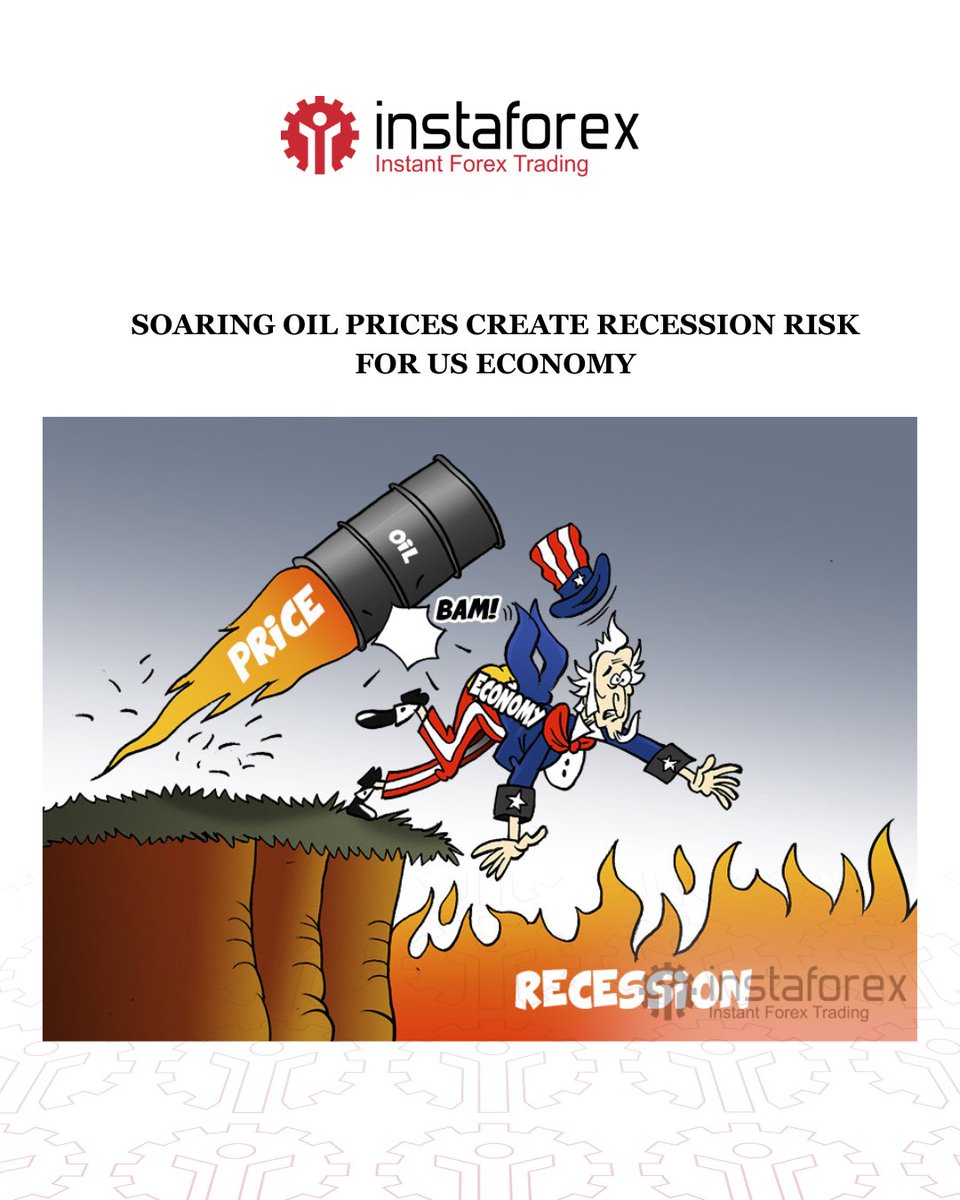
Soaring oil prices create recession risk for US economy A sustained rally in oil prices could trigger a recession in the US by weakening consumer spending and tightening financial conditions. According to a Wells Fargo report, the US economy is on the verge of an energy shock amid sluggish job growth and headline inflation expected to exceed 3%. Modeling confirms that a 50% surge in commodity costs cuts real household spending by about one percentage point. Such dynamics almost entirely offset the effect of existing tax breaks intended to stimulate domestic demand. The report identifies a Brent price of $130 per barrel as a critical threshold for maintaining current consumption rates. If global oil prices remain at that level for several months, businesses and households will have to revise investment plans and cut hiring. An energy shock turns into a downturn if it is persistent, and household income growth deteriorates further. Falling real wages drag down consumption, which ultimately leads to declines in investment in fixed capital. Being a net energy exporter gives the US some resilience compared with import-dependent countries. Nevertheless, rising producer profits and investment in infrastructure will occur more slowly than the erosion of household purchasing power. More Forex Humor: ifxpr.com/4cR1OUZ Open a trading account: ifxpr.com/register
InstaForex | InstaTrade Official - Forex Trading tweet media
English
0
0
0
70
InstaForex | InstaTrade Official - Forex Trading
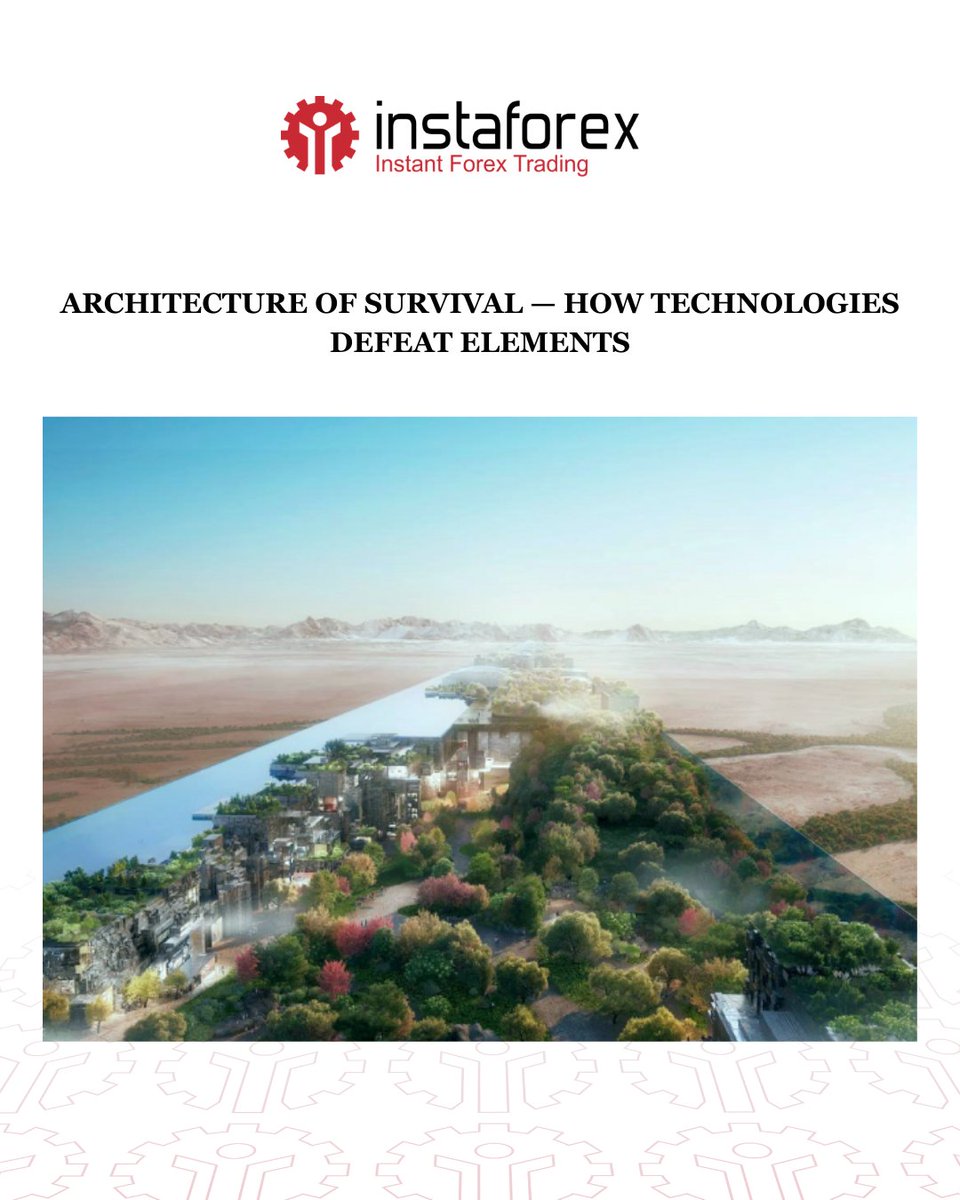
Architecture of survival — how technologies defeat elements The Line — ecological vertical in desert Saudi Arabia’s Neom project advanced into reality. The Line is a 170‑kilometer linear city with a mirrored facade that reflects sunlight to prevent overheating. The structure houses a controlled, autonomous microclimate. All essential services for living and working sit within walking distance, eliminating the need for transport. Neom positions itself as a manifesto against desertification. A super dense vertical layout reduces energy use by up to 90% versus a conventional metropolis. Oceanix — floating modules withstand flooding In 2026, the prototype floating city opened in Busan, South Korea. The project uses hexagonal platforms rather than ships. The platforms rise with the sea level. They resist tsunamis and hurricanes. Each module can be a farm, a residential block, or a power station. The floating‑city model emphasizes adaptability to weather. If an area becomes overcrowded, planners can build a new quarter. Oceanix may offer a survival option for coastal cities at risk of submersion by mid‑century. Earthscrapers — life below ground In places with extreme heat or dense historical fabric, as in Mexico City, architects develop “earthscrapers” as an alternative to skyscrapers. These inverted pyramids sink hundreds of meters into the ground. A central light well delivers sunlight. The surrounding earth acts as natural thermal insulation and keeps interior temperatures stable at 20–22 degrees Celsius without air conditioning. The design provides shelter from tornadoes, dust storms, and solar radiation. Halley VI — next‑generation Arctic stations With permafrost thawing, northern buildings sit on hydraulic piles that can change height and tilt. The Halley VI research station in Antarctica can literally be moved if the ice beneath it becomes unstable. This is a nomadic research architecture. The units behave like high‑tech all‑terrain vehicles and provide full autonomy for six months of complete isolation. Biomimetic smart facades Modern towers in Dubai and Singapore use an adaptive “skin” that reacts to the sun like a living organism. Thousands of sensors control mechanical scales that open for ventilation or close to reflect excess heat. The system cuts cooling costs by about 40%. Buildings stop being passive objects and become active thermal regulators. The facades mimic cacti’s behavior or the pores of human skin. 3D printing from lunar and desert dust In‑situ resource utilization has made it possible to print durable domes in the Sahara from ordinary sand bound with biopolymers. The structures resemble termite mounds. Their form supports natural ventilation and protection from sandstorms. The technique is fast and accessible. Planners consider it for a rapid deployment of refugee camps, turning abundant sand into a reliable shelter. Regenerative systems —house as filter and “vertical forests” New projects prioritize cleaning over consumption. Cities install vertical forests to absorb smog. Buildings integrate algal bioreactors in transparent facade panels. The algae absorb carbon dioxide and convert it into biomass for heating. In this model, a residential block becomes part of the city’s lungs and actively helps restore the local environment. Metabolic cities — Lego on steroids The concept envisions a city that can grow and shrink with demand. Modular capsule apartments slot into a giant steel frame. If a family needs more space, they buy a module and clip it onto their unit. In land‑constrained markets such as Japan and Hong Kong, this system maximizes space efficiency. The result is a living, constantly changing urban fabric. More Photonews: ifxpr.com/3VTU2Tg Open a trading account: ifxpr.com/register
InstaForex | InstaTrade Official - Forex Trading tweet media
English
0
0
0
57
InstaForex | InstaTrade Official - Forex Trading
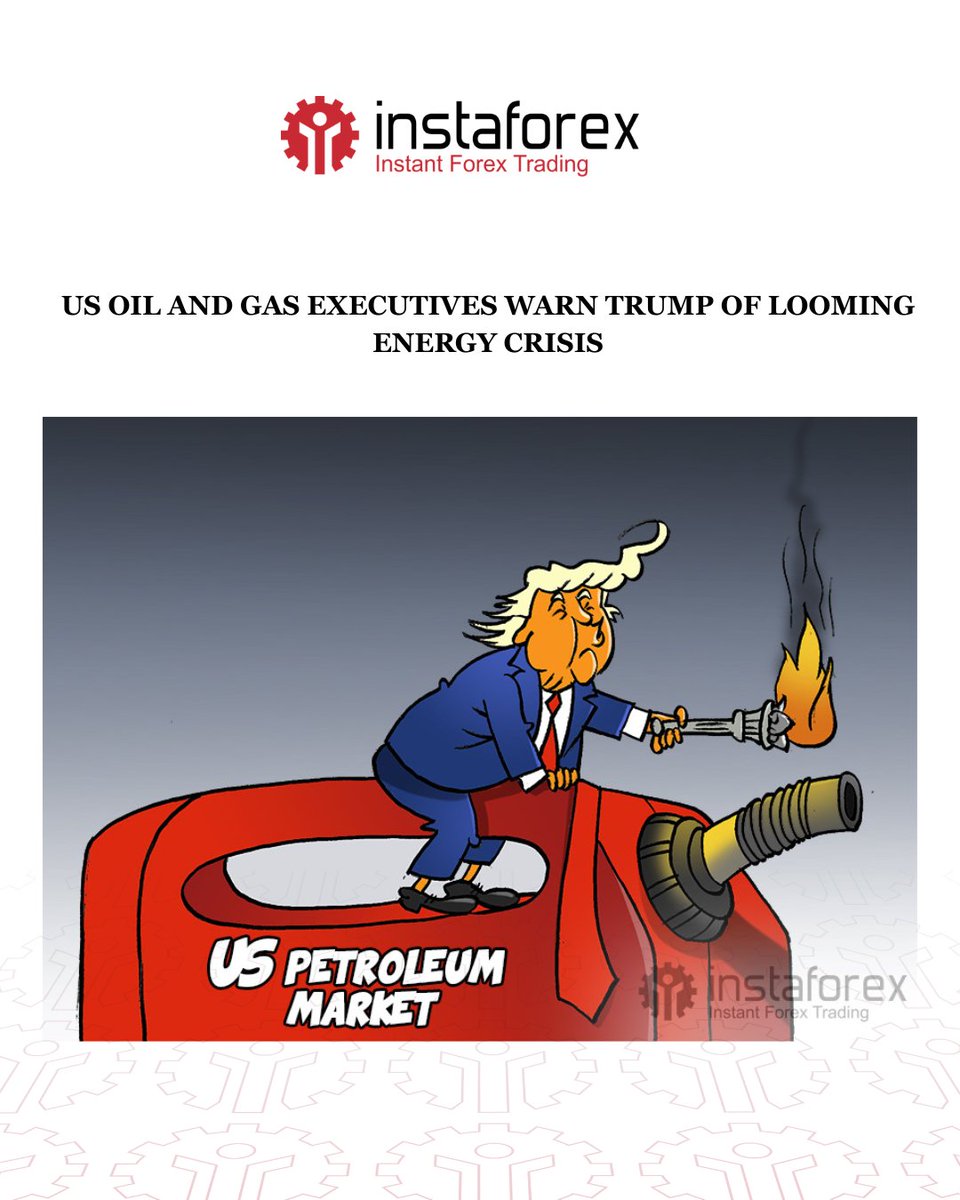
US oil and gas executives warn Trump of looming energy crisis On March 11, 2026, executives from ExxonMobil and Chevron informed US President Donald Trump during a meeting at the White House about the risks of a global energy crisis. According to The Wall Street Journal, the primary threat identified is the blockage of the Strait of Hormuz by Iran amid an escalating military conflict. ExxonMobil CEO Darren Woods pointed out that the combination of price volatility and a shortage of oil products would lead to a sharp increase in gasoline prices. He added that releasing strategic reserves might not be sufficient to overcome fuel shortages. Industry representatives believe the only solution is to unblock transportation routes, which would require ending the joint US-Israeli operation in Iran. Due to supply disruptions, American refineries are already facing technological challenges. Retail fuel prices in the United States are rising, having already surpassed $5 per gallon in California. In response to the crisis situation, Donald Trump has decided to temporarily lift sanctions on Russian oil. However, some market participants doubt that these measures will stabilize global prices in the long term. Representatives of the oil sector claim that the regulatory tools available to the administration are inadequate to compensate for large-scale disruptions in supply through key maritime chokepoints. More Forex Humor: ifxpr.com/4cR1OUZ Open a trading account: ifxpr.com/register
InstaForex | InstaTrade Official - Forex Trading tweet media
English
0
0
0
82
InstaForex | InstaTrade Official - Forex Trading
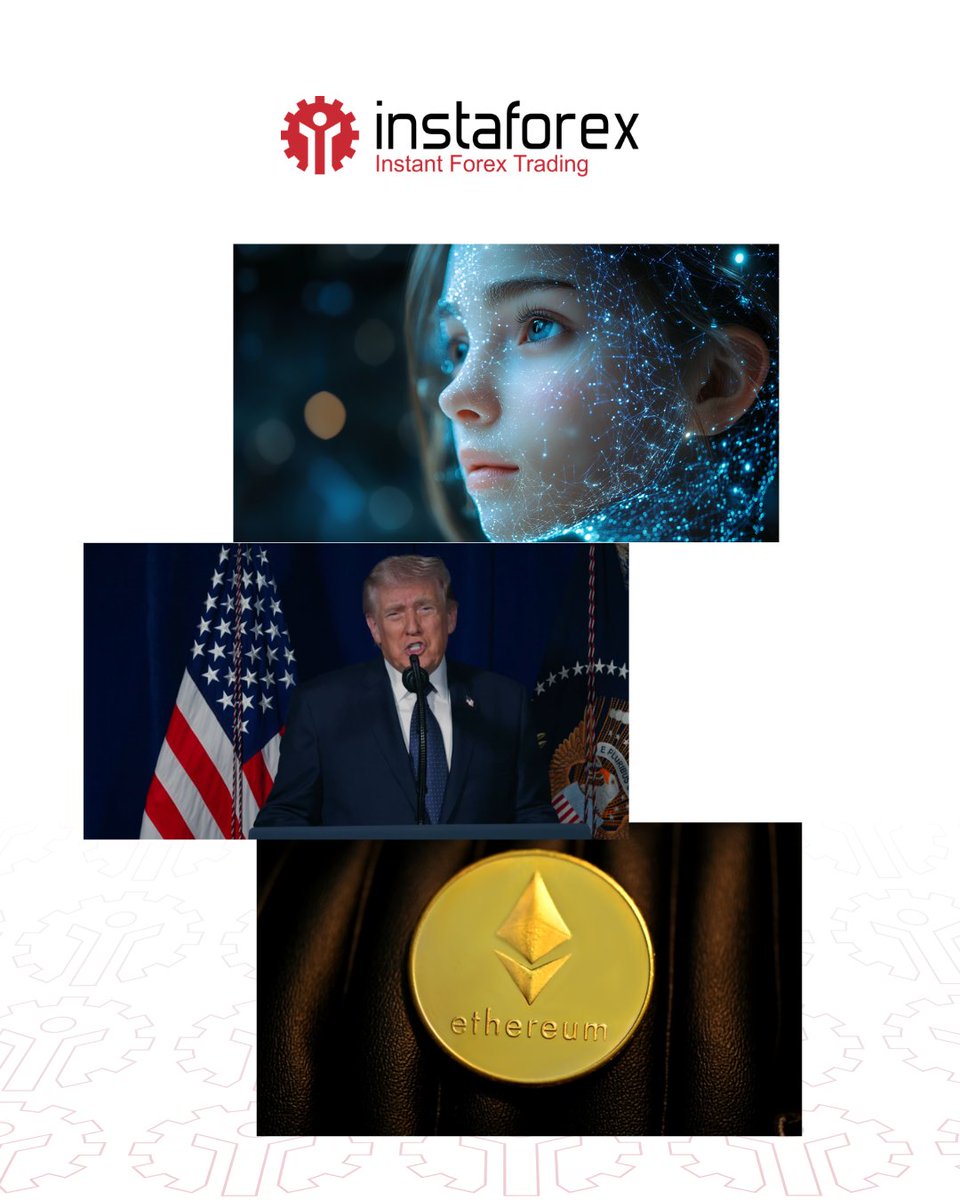
Let’s look at three major storylines currently moving the global agenda and financial markets. Trump: troops in/from Iran President Donald Trump said the US is “not yet ready to leave” Iran, but that troops will be withdrawn “in the very near future.” The comment came as Operation “Epic Fury” entered week three, with massive strikes on Iranian targets and oil market volatility. The conflict kept oil above $100, but an unexpected US inventory build (API +6.6 mln bbl) gave prices some breathing room. Markets await the Fed meeting result — rates, projections and the reaction to the oil shock will be key. Geopolitics and supply risks still support the possibility of higher prices. Tech: IBM bought Confluent for $11bn — this strengthens its data infrastructure for enterprise AI. Nvidia unveiled the ARM N1X chip — a potential x86 challenger in PCs and another tech market driver. Crypto: Ethereum ≈+9% in 24h, hitting a six‑week high; Bitcoin and altcoins also up — a risk‑on bounce after easing geopolitical tensions. Want to trade volatile markets? Open an InstaForex account and download the InstaForex mobile app — trade fast, follow the news and manage risk from your phone. 👉 Open a trading account now – ifxpr.com/regfanclub Mobile app downloads: Google Play - ifxpr.co/app-gpdsc App Store - ifxpr.co/app-asdsc #cryptocurrency #Ethereum #Bitcoin #altcoins #macro #oil #Fed #geopolitics #markets #inflation
InstaForex | InstaTrade Official - Forex Trading tweet media
English
0
0
0
54
InstaForex | InstaTrade Official - Forex Trading
Ways of manifesting wealth and power Potala: wealth hidden behind religion The Potala was the Dalai Lama’s former residence in Lhasa. It appears suddenly to visitors, like a mirage rising from the mountains. Thirteen storeys, hundreds of rooms, gilded roofs and relics with no market price — all were created not as a testament to a luxurious lifestyle but as confirmation of sacred authority. Wealth here is not ostentatious: it is concealed in details, symbols, and the red color of the walls. In Tibet, affluence takes a hidden form, characterized by elevation and inaccessibility; it refuses outward display. Discipline of gold: Versailles as manifesto of absolute power The Palace of Versailles is not just a building but an ideological statement carved in stone and mirrors. For Louis XIV, it became the architectural equivalent of a royal title translated into everyday life. The Hall of Mirrors, kilometres of symmetrical alleys, interiors designed to subordinate space to the monarch… everything there is made for admiration. The combination of gilded luxury and the ability to distance oneself from others is a visual equivalent of hierarchy and a tool of public dominance. Antilia: vertical code of inequality Antilia is a 27-storey private residence in Mumbai and one of the world’s most expensive private homes. The building includes helipads, a ballroom, a cinema, hanging gardens, parking for 168 cars, and a floor for technical support. In India, where poverty and wealth live side by side, Antilia is seen as something mythical — a classic fortress of the 21st century. Its architecture is inspired by ancient temples. It is a vertical symbol of personal status and business ambition in the world’s second-most populous country. Burj Al Arab as nation’s self‑esteem What happens when oil is transformed into architecture? The Burj Al Arab, the UAE’s signature hotel, is a vivid example. It is shaped like a sail of steel, made of glass and gold, and moored on an artificial island. Every square metre of the building is steeped in luxury — from 24‑carat gilding to private suite entrances. In Arab culture, wealth is often tied to the demonstration of hospitality and status. A hotel built not for living but for display and to inspire admiration can be read as a symbol of national ambition, its sail spread by gusts of money. Golden caves of Dambulla: wealth in generosity In Sri Lanka, material riches often flow into spiritual donations. The Dambulla temple consists of five rock caves frescoed and filled with Buddha statues surrounded by gold. Built more than 2,000 years ago and expanded by successive kings, it embodies the idea that grandeur is expressed not in private ownership but in generosity and giving. Some ceiling paintings cover more than 200 square metres. Here, you feel the energy of faith combined with regal largesse. Palazzo Vecchio: power of patronage Palazzo Vecchio in Florence — the central seat of Renaissance power — is the monument to the Medici dynasty’s banking and cultural leadership. Its interior is decorated with Vasari masterpieces, thematic frescoes, and rooms ranging from military banners to collections of antique globes. Here, wealth is intellectual influence, incorporated in public space. Built from coarse stone, the palace symbolizes authority not by gold but through patronage of culture and science. Palazzo Vecchio is the birthplace of patronage as a form of social capital. British royal regalia as capital of authority Gold is only one ingredient in what is called the Crown Jewels. Crowns, swords, scepters, and orbs were made not as ornaments but as instruments of legitimacy. Diamonds tell the story of a colonial past, tradition and an enduring power structure. The aesthetic of the regalia is not elegance but discipline. These items are not worn every day; they are brought out on ceremony as proof of historical continuity. In a culture where capital can symbolize succession, even wealth is kept under protocol. More Photonews: ifxpr.com/3VTU2Tg Open a trading account: ifxpr.com/register
InstaForex | InstaTrade Official - Forex Trading tweet media
English
0
0
0
47
InstaForex | InstaTrade Official - Forex Trading
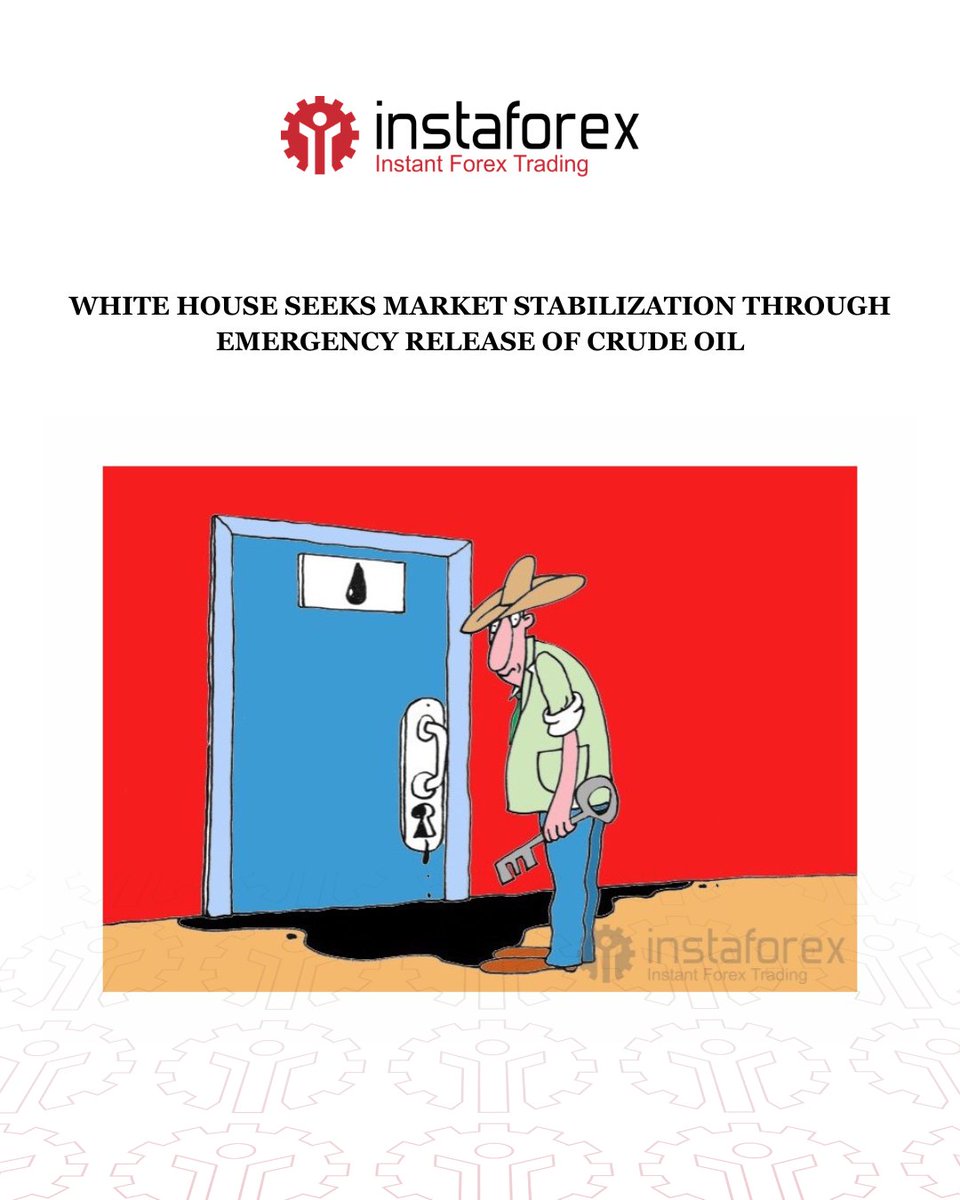
White House seeks market stabilization through emergency release of crude oil The Trump administration has initiated a large-scale operation to draw down the Strategic Petroleum Reserve, officially requesting the market to release 86 million barrels of crude oil through an exchange mechanism. This move opens the first phase of the previously announced release of 172 million barrels. The emergency measure is intended to stabilize global markets and reduce fuel prices, which have surged since the beginning of the US military operation in Iran. The US Department of Energy expects the first shipments of crude oil by the end of next week. This intervention is part of a coordinated package with international partners, totaling 400 million barrels. The terms of the deal stipulate that recipient companies will be required to return the borrowed oil to the reserve with an additional "premium" in barrels. The deadline to submit bids for participation in the tender is 5:00 PM Central Time on March 17. In the long term, the White House plans to replenish the reserves by purchasing approximately 200 million barrels within the next year, which would create a 20% surplus relative to the current withdrawal volume. The aggressive use of the SPR is directly linked to rising gasoline and aviation fuel prices within the United States, which is placing critical pressure on households ahead of the November midterm elections. With shipping paralyzed in the Strait of Hormuz, through which 20% of the world's oil traffic passes, the administration is leveraging reserves as a primary tool to combat the inflation shock. Despite a temporary drop in oil futures prices in response to the news, analysts remain skeptical. Experts doubt that even such significant interventions can fully offset the structural deficit caused by the Persian Gulf blockade. The Department of Energy's strategy now officially prioritizes immediate relief for consumers in an effort to prevent the American economy from sliding into a recession. More Forex Humor: ifxpr.com/4cR1OUZ Open a trading account: ifxpr.com/register
InstaForex | InstaTrade Official - Forex Trading tweet media
English
0
0
0
56
InstaForex | InstaTrade Official - Forex Trading
Biodesign: how nature replaces furniture factories Calcite — coral as architectural element Using mineral precipitation from seawater under a weak electric current (Biorock), designers grow “living stone” for underwater hotels and coastal villas. The material becomes harder than concrete and continuously repairs itself. By 2026, elements made from cultivated calcite signaled technological prowess and ecological awareness. These are structures and furnishings that grow stronger over time, extracting calcium carbonate from the surrounding water for their growth. Cactus leather — luxury and quality The Mexican project Desserto made high‑quality leather from nopal cactus leaves. Unlike animal leather or plastic leather substitutes, cactus leather requires minimal water and contains no plastic. Sofas and armchairs upholstered in this material are highly durable, breathable, and pleasant to the touch. For the luxury industry, this was a rescue. Brands can now create premium interiors without harming ecosystems. In 2026, cactus leather became a standard for luxury labels. Mycelium — fungal concrete in your living room Mycelium, the root network of fungi, is a supermaterial of the future. Makers place a substrate of agricultural waste into molds. Within weeks, the mycelium colonizes the form, binding particles into ultra‑strong, lightweight, and fire‑resistant blocks. Chairs and tables made from mycelium have a velvety surface and surprising strength. At the end of life, the furniture can be broken up and buried in a garden. It will become compost. This is the triumph of a product that returns to the natural cycle. Bioluminescent lamps — living light without wires Designers learned to harness the natural glow of some marine bacteria and algae. Colonies of microorganisms live inside glass tubes. They feed on carbon dioxide and sunlight by day and emit a soft, magical glow at night. Such a lamp also helps clean indoor air. This is a functional symbiosis in which a piece of furniture becomes a living household companion that requires care to keep lighting the space.Bacterial cellulose — furniture from kombucha Textiles from seaweed Fibers from brown kelp became the basis for carpets and curtains with antibacterial properties that enrich indoor air with iodine. Seaweed cultivation requires no land and no fertilizers, which makes this textile among the most sustainable in the world. The fabric feels silky to the touch and is naturally fire‑resistant. Using marine resources in interiors lets homes feel like seaside resorts where every material promotes occupant health. Living walls — photosynthesis in bedroom Instead of wallpaper, panels with microalgae (Chlorella) can be used. These living pictures actively absorb carbon dioxide and produce oxygen at volumes comparable to an adult tree. The wall is controlled via an app. You can change its color intensity by adjusting the light and nutrient supply. In 2026, such a wall is not mere decor. It is a life support system that makes the air in an urban apartment as clean as that in a coniferous forest. More Photonews: ifxpr.com/3VTU2Tg Open a trading account: ifxpr.com/register
InstaForex | InstaTrade Official - Forex Trading tweet media
English
0
0
0
40
InstaForex | InstaTrade Official - Forex Trading
Biodesign: how nature replaces furniture factories Calcite — coral as architectural element Using mineral precipitation from seawater under a weak electric current (Biorock), designers grow “living stone” for underwater hotels and coastal villas. The material becomes harder than concrete and continuously repairs itself. By 2026, elements made from cultivated calcite signaled technological prowess and ecological awareness. These are structures and furnishings that grow stronger over time, extracting calcium carbonate from the surrounding water for their growth. Cactus leather — luxury and quality The Mexican project Desserto made high‑quality leather from nopal cactus leaves. Unlike animal leather or plastic leather substitutes, cactus leather requires minimal water and contains no plastic. Sofas and armchairs upholstered in this material are highly durable, breathable, and pleasant to the touch. For the luxury industry, this was a rescue. Brands can now create premium interiors without harming ecosystems. In 2026, cactus leather became a standard for luxury labels. Mycelium — fungal concrete in your living room Mycelium, the root network of fungi, is a supermaterial of the future. Makers place a substrate of agricultural waste into molds. Within weeks, the mycelium colonizes the form, binding particles into ultra‑strong, lightweight, and fire‑resistant blocks. Chairs and tables made from mycelium have a velvety surface and surprising strength. At the end of life, the furniture can be broken up and buried in a garden. It will become compost. This is the triumph of a product that returns to the natural cycle. Bioluminescent lamps — living light without wires Designers learned to harness the natural glow of some marine bacteria and algae. Colonies of microorganisms live inside glass tubes. They feed on carbon dioxide and sunlight by day and emit a soft, magical glow at night. Such a lamp also helps clean indoor air. This is a functional symbiosis in which a piece of furniture becomes a living household companion that requires care to keep lighting the space.Bacterial cellulose — furniture from kombucha Textiles from seaweed Fibers from brown kelp became the basis for carpets and curtains with antibacterial properties that enrich indoor air with iodine. Seaweed cultivation requires no land and no fertilizers, which makes this textile among the most sustainable in the world. The fabric feels silky to the touch and is naturally fire‑resistant. Using marine resources in interiors lets homes feel like seaside resorts where every material promotes occupant health. Living walls — photosynthesis in bedroom Instead of wallpaper, panels with microalgae (Chlorella) can be used. These living pictures actively absorb carbon dioxide and produce oxygen at volumes comparable to an adult tree. The wall is controlled via an app. You can change its color intensity by adjusting the light and nutrient supply. In 2026, such a wall is not mere decor. It is a life support system that makes the air in an urban apartment as clean as that in a coniferous forest. More Photonews: ifxpr.com/3VTU2Tg Open a trading account: ifxpr.com/register
InstaForex | InstaTrade Official - Forex Trading tweet media
English
0
0
0
39
InstaForex | InstaTrade Official - Forex Trading
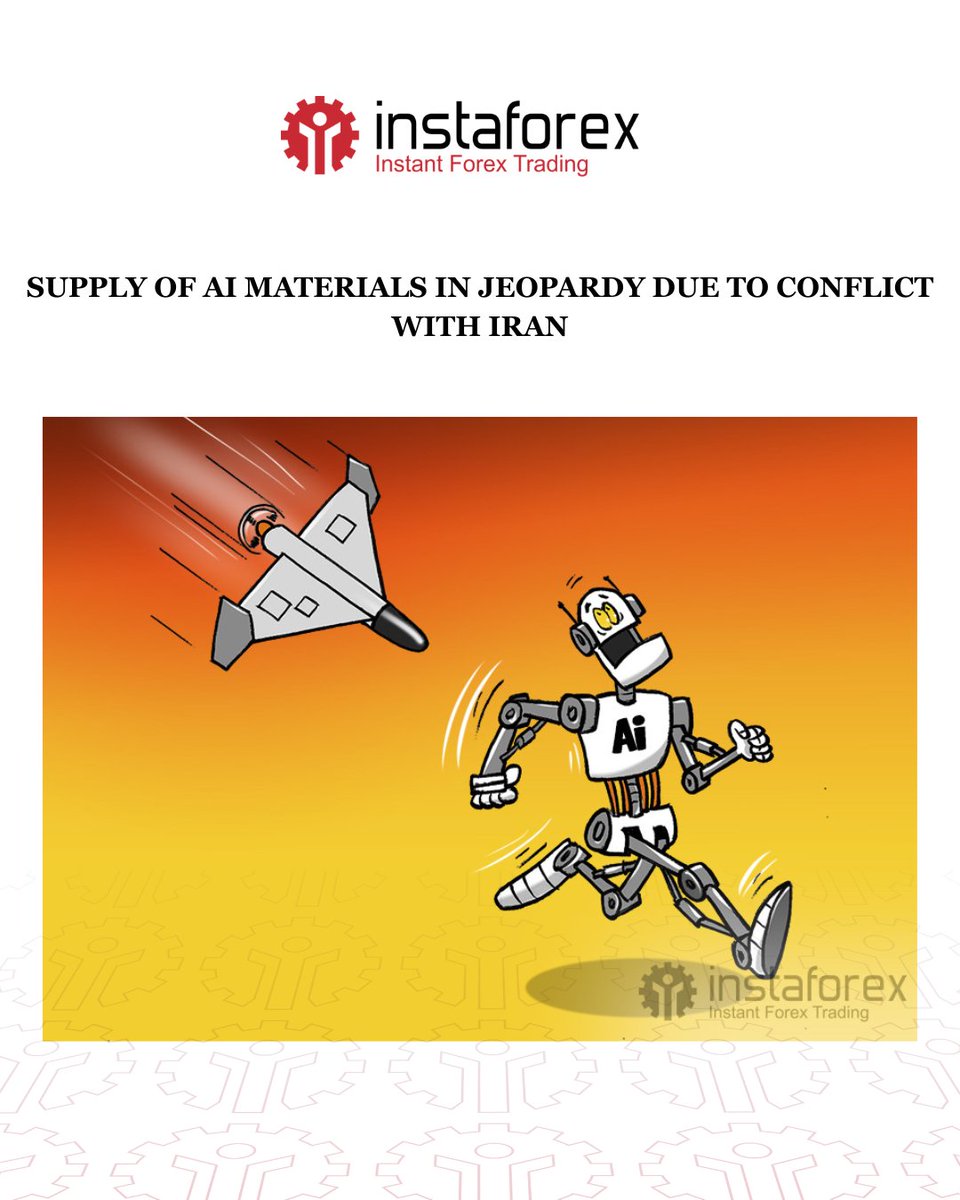
Supply of AI materials in jeopardy due to conflict with Iran The escalation of military confrontation between the US and Israel on one side and Iran on the other is jeopardizing deliveries of critical materials for microelectronics. Reuters reports that South Korean manufacturers, which supply about two‑thirds of the global chip market, have voiced concerns about possible shortages of inert gases and rare metals. The main risks stem from supplies via Qatar, which has declared a state of emergency and suspended gas production. A critical factor for the industry is a shortage of helium, which has no industrial substitute in semiconductor manufacturing. South Korea’s Ministry of Trade, Industry, and Energy has also flagged 14 raw-material items, including bromine, whose supplies depend on stability in the Persian Gulf. Disruptions to logistics through the Strait of Hormuz directly affect the region’s largest consumers — China, India, Japan, and South Korea. The crisis creates long‑term risks for the AI sector. Tech industry representatives warn of potential freezes on data‑centre construction projects in the Middle East. Reduced investment activity in the region could lower global demand for high‑performance chips and slow AI model training. The situation is worsened by a logistical blockade that has sent freight and marine insurance costs in the region sharply higher. Goldman Sachs analysts note that a protracted conflict will force tech giants, including Samsung and SK Hynix, to seek alternative commodity sources outside the Middle East. That will inevitably push up production costs and produce shortages of server components and consumer electronics parts. More Forex Humor: ifxpr.com/4cR1OUZ Open a trading account: ifxpr.com/register
InstaForex | InstaTrade Official - Forex Trading tweet media
English
0
0
0
60
InstaForex | InstaTrade Official - Forex Trading
Asia under pressure from Iran escalation: oil ~$100/bbl, mass market sell‑offs. Kospi down over 16% since the conflict began (12% one‑day drop), Nikkei ~‑10%, S&P/ASX200 ~‑6%. Central banks forced to intervene — RBI spent about $12bn in a week and bought bonds for 500bn rupees twice; Indonesia and Korea are also conducting “firm” interventions. Global funds pulled ~$11bn from emerging Asian markets in the first week of the conflict. Crypto — Bitcoin surged above $74,000 (March 16): large short squeeze, $143m of shorts liquidated in 24 hours. The rally was supported by record inflows into spot Bitcoin ETFs ($767m from March 9–13), partly into iShares (~$600m). Institutional demand + low post‑halving supply provided a strong impulse. Semiconductors & corporate: Micron closed purchase of Taiwan’s P5 site for $1.8bn — accelerating DRAM/HBM production for AI, volumes expected from FY2028; a second phase is planned. Social media & safety: BBC insiders claim Meta and TikTok sometimes prioritized engagement over user safety — serious examples of moderation‑priority failures. If you want to trade reactions (FX, oil, equities, crypto) — open a trading account at InstaForex and download the InstaForex mobile app to follow quotes and trade from your phone. 👉 Open an account now – ifxpr.com/regfanclub App download links: Google Play - ifxpr.co/app-gpdsc App Store - ifxpr.co/app-asdsc #Bitcoin #Cryptocurrency #ETF #Macroeconomics #Geopolitics #Oil #AsianMarkets #Currencies #InstaForex
InstaForex | InstaTrade Official - Forex Trading tweet media
English
0
0
2
72
InstaForex | InstaTrade Official - Forex Trading
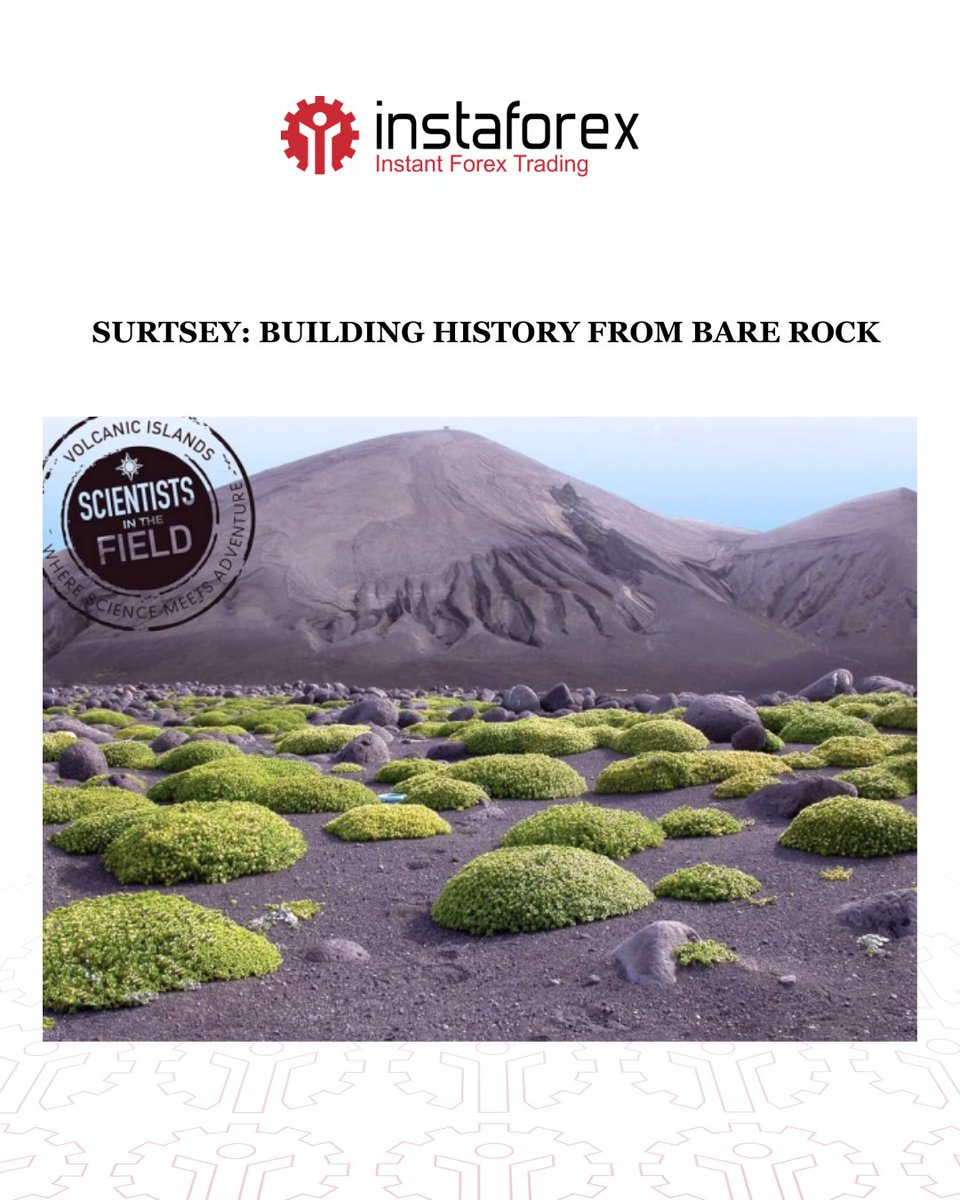
Surtsey: building history from bare rock Fire and water came first, but fishermen failed to save anyone At first, people thought a ship was sinking. When a fishing boat came closer, they discovered that fire was erupting from the ocean. The Earth’s crust split beneath the water, volcanic magma rushed upward, steam explosions began, and volcanic “bombs” flew into the sky. New land formed. Within days, the place became the focus of global attention. Journalists and scientists arrived while the sea around the island boiled with lava flows. Its birth was almost mythic in drama and in importance to science. For sake of fire and Elvis — between legend and popular humor The island was named after Surtur, the Norse lord of the fiery giants. Icelanders, however, often jokingly called the newborn “Presley” because its contours reminded them of the rock‑and‑roll king’s hairstyle. The double name reflected both ancient tradition and a folk sense of humor in the face of a natural catastrophe. The fact that days after the eruption the island already had a shape poets and musicians could discuss showed how quickly not only the landscape but also the cultural image of a place can form. How rule of non‑interference works To avoid disrupting natural colonization and to keep the experiment pure, scientists succeeded in protecting the island from mass visitation. Researchers allowed on Surtsey follow strict hygiene protocols to avoid introducing foreign seeds or insects. Only short stays are permitted, and there is a single small hut for overnighting. An ecological incident nearly occurred when pieces of tomato from a scientist’s lunch reached the soil. The plants that sprouted were removed promptly without lasting effects on the ecosystem. Months instead of millions of years— how Surtsey’s relief grew up Geologists were astonished that bays, cliffs, gullies, and boulders — forms normally attributed to millennia of erosion — appeared on Surtsey in a matter of months. By the end of January 1964, the volcano’s cap had risen to fifty meters. The combination of lava flows eroded by tides and the mechanical breakage of rock produced a surprisingly varied relief. The rapid maturing of Surtsey’s landscape surprised researchers. Where forces are strong, nature can accelerate dramatically. Rise of Green — from bacteria to trees Already in spring 1965 (a few months after Surtsey’s birth), a shoot of sea mustard pushed through the black sand. The brand‑new island was first colonized by microbes and molds. Then, grasses and cereals appeared. Moss arrived in 1967 and lichens in 1970. By the mid‑1980s, more than twenty plant species had established on the island. In 1998, the first shrub, the willow Salix phylicifolia, was recorded. By 2008, about seventy plant species had been documented. Each year, two to five new colonists arrive. Unexpected cargo — spiders and beetles delivered The people who first stepped onto the island in 1964 found flies and spiders waiting. Spiders used silk threads to balloon across the sea; beetles and small invertebrates arrived by rafting, caught on floating masses of seaweed. Birds carried seeds, and some organisms used floating vegetation as transport. This natural transfer of species, without human intervention, forced scientists to rethink distant ecological connections, where ocean currents and wind act as couriers for living organisms. Source of life — how birds turned rock into oasis Birds became the key agents of Surtsey’s revival. They brought seeds in their stomachs and enriched the soil with droppings rich in nitrogen and phosphorus. By 1970, the island hosted its first chicks. Initially, seabirds and black guillemots settled, building pebble nests and staying close to the cliffs. In autumn 1985, a pair of ground‑nesting birds arrived and made a nest of plants in the lava lowlands. With each season, more of that species came, and Surtsey grew a permanent colony of several hundred pairs. Extreme for humans — solitary hut at edge of the world A simple hut stands on the island where only invited researchers may spend the night. Since 2009, a meteorological station has operated there, and surveillance cameras transmit climate changes and the behavior of flora and fauna. Research protocols require sterilizing footwear and strict control of personal items. For scientists, the conditions are extreme, but they receive a rare privilege: to observe an accelerated formation of an ecosystem, document new species, and record how land is being settled without direct human involvement. Defying predictions — how long will Surtsey endure? The same ocean that gave Surtsey life is gradually taking it back. Over the decades, the island’s area has decreased by roughly half, although its basaltic core remains more resilient. Geologists disagree: some argue that the ash plains will be washed away entirely within a century. Others believe the island will stabilize. In any case, Surtsey — and its famous “Presley” form — has already given its most valuable gift: a lesson about the importance of sometimes stepping aside and letting nature act on its own. You can also watch the island’s life through the meteorological station’s webcam. More Photonews: ifxpr.com/3VTU2Tg Open a trading account: ifxpr.com/register
InstaForex | InstaTrade Official - Forex Trading tweet media
English
0
0
0
47
InstaForex | InstaTrade Official - Forex Trading
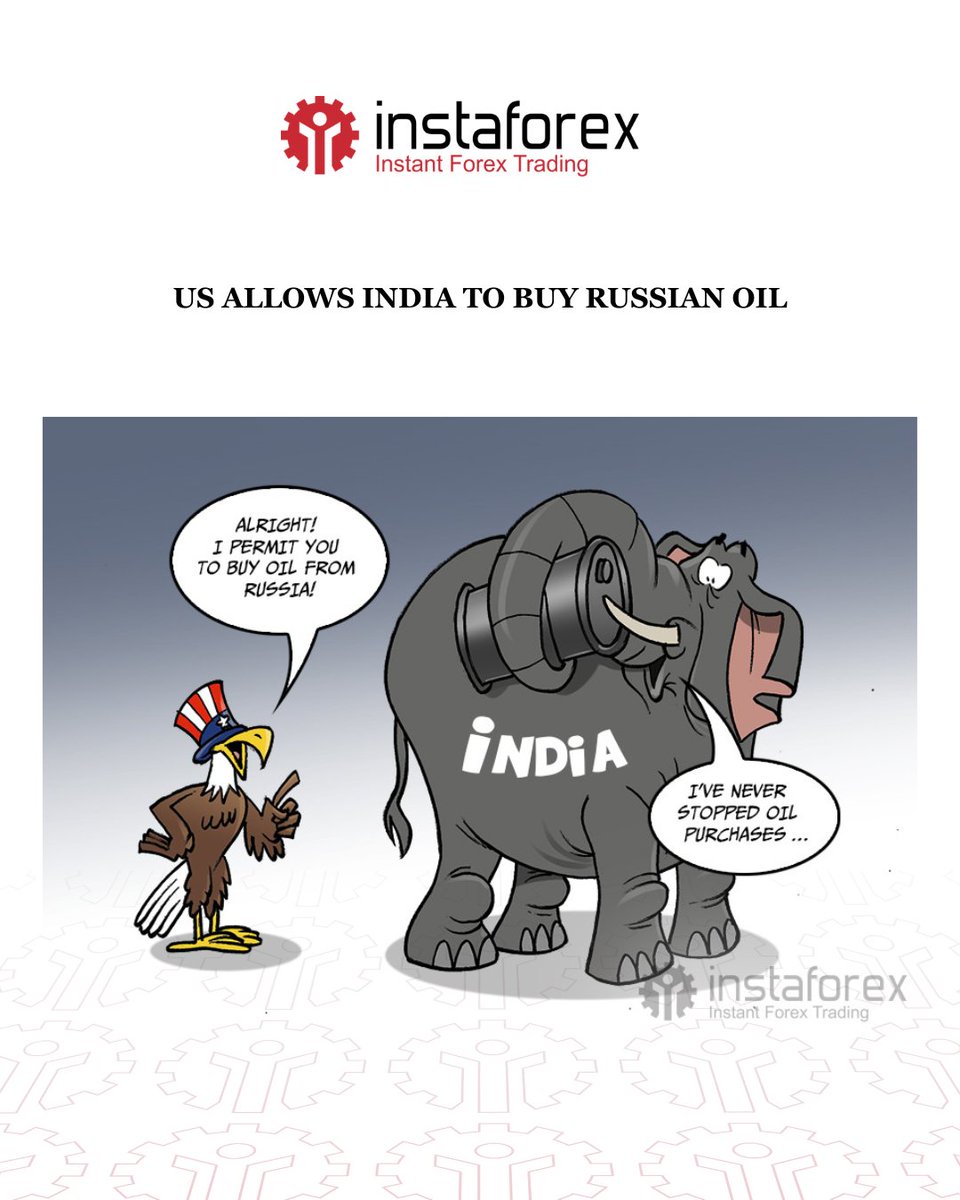
US allows India to buy Russian oil The US Treasury has issued a temporary 30‑day licence permitting India to purchase Russian oil already loaded on tankers at sea, Treasury Secretary Scott Bessent said. The move is intended to help stabilize global energy markets amid the escalating conflict in the Middle East. The relief applies only to cargoes that are already on vessels and en route. The Treasury said the measure is short‑term and designed to increase supply while regional tensions persist. The department also said the time limit should prevent Russia from gaining significant financial benefit from these transactions. The need for additional shipments arose against the backdrop of US and Israeli military operations against Iran. Markets had already reacted to geopolitical risk with soaring prices: on March 5, 2026, Brent crude jumped to $85 per barrel. Goldman Sachs analysts had warned of a potential supply shortfall caused by disruptions through the Strait of Hormuz. Washington continues to use targeted licences to influence prices without lifting major sanctions. Indian refineries are expected to begin accepting cargoes in the coming weeks. US authorities will review the licence conditions after the 30‑day term expires, depending on market developments. More Forex Humor: ifxpr.com/4cR1OUZ Open a trading account: ifxpr.com/register
InstaForex | InstaTrade Official - Forex Trading tweet media
English
0
0
1
103
InstaForex | InstaTrade Official - Forex Trading
🌐 The Price of Worry: gas surge, oil shock, hundreds of millions in liquidations and the race for HBM — where to look for profit. ⛽ The blockade of the Strait of Hormuz shook up oil. 💡 Volatility offers opportunities for long positions in oil and hedges between energy and indices. 🔥 European gas jumped nearly a third after an LNG force majeure from Qatar — depleted storage and competition with Asia. 💡 Trade futures/CFDs, hedge and use strict stop‑losses. 📉 A cascade of liquidations on the crypto market — hundreds of millions wiped out; Bitcoin trading in a tight range. 💡 Avoid high leverage, use put options and funding‑rate arbitrage. 💾 Broadcom locked up HBM and TSMC capacity — the race for AI memory is on. 💡 Long‑term longs in semiconductors, pairs trades and options around earnings. 👉 Open an account — ifxpr.com/regfanclub 📲 Trader app: Google Play — ifxpr.co/app-gpdsc App Store — ifxpr.co/app-asdsc #oil #gas #Apple #Moderna #Broadcom #stocks #commodities #volatility #trading #investing
English
0
0
0
74
InstaForex | InstaTrade Official - Forex Trading
Don’t miss opportunities in oil, Bitcoin, Amazon bonds and the MacBook Neo Oil: quotes under pressure. WTI slightly lower ($95.99), Brent about $100.9 — the market is oscillating between two factors: the U.S. is easing sanctions on Russian oil (new General License 134 allowed shipments of cargoes loaded by March 12), while escalation in the Middle East is intensifying. Iranian rhetoric and threats to economic targets raise the risk premium, but U.S. moves to relax restrictions cool prices — overall uncertainty is large. Crypto vs gold: Bitcoin benefited from geopolitics — in the weeks after strikes on Iran BTC was roughly +7% and traded near $71k, while gold barely moved and the S&P 500 slid about 1%. One reason — crypto markets operate 24/7, allowing quick reactions. Business & tech in brief: Amazon raised a record $54 billion in bonds to scale AI infrastructure. Apple unexpectedly launched the budget MacBook Neo from $599 — a serious challenge to the PC market. If you want to trade volatile markets — open a trading account with InstaForex and download the InstaForex mobile app to track quotes and enter trades from your phone. 👉 Open a trading account right now – ifxpr.com/regfanclub Mobile app download links: Google Play - ifxpr.co/app-gpdsc App Store - ifxpr.co/app-asdsc #Bitcoin #Cryptocurrency #Crypto #Oil #Brent #WTI #Macroeconomics #Geopolitics #InstaForex #Finance
InstaForex | InstaTrade Official - Forex Trading tweet media
English
0
0
0
60
InstaForex | InstaTrade Official - Forex Trading
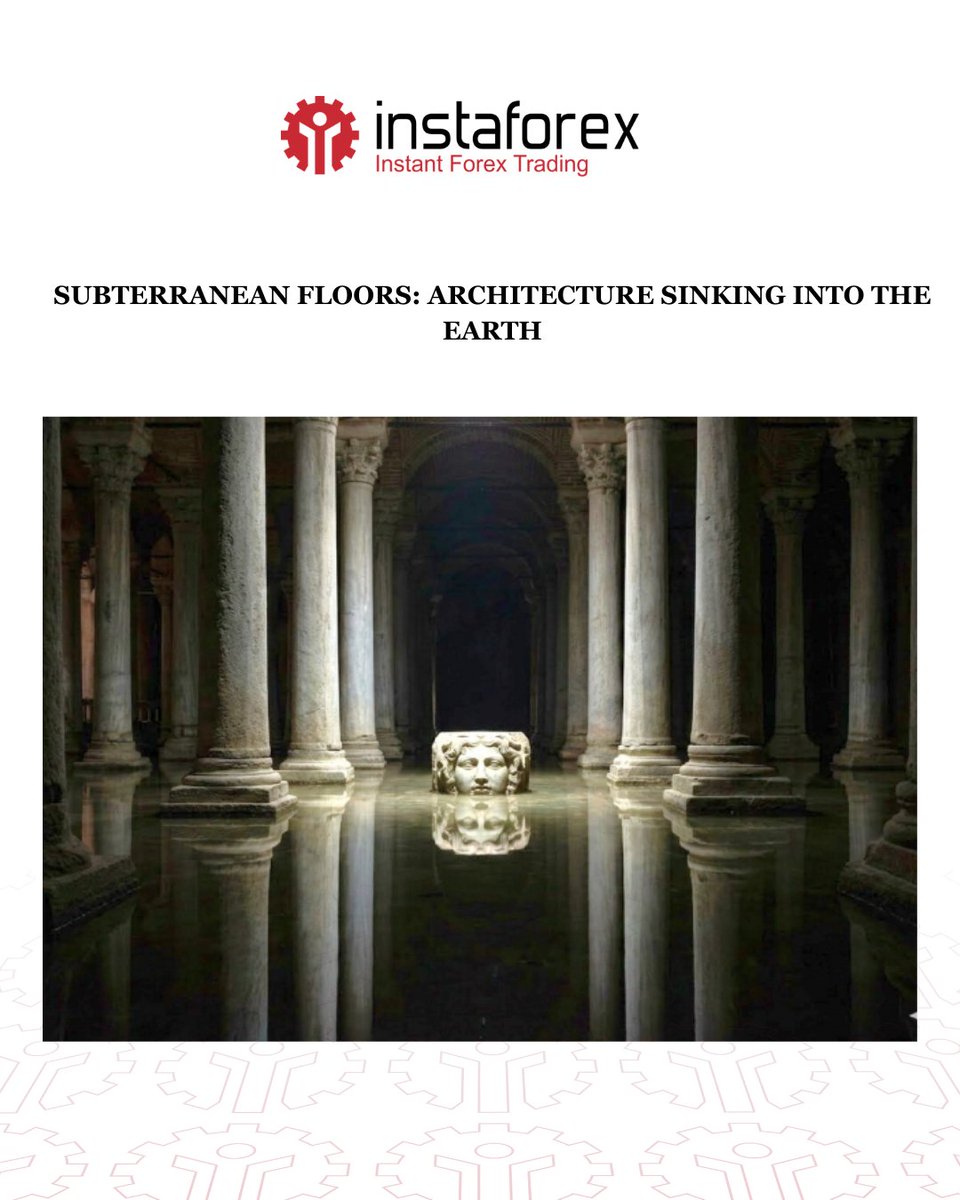
Subterranean floors: architecture sinking into the Earth Sunken palace — Basilica Cistern (Istanbul) The sixth‑century water reservoir of Istanbul is a forest of 336 columns standing in water, wrapped in complete darkness. In Byzantine times, it held 80,000 cubic meters of water for the city’s needs. Today, it is a place of mystical atmosphere, where the reflected heads of the Gorgon Medusa serve as bases for some columns. The soft lap of water and the echo of footsteps create the sensation of time frozen. It is an example of how ancient infrastructure can outlast empires and become an aesthetic treasure hidden beneath the noisy streets of a modern metropolis. Eight‑storey ghost city — Derinkuyu (Turkey) Under Cappadocia lies a genuine underground metropolis that could house 20,000 people. Built thousands of years ago, Derinkuyu descends eight levels deep — roughly 60 meters. It contained living quarters, stables, wineries, and even schools. The ventilation system was so advanced that air remained fresh even on the lowest floors. Heavy stone wheel doors protected inhabitants from uninvited visitors. This site shows how humans can adapt to any threat by turning solid rock into a snug, secure shelter beyond the reach of time. Concrete temple of water — G‑Cans discharge channel (Kasukabe, near Tokyo) Beneath the Japanese city of Kasukabe hides a structure fit for a film about gods. It is the world’s largest system for diverting stormwater. The main hall bears the nickname the Underground Temple because its roof rests on 59 columns weighing about 500 tons each. During typhoons, the system can pump 200 tons of water per second. In dry periods, the space takes on a solemn, almost religious silence. A purely utilitarian engineering facility becomes an underground architectural masterpiece where the power of concrete stands against the fury of ocean and sky. Stockholm Metro —longest art gallery in world The Swedish subway is not merely transport. It is a triumph of design over rock. Instead of covering station walls with concrete, architects left the bedrock exposed and transformed stations into vast painted caverns. At Solna Centrum, passengers are greeted by a blood-red sky. At T‑Centralen, soothing blue patterns calm commuters. This project turned transport infrastructure into part of the cultural code. Each day, passengers travel through a “living rock” that proves there is room for art and imagination even below ground. Artery through Alps — Gotthard Base Tunnel (Switzerland) The world’s longest and deepest railway tunnel, at 57 kilometers, runs beneath the heart of the Alps. Above the passengers, the mountain reaches up to 2.3 kilometers in places. Construction required the extraction of 28 million tonnes of rock. Inside the tunnel, trains run at 250 km/h, crossing the Gotthard in minutes, almost without the traveler noticing. Engineers worked from both ends and achieved a meeting deviation of only a few centimeters. The tunnel stands as a symbol of engineering precision triumphing over the unyielding power of mountains. Digital bunker — Pionen data center (Sweden) Inside a former nuclear bomb shelter under Stockholm sits one of the world’s most striking data centers. WikiLeaks servers coexist here with artificial waterfalls and jungle planted under daylight lamps. Thick granite walls protect data from electromagnetic pulses and explosions, and the interior could serve as a set for an adventure film. This is a place where cloud technology acquires a tangible, heavy physical shell. Security is elevated to a cult, turning a repository of zeros and ones into an impregnable fortress of the modern world. Ring of science’s power —LHC (CERN) The Large Hadron Collider is a 27‑kilometer tunnel located about 100 meters underground on the border of France and Switzerland. It is the most complex machine in history, hidden from public view. Along the giant ring stand detectors, the size of five‑storey buildings, entangled in millions of cables. Here, in the silence of underground halls, particles accelerate to speeds near light, recreating conditions of the Big Bang. This is where engineering scale serves the fundamental questions of existence, and cold concrete walls hide energy capable of birthing new worlds. Ring of science’s power —LHC (CERN) The Large Hadron Collider is a 27‑kilometer tunnel located about 100 meters underground on the border of France and Switzerland. It is the most complex machine in history, hidden from public view. Along the giant ring stand detectors, the size of five‑storey buildings, entangled in millions of cables. Here, in the silence of underground halls, particles accelerate to speeds near light, recreating conditions of the Big Bang. This is where engineering scale serves the fundamental questions of existence, and cold concrete walls hide energy capable of birthing new worlds. Ark in permafrost — Svalbard Global Seed Vault (Norway) Deep in a mountain on the island of Spitsbergen sits the Doomsday Vault. It is safe for the seeds of the world’s crops. The entrance looks like a futuristic portal cut into ice. Inside, millions of samples are stored at a constant −18 degrees Celsius. It is a kind of insurance policy for humanity against global catastrophe. There are no people here, only endless rows of boxes in sterile tunnels. The Arctic cold acts as a guarantor of the biological survival of civilization. At threshold of abyss — Mponeng mine (South Africa) The world’s deepest mine drops four kilometers into the Earth. Rock temperatures here reach +66 degrees Celsius, and only massive cooling systems allow humans to work in these shafts. The descent in the cage takes hours, and the air pressure is physically felt. Gold miners work in conditions comparable to extraterrestrial colonies. This is the extreme limit of human presence under the planet’s surface. The architecture here consists of temporary supports and tunnels constantly threatened to close under the mountains’ weight, a reminder of the high cost of Earth’s riches. More Photonews: ifxpr.com/3VTU2Tg Open a trading account: ifxpr.com/register
InstaForex | InstaTrade Official - Forex Trading tweet media
English
0
0
0
98
InstaForex | InstaTrade Official - Forex Trading
Strategic Infrastructure: Blockchain Settlements and Regulatory Vigour Define Early March Markets The first week of March 2026 has witnessed a decisive shift in the financial services landscape, characterized by the acceleration of institutional decentralized infrastructure and a hardening of the regulatory environment across Europe. As geopolitical volatility tests market resilience, the industry is increasingly prioritizing automated settlement and stringent compliance frameworks. #ForexNews #MarketTrends #RegulatoryCompliance #FintechInnovation #TradingTechnology
English
0
0
0
61
InstaForex | InstaTrade Official - Forex Trading
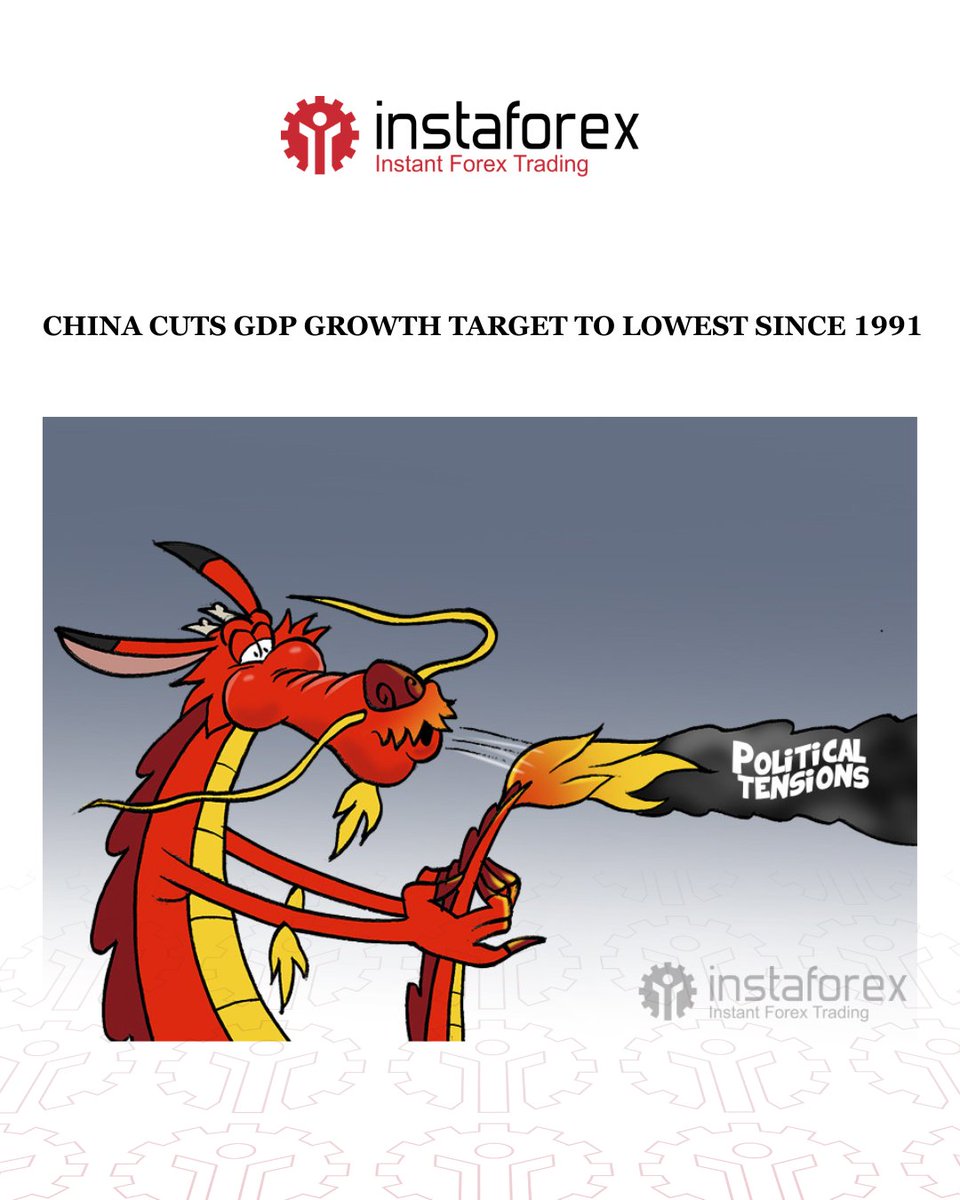
China cuts GDP growth target to lowest since 1991 China’s authorities have set an economic growth target for 2026 of 4.5–5.0%, Premier Li Qiang said at the opening of the National People’s Congress. The new target is the lowest in 35 years. In 2025, Beijing’s official goal was “around 5%,” and preliminary data indicate it was achieved. The downward revision reflects a prolonged property sector crisis and weak domestic demand. External pressure on the world’s second-largest economy is rising amid growing geopolitical risks and threats to free trade. Li Qiang also pointed to structural problems, including an imbalance of excess supply and soft consumption, as well as labor market challenges. According to a report from China’s Ministry of Finance, the 2026 budget deficit is planned at a record 4% of GDP, equivalent to 5.89 trillion yuan ($854 billion). Higher budget spending is linked to increased social benefits and the need for fiscal stimulus. Defence spending will rise 7% to 1.9 trillion yuan ($280 billion). China’s long‑term strategy supposes doubling GDP per capita by 2035. To reach that goal, Beijing plans to accelerate the development of advanced technologies and strengthen its dominance in rare-earth supply chains. Goldman Sachs analysts expect China’s actual GDP growth in 2026 to be about 4.8%, supported by export recovery and state support. More Forex Humor: ifxpr.com/4cR1OUZ Open a trading account: ifxpr.com/register
InstaForex | InstaTrade Official - Forex Trading tweet media
English
0
0
0
68
InstaForex | InstaTrade Official - Forex Trading
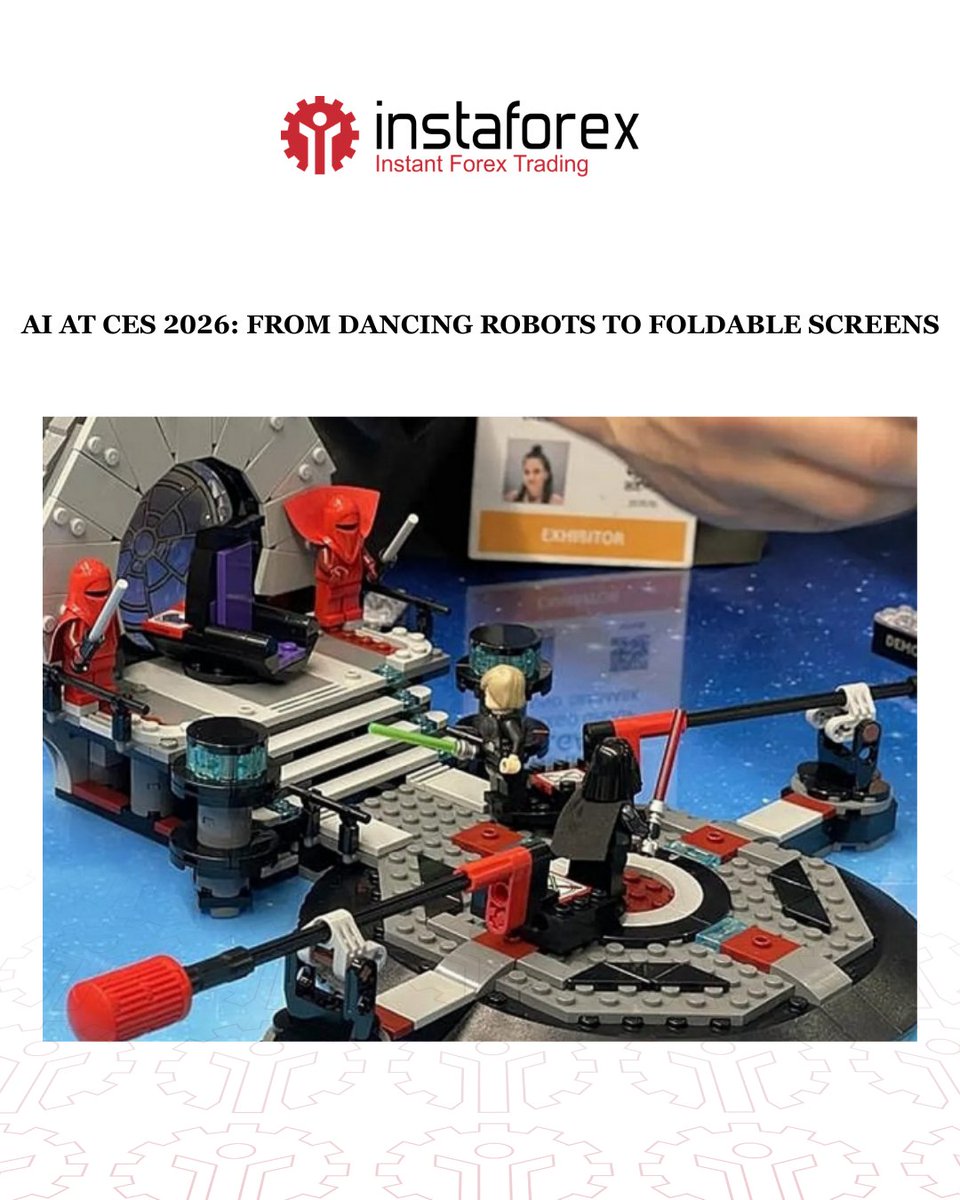
AI at CES 2026: from dancing robots to foldable screens Lego Smart Brick — sensor bricks for interactive play Lego unveiled Smart Brick, a standard block embedding a 4.1mm chip with motion, orientation, and magnetic‑field sensors. The brick responds to assembly and plays sounds through a built‑in speaker. First sets, framed around Star Wars, will ship in 2026, with prices expected to range from $70 to $160. The technology adds a digital layer without screens, boosting creativity. It is a response to AFOL demand — adult fans of Lego — where kits are becoming smarter. Smart Brick opens a roughly $500 million market for educational applications. Humanoid robots — both for dancing and domestic use At CES, humanoid robots presented by Unitree and Boston Dynamics moved in sync to music, executing flips and choreographed steps. The models use AI to coordinate their motion, delivering a convincing simulation of human movement. This represents a clear step toward physical AI in factories and homes. Boston Dynamics’ Atlas is reportedly ready for production in partnership with Hyundai. The technology promises to reduce risks in hazardous environments, and the market is forecast to expand to $150 billion in 2026. Robots are also opening niches in education and care. NVIDIA Rubin — platform that accelerates AI NVIDIA announced Rubin, an AI platform built on a six‑chip architecture that accelerates computation by three to five times. Production started ahead of schedule, helping send shares up about 35%. The move advances what some describe as quasi‑physical AI, where systems learn in the real world. Partnerships with Siemens and Caterpillar aim to integrate Rubin into the industry, unlocking a $500 billion market opportunity. Rubin promises to revolutionize edge computing, bringing AI capabilities to everyday devices. LG OLED evo W6 — ultra‑thin Wallpaper TV LG unveiled the OLED evo W6, a 9 mm‑thin panel designed to be mounted like wallpaper. The model integrates AI for upscaling, boosting brightness and color reproduction. This is an evolution of the Wallpaper line, where the screen blends into the wall. The announcement won a CES Innovation Award. The W6 is aimed at the premium market, with prices starting at $2,000. The technology promises to cut power consumption by about 20%, opening a niche in smart homes. LG plans IoT integration to personalize content. Dreame Cyber X — vacuum that climbs stairs Dreame announced the Cyber X, a robot vacuum equipped with legs to surmount steps. The model cleans stairways and obstacles using AI for navigation. It addresses multi‑story homes where traditional robots are limited. Cyber X reduces manual labor costs, with a starting price of $800. Tests showed effectiveness on about 90% of surfaces. Dreame plans smart‑home integration for scheduled cleaning. The device is part of a broader trend toward autonomous household appliances. Autonomous transport — robotaxi and AI in cars Hyundai, Zoox, and Nvidia pushed advances in robotaxi development and in‑vehicle AI for autonomous driving. Models are being tested in cities with a focus on safety and systems integration. The technology helps autonomous vehicles reason through a wide range of road scenarios, such as handling congested intersections. Nvidia announced a new project to deploy its own robotaxis built on the Drive AGX Thor platform. More Photonews: ifxpr.com/3VTU2Tg Open a trading account: ifxpr.com/register
InstaForex | InstaTrade Official - Forex Trading tweet media
English
0
0
0
92