@[email protected]/interfluidity.com (bsky) retweetledi
@[email protected]/interfluidity.com (bsky)
78.4K posts

@[email protected]/interfluidity.com (bsky)
@interfluidity
@[email protected] https://t.co/KOrJiAg0dp https://t.co/fNb7jrjzS9 https://t.co/H3CF3PW82c @interfluidity.com on BlueSky
Katılım Mayıs 2009
16.5K Takip Edilen20.6K Takipçiler

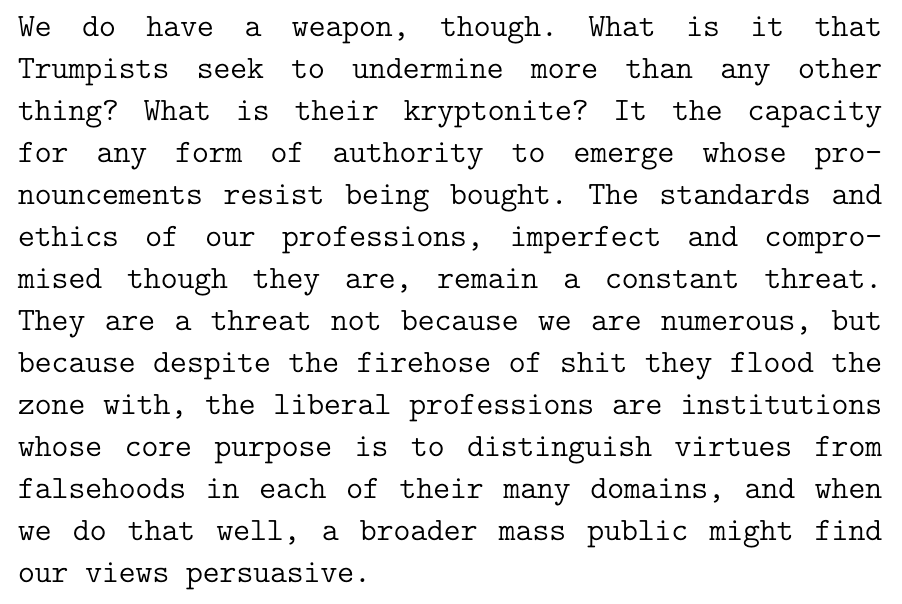
[new draft post] The fiduciary class drafts.interfluidity.com/2026/05/13/the…
English
@[email protected]/interfluidity.com (bsky) retweetledi

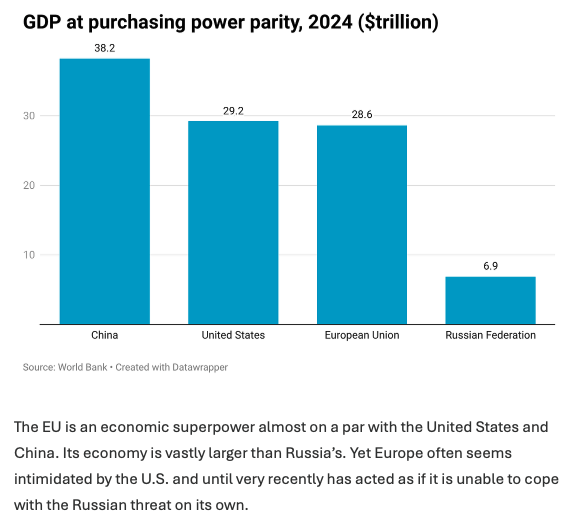
Useful for Europeans to get a reality check on the sometimes paralysing declinism that is gripping the continent.
I suppose it takes the outside perspective of Krugman to deliver it, in a good piece.
paulkrugman.substack.com/p/is-europe-in…

English
@[email protected]/interfluidity.com (bsky) retweetledi

China’s capital allocation system is colossally wasteful at the micro level, but devastatingly effective at the macro level.
It routinely overbuilds, duplicates capacity, funds weak firms, and tolerates enormous inefficiency by Western profitability and shareholder-return standards. Entire sectors can endure years of losses, redundant investment, and brutal overcompetition.
But that “waste” functions as a national-scale incubation system.
It compresses learning curves, drives down costs through overcapacity and competition, builds complete supply chains at extraordinary speed, and ensures that multiple firms survive long enough for a few globally dominant champions to emerge.
The West optimizes for efficient capital allocation and near-term returns.
China optimizes for ecosystem dominance, industrial depth, employment stability, technological catch-up, and long-term strategic positioning.
The result is that what looks irrational at the firm level can become highly rational at the system level. EVs, batteries, solar, drones, shipbuilding, telecom equipment, and increasingly AI infrastructure all reflect this pattern.
Colossally wasteful. Devastatingly effective.
English
@[email protected]/interfluidity.com (bsky) retweetledi

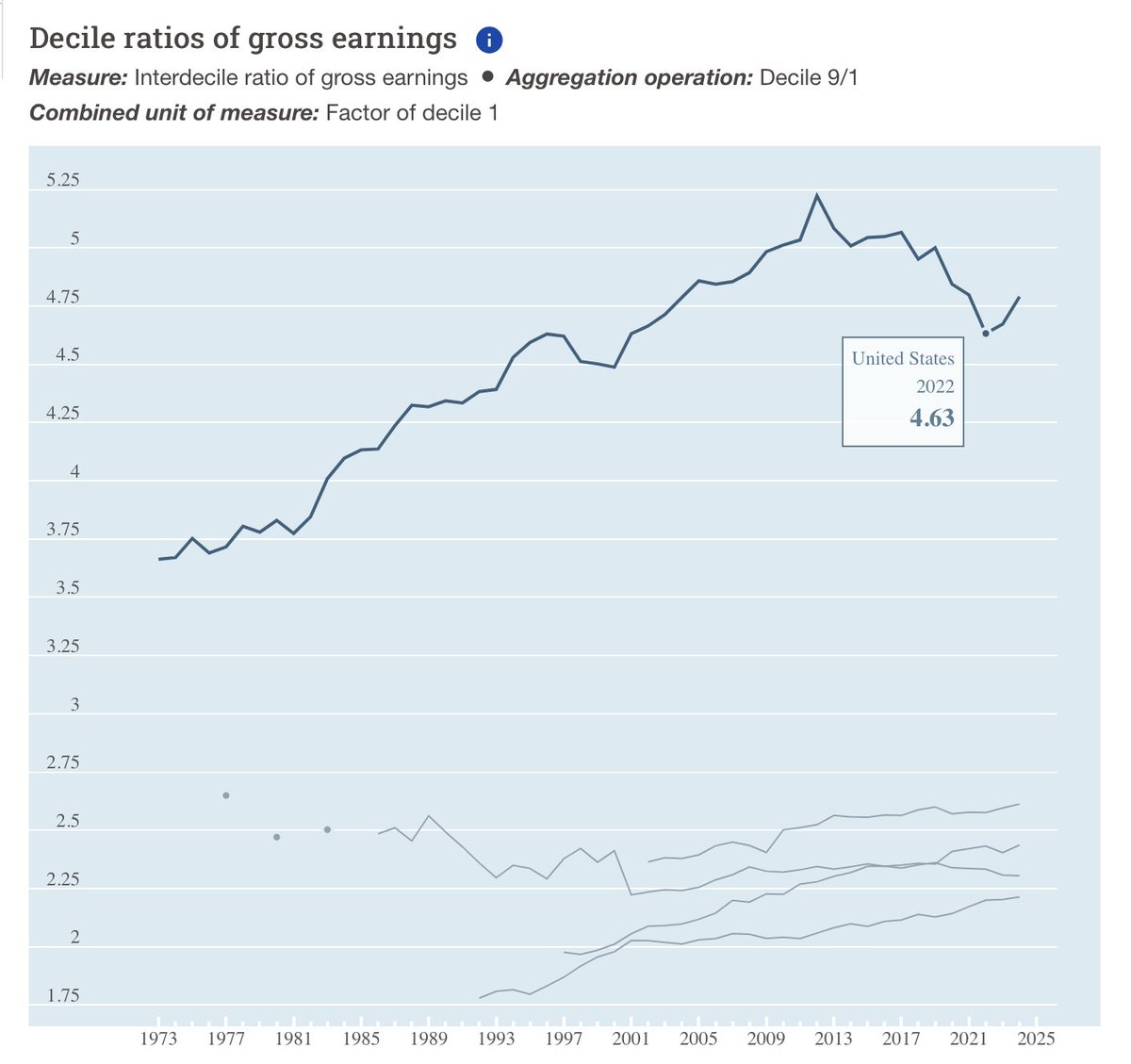
@Noahpinion I don't know that I'd call it "massive". This is the P90 to P10 gross earnings ratio (lines on the bottom are the nordic nations for fun)

English
@[email protected]/interfluidity.com (bsky) retweetledi

@matthewswspence the net effect is (1) business burdens remain unchanged; (2) the individual burden is nearly, though not absolutely, eliminated; and (3) no loss of legibility to the state of income flows. /fin
English

@matthewswspence under the unusual circumstance where individuals receive sizable income from unusual, non-reporting sources, individuals would still face an obligation to report, despite no ultimate income tax burden. but this is a very small fraction of the public. 3/
English

[new draft post] The $200,000 standard deduction drafts.interfluidity.com/2026/05/03/the…
English
@[email protected]/interfluidity.com (bsky) retweetledi

One of the cleanest grids in the world. Uruguay didn’t just go renewable. They used it to stabilise the system.
Fossil peaked ~40% in 2010.
Today ~2%.
Hydro → Wind + Biomass = reliability
98% renewables
From volatility to stability.
Fossil was backup. Now it’s irrelevant. ⚡🇺🇾#Bettrification
And here’s the part most people miss:
Electricity isn’t cheap.
Residential power sits around ~$0.25/kWh.
That’s high by global standards.
Why?
Because Uruguay didn’t optimise for the lowest short-term cost. It optimised for independence, resilience, and reliability.
They built the system first:
– Wind scale
– Biomass for dispatchability
– Grid upgrades
– Interconnection
That has a cost.
But it also removed:
– Fuel price shocks
– Import dependence
– System instability
And here’s where it flips:
As wind, solar and storage continue to scale, cost pressure moves in one direction.
Down.
Uruguay is now positioned to undercut fossil-dependent neighbours over time, as their systems remain exposed to fuel volatility.
This is what a completed system looks like.
Not just clean.
Reliable.
Cost curves follow deployment and cost always wins.

English
@[email protected]/interfluidity.com (bsky) retweetledi

What a truly evil way to treat people who risked their lives for the United States

The New York Times@nytimes
Breaking News: President Trump is said to be in talks to send Afghans who helped the U.S. war effort to the Democratic Republic of Congo. nyti.ms/48fu8Aw
English
@[email protected]/interfluidity.com (bsky) retweetledi