****** retweetledi

Liverpool fans’ success in getting the club to re-think elements of their ticketing strategy will resonate across football. Most clubs have done their ticketing announcements but will note Liverpool’s climbdown. Fans of other clubs will see that well-organised protests work, especially those designed for maximum exposure and embarrassment. Others already have: West Ham fans conducted a successful campaign over the club’s attack on concessions.
Some boards’ behaviour, treating crowds as cash cows, is offensive and counter-productive. It’s wrong for boards to ignore that many fans are hurting given the cost-of-living crisis. It’s wrong to go for multi-year increases. It’s morally wrong and commercially naïve to alienate your most loyal fans. Respect them and they will spend more in the store. Think.
It’s hypocritical when clubs emerged from lockdown, and the soulless, soundless games behind closed doors, promising to appreciate fans more. They did - for a while. It’s also stupid of boards to price out fans who generate the backdrop in sound and vision that TV pays fortunes for. Fans are part of the Premier League spectacle. Tourists are good for the club shop but not for atmosphere. Fans should lobby broadcasters to make clubs see sense.
Clubs brief that hikes are required to cover fees and wages of the stars that fans crave, to improve facilities in the stadium and to guard against PSR breaches. It’s spin. Liverpool would be generating only a reported £1.5m to £2m extra a year from the original planned increases at a club which spent £33m on agents’ fees in a year. That raked in £174.9m from Premier League prize money. That had revenue of £703m last year.
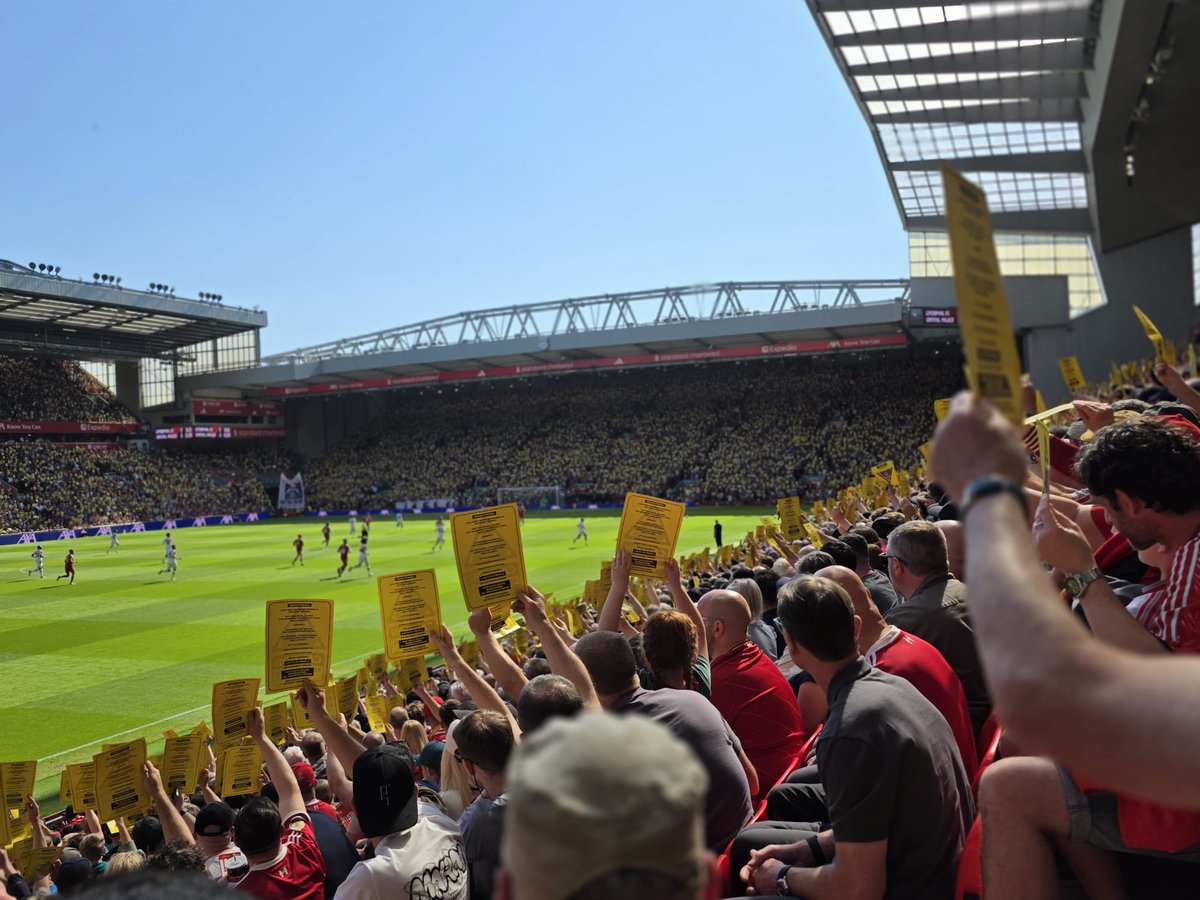
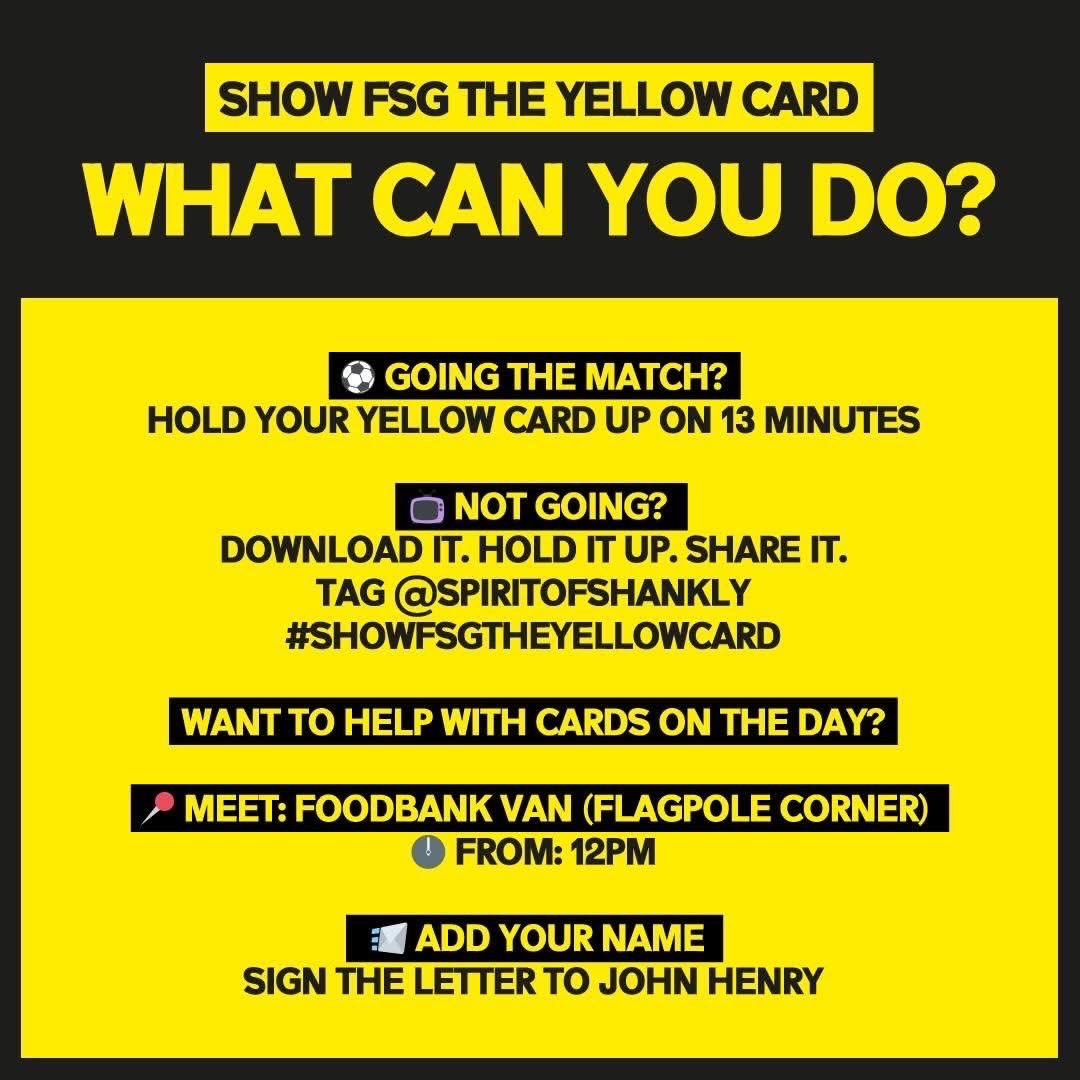
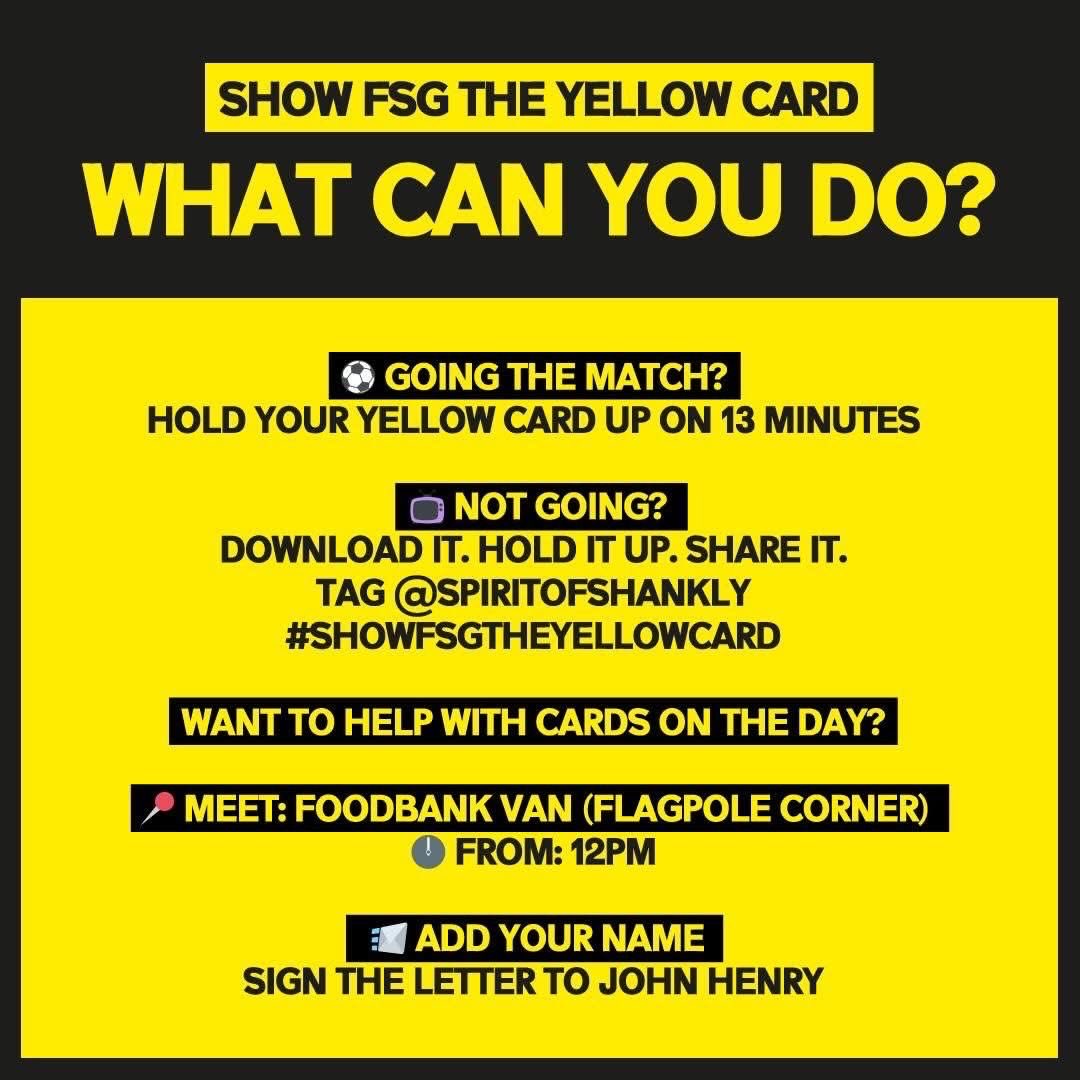
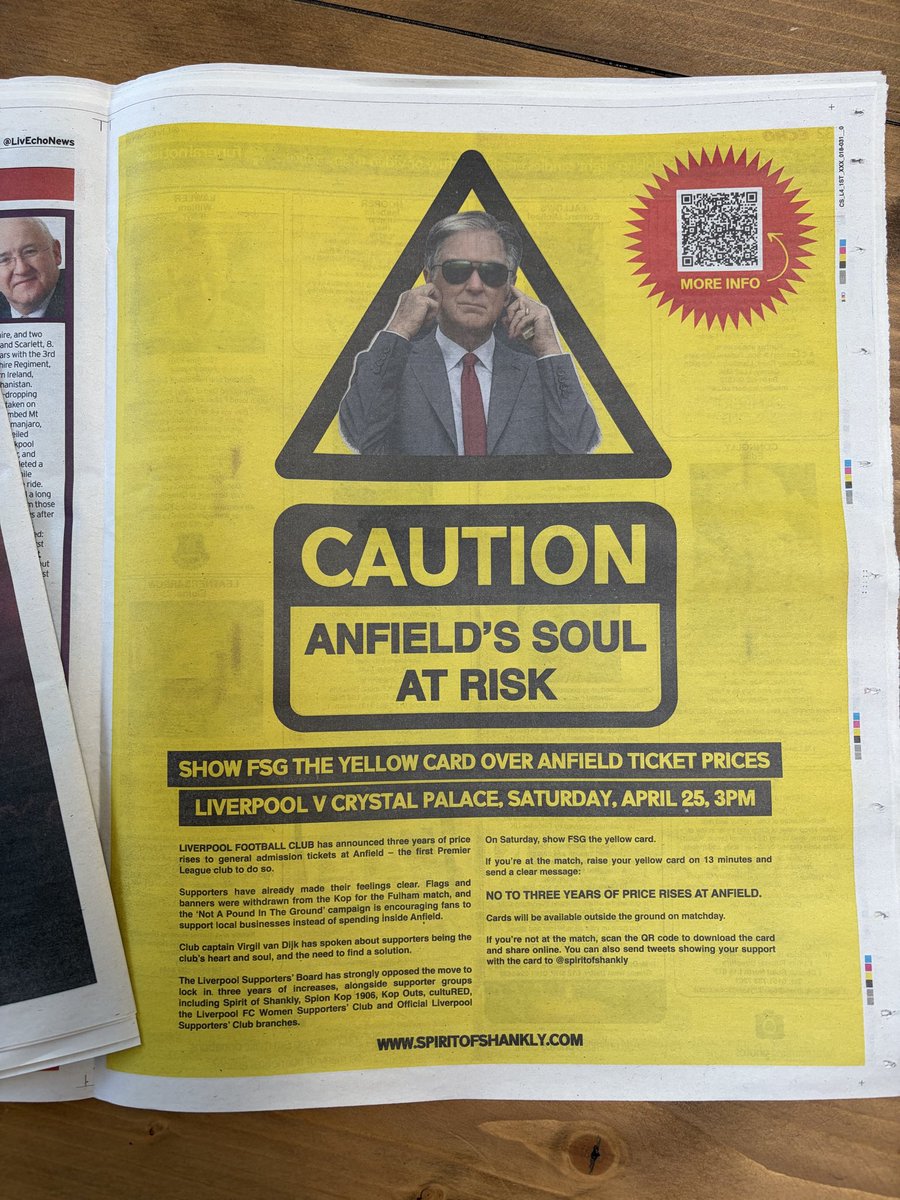
Liverpool fans, ably organised and mobilised by Spirit of Shankly, firmly made their point to club owners Fenway Sports Group with banners “FSG GR££D” and “NO TO TICKET PRICE INCREASES” along the bottom of the Kop during the recent Crystal Palace game. Fans held up yellow cards (75,000 were printed apparently) carrying messages about Fenway. Pictures were immediately posted on social media and beamed by TV around the world. Messaging is instant nowadays.
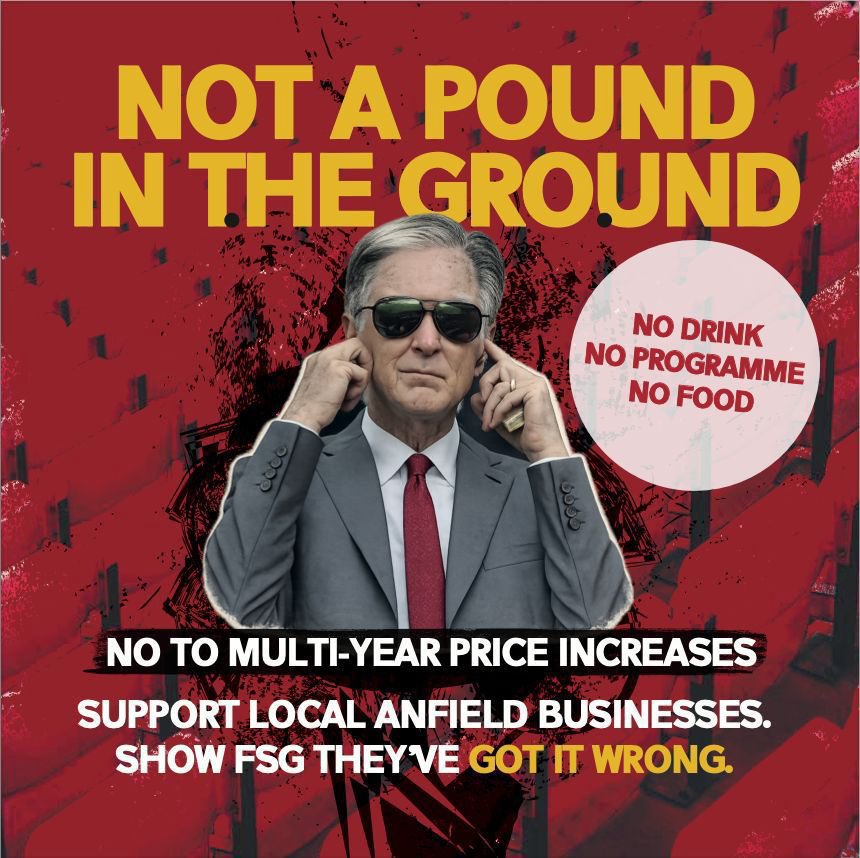
The campaign was sophisticated. Organisers also targeted club coffers with their “not a pound in the ground” campaign to encourage fans to spend their match-day money away from Anfield. During games, they chanted “you greedy b*st*rds, enough is enough”. It was a PR disaster for FSG and the club. And probably expensive financially given fans’ snubbing of in-stadium outlets.
A club historically celebrated for its bond with fans looked unthinking and unfeeling. It needs acknowledging that, overall, John W Henry and FSG have proved good owners – they’ve redeveloped Anfield, added to the squad and to the trophy cabinet. But they occasionally fail to read the room. They fail to listen to good advice.
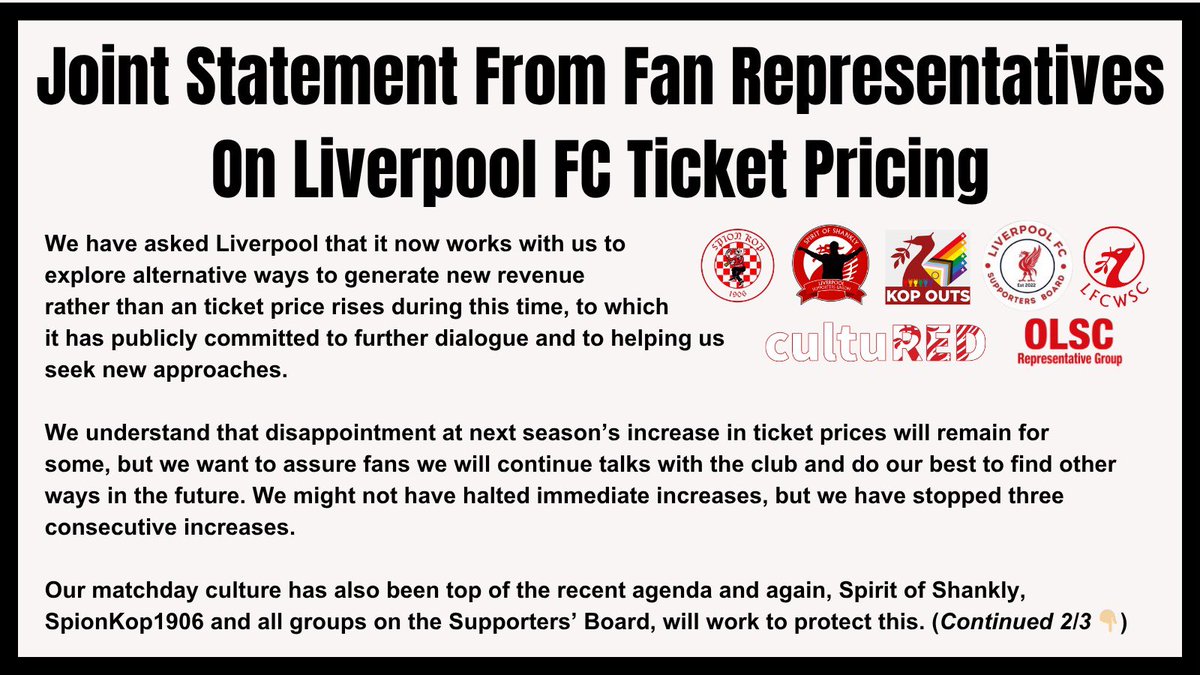
They have made this mistake fairly spectacularly before – on the high ticket prices in the redeveloped Main Stand in 2016, seeing 12,000 fans walk out during a game in protest, and backing the European Super League in 2021, bringing a backlash from fans (and players). They backtracked on both. Now they have spoken to fans, heard the concerns and made a U-turn. GA prices will rise 3% for 26/27, but are frozen for 27/28, instead of three seasons fixed to inflation.
Clubs have to understand that many fans are feeling the pinch, that even the movement of a kick-off time has a knock-on effect to travel plans and costs, that even geo-politics affects those driving to games with petrol more expensive. Fans are also having to pay for more subscription channels.
A club’s own costs would be slightly more manageable if they were collectively more sensible in resisting wage inflation – make salaries even more performance-related - and more clubs made the pathway easier from academy to first team. And listen to fans’ groups before risking own goals. You’re on the same side. #LFC
English