isabel
74 posts



Rick Rubin talks about creativity as a flowing river that must be shared to stay replenished, and I couldn't agree more...
Perfectionism just blocks your flow, and true growth only comes from closing chapters of work and moving on. If you hoard your ideas, stagnation is the only outcome for you. Sharing your work lets new material pass through you. Each piece we create is just a snapshot of who we are at that moment and it is meant to be released, not held back.
English
I would say my main goal when I'm creating something new is simply to be as raw as I can.
I'll see something I like, and I just try and make my own version. it could be simple, like this time it was nothing more than text behind a silhouette and that was all I started with.
I want my designs to feel rough, almost mistreated, like if it was a digital a la prima painting where it's placed once, drawn on once, and left alone. No overworking. No polishing. I want texture, I want grit. I want there to be soul in the work.

English
There's something special about starting a piece carefully and then allowing yourself to destroy it.
It's freeing, and it helps shape it into something completely unexpected.
I've been using this as an opportunity to practice breaking the rules so I can discover something new.

English
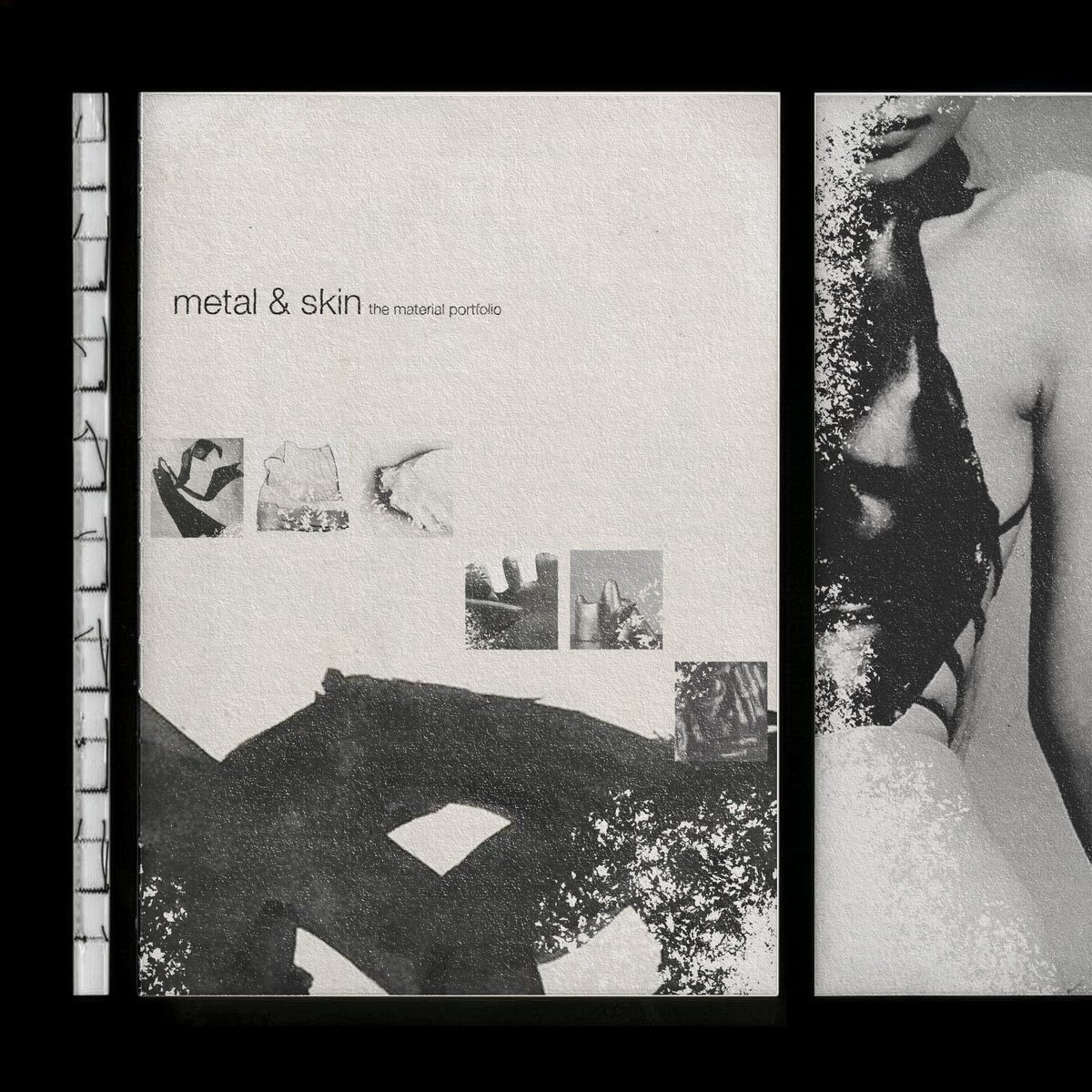
Usually the mockups I make are flat, so today I pushed myself to practice distorting and warping images on a mockup with raised pages.
I've also been thinking about how intimidating making my own mockups used to feel. I think I would've settled with paying for templates if I hadn't forced myself to learn.
It's hard but it's completely changed how I present my work.
Always choose the harder path.

English


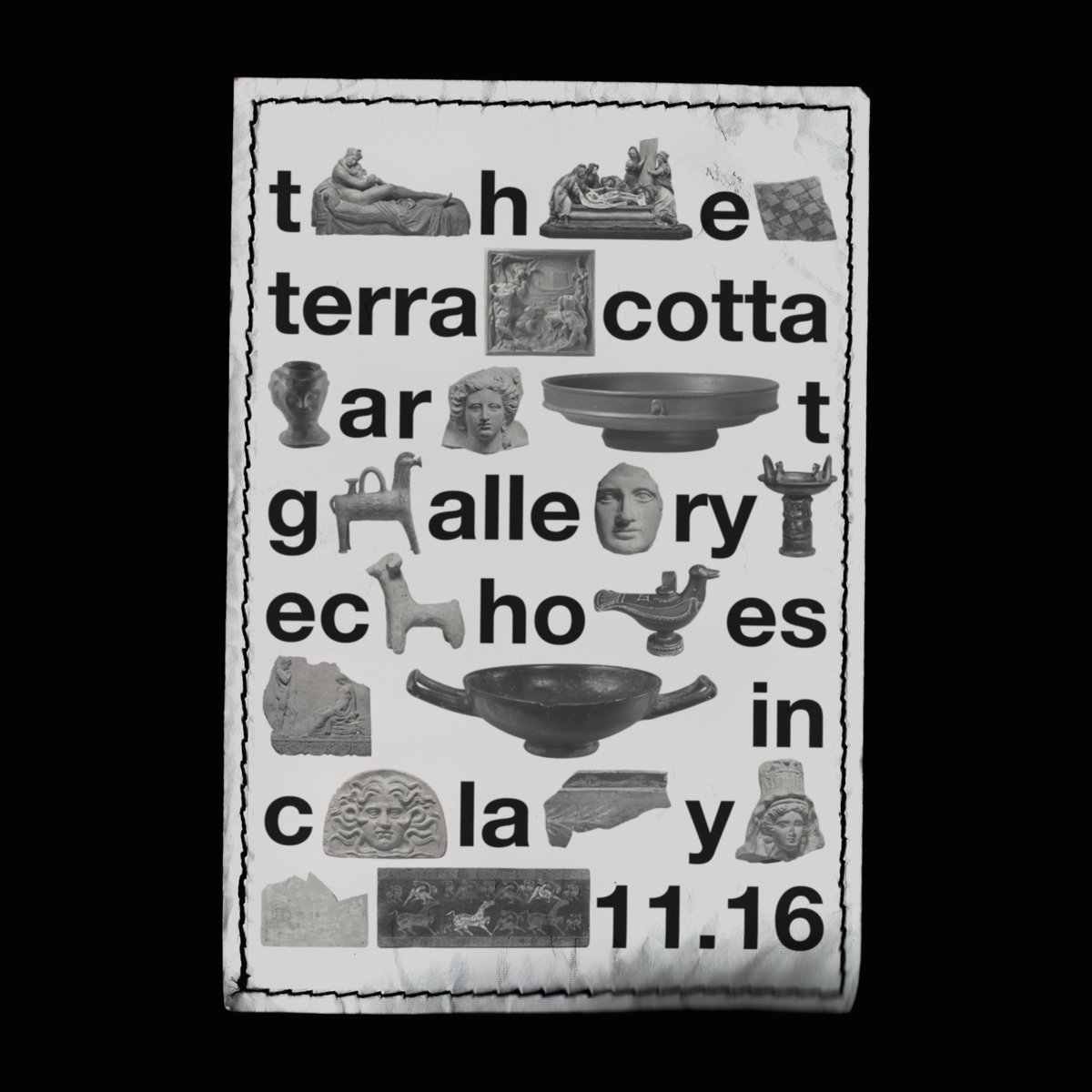
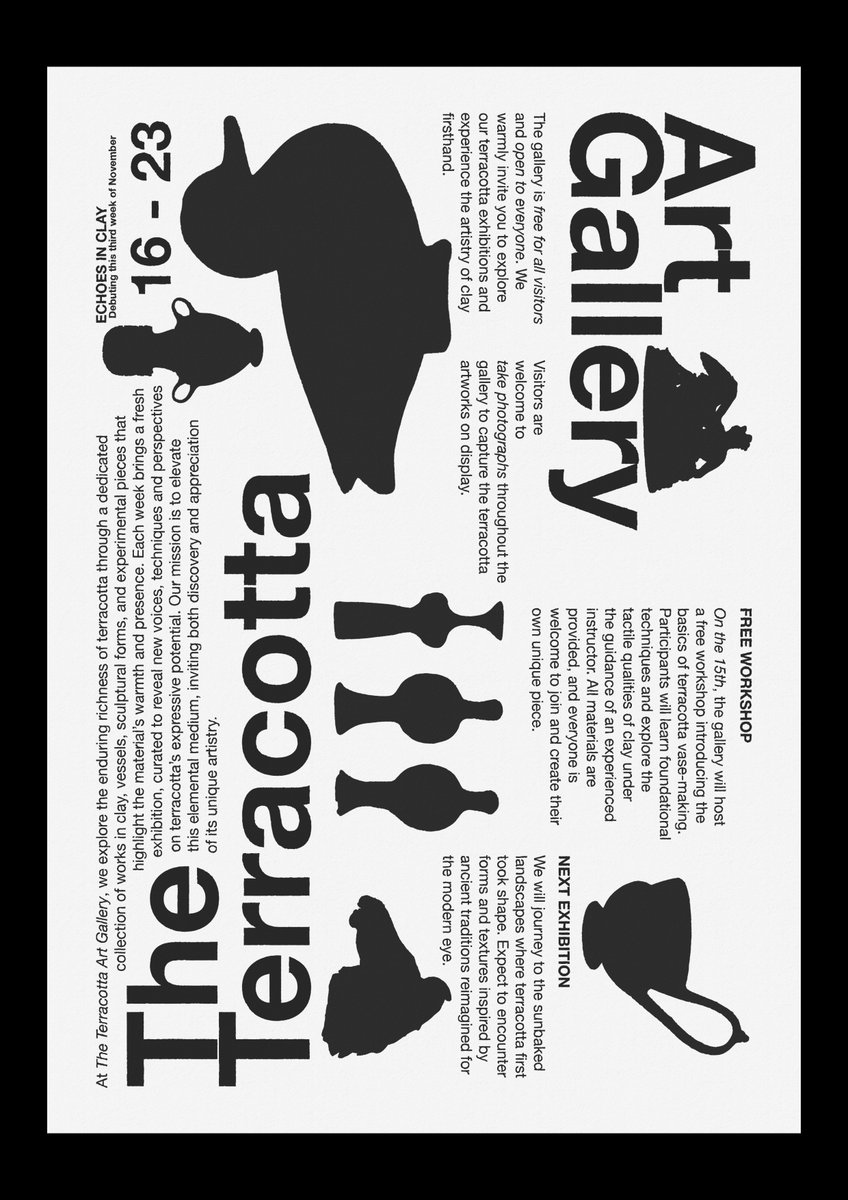
I designed a poster/handout to inform visitors about a new exhibition at the gallery. I liked the idea of darkening the artwork so it encourages people to visit and see it in person.
The layout is divided into four columns and two rows, so that you can rotate it and read from either direction.
English
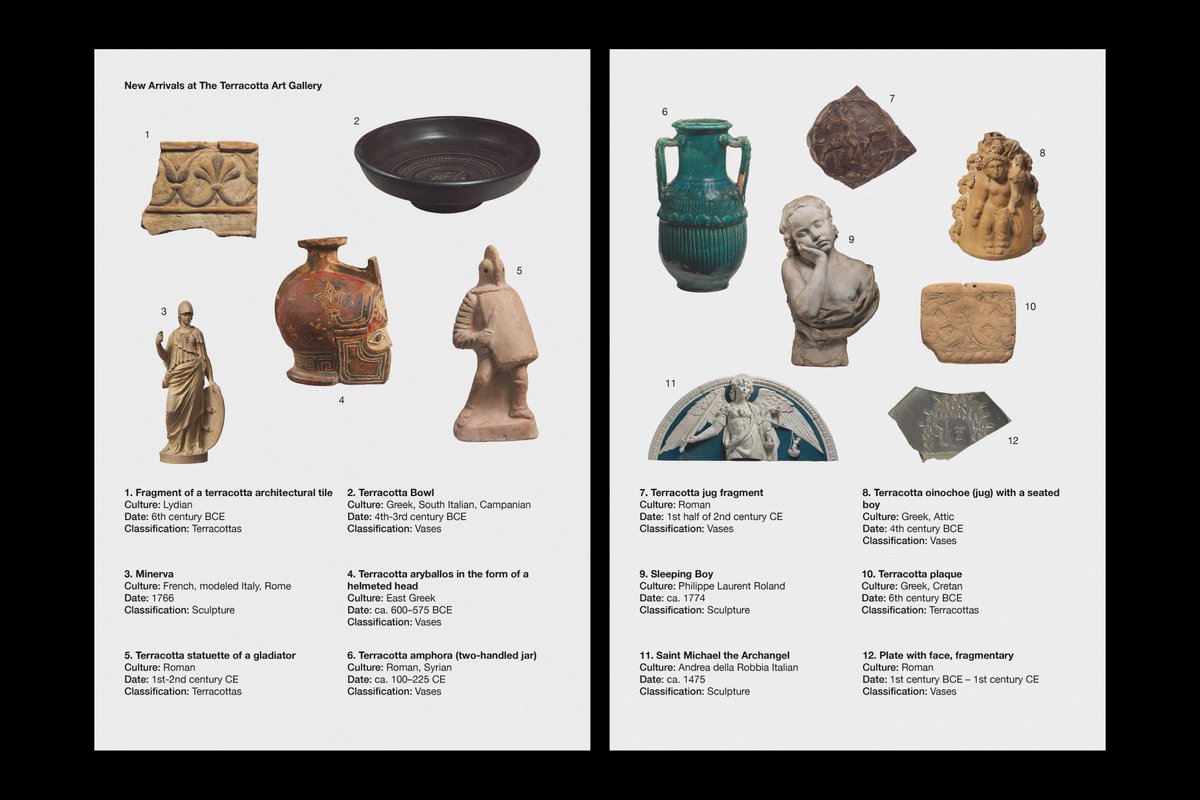
I'm developing a visual brand for an art gallery concept centered around terracotta as part of my portfolio. This piece is a catalog spread featuring new arrivals at The Terracotta Art Gallery.
I'll be sharing more designs as I continue building out this project. This is just the first of many.
English


On choosing a color palette for your designs as an artist or designer.
When picking a color palette you need to think about the emotion you’re trying to convey and also the space your design will live in.
That could be, a digital screen, print, or even a physical space like a wall.
Start with picking a key color and then add colors that are next to it on the color wheel, opposite from it, or lighter or darker tints of that color.
Always make sure to test your colors on different screens, on light and dark modes, and keep in mind your colors will look different digital than in print.
Try documenting the palette. Create a system with your primary colors, your secondary and accent colors, any neutral and background tones, and include specifics like ratios/hex codes.
Every color is a good color, experiment as much as possible. You’d be surprised the amount of interesting combinations you could come up with.
Keep your palette small. Don’t overdo it by adding a ton of colors, the fewer the better.
English