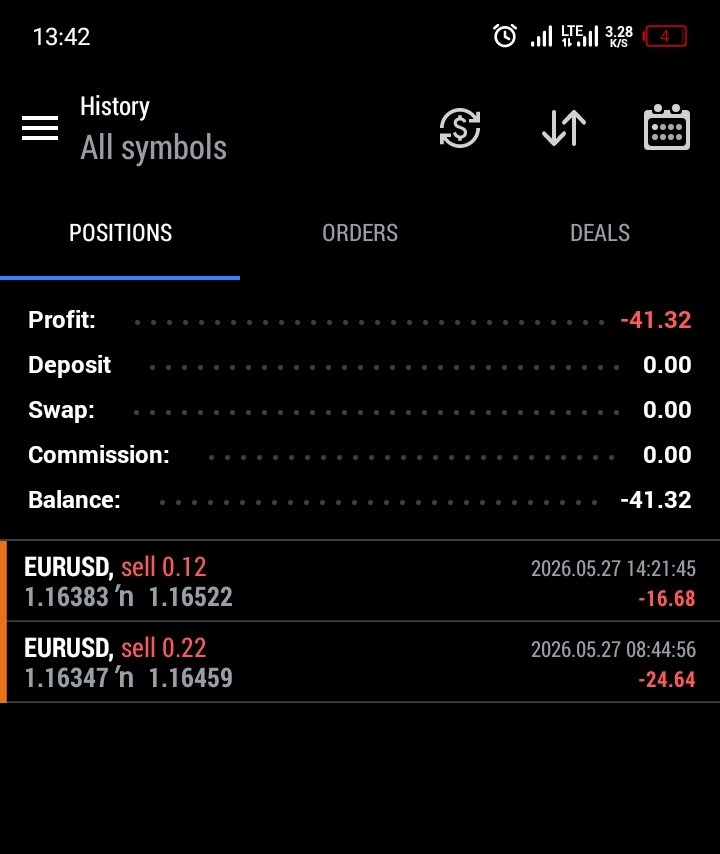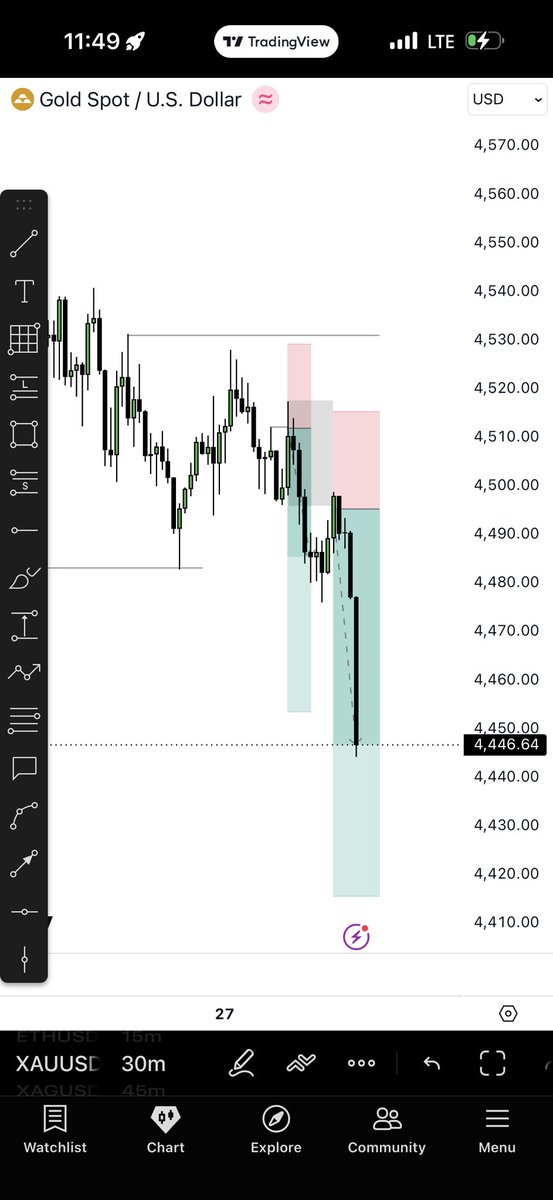
@otialeh_me1 The thing people ought to understand is you can make a profitable trade w/o following rules and a lossing one while following rules. The former is dangerous as it reinforces bad habits
English
I$EU
4.1K posts



🚨💣 BREAKING: Rafa Leão has decided to LEAVE AC Milan this summer. 🔴⚫️👋🏾 “I’m proud as I made history at AC Milan but I want new chapter. I feel ready to play in another league” 👀 “I did my best for Milan, but it’s time to try another challenge”, told @sporttvportugal.








I am a human being with emotions. But wins and losses in trading do not move me emotionally. Many people misunderstand this point. I am not fighting my instincts. I am not suppressing my emotions with strong willpower either. You do not need to become a monk in trading, and you do not need to fight your emotions. In fact, thinking through the route of "fight your emotions and win" is itself one reason many people fail. I am taking a completely different route. I have written this here many times, but much of the fear and anger that appears in trading is not a primary instinctive reaction like reacting to thunder or a loud noise. It is a secondary emotion created by the meaning you assign to the win or loss in front of you. A baby does not feel fear when looking at a chart. Because the baby has not assigned meanings like "loss," "failure," "a verdict on my ability," or "anxiety about life" to the chart. In other words, the problem is not the emotion itself. It is your perception, understanding, and meaning that produce that emotion. What kind of value are you placing on the short term result in front of you. That simply appears as your emotional reaction to wins and losses. That is why I have never told you to eliminate emotions. I have never told you to fight your emotions and win either. What you need is not to suppress the emotion. You need to change the premise that produces that emotion in the first place. When you see someone who is not afraid of flying, you do not think, "This person is a master at suppressing fear." For that person, flying is simply not interpreted as something fearful. Trading is the same. If you interpret a rule based loss as "failure," your emotions will move every time you lose. If you interpret the win in front of you as "success," your emotions will move every time you win. As long as you place value on wins and losses, it is natural that your emotions move with wins and losses. Trying to control emotions in that state is like pressing the accelerator and the brake at the same time. That is why I have not chosen the path of fighting emotions. I understand trading not as a game of wins and losses, but as a probability game. I understand that short term results are random, and that both the wins and losses produced by following the rules are part of the system. I understand that a rule based loss is not something bad, but a necessary cost for drawing out the edge over the long run. And this means nothing if you only know it intellectually. You need to test it, practice through your own hands, and experience again and again how wins and losses are distributed inside a large sample size, including losing streaks and drawdowns, before the edge eventually appears. Then you need a way to bring rules, testing, practice, position sizing, and execution procedures together and make them function as one system. Through the repetition of these experiences, your thought processes and beliefs change. When your beliefs change, the emotions that arise toward the same event also change. I have written about how to make that change here many times, and I also put it together in my book, "Trading Psychology." And the method for bringing rules, testing, practice, position sizing, and execution procedures together and making them function as one system is written in my manual, "Trading System Architecture." I have been showing this path all along. That is why I am not desperately suppressing my emotions during trading. I simply do not interpret the win or loss in front of me as my own success or failure. If I lose according to the rules, the system simply produced a necessary loss. If I win according to the rules, the system simply produced a necessary gain. My job is not to react to those wins and losses. My job is to act according to the system's instructions, keep collecting high quality samples under the same conditions, and draw out the system's edge over the long run. Unless you understand this point, no matter how much you learn emotional control, the emotional problems you face during trading will never be solved at the root. The emotions you feel are not created by the market in front of you. They are created by the meaning you assign to that market and to wins and losses.
Listen carefully if you want success