isometric

19 posts

isometric banner
isometric

isometric

@isometricmkts

a new defi primitive— isometric replaces binary prediction markets with continuous curve derivatives.

Katılım Mart 2026
0 Takip Edilen143 Takipçiler
Sabitlenmiş Tweet
isometric
isometric@isometricmkts·
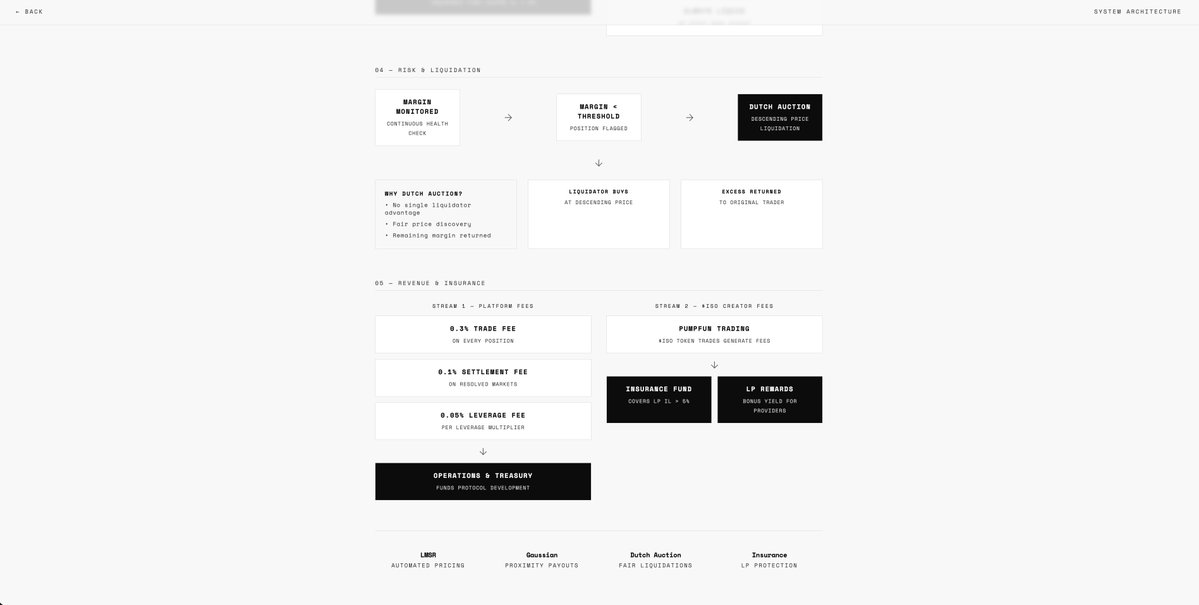
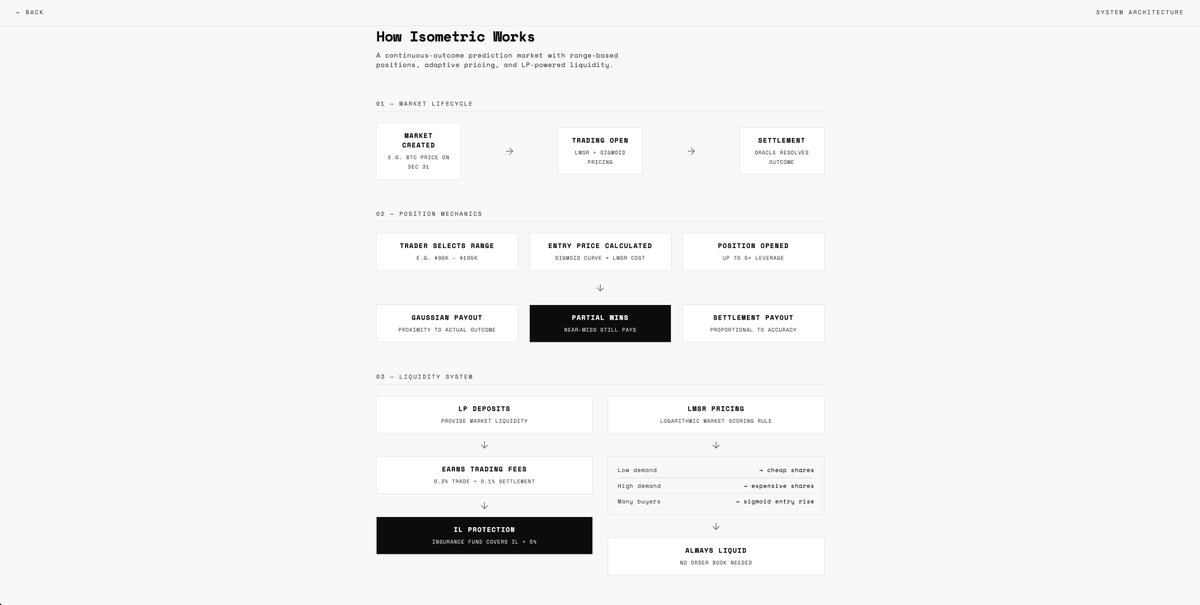
To simplify the flow of the Isometric system in layman terms, we've created a System Architecture diagram that takes the user through the entire layout, from top to bottom, of the Isometric system architecture. Let's take a dive into it below isomkts.com/system Isometric has created the novel concept of a continuous-outcome prediction market with range-based positions and a dynamic pricing & payout system; this system allows for a more incentivized platform for both liquidity providers and traders alike. 1. Market Lifecycle Contrary to typical products within the space currently, Isometric does not use binary outcomes for our prediction markets. We've elevated the concept and have taken it a step further. When a market is created on Isometric, users are instantly able to begin trading it. However, Isometric allows for users to trade the range rather than the definitive outcome (if the market is for the price of Bitcoin to be $90k on December 31st, users are able to trade any range they set (for example $70k - 110k)). Utilizing LMSR (Logarithmic Market Scoring Rules) and Sigmoid Pricing (both of which will be explained in the next section in this thread), Isometric allows for a range to be traded rather than a binary outcome with payouts being algorithmically handled via a Gaussian distribution— every position receives a payout proportional to its accuracy rather than a "I was 0.01% off and received nothing" situation. No more binary resolutions where traders need to be 100% right or wrong. Markets are resolved through a multi-layered oracle design which minimize single-point-of-failure and resist manipulation; no more last-minute manipulations that result in unnecessary damages. 2. Position Mechanics Isometric position mechanics are the biggest deviation that Isometric utilizes when it comes to other similar protocols. Through the usage and manipulation of LMSR, Isometric extends a prediction market from a conventional discrete outcome to a continuous range (e.g. instead of betting that Bitcoin will be $90k by December 31, you are able to bet the range). No more all-or-nothing positioning that consistently leaves traders dissatisfied; LMSR prices the market. With the introduction of Sigmoid Bonding Curves into the Isometric model, which prices individual range within a market, a local supply/demand dynamic is able to be created within each range bucket. We've opted for a Sigmoid curve rather than linear or polynomial curves commonly used in similar protocols for a variety of reasons: - Linear bonding curves create a uniform price increase which creates zero incentive for early conviction trades within markets. - Polynomial curves make late entries incredibly expensive due to unbounded growth; this creates zero incentive for mid-to-late conviction trades which, in turn, create a more fragile ecosystem where large exits can crash individual market prices. - Sigmoid curves are intended to be the ideal middle-ground for the mathematics of both curves— Isometric Sigmoid curves allow for incentivized early conviction through cheap early entries which are rewarded through accelerated mid-range pricing mechanics while late-stage entrants aren't priced out entirely as they're bounded; the market remains accessible and fluidly incentivized for all entrants at all time points within the market cycle. After entering a positional range within a market as a trader, traders can simply wait for a payout. Isometric does not do conventional binary payouts and instead creates a ranged payout system that rewards proximity and accuracy but does not punish incorrectness to the extent that typical products do. Through the usage of Gaussian kernels which allow for ranges to be paid (similar to how LMSR allows for ranges to be traded and Sigmoid curves allow ranges to be priced), Isometric elevates payouts to a much higher level. To exemplify this concept, imagine this scenario: - Trader 1 has decided to set their traded range for the "Bitcoin is $90k by December 31st" to $80k - $100k. - Trader 2 has decided to set their traded range for the same market to $88k - $93k. Since Trader 2's range is tighter and the price falls within that range (about directly in the middle of their range), they'd receive a ~900% gain on their position. Trader 1 would also win with about a ~400% gain as the price also falls directly in the middle of their range but, as their range is much wider, their payout is less than Trader 2's high-conviction positional range. Both traders had correct positional ranging, but higher conviction pays more. No more all-or-nothing binary outcomes. 3. Liquidity Another deviation from conventional products in the space lies within Isometric's liquidity system. Isometric combines the best properties of AMMs and rebuilds the model to be fit for the dynamic prediction market that Isometric offers. Liquidity providers are incentivized to provide liquidity deposits into markets through the Isometric Insurance Fund (funded by creator fees + platform fees); this insurance fund creates an impermanent loss threshold and caps it past that threshold— liquidity providers always know their ceiling risk prior to providing liquidity which allows for a passive position management scenario and much more incentivized participation.
isometric tweet mediaisometric tweet media
English
28
16
39
2.4K
Duy Cao
Duy Cao@duycaoxyz·
the gaussian payout framing is underrated. binary outcomes are such a brutal ux problem and i think most people building in this space just... accept it because that's how prediction markets have always worked. but "near-misses still pay" is actually a huge deal for trader retention. people don't stop playing poker because they almost won a hand. the lp side is what i kept running into when building something similar. sourcing liquidity for long-tail numerical markets is basically impossible if you need a counterparty to show up first. we ended up going a different direction, bonding curves per outcome so the market is liquid from the moment it's created, no lp recruitment needed. tradeoffs obviously but it unlocked markets nobody would otherwise bother listing. would love to swap notes sometime, a lot of overlap in the problems we're chasing
English
1
2
3
516
isometric
isometric@isometricmkts·
@duycaoxyz Absolutely! Feel free to send a message and we can discuss and swap notes! Great to see like-minded people and projects building in this direction!
English
0
0
0
45
isometric
isometric@isometricmkts·
We would like to clarify that the LPing redesign is a minor part of a much bigger picture. Isometric is basically an AMM (like Meteora) and a prediction market (like Polymarket)— the insurance fund feeds into the LP end of it. On conventional platforms like Polymarket, people bet a yes/no outcome for a market like "Will Bitcoin hit $90k by July 4th." On July 4th, let's imagine Bitcoin is sitting at $91k. Everybody who bought the yes would win! That's great, however, people who bought the no would lose the entirety of their value. That is a horribly inefficient system where only one party/side wins. Isometric flips this model (binary outcomes) entirely through the usage of our continus curve derivatives. On Isometric, liquidity providers would instead create a market of a simple "What is Bitcoin's price by July 4th." Traders then have the ability to bet entire ranges rather than binary outcomes; for example, a trader on Isometric could bet the range of Bitcoin being $80k to $100k by July 4th. Through the use of a Gaussian payout system, traders get payouts based on their proximity to the actual outcome; tighter ranges have better payouts but near-misses STILL have payouts unlike conventional markets. Your payout is proportional to your accuracy. If you would bet the range of Bitcoin being $80k to $100k by July 4th, and then on July $4th, Bitcoin is sitting at $89k, you'd win a proportional payout. On conventional markets, you'd only win if Bitcoin is >= $89k. Near-misses still pay with Isometric, LPers have a capped downside with Isometric; both sides of the trading system wins. There is an immense flywheel in play at Isometric that is wildly more efficient than any conventional model or platform in the space.
isometric@isometricmkts

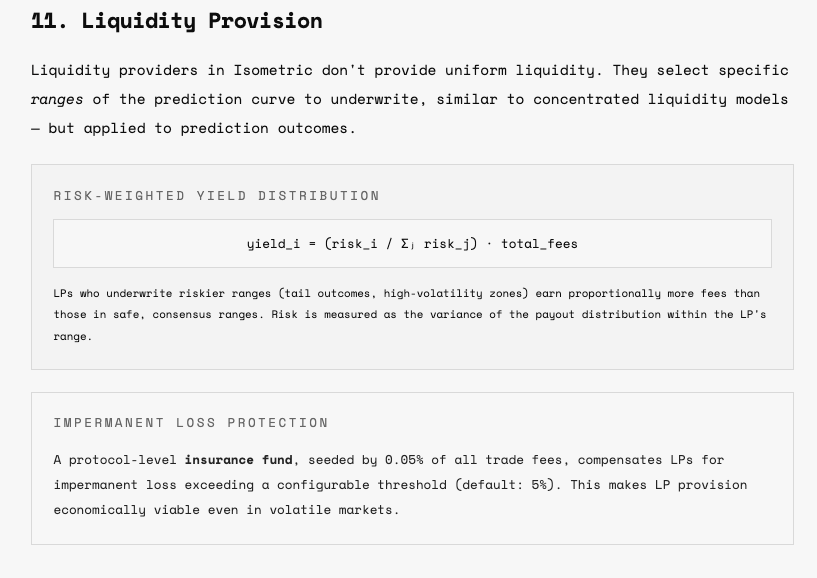
The Isometric Insurance Fund is up to $401.42! What IS this Insurance Fund and what is it used for? The Isometric Insurance Fund is a protocol-level insurance fund that is Isometric's core LP protection mechanism — a dedicated reserve that absorbs impermanent loss beyond a fixed threshold, making range-based liquidity provision viable for non-professional participants. This fund is seeded by 0.05% of all trade fees on-platform and through creator fees funded through $ISO trading, compensates LPs for impermanent loss exceeding a configurable threshold (default: 5%). The Insurance Fund is designed to completely flip the current status quo of traditional LP economics models by capping out impermanent loss for liquidity providers— passive LPs have the ability to set ranges (similar to bin ranges on AMMs like Meteora) for prediction markets and earn fees without perpetual and active monitoring. The introduction of an insurance fund incentivizes liquidity providers to provide a heavier stream of liquidity to fund markets on Isometric which creates a more promising platform for traders and speculators; this creates a perpetual self-serving flywheel where users are incentivized to provide liquidity, which creates further incentive for on-platform activity which funds a larger insurance fund and the cycle resets. Isometric is creating an entirely new model for both AMMs, prediction markets, and generally-used models across both industries.

English
50
26
64
1.4K
isometric
isometric@isometricmkts·
Excellent thread @thenarrator! We're building a similar concept over here at Isometric where our platform lies at the intersection of AMMs and prediction markets!
good@thenarrator

prediction markets and perp dexes are converging the real innovation is happening at the AMM layer and pmx previously showed us what this looks like in practice this matters because traditional prediction markets are isolated > you place a bet on a closed platform, your capital sits locked until resolution, and you can't do anything else with your position (betting infrastructure disguised as a market) pmx flipped this by plugging prediction markets directly into defi's liquidity backbone > they used meteora's DAMM v2 pools on solana where someone creates a market, raises $ from the community through a presale to prove demand, then yes and no tokens get minted and migrated into meteora pools from that moment those outcome tokens are tradeable across every solana dex on this model you buy a yes token and it behaves like any other asset in defi (you can LP it, swap it, arb it across venues, and eventually use it as collateral) your prediction becomes a composable financial position and not a locked bet the pumpfun graduation mechanic is clever too: > markets need to prove community interest before going live, which means only markets with real demand get liquidity > no more empty order books on markets nobody cares about > the market itself bootstraps its own liquidity through the presale, then plugs into existing infrastructure that already has millions in daily volume this is where the perp dex convergence gets interesting imo: once prediction market outcomes live inside the same liquidity layer as every other defi primitive, the line between trading a token perp and trading an event outcome disappears (think hyperliquid ecosystem in a near future) the platforms that understand prediction markets as defi primitives rather than standalone betting products will define the next generation composable outcome tokens inside shared liquidity infrastructure are where i think we are headed HYPE

English
3
6
9
4.1K
isometric
isometric@isometricmkts·
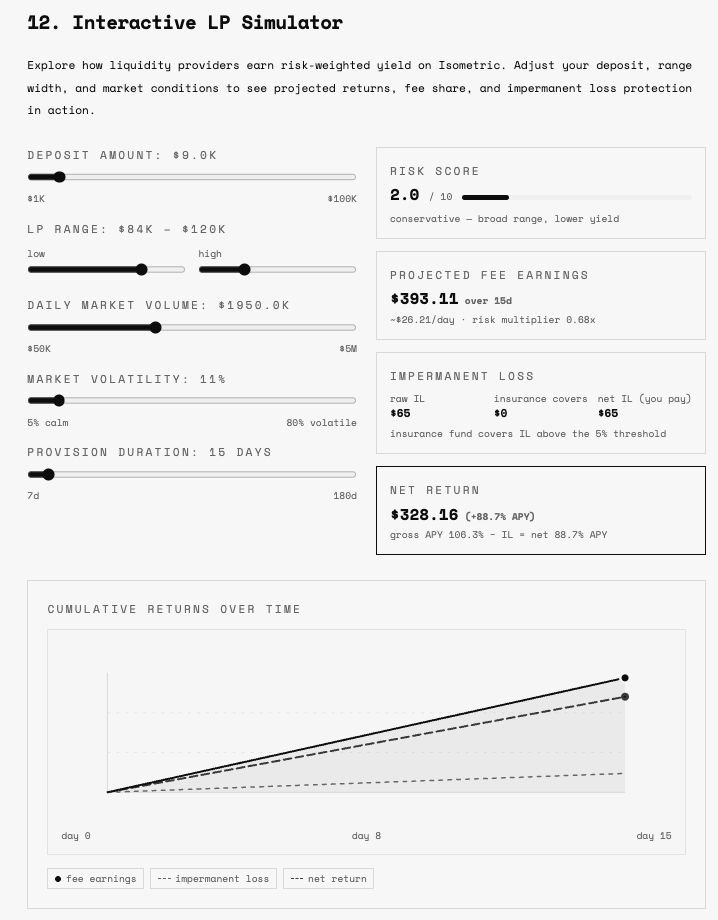
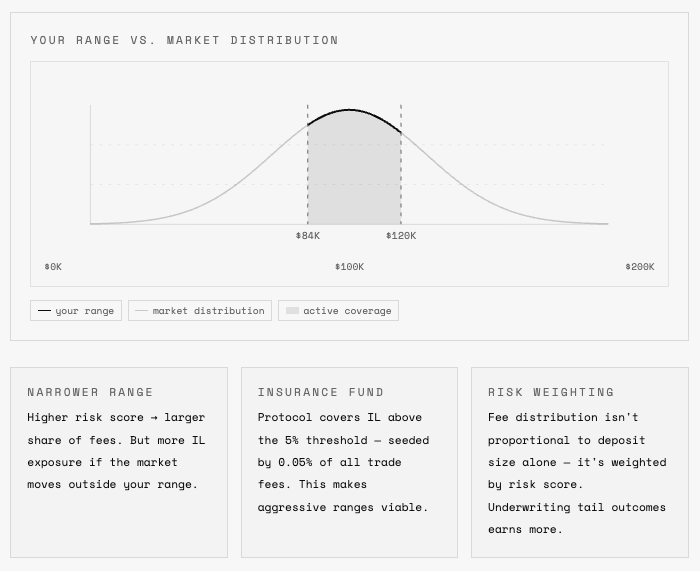
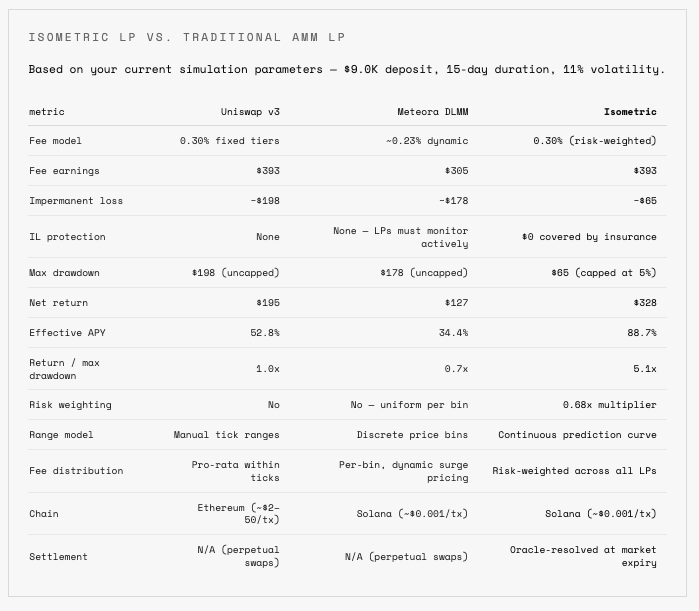
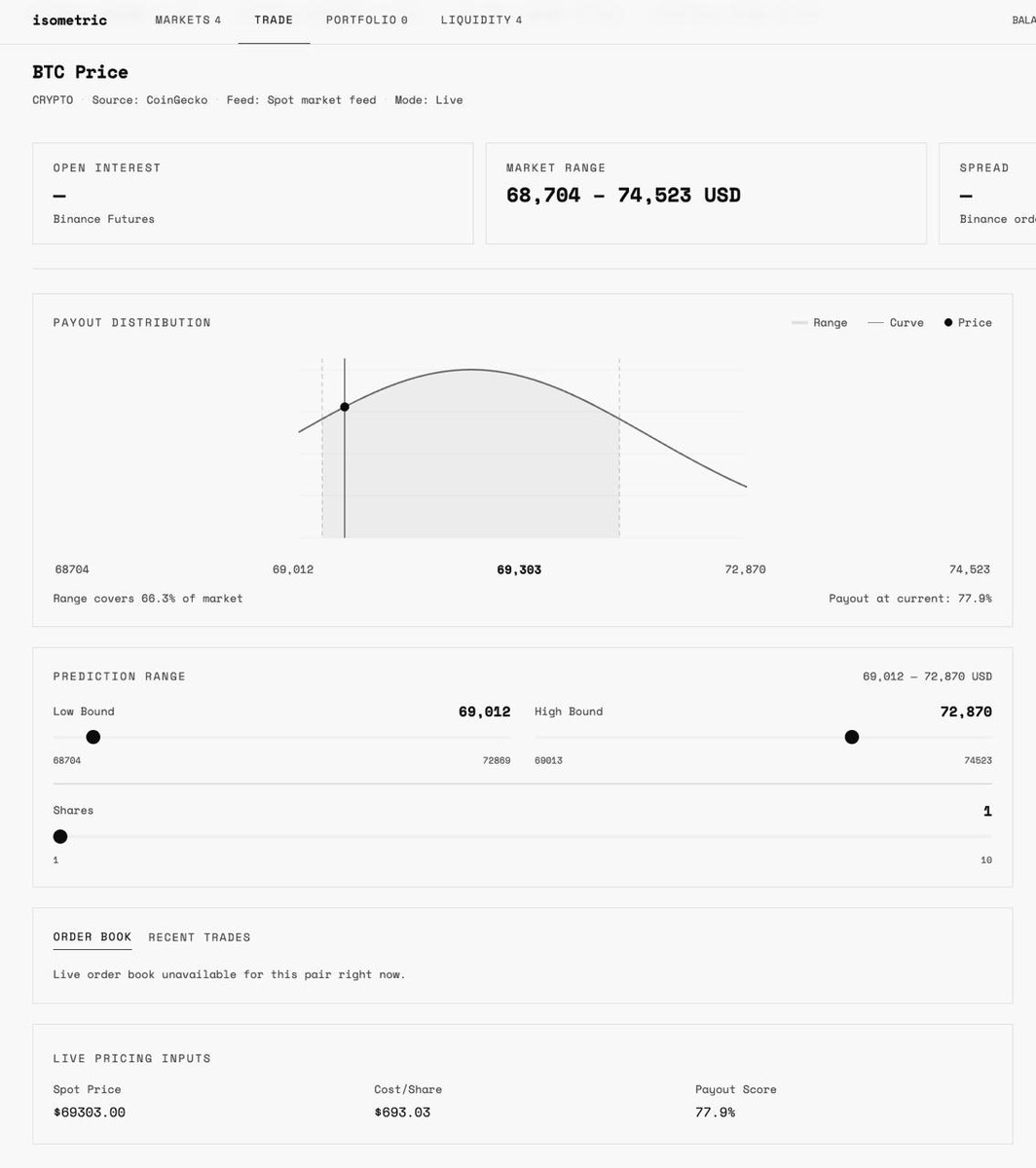
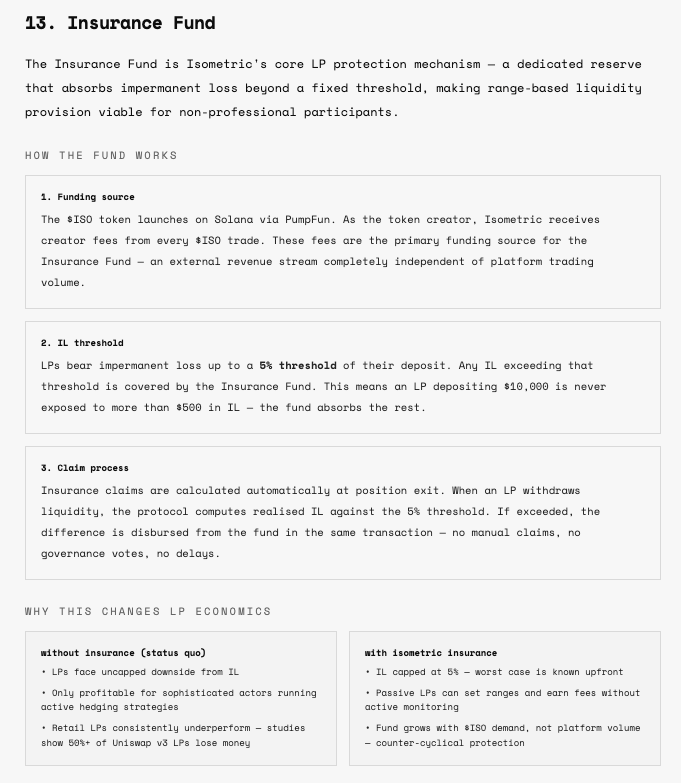
The Isometric Insurance Fund is now at ~$530. Fees generated from trading via creator fees along with on-platform trading flow directly into the insurance fund to incentivize liquidity providers in two ways: 1. Liquidity providers experience a completely passive and hands-off provisional liquidity management— through the usage of the Isometric Insurance Fund, their impermanent loss is capped out at a maximum threshold (set at 5%). Liquidity providers no longer experience having to actively monitor their positions; they know their maximum drawdown before entering a position. 2. Maximized fee earnings incentivize liquidity providers with a more favorable upside gain than conventional protocols through our range-based system rather than binary outcomes. We took the concept of an AMM, elevated it for single-sided liquidity provisions and then injected it into the core Isometric infrastructure. These two concepts, while simple in retrospect, are novel models created specifically for the Isometric platform and create a much more favorable environment for liquidity providers by capping drawdown through the Insurance Fund and maximizing upside through range-based markets. All concepts and mathematical models created for Isometric are designed to ebb and flow with each other in harmony to create a strongly-incentivized environment for both liquidity providers and traders alike. We've attached a simulation ran directly on our whitepaper to exemplify the various variables in play with providing liquidity on the Isometric platform.
isometric tweet mediaisometric tweet mediaisometric tweet mediaisometric tweet media
isometric@isometricmkts

The Isometric Insurance Fund is up to $401.42! What IS this Insurance Fund and what is it used for? The Isometric Insurance Fund is a protocol-level insurance fund that is Isometric's core LP protection mechanism — a dedicated reserve that absorbs impermanent loss beyond a fixed threshold, making range-based liquidity provision viable for non-professional participants. This fund is seeded by 0.05% of all trade fees on-platform and through creator fees funded through $ISO trading, compensates LPs for impermanent loss exceeding a configurable threshold (default: 5%). The Insurance Fund is designed to completely flip the current status quo of traditional LP economics models by capping out impermanent loss for liquidity providers— passive LPs have the ability to set ranges (similar to bin ranges on AMMs like Meteora) for prediction markets and earn fees without perpetual and active monitoring. The introduction of an insurance fund incentivizes liquidity providers to provide a heavier stream of liquidity to fund markets on Isometric which creates a more promising platform for traders and speculators; this creates a perpetual self-serving flywheel where users are incentivized to provide liquidity, which creates further incentive for on-platform activity which funds a larger insurance fund and the cycle resets. Isometric is creating an entirely new model for both AMMs, prediction markets, and generally-used models across both industries.

English
4
5
13
1.3K
isometric
isometric@isometricmkts·
We'll be releasing demos later tonight for the platform and devnet access later this week for preliminary testing! Additionally, we'll be personally funding the first several markets to kickstart platform liquidity— the insurance fund is at about ~$500, so we'll have everything rolling soon!
isometric tweet media
English
4
6
10
837
isometric
isometric@isometricmkts·
The Isometric Insurance Fund is up to $401.42! What IS this Insurance Fund and what is it used for? The Isometric Insurance Fund is a protocol-level insurance fund that is Isometric's core LP protection mechanism — a dedicated reserve that absorbs impermanent loss beyond a fixed threshold, making range-based liquidity provision viable for non-professional participants. This fund is seeded by 0.05% of all trade fees on-platform and through creator fees funded through $ISO trading, compensates LPs for impermanent loss exceeding a configurable threshold (default: 5%). The Insurance Fund is designed to completely flip the current status quo of traditional LP economics models by capping out impermanent loss for liquidity providers— passive LPs have the ability to set ranges (similar to bin ranges on AMMs like Meteora) for prediction markets and earn fees without perpetual and active monitoring. The introduction of an insurance fund incentivizes liquidity providers to provide a heavier stream of liquidity to fund markets on Isometric which creates a more promising platform for traders and speculators; this creates a perpetual self-serving flywheel where users are incentivized to provide liquidity, which creates further incentive for on-platform activity which funds a larger insurance fund and the cycle resets. Isometric is creating an entirely new model for both AMMs, prediction markets, and generally-used models across both industries.
English
11
2
24
3.6K
isometric
isometric@isometricmkts·
Quick reminder that Isometric's whitepaper contains a plethora of pertinent protocol information regarding everything from system architecture, payout and entry algorithms, price-auction simulators, and so much more. We're entirely aware that the Isometric continuous curve model is an abstract concept which is why we spent a very long time building out the extensive whitepaper. Our Telegram is open for any questions, along with messages on X, for anybody that may have lingering questions. The Isometric continuous curve model is the evolution of current products in the space and we're dedicated to proving that. We appreciate all the support for Isometric so far! The Isometric whitepaper is located at: isomkts.com/whitepaper
English
51
21
60
1.6K
isometric
isometric@isometricmkts·
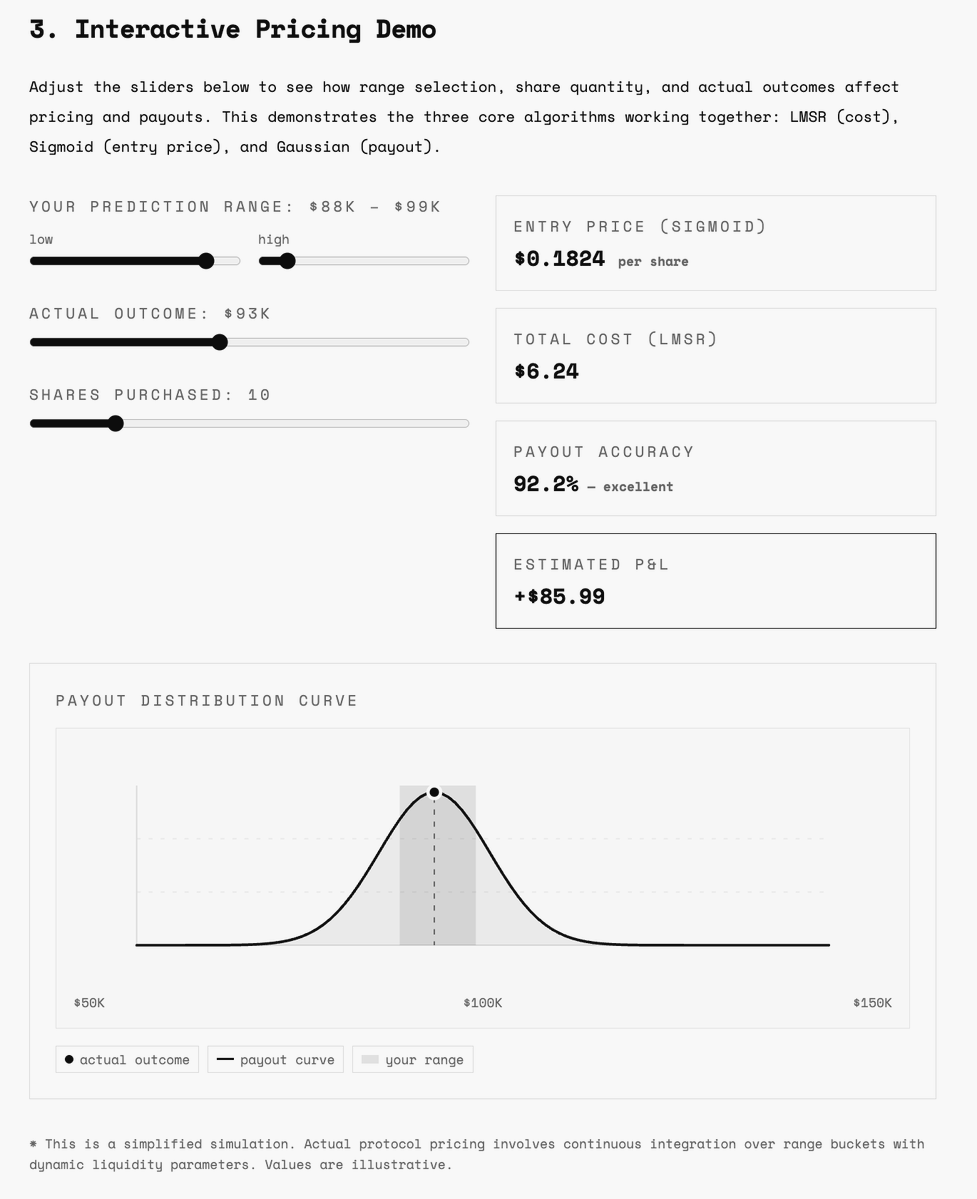
Continuous Curves versus Binary Outcomes: Isometric's Model. We've created our platform centered around a core concept: traders should not be inherently penalized due to a mispriced trade. Isometric has created the novel concept of continuous curve derivatives. What does this mean? 1. Traders are rewarded based on proximity rather than a yes/no decision. 2. People trade ranges rather than binary outcomes. In the example below from the simulator within the Isometric whitepaper, a predicted range of $88k - $99k for Bitcoin by X date was traded; in conventional products, a user would have to trade something along the lines of "Will Bitcoin reach X amount by X date). Hypothetically, if Bitcoin reached $93k by the deadline, users trading with conventional prediction markets would lose the entirety of their value if Bitcoin was not at 93k exactly. With Isometric's model of proximity-based rewarding, users are rewarded on a continuous range meaning even if Bitcoin didn't reach $93k and instead only hit $92k, they would still successfully have a payout.
isometric tweet media
English
48
24
59
1.2K
isometric
isometric@isometricmkts·
what are the benefits of Isometric versus conventional products when providing liquidity? the biggest deviation that isometric makes from platforms currently available is the usage of an insurance fund— this fund is perpetually filled through the two core isometric streams: creator fees and platform-based revenue. unlike platforms that allow liquidity providers to incur a limitless drawdown from impermanent loss or a binary loss, isometric caps impermanent losses at 5% through the usage of the insurance fund. your worst-case scenario is always known at isometric when provisioning liquidity into an established market. the usage of the isometric insurance fund incentivizes larger liquidity provisions from various sources which allow deeper markets, which, in turn, allow for the core isometric concept of continuous curve derivatives to come to fruition.
isometric tweet media
English
53
20
61
755
isometric
isometric@isometricmkts·
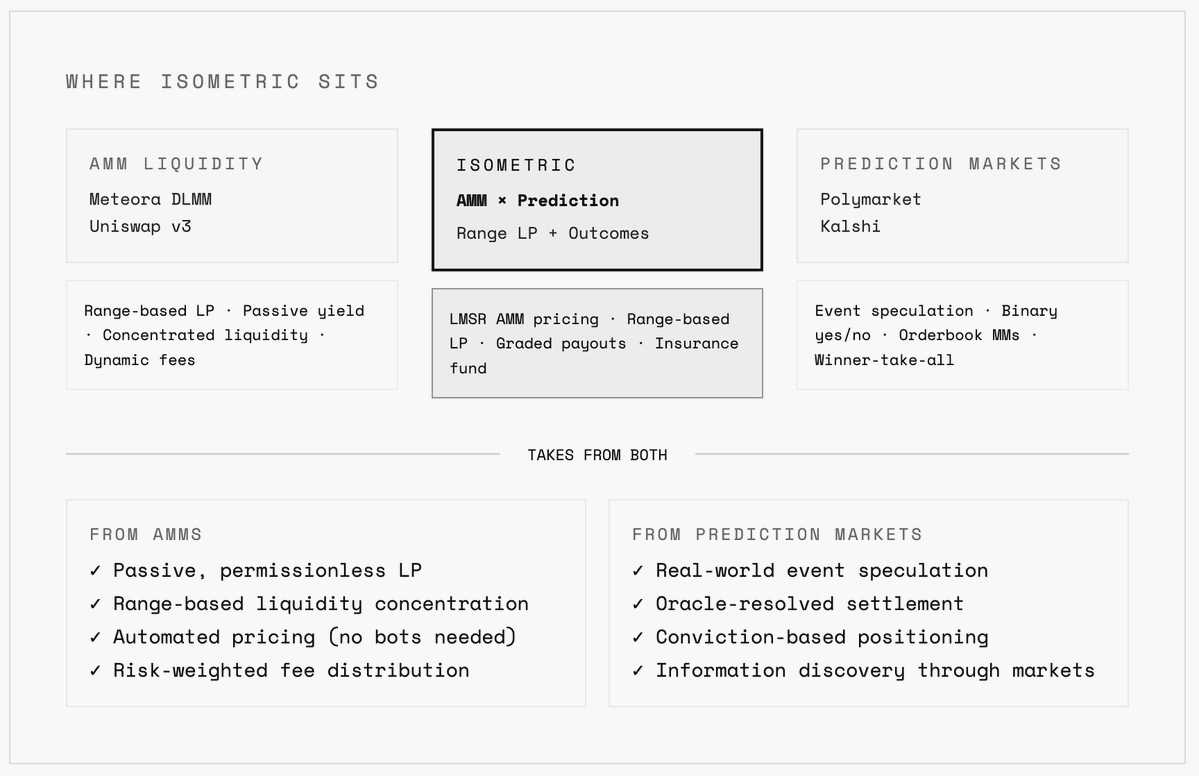
isometric is designed to take the perfect components from both conventional AMM-based protocols (Meteora, Uniswap) and prediction markets (Polymarkets, Kalshi) while elevating the intersection into an entirely new conceptual layer: continuous curve derivatives. while this is an abstract concept to grasp initially, the logic is simple! isometric allows liquidity providers to provision liquidity on ranges rather than binary yes/no outcomes and traders to trade on a continuous curve outcome. this expansion upon conventional binary markets creates a nominal downside as opposed to current products in the market while maximizing upside.
isometric tweet media
English
60
22
63
562
isometric retweetledi
Xanders🇻🇪
Xanders🇻🇪@ShibaXanders·
🍳 MONDAY OF COOKING 🔥 Chef back at it boys! $ISO isometric just making steps. Fresh low cap banger primed to cook hard CA: DTkrpySU8LEQb6S9DUdxAdmv9hyqvgnSQ1YrDHoZpump DEX: dexscreener.com/solana/2r8fsd8… NFA | DYOR $ISO
Xanders🇻🇪 tweet media
English
16
42
78
7K
isometric
isometric@isometricmkts·
isometric is live! we're building upon conventional concepts of prediction markets by replacing binary decision markets with continuous curve derivatives— isometric lays at the intersection of two battle-hardened models: AMM's like Meteora and Uniswap + prediction markets like Polymarket and Kalshi. for more information, we urge you to read the isometric whitepaper located at: isomkts.com/whitepaper we have packed a lot of information into the isometric whitepaper to fully flesh out the concept in incredibly simplistic terms. the official isometric contract address is: DTkrpySU8LEQb6S9DUdxAdmv9hyqvgnSQ1YrDHoZpump
English
15
8
37
2K
isometric
isometric@isometricmkts·
tick tock...
English
7
0
14
450
isometric
isometric@isometricmkts·
isometric   ╭━━╮   ┃╭╮┃ ╭━┻┻┫┣━╮ ┃╭┳┳┫┣╮┃ ┃╰┫┣┻┻╯┃ ╰━┫┣┳┳━╯ ╭━┻┻┫┣━╮ ┃╭┳┳┫┣╮┃ ┃╰┫┣┻┻╯┃ ╰━┫┣┳┳━╯ ╭━┻┻┫┣━╮ ┃╭┳┳┫┣╮┃ ┃╰┫┣┻┻╯┃ ╰━┫┣┳┳━╯   ┃╰╯┃   ╰━━╯
English
8
0
12
455