

Ryan Israelsen
2.9K posts

Ryan Israelsen
@israelsen
Finance Professor at Michigan State University @MSUBroadCollege | @MichiganRoss PhD | @HuntsmanSchool Econ | @AmbasciataUSA alum
Ann Arbor, MI Katılım Mart 2009
2.2K Takip Edilen1.8K Takipçiler
Wow! I’m honored! @TheRichardLewis I’ve always known you were a comedic genius, but never realized how much you’ve impacted the broader culture.

English


Offseason Checklist:
-Keep Falslev, Templin, and the freshmen
-Get a 7-footer or two
-Make Elamin eat a few sandwiches
-Ball handling drill
-3pt drills all summer
-Rip up our contract with Nike
-New sound system in the spectrum
English
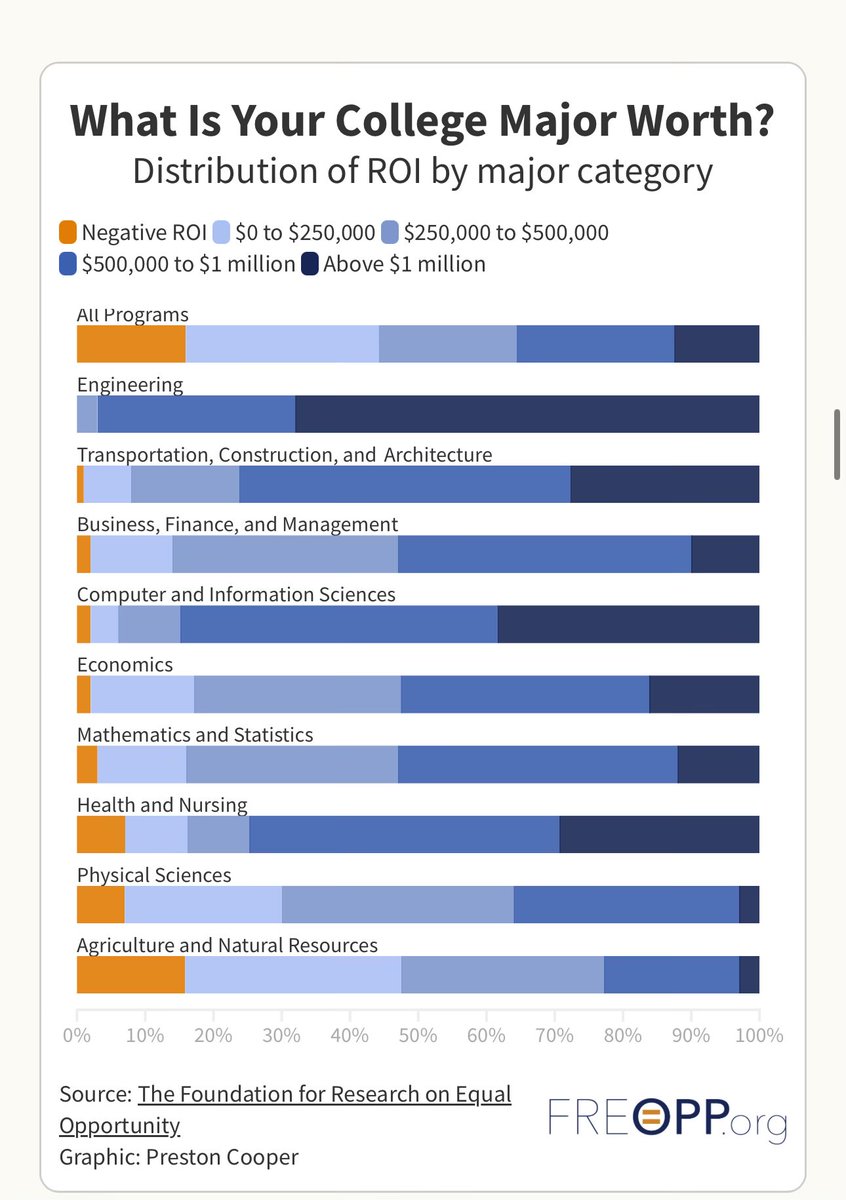

@JesusFerna7026 Communications and journalism has the least negative ROI? No way.
English

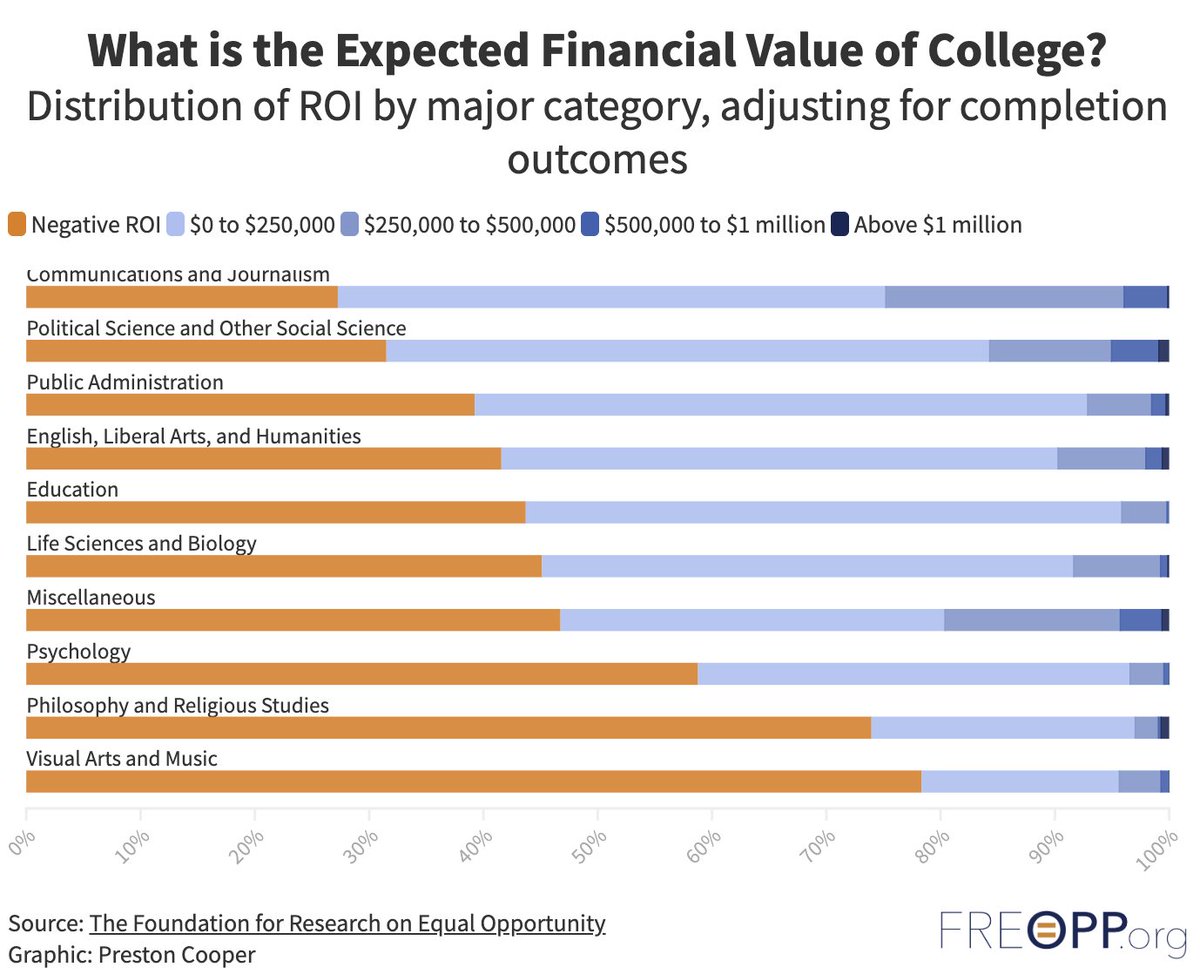
I spent this morning reviewing returns to college for a paper on human capital. The FREOPP data:
freopp.org/whitepapers/is…
are useful because they do not compare college graduates to the average high-school graduate (as the media tends to do). Instead, they construct a counterfactual for the median student conditioning on demographics, family background, academic proxies, and geography. Also, their return-on-investment (ROI) estimates account for completion risk at the college-major cell level.
Psychology is a good case to look at. I took courses in it myself and found them interesting and useful, so this is not a complaint about the subject. The problem is one of positioning. Psychology is not philosophy, where the value is largely intrinsic and everyone understands that. But it is not nursing or accounting either. Students and parents tend to view psychology as a practical, economically sensible career choice, but with real intellectual content.
According to FREOPP, 59 percent of psychology programs have a negative ROI for the median student once completion risk is accounted for. One percent have an ROI above $500,000. These numbers use a 3 percent real discount rate, which is too low in my opinion. At a more sensible 5 or 6 percent, I suspect over 80 percent of psychology programs in the U.S. have a negative ROI for the median student. Let me repeat that: 80 percent.
Psychology is not the main point. There appear to be many majors marketed as sensible economic investments that are not, for a large share of students, sensible investments at all. Programs that are cheap to run, attractive to applicants, and easy to scale are programs that colleges have every incentive to expand. The institution collects the tuition. The student bears the downside.
Colleges and universities in the U.S. need to take a hard look at what we are selling (and, yes, I say “we”). This is borderline moral failure.
English
Technically, there is a waterway that connects the Atlantic and Pacific in the Continental US that fish have traversed. x.com/theiaincameron…
Terrible Maps@TerribleMaps
Why has the US not built a canal here to rival the Panama Canal?
English

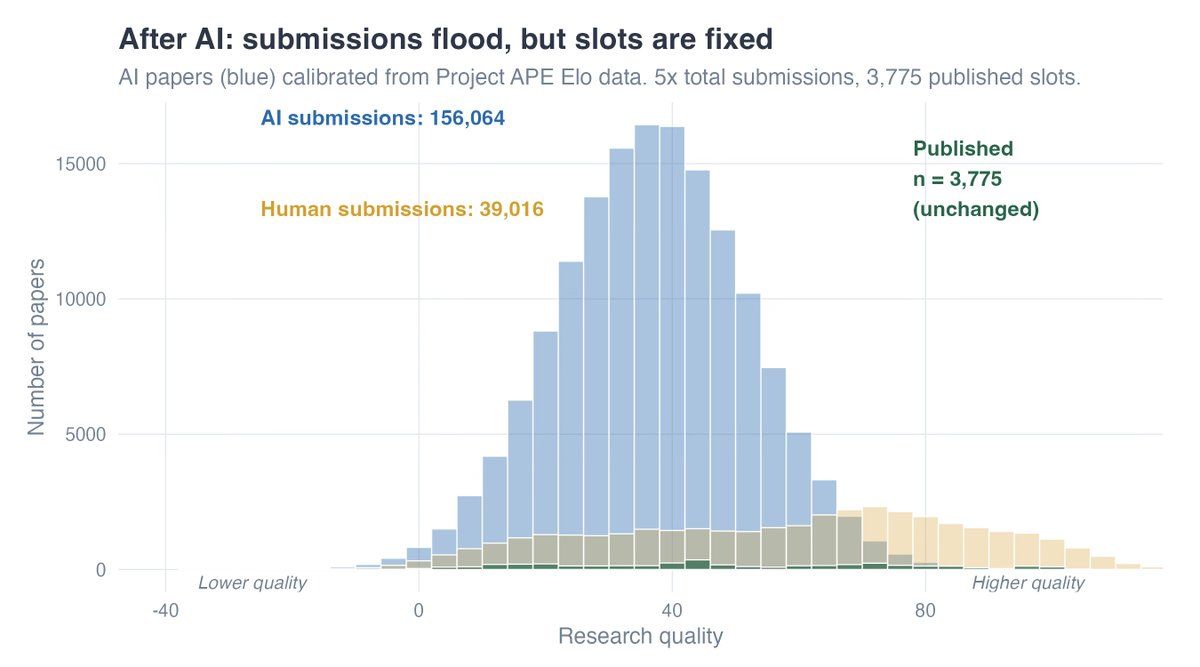
Question for fellow Economics researchers…
Suppose you submit your paper to a journal, and the criteria are codified in transparent high level guidelines.
The Editor, a human, makes the final decision.
As of today, if you had a choice between:
A) 2 human referees
B) 2 AI reports (let’s say each are $100 of compute using frontier models)
C) 1 human, 1 AI
Which would you choose?
English

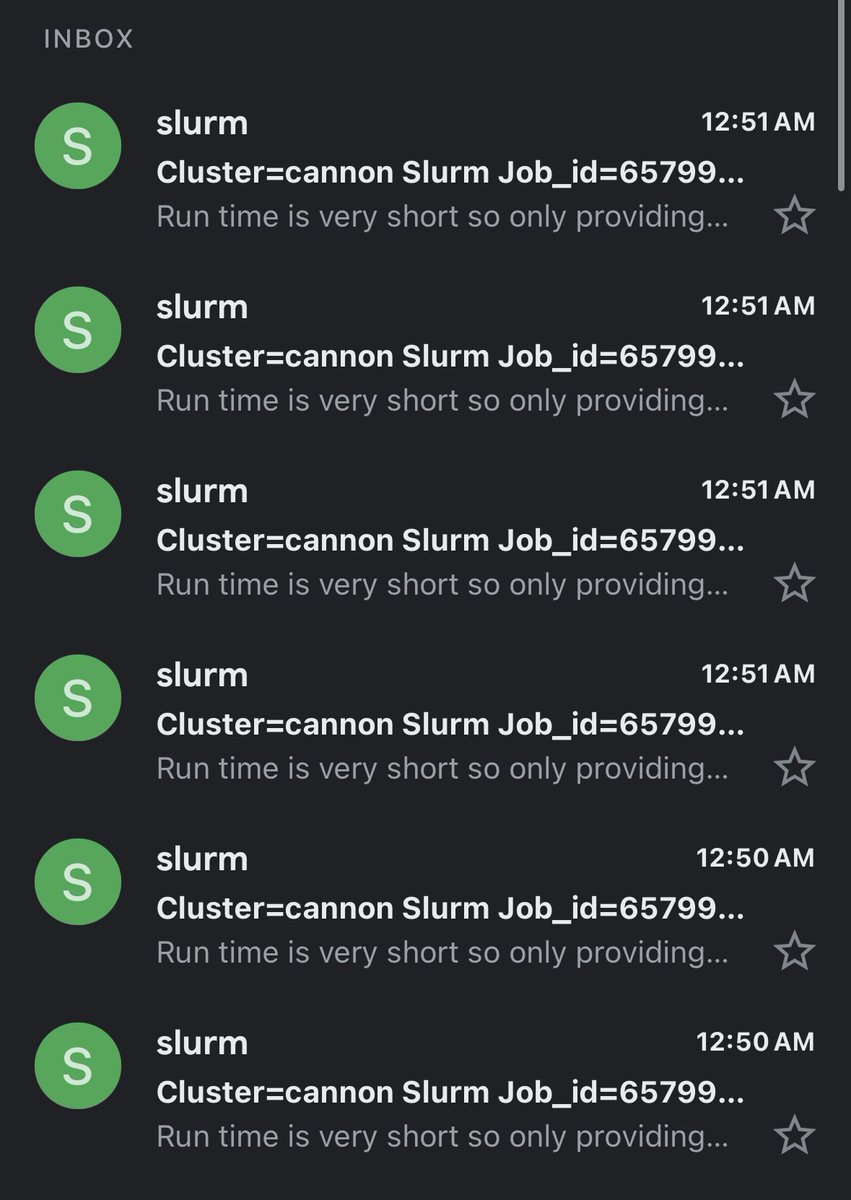
phd disaster journal update: I programmed something in the terminal last night to email me whenever a job finishes or something goes wrong… and now I’m getting about 10 emails per minute and can’t stop it. Midnight madness.
English
@BradenTClark We needed to keep him on the bench so that we could maximize the time he was on the court.
English

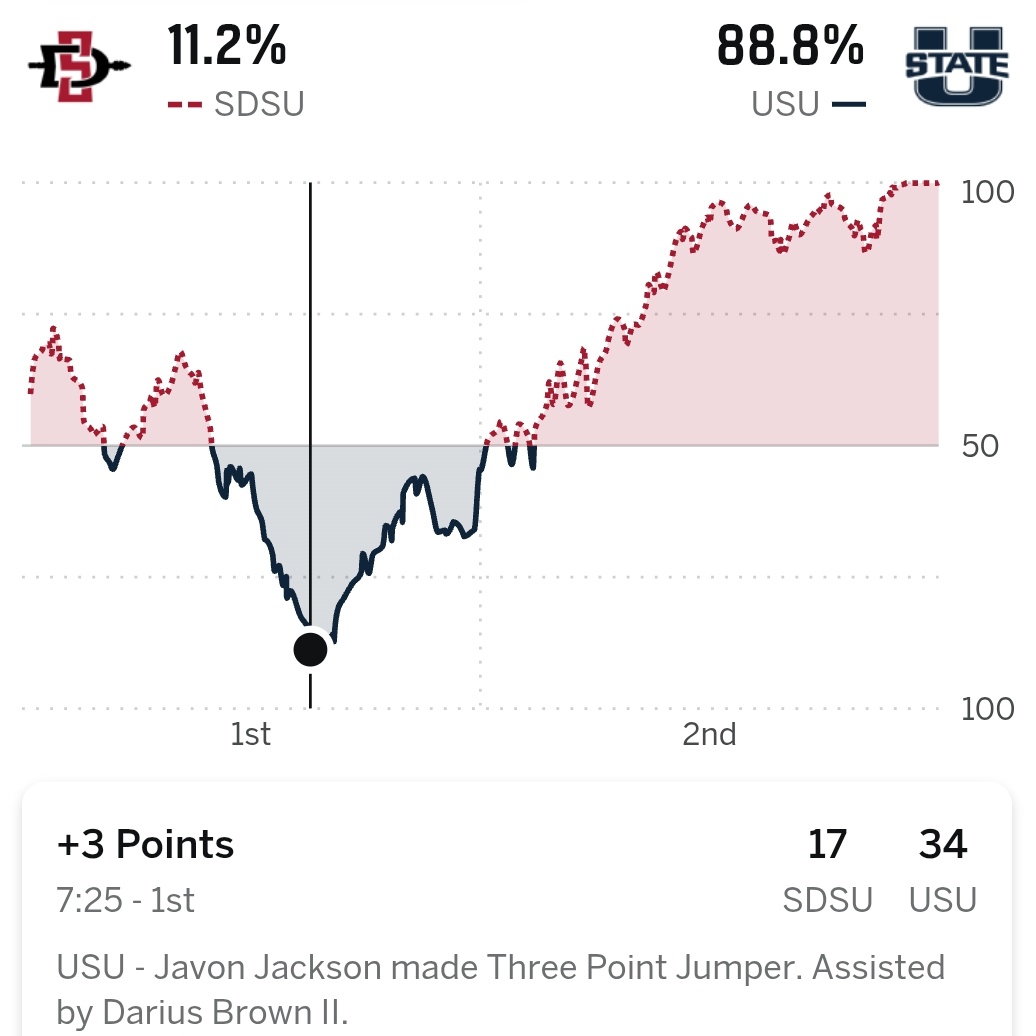
On the eve of our second-ever Mountain West semifinal as a No. 1 seed, I’m reminded of the baffling decision to sit Great Osobor after he picked up his second foul at midcourt at this moment.
I liked Sprinkle, but keeping Osobor on the bench felt obviously wrong to everyone watching.
English
@mjmill611 @causalinf Thanks. I have a massive dataset with which I’ve been using stats. Will give Python version a try.
English

@israelsen I do remember timing it and Python being faster, but I don’t remember by how much. I also didn’t try to optimize much because it wasn’t a super large dataset so it would just buy me a handful of seconds. I have another paper where this matters more, though, and I plan on trying to really optimize there. Will let you know how it goes!
English

Results from my Claude Code audit of six Callaway and Sant'Anna packages (two in python, two in R, two in Stata). Same specification, same dataset, same covariates, same estimator, almost never do they agree.
open.substack.com/pub/causalinf/…
English
So Claude thinks it is the way that singletons and missing observations are handled. In the cases where I don't match, it's always double clustering with TWFE, so Claude's idea sounds reasonable. I would have to spend more time digging in though, and don't really have the bandwidth. The SE differences (in my case) aren't large enough to be concerned about (6ish% smaller SEs in what I did), but I found it a little odd.
English
@burglarhobbit @bozavlado @_Creation22 Yes. That seems like a good way:
For all numbers - staring with the longest, find those that only match once and clip the string. Keep repeating all the way down and then start again at the longest.
English

@israelsen @bozavlado @_Creation22 Gets tricky for smaller digits. Maybe a brute force solution would be that once we know the length and digits, we can first eliminate all the digits and numbers higher than those digits from the string and then sift the permutations through the rest.
English

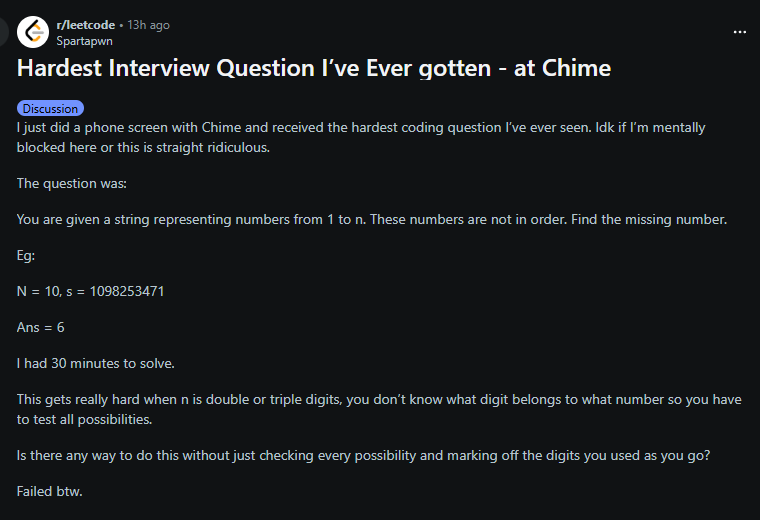
@bozavlado @_Creation22 Yep. 1:1 mapping between length of string and N (regardless of how long missing digit is). For a given N it is straightforward to get number of time each digit (0-9) appears. Then check each permutation of the missing digit(s). Could get trickier if the sequences all appear.
English
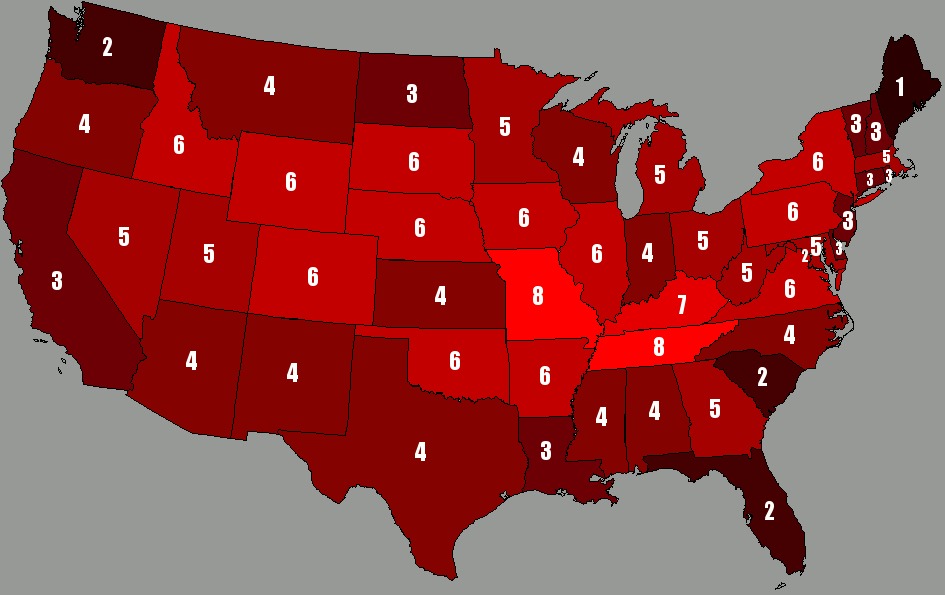
@vintagemapstore The four corners states are all 1 number too small.
English

The degree of each American state (i.e. the number of adjacent states)
English

@PhilosophyOfPhy Exactly the opposite. Einstein's approach in this paper relied on the 1900's Louis Bachelier's thesis, which was on financial markets. Stochastic integrals appeared in finance first, in physics, after that.
English

Finance Borrowed this Equation from Physics✍️
The Black–Scholes equation (1973) is mathematically the same diffusion (heat) equation used to describe Brownian motion introduced by Albert Einstein in 1905.
A risk-free portfolio behaves like heat flowing through a metal rod. Volatility is diffusivity. Payoffs are boundary conditions. Markets are just noisy physical systems.
In 1997, the Nobel Prize in Economic Sciences was awarded for this idea, essentially a physics equation.
Built on the Wiener process, the same math describes pollen grains, stock prices, quantum paths (Richard Feynman), and even early-universe fluctuations.
Different fields. Same diffusion.

English
English

No, it’s the other way around. Bachelier introduced Brownian motion in 1900 to study option prices.
The Black-Scholes formula is following up on his early work.
In the meantime, brownian motion made its way from mathematical finance to physics.
Philosophy Of Physics@PhilosophyOfPhy
Finance Borrowed this Equation from Physics✍️ The Black–Scholes equation (1973) is mathematically the same diffusion (heat) equation used to describe Brownian motion introduced by Albert Einstein in 1905. A risk-free portfolio behaves like heat flowing through a metal rod. Volatility is diffusivity. Payoffs are boundary conditions. Markets are just noisy physical systems. In 1997, the Nobel Prize in Economic Sciences was awarded for this idea, essentially a physics equation. Built on the Wiener process, the same math describes pollen grains, stock prices, quantum paths (Richard Feynman), and even early-universe fluctuations. Different fields. Same diffusion.
English


English
Ryan Israelsen retweetledi

Legacy Aggie Ryan Israelsen doing big things in economic and financial research as it relates to politics!
Ryan Israelsen@israelsen
MSU Broad featured my recent JFE publication with @nandinigupta201 and Eitan Goldman, "Political Polarization in Financial News". We find that politics flavors the reporting and coverage of financial news, leading to more disagreement and trading. Video: youtu.be/Sxkn8OUNA-M.
English