Erin Fitz

1.4K posts

Erin Fitz banner
Erin Fitz

Erin Fitz

@itserinfitz

PhD candidate @CSUPoliSci @ColoradoStateU | political behavior + psychology | trust | risk | judgment + decision making | RT ≠ E

Colorado, USA Katılım Haziran 2020
1.1K Takip Edilen440 Takipçiler
Erin Fitz retweetledi
Kyle Saunders
Kyle Saunders@profgoose·
Well, I did a thing. I hope it's useful. I mapped every four-year college in the U.S. higher education along two dimensions — institutional resilience & post-college market position — using eight indicators from federal data along with a new measure of institutional AI exposure.
English
45
121
1.3K
528.2K
Erin Fitz retweetledi
Kyle Saunders
Kyle Saunders@profgoose·
Jürgen Habermas died recently at 96. He spent his career defending the idea that rational dialogue could ground democratic legitimacy — that the better argument could win. Then AI made argument and knowledge production cheap. I wrote about what happens when a technology simultaneously fulfills Baudrillard's prophecy about simulation AND empirically challenges the constructivist epistemology that's dominated humanities departments for fifty years. The short version: the vocabulary we use to criticize AI — hallucination, bias, error — quietly presupposes that there's a reality being violated. Every critique is a covert realist claim. This piece is about the fifty-year intellectual war underneath the AI panic in academia, and why the reckoning is practical, not philosophical. 🔗 open.substack.com/pub/kylesaunde…
Kyle Saunders tweet media
English
21
73
857
643.3K
Erin Fitz retweetledi
Erin Fitz
Erin Fitz@itserinfitz·
In other words, alpha is a good early diagnostic check to see whether certain items behave similarly in your data, but it's not evidence that a scale is good. Researchers will often report alpha in the main paper just as a best practices signal but put FA and other validity test results in an appendix because it's usually a LOT of information that's not directly relevant to the main text.
English
0
0
1
33
Aella
Aella@Aella_Girl·
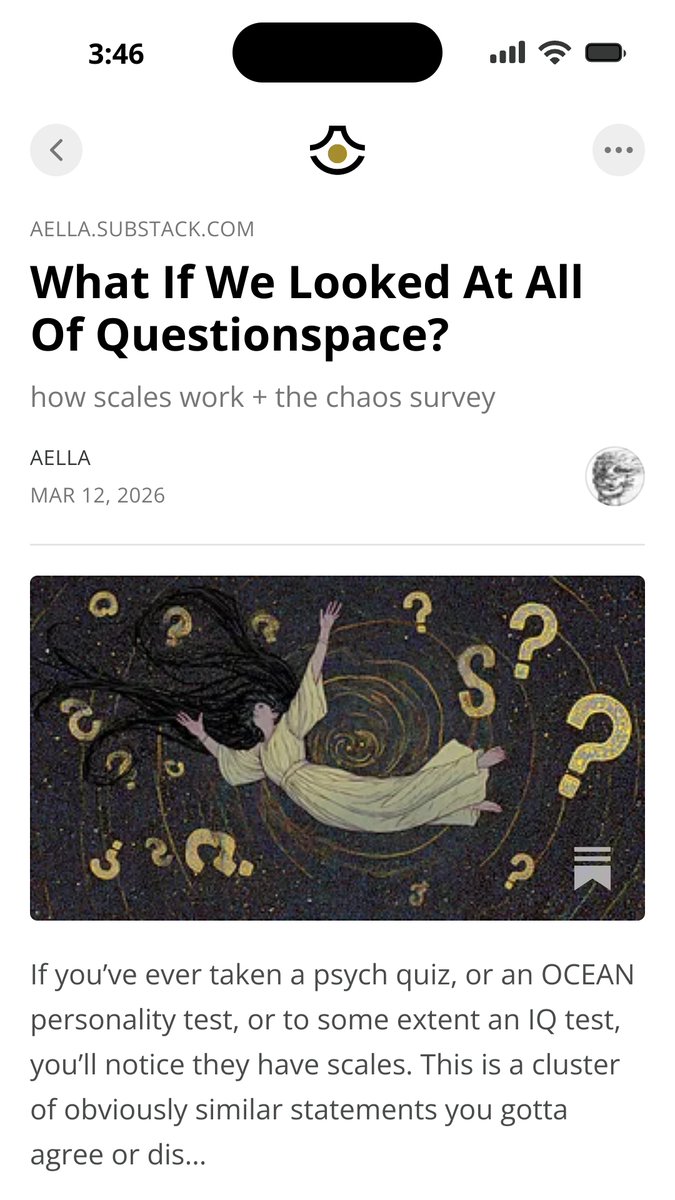
this post exists because I was personally victimized by a horrible 344 item survey i had to take last week
Aella tweet media
English
4
3
74
17.1K
Erin Fitz retweetledi
Kyle Saunders
Kyle Saunders@profgoose·
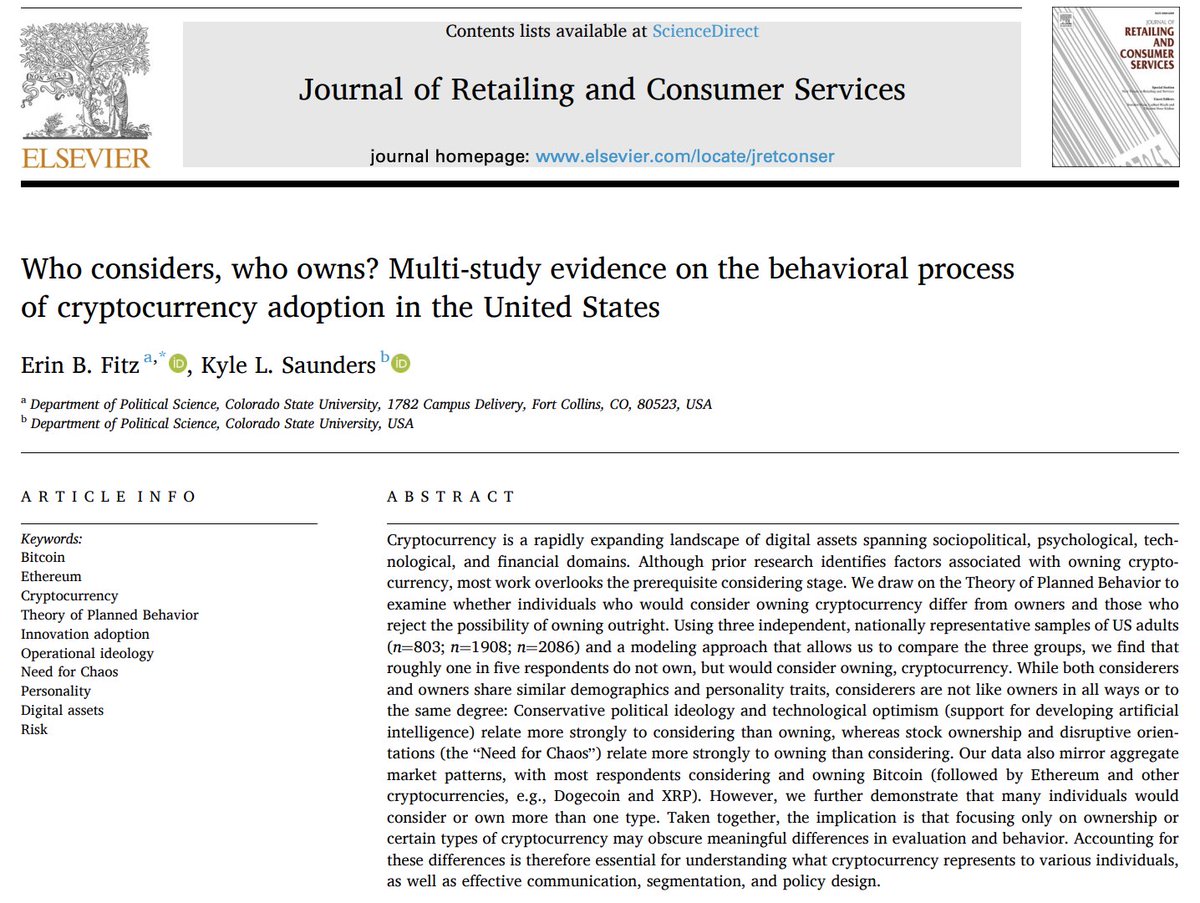
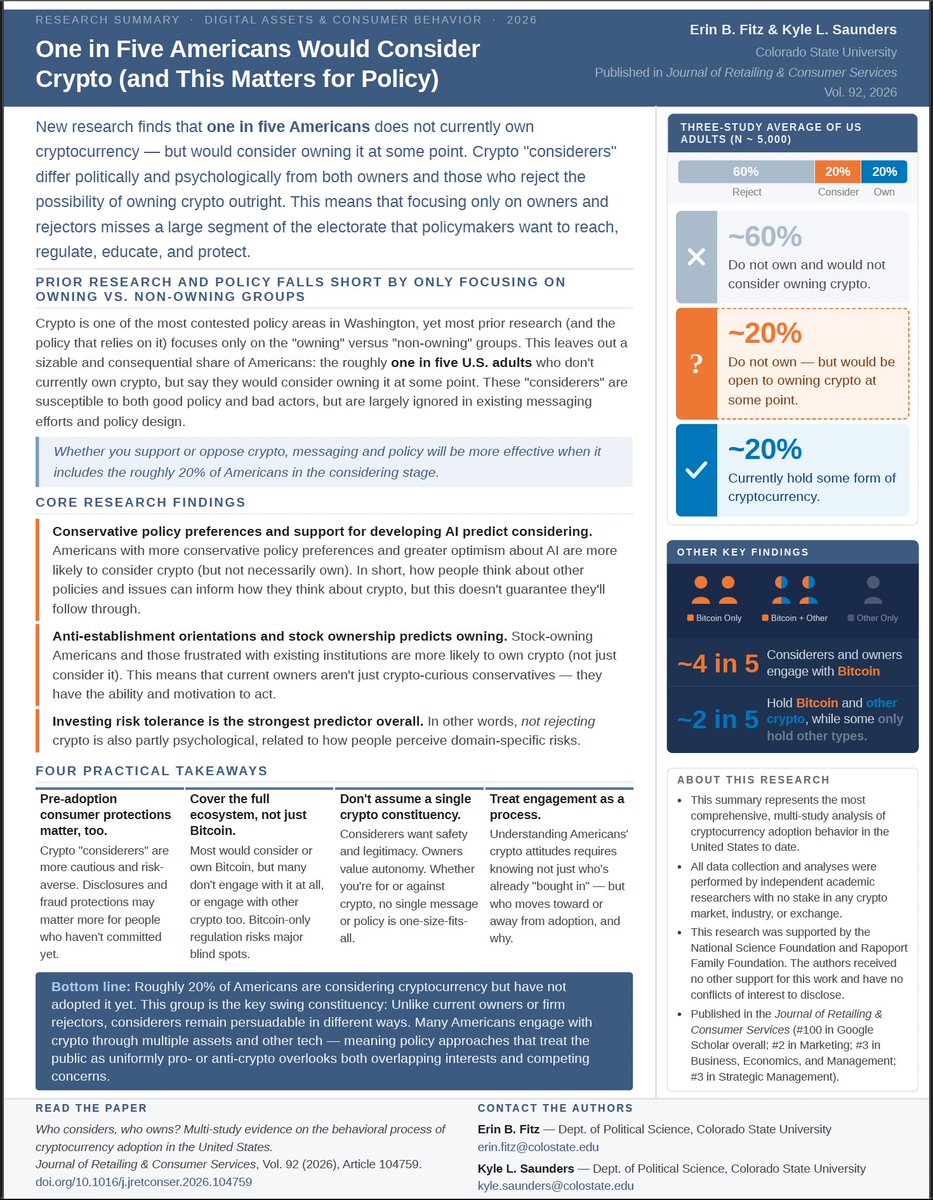
I hope you'll share our "one pager" for our bitcoin/cryptocurrency study about the differences between those who own, consider, and reject digital assets. I will link to the paper itself, a separate "explainer" site, and a picture of the abstract in the first reply. Thanks!
Kyle Saunders tweet media
English
2
4
9
1.8K
Erin Fitz
Erin Fitz@itserinfitz·
@nataliemj10 Socks + Mary Poppins + American Girl dolls is my origin story.
English
0
0
1
52
Erin Fitz retweetledi
PhD_Genie
PhD_Genie@PhD_Genie·
My research tests an alternative approach
English
4
38
255
10.5K
Erin Fitz
Erin Fitz@itserinfitz·
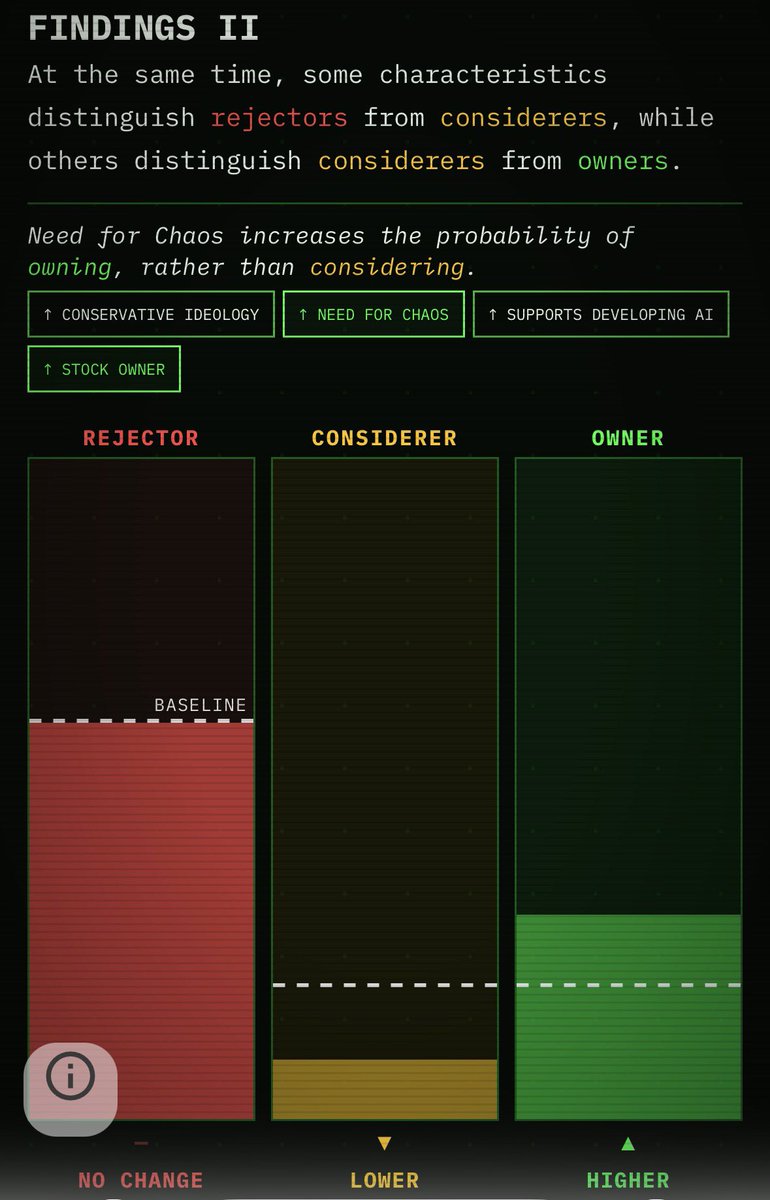
Tricky, yes! So let me try to explain: The graph is showing probabilities of being in *one* of the rejecting, considering, or owning groups. The baseline for rejecting is always largest because most people (~60%) reject, rather than consider (~20%) or own (~20%). But if the probability of being in a certain group changes because of some factor, like Need for Chaos, the other probabilities have to change so everything still adds up to 1. So here, Need for Chaos doesn't change whether or not someone rejects--that "baseline" of 60% stays the same. But Need for Chaos increases the probability of owning, rather than considering (note how the green shaded area is above the baseline, while the yellow shaded area is below the baseline, together showing that shift in probability from one group to the other).
English
1
0
2
21
Scott
Scott@sitbyriver9026·
@thetrocro @itserinfitz @profgoose Is the graph telling us that rejectors have even a greater need for chaos than owners? And therefore when the need for chaos is too high, the probability of ownership decreases?
English
2
0
2
49
Erin Fitz retweetledi
Troy Cross
Troy Cross@thetrocro·
Why are we stuck at the chasm of adoption? Maybe because people who own bitcoin “need chaos” and those who do not own bitcoin but are open to it very much do not. This from the brilliant new study by @itserinfitz and @profgoose.
Troy Cross tweet media
English
9
9
35
3.8K
Erin Fitz retweetledi
trash jones
trash jones@jzux·
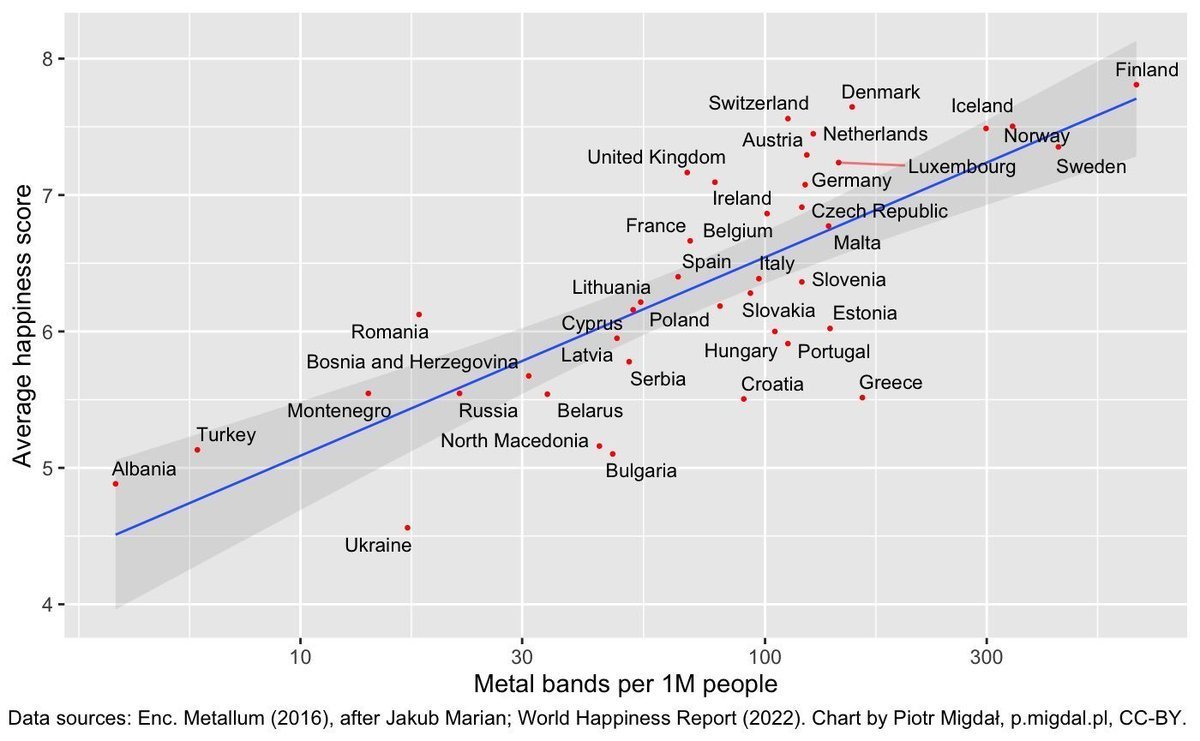
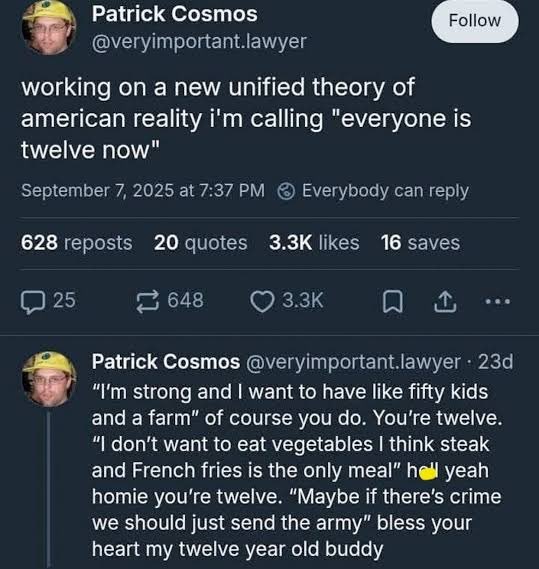
everyone I know right now
trash jones tweet media
English
13
1.8K
14.9K
167.8K
Dave☂️
Dave☂️@SOUTHSIDE263·
@itserinfitz @thetrocro I used to listen to rap and skateboard in the late 90s, when it wasn’t cool at my high school 🧠
GIF
English
1
0
2
14
Erin Fitz
Erin Fitz@itserinfitz·
Also worth adding that, in terms of the adoption curve, adoption wouldn't just represent owning in this case. It also represents acceptance, too--meaning there will always be some folks who are good with the idea of something like bitcoin existing and other people using it, they just might never actually use it themselves. Both acceptance and actual adoption determine whether it makes it farther down the curve.
English
0
0
1
16
Erin Fitz
Erin Fitz@itserinfitz·
I'll add too, as @thetrocro mentioned and we briefly talk about in the paper, that motivations/interests/incentives change all along the adoption curve. We've seen this in pretty much every innovation over time, e.g., the first people to use the internet or cell phones or whatever were not initially motivated by the more general use cases today. So it's a difference between rejecting, considering, and owning at the individual level at specific points in time, but also the difference between rejecting, considering, and owning at the collective level across time.
English
1
0
2
26
Erin Fitz
Erin Fitz@itserinfitz·
@thetrocro Homogeneous preferences for thee, but not for me.
English
0
0
0
38
Troy Cross
Troy Cross@thetrocro·
People are so difficult. The machines understand me! People don’t get bitcoin, let’s give them yield, premised on bitcoin but under layers of financial engineering. Sure sure sure. But listen to yourself. Have you ever kissed a girl?
English
7
1
25
1.8K
Troy Cross
Troy Cross@thetrocro·
The “agents will use bitcoin” narrative as well as the “people don’t need bitcoin, they’ll get yield on preferreds and Saylor will buy it for them” both reveal weakness. Even if true, they’re often an autist way giving up on the idea of people just stacking sats.
English
20
2
61
5K
Erin Fitz
Erin Fitz@itserinfitz·
Something else we don't discuss in the paper (but have looked at in other work) is that Need for Chaos is also associated with greater willingness to take risks. Risk-taking is a relatively stable psychological trait, whereas NFChaos is more contextual (i.e., it captures underlying traits that may emerge under certain conditions). So there's potentially an interaction between risk-taking (another factor we look at in the paper) and chaos, too. One thing we're working on now is whether people own *because* they're higher in for NFChaos, or NFChaos emerges *because* they own. As you mentioned, motivations often change as we collectively progress along the adoption curve, but the idea tracks either way.
English
2
0
2
21
Troy Cross
Troy Cross@thetrocro·
What is the need for chaos? A mindset where people have a deep desire to disrupt, dismantle, or "burn down" the established institutional order. It tracks, doesn’t it? That messaging will NOT land with the next wave.
English
4
0
11
760
Troy Cross
Troy Cross@thetrocro·
@itserinfitz @profgoose Thank you for the incredible work to put it together. I hope the community and industry players can hear what the data are saying.
English
1
0
4
81