Evan Walden
1.4K posts

Evan Walden
@itsevanwalden
Making it easier for people to find meaningful work at @Getro 🐇🕳
Brooklyn, NY Katılım Nisan 2009
1.3K Takip Edilen1.3K Takipçiler
Evan Walden retweetledi

@ivanhzhao Would be great to get more detailed examples of how you’re doing this at Notion, especially if you’ve found real value drivers with agents (vs. things that feel marginally valuable)
English
Evan Walden retweetledi

@DeryaTR_ @joshwoodward @OfficialLoganK @GeminiApp @NanoBanana Convert the PDF to PPT file with Adobe (free)
adobe.com/acrobat/online…
English

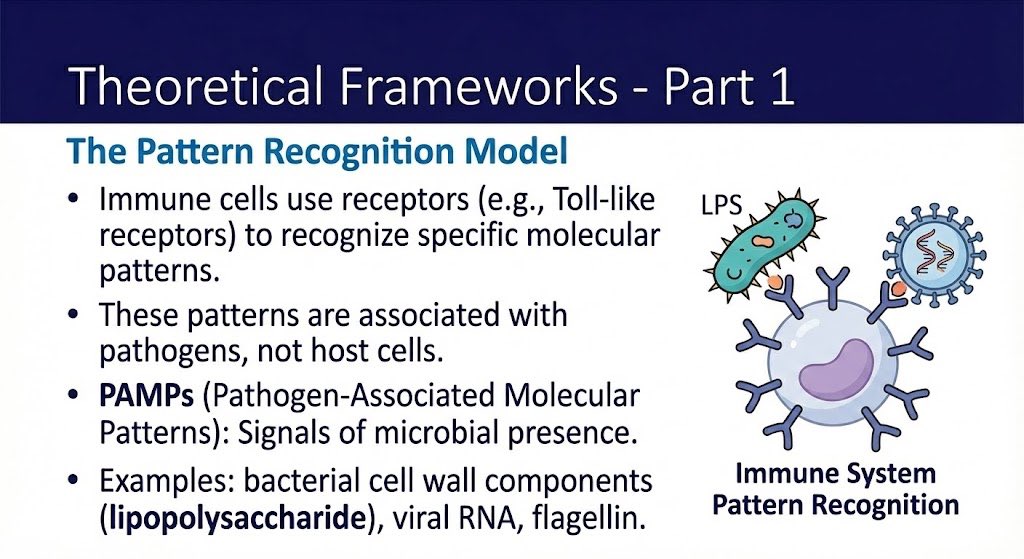
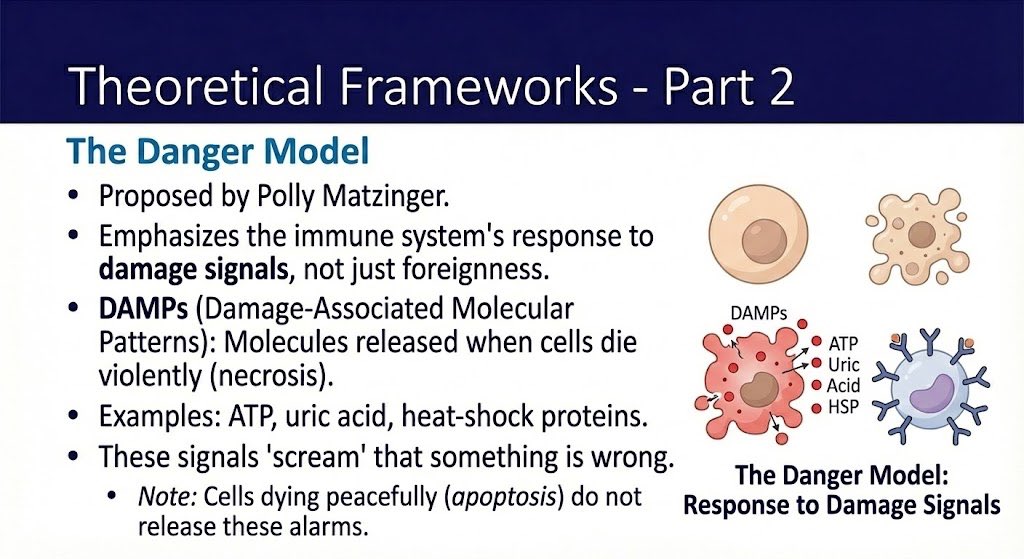
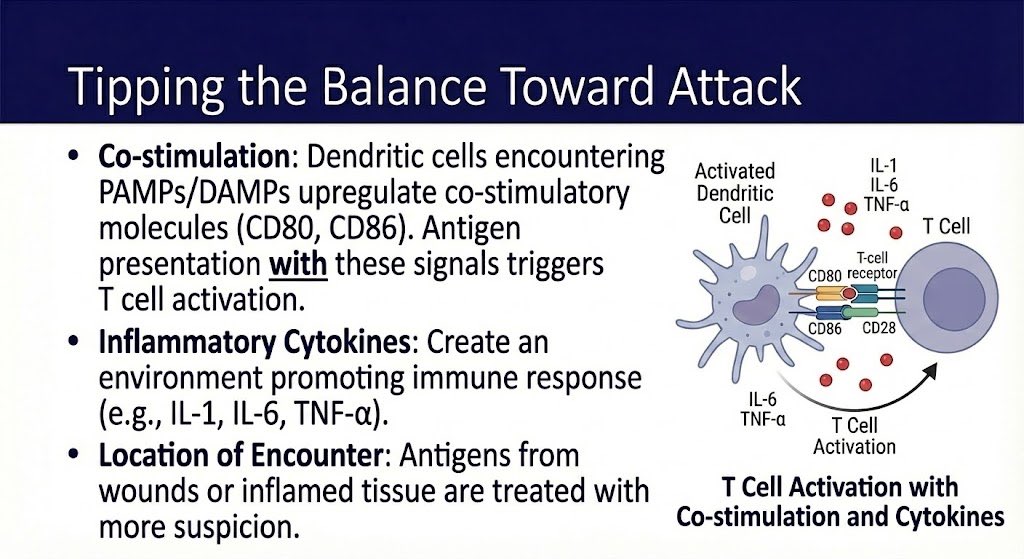
Nano Banana Pro creates amazing slides. But currently, we can’t export them as PPT files, which would be a great feature. Is there any way we can have this? @joshwoodward @OfficialLoganK @GeminiApp @NanoBanana


English
Evan Walden retweetledi

@peterrhague “What kind of support would be most helpful right now? Would it help for me to brainstorm solutions with you, or do you really just want to feel heard?
Also, I love you”
English

It’s official – I’m excited to introduce Alloy (@alloyapp), the world’s first tool for prototypes that look exactly like your product.
All year, PMs and designers have struggled with off-brand prototypes – built with “app builder” tools that look nothing like their existing app.
They’re left with confused stakeholders, prototypes they can’t show customers, and demos where they’re apologizing for the design.
Your prototypes should look like your actual product. Starting today, they can.
Alloy is AI Prototyping built for Product Management:
➤ Capture your product from the browser in one click
➤ Chat to build your feature ideas in minutes
➤ Share a link with teammates and customers
➤ 30+ integrations for PM teams: Linear, Notion, Jira Product Discovery, and more
In lab results, Alloy delivers 3-5x more detail than alternatives when you start from an existing product. It’s powered by groundbreaking technology you won’t find in any other tool.
Alloy is now available for you to try for free.
Comment “ALLOY” and I’ll DM you an invite with instant access and extra credits.
English

@lizwessel Intros to “ideal candidate profiles” is the easiest way investors can add value to portcos on searches
English

@mprkhrst Congrats and beautiful website. Would love to try it!
English

@jasonlk It's not ideal, but I'm not seeing exec leaders using personal CRM tools. Just not willing to manually make the unstructured, structured.
At the company level, contacts can be parsed from email. But at the personal level, it's LinkedIn.
Need an LLM-native contact manager 👀
English

@danshipper @meetgranola Grain has an API and a great desktop app
English

I really wish @meetgranola had API access or an export tool for your meeting transcripts.
Downloading them 1 by 1 is not good enough.
English

@ttunguz Added to our VC job board 🙌
jobsinvc.getro.com/jobs?q=theory
English

We’re looking for an investor to join our team.
We are seeking people who see alpha in ambiguity, who are passionate about crafting theories about the future & making them a reality.
The ideal person :
- enjoys researching themes & debating the future
- thrives working with founders to navigate the challenges of building companies in hypergrowth
- brings an accretive network to the firm
- values intellectual honesty & candor
If you’re interested, apply here : docs.google.com/forms/d/e/1FAI…
English

@jessfraz In a war for developer attention, the stickiest / fastest growing IDE + the best SWE agent (and a team they believe can run it) could be worth $3b today at the rate they expect to grow
English
Evan Walden retweetledi

What happens if high quality AI models become free, ubiquitous, and inexpensive to run on even low-spec hardware?
(1) First, you can rebuild every productivity app AI-first. That starts with Microsoft Word, Google Sheets, and Apple Keynote. But it extends to wholly new kinds of productivity apps.
(2) Second, every “smart” device becomes truly smart. Your fridge can double as your nutritionist. Your alarm clock is your sleep therapist. And so on. Just like your car is already your driver.
(3) Third, moats move to the app layer. As others have remarked, the GPT wrappers may end up more defensible than the GPT model itself.
(4) Fourth, physicality becomes relatively more valuable. The hardware, the secure real estate, the in-person community — these are all things digital AI can’t deliver.
(5) Fifth, high human IQ actually becomes increasingly valuable. Because AI is really amplified intelligence rather than truly agentic intelligence, since it requires the creative prompt to get started.
(6) Sixth, prompt engineering is here to stay, because prompting is programming — just in a higher-level language.
(7) Seventh, the most common form of AI doomerism is proven false, because we are getting decentralized ubiquitous AI rather than centralized monotheistic AI. More like a garden of smart things than a vengeful Old Testament God that’ll turn you into paperclips.
(8) Eighth, the combination of cuts to US “industrialized” academic research at the same time AI models accelerate discovery will mean a return to individual gentleman scientists and the advance of desci (decentralized science).
(9) Ninth, the complement to probabilistic AI is deterministic crypto. For captchas, for identity, for money, for all these things — crypto is the digital scarcity that AI can’t fake.
(10) Tenth, the main cost of software development may reduce to reducing the costs of the physical environment. That is: to providing society-as-a-service, to simply giving engineers time to type and experiment in peace. This was already so, but may become even more so.
Several of these points have been made by others, but I think that collectively they help define the second mover era.
Suhail@Suhail
AI will move into a window (later this year) that I would call "second mover's advantage." That is, the first obvious moves that could be big are played out given the technology/funding cycle. The rest of us get to watch how it worked out, take stock of the pace, understand how users use it, and better consider where it will be vs where it was--without baggage. Much of mobile and web had second movers that became dominant.
English

@DaniloVicioso11 @signulll And what are you betting your career they will look like?
English

most people still think we need some new abstraction layer—better prompting, a slicker ui, or some new way to interact with ai. they don’t realize the ultimate abstraction layer is already here: agents.
agents abstract away not just the model but the whole concept of “using ai”—you just have a conversation, give high-level intent, & stuff happens. no need for ui-heavy workflows, structured inputs, or manually chaining tools together. in the endgame, there’s no prompting, just delegation. in the future, nobody will care about models or underlying mechanics any more than they care how a database works.
most people haven’t internalized this because they still think in terms of traditional software interfaces. but once agents are fast, reliable, & capable enough to handle entire workflows autonomously, the entire concept of an “app” starts to feel obsolete. who cares what an “app” is when you can just ask & things get done?
the idea of apps & even websites are going to be ancient concepts very soon.
English