

prachi
709 posts


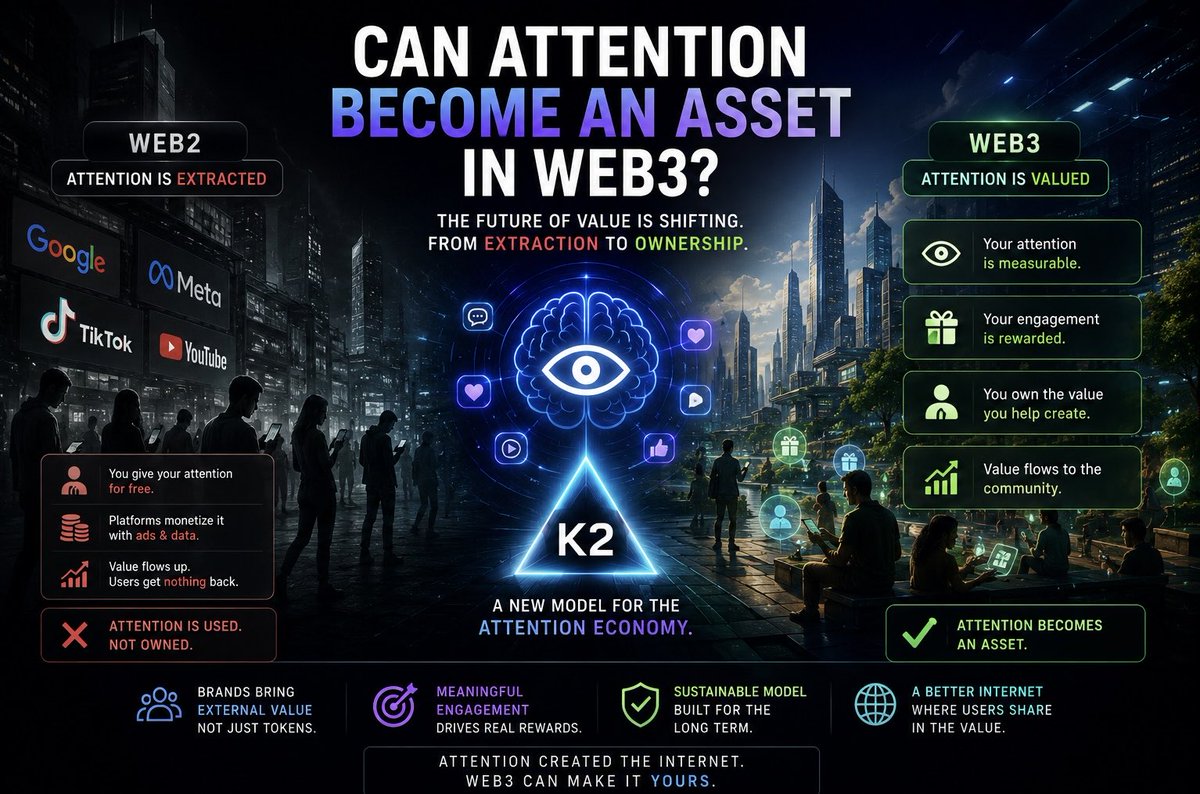
Every day, billions of dollars are made from one thing:
attention.
Every scroll, click, view, and interaction creates value.
But in Web2, most of that value flows to platforms.
Users provide the attention.
Platforms capture the upside.
What if Web3 changed that?
What if attention became something that could be:
- measurable
- rewarded
- owned in some form
That’s one reason K2 caught my attention.
The idea isn’t just rewards.
It’s the bigger shift behind it:
Turning engagement into something with visible economic value.
Instead of attention being extracted…
Could it become an asset users actually benefit from?
Still early, still a lot to prove.
But it raises an interesting question:
Can attention become one of Web3’s next economic primitives?
@K2PowerBlock
lucky@LUCKYlaku25
What if Web3’s biggest problem isn’t liquidity but synthetic demand? A lot of crypto activity looks strong on the surface: High yields. Reward programs. Incentive driven growth. But many ecosystems are powered by one thing: temporary incentives. Users come for rewards. Capital follows APYs. Activity spikes. Then incentives slow down And participation disappears. Which raises an uncomfortable question: Was the demand ever real? This is where K2 Power Block caught my attention. Instead of relying purely on crypto native loops, K2 experiments with a different idea: bringing external value into the system through brands. Not users funding users. Not endless token emissions. But businesses paying for something they already value: attention. The interesting part isn’t just rewards. It’s the question behind the model: Can externally funded demand be more sustainable than incentive driven demand? That’s a much bigger conversation for Web3. @K2PowerBlock
English
A lot of crypto projects focus on visibility.
But onboarding?
That’s where most users get lost.
Too many steps.
Too much friction.
Too many people giving up halfway.
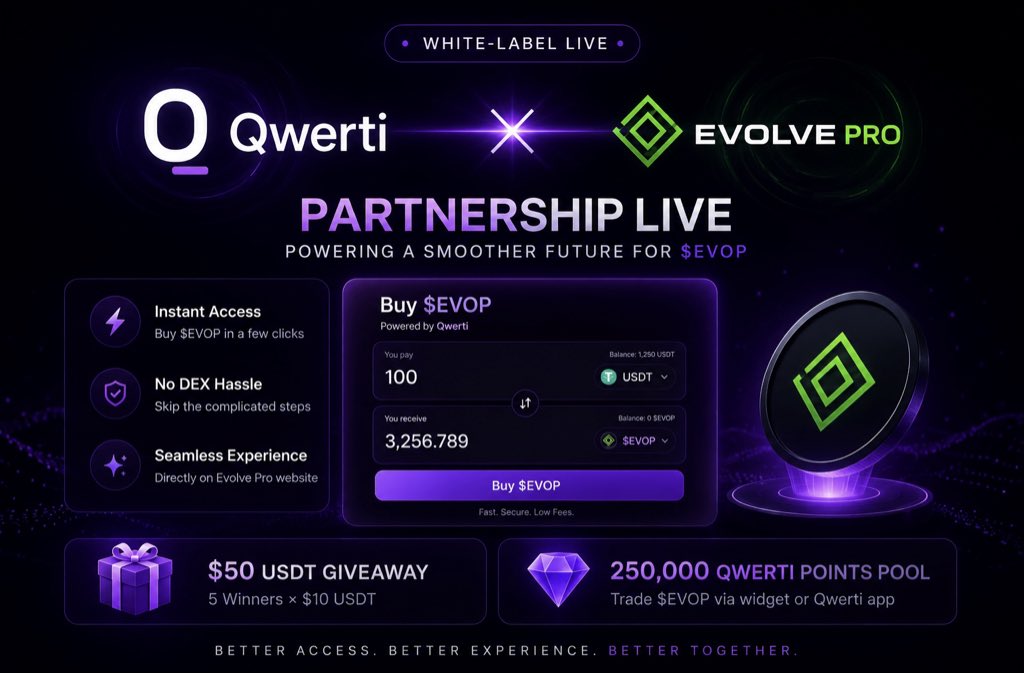
That’s why the Evolve Pro × Qwerti integration caught my attention.
Instead of sending users through the usual DEX maze,
$EVOP is now directly accessible through Evolve Pro’s website using Qwerti’s White-label Widget.
Meaning:
→ Fewer steps to buy
→ Smoother onboarding
→ Better accessibility for new users
And honestly, that matters more than people think.
Because attention is great…
but if users struggle to convert, momentum disappears fast.
What’s interesting here is that this isn’t just an integration.
They’re also attaching incentives to encourage participation:
🎁 $50 USDT giveaway (5 winners)
💎 250,000 Qwerti Points pool for users trading $EVOP through the widget or Qwerti app.
That creates a better feedback loop:
Community discovers → easier onboarding → more participation.
Feels like a smart move for Evolve Pro.
Good UX is underrated in crypto
English
AI agents and crypto protocols don’t naturally work together.
At least not yet.
Here’s the mismatch:
AI agents are asynchronous.
They observe, decide, and act continuously.
No one needs to press a button every few seconds for them to keep moving.
Crypto protocols are different.
Most are still synchronous.
They wait.
Waiting for:
- a trigger
- a bot
- a signer
- a human decision
Smart contracts are powerful, but they’re mostly reactive.
They execute when called.
Then stop.
That mismatch may be one reason AI × crypto still feels early.
You can’t build a machine economy on infrastructure that still depends on humans to initiate everything.
That’s what made Fermah’s recent thesis interesting to me.
Fermah is exploring what they call protocol agency through Fermah Kernel infrastructure designed for asynchronous, code-initiated execution.
Instead of:
human → trigger → protocol acts
The idea is:
condition met → protocol initiates → execution happens
In practice, that could mean:
- proof orchestration without manual coordination
- workflows that execute automatically
- protocols that respond to events without waiting for a human call
The bigger idea isn’t just faster infrastructure.
It’s moving crypto from reactive systems to systems that can act when conditions are met.
Still early, but definitely an interesting direction to watch.
@fermah_xyz

lucky@LUCKYlaku25
AI had a compute problem. To scale, it needed GPUs, cloud infrastructure, and systems that could handle massive workloads. ZK might be heading toward something similar. As zkApps, rollups, and privacy systems grow, so does the demand for proof generation. But generating ZK proofs isn’t lightweight. It can require heavy computation, expensive hardware, and infrastructure that scales efficiently. That’s why projects like Fermah are interesting to watch. Instead of every team building proving infrastructure from scratch, Fermah is building a network designed to coordinate proof generation across distributed hardware. The idea is simple: Apps request proofs → Fermah coordinates the work → prover machines handle computation → proofs are generated and returned to the application Behind the scenes, Fermah is working on making proof generation more efficient by coordinating distributed prover networks rather than forcing every project to manage expensive infrastructure on its own. The bigger goal seems to be making ZK infrastructure easier to access, cheaper to run, and easier to scale as proving demand increases. If AI needed compute infrastructure to scale, ZK may eventually need proving infrastructure too. Still early, but definitely an interesting layer to watch. @fermah_xyz
English
Been watching $MNTC lately and the momentum is getting interesting
Already available on BingX, MEXC & BitMart, and now the next big catalyst is coming:
Minati Exchange listing on May 26.
What stands out to me is that price action usually follows attention, ecosystem growth, and accessibility.
More listings = more visibility.
More visibility = more new eyes on the ecosystem.
The recent move on the chart has definitely caught attention, but what I’m watching closely is whether the upcoming Minati Exchange listing brings stronger momentum and community growth.
If awareness keeps building, May 26 could be an important moment for $MNTC 🚀
Available on:
✅ BingX
✅ MEXC
✅ BitMart
@MinatiExchange
#MinatiExchange #Minati

lucky@LUCKYlaku25
Been exploring @MinatiExchange recently and wanted to share a few thoughts for anyone discovering it 👇 In crypto, most people end up using different apps for everything one for trading, another for wallets, another for staking, and sometimes even more for ecosystem utilities. What caught my attention about Minati Exchange is the attempt to bring multiple utilities into one ecosystem rather than keeping everything fragmented. Some things worth noticing: • Trading-focused ecosystem with exchange utilities in one place • Multi-chain wallet integration through Minati Vault for managing digital assets • Ecosystem-driven approach where $MNTC connects different parts of the platform • Focus on broader Web3 adoption instead of being “just another exchange” I think one of the biggest challenges for any exchange today is trust, usability, and long-term execution. Features look good on paper, but what matters is how smoothly the platform evolves, how the team improves the user experience, and whether they can build consistent utility over time. If Minati keeps improving its ecosystem, wallet experience, and exchange utilities, it could become interesting to watch in the long run. Still exploring, but definitely keeping @MinatiExchange on my radar 👀 #MinatiExchange #Minati #Crypto
English
Selected as a ZAX Creator
Huge thanks to the @ZaxWeb3 team and @breyonchain sir
Really Grateful for the opportunity and i am very excited to be part of this growing community.

English
prachi retweetledi

First 250 users drop your EVM address 👇
GTD & WL checker coming soon 🔜
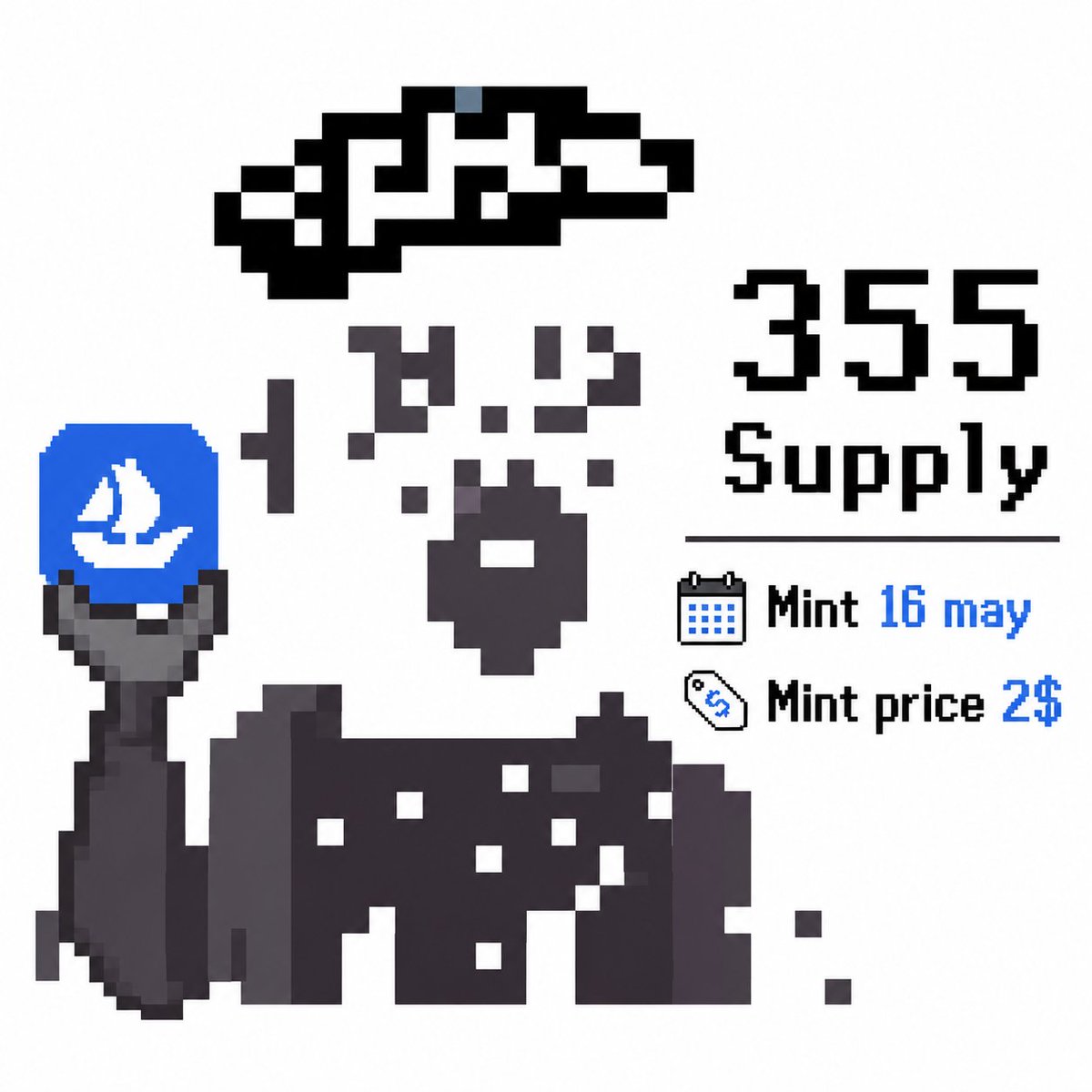
Tomorrow is mint day 🚀
Supply: 355
Mint Price: $2
Turn on notifications 🔔
Like + RT ❤️
Join discord for GTD role 👇
discord.gg/pTa2btBGgm
English
GM ☀️
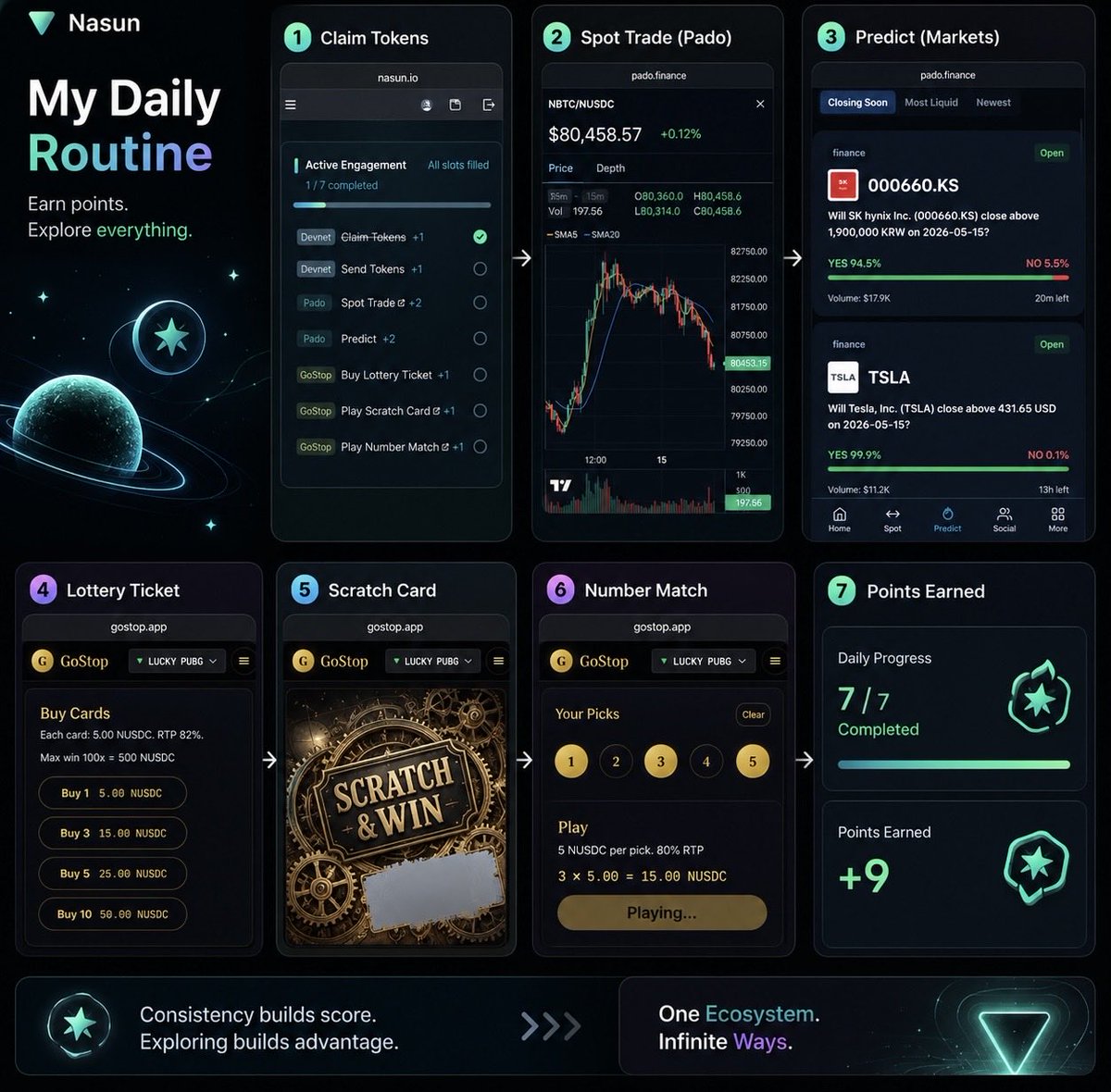
One thing I like about Nasun is that ecosystem points aren’t earned from just checking in and disappearing.
You actually explore the ecosystem while earning them.
My daily routine usually looks like this:
→ Claim tokens
→ Send a transaction
→ Spot trade on Pado
→ Try prediction markets
→ Buy lottery ticket
→ Play scratch card
→ Play number match on GoStop
Little by little it all adds up.
And honestly, it’s making me try features I probably would’ve ignored otherwise.
Trading, predictions, games, onchain actions everything connects back into one profile and one ecosystem score.
Still exploring every day ⚡
@Nasun_io
Join:- nasun.io/?ref=5COQ3N7M
English
R3ORDR my PFP!
tried this and it look soo cool 🔥
@Dario_Desiena is cooking hard for @R3ORDR
Full prompt is in comment

Dario De Siena - 💎🫵😹🐸@Dario_Desiena
R3ORDR your PFP! 🔁 @R3ORDR Full promt below!👇
English
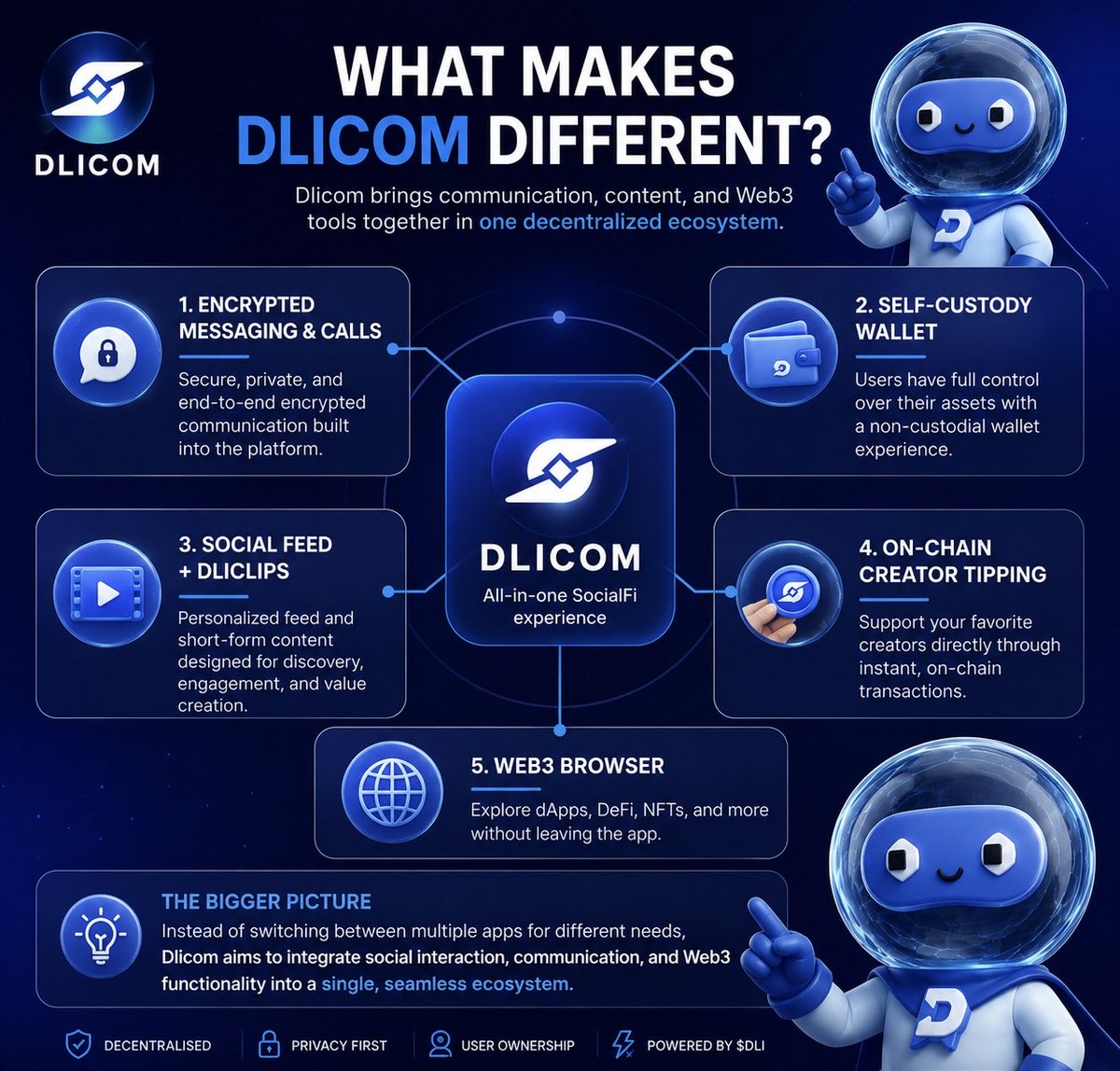
Most SocialFi platforms focus on one problem.
Some focus on content. Others on wallets, creator rewards, or messaging.
But fragmented experiences are still one of Web3’s biggest UX problems.
After going through Dlicom’s ecosystem and whitepaper, one thing became clear:
Dlicom isn’t positioning itself as just another SocialFi app it’s trying to combine the missing pieces into one experience.
Here’s what stands out:
→ Encrypted messaging & calls
Private communication built directly into the platform.
→ Self-custody wallet
Users maintain control over their assets instead of relying on centralized custody.
→ Personalized social feed + DliClips
A creator-focused content layer designed for discovery and engagement.
→ On chain creator tipping
Direct support between communities and creators without traditional intermediaries.
→ Built in Web3 browser
Access decentralized apps without constantly switching platforms.
The bigger idea here is interesting:
Instead of separating communication, content, and onchain activity across multiple apps, Dlicom is exploring what an integrated SocialFi experience could actually look like.
Still early but definitely a project worth researching deeper.
@DlicomApp
English
Been exploring @MinatiExchange recently and wanted to share a few thoughts for anyone discovering it 👇
In crypto, most people end up using different apps for everything one for trading, another for wallets, another for staking, and sometimes even more for ecosystem utilities.
What caught my attention about Minati Exchange is the attempt to bring multiple utilities into one ecosystem rather than keeping everything fragmented.
Some things worth noticing:
• Trading-focused ecosystem with exchange utilities in one place
• Multi-chain wallet integration through Minati Vault for managing digital assets
• Ecosystem-driven approach where $MNTC connects different parts of the platform
• Focus on broader Web3 adoption instead of being “just another exchange”
I think one of the biggest challenges for any exchange today is trust, usability, and long-term execution.
Features look good on paper, but what matters is how smoothly the platform evolves, how the team improves the user experience, and whether they can build consistent utility over time.
If Minati keeps improving its ecosystem, wallet experience, and exchange utilities, it could become interesting to watch in the long run.
Still exploring, but definitely keeping @MinatiExchange on my radar 👀
#MinatiExchange #Minati #Crypto

English
AI had a compute problem.
To scale, it needed GPUs, cloud infrastructure, and systems that could handle massive workloads.
ZK might be heading toward something similar.
As zkApps, rollups, and privacy systems grow, so does the demand for proof generation.
But generating ZK proofs isn’t lightweight.
It can require heavy computation, expensive hardware, and infrastructure that scales efficiently.
That’s why projects like Fermah are interesting to watch.
Instead of every team building proving infrastructure from scratch, Fermah is building a network designed to coordinate proof generation across distributed hardware.
The idea is simple:
Apps request proofs
→ Fermah coordinates the work
→ prover machines handle computation
→ proofs are generated and returned to the application
Behind the scenes, Fermah is working on making proof generation more efficient by coordinating distributed prover networks rather than forcing every project to manage expensive infrastructure on its own.
The bigger goal seems to be making ZK infrastructure easier to access, cheaper to run, and easier to scale as proving demand increases.
If AI needed compute infrastructure to scale, ZK may eventually need proving infrastructure too.
Still early, but definitely an interesting layer to watch.
@fermah_xyz

lucky@LUCKYlaku25
Everyone talk about zkApps. Few talk about what powers them behind the scenes. As ZK adoption grows, so does the demand for proof generation. And that creates a problem. Generating ZK proofs can be expensive, hardware-heavy, and difficult to scale. Teams often need powerful GPUs, complex infrastructure, and systems that can coordinate proving efficiently. That’s what caught my attention about Fermah. Fermah is building a universal proof market for ZK proof generation. Instead of every project building expensive proving infrastructure from scratch, Fermah is creating a network where: Apps request proofs → prover machines handle computation → proofs get generated → returned back to the application Behind the scenes, Fermah coordinates proving work across distributed hardware to make proof generation cheaper, faster, and more reliable. Their goal is simple: Make ZK infrastructure easier to access so developers can focus on building, not managing proving systems. (Fermah Docs) If ZK becomes a major part of crypto infrastructure, the systems powering proof generation may become just as important as the apps themselves. @fermah_xyz
English
Everyone talk about zkApps.
Few talk about what powers them behind the scenes.
As ZK adoption grows, so does the demand for proof generation.
And that creates a problem.
Generating ZK proofs can be expensive, hardware-heavy, and difficult to scale. Teams often need powerful GPUs, complex infrastructure, and systems that can coordinate proving efficiently.
That’s what caught my attention about Fermah.
Fermah is building a universal proof market for ZK proof generation.
Instead of every project building expensive proving infrastructure from scratch, Fermah is creating a network where:
Apps request proofs
→ prover machines handle computation
→ proofs get generated
→ returned back to the application
Behind the scenes, Fermah coordinates proving work across distributed hardware to make proof generation cheaper, faster, and more reliable. Their goal is simple:
Make ZK infrastructure easier to access so developers can focus on building, not managing proving systems. (Fermah Docs)
If ZK becomes a major part of crypto infrastructure, the systems powering proof generation may become just as important as the apps themselves.
@fermah_xyz

English
prachi retweetledi
First 100 Interact
We have limited slots available
Who wants it?
Follow: @BuckMcFrost On must 🔔
Drop your evm address 👇

English
prachi retweetledi
First 200 interact 👾
355 supply
Follow: @BuckMcFrost on notification 🔔
Like + RT + tag 1 friend to boost your chances.
Drop your evm address

English
prachi retweetledi
First 3oO InTeract 👇
Follow: @BuckMcFrost On nOtification 🔔
LikE rt and cOmment
DrOp EVM addreSs 👇

English
@rahulnft777 @moovexyz Building communities, educating users, and contributing to adoption feels much more valuable long term. Definitely looks like a solid opportunity for creators who genuinely care about growing Web3.
English

The biggest challenge in Web3 isn’t technology.
It’s onboarding.
For many new users, crypto still feels overwhelming different chains, wallets, bridges, gas fees, and confusing UX.
That’s exactly why communities and education matter.
And it seems like @moovexyz is taking this seriously.
Moove has officially opened applications for their Global Digital Ambassador Program giving creators, educators, and community builders a chance to help onboard the next generation of crypto users.
What stood out to me is that this role goes beyond simply posting content.
Ambassadors will help educate users, grow communities across X, Discord & Telegram, simplify crypto payments, and contribute to real ecosystem growth.
A few things that caught my attention ~
• Fixed monthly USDC + performance rewards
• Early access to products & ecosystem updates
• Direct collaboration with the Moove team
• Personal brand growth in Web3
• Opportunity to help shape crypto adoption globally
The future of Web3 will belong to platforms that make crypto feel effortless.
Apply Here: moove.xyz/careers/offici…
𝕏: x.com/moovexyz
Discord: discord.com/invite/moovexyz
Website: moove.xyz
Referral code : 𝗿𝗮𝗵𝘂𝗹𝗻𝗳𝘁𝟳𝟳𝟳
goodluck everyone! 💛

Rahul@1Rahuleth
GN CT 🌙 One thing I genuinely like about @moovexyz is that it doesn’t feel like a “just another wallet” project. They’re building an actual Web3 fintech ecosystem where everything connects smoothly: Send crypto Swap across chains Stake assets Use personalized wallet handles Access multiple chains in one place Simple UX is underrated in Web3. Most platforms still confuse new users… Moove is clearly focusing on making crypto feel effortless for everyone, not only for advanced users. And honestly? That’s exactly what the next billion users will need. Still exploring the ecosystem but the vision definitely stands out. If you join, feel free to use my referral: 𝗿𝗮𝗵𝘂𝗹𝗻𝗳𝘁𝟳𝟳𝟳 X: x.com/moovexyz Discord: discord.com/invite/moovexyz Docs: docs.moove.xyz/get-started/ov…
English