Iván Giménez

26.6K posts

Iván Giménez banner
Iván Giménez

Iván Giménez

@ivangich

Periodista y Content Manager freelance. Escribo en @historiayvida y @AventurHistoria. Siempre dispuesto a escuchar una buena historia.


Barcelona Katılım Ağustos 2010
1.5K Takip Edilen1.1K Takipçiler
Iván Giménez
Iván Giménez@ivangich·
Hasta aquí mi comentario en este hilo improvisado desde un autobús
Español
1
0
0
41
Iván Giménez
Iván Giménez@ivangich·
Con el éxito de hoy, EEUU se cobra la cuenta pendiente del fracaso de Eagle Claw. Veremos qué pasa si al final hacen la operación para recuperar el uranio
Español
2
1
3
220
Iván Giménez
Iván Giménez@ivangich·
Otra diferencia importante. Aquí han demostrado tener un plan B o capacidad de adaptación ante las dificultades que han ido surgiendo. En 1980 el plan era muy rígido y cualquier fallo condenaba a Eagle Claw (capacidad de transporte, descoordinación entre unidades…)
Español
0
0
0
5
Iván Giménez
Iván Giménez@ivangich·
¿Cómo van esas teles programando Bat-21 o Tras la linea enemiga?
Español
1
0
5
99
Iván Giménez retweetledi
James E. Thorne
James E. Thorne@DrJStrategy·
Food for thought. Trump, Hormuz and the End of the Free Ride For half a century, Western strategists have known that the Strait of Hormuz is the acute point where energy, sea power and political will intersect. That knowledge is not in dispute. What is new in this war with Iran is that the United States, under Donald Trump, has chosen not to rush to “solve” the problem. In Hegelian terms, he is refusing an easy synthesis in order to force the underlying contradiction to the surface. The old thesis was simple: the US guarantees open sea lanes in the Gulf, and everyone else structures their economies and politics around that free insurance. Europe and the UK embraced ambitious green policies, ran down hard‑power capabilities and lectured Washington on multilateral virtue, secure in the assumption that American carriers would always appear off Hormuz. The political class behaved as if the American security guarantee were a law of nature, not a contingent choice. Their conduct today is closer to Chamberlain than Churchill: temporising, issuing statements, hoping the storm will pass without a fundamental reordering of their responsibilities. Trump’s antithesis is to withhold the automatic guarantee at the moment of maximum stress. Militarily, the US can break Iran’s residual ability to contest the Strait; that is not the binding constraint. The point is to delay that act. By allowing a closure or semi‑closure to bite, Trump ensures that the immediate pain is concentrated in exactly the jurisdictions that have most conspicuously free‑ridden on US power: the EU and the UK. Their industries, consumers and energy‑transition assumptions are exposed. In that context, his reported blunt message to European and British leaders, you need the oil out of the Strait more than we do; why don’t you go and take it? Is not a throwaway line. It is the verbalisation of the antithesis. It openly reverses the traditional presumption that America will carry the burden while its allies emote from the sidelines. In this dialectic, the prize is not simply the reopening of a chokepoint. The prize is a reordered system in which the United States effectively arbitrages and controls the global flow of oil. A world in which US‑aligned production in the Americas plus a discretionary capability to secure,or not secure, Hormuz places Washington at the centre of the hydrocarbon chessboard. For that strategic end, a rapid restoration of the old status quo would be counterproductive. A quick, surgical “fix” of Hormuz would short‑circuit the dialectic. If Trump rapidly crushed Iran’s remaining coastal capabilities, swept the mines and escorted tankers back through the Strait, Europe and the UK would heave a sigh of relief and return to business as usual: underfunded militaries, maximalist green posturing and performative disdain for US power, all underwritten by that same power. The contradiction between their dependence and their posture would remain latent. By declining to supply the synthesis on demand, and by explicitly telling London and Brussels to “go and take it” themselves, Trump forces a reckoning. European and British leaders must confront the fact that their energy systems, their industrial bases and their geopolitical sermons all rest on an American hard‑power foundation they neither finance nor politically respect. The longer the contradiction is allowed to unfold, the stronger the eventual synthesis can be: a new order in which access to secure flows, Hormuz, Venezuela and beyond, is explicitly conditional on real contributions, not assumed as a right. In that sense, the delay in “taking” the Strait, and the challenge issued to US allies to do it themselves, is not indecision. It is the negative moment Hegel insisted was necessary for history to move. Only by withholding the old guarantee, and by saying so out loud to those who depended on it, can Trump hope to end the free ride.
James E. Thorne tweet media
English
2.2K
7.2K
24.6K
4M
Iván Giménez retweetledi
Javier Blas
Javier Blas@JavierBlas·
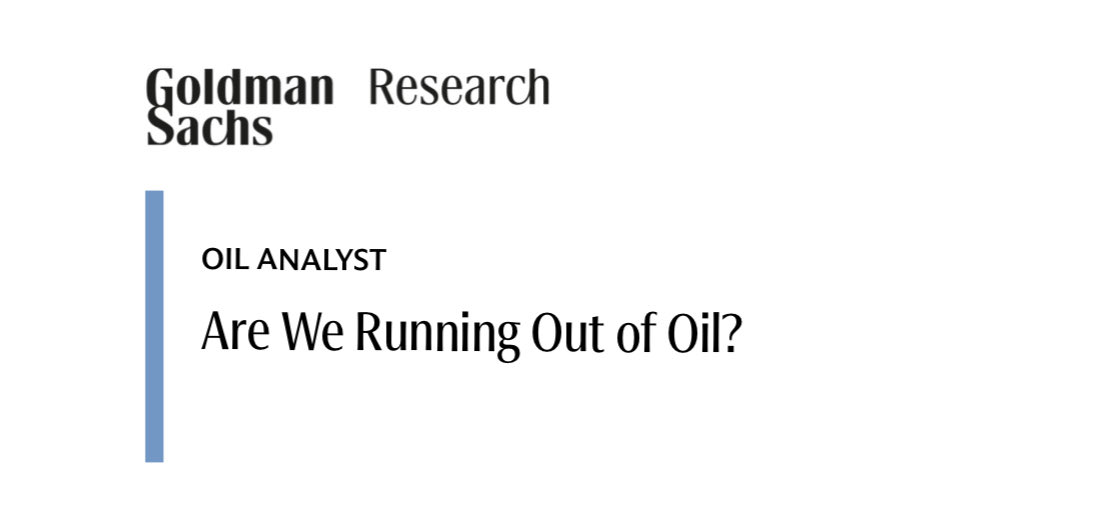
When the headline of the Goldman Sachs research’s report says it all.
Javier Blas tweet media
English
47
225
1.5K
166.6K
Iván Giménez
Iván Giménez@ivangich·
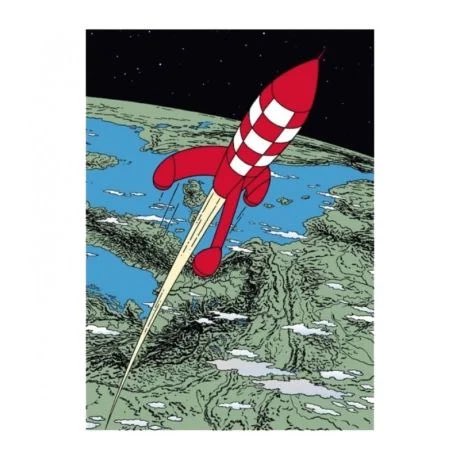
@PALAFOXZGZ Como dices, es reverdecer algo que tiene medio siglo y más que el logro científico/técnico es volver a la lógica de Guerra Fría que tuvo la carrera espacial: "vamos antes de que lleguen los chinos"
Español
0
0
2
59
PALAFOX
PALAFOX@PALAFOXZGZ·
Unpopular Opinion: Que si, que ver el Artemis despegar e ir camino de la luna es espectacular, pero se está celebrando como algo épico e histórico algo que ya se hacía hace 50 años. En serio? En menos de 50 años se pasó del vuelo de los hermanos Wright a tener reactores volando!
Español
9
0
24
1.1K
cierzo74
cierzo74@cierzo74·
@ivangich Me suena de algo y ahora no caigo... 🤔
GIF
Español
1
0
1
58