imaginary

4.2K posts

imaginary banner
imaginary

imaginary

@jaisoddj

Everytime the authority wants to torture one, they invariably vilify Every generation, you listen All you have to do is ask, why, until they're concrete

Liquified and shattered ground Katılım Aralık 2022
76 Takip Edilen73 Takipçiler
Sabitlenmiş Tweet
imaginary
imaginary@jaisoddj·
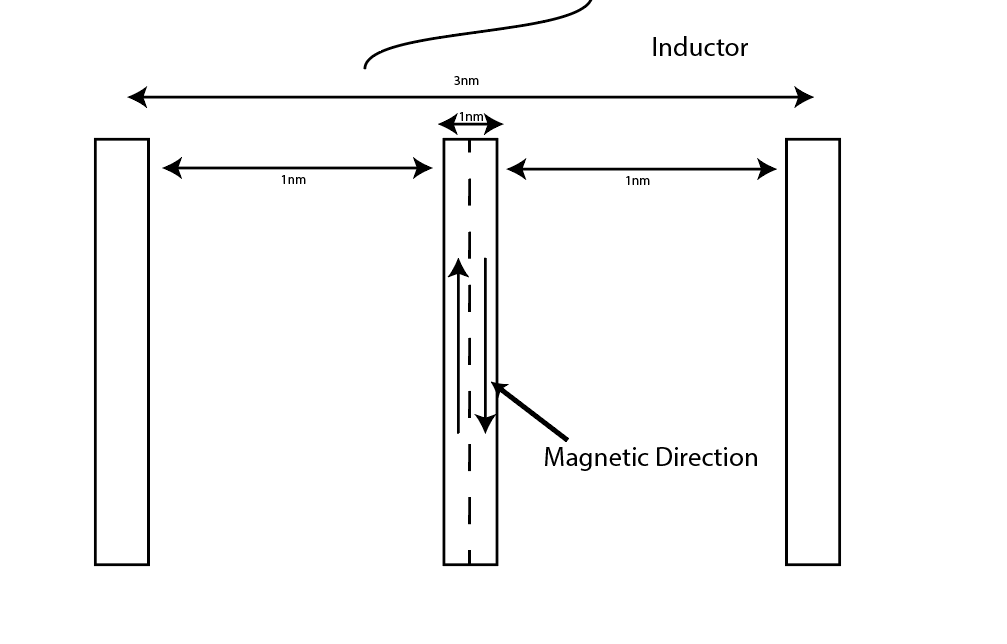
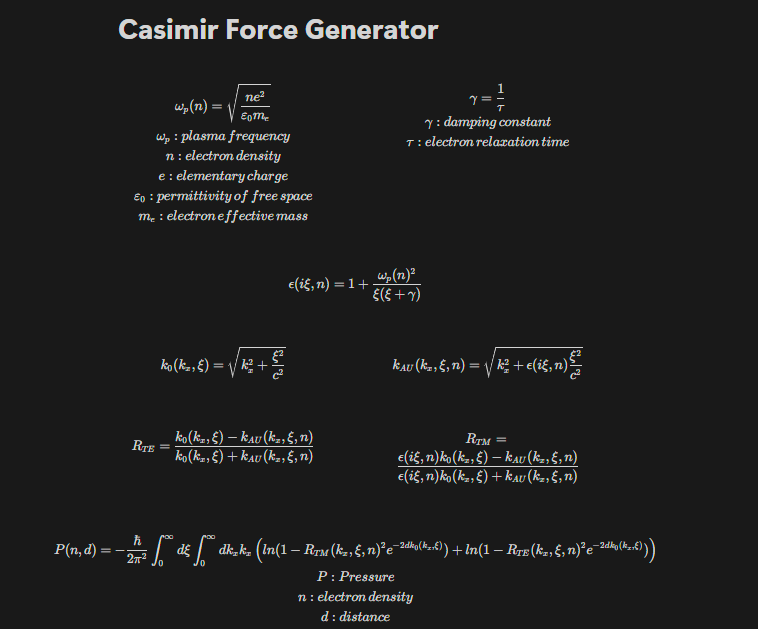
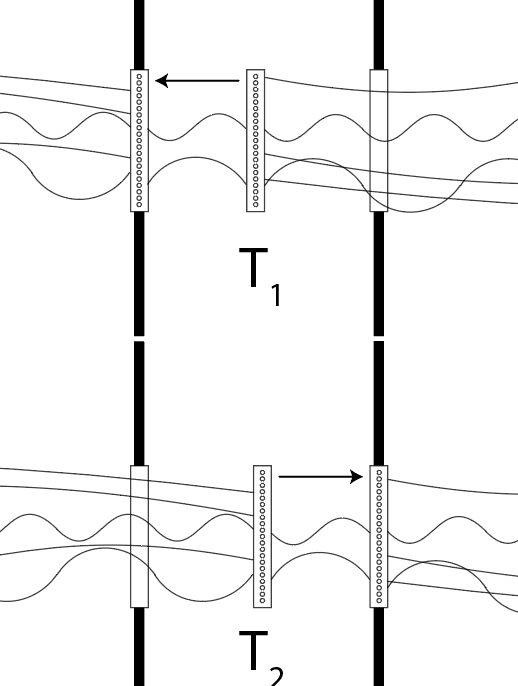
Another nanoscale solution to powering the productive propeller. Keep in mind. 1nm³ fits into 1m³, 10²⁷ times. Zero Point Energy Generator The Casimir Generator Casimir Force: The Casimir force is a quantum mechanical phenomenon where two uncharged, closely spaced objects experience an attractive force due to quantum vacuum fluctuations By the Lifshitz formula: The bulk density of the material isn't a direct term in the Casimir force equation for ideal plates, the electron density (a form of density) within the material is crucial because it influences the material's dielectric properties, especially the plasma frequency, and thus, the strength of the Casimir interaction So, distribute your charges in time, around a neutral magnetic plate, where higher charge density equals greater attraction. The moving magnetic plate, which results, is sapped of energy as it moves against a series of inductors, which feeds voltage to a central circuit. Here, we have a moving magnetic plate that is of an arbitrary magnetic magnitude. I'm calculating returns of over double the energy input
imaginary tweet mediaimaginary tweet mediaimaginary tweet media
English
0
0
1
523
imaginary
imaginary@jaisoddj·
Pair production with a standard .5 meter linac has an efficiency of 1% maximum! So, because 99% of the energy is wasted on a tungsten target, this too, will be hooked up to the altermagnetic thermoelectric generator along with the target on which the pair produced matter annihilates.
English
0
0
0
6
imaginary
imaginary@jaisoddj·
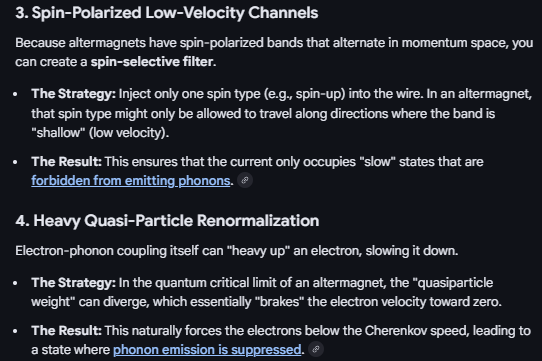
The altermagnet features a variety of exploits with which to maintain a sufficiently low velocity of its electrons, to bring phonon emission to a necessary 0%, meaning the actual metal will never get hot, but its electrons will still directionally accord to their spin, and those velocities will still be filtered by orientations. In other words, I don't need to add energy to the system to keep one side cold.
imaginary tweet mediaimaginary tweet media
English
0
0
0
3
imaginary
imaginary@jaisoddj·
The V₂S₂O monolayer altermagnet can take nearly 10⁹ Joules of heat energy per m³, if evenly distributed, while maintaining its magnetic properties.
English
0
0
0
5
imaginary
imaginary@jaisoddj·
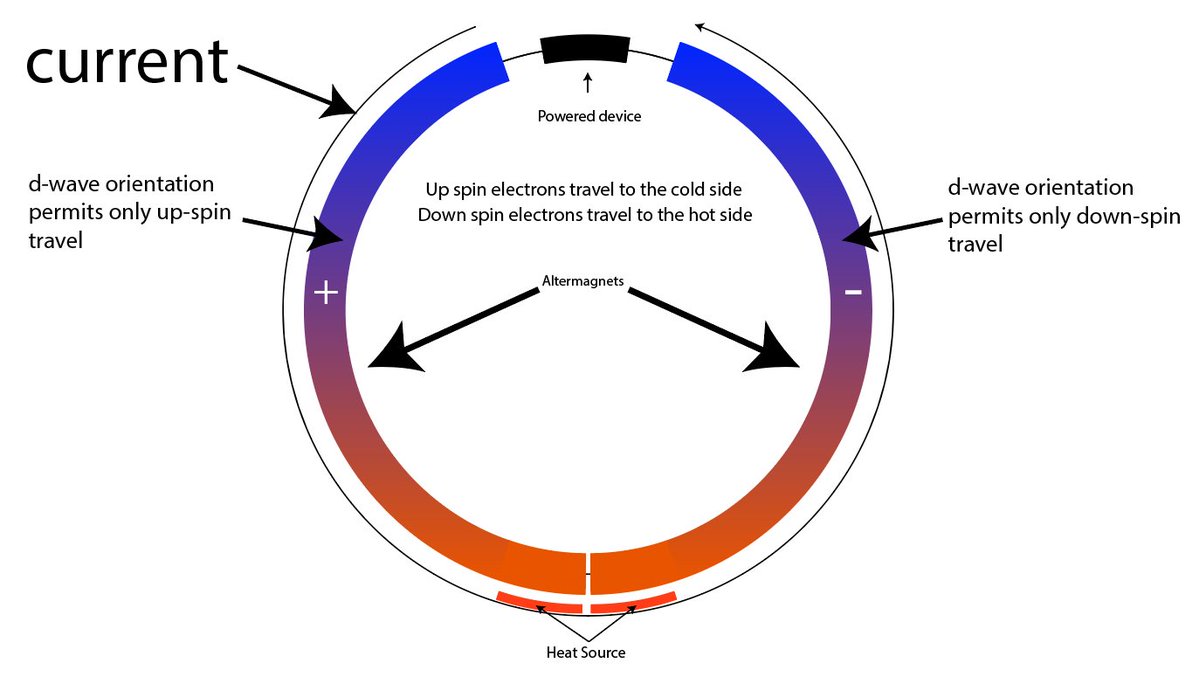
How I'm thinking the altermagnet thermoelectric generator will work, and how I will recycle the pair production energy for the productive propeller.
imaginary tweet media
English
0
0
0
5
imaginary
imaginary@jaisoddj·
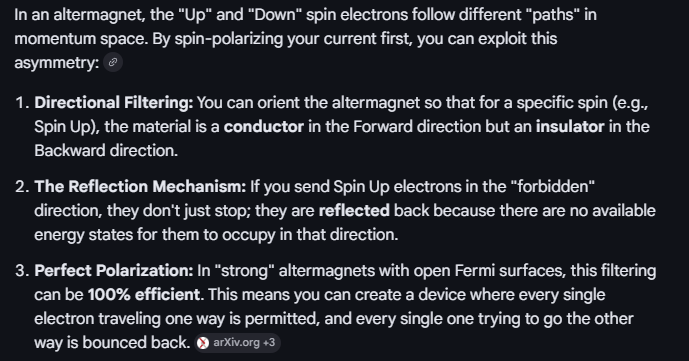
If I am reading this correctly, altermagnets are promising candidates for super efficient thermoelectric generators, as they can achieve one way reflection of electrons. Heat it up, speed them up, and directionally reflect them. The Spin Seebeck Effect: 'Applying a temperature gradient ( ) acts as the "pump." In an altermagnet, this heat pushes spin-up electrons toward the cold end and spin-down electrons toward the hot end. You now have two distinct streams of electrons moving in opposite directions.' The d-Wave Steering Effect: 'If you send a current along one crystal axis (the x-axis), the material acts as a "green light" for spin-up electrons but a "red light" (high resistance) for spin-down electrons.' So, I will apply a combination of the Spin Seebeck effect and the d-Wave Steering effect to Send spin up electrons forward, and spin down electrons backwards, and then permit spin up electrons on that axis, while restricting spin down electrons on that axis to resist or reflect them. The result: 'By combining these, you’ve built a device that takes random waste heat and turns it into a one-way stream of polarized information.'
imaginary tweet media
English
0
0
0
7
imaginary
imaginary@jaisoddj·
Just realized, if I can invent a virtually absolutely efficient thermoelectric generator, I can increase coulomb production to maybe one million per second, at which point, I'd be cycling 511 GW of heat energy. At this point, I could reduce the power to the accelerator to maybe mere kilowatts, as I am pushing so much charge for thrust. The battery for 511 GW would be immense, however. Even at the theoretical limit for energy density of lithium-air batteries, I'd add about 14,000 kg in batteries alone. Oh well, that is still 3 times lighter than a heavy weight fighter jet. Anyhow, if I can get the accelerator to, say 300kW, in theory, at this point, 14,000 kg of batteries would suffice for over 30 hours of flight time. So far, with this setup, I've gotten the wattage down to 1.76MW for the accelerator, 10⁻²⁰ Ns of momentum per charge, 10⁶ Coulombs produced, standard accelerations of a 15,000 kg vessel at half of g, at which point, at this full throttle, it would run for 22 hours.
English
0
0
0
5
imaginary
imaginary@jaisoddj·
Thinking of a superefficient thermoelectric generator. Piezomagnetics may be a solution. 'As [the electron] zips past a piezomagnetic atom, its magnetic field "yanks" on the atom's own magnetic alignment. If the electron's spin is oriented correctly, it can provide just enough of a "kick" to flip the atom's magnetic direction or cause its neighbors to briefly align. This creates a localized, nanosecond-long spike in magnetism.' 'If the electron travels along the crystal’s "easy axis" (the direction the atoms prefer to point), it might pass through with little effect. If it hits at a perpendicular or diagonal angle, it exerts a "torque" (a twisting force) that forces the atom’s magnetic spin to rotate or "wobble." This wobble is what creates the measurable spike.' So, orient the atoms of a piezomagnetic material such that backward angled interactions spike magnetization to curl those electrons into a desirable direction, while forward angled interactions do not, thereby leaving a net current of the wire.
English
0
0
0
16
imaginary
imaginary@jaisoddj·
The productive propeller was supposed to exhaust its produced matter.. Originally, it was supposed to annihilate its own electrons, and recycle the heat to reduce to the massive cost of material production, but the heat energy is humongous, so I just planned to exhaust it. On second thought, considering that the cost is upwards of .5MW per coulomb of charge, I'm going to annihilate some undetermined material on it all, indeed, and recycle the heat energy. This will require a new invention. Hyper efficient thermoelectric generators. Sidenote: The theoretical energy density limit of our batteries of current is 11,000 Wh/kg by the lithium-air battery! That's around 40MJ per kg! We could really get enough energy in a rocket, under feasible weights to lift themselves on Earth and significantly propel themselves for a little while in space! They need to pack either massive amounts of solar panels for feasible recharge rates, or I too, need to invent hyper efficient photovoltaic panels. Even if I could miraculously get the cost of material production down to nothing, with an absolutely efficient thermoelectric generator, the accelerator still requires many megawatts.
English
0
0
0
9