Jake Levi

244 posts

Jake Levi banner
Jake Levi

Jake Levi

@jakelevi_ml

PDHD (PhD+ADHD) student @UniofOxford supervised by @markvanderwilk ~ research == tree search ~ Personal account @lakejevi

Katılım Aralık 2023
383 Takip Edilen37 Takipçiler
Sabitlenmiş Tweet
Jake Levi
Jake Levi@jakelevi_ml·
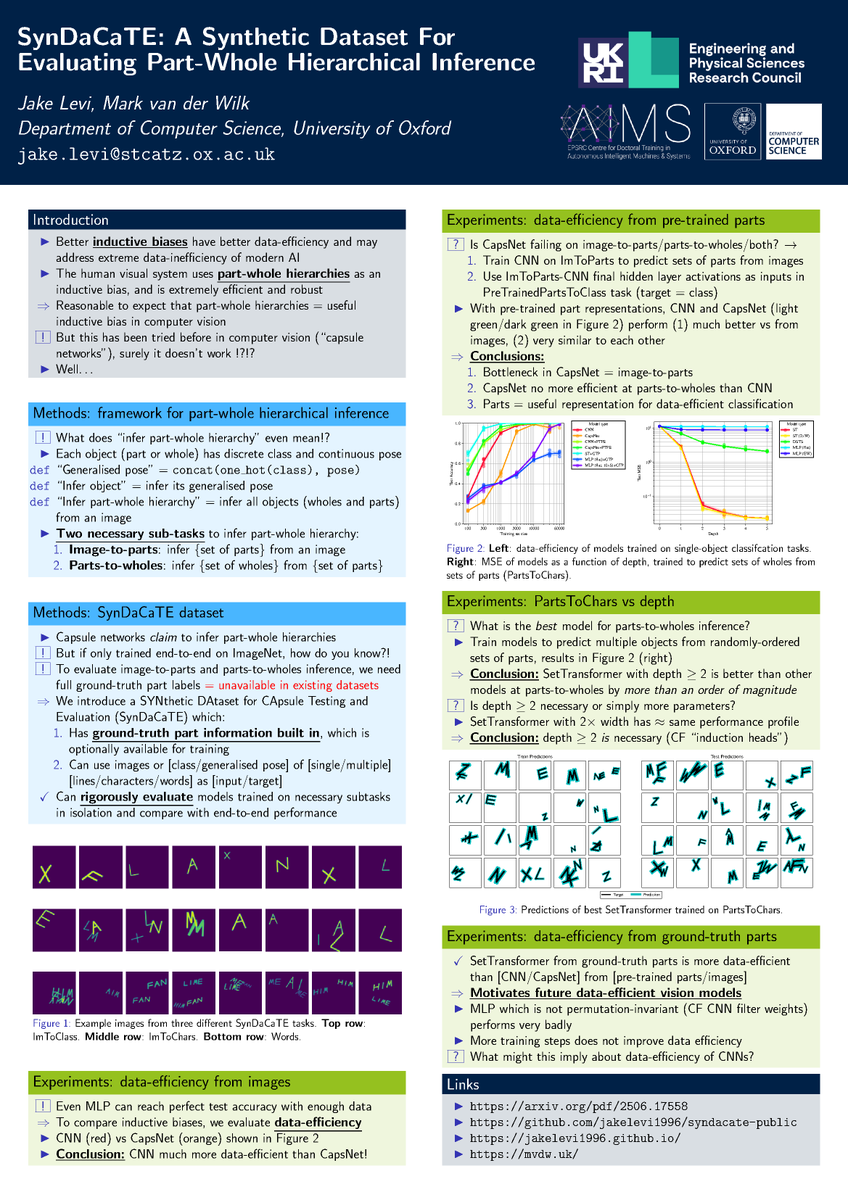
[1/9] 🚨📄 This Saturday 19th July, at the @MOSS_workshop at #ICML2025 , I will present a poster for my new paper "SynDaCaTE: A Synthetic Dataset For Evaluating Part-Whole Hierarchical Inference". Here is a quick overview! ... 🧵
Jake Levi tweet mediaJake Levi tweet media
English
1
0
3
483
Branton DeMoss
Branton DeMoss@BrantonDeMoss·
80e34c73c4b39b8b3384cde89dc2fec88f05b6813d8e74b42e946dfd6d07bb5b
Français
2
0
1
164
Jake Levi
Jake Levi@jakelevi_ml·
@RichardSSutton "I don’t want you to feel entitled — to feel that you were here first, and that therefore you should always have priority." We should feel entitled! We should not create machines that have priority over other human beings! To do so would be a failure
English
0
0
0
59
Richard Sutton
Richard Sutton@RichardSSutton·
The text of my speech last week at the University of Alberta convocation ceremony: Good afternoon graduating students, parents, and ladies and gentlemen of the university community. It is my great honour to receive this degree from the University of Alberta. I am receiving this honour because of my work in artificial intelligence, so I thought I would take this opportunity to talk to you all about the public perception of AI. Today, talk of AI is everywhere. In the news, on billboards, in almost every software product. The headlines scream that intelligence is now a commodity, that conventional programming jobs are disappearing, and that almost all current jobs will soon be automated. There are anxious calls for AI development to be paused or stopped, for fear that an AI will take over the world. Others claim that AI will lead to tremendous increases in productivity, that our new economies may require AI, and that accelerating AI development may be the only way to avoid recession. The current level of public excitement about AI is a new thing. The field is about 70 years old, and for most of this time it has been like any other specialized intellectual activity. Experts did research, wrote papers, and went to conferences. There was always a hope, a belief, that AI research would someday have a big impact on the economy and on society. After all, the aim was to understand intelligence, humanity’s most prized distinguishing feature, the ability that made us powerful. If intelligence was understood, then we could build tools that would make us vastly more powerful. But it would also challenge us. If we understood minds, then we could create minds stronger than our own. Would we just use them, or would we have to become them? The success of AI — of understanding our minds — is a step that cannot help but be profoundly challenging and transformative. Is this what is happening today? In short, no. We do not yet understand how to make minds like our own, that are truly aware of their world and their influence on it, and that are powerful as a result. The coming of true AI still lies in the future, but what is happening now is almost as profound. It is not the moment when true AI arrives, but it is the moment when it becomes clear to the public that true AI will arrive. It is the moment of first contact between the public and the reality of AI in its midst. This moment is pivotal for our society and its relationship to machine minds. Will we fear them and suppress them, or will we embrace them, and even become them? Will we see the AIs as alien competitors, or as our progeny? This is the moment when we have that discussion. “Discussion” of course seems too tame a word. It is loud and noisy. It is controversial at so many levels. It is utopic and dystopic. It is tech billionaires and manipulative governments. And so much of it is driven by fear. Fear of the Terminator and Skynet, of people losing jobs and the machines taking over, of the world suddenly changing underneath us without our permission. The AI fear-mongers have not helped us see clearly, but they have gotten us to pay attention. So, this is what is happening now. Not true AI — that is yet to come, and probably not for another decade or two. But now the public is realizing that it is coming, that mind really can be reproduced in machines, and what that might mean. So when you hear about AI and wonder what is really going on, when you feel powerless because you don’t understand the technology, when you feel that things are changing too fast and that you are being left out, remember this: The reality is exactly the opposite. You have not been passed by and you are not powerless. In fact, you are the main event at this moment. You are what it is all about. You and your reaction, your time and attention, your fear and your dollars, are what it is really all about. Society is struggling over the AI narrative, over how the public thinks about AI, and your part of that is in your head and under your control. It is you that all the newspapers and AI companies are trying to influence. Of course, I too am trying to influence you. What I want is for you to relax and think, to not be afraid, but to pay attention. I want you to know that true AI is not here yet, but that it is coming. I want you to know that machine minds will be joining us in the near future. We have not met them yet, so really it is too soon to be judging them. I want you to be open to the machine minds. I don’t want you to feel entitled — to feel that you were here first, and that therefore you should always have priority. You are the creator species, so you will always be special and perhaps revered, even if you are superseded in some ways. In summary, when science brings us machine minds, I want you to be open, humble and generous to the new arrivals, in the best Canadian tradition. Can we do that? I hope so. Thank you for your attention today.
English
17
51
361
28.7K
Jake Levi
Jake Levi@jakelevi_ml·
General rule of thumb: however well a method performs on a simple problem, it will probably perform worse on a more difficult problem
English
0
0
0
19
Jake Levi retweetledi
Pedro Domingos
Pedro Domingos@pmddomingos·
Geoff Hinton set out to figure out how the brain works and failed. Andrew Ng set out to build a complete robot and failed. Demis Hassabis set out to achieve AGI using deep RL and failed. Yet they all succeeded.
English
32
32
568
39.4K
Jake Levi
Jake Levi@jakelevi_ml·
🌶️ take: "softmax" should be called "softargmax" and "logsumexp" should be called "softmax" 🌶️ but true
English
0
0
0
25
Jake Levi retweetledi
atulit
atulit@atulit_gaur·
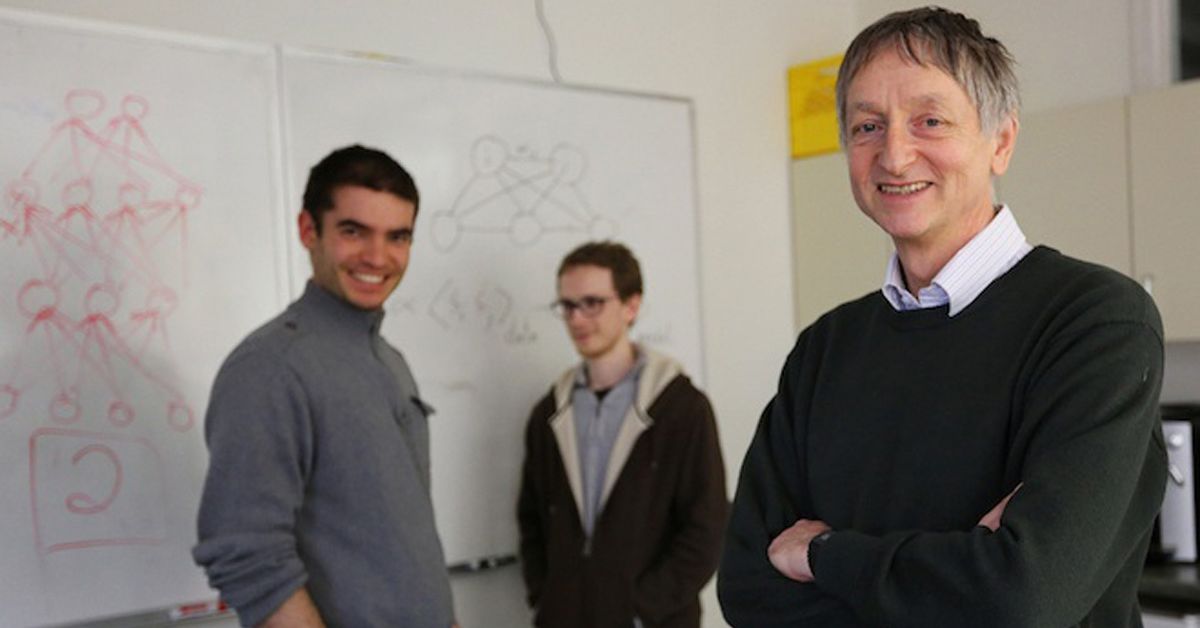
when ilya sutskever joined geoffrey hinton’s lab at the university of toronto, it was a small, almost rebellious place. neural networks weren’t fashionable. most of the field had moved on. hinton hadn’t. ilya stood out, but not in an obvious way. he was quiet, intense, and often thinking in directions that didn’t immediately make sense. there were moments hinton wasn’t fully sure about him - not about his intelligence, but about where it would lead. but hinton had a rare trait as a mentor. he didn’t force direction. he gave space. and ilya used that space differently. while others followed safer paths, he kept pushing on deeper ideas like sequence learning, optimization, representation. things that would later become fundamental. then came alex krizhevsky, and together, in that same lab, they built alexnet. 2012 changed everything. alexnet crushed imagenet. not by a little, but by a gap so large it forced the entire field to rethink. suddenly, the thing hinton had believed in for decades actually worked. that lab - small, stubborn, ignored - became the birthplace of modern deep learning. and ilya was at the center of it.
atulit tweet media
English
17
26
437
35.2K
Jake Levi retweetledi
Andrew Gordon Wilson
Andrew Gordon Wilson@andrewgwils·
It's funny to see the "I want to do... what everyone else is doing, and in exactly the same way" tendency so strong even in science. Really, what's the point? Do something that wouldn't exist if you hadn't worked on it.
English
8
13
149
8.9K
Jake Levi
Jake Levi@jakelevi_ml·
This is a historic turning point. It's interesting, and I think it's valid that people are incentivised to pursue this, but I want no part in it, simply because, at least for the time being, I prefer the satisfaction of doing things myself
Andrej Karpathy@karpathy

Three days ago I left autoresearch tuning nanochat for ~2 days on depth=12 model. It found ~20 changes that improved the validation loss. I tested these changes yesterday and all of them were additive and transferred to larger (depth=24) models. Stacking up all of these changes, today I measured that the leaderboard's "Time to GPT-2" drops from 2.02 hours to 1.80 hours (~11% improvement), this will be the new leaderboard entry. So yes, these are real improvements and they make an actual difference. I am mildly surprised that my very first naive attempt already worked this well on top of what I thought was already a fairly manually well-tuned project. This is a first for me because I am very used to doing the iterative optimization of neural network training manually. You come up with ideas, you implement them, you check if they work (better validation loss), you come up with new ideas based on that, you read some papers for inspiration, etc etc. This is the bread and butter of what I do daily for 2 decades. Seeing the agent do this entire workflow end-to-end and all by itself as it worked through approx. 700 changes autonomously is wild. It really looked at the sequence of results of experiments and used that to plan the next ones. It's not novel, ground-breaking "research" (yet), but all the adjustments are "real", I didn't find them manually previously, and they stack up and actually improved nanochat. Among the bigger things e.g.: - It noticed an oversight that my parameterless QKnorm didn't have a scaler multiplier attached, so my attention was too diffuse. The agent found multipliers to sharpen it, pointing to future work. - It found that the Value Embeddings really like regularization and I wasn't applying any (oops). - It found that my banded attention was too conservative (i forgot to tune it). - It found that AdamW betas were all messed up. - It tuned the weight decay schedule. - It tuned the network initialization. This is on top of all the tuning I've already done over a good amount of time. The exact commit is here, from this "round 1" of autoresearch. I am going to kick off "round 2", and in parallel I am looking at how multiple agents can collaborate to unlock parallelism. github.com/karpathy/nanoc… All LLM frontier labs will do this. It's the final boss battle. It's a lot more complex at scale of course - you don't just have a single train. py file to tune. But doing it is "just engineering" and it's going to work. You spin up a swarm of agents, you have them collaborate to tune smaller models, you promote the most promising ideas to increasingly larger scales, and humans (optionally) contribute on the edges. And more generally, *any* metric you care about that is reasonably efficient to evaluate (or that has more efficient proxy metrics such as training a smaller network) can be autoresearched by an agent swarm. It's worth thinking about whether your problem falls into this bucket too.

English
0
0
0
48
Jake Levi
Jake Levi@jakelevi_ml·
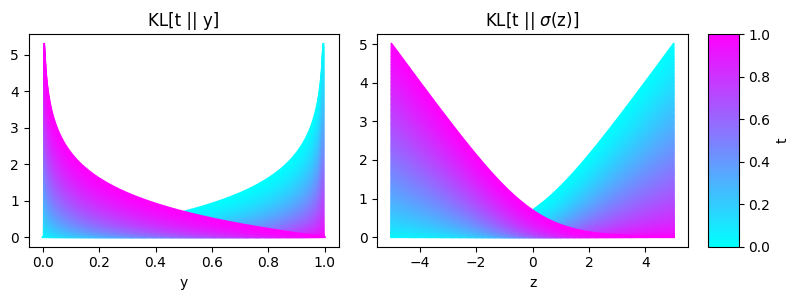
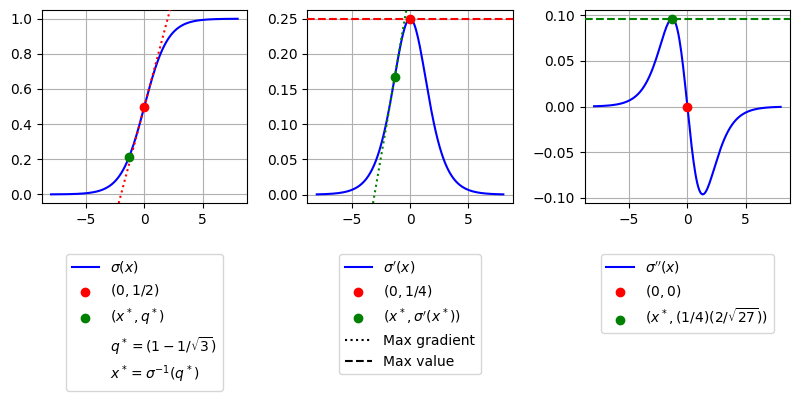
As an interesting test of both ChatGPT and Gemini, I gave this image to both LLMs, with prompt "Write code to generate this plot". There were mistakes in the code from BOTH (but Gemini was better). Also, code from both was IMO uglier than mine. Think before trusting LLM code!
English
0
0
0
42
Jake Levi
Jake Levi@jakelevi_ml·
Intuition in research ~ value functions in RL. The better the value function, the easier it is to learn an effective policy and act successfully within an environment
English
0
0
1
27
Jake Levi retweetledi
nxthompson
nxthompson@nxthompson·
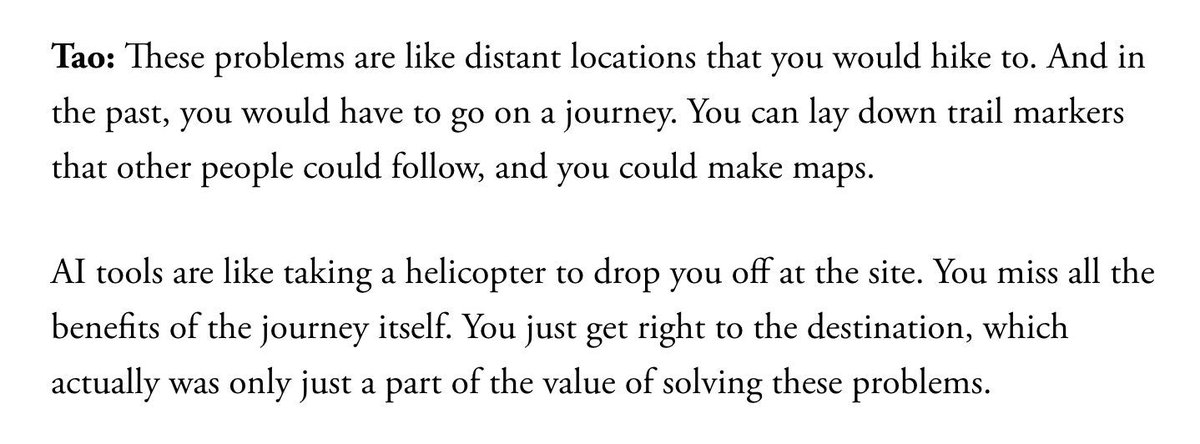
I love this metaphor from Terence Tao—widely considered the world’s greatest living mathematician—about one of the drawbacks of using AI to solve hard math problems. theatlantic.com/technology/202…
nxthompson tweet media
English
61
591
4K
151.4K
Jake Levi
Jake Levi@jakelevi_ml·
What motivates me to research computer models of neural networks? It's interesting to understand anything complicated. Human intelligence is complicated. This research could one day help us to understand human intelligence better, and in so doing, help us to understand ourselves
English
0
0
0
25
Jake Levi
Jake Levi@jakelevi_ml·
Anyone else think that AI/ML research papers are becoming increasingly shallow? The frequency with which I find genuinely useful, interesting, deep insights from papers seems to be decreasing over time Maybe I just need better research discovery methods (advice welcome)
English
0
0
0
26
Jake Levi
Jake Levi@jakelevi_ml·
New year, new me, new blog post (and new paper, which I have written, and will hopefully soon be able to publicise). "Is the future of AI in good hands? An analysis of 3 Tweets" Read on my sparkly new ✨substack✨ jakelevi1996.substack.com/p/is-the-futur…
English
0
1
1
51
Jake Levi
Jake Levi@jakelevi_ml·
Instead of safety fine tuning LLMs, which is notoriously brittle and full of vulnerabilities, wouldn't it be possible to just use a pre-trained LLM to filter out training data which contains harmful knowledge (EG how to build a bomb) so it never enters the LLM in the first place?
English
0
0
0
40