Jamie Jennings 🏳️‍🌈 @[email protected]

1.7K posts

Jamie Jennings 🏳️‍🌈 @jamiejennings@hachyderm.io

Jamie Jennings 🏳️‍🌈 @[email protected]

@jamietheriveter

Computer science professor @cscncsu. IBMer for 19 years. PhD @CornellCIS 1995. She/her. @[email protected]

Emacs Katılım Temmuz 2016
241 Takip Edilen285 Takipçiler
Jamie Jennings 🏳️‍🌈 @[email protected] retweetledi
Chaucer Doth Tweet
Chaucer Doth Tweet@LeVostreGC·
That ys me yn the corner That ys me yn the spot lighte recommendinge bookes that Ich knowe are goode but that Ich have not myselfe read by cause Ich will not get thrugh my ever-growinge 'to reade' pile evir
English
2
47
308
14.4K
Jamie Jennings 🏳️‍🌈 @jamiejennings@hachyderm.io
@paulg @Meaningness I enjoyed jar’s related analysis. He put scheme48 on our robots at Cornell and we would have been nowhere without it. He split out the compiler+debugger so it ran on a workstation and talked to the scheme vm on the robot. I thought I knew lisp until I worked with Jonathan!
English
0
0
0
96
Jamie Jennings 🏳️‍🌈 @[email protected] retweetledi
David Chapman
David Chapman@Meaningness·
The older you get, the harder to resist saying "I told you so." When OO programming came in, it made no sense to me, and I've never used it. Everyone said I was too old to understand. Thirty years later, everyone's snapping out of it and wondering wtf they'd been thinking.
English
195
159
2.6K
1.4M
Jamie Jennings 🏳️‍🌈 @[email protected] retweetledi
Chaucer Doth Tweet
Chaucer Doth Tweet@LeVostreGC·
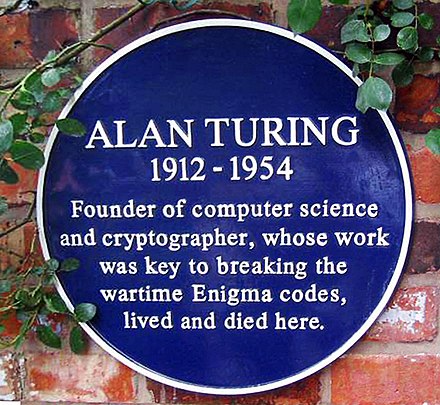
For Alan Turing on his birthedaye, nothinge but love. A genius who deservid so much more than the homophobic crueltye and horror given to him by the ignorance of the worlde. Looke arounde todaye, and worke to make thinges bettir.
Chaucer Doth Tweet tweet media
English
1
137
718
27.1K
Jamie Jennings 🏳️‍🌈 @[email protected] retweetledi
Chaucer Doth Tweet
Chaucer Doth Tweet@LeVostreGC·
An ymportant message that must be shared as much as possible. It wolde be moost welcome and wondirful yf we koude RT thys one hundred tymes. The struggle of these workeres ys part of a larger struggle for rightes and freedoms. Plese RT!
Starbucks Workers United@SBWorkersUnited

Starbucks workers across the country are striking this week over Starbucks’ treatment of queer & trans workers. We know that workers rights ARE queer & trans rights. Here’s just some of the things we’re fighting for —

English
2
78
187
32.5K
Jamie Jennings 🏳️‍🌈 @[email protected] retweetledi
Ilhan Omar
Ilhan Omar@IlhanMN·
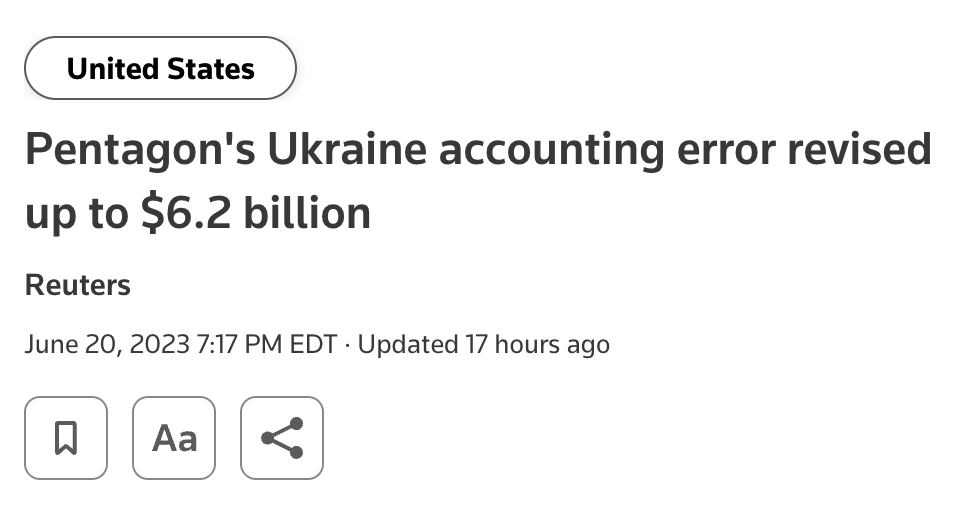
We spend less than $4 billion on addressing homelessness each year. But for the Pentagon’s $858 billion budget, $6.2 billion is just an “accounting error.” Our priorities are completely backwards.
Ilhan Omar tweet media
English
457
506
3.1K
222.3K
Jamie Jennings 🏳️‍🌈 @[email protected] retweetledi
Shriram Krishnamurthi (primary: Bluesky)
Can't say this loudly enough. EVERY worthwhile thing I've done has been part of a team. I grew up thinking science was solo efforts; as an undergrad I learned how social it could be and felt free to embrace that. Students: don't belabor under "movie stereotypes".
Kathi Fisler@KathiFisler

@ShriramKMurthi @sigplan @racketlang @Bootstrapworld @PyretLang Echoing @ShriramKMurthi's acknowledgement of the many others we've worked with over the years. Couldn't have done it without them, and it wouldn't have been nearly as much fun. Young researchers: learn how to seek out collaborators -- it pays off in so many ways.

English
2
10
57
7.7K
Jamie Jennings 🏳️‍🌈 @[email protected] retweetledi
Jessica Ellis
Jessica Ellis@baddestmamajama·
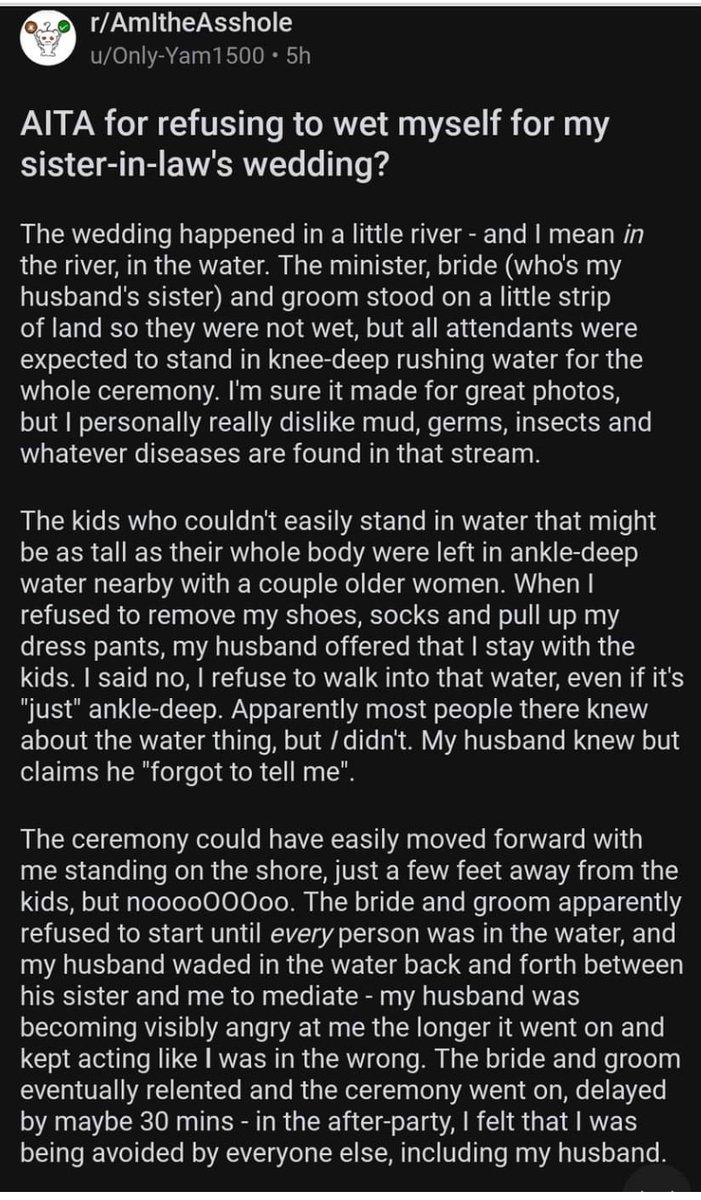
Wedding culture has gotten insane and should be studied as a symptom of societal collapse.
Jessica Ellis tweet media
English
308
1.3K
25.9K
3.6M
Shriram Krishnamurthi (primary: Bluesky)
Honestly, most excited @sigplan recognized @KathiFisler. I get ample notice but she's worked so well, so hard, on so much, but gets overshadowed. So many others also earned this: @racketlang collabs, @Bootstrapworld co's, @PyretLang co's, former students. I'm just SO darn lucky.
Racket@racketlang

Congratulations to Kathi Fisler and Shriram Krishnamurthi for the SIGPLAN Distinguished Educator Award 2023. @KathiFisler @ShriramKMurthi

English
26
12
175
19.6K
Jamie Jennings 🏳️‍🌈 @[email protected] retweetledi
Paul Terra
Paul Terra@junyer·
THAT'S WHAT I KEEP TRYING TO TELL PEOPLE.
Paul Terra tweet media
English
4
56
120
0
Jamie Jennings 🏳️‍🌈 @jamiejennings@hachyderm.io
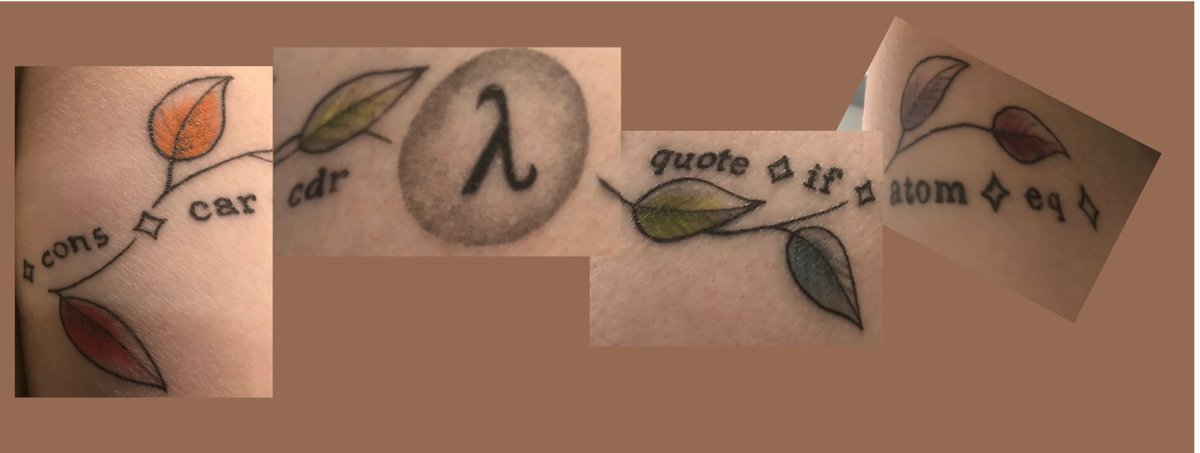
(*) In one deviation, I decided to use IF instead of COND, mostly for aesthetic reasons but also because COND is sugar for the essential expression-oriented conditional, IF.
English
0
0
4
241
Jamie Jennings 🏳️‍🌈 @jamiejennings@hachyderm.io
Two updates from the academic year 2022-23: I got a tattoo of the “Maxwell’s equations of software”, the core elements of Lisp from McCarthy’s early paper. It’s an armband, with lambda in the center. Also, I’ve been promoted to Associate Prof (teaching, not tenured).
Jamie Jennings 🏳️‍🌈 @jamiejennings@hachyderm.io tweet media
English
4
2
9
2.8K
Jamie Jennings 🏳️‍🌈 @jamiejennings@hachyderm.io
Faculty burn out from “institutional crises around finances and accreditation, the ever-increasing amount of committee work, the pressure to publish more and more, the lack of recognition from university leaders, and the lack of affirmation and engagement from students”
English
0
0
1
169
Jamie Jennings 🏳️‍🌈 @[email protected] retweetledi
Rose Bohrer
Rose Bohrer@rose_bohrer·
Want to cold-contact an academic because you're curious about their work? Just do it! Most of us love to see our work make someone excited. Worst that can happen is they're busy and don't respond
English
0
1
11
446
Jamie Jennings 🏳️‍🌈 @[email protected] retweetledi
Daniel Lemire
Daniel Lemire@lemire·
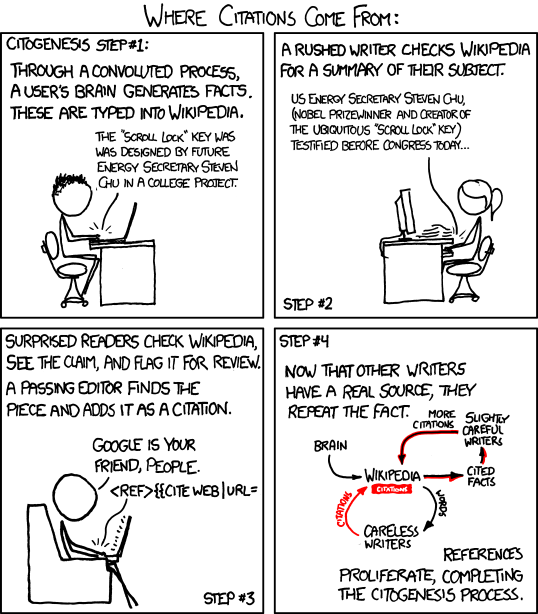
Citogenesis in science and the importance of real problems Scientists publish papers in refereed journals and conferences: they write up their results and we ask anonymous referees to assess it. If the work is published, presumably because the anonymous referees found nothing objectionable, the published paper joins the “literature”. It is not a strict requirement: you can do excellent research without publishing in refereed journals. Einstein refused to publish in refereed journals. The famous computer scientist Dijkstra mostly published his work in the form of letters he would send to his friends: today, we would refer to this model as a blog. Dijkstra invited computer scientists to become independent of peer review as he viewed the peer review process as a path toward mediocrity. More recently, the folks from OpenAI appear to mostly publish unrefereed online papers. Yet OpenAI has probably produced the greatest scientific breakthrough of the decade. Unfortunately, some people confuse “science” with the publication of refereed papers. They may also confuse our current knowledge with what is currently published in refereed journals. Many papers in Computer Science tell the following story: 1. There is a pre-existing problem P. 2. There are few relatively simple but effective solutions to problem P. Among them is solution X. 3. We came up with a new solution X+ which is a clever variation on X. It looks good on paper. We ran some experiments and tweaked our results until X+ looked good. We found a clever way to avoid comparing X+ and X directly and fairly, as it might then become obvious that the gains are small, or even negative! They may think: We would gladly report negative results, but then our paper could not be published. Some years ago, I attended a talk by a highly productive research who was providing advice to the students: never run an experiment unless you are sure you can turn it into a positive result. It seems hard to believe that you can make sure that all your ideas turn out to be correct. But it is not so difficult. A popular approach to get positive results is to use a model as validation. Testing in the real world takes a lot of effort and your results could be negative, so why bother? Even when running experiments in the real world, there are many ways to cheat to ensure you get the result you need. It looks harmless enough: just people trying to build up their careers. But there might be real harm down the line. Sometimes, especially if the authors are famous and the idea is compelling, the results will spread. People will adopt X+ and cite it in their work. And the more they cite it, the more enticing it is to use X+ as every citation becomes further validation for X+. And why bother with algorithm X given that it is older and X+ is the state-of-the-art? Occasionally, someone might try both X and X+, and they may report results showing that the gains due to X+ are small, or negative. But they have no incentive to make a big deal of it because they are trying to propose yet another better algorithm (X++). This process is called citogenesis. It is what happens when the truth is determined solely by the literature, not by independent experiments. Everyone assumes, implicitly, that X+ is better than X. The beauty of it is that you do not even need for anyone to have claimed so. You simply need to say that X+ is currently considered the best technique. Some claim that science is self-correcting. People will stop using X+ or someone will try to make a name for himself by proving that X+ is no better and maybe worse than X. But in a business of science driven by publications, it is not clear why it should happen. Publishing that X+ is no better than X is an unimpressive negative result and those are rarely presented in prestigious venues. Of course, the next generation of scientist may have an incentive to displace old ideas. There is an intergenerational competition. If you are young and you want to make a name for yourself, displacing the ideas of the older people is a decent strategy. So it is credible that science may self-correct, one funeral at a time: A new scientific truth does not triumph by convincing its opponents and making them see the light, but rather because its opponents eventually die (…) An important scientific innovation rarely makes its way by gradually winning over and converting its opponents (…) What does happen is that its opponents gradually die out, and that the growing generation is familiarized with the ideas from the beginning: another instance of the fact that the future lies with the youth.— Max Planck, Scientific autobiography, 1950, p. 33, 97 There are cases where self-correction does happen: if there is a free market and the scientific result can make a difference by offering a better product or a better service. That is why computer science has made so much progress, so rapidly: we have clients that will adopt our ideas if they are worthwhile. Once your new idea is in the smartphones, it is hard to deny that it works. Similarly, we know that Physics work because we have nuclear bombs and space exploration. What keeps us honest are the real problems. John Regehr made a similar point about our inability to address mistakes in the literature: In many cases an honest retrospective would need to be a bit brutal, for example to indicate which papers really just were not good ideas (of course some of these will have won best paper awards). In the old days, these retrospectives would have required a venue willing to publish them, (…), but today they could be uploaded to arXiv. I would totally read and cite these papers if they existed (…) But there is hope! If problem P is a real problem, for example, a problem that engineers are trying to solve, then you can get actual and reliable validation. Good software engineers do not trust research papers: they run experiments. Is this algorithm faster, really? They verify. We can actually see this effect. Talk to any Computer Scientist and he will tell you of clever algorithms that have never been adopted by the industry. Most often, there is an implication that industry is backward and that it should pay more attention to academic results. However, I suspect that in a lot of cases, the engineers have voted against X+ and in favor of X after assessing them, fairly and directly. That is what you do when you are working on real problems and really need good results. It gets trickier in fields such a medicine because success may not ever be measured. Do you know if your doctor is more likely to cure you than another doctor? They may not even know themselves. So you need to work on problems where people measure the results, and where they have an incentive to  adopt ideas that work. In effect, you need real problems with people who have skin in the game. lemire.me/blog/2023/06/1…
Daniel Lemire tweet media
English
5
8
36
6.7K
Jamie Jennings 🏳️‍🌈 @[email protected] retweetledi
Amy Diehl, Ph.D.
Amy Diehl, Ph.D.@amydiehl·
Imposter Syndrome is a misogynistic scheme to keep women focused on their supposed inadequacies, instead of the system that holds us back. Women: There's nothing wrong with you and there is nothing about you that needs "fixed". @reshmasaujani glamour.com/story/impostor…
English
5
64
190
28.4K