

🐧 Javier
4.8K posts

🐧 Javier
@javipdr
Medicina Preventiva y Salud Pública. Católico.
España Katılım Kasım 2011
1K Takip Edilen1.4K Takipçiler

@DonMaizo Algunos son ateos porque no han conocido a Dios. Otros son ateos porque lo han rechazado. Para algunos, su propia voluntad es el principio que lo guía todo. La eutanasia permite al individuo elegir incluso su propia muerte. Consecuencia de no saberse hijos de Dios.
Español

Cuando era ateo tenía una posición incluso más contraria hacia el aborto y la eutanasia precisamente porque estaba convencido de que después de la muerte no había más que un vacío infinito. ¿Qué clase de argumento descerebrado es no defender la vida porque no eres católico?
Don Maízo@DonMaizo
La defensa de la vida no es un capricho absurdo de ultracatólicos. El catolicismo defiende la vida, sí, pero los creyentes, precisamente, creen que las víctimas van al Cielo con Dios. Es nuestra parte material, ligada al mundo, la que más grita que la vida debe ser defendida.
Español

Dicen que la eutanasia de Noelia está justificada por su situación de discapacidad, que estar en una silla de ruedas no es vida. Aparte de la brutalidad que eso supone, ignora el hecho de que ella quedó en discapacidad después de una violación y un intento de suicidio.
Español
Dicen que ETA ya *no existe. Claro que no. Nuestro Gobierno *no se sostiene con el apoyo de Bildu, cuyo objetivo principal *no es la liberación de los presos de ETA... La política de todo un país condicionada por 200 terroristas en prisión.
Iñaki Arteta Orbea@IakiArtetaOrbea
Este es el plan. Otegi en 2021:
Español

Tengo 37 años, gano bien, viajo 4 veces al año y mi casa siempre está impecable y en silencio. Ayer mi mejor amiga, que tiene 2 hijos y vive estresada, me dijo que mi vida 'no tiene propósito' porque no he formado una familia.
Honestamente, veo su vida (pañales, gritos, no dormir, cero ahorros) y me parece una pesadilla. Le respondí que mi propósito es disfrutar mi dinero y mi paz, no ser una mártir de la maternidad. Se ofendió muchísimo. ¿Tan difícil es aceptar que algunos elegimos NO arruinar nuestra vida?
Español
Estos "vascos" tienen una cultura diferente, una religión diferente, un idioma diferente. No se adaptan, viven en sus propias comunidades. Tasas de criminalidad altísimas. No aportan a la economía local. Peeero ... son vascos.
ain noa 🏛@noanovota
“Cerca de 150.000 vascos de religión musulmana”. EITB, tu telediario de confianza, que informa con aparente ligereza sobre los nuevos vascos, sus costumbres recientes… incluyendo, por ejemplo, a niñas pequeñas que llevan velo. Todo esto en un reportaje de hoy mismo.
Español
Una de las eliminatorias más épicas de la historia del fútbol.
Noticias Último Minuto – Deportes@MauroSports24
Recordar es volver a vivir El milagro del Real Madrid para remontar al Manchester City en la Champions League de 2022. Dos goles de Rodrygo en el último minuto. Quién ganará hoy ?
Español
Pepe Cuenca es histórico.
Don Raggio@Raggiomoral
"El ajedrez es aburrido. Prefiero el fútbol" La partida de ajedrez menos tensa:
Español
Hay que quemar Hacienda.
Hispanic Nomad | Remote Work, Travel, Growth@hispanicnomad
I just found my favorite Spanish 🇪🇸 tax authorities story ever Paco Vallejo was a professional chess player. Top 40 in the world; which is a CRAZY achievement Then Hacienda decided he owed them €650,000... For money he never made See, Paco played online poker in 2011, for fun. He ended up losing 5,715€, which, you know, no big deal But Hacienda took that and decided to ruin his life See, in 2011 there was an old Spanish law that taxed poker "winnings" at 47% but didn't allow you to deduct losses. So if you made €86,000 and lost €92,000, the government ignored the losses and taxed you on the full €86,000. This law was insane. Everyone knew it was insane. So in 2012 they changed it But they didn't make the change retroactive Five years later, in 2016, Hacienda sends Vallejo a letter. They've looked back at his 2011 poker account, and saw he had gross winnings of €86,482. They ignored that he lost €92,197. They did the math under the old law and told him he owed €550,000 in taxes For money he never made, and for a loss he actually took Paco is Spain's #1 chess player. One of the world's best. This wasn't some hidden offshore scheme, either; his poker account was completely transparent, digitally recorded. They could see every hand. They knew he lost money They didn't care The appeals process was designed to break him: ❌ Years of lawyers ❌ Legal fees destroying his savings ❌ Every day, the threat of seizure hanging over him ❌ His mother got sick during this period. He couldn't help her because Hacienda had already taken almost all his money The stress was so severe he withdrew from a major international chess tournament. First time in his professional career He was 35 years old, and one of Spain's greatest talents. And the government was treating him like a criminal for playing poker once and losing money So he left Spain Eventually he won the case, which took him six years of his life. But here's the thing: ❌Hacienda didn't compensate him for the legal costs ❌ Didn't compensate him for the years of stress ❌ Didn't compensate him for the tournaments he cancelled, the image damage, the psychological destruction He just got his initial money back, and he had to move on This is what I mean when I talk about Spain's tax system. It's not just "unfair." It's designed to assume guilt and make you prove innocence, even when the digital evidence is crystal clear Funny enough, Paco released an interview last week, and it turns out he's living in Paraguay now, too. I'd love to meet him; so Paco, if you're reading this, let's grab a beer! Anyway, that's why Paco left, and why thousands of others leave too And that's what I help people navigate
Español
🐧 Javier retweetledi

Medidas herejes impensables para aumentar la natalidad: dar dinero SOLO a hombres. En este estudio se vio que un aumento de sueldo en hombres les hacía tener más hijos, mientras que un aumento de sueldo en mujeres les hacía tener menos hijos.
More Births@MoreBirths
A recent study found that giving men a pay raise led them to have more children, while giving women a pay raise led them to have fewer children. 🧵.
Español

@julian_chandal Están los judíos poniendo la escena de turno en cada peli (en cada maldita peli) y llega una chica que dice que no las mira y saltamos a por ella en vez de ir por los productores de esas escenas de degenerados.
Español

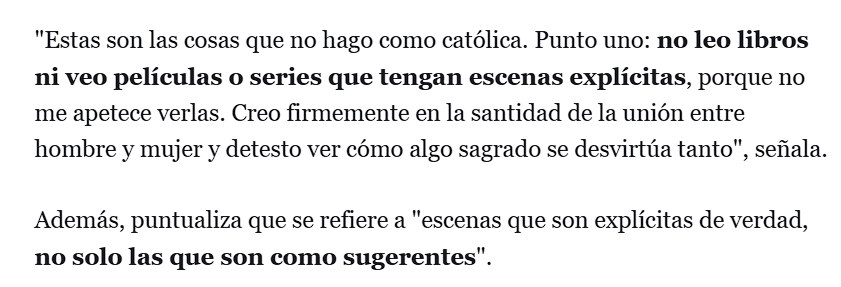
Segundo artículo idéntico en tres días. Del otro borré el comentario porque me pareció un poco bruto y de mal gusto sugerir cosas de una muchacha joven que (por la razón que sea) se acerca a la iglesia. Pero coño, primera cosa que dice la entrevistada en el artículo:
EL ESPAÑOL@elespanolcom
⛪️ Eva Alcalá, joven católica de 24 años: "Para mí la Misa no es una segunda opción, si tengo que cancelar planes, lo hago" dozz.es/4fw7o3
Español
Miguel, ha sido un placer hablar contigo. Creo que lo podemos dejar aquí, porque ya nos estamos repitiendo un poco. Efectivamente, cambiar hábitos dietéticos es difícil. En UNATI tendrán que trabajar bien para conseguirlo. Con todo, en ensayos nutricionales previos lo han logrado. Efectivamente, el grupo intervención no es un grupo de consumo moderado de alcohol "sin más". También importa el patrón de consumo y el tipo de bebida alcohólica (el vino). Regalar el vino es necesario para estandarizar la exposición y también para evitar sesgos de estatus socioeconómico (para análisis observacionales del ensayo). Además, es la práctica recomendada, y es análogo a lo que se hace en ensayos farmacológicos.
Español

@javipdr Tengo amplia experiencia en pacientes con consumo de alcohol y con 50 años te puedes pasar a la cerveza sin alcohol si bebías cerveza pero conozco poca gente con consumo importante de alcohol que cambie el tipo de bebida. Al final, cambiar de gustos con 60 años es difícil.
Español
¿Qué implicaciones tiene el estudio UNATI sobre consumo de alcohol y qué resultados va a permitir obtener? Voy a hacer un #hilo para intentar explicar qué puede responder y, sobre todo, qué NO puede responder.
unav.edu/web/departamen…
Español