

spongebrave
244 posts

$NC pump is inevitable.
If bitcoin stabilises then expect a bigger pump from nodepay.

English

@johnnysuede That's not how staking works.... you can literally be net profitable even if you're offline like 40% of the time.
English
Some thoughts on solo staking, what realistic value solo (+ small-business and community) stakers could provide to the network, and what changes L1 can make to better support solo stakers.
Samuel Chong@stakesaurus
A summary of my fireside chat with @VitalikButerin at the Home Staking Summit in Singapore last week if you weren't able to attend. *Disclaimer: This also includes some of my prior understanding and interpretation. Part 1 of 3: The importance of solo stakers Solo stakers serve as both the first and last line of defence for the Ethereum network. First line = Providing censorship resistance. Last line = Quorum-blocking set by preventing 67% finalisation of the wrong chain As a censorship resistant set, solo stakers are typically uncorrelated and unaligned with any organisations, making them a difficult target for regulatory capture or coercion. What this means is that, certain organisations can try to impose censorship on Ethereum but will likely only go as far as delaying these transactions. Full censorship will be extremely difficult because solo stakers exist on Ethereum (amongst other mechanisms). IMO this is a huge part on why ETH is the credibly neutral block space that serious money wants to settle on!😎 As a quorum-blocking set: Ethereum's social layer can organise a recovery from a 51% capture where the chain splits in 2 but finalising the wrong thing (i.e., 67% capture) will be very bad as the blockchain's past & future can be changed without direct slashing risks. One way to prevent finalisation capture is to increase the quorum threshold - e.g., from 67% to 75% or even 85%. At 85%, current numbers of identified solo stakers + unidentified stakers from @hildobby_ 's dashboard will be sufficient. But on the other hand, will this decrease the cost of attack to prevent finalisation? - e.g., from >33% to just >15% of staked ETH? Not necessarily, as there are cheaper backdoor ways to mount this attack even today. Eg. Bribing core devs or key employees of large node operators, or even outrightly buying out the large node operators Hence, the 33% of staked ETH here represents the highest cost of attack to hold the chain hostage. If so, then we are currently overpaying to prevent >33% front door attack today, which means there is room to decrease the budget in favour of better security against ">66%" attacks. The analogy Vitalik uses is that if we imagine a house with 10cm thick bulletproof glass as windows but has a crappy wooden door, then we should reallocate resources to strengthening the weakest link. The other more ambitious but realistic method is to increase the number of solo stakers such that we become the quorum-blocking set of the current finalisation threshold. How do we achieve this? Stay tuned for Parts 2 and 3 for my discussion with Vitalik on Orbit SSF and Rainbow Staking!
English

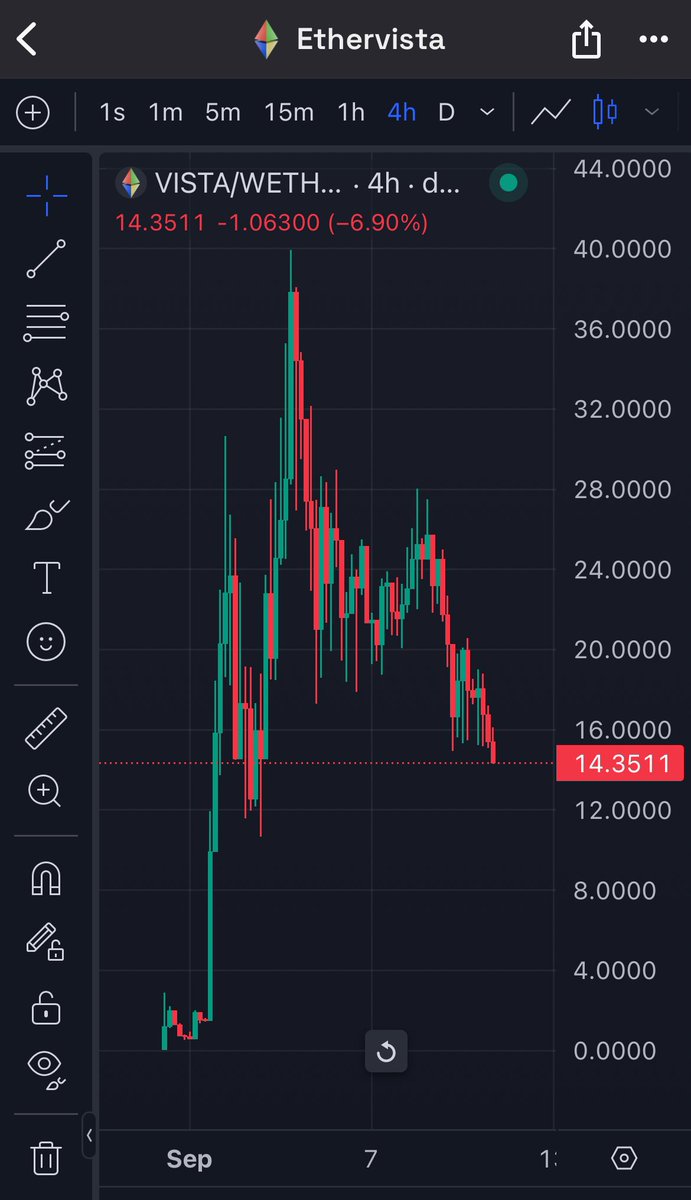
We about to witness death of $vista, in couple days down almost 50%, it was looking as accumulation zone, but non-stop selling, every try pump back to 18-20 getting heavily insta sold, even is good project, but already lost traction and support. Soon under 10
Horrible chart
English

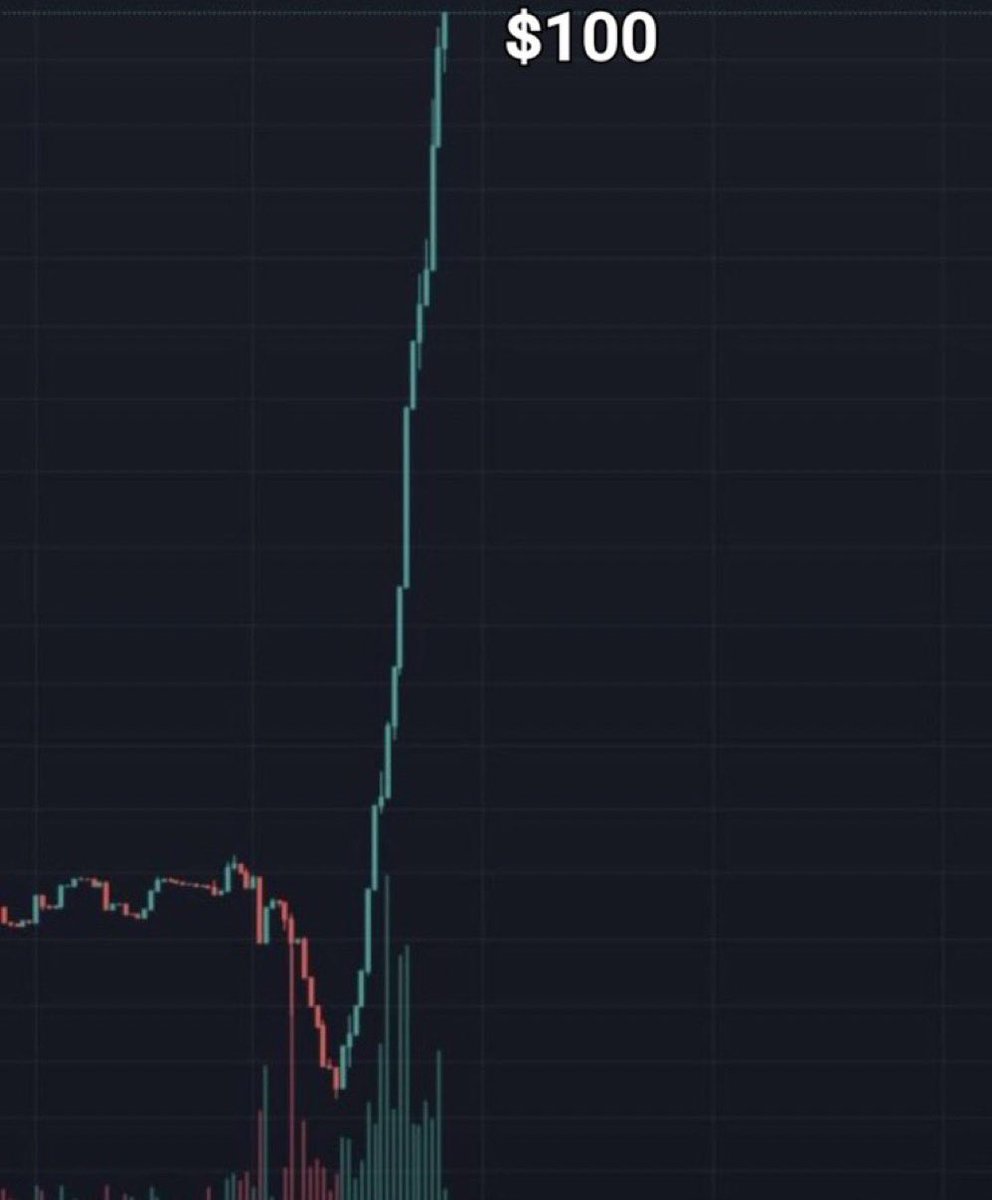
Get ready for massive breakout with #XRP! It's on the verge of a multi-year breakout, and once it happens, the pump will be absolutely huge! Get ready to ride the wave and enjoy the exciting gains coming our way! 🌊💥💰 #Crypto #XRPCommunity
English



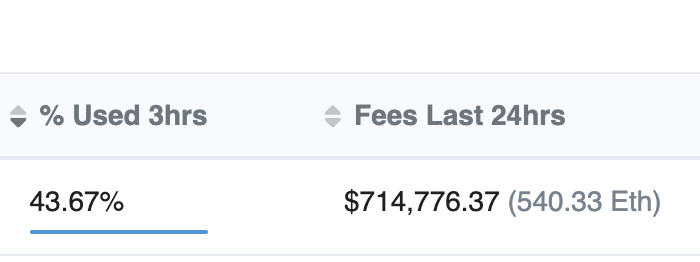
@XEN_Crypto +-1.000.000.000 Coins in only 2days!!
Strange🧐. No good start. Sorry. Impossible reach 1$

English


New listing on #MEXC:mexc.com/register?invit…
Coin: $BXEN
Pairs:
#BXEN/#USDT
#newcoinlisting #crypto #cryptonews #cryptoAlerts #altcoins #bitcoin #blockchain #cryptocurrency #cryptotrading
English
English

@jay_esti @MEXC_Global @XEN_Crypto It's not possible from my research. I think the use of the word scam have been misconstrued. Some of the exchanges will soon be listing this token as it is trading already or is it something personal?
English

Ready for the next moonshot? Here it is 👇
@XEN_Crypto 🚀🚀
$XEN/USDT will list as a spot trading pair in the Assessment Zone once the tokens are circulated!
Deposit to share 1,000 $MX ▶️ bit.ly/3VphPJU
💚Sign up: bit.ly/3nX4h91
#MEXCGlobal #MEXCListing

English
@TomMartinFrank1 @FloydMayweather punch him to the moon and never come back
English
@TomMartinFrank1 @XRdogeClassic @TheReaperCoin @skipper_xrp @Horster5 @DigitalRoninX1 @XRDC_MAXI @grunge777 joke pump by Tom 🤡
English
@bitcicomglobal maybe it's a fake account that spread the fake news
English

Dear users,
We have recently heard the announcement of Bitci/USDT, Brazil/USDT and SNFT/USDT pairs going to be delisted from Bitget platform. Despite our efforts, we were unable to obtain any information from the officials of Bitget. We are still investigating the matter.
English
At this point, there are no damage done to Bitci or its users, however, in case of any damage incurred, Bitci will take all the necessary legal steps for compensation. We will inform you with further update.
English
English