Jay Bardhan

450 posts

Jay Bardhan banner
Jay Bardhan

Jay Bardhan

@jaybardhan

Indian Exporter | A-Trader. Customs Professional. Machinery and Agri Exports. Sharing India’s Industrial Ascent Through Advanced Trading and Global Exports.

Katılım Ocak 2025
10 Takip Edilen286 Takipçiler
Sabitlenmiş Tweet
Jay Bardhan
Jay Bardhan@jaybardhan·
Honestly, my favorite activity is visiting manufacturing plants across India and meeting some amazing founders. And this is just the perfect timing for manufacturing automation in India! I was reading the PwC–Observer Research Foundation report, which estimates that AI will help India’s manufacturing MSMEs create $135–150 billion in value by 2035. But only if we move MSMEs from their current 35.4% share of manufacturing GVA to 50%. That's the gap we need to close right now... India has 7.5+ crore MSMEs employing around 35 crore people, which makes the sector one of the largest economic engines in India. Remember, if manufacturing reaches 25% of India’s GDP and MSMEs increase their share of manufacturing value to 50%, the sector is projected to unlock $3.88 trillion in growth by 2047. Right now, India's MSMEs have a 74% productivity gap with large firms. Just walk into most small plants, and you'll see how manual quality checks, unplanned downtime, and energy waste you can literally feel. BUT... Here is the good news is that our manufacturing expanded 8.1% in December 2025, the highest in over two years. Right now, we need an estimated $500 billion in AI infrastructure investment by 2035, no matter what, and there is a massive $100B+ demand opportunity for MSMEs to supply the physical backbone, like cooling equipment, standardized piping, and industrial chambers, to new data centers and semiconductor plants. The future of Indian manufacturing is just super exciting...
English
5
7
29
11.4K
Jay Bardhan
Jay Bardhan@jaybardhan·
I love watching India's exports rise, which is so real and authentic, but the last 10% of that journey, between ex-warehouse (factory) and cross-border, is where most of the export value is lost. Even I personally observed a lot of factories producing 10,000+ units flawlessly, but the classification in the invoice is altogether wrong, sometimes RCMC (Registration-cum-Membership Certificate) hasn't been renewed, not even for the LUT, and the invoice quantity does not match the declared export amount, so as usual, that export cargo is detained. What I'd tell any manufacturer thinking about export, please invest more in your customs/legal infra the same way you invest in your production line. It's the ONLY cost of participating in global trade, sincerely. In fact, most of the companies expanding fastest here are the ones who figured that out ahead of time.
English
2
1
3
50
Jay Bardhan
Jay Bardhan@jaybardhan·
You can never learn trade skills from a standard training program. You learn it when a consignment gets stuck at customs, and you have exactly 6 hours to fix it. You'll love the adrenaline rush.
English
0
0
2
57
Jay Bardhan
Jay Bardhan@jaybardhan·
I had a conversation about LC (Letter of Credit) payment clearances with ICICI Bank in Bangalore just recently, which genuinely blew my mind. I speak with various state and private banks daily about trade credit, etc., but this kind of specific situation was a first. Basically, after completing a shipment, we share all post-shipment documents with our clients so they can submit them to their banks, and to keep the documents clean and avoid mismatches, we typically align the transport document date with the official invoice date. It's a standard procedure. But the bank manager was completely unaware of the transport document's context, even when I personally shared the LEO (Let Export Order, the original final shipping bill) copy, he continuously denied it. Actually, the invoice date was 18th March, and the transport bill was also the same, but the export completion date was 11th April. So they're considering the transport bill as an official export date. Just weird. The Let Export Order (LEO) generated by Indian Customs via ICEGATE is the conclusive, actual legal proof that your goods have been cleared for export. The bank absolutely needs the shipping bill and the LEO to update the RBI’s EDPMS (Export Data Processing and Monitoring System). Without this data, the realization of export proceeds cannot be legally closed in the government's eyes. Under global LC rules (UCP 600), banks deal strictly in documents (like a bill of lading or airway bill). It is entirely fair for a bank to raise a discrepancy query if the transport docs don't perfectly match the LC terms. However, questioning the actual validity of an official LEO as proof of shipment fundamentally misunderstands the customs layout. A bank has every right to raise a documentary query under an LC, that's their job, but flat-out rejecting an original LEO and questioning whether the export actually happened is a weakness in basic trade law knowledge.
English
1
1
3
400
Jay Bardhan
Jay Bardhan@jaybardhan·
Yesterday, I was talking to a buyer from Holland. Actually, I met him in a very reputable B2B portal. He actually sources the garments' raw material largely from three major manufacturing centers in India, Bangladesh, and Vietnam. I asked him in the conversation what particular criteria would make you stay with a supplier for a long time. He answered very skillfully. He didn't say the cheapest cost or for the most outstanding quality he needed. He actually said, I would prefer to sleep at night. I was like, what? I asked him to clarify. He said when I make an order of any kind, I should not wake up anxious about it. A supplier who gives me that peace, I will never leave them. In my experience dealing with the daily challenges of exports and high-volume logistics, this is the absolute truth and hard-hitting for me. No matter whether you are shipping textiles or industrial chemicals, buyers aren't looking for a legendary, perfect factory.
English
0
1
5
121
Jay Bardhan
Jay Bardhan@jaybardhan·
I was reviewing three new Gujarat-based supplier quotes and observed that two of them had FOB terms written incorrectly. The port of origin was listed as the destination. The error is very tiny, I mean. It's actually enough in an LC term that gets your payment completely blocked. This is exactly why I go through every document line by line, not because I distrust people. Because trade documents have no mercy for assumptions.
English
2
0
3
115
Jay Bardhan
Jay Bardhan@jaybardhan·
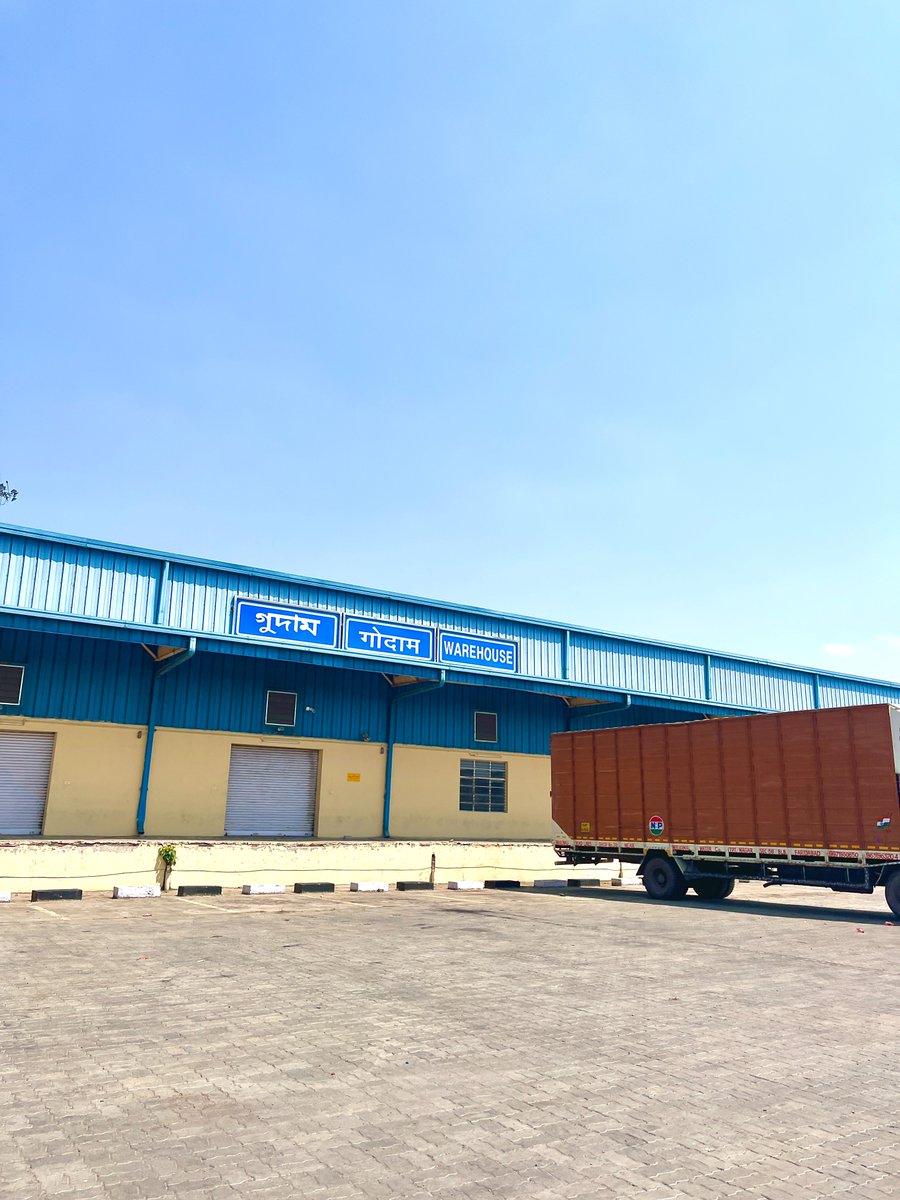
I've been thinking about what it means to expand a company, especially in a corridor-based business. It's absolutely different from growing a new-gen tech startup or a retail brand. There are no viral moments. No high-tech product launches. Growth here is almost 100% invisible. It actually shows up in your annual work volume, your repeat buyer rate, and whether your name carries significant weight when something goes wrong at the checkpoint. The relationships you build with foreign agents, various transporters, and even the small tea shops near the port, where information circulates, all compound over time. One thing I've learned in this industry is that your reputation/image circulates way faster than your lorries. It's funny but so damn true. A consignment put on hold because you cut typical corners on critical documents not only costs you that cargo, but it also affects how people talk about you the next time someone asks for a reliable name in South Asia's largest land port corridor. So I've made a sensible choice to grow gently and super-accurately. Not gently because I'm not ambitious. Gently, because I want every process to be solid before I begin to scale it. If my customs handling rate isn't consistent, adding volume just means more consistent failures. Isn't it? The companies that last in typical border-related trade are the ones that understand that patience and courtesy aren't the opposite of growth, but it's the basis of it. You know what, there's enough movement through the port to build something real. You just have to stop pursuing the quickest earnings and start constructing the quiet infrastructure. That's what this year is about for me.
Jay Bardhan tweet media
English
1
2
6
212
Jay Bardhan
Jay Bardhan@jaybardhan·
India's manufacturing has been stuck at 15% of GDP for years. At the same time, China hit 25-35% during its growth time, and South Korea, Taiwan, and Japan had the same story. We're not even close. Actually, Bernstein (a global equity research and brokerage firm) just issued a crucial fact-based check on India's manufacturing ambitions. Honestly, I don't want to say it, but they aren't wrong. Let me explain what they meant... Start with our assembly part. Much of our current achievement is in final-stage assembly. The actual domestic value addition for highly publicized electronics exports often fluctuates between 15 to 20%. Even with aggressive PLI schemes and the Make in India push, manufacturing's share of our GDP has consistently hovered around 15-17% for over a decade, well short of the 25% target. We still account for roughly 2.5-3% of global manufacturing output. Everyone is talking about supply chain alterations (China+1), but our gains have been so limited, and the reason is our shallow supply chains, slow execution, and skill deficiencies in advanced manufacturing. India imports nearly 100% of lithium-ion batteries, and 75% comes from China. We're trading oil dependence for battery dependence. Just imagine where we are standing. India spends 0.64% of GDP on R&D. China does 2.43%. South Korea is 4.91%. Our private sector contributes just 38-40% vs. 80%+ in advanced economies, almost double. You can't innovate on that budget. 10-15 million IT-BPO workers built India's middle class, and GenAI is coming for those jobs, all captured in the US and China. We're building prosperous consumers, not entrepreneurs/manufacturers/global traders/creators. The question Bernstein asked that actually matters. They're being brutally realistic.
English
1
1
3
571
Jay Bardhan retweetledi
Chenthil
Chenthil@jcrajan00·
India-US trade deal Phase 1 is 'almost finalised.' Commerce Minister Goyal confirmed it after three days of Washington talks ending yesterday. Here is what is actually on the table. India offered to cut tariffs on ALL US industrial goods. That is not a normal opening move. India is historically protective on manufacturing tariffs. This signals how seriously Delhi is treating the deal. In return, India wants preferential market access for its services and IT exports. Not just equal terms — better terms than Vietnam, Bangladesh, and other competitors get in the US market. The deal also covers agriculture protections. India's red lines on dairy, pulses, and edible oils remain intact. The American dairy lobby has been pushing for Indian market access for a decade. They are not getting it in Phase 1. India-US bilateral trade is now at $190 billion. But here is the bigger picture: India has signed or concluded trade deals with the UK, EU, Australia, UAE, Oman, and New Zealand in the last 18 months. Add the US and India will have preferential access to markets covering over 60% of global GDP. The country that 'does not do trade deals' now has more active trade negotiations than any other major economy on earth.
English
5
32
172
28.1K
Maahir Panchal
Maahir Panchal@maahirpanchal·
This decade, the benchmark for industries is no longer America. It is China or India.
English
2
1
18
434
Jay Bardhan
Jay Bardhan@jaybardhan·
Well, China's 20% is mainly supported by actual, physical manufacturing and merchant goods, which are highly durable for the Chinese economy, and India's export share relies very much on the services, which were historically strong, but the fast advancements in AI are already threatening to automate a significant portion of those service-based roles.
English
0
0
0
70
tushar
tushar@tushar9590·
India is a domestic driven co, it's GDP share from exports- 22% China is a manufacturing hub of the world, it's GDP share from exports-20% This is what higher per capita of a co do to its domestic economy.
English
1
0
32
2.5K
Jay Bardhan
Jay Bardhan@jaybardhan·
Actually, there's a huge tendency in this particular space to overcomplicate things, mostly to create visually appealing content for social media, which is completely missing the forest for the trees, and they forget that boring, unsexy things are what actually build durable, generational wealth, and everything else is just a bubble waiting to pop.
English
0
0
2
266
Radika
Radika@radika_agarwal·
unsexy businesses are actually much sexier with each model release so - build the supply chain - set up a manufacturing unit - sign up 1000s of vendors who don’t understand technology beyond UPI use ai in the bg- to expedite everything that you do but continue deeply engaging yourself in the real world. in 2026, that’s the moat
English
16
8
184
21.3K
Jay Bardhan
Jay Bardhan@jaybardhan·
I frequently talk with people starting new export companies. The most commonly made mistake they make is searching for a classified buyer list, which doesn't even ever exist. The simple fact is that buyers are everywhere. Being trustworthy is what's rare, and most people completely ignore the part. Focus on building a solid network of suppliers and presenting quality and technically sound proposals. Please stop seeking convenient shortcuts, instead focus on figuring out the fundamental mechanics of trade.
English
1
1
5
140
Jay Bardhan
Jay Bardhan@jaybardhan·
Today, when I was heading to the office, I was reading The Wealth of Nations, which is still very much relevant. Smith wrote about the division of labor in 1776. Now, just walk into any export packaging unit in West Bengal today, and you're watching the same principle running in real time.
English
0
0
2
109
Jay Bardhan
Jay Bardhan@jaybardhan·
Now, the hybrid model, where a merchant exporter maintains long-term contracts with 2-3 dedicated manufacturers, is, in my view, the most durable structure for small businesses in this industry. You get production flexibility without owning the capital expense. You continue to maintain the buyer relationship, and you can scale without a comparable increase in fixed costs. The thing is, very few small exporters actually execute it cleanly.
English
0
0
0
37
Jay Bardhan
Jay Bardhan@jaybardhan·
A merchant exporter who tries reverse integration into manufacturing and completely underestimates capital expenditure, licensing responsibilities, and the operational level of complexity every single time. All things their ground-level relationship-building atmosphere never prepared them for.
English
1
0
0
37
Jay Bardhan
Jay Bardhan@jaybardhan·
A manufacturer exporter controls the production. They control quality at the source. Their risk level is in the factory, raw material costs, labor, and machine maintenance. Their margin essentially lives or dies at the production level.
English
1
0
2
101