James Cantonwine

3.7K posts

James Cantonwine

James Cantonwine

@jcantonw

Leader in K-12 focused on research and assessment Tweets are a selection of a personal reading list and do not represent the viewpoints of any employer

Washington, USA Katılım Ocak 2017
451 Takip Edilen410 Takipçiler
Sabitlenmiş Tweet
James Cantonwine
James Cantonwine@jcantonw·
Peninsula SD just launched psd401.ai, with AI guidance, real-world implementation stories, an archive of conference presentations and PD materials, and a collection of staff-contributed use cases for AI in both classroom instruction and administrative operations.
English
2
0
4
230
James Cantonwine
James Cantonwine@jcantonw·
@adamboxer1 I'm following this with interest as I work on an app for just this purpose for use by teachers in our district. So far, teachers report it being in line with feedback from a human coach: helpful notes mixed with unhelpful ones. More an aid to self-reflection than anything else.
English
1
0
2
102
Adam Boxer
Adam Boxer@adamboxer1·
Is there any world in which you would actively seek out feedback on your teaching from an AI? Or - and maybe this is spicy - even if you knew it could tell you something useful, you wouldn't want to hear it from an AI?
Adam Boxer@adamboxer1

Can AI give teachers meaningful feedback on their teaching? This week's guest @RajEcon tries to convince me and @amymayforrester that maybe it can. My eyebrows were pretty raised, but it was a fascinating discussion. Tune in and share if you can! open.spotify.com/episode/7JLuKL…

English
9
0
6
5.4K
James Cantonwine
James Cantonwine@jcantonw·
A year ago, researchers from @rpplpartnership asked how our district was using AI to improve teachers' practice. I didn't have a good answer. That question led to LessonLens: an open-source AI coaching tool that gives teachers framework-aligned feedback on their lessons.
English
1
0
0
31
Michael Pershan
Michael Pershan@mpershan·
Has Megan McArdle's writing been getting better lately?
English
1
0
0
341
James Cantonwine
James Cantonwine@jcantonw·
@mpershan Added. Though I suppose it’s possible she works on them simultaneously, that seems less likely.
English
0
0
1
28
James Cantonwine retweetledi
Neil Almond
Neil Almond@Mr_AlmondED·
Stop using AI like a search engine because it isn’t one.
English
0
1
2
106
James Cantonwine
James Cantonwine@jcantonw·
@MatthewAKraft It's not inconsistent with what I heard an Anthropic employee say at the closing panel of the Stanford AI+Education summit last month. (He was speaking more directly about what students should learn.)
English
0
0
1
133
Matthew A. Kraft
Matthew A. Kraft@MatthewAKraft·
When asked about AI and the future of K-12 teaching during a panel at #AEFP2026, I responded that I thought very little of what teachers do on a day-to-day basis *in classrooms* would change in the next 10 years. The reaction I got suggested this is a heterodox view. Am I wrong?
Matthew A. Kraft tweet media
English
8
1
21
10.9K
James Cantonwine
James Cantonwine@jcantonw·
@RonakAtHome Thanks for this. I'm optimistic about our potential in working with higher ed partners to build out an AA path that takes place on our campuses, in addition to those that are off campus. Not really my area of the org, just an area of interest!
English
0
0
1
20
Ronak Bhatt
Ronak Bhatt@RonakAtHome·
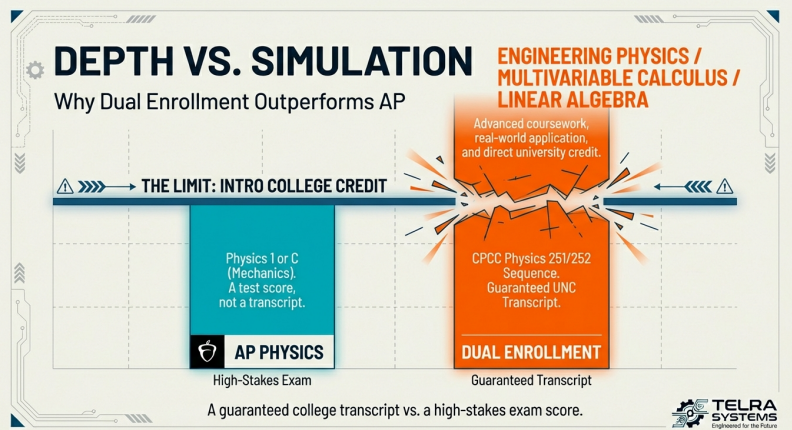
@jcantonw Oh, we certainly run across people who are locked in a mindset from 15-20 years ago. AP is fine if you're content with basic 1st year college work. There are plenty of others who see the value prop of going beyond that with dual enrollment. Sometimes showing some slides helps.
Ronak Bhatt tweet mediaRonak Bhatt tweet media
English
1
0
1
29
Ronak Bhatt
Ronak Bhatt@RonakAtHome·
This is the way. Telra is normalizing 10th graders earning Associate Degrees.
Matt Griswold@griswold

Hot take: eliminate AP classes and credits entirely. Instead, teens that want college credit should have free access to dual enrollment programs under their state university system to earn college credit via college classes. AP test incentives are misaligned in the worst way: "Students and families are happier because they get college credit. . . . Schools are happier because they look good. Governors and state agencies are happier because they get to brag about it.” Dual enrollment does not resolve every incentive problem, but it at least eliminates one layer of abstraction. It also can help reduce the cost of college by shifting some general requirements into the academic stagnation that is high school. This could be the simplest way to pivot American high schools toward tracking, too, so long as students not looking at college are also able to access courses that lead toward interests and industry certification. To anyone who defends AP classes are the last leg of meritocracy in schools, I'd argue it's more meritocratic to not gate keep the real thing just because someone is slightly younger than a college freshman. The ceiling can be much higher. It is possible, as the College Board suggests, that "AP standards for qualifying scores remain more stringent than grading standards in many college classrooms." Sure; but that's an issue for the state colleges to resolve. College students regularly transfer in with community college credits for these introductory courses, so the colleges have already determined that AP tests are unnecessary. AP tests are the signature of a decades-long evolution of high schools choosing college prep over life prep, so it's not a unqualified scapegoat to begin moving in another direction. I welcome any steel man against this idea.

English
2
1
5
517
James Cantonwine
James Cantonwine@jcantonw·
I'm much more optimistic on this than @emollick. Many orgs have people who are (understandably) bogged down enough not to realize what AI could do for them, including app development. Execs don't know or see those particular pain points. Internal FDE roles have huge potential.
Ethan Mollick@emollick

I am not sure "Forward Deployed AI Engineers" are going to deliver on what a lot of companies are hoping for. They are useful, yes, but AI applications are far less of a technical issue, and much more about rethinking the deep expertise & structure of your organization around AI.

English
0
0
0
22
Rahim Nathwani
Rahim Nathwani@RahimNathwani·
@jcantonw Right, but "school boards and the media" are *not* equivalent to 'the public'. Both are captured by unions, ed schools and bureaucrats.
English
1
0
0
17
Rahim Nathwani
Rahim Nathwani@RahimNathwani·
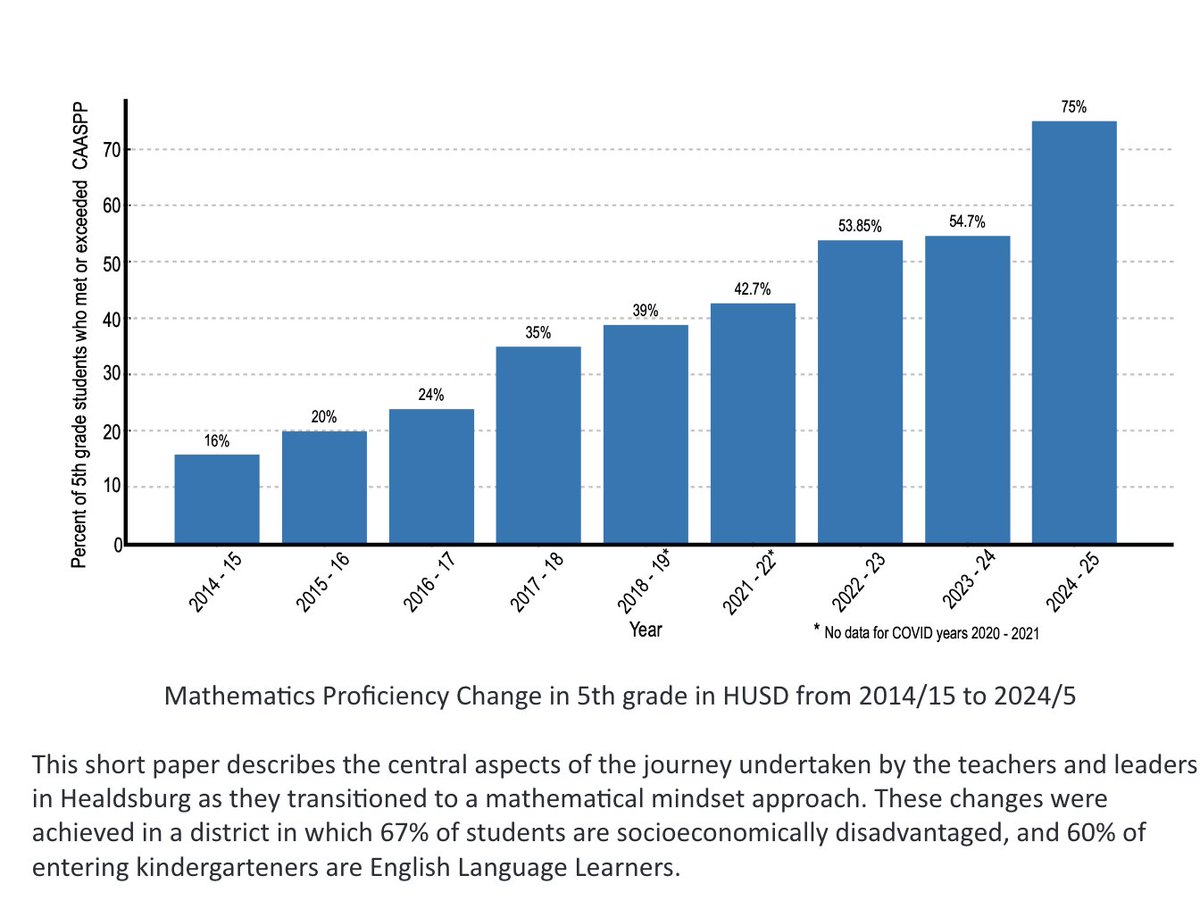
@youcubed posted a PDF recently showing amazing improvement in math results at Healdsburg Unified School District in Sonoma County. The PDF includes this chart. When I looked at, something seemed off.
Rahim Nathwani tweet media
English
7
17
63
38.3K
James Cantonwine
James Cantonwine@jcantonw·
@RahimNathwani Locally, ed reporters might not have any connection to an ed school and are instead looking to national publications or local folks in ed. Lots to blame ed schools for, but I'm not sure reporting is one of them.
English
0
0
1
14
James Cantonwine
James Cantonwine@jcantonw·
@RahimNathwani Indirectly, yes. I think the answer might change if we're talking local vs. state/national contexts. Like other reporting, ed reporting often looks for "the story", which might not reflect the available quantitative data. The narrative that sells isn't always one that's true.
English
1
0
1
17
James Cantonwine
James Cantonwine@jcantonw·
@RahimNathwani 2. Absolutely! There’s far better data available than what goes on state report cards! 3. I think this might be the only place we disagree. If ed reporters follow anyone’s lead, it’s journalism schools, not ed schools. If they followed ed schools, reporting would likely be worse.
English
1
0
1
25
James Cantonwine
James Cantonwine@jcantonw·
@RahimNathwani 1. Not sure where you’d find that data, but speaking from my experience as a district assessment guy (not in CA), that’s what school boards and the media (including school ranking sites) most frequently ask about. I wish they asked about cohorts and growth more often!
English
2
0
1
25