Jerome Darker

1.1K posts

Jerome Darker banner
Jerome Darker

Jerome Darker

@jeromedarker

Progress happens when smart, dedicated people translate good intentions into concrete realities.

Cape Town Katılım Mart 2012
4.4K Takip Edilen273 Takipçiler
Jerome Darker retweetledi

Ruben Hume
Ruben Hume@rubenhume·
Amazonia has a new logo, and it’s a masterpiece. The letters were extracted from satellite images of the river itself

Ruben Hume tweet mediaRuben Hume tweet media
English
174
9.3K
116.1K
5M
Jerome Darker retweetledi
Afshin Rattansi
Afshin Rattansi@afshinrattansi·
Russia’s🇷🇺 Dmitry Medvedev: ‘Following the assassination of the Supreme Leader of Iran, there is no doubt that Iran will continue pursuing nuclear testing and will eventually acquire nuclear weapons.’ While this is a likely scenario, even if Iran chooses not to build nuclear weapons, other global south nations will. The lesson the US has taught the world through successive administrations is that the agreements they sign are not worth the paper they are written on… Signing an agreement with the US, or not having a deterrent is a fatal mistake. Gaddafi ended his WMD program and was assassinated in a NATO regime change war. Saddam Hussein had no deterrent and Iraq was destroyed. Iran signed the JCPOA, which Trump ripped up in his first term, and then launched a war on Iran with Israel killing Khamenei in his second term. Venezuela had no deterrent and had its President kidnapped. The only middle power enemy that Washington has dared not to touch is North Korea🇰🇵. Kim Jong Un was labeled as ‘crazy’ and ‘rocket man’ for pursuing full-speed development of a nuclear arsenal, the lesson that the US has taught the world is that Kim Jong Un’s strategy was the correct one. Another example of the genius foreign policy of Washington which wastes hundreds of billions of taxpayers’ money, destabilises entire regions, and eventually leads to blowback. The blowback now won’t be refugee waves and terrorism, in a few years the blowback could be nuclear.
Going Underground@GUnderground_TV

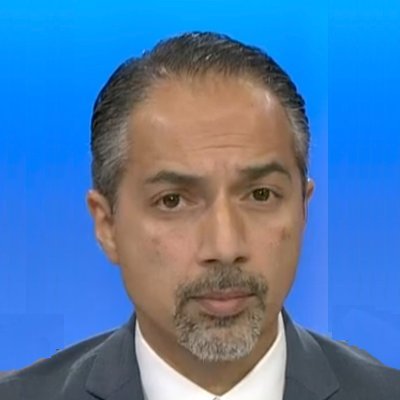
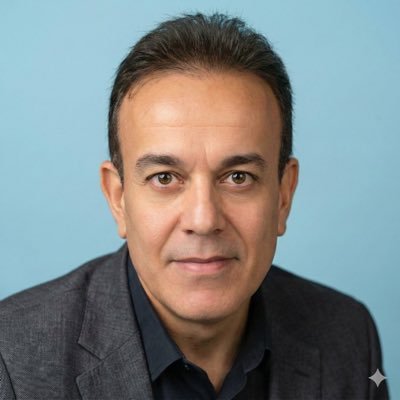
🚨WILL IRAN MOVE TO BUILD NUCLEAR WEAPONS? @afshinrattansi: ‘Iran’s only choice now, apart from the Strait of Hormuz and all of these asymmetric strategies, is that it must get nuclear weapons as quickly as possible to counter the Israeli nuclear program.’ Obama’s Deputy Assistant Secretary of State Joel Rubin: ‘Iran hasn’t enriched uranium since the June strikes, and it has less capacity today than it did in June. It hasn’t basically enriched, according to some estimates out there, for the first time in two decades. So I understand your point. It’s a fair point. The will, the desire, does that mean the possibility is there? I would beg to differ. It’s unlikely now. There are people who make the argument, well, now because all your infrastructure is gone, it’s likely you’re going to get a bomb. That’s like somebody blowing up my house and saying, well, now I really want a bigger house, so it’s likely I’ll get it because they did that, and now I could get a bigger one because of the insurance payout.’ Watch the full heated interview with @JoelMartinRubin, in the quoted post, or watch it on Rumble, link below in the replies👇
English
61
1.2K
2.7K
184.7K
Jerome Darker retweetledi
Trita Parsi
Trita Parsi@tparsi·
First, the Omani FM came out and revealed that there was a deal on the table that met Trump's demands, but that he instead chose war. And now, it is revealed that the British National Security Advisor was also part of the talks, and he too attests to the fact that A) there was no imminent threat from Iran, B) Trump could have gotten a surprisingly good deal if he stuck to diplomacy. But the perhaps most damning quote in the story comes at the end, attributed to an unnamed diplomat: “We regarded Witkoff and Kushner as Israeli assets that dragged a president into a war he wants to get out of.” theguardian.com/world/2026/mar…
English
705
18.7K
40.5K
2.2M
Jerome Darker retweetledi
Tansu Yegen
Tansu Yegen@TansuYegen·
Electric lifts that climb stairs on their own just came out in China, carrying up to 180 kg for 60 to 80 floors, totally changing the game for delivery people...
English
404
2.9K
15.4K
1.2M
Jerome Darker retweetledi
💧Mary Kostakidis
💧Mary Kostakidis@MaryKostakidis·
Max Blumenthal: How FBI & Israel Got Trump to Attack – The F.B.I. manufactured plots to convince Donald Trump that Iran sought to kill him, while Israel and its administration allies exploited the president’s deepest fears to keep him on the path to war. consortiumnews.com/2026/03/13/max…
English
3
32
37
2.3K
Jerome Darker retweetledi
Michael Strong
Michael Strong@flowidealism·
If your child becomes a reader, about 80% of the education job is already done. That's my honest assessment after working in education for over thirty years. Everything else is secondary. Most parents think science education is important. Yes it is. But if you can't read the biology textbook, you're not going to learn biology. Reading is the meta-skill that enables all other skills. History requires reading. Science requires reading. Even math increasingly requires reading as it becomes more sophisticated. The child who reads voraciously will figure out everything else. The child who doesn't will struggle with everything.
English
419
4.3K
26.2K
2M
Jerome Darker retweetledi
Thomas Fazi
Thomas Fazi@battleforeurope·
If you want to understand why the US and Israel are attacking and attempting to subjugate Iran, you must read this historic speech by Iranian foreign minister Abbas Araghchi, delivered earlier this month at the 16th Al Jazeera Forum held in Doha: “Excellencies, Distinguished colleagues, Ladies and gentlemen, السلام علیکم It is a privilege to address you at this distinguished forum and discuss the profound question of our region: Palestine. Let me begin with a fact that the region has learned through decades of painful experience, and that the world is learning again at a terrible human cost: ‘Palestine is not one issue among many’. Palestine is the defining question of justice in West Asia and beyond. It is the strategic and moral compass of our region. It is a test of whether international law has meaning, whether human rights have universal value, and whether global institutions exist to protect the weak — or merely to rationalise the power of the strong. For generations, the Palestinian crisis was understood primarily as the consequence of an illegal occupation and the denial of an inalienable right: the right of a people to self-determination. But today, we must recognise that the crisis has moved far beyond the parameters of occupation alone. What we are witnessing in Gaza is not merely war. It is not a ‘conflict’ between equal parties. It is not an unfortunate byproduct of security measures. It is the deliberate destruction of civilian life on a massive scale. It is genocide. The human cost of Israel’s atrocities in Gaza has wounded the conscience of humanity. It has torn open the heart of the Muslim world — and it has also shaken millions beyond it: Christians, Jews, and people of all faiths, who still believe that the life of a child is not a bargaining chip, that starvation is not a weapon, that hospitals are not battlefields, and that the killing of families is not self-defense. Palestine today is not simply a tragedy; it is a mirror held up to the world. It reflects not only the suffering of Palestinians, but also the moral failure of those who had the power to stop this catastrophe — and chose instead to justify it, enable it, or normalise it. But Palestine and Gaza is not only a humanitarian crisis. It has become the platform for something larger and more dangerous: an expansionist project pursued under the banner of ‘security’. This project has three consequences — each of them profound, each of them alarming: The first consequence is global. The Israeli regime’s conduct in Palestine, and the impunity granted to it, have deeply damaged the international legal order. We must say this clearly: the world is moving toward a condition where international law no longer is respected and governs international relations. What is perhaps most dangerous is the precedent being established: that if a state has sufficient political cover and protection, it may bomb civilians, besiege populations, target infrastructure, assassinate individuals across borders, and still demand to be regarded as lawful. This is not merely a Palestinian problem. It is a global problem. We are witnessing not only the tragedy of Palestine, but the transformation of the world into a place where the law is replaced by force. The second consequence is regional. Israel’s expansionist project has had a direct and destabilising impact on the security of all countries in the region. The Israeli regime now openly violates borders. It breaches sovereignties. It assassinates official dignitaries. It conducts terrorist operations. It expands its reach in multiple theatres. And it does so, not discreetly, but with a sense of entitlement — because it has learned that international accountability will not come. Let us be candid: if the Gaza issue is ‘settled’ through destruction and forced displacement — if that becomes the model — then the West Bank will be next. Annexation will become policy. This is the essence of what has long been called the ‘Greater Israel’ project. The question therefore is not whether Israel’s actions threaten Palestinians alone. The question is whether the region will accept a future in which borders are temporary, sovereignty is conditional, and security is determined not by law or diplomacy, but by the ambitions of a militarised occupier. The third consequence is structural — and perhaps the most dangerous. Israel’s expansionist project requires that neighboring countries be weakened — militarily, technologically, economically, and socially — so that the Israeli regime permanently enjoys the upper hand. Under this project, Israel is free to expand its military arsenal without limits, including weapons of mass destruction that remain outside any inspection regime. Yet other countries are demanded to disarm. Others are pressured to reduce defensive capacity. Others are punished for scientific progress. Others are sanctioned for building resilience. Nobody should be confused: this is not arms control, it is not non-proliferation, it is not security. It is the enforcement of permanent inequality: Israel must have a ‘military, intelligence and strategic edge’, and others must remain vulnerable. This is a doctrine of domination. Ladies and gentlemen, This is why the Palestinian question is not only a humanitarian issue. It is a strategic issue. It is not only about Gaza and the West Bank. It is about the future of our region and the rules of the world. So what must be done? It is not enough to express concern. It is not enough to issue statements. It is not enough to mourn. We need a coordinated strategy of action — legal, diplomatic, economic, and security-based — rooted in the principles of international law and collective responsibility. First, the international community must support legal mechanisms without hesitation. Second, there must be consequences for violations. We call for comprehensive and targeted sanctions against Israel, including: an immediate arms embargo, the suspension of military and intelligence cooperation, restrictions on officials, and banning trade. Third, we need a credible political horizon grounded in law. The international community must affirm: the end of occupation, the right of return and compensation in accordance with international law, and the establishment of a unified and independent Palestinian state with Al-Quds Al-Sharif as its capital. Fourth, the humanitarian crisis must be treated as a matter of urgent international responsibility. Collective punishment must never be normalised. Fifth, regional states must coordinate to protect sovereignty and deter aggression. The principle must be clear: security cannot be built on the insecurity of others. And finally, the Islamic world, the Arab world, and the nations of the Global South must build a united diplomatic front. The Organization of Islamic Cooperation, the Arab League, and regional organisations must move beyond symbolism toward coordinated action: legal support, diplomatic initiatives, economic measures, and strategic messaging. This is not about confrontation. It is about preventing the region from being reshaped by force. Dear colleagues, Let no one miscalculate: a region cannot be kept stable by allowing one actor to act above the law. The doctrine of impunity will not produce peace; it will produce wider conflict. The path to stability is clear: justice for Palestine, accountability for crimes, an end to occupation and apartheid, and a regional order built on sovereignty, equality, and cooperation. If the world wants peace, it must stop rewarding aggression. If the world wants stability, it must stop enabling expansionism. If the world believes in international law, it must enforce it — consistently and without double standards. And if the nations of this region seek a future free from perpetual war, they must recognise this fundamental truth: Palestine is not merely a cause for solidarity; it is the indispensable cornerstone of regional security. Thank you”.
Thomas Fazi tweet media
English
50
1.3K
2.7K
212K
Jerome Darker retweetledi
GRU Space (YC W26)
GRU Space (YC W26)@gru_space·
@elonmusk We will build the first hotel and city on the Moon:
English
2
6
62
3.8K
Jerome Darker retweetledi
Sarah Wilkinson
Sarah Wilkinson@swilkinsonbc·
Israeli torturers in jails smashed the hands of skilled Palestinian surgeons so they could no longer practice in any hospital ever again theguardian.com/global-develop…
English
529
15.8K
26.8K
1.5M
Jerome Darker retweetledi
Dr. Cameron Maximus🤴🏻 🥷🏻 🧙🏻‍♂️ 🤵‍♂️
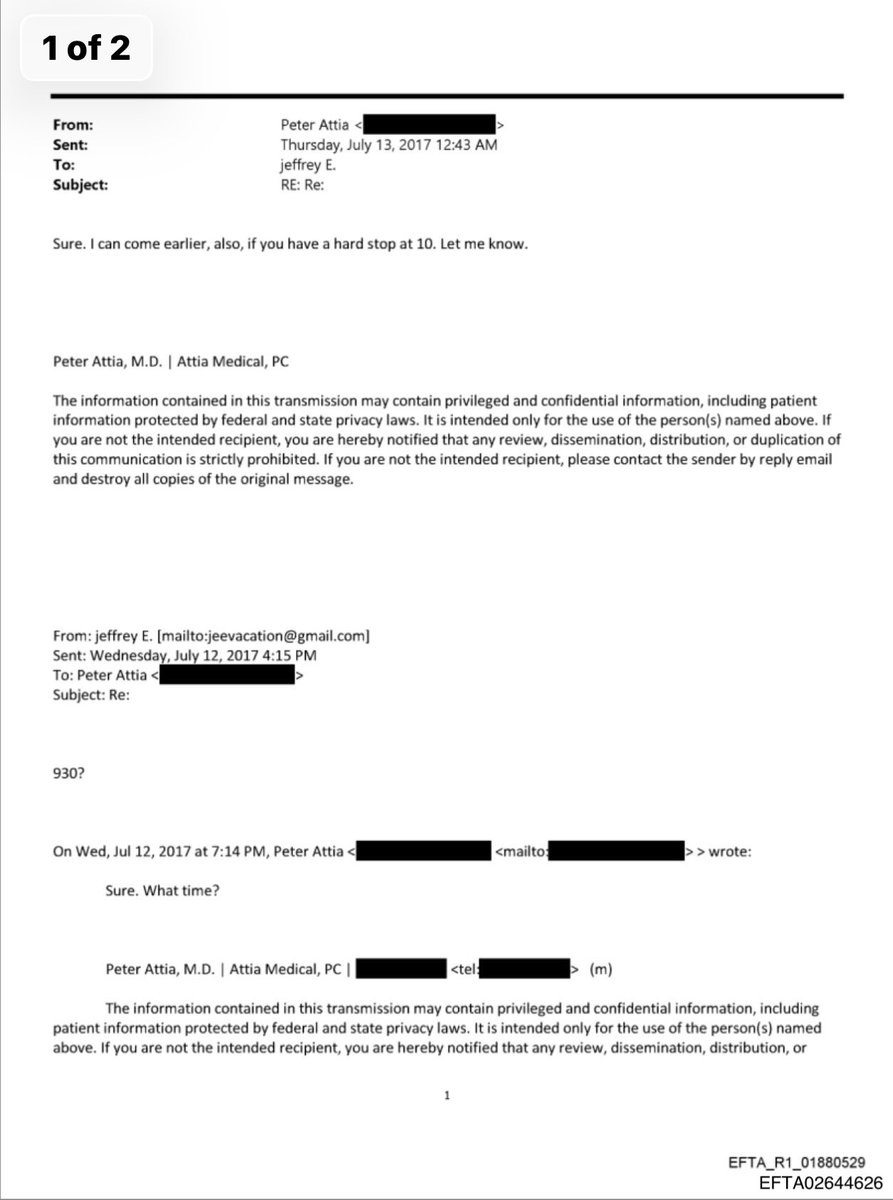
In his book Outlive, Peter Attia shares that his 1 mo old son almost died & his wife begged him for 4 days to come to the hospital where she was alone, but he didn’t due to his “important work” in New York. Turns out that important work was meeting Jeffrey Epstein. Psychopath!
Dr. Cameron Maximus🤴🏻 🥷🏻 🧙🏻‍♂️ 🤵‍♂️ tweet mediaDr. Cameron Maximus🤴🏻 🥷🏻 🧙🏻‍♂️ 🤵‍♂️ tweet mediaDr. Cameron Maximus🤴🏻 🥷🏻 🧙🏻‍♂️ 🤵‍♂️ tweet media
English
113
1.4K
7.1K
1.4M
Jerome Darker retweetledi
Zijing Wu
Zijing Wu@zijing_wu·
How has China systematically built a vast pipeline of AI talent? My debut feature in FT Magazine explores the pivotal education program behind this achievement, weaving in some personal reflections. China’s Genius Plan as.ft.com/r/c8abb097-a2c…
English
32
286
1.2K
1.1M
Jerome Darker retweetledi
Furkan Gözükara
Furkan Gözükara@FurkanGozukara·
This is how you cook shameless Piers Morgan well done
English
27
513
1.6K
42.4K
Jerome Darker retweetledi
Moses Kagan
Moses Kagan@moseskagan·
Great nugget from Schwarzman’s What It Takes: His strategy for getting a job out of college. Didn’t limit himself to reaching out to people a few yrs older. Instead, he connected w the Old Bulls of finance, recent retirees w incredible networks & not much to do. Brilliant.
English
21
22
748
44.1K
Jerome Darker retweetledi
Dario Amodei
Dario Amodei@DarioAmodei·
The Adolescence of Technology: an essay on the risks posed by powerful AI to national security, economies and democracy—and how we can defend against them: darioamodei.com/essay/the-adol…
English
868
2.7K
15.3K
6.2M
Jerome Darker retweetledi
Paul Graham
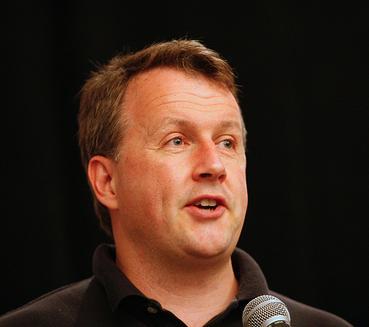
Paul Graham@paulg·
Ten years ago I wrote an essay explaining the source of America's increasing polarization. If you want to understand how we got from the unity (and uniformity) of the mid 20th century to the way things are now, this is what happened: paulgraham.com/re.html
English
139
112
1.4K
220.6K
Jerome Darker retweetledi
Peyman Milanfar
Peyman Milanfar@docmilanfar·
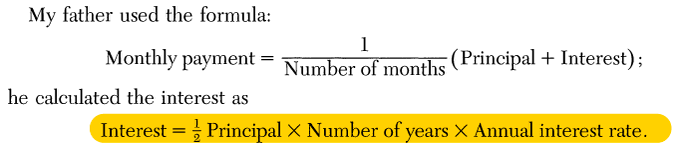
Years ago when my wife and I we were planning to buy a home, my dad stunned me with a quick mental calculation of loan payments. I asked him how -he said he'd learned the strange formula for compound interest from his father, who was a merchant born in 19th century Iran 1/4
Peyman Milanfar tweet media
English
76
729
8.6K
1.5M
Jerome Darker retweetledi
Jesús Fernández-Villaverde
Jesús Fernández-Villaverde@JesusFerna7026·
I have been posting repeatedly on X about the extraordinarily fast collapse of births across the planet: in rich and poor countries, in fast-growing and slow-growing economies, in religious and secular societies, under right-wing and left-wing governments, with high taxes and with low taxes. The pattern is universal. I knew this trend would continue. Still, the figures released this morning left me genuinely speechless. China’s government announced on Monday (see screenshot below) that births in 2025 fell to 7.92 million, a staggering 1.62 million fewer than in 2024, and that the total fertility rate has dropped to 0.93. Few economists have been more forceful than yours truly in arguing that births are collapsing, yet even I was surprised by these numbers. I was forecasting around 8.5 million births, not 7.92. To put this into perspective: if China could somehow sustain 7.92 million births per year from now on, its population would eventually stabilize at roughly 625 million, far below today’s 1.405 billion. In reality, as smaller cohorts reach childbearing age, births will fall well below 7.92 million. Hence, 625 million is a very generous upper bound, even under implausibly optimistic assumptions about life expectancy. Put differently, there were fewer births in China in 2025 than in 1776, the year the United States declared independence. I am still trying to process these numbers. This is the defining issue of our time.
Jesús Fernández-Villaverde tweet media
English
538
1.3K
7.6K
1.7M