

jinglinggggg
88 posts
jinglinggggg
@jinglingsima
PhD candidate in Economics @LEREPS_IEP | Passionate about sustainable transitions 🌱 | she/her
Katılım Şubat 2020
222 Takip Edilen67 Takipçiler
jinglinggggg retweetledi

China trials visa-free travel for six countries bbc.in/3RagJkW
English
@cnavarreteliz @Univ_Toulouse I always trust you can make it! Happy to be there with you. 🥳🥳🥳
English

Today, I concluded a cycle. I successfully defended my Ph.D. in Computer Science at @Univ_Toulouse. Finally I’m a doctor 🎉🥳 so happy to explore the next challenges in my career. Thank you for all the people who walked with me during this journey, my supervisor, reviewers + jury

English
jinglinggggg retweetledi

.@cnavarreteliz @cesifoti et al. use #digitalparticipation data to develop a metric of political divisiveness that helps identify polarizing proposals in the 2022 French and Brazilian elections. #digitaldemocracy
nature.com/articles/s4156…
English
Thrilled to witness our digital democracy project featured in Nature Human Behavior! It was an unforgettable journey, from platform preparation to launch and insightful results discussions. #DigitalDemocracy
César A. Hidalgo@cesifoti
**New Paper in Nature Human Behaviour** If there is something that many democracies have in common is a great degree of polarization. But what issues divide a population? And how can we detect them? In 2022 we ran two digital democracy experiments in France 🇫🇷 and Brazil 🇧🇷. During their 2022 presidential elections, we launched platforms that allowed people to build a collaborative government program. People were asked to combine proposals drawn from the official candidates’ programs. In the paper we first applied traditional tools from social choice theory to identify the proposals agreed upon by the participants. We found, for instance, that participants from both Brazil and France valued proposals to improve the minimum wage and the healthcare system, no matter if they self-identified with the political left or right. But this data also allowed us to identify proposals that drove a wedge among the participants. To do this, we first split the population of participants into “halves.” We then compared the scores that a proposal would get if we considered only participants from the left, or the right, or participants for instance, that self-identified as men or women. This highlighted proposals that were seen differently by these two groups of participants. For example, older participants liked proposals to reduce real estate taxes more than younger participants. Participants from the left, were more supportive of caps in wages than participants from the right. Then, we introduced a method to estimate the divisiveness of a proposal that did not relied on self-reported characteristics. This method showed, for instance, that the most divisive proposal among the participants from France was the idea of establishing a constitutional assembly to move France to the sixth republic. In Brazil, proposals regarding native lands come out as divisive. There are a few reasons why having a method to estimate the divisiveness of a policy proposal is important. Divisiveness tells us about pushback. Two proposals ranked 20 and 21 out of 100 may look like similar in terms of support. But the nature of their support is very different. We should expect the proposal with more divisiveness to face more pushback, and to breed more social conflict. After all, this is a proposal that some people love and other hate. Traditional voting rules, such as Condorcet or Borda, don’t tell us anything about divisiveness. So we need the new measure. That gets us to the second reason why this idea is interesting. For 200+ years social choice theory has focused on measures of “agreement.” There are many fugues and variations of these metrics. But the information they provide is highly correlated. We show in the paper that traditional measures capture information related to the first eigenvector of the matrix of pairwise preferences, whereas divisiveness metrics are related to higher order vectors. Divisiveness is thus, a general and natural extension to these metrics, and also, it is what makes aggregating preferences difficult. To me, this means that it should be a fertile area of theoretical and empirical study. In the paper we also have a few other interesting findings. We look at whether participants support the preferences of the candidates that they are politically aligned with. For the most part they do, but they are not completely against the proposals of opposition candidates. In France, we find an interesting asymmetry, which is that participants from the right are more likely to support a proposal from a candidate from the left than vice-versa. Unfortunately, our convenience sample does not allow us to generalize this outside the study's participants. We also explore the axiomatic properties of “elections” involving hundreds of proposals (instead of a few candidates). We find the results to be quite robust to the removal of irrelevant alternatives, and to have a high pairwise efficiency (the aggregate ranking tends to agree with the results of pairwise contests). Overall this is a first study of what we hope will be many others. It was a long process that was made possible thanks to a great international and multidisciplinary team, including @cnavarreteliz, @umbe_grandi, @marianagmmacedo, @jinglingsima, and others. If you want to learn more about this work, please read our paper at Nature Human Behaviour. nature.com/articles/s4156… Pre-print: arxiv.org/abs/2211.04577
English
jinglinggggg retweetledi

#JobAlert
Post-doctoral position in applied economics, Sciences Po Toulouse, France, Chaire UNESCO Bernard Maris
@LEREPS_IEP
👉 Application deadline: 30 November 2023
ersa.org/vacancies/

Français
jinglinggggg retweetledi

Why do people judge AIs differently than humans?
And, what role do our mental models of AIs play in these judgments?
In this new IEEE paper, @jinglingsima, @janerebecca_c & I, explore this question by manipulating people's perception of AIs /1
centerforcollectivelearning.org/s/ZhangConwayH…

English
jinglinggggg retweetledi
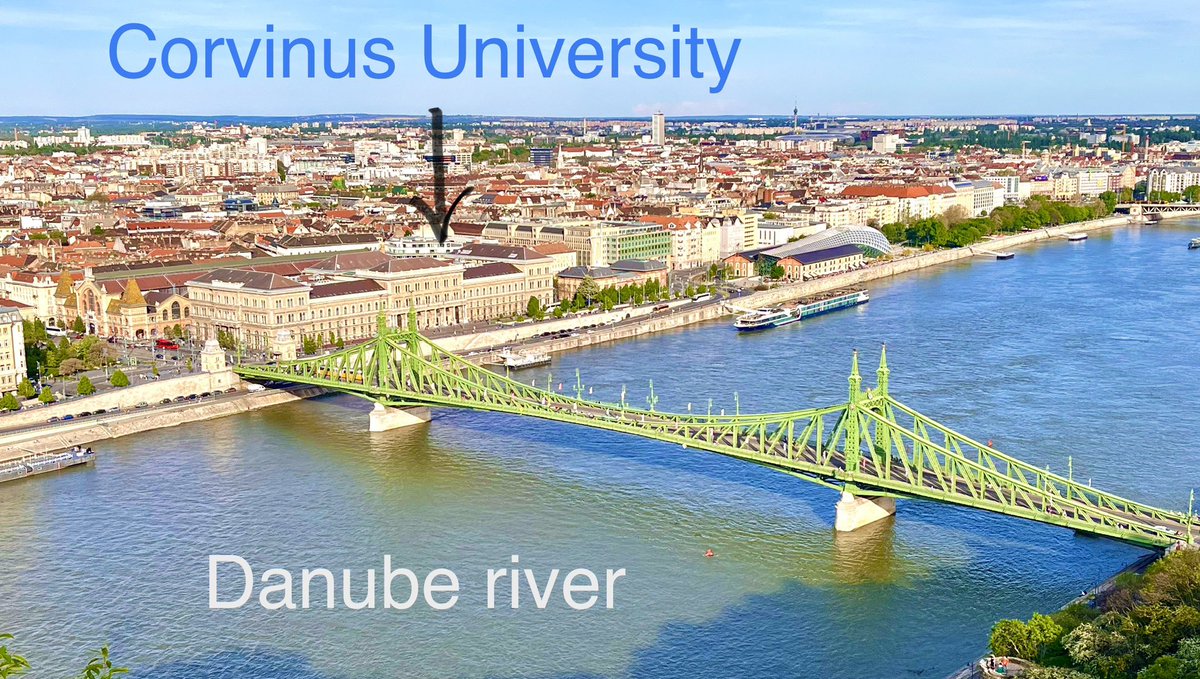
Who has 2 PhD students, 1 postdoc, and the best view of the Danube?
The next Assistant Professor in Data Science at Corvinus university.
We are looking for a tenure track assistant professor.
Help us spread the word.
Apply here:
uni-corvinus.hu/ind/career-opp…
English
English
English


jinglinggggg retweetledi

To support our research on collective memory, play our latest trivia game at pantheon.world/app/trivia.
/9
English
jinglinggggg retweetledi
In his famous poem 20, Pablo Neruda wrote: "Love is so short, but forgetting so long".
This quote inspired us to explore the decay of collective memory. Does society experience the two phases of memory decay described by Neruda: high attention followed by a slow decay? 🧵

English
jinglinggggg retweetledi
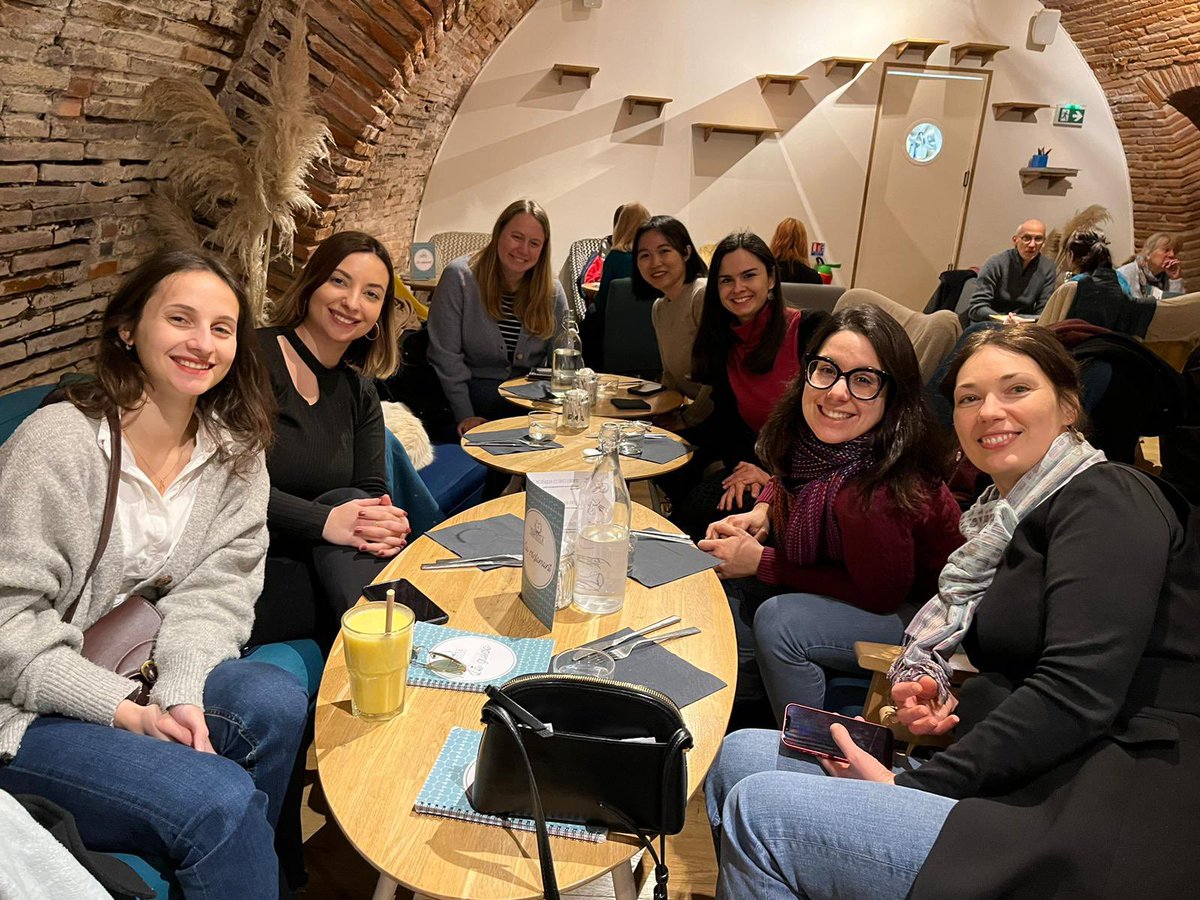
Happy International Women’s Day! 🥳At CCL, we are proud to have a team of talented women researchers work towards gender equality through their ongoing research efforts. Together, let’s continue to empower and uplift women around the world.#WomensDay2023

English
jinglinggggg retweetledi

Looking forward to hearing from our keynote César A. Hidalgo @cesifoti from the Center for Collective Learning at the University of Toulouse @LearningCCL at the Oxford Summer School in Economic Networks, June 26-30.
Apply: maths.ox.ac.uk/events/summer-…
Deadline: Feb 28th

English
jinglinggggg retweetledi
There is a peculiar change of behavior starting to show as people replace search with AI.
When someone doesn’t find what they want on search, they try again & refine their query.
But with AI, some people are starting to argue. They don’t try to explain themselves better…/1
Toulouse, France 🇫🇷 English
jinglinggggg retweetledi

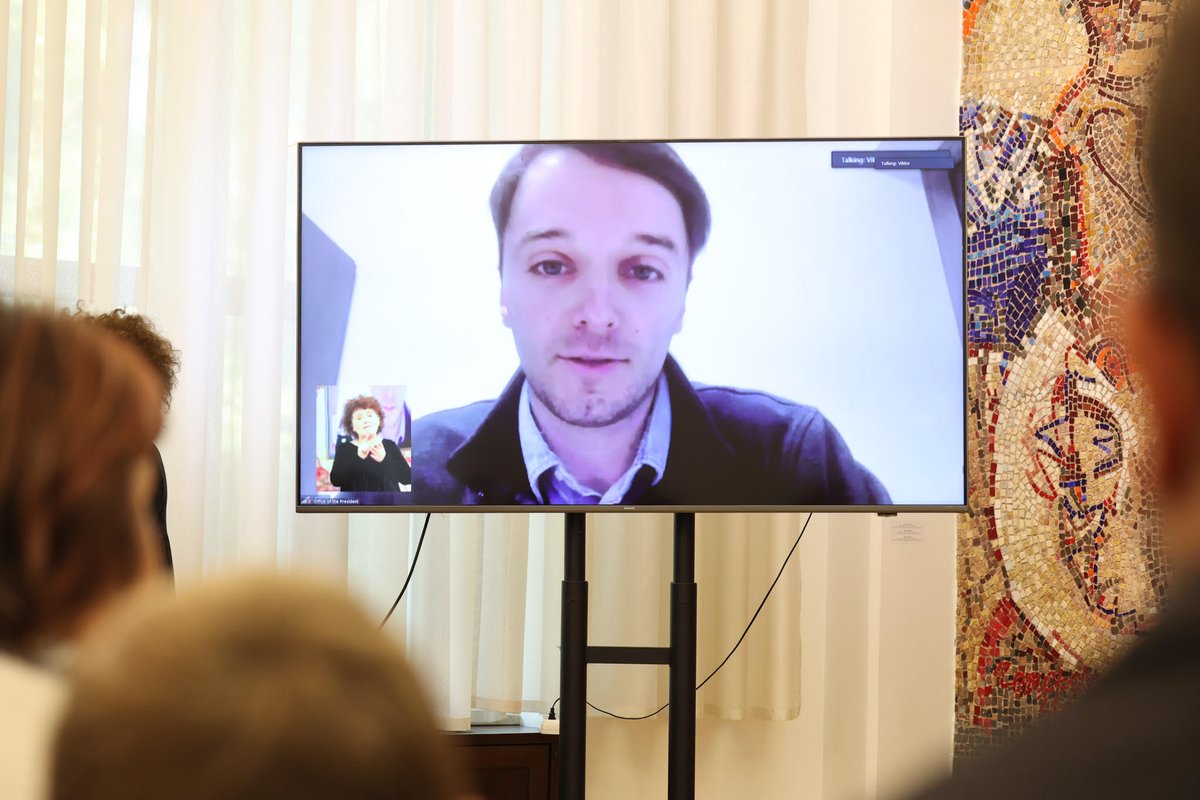
🏆 Congratulations to @ViktorStojkoski who receives the "Best young social scientist" award from the President of North Macedonia
💫 Post-doc at the Center for Collective Learning, Viktor is awarded for his research contribution to quantitative economics
aniti.univ-toulouse.fr/en/2022/12/01/…
English
jinglinggggg retweetledi
Congratulations to @ViktorStojkoski, who today received an award for Best Young Social Scientist in North Macedonia 🇲🇰!
The award was handed directly by the president Steve Pendariski @SPendarovski.
We are thrilled to have Viktor at @LearningCCL @ANITI_Toulouse @Univ_Toulouse


English