
John Martin | Paid Ads

5K posts

John Martin | Paid Ads banner
John Martin | Paid Ads

John Martin | Paid Ads

@john_marto

Paid Ads & Positive Vibes | Founder @ https://t.co/Ms4b8BBOJu

Grow your business faster 👉 Katılım Ocak 2018
46 Takip Edilen381 Takipçiler
Sabitlenmiş Tweet
John Martin | Paid Ads
John Martin | Paid Ads@john_marto·
The top 3 biggest mistakes people make with Google Ads: 1. Writing copy so generic it blends in with every other ad. 2. Not calling out what makes the product or offer different. 3. Failing to grab attention in the first second. Here’s how to fix them: Write specific, punchy copy that sounds like you and your customer. Ask, “What makes this offer different?” and lead with that in the first line. Make sure your ad stops the scroll with a strong visual and a clear headline. These three mistakes kill your ROI. But they’re dead simple to fix.
English

9
0
24
1.2K
John Martin | Paid Ads
John Martin | Paid Ads@john_marto·
I run a Google Ads agency for DTC brands from a small town in Thailand. A team of 3 including me. Dozens of clients. And a system that actually works. Here's what my morning looks like: 5:30am. Coffee. Open up my anomaly alerts before I even touch an account. I built an AI system that scans every single client account overnight. Spend spikes, conversion drops, ROAS dips, broken tracking. If something's off, I know about it before the client wakes up. Most mornings? 3-4 flags across all accounts. Takes me 20 minutes to triage and fix. By 7am I'm into deep work. Campaign builds, restructures, feed optimisation. The stuff that actually moves the needle. By midday the heavy lifting is done. Afternoons are calls, client updates, team syncs. Here's the thing nobody talks about in this industry. You don't need 50 employees to run a proper agency. You need good systems, relentless focus, and the discipline to not overcomplicate things. I've seen agencies with 30 staff deliver worse results than what a small, focused team with better processes can do. Bigger is not better. Sharper is better. Anyone else running a lean operation and loving it? Curious how others structure their day.
John Martin | Paid Ads tweet media
English
0
0
2
39
John Martin | Paid Ads
John Martin | Paid Ads@john_marto·
Lots of ecom brands I audit are running Performance Max the same way. One campaign. No structure. No exclusions. Just a budget and a prayer. Here's the problem with that. PMax is a black box. Google decides where your ads show. Search, Shopping, Display, YouTube, Gmail, Discover. You have zero control over the split. Without structure, Google will spend your money wherever it's cheapest. Which usually means Display and Discover. Low intent. Low conversion. High volume of meaningless clicks. I've seen PMax accounts where 70% of spend was going to Display placements the client had never even seen. Here's how we set up PMax properly. Segment your asset groups by product category. Don't throw everything into one group. Google needs clear signals about what to show and to whom. Add audience signals. Your customer lists, your website visitors, your in-market audiences. PMax works better when you give it a starting point. Exclude your brand terms. If you're running a separate brand campaign (which you should be), you don't want PMax cannibalising those clicks at a higher cost. Check your placements report weekly. If you see spend going to random apps and games, you know PMax is off the rails. PMax can work. But only when you treat it like a campaign that needs management, not a magic button. How are you running yours?
English
0
0
1
83
John Martin | Paid Ads
John Martin | Paid Ads@john_marto·
"We never bothered with Google. Meta works for us." I hear this from DTC brands all the time. And they're not wrong. Meta does work. But here's what they're missing. Meta creates demand. Someone scrolling Instagram sees your ad, thinks "that looks cool" and maybe clicks. Maybe doesn't. Either way, you've planted a seed. Google captures demand. That same person, two days later, types your product into Google. Or your brand name. Or "best [your category]." They're actively looking to buy. If you're not there when they search, someone else is. And you just paid Meta to create a customer for your competitor. I see this constantly. Brands spending 30k, 50k, 100k a month on Meta. Getting great results. But they have zero presence on Google. They're paying to fill a bucket with a hole in the bottom. The fix isn't complicated. You don't need to move budget away from Meta. You need a Google Ads strategy that catches the demand Meta creates. Branded search. Shopping ads. A proper feed. That's it to start. One of our clients was spending everything on Meta. We added Google alongside it. Within 3 months their overall CAC dropped by 35% because they stopped losing customers at the point of purchase. Meta and Google aren't competitors. They're two engines on the same plane. If you're only running one, you're flying in circles.
English
0
0
2
69
John Martin | Paid Ads
John Martin | Paid Ads@john_marto·
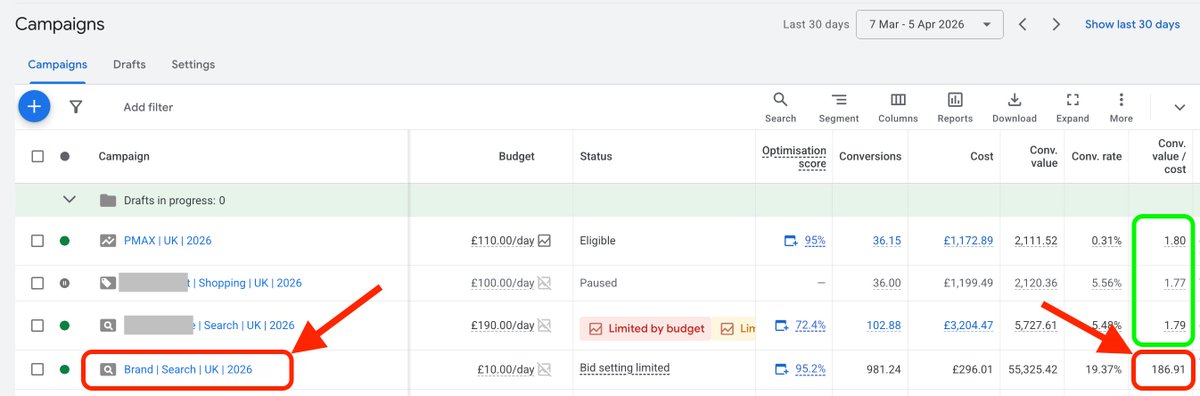
I've audited more Google Ads accounts than I can count this year. The same 3 problems show up almost every single time. 1. Blended ROAS reporting. Your agency tells you ROAS is 8x. Sounds great. But 60% of that revenue is coming from people who searched your brand name. They were going to buy anyway. Strip out branded traffic and suddenly that 8x is a 2.5x. That's your real acquisition performance. That's the number that matters. If your agency can't show you non-brand ROAS separately, that should worry you. 2. Broken conversion tracking. Duplicate conversion actions. GA4 imports firing alongside Google Ads tags. Old goals nobody turned off. I've seen accounts counting the same sale 3 times. If your data is wrong, every decision you make off the back of it is wrong too. This is the first thing I fix in every account. Always. 3. Performance Max running blind. PMax is not a set-and-forget campaign. It needs clean product feeds, proper audience signals, and someone actually watching what it's doing. Most accounts I audit have PMax running with zero structure. No asset groups segmented. No exclusions. Just money going in and Google deciding where it goes. That's not a strategy. That's a hope. If any of this sounds familiar, it might be time to get a second opinion on your account.
John Martin | Paid Ads tweet media
English
0
0
0
25
John Martin | Paid Ads
John Martin | Paid Ads@john_marto·
Audited a £15k/month Google Ads account this week. Brand and non-brand mixed together. Reported 6x ROAS. Actual non-brand: 1.2x. Shopping feed: 400 products active, only 60 with a sale in 90 days. Rest just burning budget. PMax with no exclusions. 20-30% spend on irrelevant queries. None of these are hard fixes. All of them are expensive to ignore.
English
1
0
1
146
John Martin | Paid Ads
John Martin | Paid Ads@john_marto·
Meta converts at 1-3%. Google Search converts at 5-12%. Same product. Same landing page. The difference: Meta interrupts people who weren't looking. Google captures people who are already searching. Most DTC brands spend £20-30k on Meta creating demand, then leave Google wide open for competitors to capture it. If you're not running both, you're generating demand for someone else.
English
0
0
1
105
John Martin | Paid Ads
John Martin | Paid Ads@john_marto·
Do you actually know your non-brand Google Ads ROAS? Not blended. Not the number in the agency report. The actual return on people who didn't already know your name. 8 out of 10 accounts I audit have never separated it. Do you know yours?
English
0
0
0
32
John Martin | Paid Ads
John Martin | Paid Ads@john_marto·
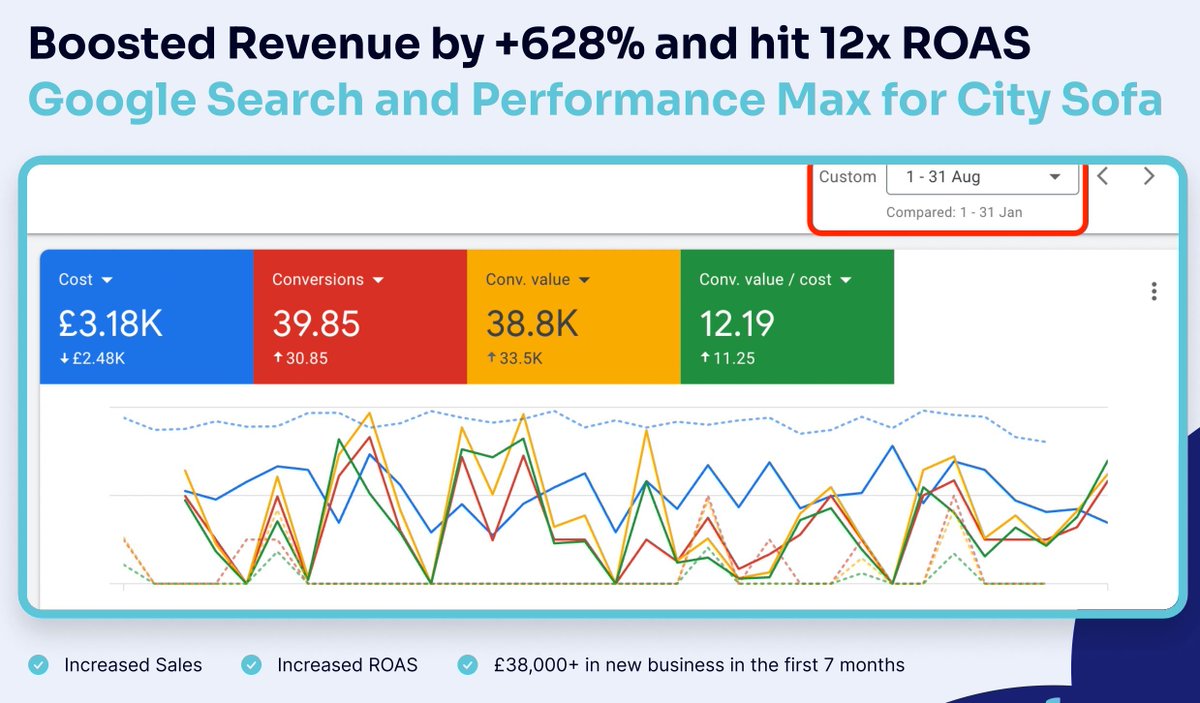
628% revenue increase. -44% cost reduction. Same products, same market, same brand. The only thing that changed was moving off Google's default campaign type. We had this furniture retailer that had been running Google Ads for about two months using Smart Campaigns. The easy setup Google pushes when you first create an account. Few clicks, done, you're advertising. Sounds good, right? The problem with Smart Campaigns is you get almost no control. You can't pick keywords. You can't structure campaigns around product categories. You can't set negative keywords. You can't control which search terms trigger your ads. You can't segment audiences. Google decides everything. And Google's priority is spend, not your profit margin. For two months, this brand assumed Google Ads "kind of worked." Revenue was coming in. Not great, not terrible. The dashboards weren't alarming. We replaced Smart Campaigns with proper Search and Performance Max campaigns. Enriched the product feed so Shopping listings were actually competitive. Built a structured scaling plan instead of letting Google auto-allocate. Over the next 7 months: revenue up 628%. Sales up 343%. Costs down 44%. 12x ROAS. £38k in new business from £3.18k in spend. The brand hadn't changed. The audience hadn't changed. The only variable was campaign structure. This is the thing about Google's "easy" setup options. They lower the barrier to entry, which sounds good. But they also create a false baseline. You try Google, it produces mediocre results, and you conclude "Google doesn't really work for us." It did work. You were just using the version of it designed to be simple, not effective.
John Martin | Paid Ads tweet media
English
0
0
2
43
John Martin | Paid Ads
John Martin | Paid Ads@john_marto·
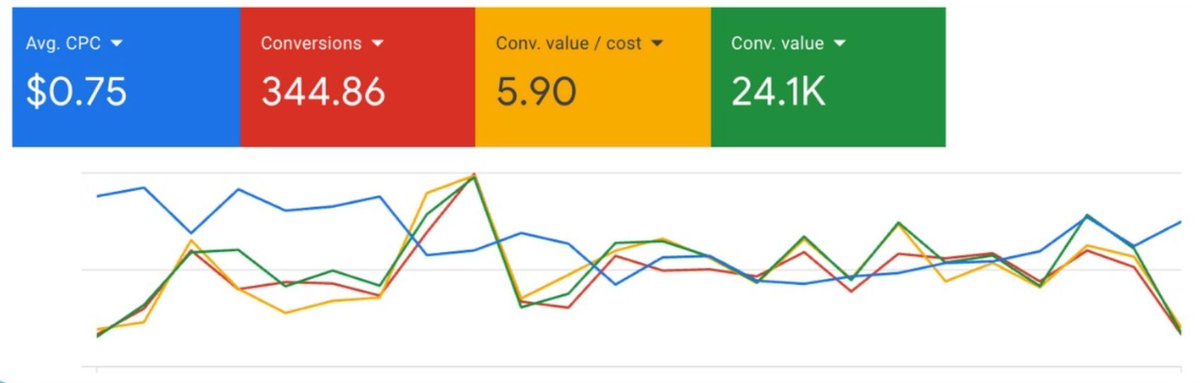
US-based DTC haircare brand spending 100% of their ad budget on Meta. Good performance. Profitable. Growing. They had no Google Ads. Not paused. Not underperforming. Just never set up. Think about what that means for a brand with established Meta campaigns. Every day, Meta is putting their products in front of thousands of potential buyers. Some of those people don't buy immediately. They Google the brand name later. They search for product reviews. They compare options. That search traffic was going somewhere. Just not to this brand's own Google campaigns, because those didn't exist. We built Search, Shopping, and PMax from scratch. Split brand and non-brand from day one so we could see what was actually driving new customer acquisition vs recapturing existing demand. Tailored audience signals to match their customer profile. Optimised for high purchase intent, not just clicks. Results: 5.9x ROAS since launch. $24k in new revenue. 344 conversions. Average CPC of $0.75 in a competitive category. $0.75 per click for buyers who were already problem-aware and brand-aware from Meta exposure. That's the part that gets overlooked. Google didn't replace Meta's role. It caught what Meta was generating but couldn't close. Two different jobs, same customer journey. The most expensive version of this mistake is doing Meta well and assuming that's enough. You're paying to create demand and then letting it leak.
John Martin | Paid Ads tweet media
English
1
0
2
97
John Martin | Paid Ads
John Martin | Paid Ads@john_marto·
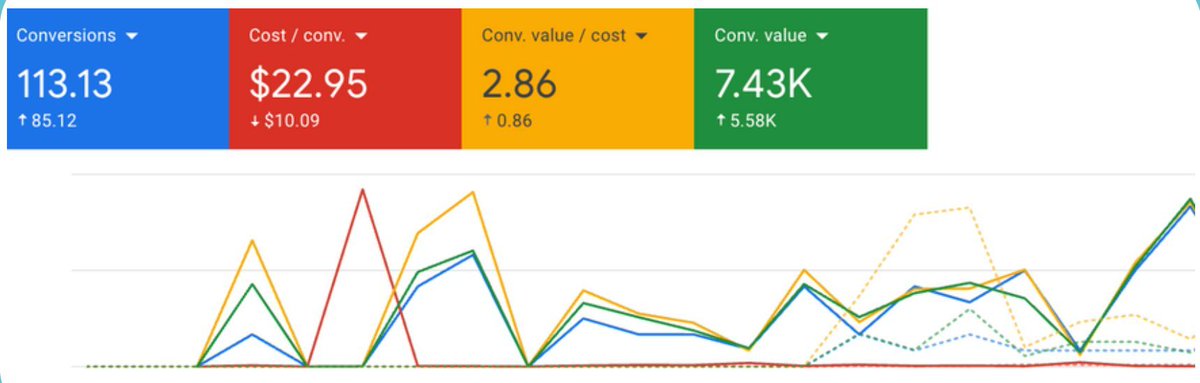
Audited a handcrafted jewellery brand's Google Ads. They were losing money on every sale. ROAS was below 1.0. Ten conversions in total. £98 CPA on a product line where average order value didn't justify that acquisition cost. The account had one Shopping campaign. That was it. No branded search protecting their name. No negative keywords filtering out irrelevant traffic. Product titles weren't optimised for what people actually search. Bidding strategy was wrong for the account size. No audience segmentation. Basically, Google was running on autopilot with zero direction. Here's the thing about Google Ads at low volume: the algorithm doesn't have enough data to optimise properly. It needs conversion signals. If you're getting 10 conversions a month, there's nothing to learn from. So the first job wasn't to "fix the campaigns." It was to generate data. We ran Shopping and Search together to build up conversion volume. Used that data to inform a properly structured PMax campaign with real asset groups, relevant search themes, and actual audience signals. 30 days later: conversions up 303%. Revenue up 300%. Non-brand ROAS hit 2.86x. Cost per conversion dropped from £98 to £23 and we generated £7.4k in net-new revenue. From literally losing money to profitable inside a month. The account didn't need a bigger budget. It needed someone to look at it properly for the first time.
John Martin | Paid Ads tweet media
English
0
0
2
73
John Martin | Paid Ads
John Martin | Paid Ads@john_marto·
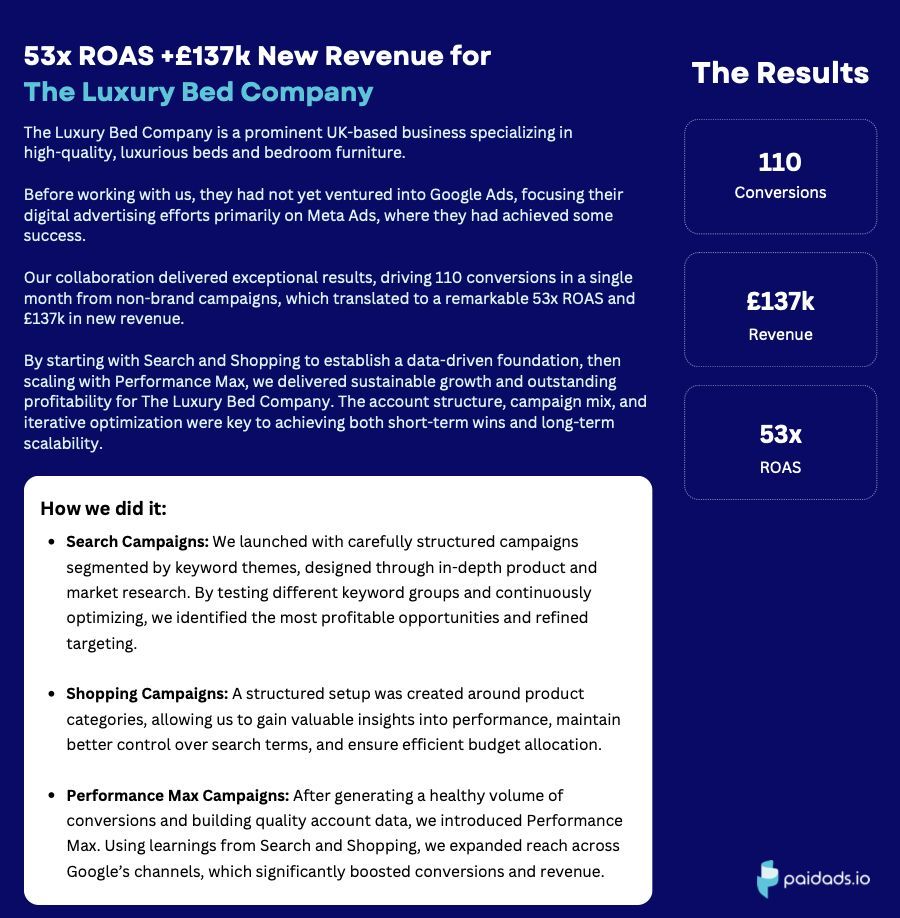
"We never bothered with Google. Meta works for us." Heard this from a furniture brand doing well on social. Strong creative, decent ROAS, consistent revenue. Their logic made sense on the surface. Meta was working. Why fix what isn't broken? They weren't choosing Meta over Google. They were choosing Meta over something they'd never even TESTED! We built their Google Ads from scratch. Search and Shopping first to gather data, then layered in Performance Max once we had conversion signals to work with. First month: 110 conversions from non-brand campaigns alone. £137k in new (non-brand) revenue. £23 cost per conversion. None of that came at Meta's expense. Meta kept running. Same budget, same performance. The £137k was net new. Google was catching search intent that Meta had been creating for months. People seeing the brand on Instagram, then Googling it later. That traffic was going to competitors, or just evaporating. What gets me about this one is the size of the gap. A brand doing well commercially, with zero presence on the channel where their highest-intent buyers were actively searching for them. The assumption that "Meta works, so we don't need Google" sounds reasonable until you see what was sitting on the other side of that assumption.
John Martin | Paid Ads tweet media
English
0
0
2
69
Fivos Aresti
Fivos Aresti@fivosaresti·
I co-founded an agency that’s on pace for $5,000,000 ARR. We’re going to do that by becoming the #1 "service-as-software" for GTM. Right now, we have 13 agents in our org chart. And we’re “hiring” 10 more. Here’s our plan to stay an extremely lean team: (across departments) Content Team • Competitor Research Agent • Content Ideator Agent • Interviewer Agent • Designer Agent • Repurposer Agent • Newsletter Agent • Client Track Agent GTM Team • List Building Agent • Qualification Agent • Outbound Plays Strategist Agent • Copywriter Agent Sales Team • Pre-Call Assistant Agent • CRM Assistant Agent • Email Assistant Agent • Sales Analyst Agent Project Management Team • Project Tracker Agent • Outbound Reporting Agent • LinkedIn Reporting Agent Customer Success Team • ICP Matrix Agent • Company Research Agent • Meeting Summarizer Agent • Onboarding Agent • Expansion Agent I put together a complete agents + humans org chart that maps this all out. That way, you can steal it and scale your company 3-5x leaner. If you want it... Comment "Agents" And I’ll DM it to you.
English
549
33
542
50.5K
John Martin | Paid Ads
John Martin | Paid Ads@john_marto·
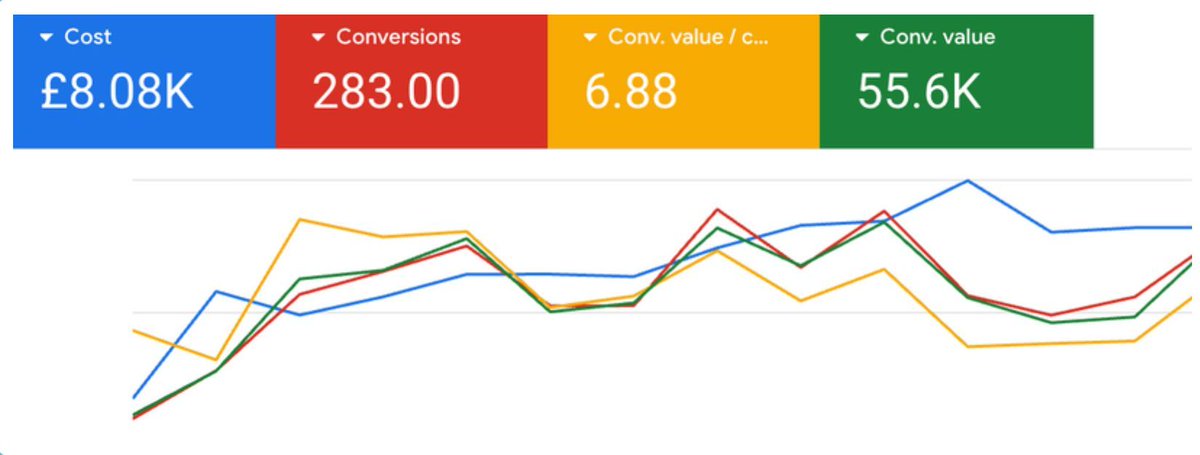
A premium pet brand had a problem that looked like a budget ceiling but was actually a settings problem. They were running their own Google Ads. Decent instincts. Click-through rates between 9-12%, clearly understood their customer. But every time they pushed daily spend beyond £130, CPA doubled. Without fail. £130 was the invisible wall. So they'd scale up, watch costs spike, pull back, wait a few weeks, try again. Same result every time. Classic scaling loop. When we looked at the account, the issue was in the campaign objective. They'd set it to maximise traffic. Not conversions. Not conversion value. Traffic. Google was doing exactly what it was told: finding the cheapest clicks possible. And at £130/day, there were enough cheap, relevant clicks to keep things ticking. But beyond that budget, Google started buying increasingly low-quality clicks to hit the volume target. CPA spiked because the traffic quality tanked. We switched the campaign goal to maximise conversion value. Built a hero-product PMax campaign with custom images and specific search themes. Then scaled spend in small, controlled increments instead of big jumps. 100 days in: 283 conversions. £55.6k revenue. 6.88 ROAS from £8k total spend. What a result that is! The ceiling wasn't a budget problem. It was a strategy problem. Makes you wonder how many brands are stuck at a spend level that has nothing to do with their market size and everything to do with a setting someone picked 18 months ago and forgot about!
John Martin | Paid Ads tweet media
English
0
0
1
42
John Martin | Paid Ads
John Martin | Paid Ads@john_marto·
Your optimisation score is 92%. Congrats. You get a gold star from Google 😂 That score goes up every time you accept a recommendation. Almost every recommendation involves spending more or loosening targeting. Funny how that works! This week I had a brand owner managing their own account, but struggling to scale profitably and looking for help. Their optimisation score was through the roof, so they assumed they were doing a great job. 40% of their search budget was going to terms like "free samples" competitor brand names and completely irrelevant search queries. Shopping was pushing their lowest margin SKUs because Google optimises for volume, not profit. But according to Google, everything was great. Your Google Ads strategy should be built around YOUR business, not Google's margins.
English
1
0
2
126
John Martin | Paid Ads
John Martin | Paid Ads@john_marto·
Meta converts at 1-3%. Google Search converts at 5-12%. Not because Google is "better" Because the intent is completely different. Meta interrupts. Someone's scrolling, sees your ad, maybe clicks. They weren't looking for you. You found them. That's powerful for awareness, but you're starting from zero every time. Google captures. Someone actively searches for "best organic dog food UK" They already want what you sell. They're comparing. They're ready. Yes please! The gap between those two conversion rates isn't a flaw in your Meta strategy. It's a completely different type of customer, at a completely different stage of the buying cycle. If you're spending everything on interruption and nothing on capture, you're paying to create demand, then leaving the back door open for competitors to convert it. If someone sees your Meta ad, doesn't buy, then Googles your product category later, who shows up? If it's not you, you just funded your competitor's sale. The brands growing fastest right now aren't choosing between push and pull. They're running both.
English
0
0
1
43
Aryan Mahajan
Aryan Mahajan@aryanXmahajan·
Claude Cowork automated 100% of my LinkedIn content creation. Ideation → Draft → Review. All on autopilot. 46K followers + $876K revenue in 6 months. → No more staring at blank screens for 2 hours before posting → No more chasing followers while wondering why pipeline stays empty → No more ""engagement experts"" selling vanity metrics with zero revenue attached → No more disconnected tools killing your content velocity Just one automated system → followers and revenue generated simultaneously. Here's how it works: → Post Idea Generator (eliminates creative blocks completely) → Viral Momentum Engine (makes LinkedIn's algorithm work for you, not against you) → Follower Growth Stack (compound tactics most accounts never discover) → Sales & Fulfillment System (comment → qualified prospect → closed revenue) → Complete Tool Infrastructure (exact stack running my operation daily) Built with the same infrastructure engineering principles deployed for Fortune 500 consulting firms. Runs 24/7 without manual intervention. Zero vanity metric optimization. Want the complete LinkedIn Revenue Infrastructure? Like + comment ""LINKEDIN"" + repost, and I'll DM it to you. (must be following)"
Aryan Mahajan tweet media
English
651
257
724
58.3K
John Martin | Paid Ads
John Martin | Paid Ads@john_marto·
Your Meta ads are working. £30k a month, 3-4x ROAS, profitable. So why would you touch Google Ads? Because Meta is doing one job. Finding people who didn't know they wanted your product. That's demand creation. It works, but CPMs spike, frequency creeps up, creative fatigue hits. Suddenly your "scaling channel" needs constant feeding just to hold steady. Google Ads does the other job. Capturing people who ALREADY WANT what you sell. They're typing your product into a search bar. They've seen your Meta ad three times and now they're comparing options. That traffic exists whether you're running Google Ads or not. The question is whether you're capturing it, or your competitors are. I see a lot of ecom brands running 80-90% of their ad spend through Meta. Nothing on Google, or a neglected Shopping campaign someone set up 18 months ago. That's not a strategy. That's a single point of failure. Two engines means if Meta has a rough week, Google picks up the slack. If Google CPCs rise, Meta's still filling the top of funnel. They compound each other. One channel is a bet. Two is a system. What's your current split?
English
4
0
3
92
John Martin | Paid Ads
John Martin | Paid Ads@john_marto·
Fix your Google Ads - or torch the whole things and start again? Get it wrong and you either waste months polishing a turd... or blow up an account that just needed a bit more time. Very common position for clients, here's how I think about it: Keep optimising if: 1. Performance is slipping but you can see exactly where the bleed is 2. The account has good historical data you don't want to lose 3. Changes in the last 30 days can explain most of the decline Rebuild if: 1. You've made 3+ rounds of changes and nothing's moving the needle 2. The campaign structure doesn't reflect how the business actually works anymore 3. Conversion tracking has changed significantly since the account was set up Sometimes rebuilding feels risky. But tweaking a broken structure for 6 months is how accounts go nowhere.
English
0
0
1
38
John Martin | Paid Ads
John Martin | Paid Ads@john_marto·
Cost cutting is not strategy. "We paused campaigns over the slow period and now we can't get back to where we were." Hear this one a lot. People assume pausing campaigns has a neutral effect - just a budget decision. It's not. When you pause, you lose: * Months of algorithm learning * Audience signals Google built up about your buyers * Quality Score momentum on Search * Your position in Shopping auctions Restarting isn't picking up where you left off. It's starting a new learning phase while your competitors (who stayed on) have been compounding their data the whole time. For accounts spending 20K+/month, pausing for 30 days doesn't just cost you that month's revenue. It costs you 6-8 weeks after where you're paying full price for half-baked performance while everything relearns. If things are slow, cut spend by 30-40% and let campaigns tick over. Going dark completely almost always costs more in the long run.
John Martin | Paid Ads tweet media
English
0
0
1
29