John A.C. Hardin

17 posts

John A.C. Hardin banner
John A.C. Hardin

John A.C. Hardin

@johnachardin

Story collector. I've shaped fairways, led congregations, grabbed a PhD, wrote a book, and funded dreamers. Now exploring AI and music. Dad. Husband.
Rock Hill, SC Katılım Aralık 2025
11 Takip Edilen8 Takipçiler
John A.C. Hardin
John A.C. Hardin@johnachardin·
Duke Ellington didn't ask the microphone to behave like the horn. He rearranged the band. That's all folks.
English
0
0
1
5
John A.C. Hardin
John A.C. Hardin@johnachardin·
When the microphone arrived in 1925, critics said it was breaking up the band. It didn't sound natural. It threatened livelihoods. It was enabling a moral panic called "crooning." Replace "microphone" with "AI" and you have some of last week's music industry headlines.
English
0
0
1
16
John A.C. Hardin
John A.C. Hardin@johnachardin·
Before 1925, recording studios employed "pushers," people whose entire job was to physically shuffle musicians closer to or farther from the recording horn to control dynamics. One violinist just sat on a box with wheels. Then the microphone arrived. And everything changed.
English
0
0
1
16
John A.C. Hardin
John A.C. Hardin@johnachardin·
The 1960 Payola hearings weren’t about ethics; they were about economics. By discrediting the independent DJs, ASCAP and the labels were able to crush the upstart competition and regain control of the airwaves.
English
0
0
1
13
John A.C. Hardin
John A.C. Hardin@johnachardin·
The major record labels do not oppose manipulation. They merely oppose unauthorized manipulation.
English
0
0
1
9
John A.C. Hardin
John A.C. Hardin@johnachardin·
Gutenberg wasn’t just a printer. He was a UI/UX genius. 👓 In 1455, reading was a blurry nightmare. To sell his radical new products, Gutenberg engineered a "High-Definition" font for his target audience: wealthy elites with bad eyesight. Even the Pope was blown away.
English
0
0
1
19
John A.C. Hardin
John A.C. Hardin@johnachardin·
Folks are concerned about the takeover of the "Code." But history reminds us that the code is just the plumbing. Satoru Iwata’s work on Mario shows that "Resonance" is a human choice, not a mechanical one. 🎨📐 #mario #nintendo
English
0
0
0
25
John A.C. Hardin
John A.C. Hardin@johnachardin·
The TRAIN Act (S.2455) could be a 19th-century legal heist dressed up as 21st-century ethics. 🦈🏛️ By flipping the burden of proof, are we protecting artists or empowering "Copyright Trolls?"
English
0
0
0
11
John A.C. Hardin
John A.C. Hardin@johnachardin·
If implemented with this balance in mind, the White House’s approach can help modernize intellectual property for a new era, ensuring a marketplace that respects past contributions while expanding the opportunity for a more diverse set of creators to flourish in the future.
English
0
0
0
12
John A.C. Hardin
John A.C. Hardin@johnachardin·
This creates a “compliance moat” that shuts out independent creators and emerging innovators. A robust American framework must protect the creators of today without weakening the pipeline of future creators.
English
1
0
0
10
John A.C. Hardin
John A.C. Hardin@johnachardin·
High-friction enforcement mechanisms favor legacy stakeholders with legal infrastructure to navigate them, effectively weaponizing regulations against the uncapitalized artisans.
English
1
0
0
12
John A.C. Hardin
John A.C. Hardin@johnachardin·
When the “walls” of protection are built too high, the resulting administrative costs and legal complexities are a regressive tax on the creative process. The system shifts from protecting the act of creativity to protecting the state of incumbency.
English
1
0
0
5
John A.C. Hardin
John A.C. Hardin@johnachardin·
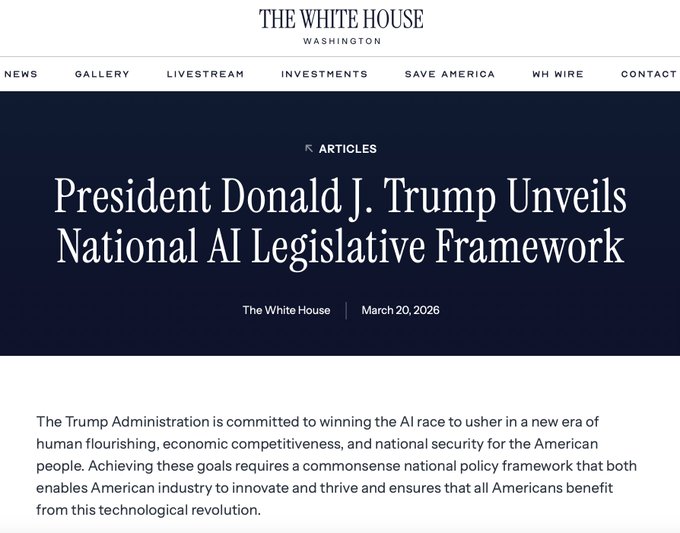
The White House’s emerging framework on respecting intellectual property rights and supporting creators is a meaningful step in the right direction. It recognizes both the importance of protecting creators and the need to ensure that the next generation can continue to build.
John A.C. Hardin tweet media
English
1
3
3
228
John A.C. Hardin
John A.C. Hardin@johnachardin·
While we must ensure that artists and innovators retain meaningful ownership and marketplace leverage, we must also recognize a critical tipping point in regulatory design.
English
1
0
0
7
John A.C. Hardin
John A.C. Hardin@johnachardin·
They intended it as a compromise: sufficient exclusivity to incentivize the creator, but not so much that it starves the next generation of inputs for creation.
English
1
0
0
12
John A.C. Hardin
John A.C. Hardin@johnachardin·
The Founders established intellectual property rights as a calibrated instrument to “promote the Progress of Science and the useful Arts.”
English
1
0
0
10