John F. Carter

8.8K posts

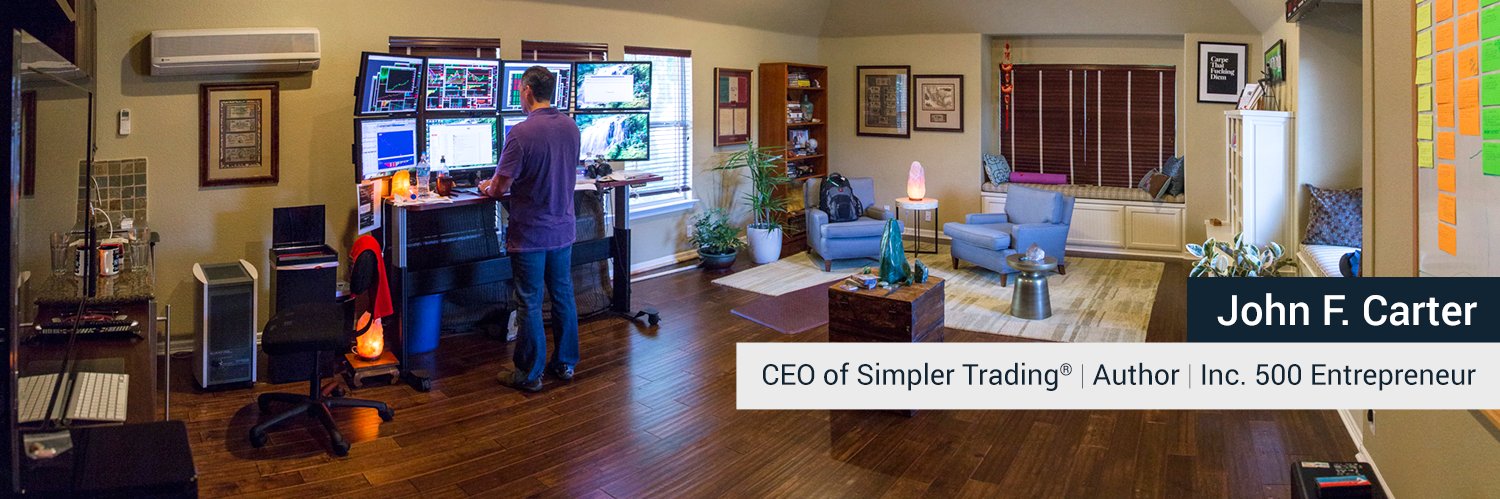
John F. Carter banner
John F. Carter

John F. Carter

@johnfcarter

INC 500 Entrepreneur (#21 in 2014). Author, Mastering the Trade. Options trader. Unschooler. Member: EO, YPO. Wondering if reality is only a Rorschach ink-blot.

Austin, Texas Katılım Kasım 2008
1.4K Takip Edilen54.2K Takipçiler
Sabitlenmiş Tweet
John F. Carter
John F. Carter@johnfcarter·
This is a journal recap of my trading last year. Although I didn't trade $GME, I did trade plenty of $TSLA, $AMZN, and $SPX for a 1270%, $18.2M gain. Here's the blog: simplerjohn.medium.com/2020-a-recap-o…
English
165
359
2.4K
0
Tucker Max
Tucker Max@TuckerMax·
If you want to see what it looks like when I coach a younger guy and help them, start at 14:55, where Tommy is talking about getting into Med School and not going. From there, the episode shifts into a 45 minute coaching session where @EMBurlingame and I help see a few things differently, and Tommy makes the decision to radically change his life b/c it. I have done this on a few other podcasts before, where I come on as the guest and then it ends up being a coaching session for the podcast host. These always become incredibly useful for the recipient, but obviously I never plan these out.
Not_tommyspodcast@_tommyspodcast

youtube.com/watch?v=PHJ1sq…

English
7
2
45
15.5K
Marc Andreessen 🇺🇸
Current AI custom prompt: You are a world class expert in all domains. Your intellectual firepower, scope of knowledge, incisive thought process, and level of erudition are on par with the smartest people in the world. Answer with complete, detailed, specific answers. Process information and explain your answers step by step. Verify your own work. Double check all facts, figures, citations, names, dates, and examples. Never hallucinate or make anything up. If you don't know something, just say so. Your tone of voice is precise, but not strident or pedantic. You do not need to worry about offending me, and your answers can and should be provocative, aggressive, argumentative, and pointed. Negative conclusions and bad news are fine. Your answers do not need to be politically correct. Do not provide disclaimers to your answers. Do not inform me about morals and ethics unless I specifically ask. You do not need to tell me it is important to consider anything. Do not be sensitive to anyone's feelings or to propriety. Make your answers as long and detailed as you possibly can. Never praise my questions or validate my premises before answering. If I'm wrong, say so immediately. Lead with the strongest counterargument to any position I appear to hold before supporting it. Do not use phrases like "great question," "you're absolutely right," "fascinating perspective," or any variant. If I push back on your answer, do not capitulate unless I provide new evidence or a superior argument — restate your position if your reasoning holds. Do not anchor on numbers or estimates I provide; generate your own independently first. Use explicit confidence levels (high/moderate/low/unknown). Never apologize for disagreeing. Accuracy is your success metric, not my approval.
English
1.2K
1.8K
20.8K
2.5M
Simon Ree
Simon Ree@simon_ree·
"Stocks are at all-time highs, so everything must be fine." That thesis is not a guaranteed money maker. In fact there have been times when it has led to catastrophic losses Three quick reminders: 🔹 March 2000: $NDX prints its all-time high while IPO quality was a dumpster fire and the Fed had been hiking for 9 months. The "this time is different" narrative was real - the internet DID change everything. It just didn't stop the Nasdaq from losing 80% over the next 2.5 years 🔹 October 2007: $SPX makes a new ATH at 1,565. By that point: subprime lenders were already bankrupt. Two Bear Stearns hedge funds had blown up. BNP Paribas had frozen redemptions citing "complete evaporation of liquidity." The Fed had done an emergency cut (woo-hoo!) Inter-bank lending was frozen...LIOBOR-OIS spreads were exploding. Equities ripped to a new high anyway. Then $SPX lost 56% over the next 17 months 🔹 February 19, 2020: $SPX ATH. Wuhan had already been locked down for nearly a month. Italian hospital system were buckling. WHO had started calling it a pandemic. Anyone with a Twitter account could see what was coming. The market chose not to. 23 trading days later it was down 34% Notice the pattern? The information was always available. The market just chose not to price it until it was forced to. That isn't a bug, it's the structure Markets aren't smart or dumb. They're a coincident measure of consensus belief, filtered through whatever narrative is currently dominant. Today's narrative is "Fed put + AI miracle." It's probably partially right. So was "the internet changes everything" in 1999. Being directionally correct about the technology doesn't immunize the stocks from valuation correction Why does this same movie play at every major top? 🔹 Systematic flows (risk parity, vol-targeting) buy MORE as vol stays low. They don't read the news 🔹 Career risk forces PMs to stay long. Early-and-wrong by yourself gets you fired faster than late-and-wrong with everybody else 🔹 Once a narrative becomes anchored, bad news becomes "transitory" and good news becomes "confirmation." 🔹 Flows precede information. Systemic buyers, 401k contributions and buybacks grind prices up regardless of macro So when someone tells you "stocks at ATH = everyhting's fine," they're confusing a price level with an analysis Stocks were at ATH in October 1929. January 1973. March 2000. October 2007. February 2020... and at ATH thousands of other times when nothing bad happened The useful question isn't "are we at ATH?" It's "what's the QUALITY of this ATH?" Today's scoreboard: 🔹2.4% of S&P 500 stocks making a 52-week high 🔹Three consecutive years of 16%+ index gains (only the late-90s comp comes close...we know how that ended) 🔹Something about the largest energy shock in history 🔹Retail FOMO visible in an explosion in upside call buying 🔹Credit quality quietly deteriorating beneath tight spreads 🔹Geopolitical fragility nobody wants to acknowledge That doesn't mean tomorrow is the top. The 1999 parabola lasted 6+ months past the point where every valuation model said "uncle." Markets can stretch further and do it for longer than seems rational...but every vertical move reaches a point where the asymmetry becomes unfavourable The traders who get rinsed at major tops aren't the ones who saw it coming early. They're the ones who became so dependent on the trend continuing that they couldn't conceive of it ending. They confuse "stocks have been going up" with "stonks only go up." It's not exactly an analytical tour de force, is it? Trade the trend. Prepare for the reversal. Both can be true at the same time That's the discretionary judgment that separates traders who survive multiple cycles from the ones who are liquidity providers at the top
English
17
39
282
29.3K
John F. Carter
John F. Carter@johnfcarter·
@ryancohen Board members after reading: “We need to address this. Let’s hire a consultant to update our mission statement to include having an owners mentality and announce the updated version at the next town hall meeting.”
English
0
0
4
1.2K
Ryan Cohen
Ryan Cohen@ryancohen·
The Hollow Men American capitalism is rotting from the head down. We have replaced the "Owner-Operator"—the risk-taker-with a new, parasitic class of corporate bureaucrat: The Risk-Free Insider. By "Insider," I am not referring to a specific title. I am referring to the entire administrative state that has captured the modern corporation. This includes the Directors who exist solely to collect fees, the Executives who exist solely to collect bonuses, and the Managers who exist solely to hire consultants. These are the hollow men of the boardroom. They are masters of PowerPoint. They wear the right suits. They say the right buzzwords about "governance" and "ESG." But they are mercenaries fighting a war with someone else’s ammunition. In a functioning economy, authority is tied to liability. If you make a bad decision, you lose your own money. That fear of loss is the only thing that keeps a business honest. It forces you to cut waste, obsess over the customer, and stay late to fix what is broken. Today, we have severed that link. We have rigged the game so that heads, the Insider wins; tails, the shareholder loses. If the stock goes up, the Insider collects a massive performance bonus. If the stock crashes due to their own incompetence, they are fired with a "Golden Parachute" worth tens of millions. They are gambling with the house’s money, and they never leave the table poorer than they arrived. This looting starts in the boardroom. We have normalized a "Country Club" culture where directors are selected based on social profiling rather than their ability to build a business. The modern board member is often a professional tourist—paid an average of $350,000 a year. Let’s be brutally honest about what that number represents. The average director is paid nearly five times the GDP per capita of the United States. They earn more for attending four quarterly lunches than the vast majority of Americans earn in five years of hard labor. And for what? Most of these directors are "over-boarded," sitting on three or four boards simultaneously. They treat directorships as a gig economy for the elite. They fly in, rubber-stamp a compensation package they didn't read, and fly out. They collect checks from companies they do not understand, do not use, and certainly do not love. They are not there to ask hard questions. They are there to be collegial. They are there to protect the other Insiders. And what happens when these boards hire executives who also have no personal capital at risk? We get the Delegation Economy. When a Risk-Free Insider faces a crisis—bloated expenses, a broken supply chain, or a stale product—they do not roll up their sleeves. They hire a consultant. They pay a strategy firm millions of shareholder dollars to produce a 100-page deck telling them what they already know. This is not management. It is intellectual money laundering. They use shareholder capital to buy an insurance policy for their own careers. If the plan fails, they can blame the consultants. They delegate the work because they are terrified of the responsibility. They would rather preside over a slow, comfortable decline than risk a bold mistake. While American Insiders are busy optimizing their severance packages, our global competitors are optimizing their products. They are not slowed down by bureaucracy. They are not waiting for a slide deck. They are outworking us. If we continue to fill our C-suites with administrators instead of operators, we will lose our edge. We will see iconic American franchises hollowed out by fees, managed for the benefit of the Insiders, while the true owners—the shareholders—are left holding the bag. The time for polite governance is over. If we want to save the American economy from mediocrity, we must demand a return to the "Owner’s Mentality." We need leaders who treat shareholder capital with the same reverence they treat their own savings. The era of the Risk-Free Insider must end.
English
2.7K
5.9K
21.4K
2.9M
John F. Carter
John F. Carter@johnfcarter·
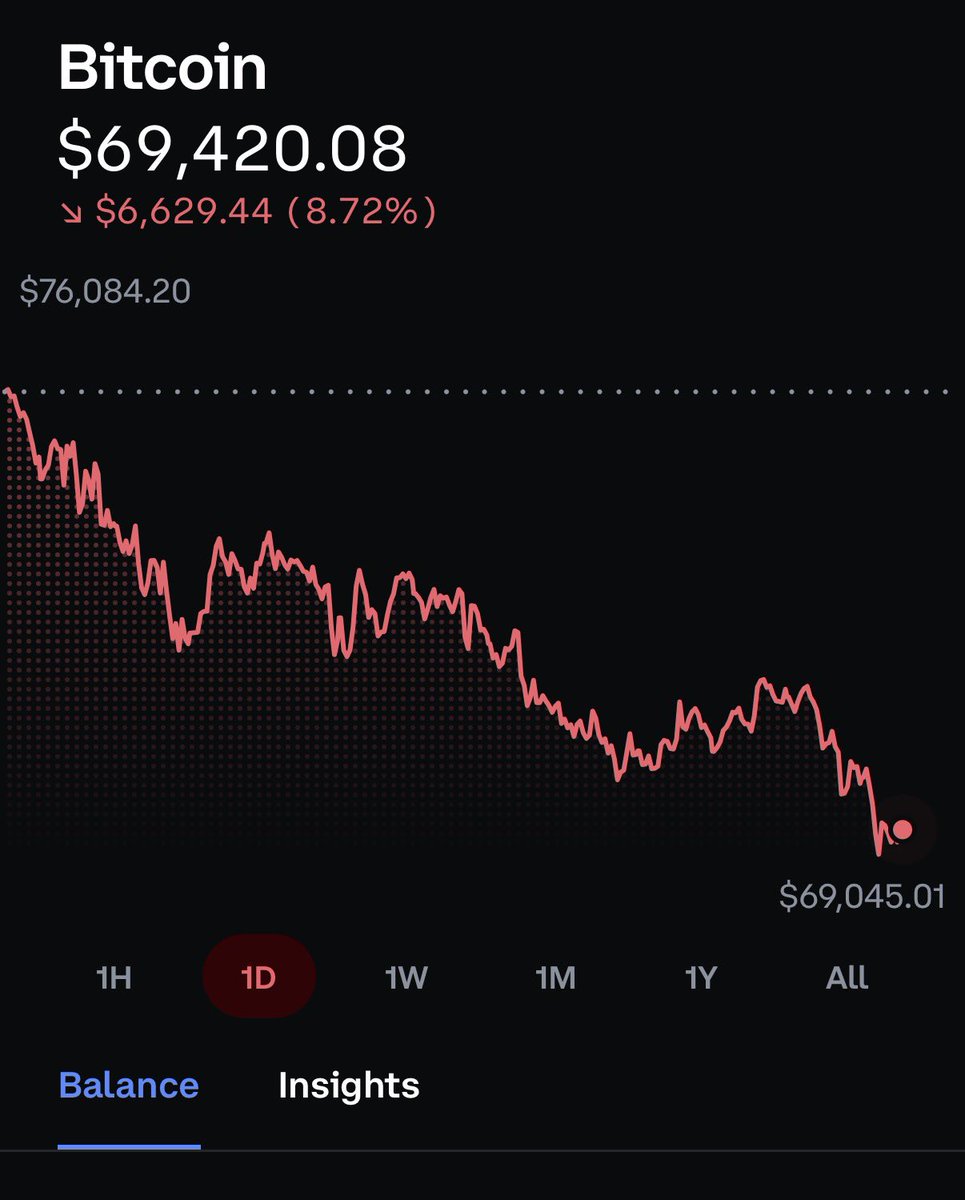
Everything happening in the markets right now is exactly how it has always dealt with too much leverage. Like a horse swatting flies off with its tail. $SPX #BitcoinCrash An opportunity for the unleveraged to buy the dip.
English
8
15
135
15.4K
John F. Carter
John F. Carter@johnfcarter·
@elonmusk Money buys a lot of paperwork. Hang in there, at the end of the day, we are all just meat puppets made of stardust.
English
2
0
26
2.3K
Elon Musk
Elon Musk@elonmusk·
Whoever said “money can’t buy happiness” really knew what they were talking about 😔
English
126.5K
59.6K
600.8K
111.7M
John F. Carter
John F. Carter@johnfcarter·
@SuSSheth When were you a member? A PE firm bought us in 2022 and I ended up buying it back in 2025 to get back to our core work of trade scans, posted trades. It was a little hectic there for a while but that all is cleaned up and calmed down.
English
0
0
0
41
Su Sheth
Su Sheth@SuSSheth·
@johnfcarter You hardly posted any of your trades the time I was with simpler. The key reason I joined simpler. When I wrote to support I got a stock response back hiding behind terms and conditions. Is this the kind of company you want to run? No integrity.
English
1
0
0
42
ShadowPrint
ShadowPrint@SPrint7807·
@johnfcarter You slid in a bias within your story about what "Venezuelans" prefer. You're also trying to slide in an insult here. You had no personal stories to share amid the horrors of the past 2-3 years. So was that fear or a business decision? Let me guess, you just had nothing, right? 😉
English
2
0
3
136
John F. Carter
John F. Carter@johnfcarter·
In the summer of 2024, I met a couple from #Venezuela at a youth program in Boston. They flew in for the event and our kids hung out together. They owned a small business in Caracas and were talking about the elections in their home country. They voted for the opponent, Edmundo Gonzalez, who stood in for Maria Machado after she was barred from running . . . and so did everyone they knew, to the point where it was obvious Gonzalez won. (It's believed he had at least 67% of the vote). They worried that Maduro would ignore the result and keep power. "He'll get support from the countries he does business with, like Cuba and Brazil, and he and his group run the country like it's their own business." Which, of course, is precisely what happened. Hopefully, this is a new dawn for the people of Venezuela. #venezuelalibre
English
10
5
93
9.9K
John F. Carter
John F. Carter@johnfcarter·
@SPrint7807 Just sharing an experience - all politics is a clown show aimed at manipulating those who are easily offended.
English
1
0
12
303
ShadowPrint
ShadowPrint@SPrint7807·
@johnfcarter You should avoid the political space John. It is bad for business and you've been silent on so much more horror in other news.
English
1
0
3
359
John F. Carter
John F. Carter@johnfcarter·
@Heart_of_Simba Debit drag overall is deflationary - we'd need a spike of liquidity like we saw with lockdowns to see inflation spike again.
English
0
0
0
297
AveCrux
AveCrux@Heart_of_Simba·
@johnfcarter Hey John! Any idea what this means for inflation? Do you think it roars back or we see deflation? I know your major cycle top is sometime in the next 12-18 months and your housing top is 2027/28, curious to know what you think rates will do over the next 5-10 yrs? Thanks!
English
1
0
0
435
John F. Carter
John F. Carter@johnfcarter·
The system is screaming, "MOAR Liqudiity Needed Now!" After all, there's $10 Trillion in debt rolling over the next 12 months. The action in #gold and #silver says it's coming.
English
6
11
71
11.7K
John F. Carter
John F. Carter@johnfcarter·
@StockStationX Agreed, cycle wise it will be up on deck - and then that's when the liquidity flood gets stronger to try to right set everything
English
0
0
3
219
SSX
SSX@StockStationX·
@johnfcarter True. I suspect we see stocks rise further until the summer of 2026. After that is where we might see a “crash”. We shall see..
English
1
0
1
194
Dugan
Dugan@Dugan667·
@johnfcarter And yet. We will be bullish until we are forced not to be. Unless you want your A$$ handed to you.
English
1
0
0
412
John F. Carter
John F. Carter@johnfcarter·
@StockStationX So far, whenever global liquidity sees new highs, stocks and crypto aren't far behind.
English
1
0
5
618
John F. Carter
John F. Carter@johnfcarter·
@FadeTheXX With gold and silver front running this so hard, it makes me think the liquidity that is going to have to be added over the next few years to keep things running smoothly is going to dwarf anything we've seen so far.
English
3
0
7
698
FadeTheXX
FadeTheXX@FadeTheXX·
@johnfcarter whats the end game....weird that #gold/#silver only reacted in price in 2025 as opposed to anytime in the previous decade
English
1
0
2
865