John J. Berger

2K posts

John J. Berger banner
John J. Berger

John J. Berger

@johnjberger

Climate, energy, & environmental policy specialist & consultant. Author, Solving the Climate Crisis, which offers scalable solutions to the climate crisis.

San Francisco Bay Area Katılım Eylül 2009
3.3K Takip Edilen7.7K Takipçiler
John J. Berger
John J. Berger@johnjberger·
I'm excited to be hosting Accelerating The Transitiont, the kickoff conference to SF Climate Week! Join me for the premier gathering of American leaders shaping the nation's clean energy and climate future. 🎟️Register here: luma.com/1zi5m5sy (or scan the QR in the graphic)
John J. Berger tweet media
English
0
1
1
51
John J. Berger
John J. Berger@johnjberger·
The article highlights OCOchem, a startup using renewable electricity, captured CO₂ (sourced directly from industrial emissions), and water to produce formate—a key chemical feedstock used in pharmaceuticals, agriculture, and as a building block for plastics—without burning fossil fuels or building massive plants. This isn’t going to decarbonize the chemical sector overnight. But it challenges the assumption that industrial scale always means centralized, carbon heavy infrastructure. OCOchem’s modular units can be deployed close to CO₂ sources, eliminating the need for large facilities and long transport chains—an important rethinking of how emissions add up in the system. In Solving the Climate Crisis, I argue we need more than cleaner energy for the grid. We need to reconstruct entire sectors—and chemicals are among the hardest. Modular, distributed systems like OCOchem’s could help bypass the cost, delay, and structural inertia that define legacy chemical plants. Whether they scale will depend on clear policy pathways, strategic investment, and our willingness to rethink our industrial baseline—not just tinker with it. This isn’t the answer. But it’s exactly the kind of innovation we need to take seriously and integrate into a broader climate strategy.
English
1
0
1
84
John J. Berger
John J. Berger@johnjberger·
In 2024, the world endured the worst tropical forest loss in over two decades — 18 soccer fields per minute, according to the World Resources Institute's Global Forest Watch data. Fires were the main driver, surpassing agriculture for the first time. They released 3.1 billion tonnes of CO₂ in a single year — decades of carbon storage gone up in smoke — and caused grave biodiversity losses. At the UN Climate Change Conference in Glasgow (COP26), governments pledged to end deforestation by 2030. But based on the World Resource Institute's latest data, we are going in the opposite direction. UN Climate Chief Simon Stiell is right: national climate plans (NDCs) are not just environmental goals — they’re economic strategy. Without clear, sector-level commitments, we’re not going to get there. The public understands this. Polling reported by The Guardian (Apr 2025) shows 89% of the public wants climate action — but most think they’re in the minority. And governments are acting like the public isn’t ready. They are. The forests are burning. People are paying attention. What’s missing is a powerful, well-organized political constituency forcefully demanding that political leaders do what we already know is necessary. Updated, ambitious, and enforceable NDCs are a tool to achieve rapid decarbonization and support forest protection. But sound NDCs won't miraculously appear without political pressure from a forceful organized campaign to get them written and adopted. Action on this is needed — not by 2030 — but now.
English
0
0
0
55
John J. Berger
John J. Berger@johnjberger·
Nuclear power has managed to attract support from both the Biden and Trump administrations — and most recently and disappointingly, from New York Governor Kathy Hochul, who enthusiastically supports it. Calling it the best way to generate round-the-clock power, Governor Hochul has told the New York State Power Authority to plan, site, and build a large reactor somewhere in upstate New York, with partners yet unknown. But neither her support nor any of the advocacy echoing nuclear industry talking points nor billions in public funding ultimately can hide the fact that nuclear isn’t a viable climate solution and, during its nearly 68 years of U.S. operation, it has devoured hundreds of billions of dollars in public funding. Safety issues aside, commercial nuclear power just takes too long to build. It’s too expensive. And it won’t deliver the emissions cuts we need this decade or the foreseeable future. The Vogtle reactors in Georgia, the most recent nukes built in the U.S., took 16 years to build and cost $35 billion, including billions in public subsidies from the U.S. Department of Energy Loan Program Office to become one of the world's most expensive power plants. That’s not an outlier — it’s the continuation of a long-standing pattern of nuclear plant cost overruns and delays. And while solar, wind, storage, geothermal, and energy efficiency have gotten cheaper and faster, nuclear hasn’t. Every dollar spent on nuclear power is a dollar not spent scaling the clean, safe, and sustainable energy technologies that are actually delivering clean economical, radiation-free power today. Boiling all this down to simplest terms, for every kilowatt generated by nuclear power, we could be producing more kilowatts more cheaply and more safely with other technologies. As far as the intermittency of individual renewable technologies goes, the solution, as I explain in my book, Solving the Climate Crisis, is to combine various types of complementary renewables on the grid along with energy storage to achieve power on demand but more cheaply, safely, and reliably. We don’t have the luxury of waiting until 2030 or 2035 to be sensible about how we invest our energy dollars. We don’t need more proof that nuclear delays climate action. We need to stop confusing legacy ambition with actual viability. The climate crisis doesn’t adjust to permitting delays or construction timelines or waste of scarce taxpayer funds. Neither should we. buff.ly/IjbCQMz
English
0
0
1
67
John J. Berger
John J. Berger@johnjberger·
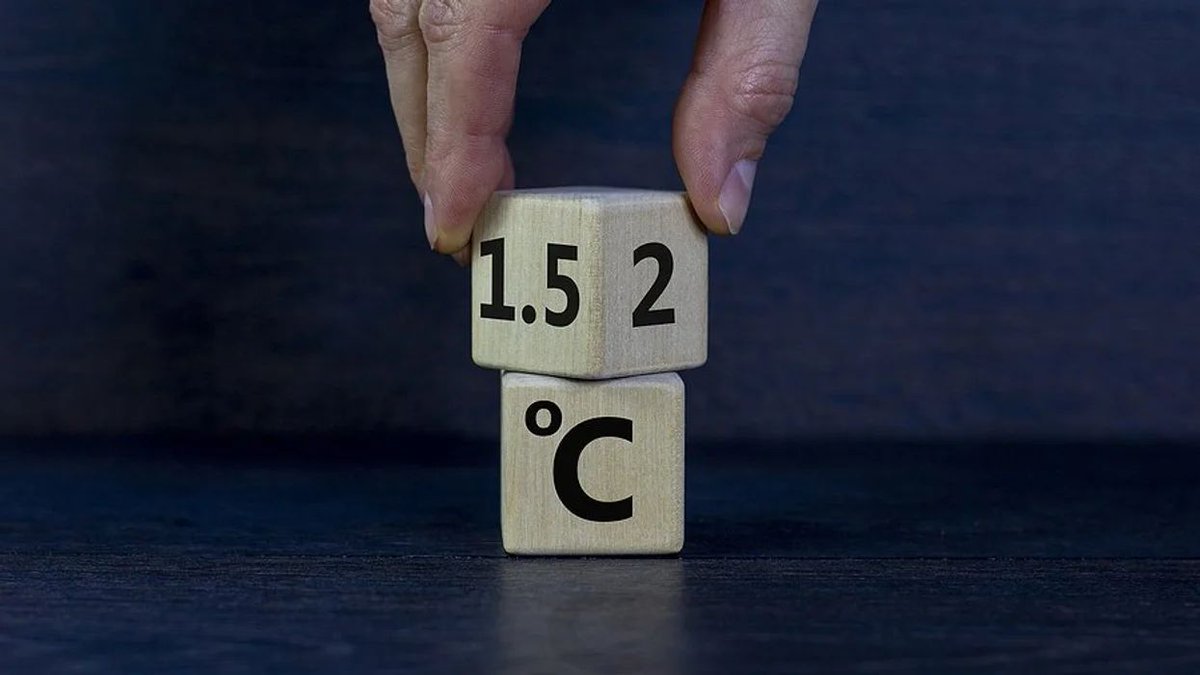
The UN's World Meteorological Organization now expects us to cross the 1.5°C average global surface temperature heating threshold within two years, meaning the Earth’s average temperature will be 1.5°C (2.7°F) higher than preindustrial levels. Keeping average global surface temperature from rising more than 1.5°C was an ambitious goal, given that atmospheric concentrations of global greenhouse gases have been rising relentlessly. Now we seem fated to pass that 1.5°C milestone. This isn’t just about climate targets slipping out of reach. It’s about what is already happening to the Earth as its ice sheets and glaciers melt, oceans acidify and overheat, coral reefs die, droughts worsen, crops fail, and storms intensify. As a new scientific study makes clear, we’re facing $28 trillion in heat-driven damages, directly tied to fossil fuel emissions. That’s not theoretical. That’s the cost of inaction. So the question isn’t “can we still stay below 1.5°C?” The question is: what now? Incremental policy isn’t going to get us where we need to go. It’s time to stop treating this like a distant risk and start treating it like a structural emergency — one that requires deep shifts in how we generate energy, move capital, and define growth. This isn’t alarmism. It’s about scale. If we’re serious about minimizing damage and building anything resembling resilience, we can’t afford to waste another minute on halfway measures. If we demand large-scale, effective programs from leaders in business and government, there’s still a path forward — but the longer we dilly dally, the more costly and tragic the consequences will be. (Image credit: Dzmitry Dzemidovich / Big Stock Photo)
John J. Berger tweet media
English
0
0
0
56
John J. Berger
John J. Berger@johnjberger·
I recently had the pleasure of joining Dr. Chris Meek once again on his podcast, Next Steps Forward, for a frank and urgent discussion about the climate crisis — and the solutions still within our reach. In the conversation we discussed: • The evolving science of climate change • The rise of organized climate denial • The urgent need for policy reform • Scalable, real-world solutions to decarbonize our economy • How we can reduce energy waste & transition to clean energy • How public pressure and political will still offer a hopeful, actionable path forward. This dialogue echoes key themes in my new book Solving the Climate Crisis — and reinforces why bold, informed action is needed now more than ever. Listen here: sites.libsyn.com/556866/dr-john… Let me know what you think — and share if this resonates. The time to act is now. #ClimateCrisis #ClimateSolutions #CleanEnergy #Sustainability #NextStepsForward #JohnBerger #ClimateAction #EnvironmentalPolicy
John J. Berger tweet media
English
0
0
1
38
John J. Berger
John J. Berger@johnjberger·
My far-ranging conversation today with @ChrisMeek_USA of Next Steps Forward voiceamerica.com/episode/151932… explained how the climate system works & how today's climate change differs radically from natural climate change & what can be done about the current climate crisis & much more.
English
0
0
1
99
John J. Berger
John J. Berger@johnjberger·
Distinguished Harvard Law Professor Lawrence Tribe has a slightly less ominous take on the current effort by right-wing extremists to steal the election than does investigative reporter Greg Palast. See Tribe's opinion piece in the Post washingtonpost.com/opinions/2024/….
English
0
0
2
75
John J. Berger
John J. Berger@johnjberger·
Everyone concerned about the safety and preservation of our democracy should read investigative reporter Greg Palast's searing new report on election trickery by right-wing extremists to disenfranchise the majority of voters who reject Trump. See gregpalast.com/how-trump-wona…
English
0
0
1
61
John J. Berger
John J. Berger@johnjberger·
This article of mine published prior to the presidential debate correctly anticipated that the climate crisis would be glossed over in a perfunctory manner. Indeed, it was discussed for only three minutes. x.com/Countercurrent…; commondreams.org/opinion/presid…; znetwork.org/znetarticle/pr…
Countercurrents.org@Countercurrents

Presidential Debate Questions for a Sweltering World by John J Berger countercurrents.org/2024/06/presid… via @countercurrents

English
0
0
3
128
John J. Berger
John J. Berger@johnjberger·
I love receiving feedback from students & faculty on my book, “Solving the Climate Crisis," about the profitable clean technologies we have for conquering this crisis. Learn what can be done to protect our climate. For more educational resources, visit solvingtheclimatecrisis.com
John J. Berger tweet media
English
0
0
2
43
John J. Berger
John J. Berger@johnjberger·
The U.S. Department of Energy has mandated that federal agencies only construct fossil fuel-free buildings, starting in 2030. They estimate that over the next three decades this will help to reduce carbon and methane emissions. Read more at tinyurl.com/phaseoutff
John J. Berger tweet media
English
0
0
2
48
John J. Berger
John J. Berger@johnjberger·
Youth plaintiffs in Navahine v. Hawaiʻi Department of Transportation have won a historic victory in a constitutional climate case that requires decarbonization of the state's transportation system and entire economy by 2045.
English
0
0
2
79