John O'Nolan

4.8K posts

John O'Nolan banner
John O'Nolan

John O'Nolan

@JohnONolan

Founder/CEO @Ghost — Geographically restless. Making an RSS reader for some reason @AlcoveNews

Remote Katılım Mart 2008
645 Takip Edilen37.7K Takipçiler
Sabitlenmiş Tweet
John O'Nolan
John O'Nolan@JohnONolan·
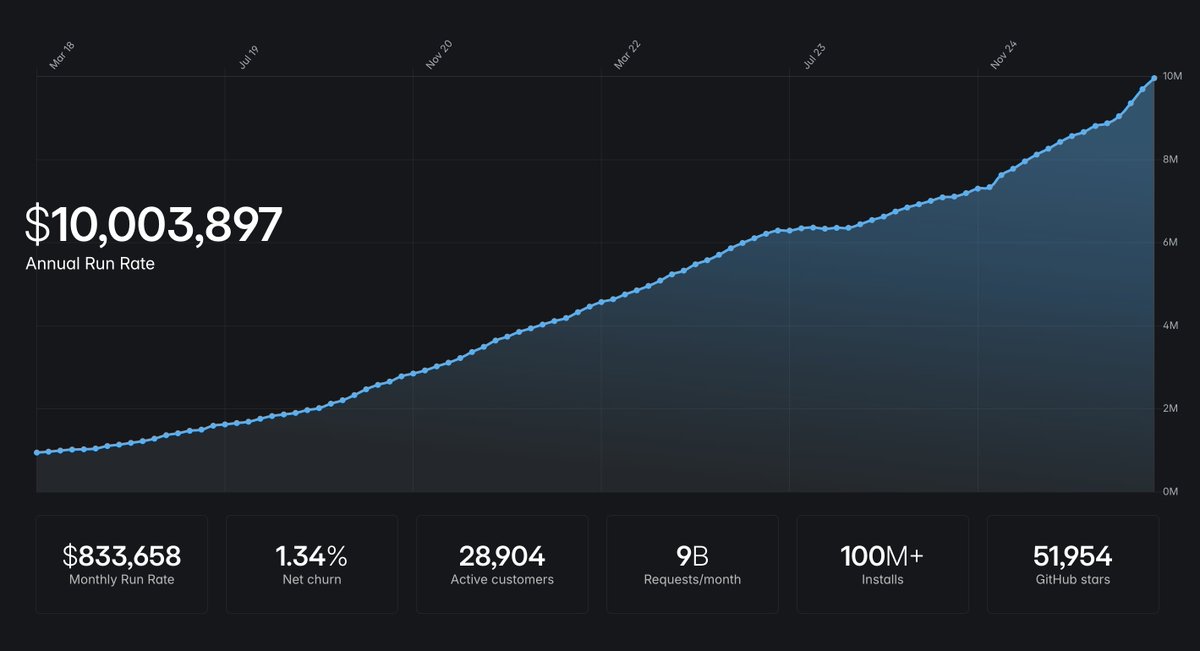
Today @Ghost crossed $10M ARR, as a bootstrapped non-profit foundation building open source software. Indie publisher revenue earned with Ghost now ~$130M, and accelerating. The world of technology is shifting rapidly, and so is the world of media, creators and journalism. It's hard to keep up with, and even harder to predict. My strong belief, though, is that open software that you own and control is going to be even more important and relevant in the future than it is now. So we're going to keep building it.
John O'Nolan tweet media
English
70
35
495
55.9K
John O'Nolan
John O'Nolan@JohnONolan·
@staysaasy What feels most consistent is that the fastest moving teams typically have the strongest convictions And then I think the dynamics can shift beneath you at different levels of scale, which can be an forcing factor that shifts conviction
English
0
0
1
428
staysaasy
staysaasy@staysaasy·
@JohnONolan I find that they just don't obsess over their SDLC. They have strong customs but they don't spend a ton of time on process. They also tend to fix slowness via hiring (/firing) rather than enforcing rigid processes on teams. I'm also curious on your thoughts given your background
English
1
0
14
1.1K
staysaasy
staysaasy@staysaasy·
I find pretty consistently that the slower your team moves the more energy they spend on mapping out their software development lifecycle
English
8
9
189
16.3K
Anneshu Nag
Anneshu Nag@anneshu_nag·
> March Claude users: "Opus has been feeling noticeably dumber lately. Something's off." Claude team: "You're all just imagining it. Classic user delusion. Touch grass. Maybe try not being bad at prompting." > 1 month later Claude team: "After extensive internal analysis, we can now confirm that Opus was, in fact, dumber for the past 31 days. Here's our 47-page technical report with graphs, appendices, and a very polite explanation of the mysterious regression that definitely wasn't our fault." ps: "Also since today GPT-5.5 dropped here's a limit reset just to distract y'all from our failures."
English
18
76
1.2K
106.9K
ClaudeDevs
ClaudeDevs@ClaudeDevs·
Over the past month, some of you reported Claude Code's quality had slipped. We investigated, and published a post-mortem on the three issues we found. All are fixed in v2.1.116+ and we’ve reset usage limits for all subscribers.
English
1.9K
2.6K
38.4K
6M
:Cromwell:
:Cromwell:@learnwithmattc·
@JohnONolan Wait... This is how I understand your counterpoint: SubStack: Email deliverability is bad So we're providing an alternative to our customers via our app Ghost: Email deliverability is bad And that's just how it is
English
1
0
3
545
John O'Nolan
John O'Nolan@JohnONolan·
Every time Substack make a move that serves the business, they disingenously play it off as something that's in the best interest of users. > [Email is getting less reliable, so we had to build an app.] "I know I've said this a lot, but I cannot emphasize enough that email will continue to become less deterministically reliable as a means for distributing your work; this is a huge part of why we got into the app and feed business!" Sure. And there's also the economics. One of the largest overheads for any newsletter platform is email delivery — it's expensive, and it scales linearly with subscribers. Delivering the same content by API to an app you own is essentially free, and keeps users inside your ecosystem. The app isn't some reluctant response to problematic technology, it's just a better business. That would be perfectly fine to say out loud. Instead it's "email is unreliable, actually" - a pretty stark reversal of how they used to talk about email. Substack CEO in 2018: "[Email is] the one channel that you have as an independent writer to reach a reader base that’s not directly mediated by a third party. It doesn’t have a Facebook algorithm deciding what people are going to see." In 2026: email is bad, and the answer is the Substack app, mediated by the Substack algorithm deciding what people are going to see. Yes, email is more complicated than it used to be, but there are thousands of newsletter platforms out there, and only one of them is insisting that the only solution to reliable distribution is using their branded app. > [Nobody feels locked into Substack.] "I saw several wags speculate that this was because we were trying to achieve 'lock in' at the behest of our investors. Brother, if you've ever heard of someone who feels locked-in to Substack because of their follow graph, please tell me." The lock-in is not the follow graph. That's a complete strawman. People feel locked in because mobile paid subscriptions are literally locked in. Subscriptions started on the web sit in the writer's own Stripe account — portable, owned, migratable. Subscriptions started inside the Substack app are permanently stuck on Substack. Which, ofc, is conveniently "[just how mobile works, Apple make us do it]" - but publishers don't even have an option to disable paid subscriptions through the Substack app, they are forced into using it. We migrate people off Substack to @Ghost every week. One of the top complaints is "I need to get out before any more of my revenue gets locked into the Substack app." Substack is a venture-backed platform optimising for retention, unit economics, and platform dependency. That is a perfectly normal thing for a venture-backed platform to do. Just say what you're actually doing and stop trying to dress it up as something else.
Mills Baker@millsbaker

I know I’ve said this a lot, but I cannot emphasize enough that email will continue to become less deterministically reliable as a means for distributing your work; this is a huge part of why we got into the app and feed business! You can blame a few things (1/n):

English
15
14
159
39.7K
John O'Nolan
John O'Nolan@JohnONolan·
@richeholmes Ghost uses the same underlying email delivery infrastructure as Substack - the claim that open rates are becoming harder to track and report is accurate That doesn't mean people aren't receiving, opening and reading email newsletters - they are, no change there
English
0
0
4
424
Rich Holmes
Rich Holmes@richeholmes·
@JohnONolan Are Gmail open rates higher on Ghost-powered newsletters?
English
1
0
1
464
John O'Nolan
John O'Nolan@JohnONolan·
John O'Nolan@JohnONolan

Every time Substack make a move that serves the business, they disingenously play it off as something that's in the best interest of users. > [Email is getting less reliable, so we had to build an app.] "I know I've said this a lot, but I cannot emphasize enough that email will continue to become less deterministically reliable as a means for distributing your work; this is a huge part of why we got into the app and feed business!" Sure. And there's also the economics. One of the largest overheads for any newsletter platform is email delivery — it's expensive, and it scales linearly with subscribers. Delivering the same content by API to an app you own is essentially free, and keeps users inside your ecosystem. The app isn't some reluctant response to problematic technology, it's just a better business. That would be perfectly fine to say out loud. Instead it's "email is unreliable, actually" - a pretty stark reversal of how they used to talk about email. Substack CEO in 2018: "[Email is] the one channel that you have as an independent writer to reach a reader base that’s not directly mediated by a third party. It doesn’t have a Facebook algorithm deciding what people are going to see." In 2026: email is bad, and the answer is the Substack app, mediated by the Substack algorithm deciding what people are going to see. Yes, email is more complicated than it used to be, but there are thousands of newsletter platforms out there, and only one of them is insisting that the only solution to reliable distribution is using their branded app. > [Nobody feels locked into Substack.] "I saw several wags speculate that this was because we were trying to achieve 'lock in' at the behest of our investors. Brother, if you've ever heard of someone who feels locked-in to Substack because of their follow graph, please tell me." The lock-in is not the follow graph. That's a complete strawman. People feel locked in because mobile paid subscriptions are literally locked in. Subscriptions started on the web sit in the writer's own Stripe account — portable, owned, migratable. Subscriptions started inside the Substack app are permanently stuck on Substack. Which, ofc, is conveniently "[just how mobile works, Apple make us do it]" - but publishers don't even have an option to disable paid subscriptions through the Substack app, they are forced into using it. We migrate people off Substack to @Ghost every week. One of the top complaints is "I need to get out before any more of my revenue gets locked into the Substack app." Substack is a venture-backed platform optimising for retention, unit economics, and platform dependency. That is a perfectly normal thing for a venture-backed platform to do. Just say what you're actually doing and stop trying to dress it up as something else.
English
0
0
4
896
John O'Nolan
John O'Nolan@JohnONolan·
@okdan Thanks Dan, new Memberful site looks great btw
English
1
0
1
382
Steven Tey
Steven Tey@steventey·
Sent this to our company Slack @dubdotco today 👇 Have been seeing a pattern of security incidents caused not by insecure/open-source code, but rather via: 1. social-engineering (phishing links/emails) 2. compromised employee accounts 3. insecure 3rd party OAuth apps In the case of the Vercel hack, it looks to be a combination of #2 and #3. PSA: Your company’s security is only as secure as your weakest link, so it’s critical to ensure all employees abide by security best practices — especially ones who have access to customer data.
Steven Tey tweet media
English
11
19
224
36.3K
Brad Menezes
Brad Menezes@bradmenezes·
4M views. Traffic took our site down. Check Webflow our site hosting provider, wait we took all of Webflow down. Oops!
Brad Menezes tweet media
Brad Menezes@bradmenezes

Introducing Superblocks 2.0: AI-generated enterprise apps – finally under IT control. Vibe-coded apps just became the #1 attack vector in the enterprise. Business teams are building on production data, while IT has zero visibility. No reviews. No audits. No permissions. No control. AI hackers are about to get 100x better. Anthropic proved it with Mythos. Superblocks 2.0 is the only platform to take back control: > Business teams build AI-powered apps with permissions baked in. > IT and Security can audit everything and lock down anything, instantly. > Engineering sets the standards. Every app follows them. Instacart, SoFi, and LinkedIn run Superblocks in production today. And larger organizations we can't yet name are too: A Fortune 500 just shut down 2,500 Replit users to standardize on Superblocks, running the platform air-gapped in their AWS environment. A 150,000-employee global services firm replaced Lovable with Superblocks to unlock AI-built apps on restricted internal systems. Every IT leader we’ve demoed to using Replit, Lovable or v0 asked for early access. Today we open access to the world. The genie is out of the bottle on employee vibe coding. Let it run wild, or take back control – superblocks.com

English
33
3
103
33.8K
John O'Nolan
John O'Nolan@JohnONolan·
Experimenting with some AI-assisted features in @Ghost for helping with generated structured data and site administration Kinda fun. Not sure what the UI should be. Don't really want to have to click a button, would be even better if it just happened in the background
English
4
1
14
1.2K
John O'Nolan
John O'Nolan@JohnONolan·
🎯🎯🎯 "If you obscure your code, you are making a bet that your internal team can find and fix flaws faster than an automated swarm of external AI agents can discover them from the outside. Historically, security through obscurity has always failed. Against AI, it will fail exponentially faster." strix.ai/blog/cal-com-i…
English
0
0
7
713
John O'Nolan
John O'Nolan@JohnONolan·
Thinking that going closed source is going to save you from the onset of AI is just delusional tbh. Yes, the world is changing. The answer is to change with it and figure out new ways to succeed, rather than make decisions from a place of fear of losing what you have.
Bailey Pumfleet@pumfleet

Open source is dead. That’s not a statement we ever thought we’d make. @calcom was built on open source. It shaped our product, our community, and our growth. But the world has changed faster than our principles could keep up. AI has fundamentally altered the security landscape. What once required time, expertise, and intent can now be automated at scale. Code is no longer just read. It is scanned, mapped, and exploited. Near zero cost. In that world, transparency becomes exposure. Especially at scale. After a lot of deliberation, we’ve made the decision to close the core @calcom codebase. This is not a rejection of what open source gave us. It’s a response to what risks AI is making possible. We’re still supporting builders, releasing the core code under a new MIT-licensed open source project called cal. diy for hobbyists and tinkerers, but our priority now is simple: Protecting our customers and community at all costs. This may not be the most popular call. But we believe many companies will come to the same conclusion. My full explanation below ↓

English
9
5
55
5.6K
Christian Keil
Christian Keil@pronounced_kyle·
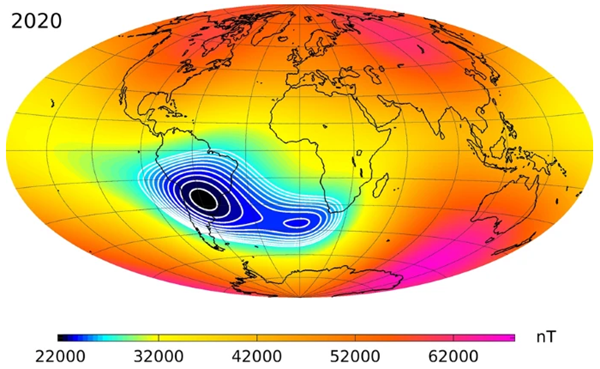
The Bermuda Triangle is 100% real (But it's actually in space, and ~3500 miles SSE of where most people think it is.)
Christian Keil tweet media
English
9
2
77
7.9K
Matías
Matías@matidotlol·
"Port this Astro site into a @Ghost theme" two prompts and it pretty much did it
English
1
0
2
994
John O'Nolan
John O'Nolan@JohnONolan·
@catehall This was clever and really nicely messaged, pre-ordered 🫡
English
1
0
1
140
Cate Hall
Cate Hall@catehall·
I made a quiz that will tell you what your REAL problem is, take it if you want your feelings hurt (link below)
Cate Hall tweet media
English
54
34
1K
132.9K