John Styles

73 posts

John Styles banner
John Styles

John Styles

@johnstyles1949

Historian of material culture, textiles, manufacturing, design. Professor Emeritus @UniofHerts. Senior Research Fellow @V_and_A. Hill walker.

London, England Katılım Haziran 2020
3 Takip Edilen229 Takipçiler
John Styles
John Styles@johnstyles1949·
@pseudoerasmus @Jackbmeyer John Holker, France, 1756: In England 'the master manufacturers have much more authority over their workers, against whom the law is very severe and always favours the merchant, strictly punishing the worker for faults in manufacture'.
English
1
0
0
140
Jack Meyer 🏛️
Jack Meyer 🏛️@Jackbmeyer·
Dismissing unions and collective bargaining as purely rent-seeking neglects the structural bias of labor markets in favor of employers. When it comes to organizing and wage-setting power, this much has been clear for over 250 years:
Jack Meyer 🏛️ tweet media
English
12
24
241
14.1K
John Styles
John Styles@johnstyles1949·
Just published, ‘Transformations in Textiles, 1400-1760’, my (critical) homage to Jan De Vries’s ‘Industrious Revolution’. Available as an open access e-book chapter manchesterhive.com/display/978152… in
John Styles tweet media
English
0
0
2
104
John Styles
John Styles@johnstyles1949·
@pseudoerasmus @AngusBylsma Similar story in Japan. Cotton manufacture didn't arrive until the 16th century. Previously, the generally used fibres – hemp and ramie – were spliced to produce yarn rather than spun. The main use for spinning wheels was probably to spin silk waste (as in pre-cotton China).
English
1
0
0
200
Angus Bylsma
Angus Bylsma@AngusBylsma·
Finally seen throne of blood and it is an improvement on Macbeth in every way — lady Macbeth is cogent, the ‘ripped untimely from the womb’ is cut, and the trees and castle bit works much better
English
1
0
1
481
John Styles
John Styles@johnstyles1949·
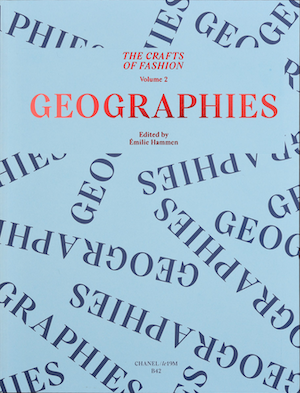
Just published, my 'Printed Calicoes between India and Europe: Lost in Translation?' in Émilie Hammen (ed.), The Crafts of Fashion vol. 2: Geographies (Éditions B42). 'India was a model and a source of inspiration, but India was not necessarily the tutor.'
John Styles tweet media
English
1
3
16
1.5K
John Styles
John Styles@johnstyles1949·
@SarahABendall @MarloAvidon Great! Happy to discuss further when I see you in September. The piece width issue must have had implications for garment construction, especially if makers were combining European silks with Chinese taffeta linings.
English
1
0
2
39
John Styles
John Styles@johnstyles1949·
@SarahABendall @MarloAvidon 2. But Chinese silks were woven on wider looms than most European silks. For a recent study which gives information on piece lengths and widths, see Hannah Hodacs, ‘Cheap and Cheerful’, Eighteenth-Century Studies, 2017.
English
2
0
2
56
Sarah Bendall
Sarah Bendall@SarahABendall·
Dress and textile historians: I'm coming across lots of references to "pieces" of fabric in the late 17th century, but I can't find any info about piece as a unit of measurement - any ideas? I'm trying to compare prices with those listed in yards or ells! (Image for attention!)
Sarah Bendall tweet media
English
4
10
33
4.5K
John Styles
John Styles@johnstyles1949·
@SarahABendall @MarloAvidon 1. Yes, JF's Merchant's Ware-house laid open / Plain Dealing Linnen-Draper is a reasonably good guide to many Indian cotton piece lengths in the 1690s, but don't forget widths. Easier for Indian cottons, many of which were approximately a yard wide.
English
0
0
1
48
John Styles
John Styles@johnstyles1949·
@antonhowes Ah-ha! The mighty packhorse. 'The Bell Mare', 1757, at Kendal Museum, presumably carrying a bale of Kendal cottons.
John Styles tweet media
English
1
1
3
719
Dr Anton Howes
Dr Anton Howes@antonhowes·
Now this is the good stuff
Dr Anton Howes tweet media
English
13
10
114
6.1K
Dr Anton Howes
Dr Anton Howes@antonhowes·
Mad fact I just learned: the room temperature of a coal-heated London house in the 1740s in winter was usually as low as 10 degrees Celsius (50 Fahrenheit). During the night-time often below freezing. And this is remarked on as very cold, for room temperature, by a Swede!
English
98
59
875
192.7K
John Styles
John Styles@johnstyles1949·
@antonhowes 3. and keeps the Hands from being so soon numb'd in Cold Weather ; Whereas by the use of the Hand Shuttle, the Weaver much sooner has his Hands numb'd with Cold, by changeably handling the Shuttle, first with one Hand, then the other”.
English
0
0
2
331
John Styles
John Styles@johnstyles1949·
@antonhowes 1. “in Weaving with the same, one Hand keeps its Position upon the Lathe Top, the other Hand holds an Handle, by which the Wheel Shuttle is cast through the Shed at Pleasure, which Lathe Top, and Handle, soon becomes warm,
English
1
0
3
3.3K
John Styles
John Styles@johnstyles1949·
@antonhowes 1. 18th century space heating was not just an issue for the comfort of 18th century Swedish visitors, but also for productivity in domestic manufacturing. Poor space heating accounts for one of the arguments in favour of the wheel (ie. ‘flying’) shuttle:
English
0
1
5
1.8K
John Styles
John Styles@johnstyles1949·
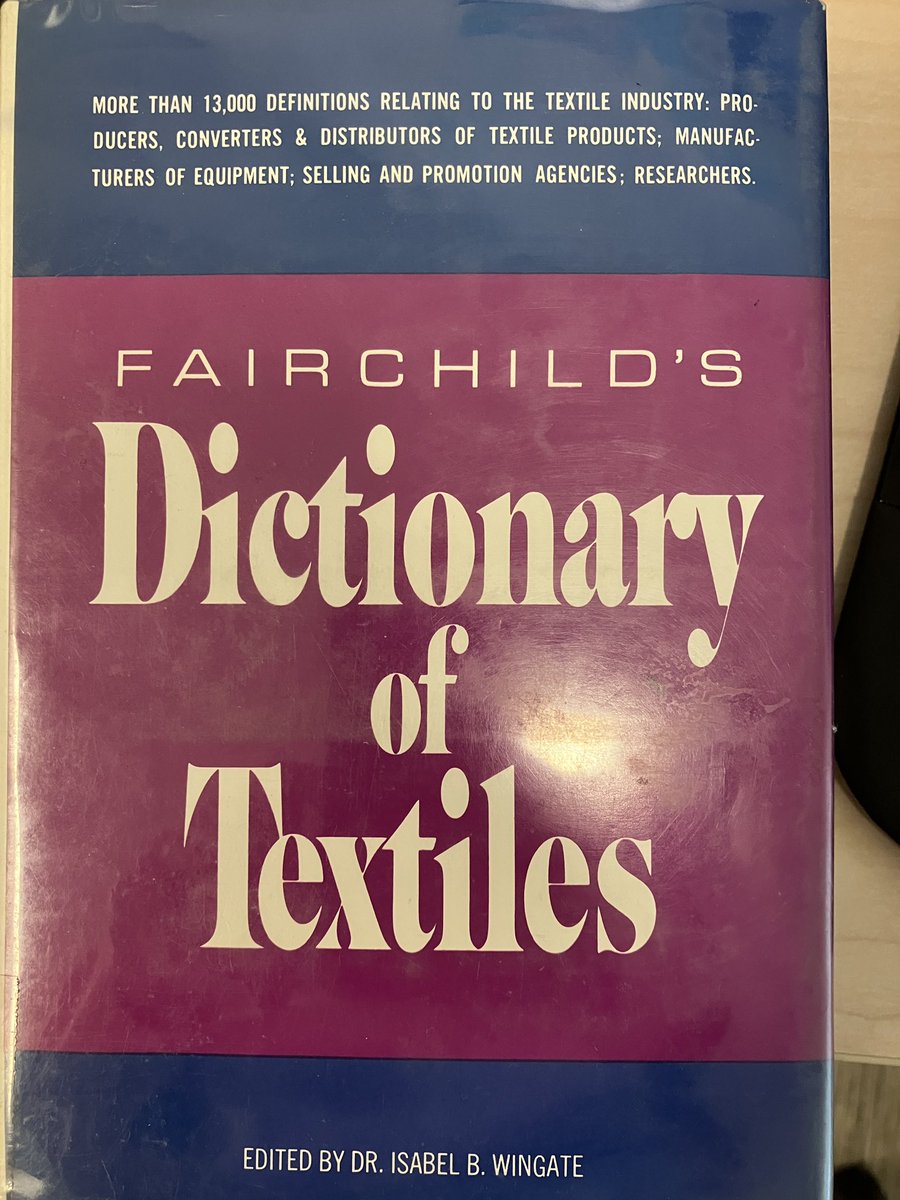
@cmicmeissner The full 1959 edition of Fairchild's Dictionary is available online at HathiTrust, but if you're really desperate to know whether leas are different from cuts, you need David Jeremy's 'British and American Yarn Count Systems,' Business History Review, 45, 1971.
English
0
0
1
75
Christopher M. Meissner
Christopher M. Meissner@cmicmeissner·
I found this today in the lounge. Totally needed this. Woot! Anyone want to know what a “lea” is?
Christopher M. Meissner tweet media
English
5
0
8
1K
John Styles
John Styles@johnstyles1949·
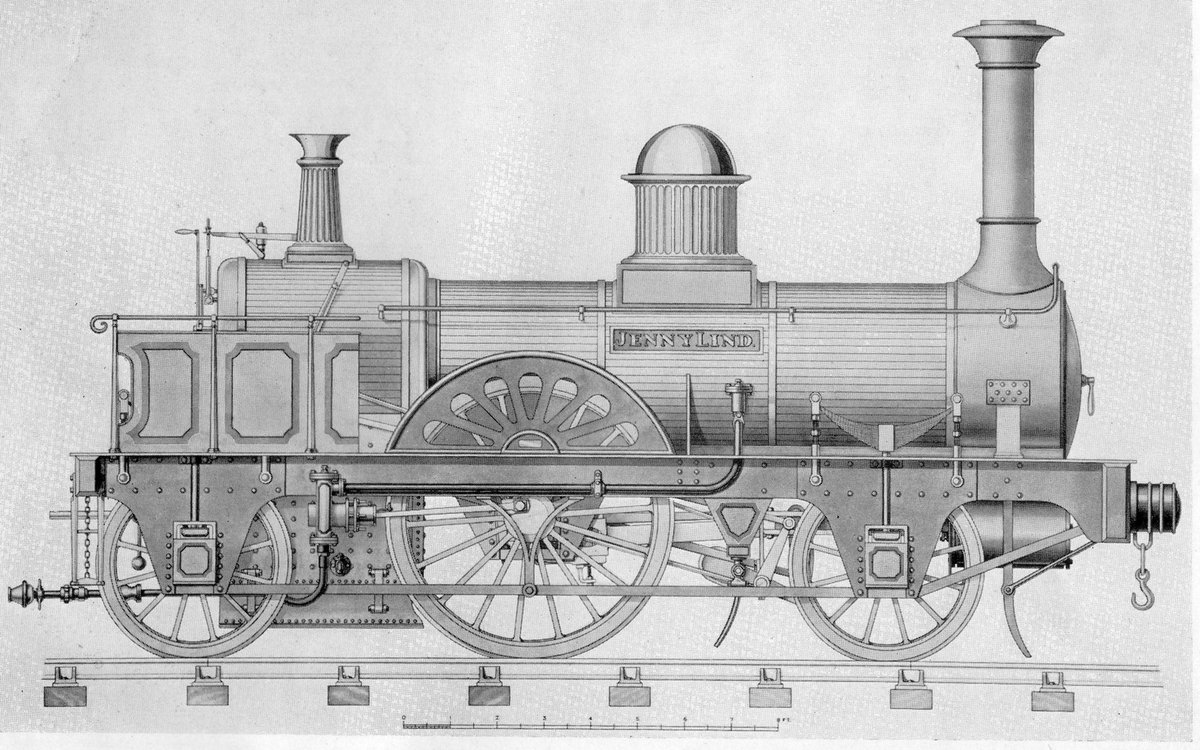
@andrewpopp6 But how about the railway locomotive? More steam power was used in transport than in factories at your period. This 1847 'Jenny Lind', built at Leeds, is brilliantly architectural.
John Styles tweet media
English
1
0
0
40
Andrew Popp
Andrew Popp@andrewpopp6·
@johnstyles1949 If I go cotton (and I probably will) there will be foundling swatches.
English
3
0
2
145
Andrew Popp
Andrew Popp@andrewpopp6·
If you were going to teach 1789-1848 on an intro UG class (1 x 3hrs, for non-history students) through one commodity, one object, and one text, what would they be? #twitterstorians
English
12
1
6
5.3K
John Styles
John Styles@johnstyles1949·
@andrewpopp6 It's all so characteristically Enlightenment. At the Foundling Hospital it was the babies who were given numbers; at Manchester it was the textiles.
English
0
0
1
38
John Styles
John Styles@johnstyles1949·
@rozsro 4. Otherwise it’s back to the various French editions and English adaptations of Savary des Brûlons, I’m afraid.
English
0
0
0
47