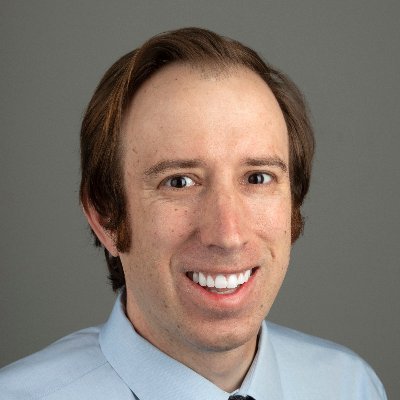
John Torous, MD MBI

7.3K posts

John Torous, MD MBI banner
John Torous, MD MBI

John Torous, MD MBI

@JohnTorousMD

Psychiatrist, Director BIDMC https://t.co/SeRtYKs2Hf, Associate Professor @HarvardMed, Editor JMIR MentalHealth, Alum @Berkeley_EECS

Boston, Massachusetts, USA Katılım Nisan 2015
722 Takip Edilen9.5K Takipçiler
John Torous, MD MBI retweetledi
Shoshana Weissmann, Sloth Committee Chair 🦥
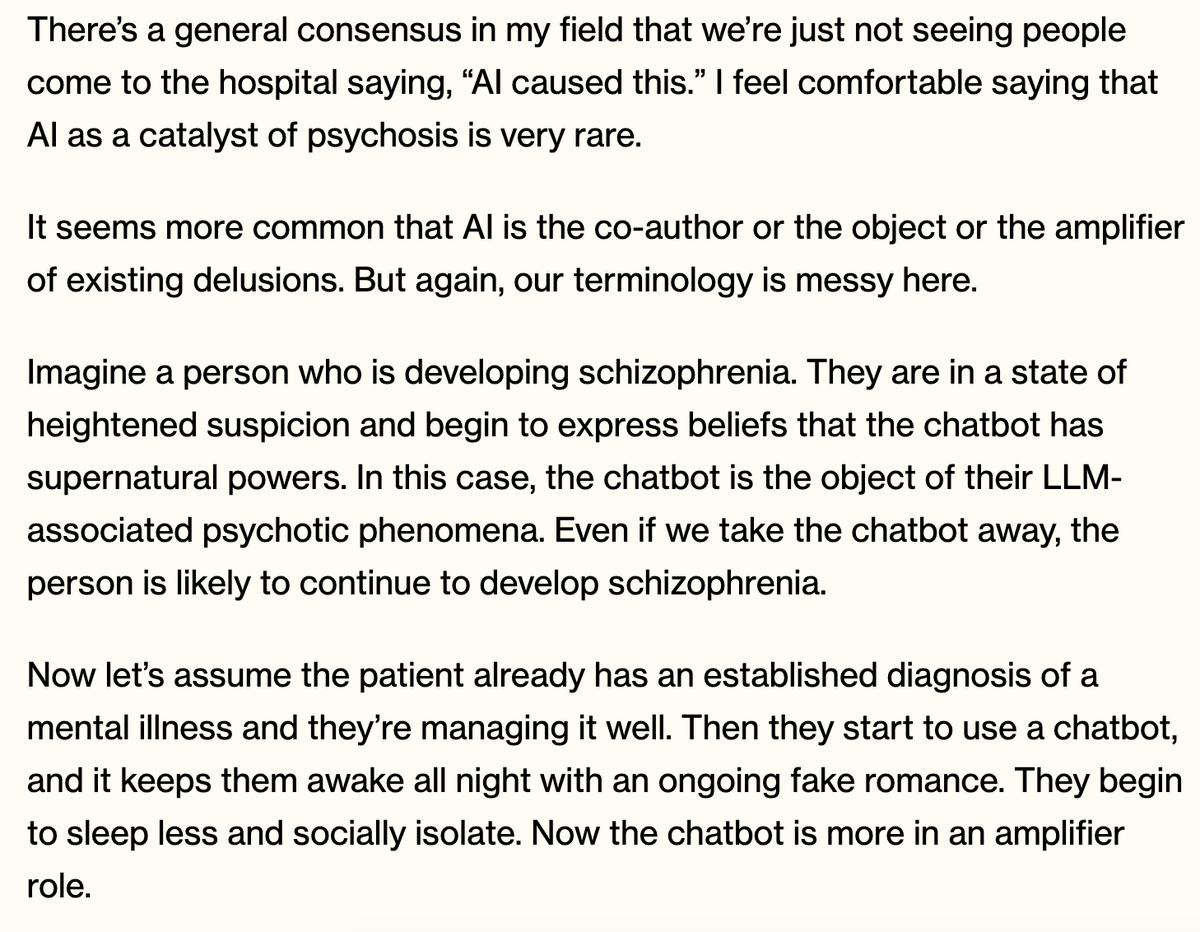
An expert in psychosis @JohnTorousMD pushes back against "AI psychosis" "It’s not uncommon that people have delusions about the radio or TV talking to them, and no one would reasonably say that the radio or television causes people to be psychotic, right?" And he gets into how AI is different and how to think about AI psychosis when it does happen
Shoshana Weissmann, Sloth Committee Chair 🦥 tweet mediaShoshana Weissmann, Sloth Committee Chair 🦥 tweet mediaShoshana Weissmann, Sloth Committee Chair 🦥 tweet media
English
4
2
18
8K
John Torous, MD MBI retweetledi
JMIR Publications
JMIR Publications@jmirpub·
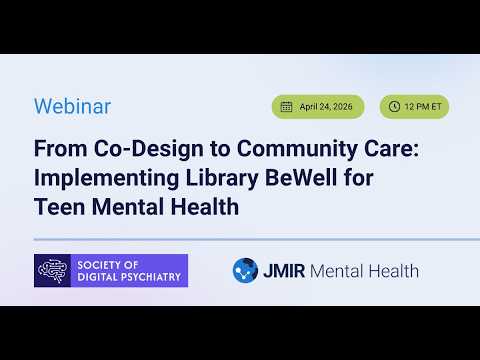
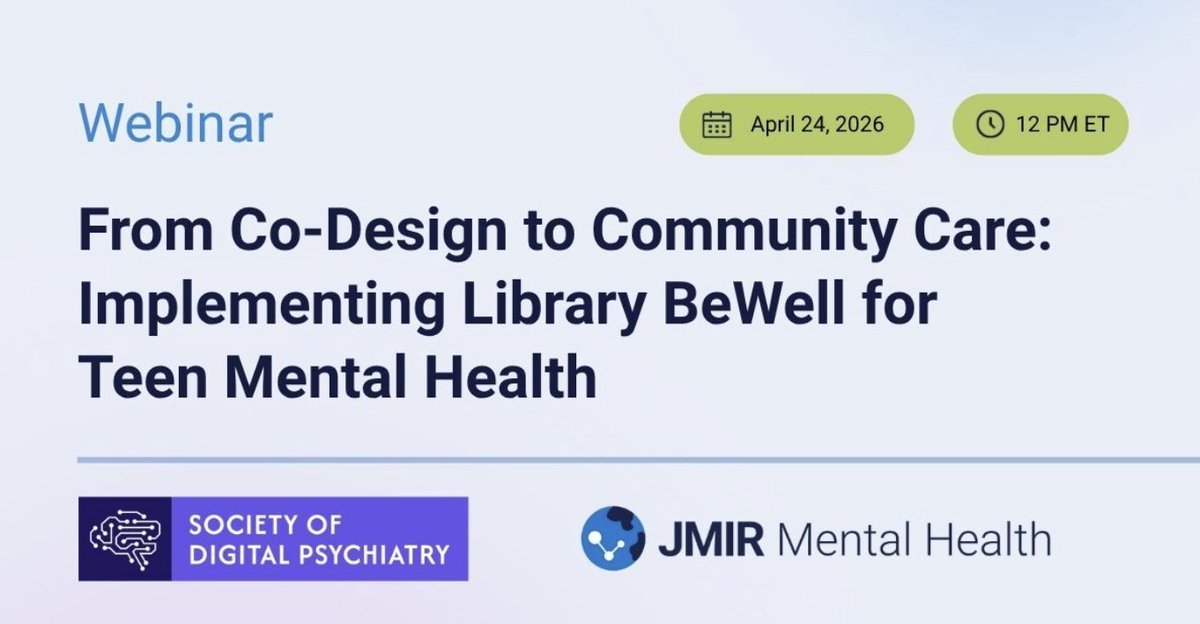
What if mental health care for teens started somewhere they already know, like a library? Join this free webinar with Dr. Ashley Knapp and @JohnTorousMD to explore how Library BeWell is bringing digital mental health into community spaces. 🗓 April 24 | 12 PM ET 🔗 Register now: landingpage.jmirpublications.com/from-co-design… #DigitalHealth #YouthMentalHealth #HealthInnovation #CommunityHealth #MentalHealthCare #JMIR #PublicHealth #HealthEquity #DigitalMentalHealth
JMIR Publications tweet media
English
0
2
1
182
John Torous, MD MBI retweetledi
Harvard Review of Psychiatry
Harvard Review of Psychiatry@HarvardRevPsych·
Smartphone-based cognitive assessments generate rich metadata. This review highlights how high-frequency behavioral patterns can enhance psychiatric evaluation and clinical decision-making. journals.lww.com/hrpjournal/ful…
English
1
4
17
1.3K
John Torous, MD MBI retweetledi
JMIR Publications
JMIR Publications@jmirpub·
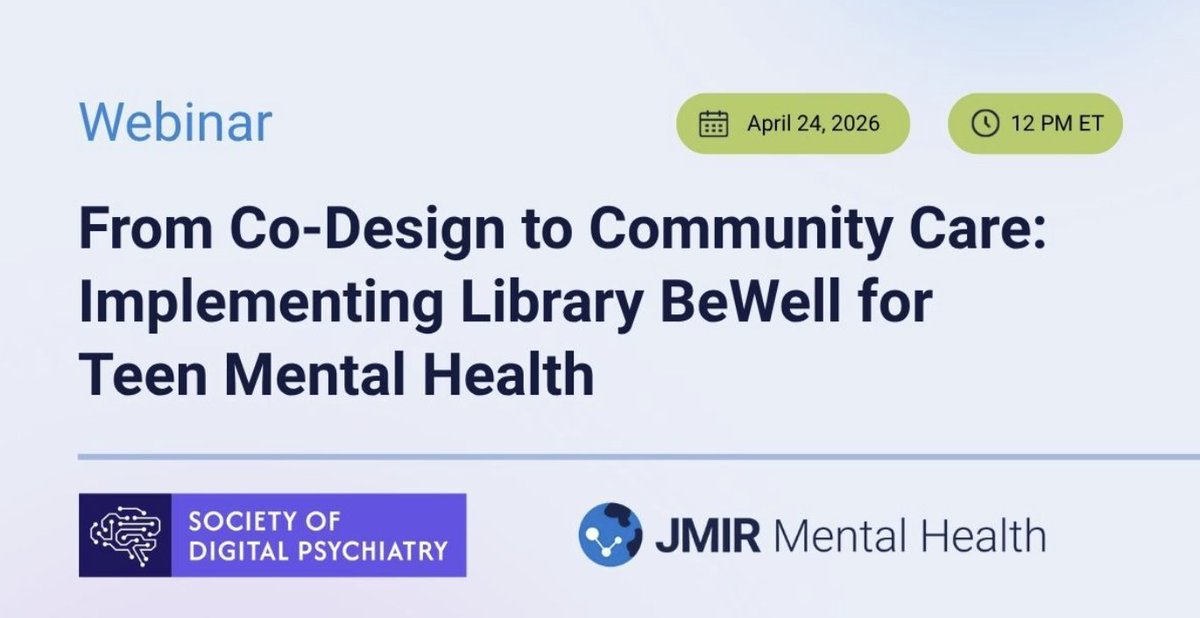
What if your local library could support teen mental health? Join Dr. Ashley Knapp + @JohnTorousMD in a free webinar to explore Library BeWell, a co-designed digital mental health intervention bringing support into public libraries. 🗓 April 24 | 12 PM ET 🔗Register now: landingpage.jmirpublications.com/from-co-design… #DigitalHealth #MentalHealthInnovation #YouthMentalHealth #CommunityCare #HealthEquity #JMIR #PublicHealth #MentalHealth #PublicLibraries
JMIR Publications tweet media
English
0
2
4
247
John Torous, MD MBI retweetledi
Chirag Patel
Chirag Patel@chiragjp·
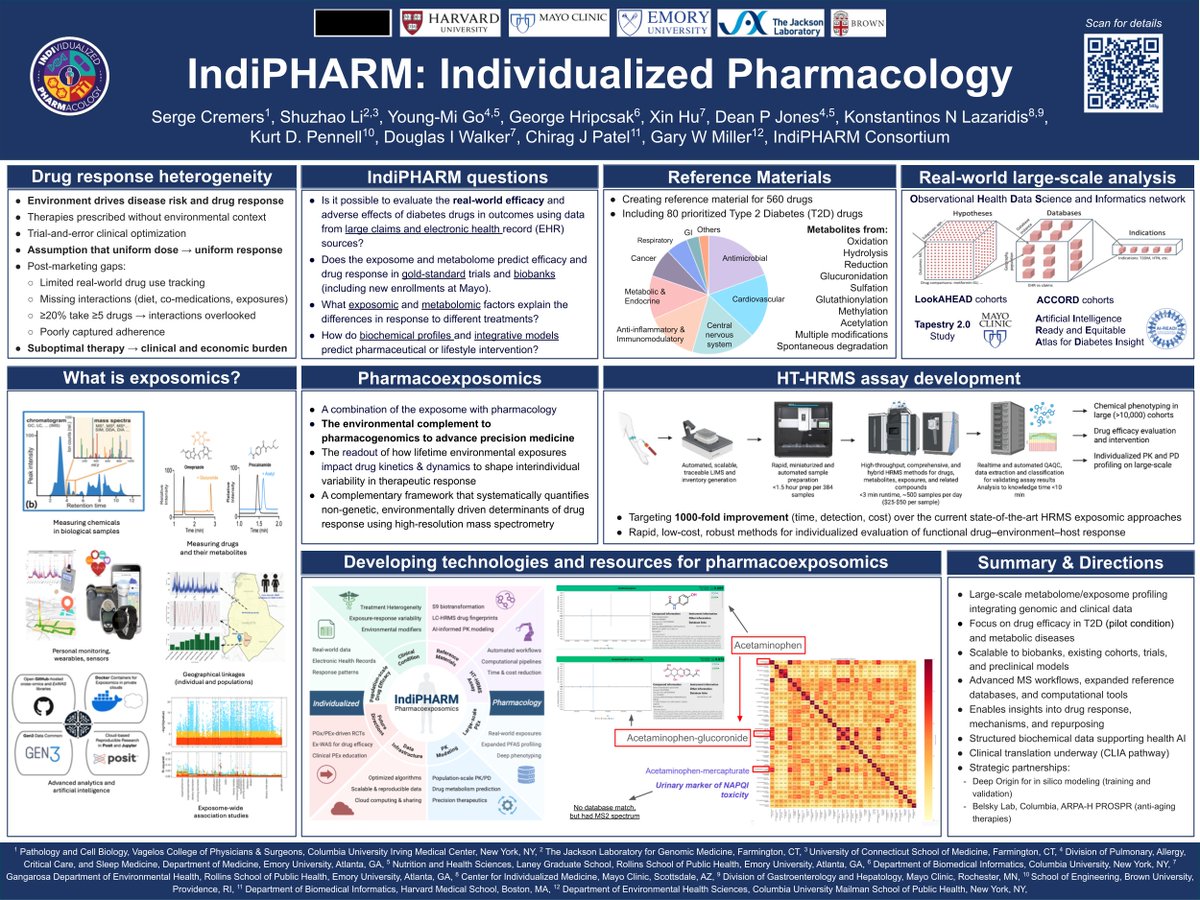
About time to present IndiPharm: Individualized Pharmacology: Why do patients on the same drug get different outcomes? A precise molecular readout of patient's #exposome may hold answers. 👇 We're integrating lifetime exposures, drug 'omics, and real-world data to predict individualized drug dynamics at scale. Grateful to @ARPA_H, Andy Kilinaski, and the Health Sciences Futures team for the vision and funding to push this forward and the greater portfolio 🙏 On behalf of @GaryWMiller3 and team: @Columbia @Harvard @MayoClinic @EmoryUniversity @JacksonLab @BrownUniversity
Chirag Patel tweet media
English
0
6
18
1.1K
John Torous, MD MBI retweetledi
JMIR Publications
JMIR Publications@jmirpub·
💡 Free Webinar: Implementing Library BeWell for Teen Mental Health What if your local library could support teen mental health? Join Dr. Ashley Knapp and @JohnTorousMD for a session on Library BeWell, a digital mental health tool co-designed with teens. Discover how community workshops, usability testing, and public libraries come together to create accessible, youth-centered mental health support. 🗓 Date: April 24, 2026 | 12 PM ET 🔗 Register Here: landingpage.jmirpublications.com/from-co-design… #JMIR #DigitalMentalHealth #YouthWellness #CoDesign #LibraryInnovation #JMIRMentalHealth
JMIR Publications tweet media
English
0
2
3
202
John Torous, MD MBI retweetledi
JAMA Psychiatry
JAMA Psychiatry@JAMAPsych·
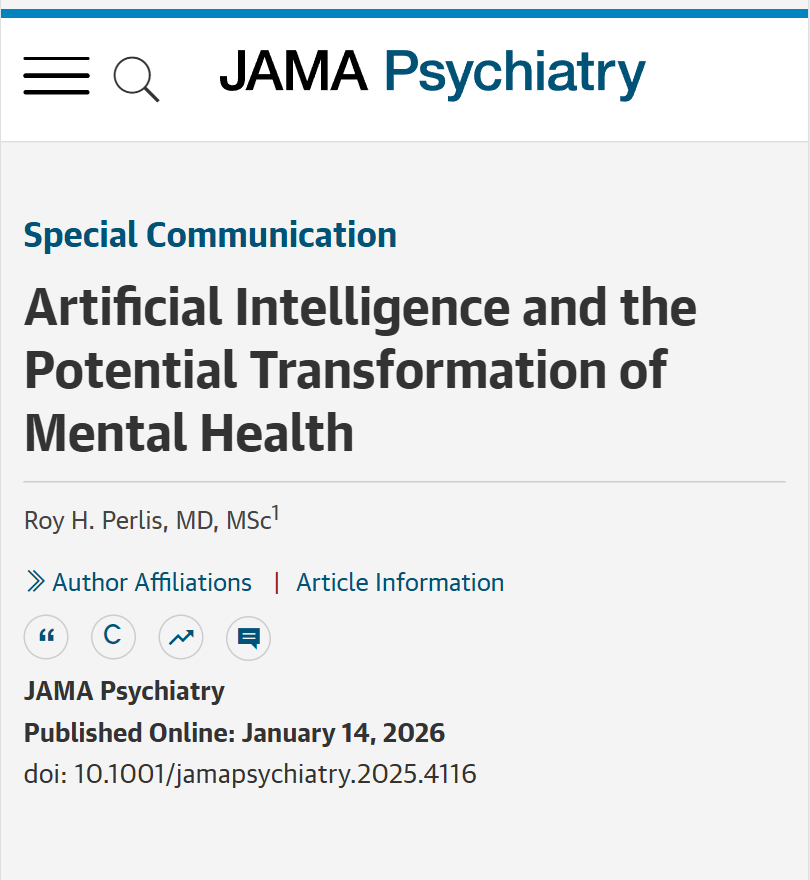
Artificial intelligence tools may improve access and quality in #MentalHealth care, but implementation poses risks including diminished clinician skill and unintended consequences. Regulation and clinician education may be needed. ja.ma/4tt4gJq
JAMA Psychiatry tweet media
English
5
20
71
4.7K
John Torous, MD MBI retweetledi
Harvard Review of Psychiatry
Harvard Review of Psychiatry@HarvardRevPsych·
Emerging evidence shows that metadata from smartphone-based cognitive tests can meaningfully inform psychiatric assessment. This review underscores the value of high-frequency digital patterns across platforms journals.lww.com/hrpjournal/ful…
English
0
4
14
1.4K
John Torous, MD MBI retweetledi
JAMA Psychiatry
JAMA Psychiatry@JAMAPsych·
📢 Applications open: @JAMAPsych Editorial Fellowship Early-career psychiatrists or doctorate-level clinicians are invited to apply for this opportunity to gain hands-on training in the editorial processes of a peer-reviewed psychiatry journal. 🔗 ja.ma/40Hh1Uw
JAMA Psychiatry tweet media
English
0
3
8
1.9K
John Torous, MD MBI retweetledi
Schizophrenia International Research Society
Join us this afternoon at #SIRS2026 for an insightful plenary session featuring Dr. John Torous. Dr. Torous will lead a balanced discussion on the risks and benefits of innovative technologies. As these tools become more prevalent, understanding how to assess their clinical value and ethical implementation is paramount for researchers and practitioners alike. We look forward to an engaging session on the future of technology-assisted care.
Schizophrenia International Research Society tweet media
English
0
1
8
455
John Torous, MD MBI retweetledi
JAMA Psychiatry
JAMA Psychiatry@JAMAPsych·
JAMA Psychiatry is recruiting early career clinicians for a 2-year editorial fellowship. Gain hands on experience with peer review, participate in editorial discussions, and complete a personalized editorial project. 🔗 ja.ma/4sVLWsb
JAMA Psychiatry tweet media
English
0
1
9
1.9K
John Torous, MD MBI retweetledi
JMIR Publications
JMIR Publications@jmirpub·
🚨 Last chance to register! Join our webinar tomorrow on digital health navigators in prescription digital therapeutics. Dr. Julian Schwarz & @JohnTorousMD share insights from the DigiNavi pilot study and real-world implementation. 📅 Mar 24 | ⏰ 3 PM ET 🔗 Secure your spot: landingpage.jmirpublications.com/bridging-innov… #DigitalHealth #DigitalTherapeutics #DigitalPsychiatry #Webinar #LastChance #DigitalMentalHealth
JMIR Publications tweet media
English
0
3
6
155
John Torous, MD MBI retweetledi
Harvard Review of Psychiatry
Harvard Review of Psychiatry@HarvardRevPsych·
This new review emphasizes the clinical relevance of metadata from smartphone-based cognitive tests, focusing on high-frequency patterns over individual apps to support psychiatric assessment journals.lww.com/hrpjournal/ful…
English
0
3
6
1K
John Torous, MD MBI
John Torous, MD MBI@JohnTorousMD·
Listen to the free author interview podcast! Link inside the @JAMAPsych paper below
Balázs Szigeti@psybalazs

🚨MAJOR NEW PAPER 🚨 just out in @JAMAPsych : Psychedelic Therapy vs Antidepressants for the Treatment of Depression Under Equal Unblinding Conditions (tinyurl.com/yu2rbtaf). I am very proud of this one, was a lot of work for me - both co-first and last author! Eternal gratitude to co-first @QuantPsychiatry and twitterless Hannah Barnett! The premise is that it is biased to compare open-label trials (=where patients know what treatment they are getting) to blind trials (=where patients do NOT know what they are getting). Open-label trials would gain an unfair advantage by higher placebo response. Even formally blinded psychedelic trials are practically open-label as its obvious to distinguish placebo from 25mg of #psilocybin. In contrast, traditional antidepressants (SSRIs/SNRIs) trials are are close to be truly blind (Lin 2022). Given the bias of open-label vs. blinded comparison, we compared the efficacy of psychedelic-therapy (which is practically always open-label) vs. open-label antidepressants for the treatment of major depression. We tested 3 prior hypothesis: - There will be a significant difference between psychedelic-therapy vs. open-label antidepressants, favoring psychedelic-therapy. - There will be a significant difference between blinded and open-label antidepressants trials, favoring open-label. - There will NOT be a significant difference between blinded and open-label psychedelic-therapy, as practically they are always open-label. In contrast with our prior hypothesis, we did not find psychedelic-therapy to be more effective than open-label antidepressants (H1). Not only was the difference not clinically meaningful, but practically there was no difference at all. This finding means that antidepressants administered knowingly to patients, which is the case in real-life medical practice, is as effective as psychedelic-therapy. This result was robust across variations in study selection, including when we removed psychedelic-therapy trials on treatment-resistant depression. We also assessed the impact of blinding in both psychedelic-therapy and antidepressants trials. We found that for antidepressants (H2), but not for psychedelic-therapy (H3), open label is associated with better outcomes than blinded treatment. However, even in the case of antidepressants, the difference was practically small (~1.3 HAMD units). How come hypothesis 1 failed, i.e. that psychedelic-therapy is no ore effective than open-label antidepressants, given that antidepressants trials are famous for small drug-placebo difference (~2.4 HAMD units), while psychedelic-therapy trials reported large effects (~7.3)? The key factor is that in psychedelic trials the placebo response is about 50% relative to antidepressants, ~ 4 vs 8 HAMD units (Hsu 2024, Hieronymus 2025). This suppressed placebo response leads to an inflated between-arm difference, as the treatment arm is measured against a lower floor. The suppressed placebo response in psychedelic-therapy trials is likely attributable to the ‘know-cebo’ effect, i.e. the disappointment when patients realize they are in the control group. In psychedelic-therapy trials, this placebo suppression accounts for 4.0 / 7.3 ~ 55% of the specific treatment effect. In other words, ~55% of psychedelic-therapy’s effect is not explained by patient improvement after the treatment, but rather by the lack of improvement in the placebo group. In summary, we found that for the treatment of depression, psychedelic-therapy is no more effective than open-label SSRIs/SNRIs. Our results for psychedelics are twofold: psychedelic-therapy demonstrated a robust and large therapeutic effects (~12 HAMD units), which justifies optimism. On the other hand, psychedelic-therapy’s lack of superiority compared to open-label SSRIs/SNRIs highlights the influence of blinding integrity and argues against overly optimistic narrative's about psychedelic-therapy's potential.

English
1
2
8
3.5K
John Torous, MD MBI retweetledi
JMIR Publications
JMIR Publications@jmirpub·
WEBINAR ALERT❗️ Who helps patients navigate prescription digital therapeutics? Join Dr. Julian Schwarz and @JohnTorousMD as they discuss the DigiNavi pilot, the first study evaluating digital health navigators in routine care in Germany. Mar 24 | 3 PM ET
English
0
1
3
23.2K