Jon Zink

720 posts

Jon Zink banner
Jon Zink

Jon Zink

@jonKzink

Exoplanets | Hubble/Sagan Postdoctoral Fellow @Caltech

Los Angeles, CA Katılım Şubat 2019
422 Takip Edilen595 Takipçiler
Sabitlenmiş Tweet
Jon Zink
Jon Zink@jonKzink·
We have a new paper out today diving into the architectural facets unique to Hot Jupiter systems: Hot Jupiters Have Giant Companions: Evidence for Coplanar High-Eccentricity Migration arxiv.org/abs/2310.01567
English
1
8
25
3.6K
Jon Zink retweetledi
Kiersten Boley
Kiersten Boley@KierstenBoley·
My new paper is on arxiv! We surveyed ~110K stars and found a metallicity "cliff" in super-Earth formation. This one has been in the works for a while. Check it out here: arxiv.org/pdf/2407.13821
English
3
22
110
19K
Jon Zink
Jon Zink@jonKzink·
Yesterday was my last official day as a professional astronomer. It’s been a good run and I have made amazing friendships along the way. Looking forward to the next chapter of my career at Google.
English
12
1
123
9.5K
Jon Zink
Jon Zink@jonKzink·
Don’t sleep on this result! We have put a pretty important constraint on the timescale for sub-Neptune mass-loss (about 700 Myr).
English
0
0
5
1.5K
Jon Zink
Jon Zink@jonKzink·
@AlexNeedsSpace I don’t know of a formal function for magnitude. But, I highly doubt we are anywhere near that complete with TESS. Maybe for >4 Earth radius and V< 9, completeness might be close to unity.
English
1
0
2
113
Flatland Astronomer, PhD
Flatland Astronomer, PhD@AlexNeedsSpace·
AstroTwitter: Does anyone know of any work done to assess the completeness of TESS as a function of, say, magnitude? i.e, have we found most of the transiting short period planets (above ~1 earth radius) around bright stars?
English
1
0
0
395
Jon Zink
Jon Zink@jonKzink·
We have a new paper out today diving into the architectural facets unique to Hot Jupiter systems: Hot Jupiters Have Giant Companions: Evidence for Coplanar High-Eccentricity Migration arxiv.org/abs/2310.01567
English
1
8
25
3.6K
Sharon Xuesong Wang
Sharon Xuesong Wang@sharonxuesong·
@jonKzink I look forward to it! ...and hope that I didn't spill the beans too early or "scoop" you accidentally via twitter... 😂
English
1
0
0
39
Sharon Xuesong Wang
Sharon Xuesong Wang@sharonxuesong·
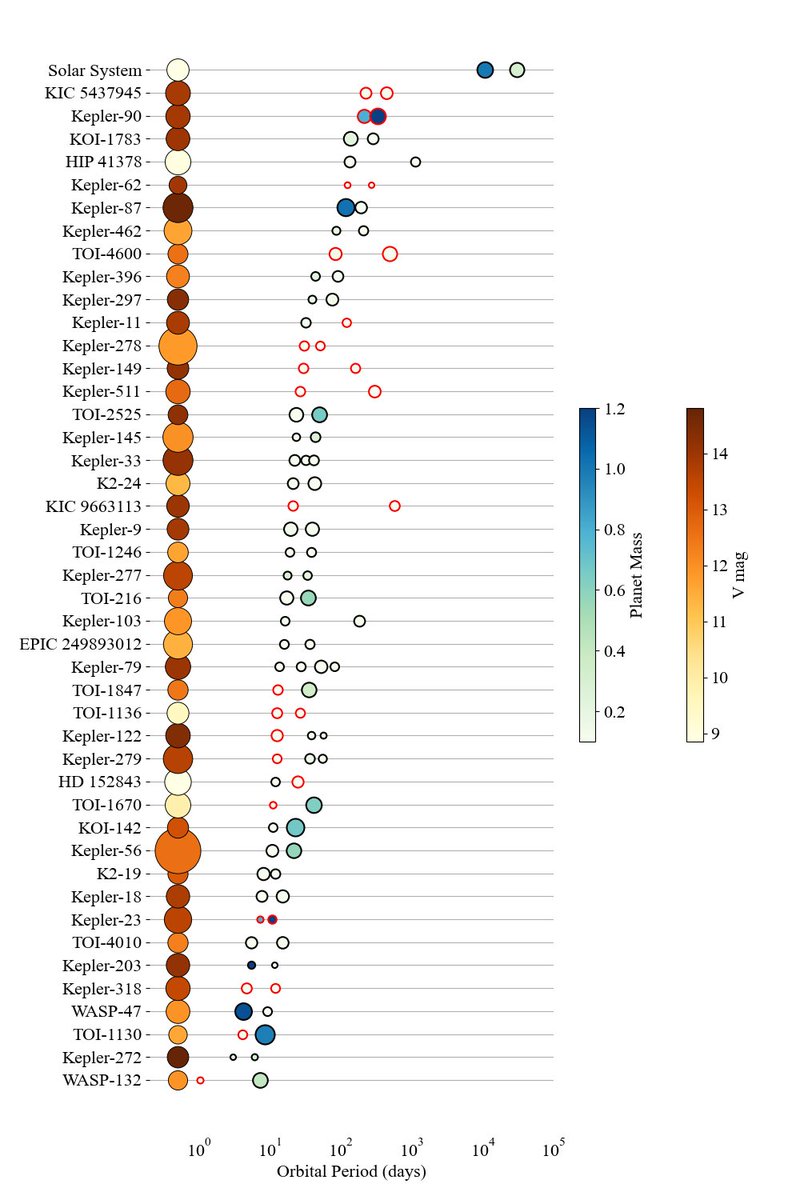
I made a plot for all systems hosting more than one transiting giant planets (R>0.3RJ or M>25Me). The small ones are not plotted, but all giants in each system are shown here. They are so close to each other! 1/n thread
Sharon Xuesong Wang tweet media
English
5
10
57
6.5K
Jon Zink
Jon Zink@jonKzink·
Putting all of these features together we favor coplanar high-eccentricity migration ---which predicted a >3X mass correlation for HJ outer companions--- as the dominant mechanism for hot Jupiter formation.
English
0
0
2
130
Jon Zink
Jon Zink@jonKzink·
🌟Characteristic 3: Eccentricity Unveils Secrets🌟 In Hot Jupiter (HJ) systems, outer companions tend to have mid-range eccentricities, while comparable non-HJ outer companions appear more circular. This suggest a rich dynamic history between HJs and their outer companions.
English
1
0
3
140
Jon Zink
Jon Zink@jonKzink·
@sharonxuesong Look out for a very relevant paper on just this topic hitting ArXiv this week 😉.
English
1
0
2
73
Sharon Xuesong Wang
Sharon Xuesong Wang@sharonxuesong·
I'll report back with more if my system-architecture friends have any comments, but please share your thoughts or papers in this thread!
English
1
0
0
277
Jon Zink retweetledi
ARCHIVED NASA Exoplanets
ARCHIVED NASA Exoplanets@NASAExoplanets·
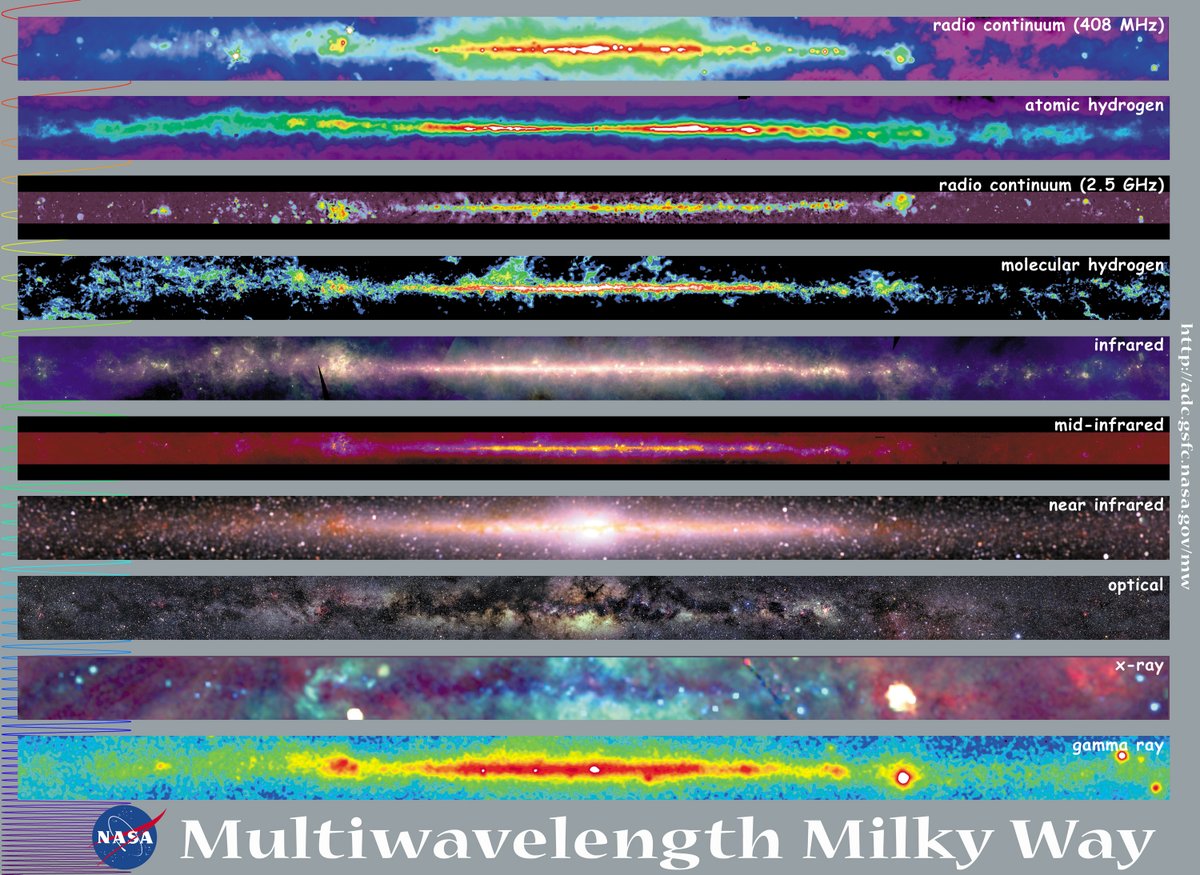
Stars that travel high above the galactic plane, shown here in many wavelengths, may have fewer small, hot planets than those nearer the plane, according to a new study. Planet formation might differ from one galactic neighborhood to the next! go.nasa.gov/3E5YcPp
ARCHIVED NASA Exoplanets tweet media
English
8
90
428
66.5K
Jon Zink retweetledi
ARCHIVED NASA Exoplanets
ARCHIVED NASA Exoplanets@NASAExoplanets·
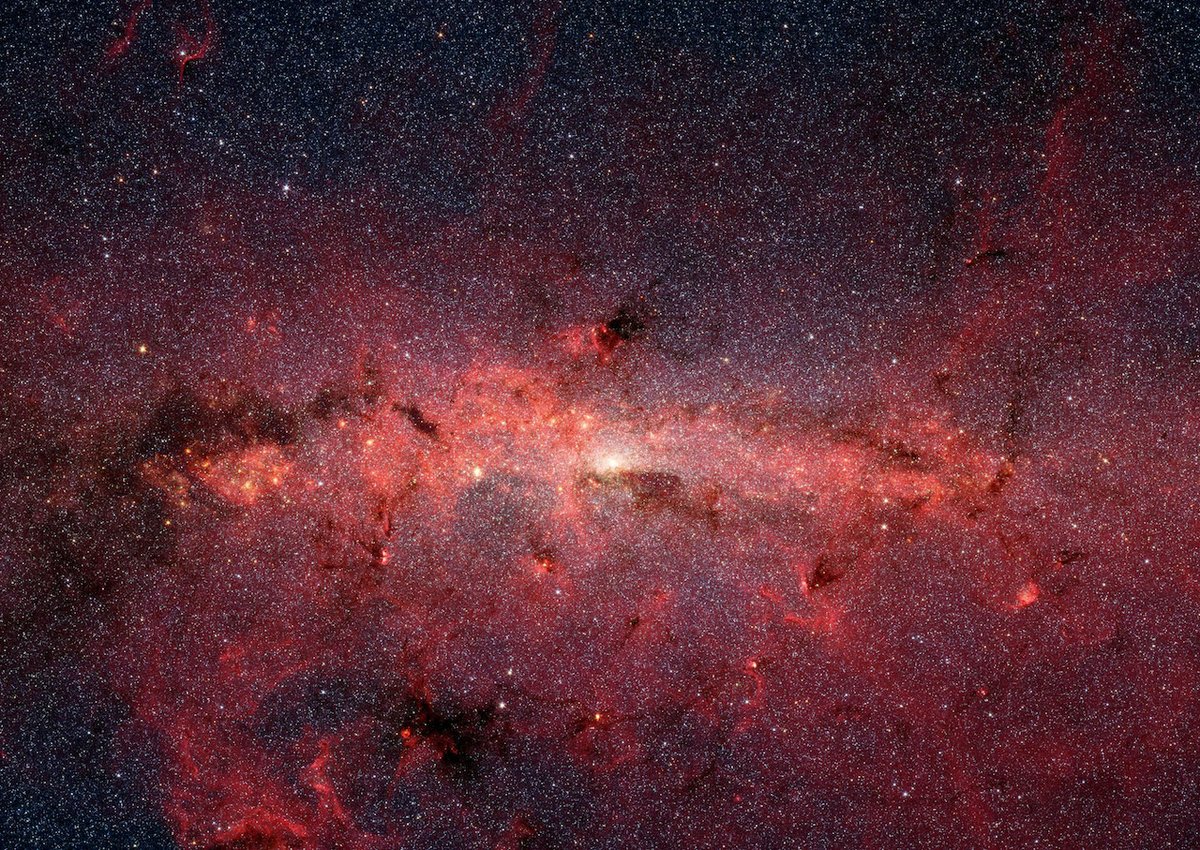
Discovery Alert! 📣 A meticulous study finds that stars on the fringes of the Milky Way possess fewer of the most common planet types. Planet formation – and the resulting families of planets – might differ from one galactic neighborhood to the next! go.nasa.gov/3E5YcPp
ARCHIVED NASA Exoplanets tweet media
English
7
165
812
113K
Jon Zink
Jon Zink@jonKzink·
I am looking to do some talks this fall about exoplanets and their interactions with galaxy itself. If you run a colloquium/coffee/group-meeting and are interested please email or DM me.
English
1
0
4
426
Jon Zink
Jon Zink@jonKzink·
Apparently people are having trouble with the DMs. Just email me. Jzink@caltech.edu
English
0
0
0
96
Jon Zink
Jon Zink@jonKzink·
I would love to chat/coffee/lunch with #Sagan2023 folks tomorrow (Wednesday). Reach out if you're interested.
English
1
1
4
1.8K