Matthew D. Sacchet@MatthewSacchet
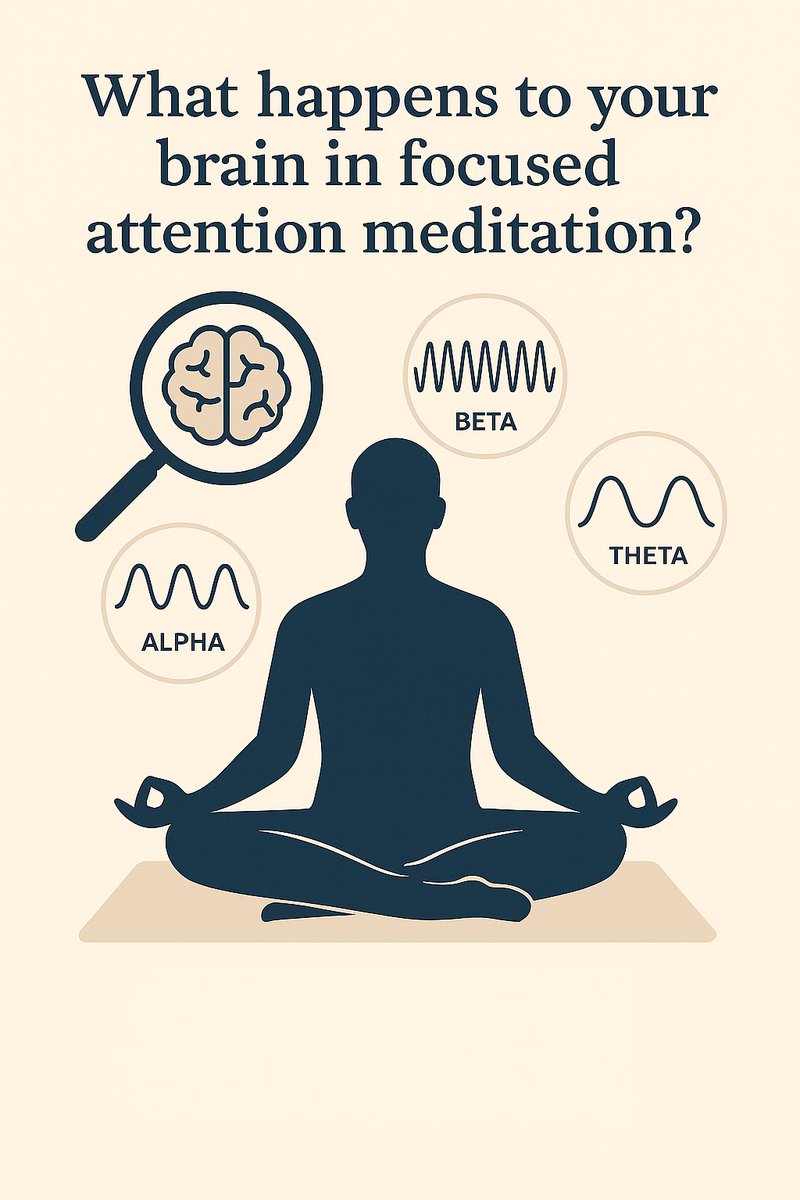
What does neuroscience really know about focused attention meditation? And what’s next?
Focused attention meditation (FA) is a class of practice involving intentionally directing attention to a single object, such as the breath or bodily sensations, while consistently bringing your focus back whenever distractions arise. FA is both a beginner-friendly entry point into meditation and a prerequisite for accessing potentially transformative concentrative absorption states (e.g., forms of advanced concentrative absorption practice such as what are sometimes called the jhanas) and other altered states of consciousness.
But why is this practice so central to meditation traditions globally, and what precisely changes within our brains during FA?
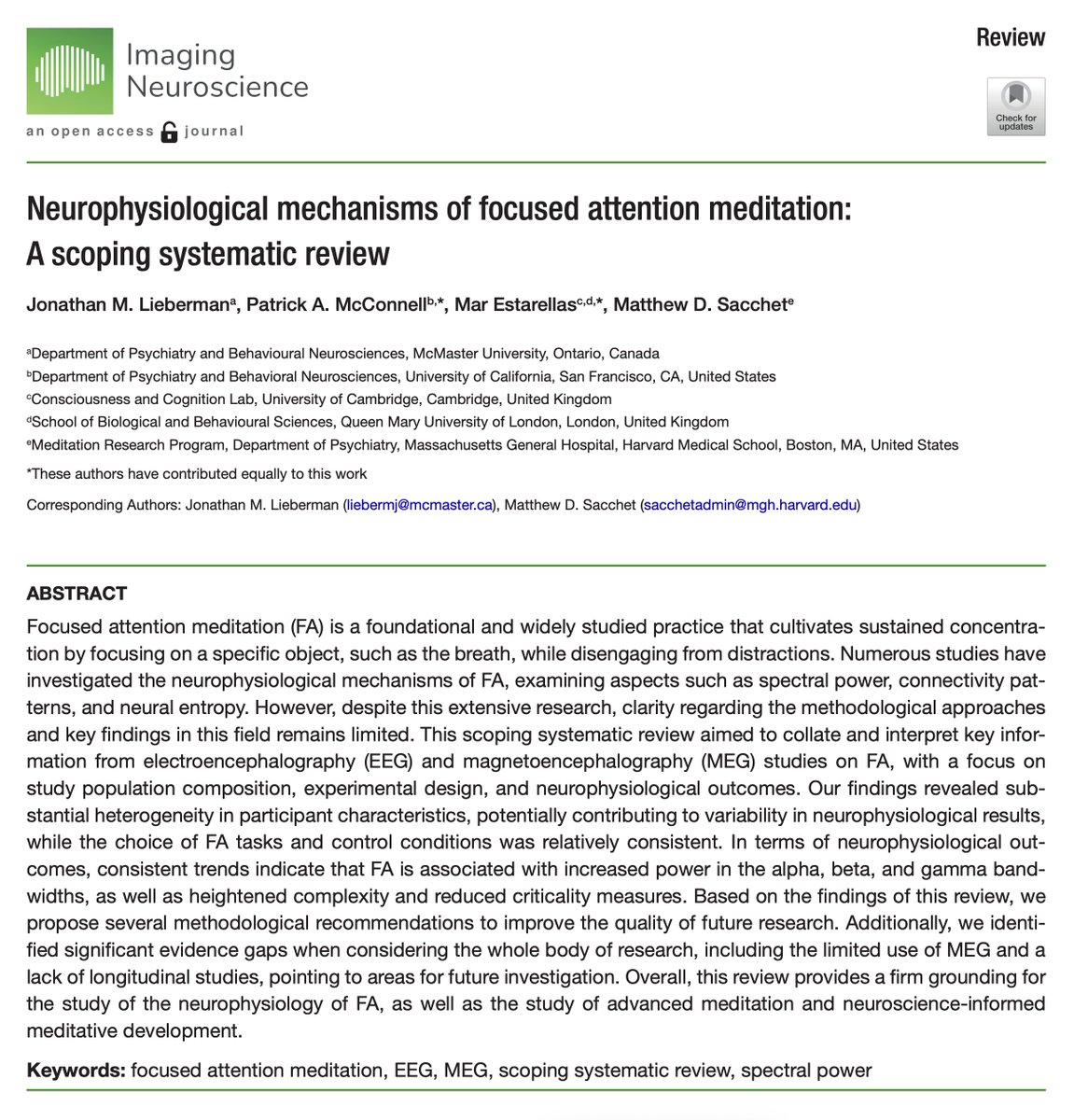
In our recent scoping systematic review exploring the neurophysiology of FA, first author Jon Lieberman @jon__lieberman , Patrick McConnell @PAMcConnellPhD , Mar Estarellas García @mar_estarellas , and I systematically reviewed existing electroencephalography (EEG) and magnetoencephalography (MEG) studies. Among other things, we discovered that FA is related to:
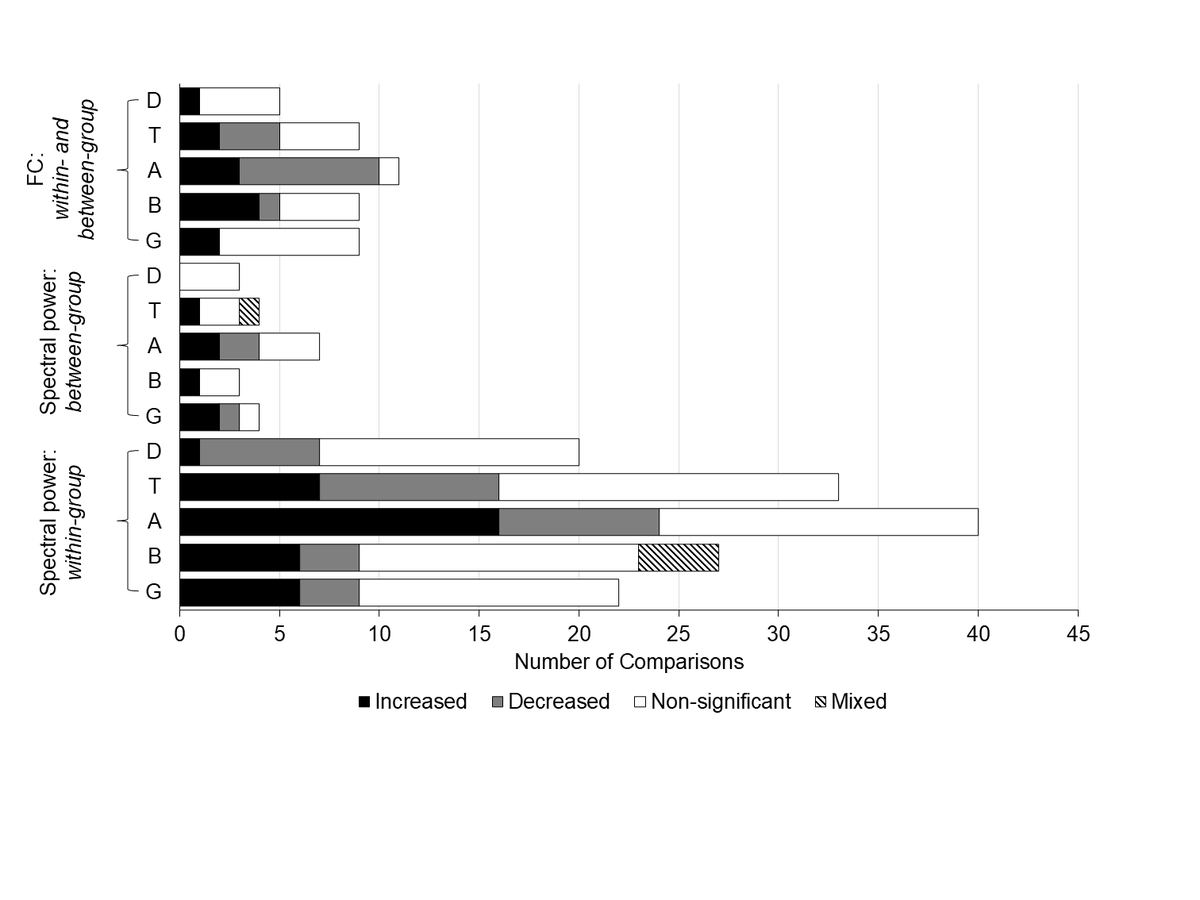
**Increases in alpha, beta, and gamma brainwaves—associated with heightened concentration and perception, mental clarity and alertness, flow states, and more.
**Increased neural complexity and reduced criticality, potentially reflecting improved cognitive flexibility and adaptive thinking.
**Activation in brain networks (default mode, salience, executive control) involved in attentional control, interoception (internal body awareness), and managing distractions.
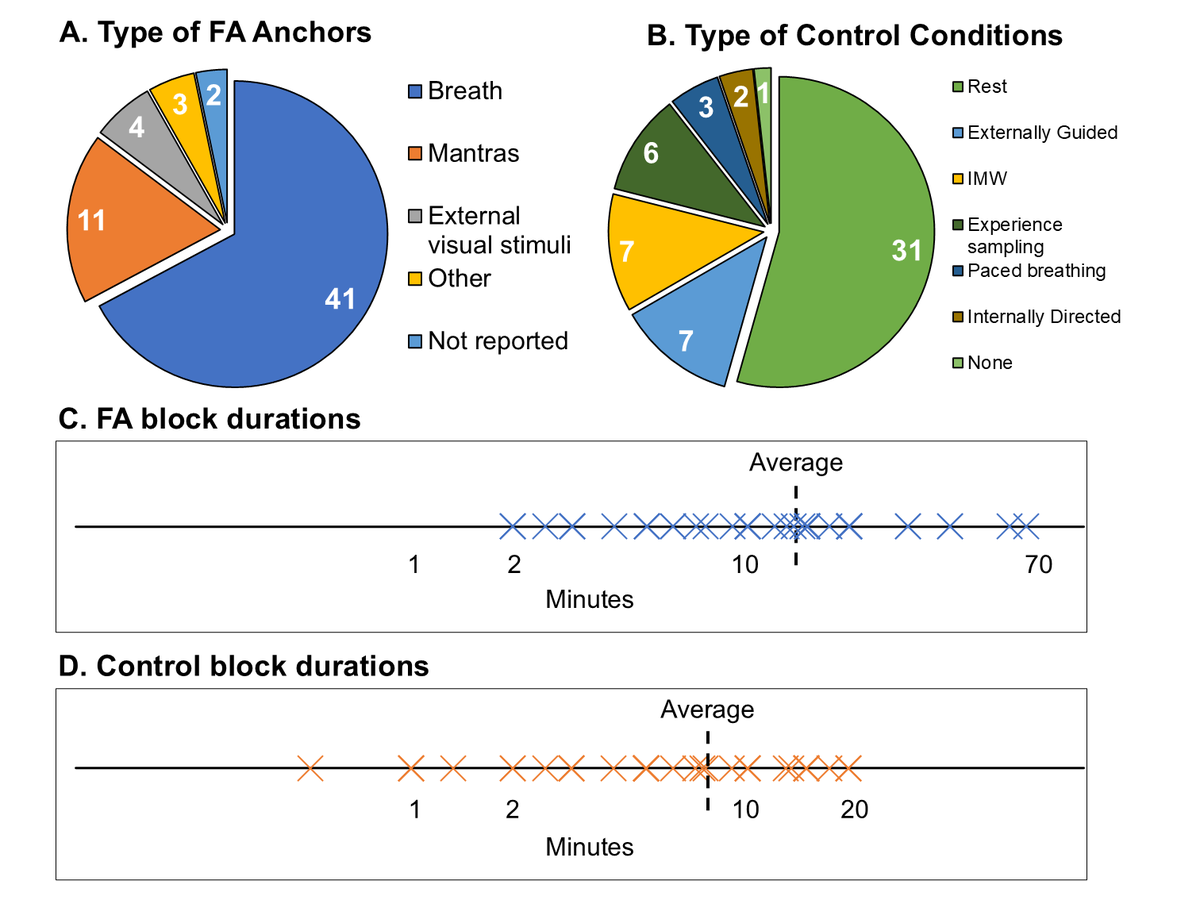
We also identified methodological gaps and inconsistencies, including variability in demographics, as well as limited use of standardized methodologies and analytical techniques, which currently hinder our ability to pinpoint clear and definitive neurophysiological markers specific to FA.
To address these gaps, we recommend future research focus on:
**Developing a standardized approach that outlines best practices in experimental design and reporting of meditation studies, including ensuring a careful selection of appropriate control conditions
**Including more female participants in research studies
**Using experience-based classifications of meditation techniques and exploring a broader range of meditation anchors
**Broader use of MEG along with more longitudinal studies, especially those involving intensive meditation retreats.
This science promises to inform more effective and engaging education, guidance, and support for those curious about getting the most out of the powerful practice of focused attention meditation.
May this work benefit many 🙏
The full PDF can be found here on our website, and from the publisher:
meditation.mgh.harvard.edu
meditation.mgh.harvard.edu/publications/
direct.mit.edu/imag/article/d…