Jon Man

6.3K posts

Jon Man

Jon Man

@jon_mancini69

gay guy. ⛵🏊‍♂️🏖️🍸👨‍🌾

North West, England Katılım Nisan 2024
890 Takip Edilen144 Takipçiler
Sabitlenmiş Tweet
Jon Man
Jon Man@jon_mancini69·
Nice to see that #JesusChrist is trending again 😂👍🙈🤤 AND it's the start of ... THE AGE OF AQUARIUS so expect massive changes to society. Previously Aquarius gave us all the Vote and the mighty USA became independent - so it's all going to be worth it. Eventually.
English
2
2
11
2.2K
Jon Man
Jon Man@jon_mancini69·
@ronsterd89 Me! Glass butter dish from Amazon, old style 😁👍.
Jon Man tweet media
English
5
0
4
1.1K
Ron wright
Ron wright@ronsterd89·
Does anyone still keep butter in a butter dish outside the refrigerator at room temp? 🤫🧈
English
1K
36
4.9K
350.6K
Jon Man retweetledi
Tommy Robinson 🇬🇧
Tommy Robinson 🇬🇧@TRobinsonNewEra·
Drone Footage Reveals the TRUE Size of the UTK Rally - The MSM Won't Show This! Share this far and wide! We won on May 16th! Thank you to everyone that attended, spoke and was involved in the running of this beautiful, peaceful, patriotic event! COME ON!!!!!
English
1.2K
18.8K
60.1K
920.7K
Black Hole
Black Hole@konstructivizm·
JAPAN | Mount Fuji in Poetry In the Earth's shadow, it rises silently, Snow-capped Fuji, a self-evident summit. On the island of Honshu, guardian of the horizons, It watches over the cities and their constellations. Its white mantle stretches beneath the winter skies, Reflecting a deep fire slumbering beneath its skin. Born from tectonic plates at the edge of Japan, It carries within its flanks the memory of shivers. Around it, life throbs in thousands of lights, Nearby Tokyo illuminates its mysteries. Between raw nature and crowds in motion, It unites the mineral and the hearts of the living. From the blackness of space, its form is almost a dream, A suspended world that the gaze ... In Earth’s soft shadow, it rises without sound, Snow-crowned Fuji, where quiet truths are found. On Honshū’s island, horizon’s silent guard, It watches over cities, their lights like scattered stars. Its white cloak stretches beneath the winter sky, A sleeping fire hidden where its secrets lie. Born where restless plates collide at Japan’s far seams, It carries ancient tremors within its silent dreams. Around it, life flickers in a thousand shining lights, Nearby Tokyo glows, revealing hidden sights. Between raw nature and the pulse of human streams, It binds the stone to living hearts and dreams. From the darkness of space, it feels almost unreal, A suspended world the wandering eyes can feel. ESA
Black Hole tweet media
English
3
25
108
4.2K
Jon Man retweetledi
Black Hole
Black Hole@konstructivizm·
Japan has built a $2,500 cardboard drone. It actually flies fast while avoiding radar! At first, the military thought it was a joke. A plane made of… cardboard? Yet, this drone can travel nearly 80 km at over 100 km/h. And the craziest thing is that its material becomes an advantage. Cardboard reflects radar waves less than some conventional materials. As a result, it's harder to detect in the sky. Japan can even transport hundreds of them in a single container and assemble them in minutes. While some countries are building drones costing millions, they're focusing on machines that are practically disposable. Perhaps this is the new technological warfare: Simple, ultra-fast weapons… produced like Amazon packages. Subscribe to discover incredible human advancements in five minutes a day.
Black Hole tweet media
English
703
2.7K
11.3K
2.1M
Peter Clack
Peter Clack@PeterDClack·
This isn't just a pile of debris - it’s the future of green energy waste hidden in plain sight. Millions of solar panels are hitting their end-of-life cycle, and the world is completely unprepared for the coming toxic avalanche. By 2050, the International Renewable Energy Agency projects up to 78 million metric tons of solar e-waste. Where is it all going to go? The industry boasts that solar panels are '95% recyclable'. Technically, yes - because they are made of glass, aluminum and copper. But economics always trumps physics. In Australia and the US, it costs roughly $20 to $28 to properly disassemble and recycle a single panel, but only about $4 to dump it in landfill. Because there is no financial incentive, up to 90% of decommissioned panels go straight into the ground. Each solar panel is an industrial 'sandwich' bound tightly by heavy polymers. To extract the microscopic amounts of valuable silver and high-purity silicon requires energy-intensive chemical and thermal baking. When they are crushed or left to fracture in landfills, heavy metals like lead and cadmium can leach into the surrounding soil and groundwater, turning 'clean energy' into a multi-generational hazardous waste problem. The crisis is accelerating faster than models predicted. Because solar cells degrade and lose efficiency, and because newer, cheaper panels hit the market, consumers and solar farms are ripping out functional systems at least a decade early to upgrade. This compressed lifecycle destroys the narrative of a long-term, stable asset and creates an endless loop of unrecyclable industrial trash.
Peter Clack tweet media
Bega, New South Wales 🇦🇺 English
737
9.2K
13.7K
424.3K
Jon Man
Jon Man@jon_mancini69·
@SamaHoole All very true. Full Cream Milk is so good for you, children should be given it, maybe just at junior school so they get a good start. Saying that, if they had cereals for breakfast. . . What do children eat for breakfast now?
English
0
0
0
6
Sama Hoole
Sama Hoole@SamaHoole·
Every British primary school child between 1946 and 1968 had a small ritual at morning break. Eleven o'clock. The crate had been sitting on the back step since seven, where the headmaster had been told to leave it by the council, on the grounds that the milk was supposed to come up to drinking temperature before the bell. Whether this was a kindness to the children or a kindness to the cleaners has never been satisfactorily explained. By July the milk was warm. By September it was on the turn. A whole generation of British adults can still describe, with uncomfortable precision, the taste of a glass bottle of full-cream milk that has been standing in the sun for four hours next to a brick wall. You drank it anyway. You put a paper straw through the foil, stood by the radiator, and got it down in two minutes flat because the milk monitor was watching and the bell was about to go. The cream stuck to the inside of the foil cap and ended up on your nose if you were impatient. The empties went back in the crate. You ran outside. The 1946 School Milk Act, pushed through by Ellen Wilkinson, the first female Minister of Education, gave every child under 18 a third of a pint a day. Infant mortality fell by close to 90% over the post-war decades. Rickets, a routine paediatric diagnosis in industrial towns in the 1930s, more or less disappeared from British wards within a generation. The milk was not the only reason. The milk was a substantial part of the reason. The programme was withdrawn in two stages. In 1968, Harold Wilson's Labour government cut free milk for secondary schools. The headline never quite stuck because Wilson, Wilson, Milk Snatcher does not scan. In 1971, Margaret Thatcher, as Education Secretary under Edward Heath, cut it for primary schoolchildren over seven. The headline stuck to her for the rest of her career. The under-sevens kept their third of a pint. Everyone else lost it. A piece of national nutritional infrastructure built brick by brick between 1906 and 1946, that had survived two world wars, was dismantled in two parliamentary acts inside three years on grounds of cost. The kids who got the warm September milk are in their seventies now. They will still tell you, given half a chance, that it was disgusting. They will also tell you, in the same breath, that nothing tastes quite the way it used to, that they walked four miles to school in the snow, and that they are not on any tablets. The cream is still rising. Just not in any school in the country.
Sama Hoole tweet media
English
194
248
1.2K
37.4K
Jon Man retweetledi
Maxi
Maxi@AllForProgress_·
In a workshop on the outskirts of Bletchley (it had to be there, didn't it), on the 26th of March this year, a small British company called Pulsar Fusion did something that has not been done by any other company or government on Earth. It ignited a controlled plasma inside the test chamber of a working nuclear fusion rocket engine. The plasma held, along with the chamber. The fusion reaction was the kind of reaction that, contained inside a sufficiently engineered magnetic bottle, will one day take a crewed British vehicle to Mars in 30 days rather than 8 months, and that will, within the working lifetime of the engineers presently building it, make the outer planets of the solar system accessible to anyone with a British passport. The geography of the achievement deserves a longer moment of pause. Bletchley, in 1942, was where Alan Turing and his colleagues broke the Enigma cipher and almost certainly shortened the war in Europe by two years. Pulsar Fusion's headquarters sits roughly 600 yards from the Hut where they did it. The country that did the maths inside that hut has just, less than a mile down the road, ignited the plasma that could power the next century of human space travel. There is a continuity of British scientific lineage here that is, on the face of it, almost embarrassingly providential, and it is almost completely unreported in the British press. It's not quite Kitty-Hawk-to-the-moon in 61 years, but it's close. Like so many great companies of profound importance, Pulsar Fusion is pretty small. It was founded in 2013, and employs around 50 staff. Its chief executive, Richard Dinan, is a working British physicist who has spent the last decade quietly assembling the team and the capital to do what the world's national space agencies have been promising for 60 years and consistently failing to deliver. The competing American programmes, principally at NASA's Glenn Research Center and at the Princeton Plasma Physics Laboratory, are years behind on the propulsion side. The competing Chinese programmes are obscure but, on what is known publicly, also behind. The European Space Agency is, as ever, organising a workshop. Pulsar fired its plasma in March and has been preparing the next-stage tests in the months since. What this kind of capability means, when commercialised, is genuinely vast. The economic argument for getting a payload to Mars in 30 days rather than 8 months is not principally about the human passengers, though there is one. It is about cargo. Given a 30-day transit, Mars becomes a logistically tractable destination for the kind of infrastructure-build that turns it from a flag-planting science mission into a working industrial site. The argument for the outer planets is even larger. The asteroid belt alone, on conservative mineralogical estimates, contains more economically viable platinum-group metals than the entire crust of the Earth has been mined for in industrial history. The first country with reliable fusion propulsion is the first country with reliable access to that supply. The country that holds that capacity, fifty years from now, will be holding the most consequential industrial advantage of the 21st century, and there is no obvious second prize. The standard British response to this kind of thing is to either ignore it entirely, sell the company to an American buyer at series B (the DeepMind path) for fire-sale prices, or fund it at the level of a Whitehall departmental tea and coffee budget (the Skycutter and Orbex paths). The standard British response will not be sufficient. Pulsar Fusion needs the kind of patient capital that turns a working demonstration into an operational engine, and that, in turn, into a manufacturing capability. The British state, on present form, is structurally incapable of providing it, British pension funds are structurally incapable of investing in it, and the British political class will, on present form, only notice if it somehow manages to swing a leadership election. I wantt= Pulsar Fusion treated as a national-strategic asset, and beyond that as a potential subject of national destiny. The Sovereign AI Fund that backed Ineffable Intelligence has a clear template. The Prosperity Zone programme we designed at Progress that anchors heavy industry at SaxaVord and Teesside has the geographic flexibility to include a fusion-propulsion cluster in Buckinghamshire, six miles from the most evocative site in modern British scientific history. The procurement architecture of every major British defence and space agency should, from this autumn, be writing offtake contracts contingent on Pulsar's milestones. There's nothing extreme about these ideas. We could have been doing it decades ago. I always conceived of Britain as being as much among the stars as it is on Earth. To buy into the idea of Britain as a culture and polity is necessarily to buy into the concept of the human being as an illimitable force. Our history is littered with happy instances of people of great fortitude hitting upon obstacles and, with a cry of "This will not stop us", clearing the way for our brothers and sisters to follow through. A small British company in Bletchley has, while nobody was looking, extended that arm of our tradition, by accomplishing one of the most important pieces of scientific engineering of the decade. The country that produced them is, in a measurable sense, the same country that produced the Bombe, the Colossus, the jet engine, the structure of DNA, and the World Wide Web. The capacity is intact. The political class capable of recognising it must catch up, and will.
Maxi tweet media
English
95
340
1.6K
249.1K
Jon Man retweetledi
Maxi
Maxi@AllForProgress_·
The British government has spent the last 20 years engaged in a quiet war against the price mechanism. What this means is that, rather than allowing prices to emerge naturally, the British government interferes with them. Why does this matter? Why is this not just abstract economics, but something that actively affects the quality of life you enjoy, and the amount of money you have in your pocket at the end of each month? Let's take a look. Energy first. Ofgem caps what your supplier can charge per unit and tops it up with a standing charge to keep the supplier solvent. Because every supplier is charging at or close to the cap, none of them is competing for your business. The cheap deals you used to switch to have stopped existing. You now pay £208 a year in standing charges before a single kilowatt-hour goes into your home, and you pay the capped rate on every unit after that. The cap was sold to you as a protection, but it is the highest rate available. Water bills are set, in their entirety, by Ofwat. Ofwat tells the privatised water companies what they are allowed to earn over a five-year window. The companies earn it, pay most of it out as dividends to their shareholders, and invest only what the rules force them to in the pipes. Your bill rises at above-inflation rates every cycle. Your sewage spills into the river every time it rains. There is no competitor for you to switch to, because the government licensed exactly one supplier in your area in 1989 and has not licensed another since. Rail fares are set by the Department for Transport. Every January for the last 20 years, the DfT has decided that the regulated-fare basket should rise faster than your wage. The train operators don't argue with them. They did not set the price; they just collect it, and they have no need to fight for your business because the price you pay is not negotiable. The annual season ticket from Reading to central London now costs around £5,800. In 2003 it cost £2,800. Unless you're one of the very lucky few, your wage, in the same period, has not doubled. Bus fares are subject to a £2 single-journey cap, soon to rise to £3, with the Treasury paying the bus company the difference between the cap and the rate they would otherwise have charged. You save cash at the bus stop; great! Well, until you realise you're paying the subsidy back through your tax. The unsubsidised rural route through your village has been cancelled, because the cap does not apply where there is nobody to pay it. Scotland and Wales decided cheap bottles of alcohol were a public health problem. So they made cheap bottles illegal, via a minimum unit price set by primary legislation. The same bottle now costs more. The drinking hasn't stopped. The bottle just got dearer. The extra £150 a year leaves the regular drinker's pocket and lands in the retailer's, or the Treasury's, or both. Childcare hourly rates in the funded-hours framework are set by the Department for Education at a level lower than the cost of providing the hour. So the nursery does one of three things: it closes, it refuses to take funded children, or it charges the non-funded parents triple to make up the difference. Working parents in London and the South East now pay £15,000 to £25,000 a year for a nursery place that, in a functional market, would cost a fraction of that. That's why in many parts of the country, the nursery has shut. NICE tells pharmaceutical companies the maximum the NHS will pay for a new medicine. The pharmaceutical companies look at the offer and decide whether to bring the drug to the UK at all. Britain is now consistently the last major Western country to receive new cancer therapies, immune treatments, and rare-disease medicines. That means you wait. That means your loved ones die earlier than they should. Your taxes still pay for the NHS that is taking longer to treat you. The new Renters' Rights Act, which came into force last week, stops landlords raising the rent above what a tribunal considers reasonable. Three things happen, in this order. The smaller landlords, with one or two flats, sell up, because the maths no longer works for them and managing a tribunal challenge is not what they signed up for; the supply of rentals contracts. The landlords who stay set the starting rent higher than they used to, because they cannot adjust it freely later; new tenants pay more from day one. The renters this was supposed to help find there are fewer flats available, and the ones that exist cost more. The Act was sold as a protection for tenants. Instead, it's just been YET ANOTHER transfer of wealth from people who do not own property to people who do! The minimum wage, which began life in 1999 at 47.5% of median earnings, now stands at approximately 67% of median earnings in lower-paid regions. The government meddles here by raising the floor every April. The employer cannot pay more on top of the rise, because his margins do not allow it. So everyone above the floor sees their hourly rate stand still. In Doncaster, the 22-year-old new starter and the 40-year-old supervisor with 15 years on the job now earn within a few pence per hour of each other. The floor has risen. The middle has collapsed onto it. No one has anywhere to go. The pattern is straightforward, once you get your head around it. The British government tries to cap, fix, distort, or otherwise manage every major price an ordinary British household encounters. Labour do it with a smile, but the Tories did it behind closed doors, too. Each intervention has its own surface justification. But the cumulative result is that the British economy in 2026 is, in price-formation terms, closer to the British economy of 1976 than the British economy of 1996 was. It means you're poorer, and that you pay more. But why is it happening like this? Because the British state has lost the institutional capacity to grow the productive base that would deliver lower prices through competitive supply. More stuff, made by more competent people, with the same amount of money in the economy (i.e. supply outpacing demand) makes it all cheaper for you. It's also happening because no one has the political confidence to address the spending side of the public ledger. What remains, when both growth and nation rebuilding are off the table, is price molestation. The pricing dial gets turned. The 'cheat code' is switched on. The bill arrives later, payable in shortages, everything-gets-crapper, no investment, and just one shit option for you every time you try to buy something. The truly remarkable thing about the war on prices is the consistency with which the political hoi-polloi subscribe to it. The Tories did it. Labour is doing it more aggressively. Reform MPs have, on the record, supported some of the same controls; they do not have the economic vision that would allow them to do otherwise. There is no major British political party that, as a matter of stated policy, is committed to unwinding the patchwork. That's one of the reasons something like Progress had to emerge. Just remember one thing that will serve you well wherever you go: the government cannot make things cheaper. It can only move where you pay for them. You can pay in cash at the till, or in tax to the Treasury, or in time on a waiting list, or in the bus that does not come, or in the cancer drug your mother cannot get, or in the rent on a flat the last landlord sold to a property fund. But the bill arrives. It always arrives. And the only way to shrink it is by turning Britain back into a country that builds, does, and makes things.
English
3
46
108
7.6K
Jon Man retweetledi
Sama Hoole
Sama Hoole@SamaHoole·
The goats are gone. Not all of them. There's about 95,000 left in the UK. Mostly hobbyists. A few smallholders. The odd appearance on a children's TV show. But once upon a time, this island was crawling with them. Wales had them. Scotland had them. Ireland by the boatload. The medieval peasant kept one in the back garden the way people now keep a Roomba: because it did a job, it cost nothing to run, and it tidied up the inputs. Goat milk. Goat cheese. Goat hair for rope. Goat skin for parchment, on which most of British law was written. Goat tallow for candles, by which most of British law was read. You could keep one on a quarter-acre. You could tie one to a fence. You could feed it the brambles and the nettles and the bits of hedge nobody else wanted, and it would give you food and clothing and light in return. Goats kept the poor alive for a thousand years. Then the enclosures took away the land you could keep one on. The factories took away the people who would have kept one. The supermarket took away the local economy that would have bought the cheese. The subsidies got written for cattle and sheep, and the goat got demoted to a punchline and a face on a tea towel. Meanwhile, our hillsides are quietly being swallowed by bramble, gorse, blackthorn, and rhododendron. Invasive scrub that nothing else will eat. The kind of scrub a goat would clear in a fortnight. Without being asked. Without being paid. Without a planning application. You don't have a brush management problem. You have a missing goat problem. And nobody can quite remember when we stopped having them.
Sama Hoole tweet media
English
54
847
2.8K
34.1K
Jon Man retweetledi
Ross The Don
Ross The Don@rossthedonn·
We’ve done it. 315 miles walked. Over £10,000 raised with Gift Aid for homeless veterans. And now we’re in Central London, ready for Unite the Kingdom tomorrow. What a mad journey it’s been........ I set off wanting to do something meaningful for a proper cause, and along the way I saw the best of ordinary proper English fuckin people. Working people. Good people. People stopping to help, offering food, water, words of support, a place to rest, a few quid for the cause, or simply a bit of hope when I needed it most. That’s what’s stayed with me. For all the doom and gloom, there is still a strong heart beating in this country. There is still kindness and decency in our people. I saw that with my own eyes every day on the road, and it’s restored a lot of faith in me. This walk was for homeless veterans. Men who served this country and ended up forgotten and left behind. That should never sit right with any of us. So to have raised over £10,000 with Gift Aid for them is something I’m massively proud of, and that is down to every single person who got behind this. I also want to say this. Not everyone wished me well. There was hatred, abuse, and people who wanted to see me fail. Some even wanted worse. But I’m not carrying that with me. First of all - fuck them but more importantly I forgive them. I’ve got no interest in bitterness. This journey was about something bigger than that. We made it here. Proper fackin job. And I just want to say a genuine thank you to everybody who donated, shared the page, followed the journey, messaged support, or helped me along the way. You helped make this happen. For the veterans. For the working class. For the people of this country. We’re here London 🇬🇧🇬🇧🇬🇧🇬🇧🇬🇧🇬🇧
English
469
2.4K
11.2K
132.4K
Jon Man
Jon Man@jon_mancini69·
@KTHopkins Well done you. Still lovin' your work 😁👍.
English
0
0
0
5
Katie Hopkins
Katie Hopkins@KTHopkins·
On behalf of their client, Zara Sultana, Bindmans Media and Information Law Practise Group requires that I publish the following statement on X, and that such statement must be clearly visible and pinned to my profile for a continuous period of no less than 24 hours: “On 30 March 2026, I published a post on my X account addressed to Zarah Sultana in which I stated that she encourages and incites violence and is friends with terrorists. Those statements are false. I was wrong and offer my sincere apologies to Ms Sultana for the harm and distress caused to her.” It is my very great pleasure to do this, and I reiterate my sincere and repeated offer to meet with Miss Zara Sultana in person to resolve our differences.
English
4.2K
7.3K
13.8K
3.9M
Jon Man retweetledi
Dominik Tarczyński MEP
Dominik Tarczyński MEP@D_Tarczynski·
This is what communism looks like in the 21st century. I have just been denied entry to the UK in order to speak at the largest patriotic event in Europe. Starmer will be sued by me. Not the government, not the Home Office but Starmer personally. Once you lose the next election, communist, we’ll meet in court! Tommy @TRobinsonNewEra , this communist cannot silence millions, nor can he take away their right to vote! UNITE THE KINGDOM!
Dominik Tarczyński MEP tweet media
English
5.3K
17.3K
75K
5.6M
Jon Man retweetledi
Tommy Robinson 🇬🇧
Tommy Robinson 🇬🇧@TRobinsonNewEra·
The lying rat that is @Keir_Starmer has just gave a speech following hundreds of his own party demanding he resign During it, he openly admitted he's banning anyone from entering the UK for our Unite The Kingdom and the West rally. This is including American citizens, he lied to your faces @JDVance @realDonaldTrump This pathetic little man does not speak for the UK. Our borders remain wide open to invaders, yet people fighting for free speech are denied entry. All eyes on May 16th.
English
2.2K
21.7K
91.7K
2.1M
Jon Man retweetledi
Tommy Robinson 🇬🇧
Tommy Robinson 🇬🇧@TRobinsonNewEra·
⚠️OFFICIAL MARCH ROUTE⚠️ One week until we carve our names into history with our Unite The Kingdom and the West rally in central London. Listen, carry, and share this important information with everyone attending. The time is now. See you next week 🇬🇧
English
391
2.4K
9.6K
423K
Jon Man retweetledi
ClarksonsFarm
ClarksonsFarm@ClarksonsFarm1·
Always!
ClarksonsFarm tweet media
English
25
569
3.2K
34.8K
Jon Man retweetledi
Give A Shit About Nature
Give A Shit About Nature@giveashitnature·
In 1974, the Mauritius kestrel was the rarest bird on Earth. Only four remained in the wild. One breeding pair and two singles. Extinction seemed certain. Then a 25-year-old Welsh biologist named Carl Jones showed up in 1979 and refused to accept it. He pioneered techniques no one had tried on this species: double-clutching (removing the first eggs so the pair would lay again), hand-rearing chicks, “hacking” them back into the wild, installing nest boxes, controlling rats and cats, and supplemental feeding. The results were remarkable: - By the mid-1990s: hundreds of birds - By early 2000s: 500–800 kestrels Jones basically saved the species, and went on to save several others on Mauritius too. But here’s the part people don’t talk about: The population has declined again. The species is back on the Endangered list with roughly 140–400 birds left (estimates vary, but the trend is downward). Funding dried up once it looked “safe.” Invasive plants changed the habitat. The fight never really ends. Saving a species from the brink can take decades of intense work. Losing the gains can take far less.
Give A Shit About Nature tweet media
English
15
509
1.6K
23.5K
Jon Man retweetledi
Josh Everest-Boffin
Josh Everest-Boffin@iamjoshboffin·
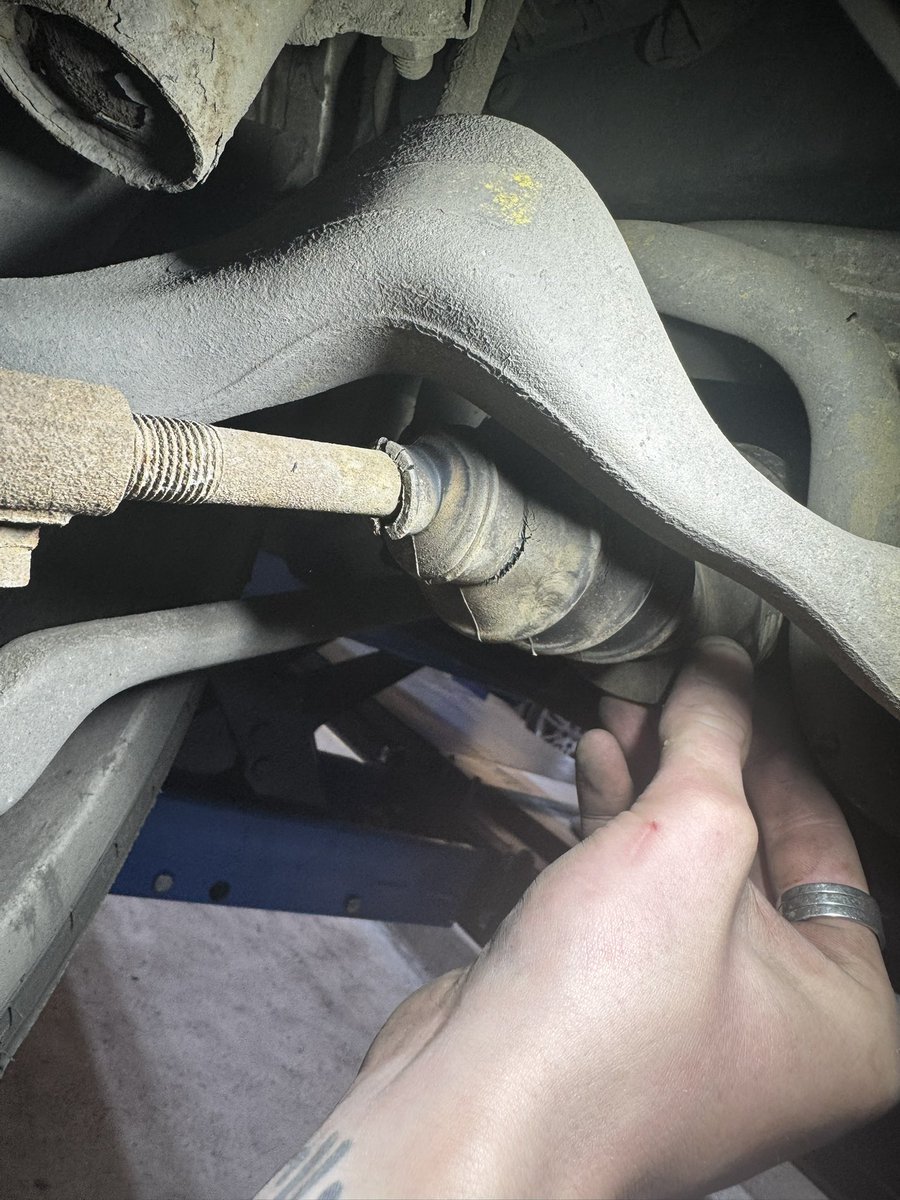
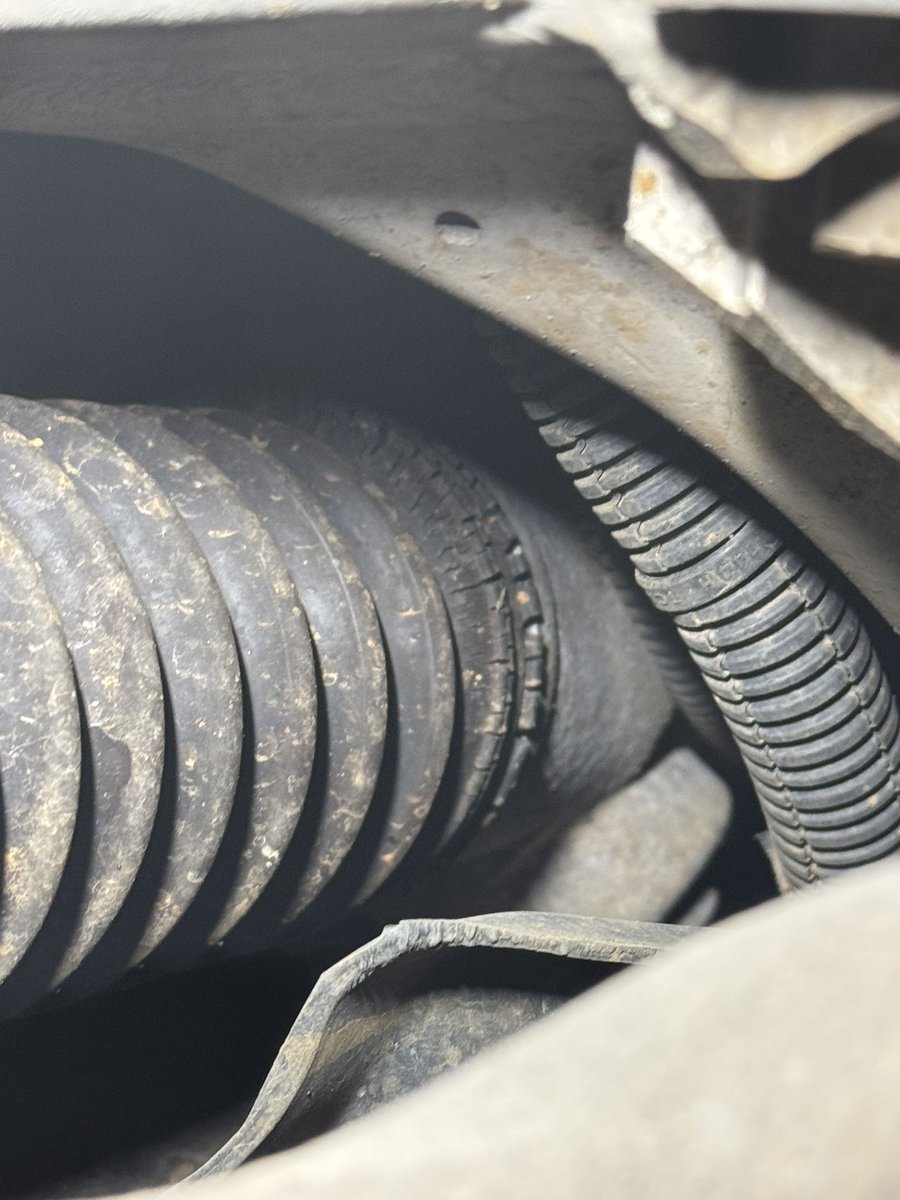
Since @KwikFitCS are refusing to acknowledge my emails, complaint form and will not call me, I thought I’d share this with everyone here. Last July, the cowboy mechanics at Kwik Fit told me that whilst they had my car for 6 hours, they had replaced the CV boots on my car. Today, I took it to my garage for its MOT and the tester revealed that Kwik Fit had not touched them. Perished rubber exceeding a year was obvious. So Kwik Fit took £300 from me and did not complete any of the work listed on my receipt. I’m hoping that this tweet will maybe jumpstart them into having a conversation with me and giving me my money back. Given that the cost of living is extortionate generally, I think everyone could do without Kwik Fit’s daylight thievery.
Josh Everest-Boffin tweet mediaJosh Everest-Boffin tweet mediaJosh Everest-Boffin tweet media
English
553
1.7K
6.2K
535.9K
Jon Man retweetledi
Ross The Don
Ross The Don@rossthedonn·
The final 10 miles to Camden where I'll need some security and support. Friday 9:30am 🫡 I'll walk the last mile May 16th 9am
Ross The Don tweet media
English
24
206
801
37.6K
Jon Man retweetledi
Dame Andrea Jenkyns DBE 🇬🇧
Today we salute our Greatest Generation. They didn't "wait and see" or make excuses, they took the fight to the enemy and won our freedom! We owe them everything. It's time we showed that same British Backbone, stopped apologising for our history, and put our country first. Lest we forget. #VEDay #SpiritOfBritain #NoApologies #Backbone #CommonSense
Dame Andrea Jenkyns DBE 🇬🇧 tweet media
English
45
650
2K
12.1K