Jonathan Watts

4.5K posts

Jonathan Watts banner
Jonathan Watts

Jonathan Watts

@jonathan__watts

Writing Books | Recording Podcast on the World's Greatest People (Greatness on All Platforms)

GET MY BOOKS Katılım Mart 2014
265 Takip Edilen1.1K Takipçiler
Jonathan Watts
Jonathan Watts@jonathan__watts·
A short story that would alter the history of Starbucks: In 1982, Howard Schultz planned to join a small coffee company called Starbucks in the Pacific Northwest. After speaking with the original founders and hearing the vision Schultz had for the company, they decided not to offer Schultz a job. Unlike most, Schultz called the founders back and urged them, and almost willed his way into joining the company. Twenty-four hours later, after another conversation, after some more convincing, they offered Shutlz the job. It was the moment that would forever alter Starbucks' future, but only because Shultz had the persistence and will that so few have. As he recalled, "In the 15 years since then, I've often wondered: what would have happened had I just accepted his decision? Most people, when turned down for job, just go away."
English
0
0
0
34
Jonathan Watts
Jonathan Watts@jonathan__watts·
Steal and steal often. Pablo Picasso said, “Art is theft.” T.S. Elliot explained, “Immature poets imitate; mature poets steal; bad poets deface what they take, and good poets make it into something better, or at least something different. The good poet welds his theft into a whole feeling which is unique, utterly different from that from which it was torn.” Austin Kleon shares a similar sentiment: “Work that only comes from the head isn’t any good. Watch a great musician play a show. Watch a great leader give a speech. You’ll see what I mean.” The world has the answers. Be open, look around, and steal relentlessly.
English
0
0
0
26
Jonathan Watts
Jonathan Watts@jonathan__watts·
The question that changed Margaret Seddon’s life. After spending years in medical school, she was asked during her residency: “What would you do if you weren’t doing this?” After some deep contemplation, she said, “I would be an astronaut." Years later, she would be one of the first female astronauts to join NASA. At all moments, keep asking yourself that question: “What would you do if you weren’t doing this?” If the answer is what you’re doing, stay the course. If it’s something different, it might be time for a change.
Jonathan Watts tweet media
English
0
0
0
18
Jonathan Watts
Jonathan Watts@jonathan__watts·
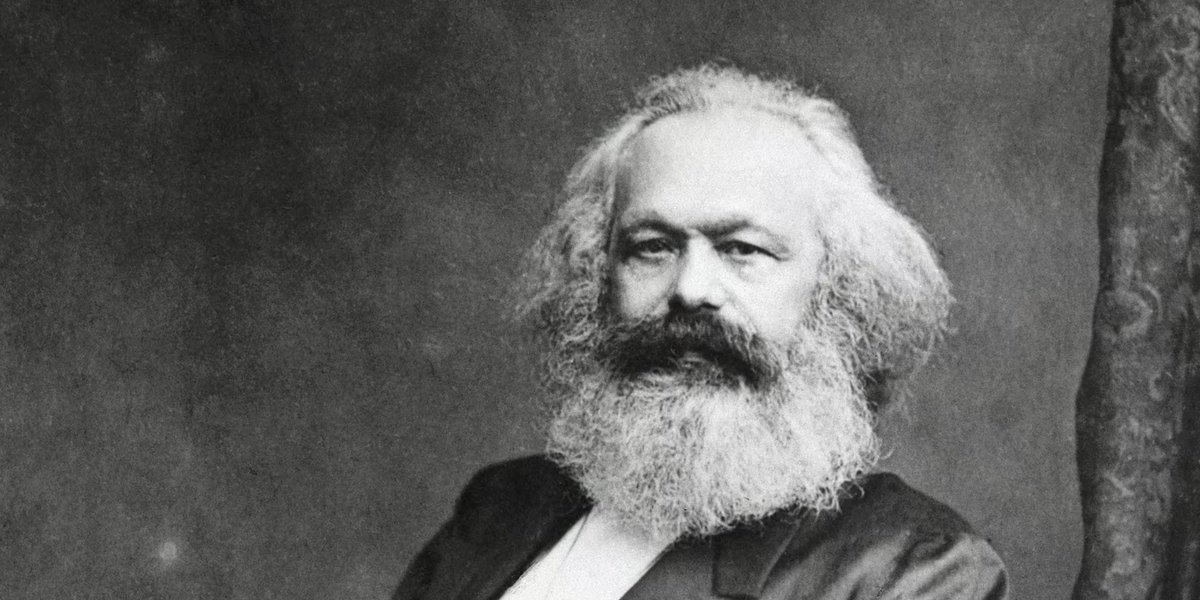
The goal is to have regrets…just the good kind of regrets. Karl Marx dedicated most of his life to writing his major work, Das Kapital. When looking back on his life, he said, “You know that I have sacrificed my whole fortune to the revolutionary struggle,” he wrote to a fellow political activist in 1866. “I do not regret it…Had my career to start again, I should do the same.” You want regrets. The regret where you wish you could do that thing again, chase that port once more, experience that thing another time. ----- Short story from a recent episode of Greatness: podcasts.apple.com/us/podcast/gre…
Jonathan Watts tweet media
English
0
0
0
19
Jonathan Watts
Jonathan Watts@jonathan__watts·
A great idea for business and life from Mary Kay Ash: Everyone loves praise. One of the most important steps I ever took was when I began imagining that every single person I met had a sign around his or her neck that read, “make me feel important.”
Jonathan Watts tweet media
English
0
0
0
18
Jonathan Watts
Jonathan Watts@jonathan__watts·
Henry Ford believed that work being separate from life was a path to misery. As he said, “I think that we have already done too much banishing the pleasant things from life by thinking that there is some opposition between living and providing the means of living. We waste so much time and energy that we have little left over in which we enjoy ourselves.” If there’s a sense that you need work-life balance, meaning you’ve separated work and life, it may mean you need different work, more meaningful work, work that is more enjoyable.
Jonathan Watts tweet media
English
1
1
0
27
Jonathan Watts
Jonathan Watts@jonathan__watts·
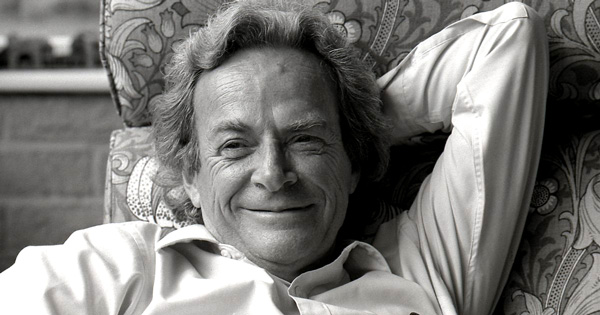
Richard Feynman on an early lesson he learned from John von Neumann: "John von Neumann gave me an interesting idea: that you don't have to be responsible for the world that you're in. So I've developed a very powerful sense of social irresponsibility as a result of Von Neumann's advice. It's made me a very happy man ever since." It might sound like a foolish mindset to adopt, but it might be healthy to develop a sense of social irresponsibility for the world, rather than feeling responsible to anyone or anything. You don’t have to live up to others' expectations.  You don’t have to care about this thing or that thing. You don’t have to invest your time here and there. You can just do what you want to do.
Jonathan Watts tweet media
English
1
0
1
18
Jonathan Watts
Jonathan Watts@jonathan__watts·
A good framework for if a goal/mission is worth chasing: If you knew the most likely outcome was failure, would you still do it? If the possibility of failure doesn't deter you, it means enough to you.
English
1
0
1
26
Jonathan Watts
Jonathan Watts@jonathan__watts·
Genius is endurance in disguise. Gertrude Stein usually only wrote for thirty minutes a day. Martin Amis explained on his writing ways, “Everyone assumes I’m a systematic and nose-to-the-grindstone kind of person,” he said. “But to me it seems like a part-time job, really, in that writing from eleven to one continuously is a very good day’s work. Then you can read or play tennis or snooker. Two hours. I think most writers would be very happy with two hours of concentrated work.” Some work, done every day, for a long ass time. That’s the simple but not-so-simple formula. Joyce Carol Oates might have said it best: “I write and write and write, and rewrite, and even if I retain only a single page from a full day’s work, it is a single page, and these pages add up. As a result, I have acquired the reputation over the years of being prolix when in fact I am measured against people who simply don’t work as hard or as long.”
Jonathan Watts tweet media
English
0
0
0
33
Jonathan Watts
Jonathan Watts@jonathan__watts·
Some of the greatest pieces of work have come from these intense, short bursts of activity—what Naval Ravikant calls "working like a lion." Scott F. Fitzgerald, while in the army, wrote a 120,000-word novel in only three months by writing from 1:00 P.M. to midnight on Saturdays and from 6:00 A.M. to 6:00 P.M. on Sundays. And throughout Fitzgerald’s career, his "writing usually happened in brief bursts of concentrated activity, during which he could manage seven thousand or eight thousand words in one session.” It’s the advice Naval gives: "The way people tend to work most effectively, especially in knowledge work, is to sprint as hard as they can while they feel inspired to work, and then rest. They take long breaks. It’s more like a lion hunting and less like a marathoner running. You sprint, and then you rest. You reassess, and then you try again. You end up building a marathon of sprints." ----- New episode is live on the working ways of the world's greatest artists. Listen below: podcasts.apple.com/us/podcast/gre…
English
0
1
0
25
Jonathan Watts
Jonathan Watts@jonathan__watts·
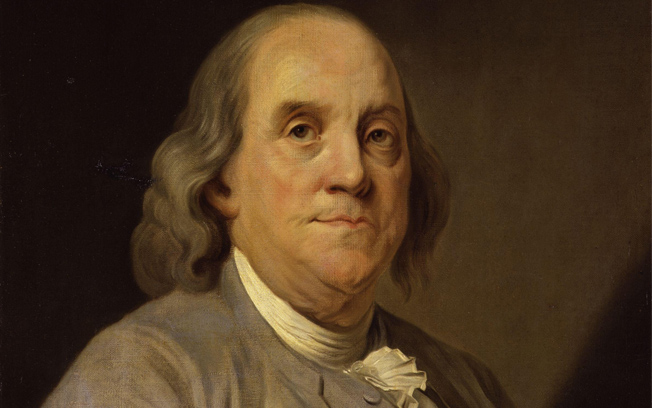
Every day, Benjamin Franklin wrote two questions down in his journal. In the morning, he asked: What good shall I do today? And then in the evening: What good have I done today? That's the goal: to do some good every single day.
Jonathan Watts tweet media
English
0
0
0
23
Jonathan Watts
Jonathan Watts@jonathan__watts·
Marcus Aurelius, while entering the back half of his life, maybe concerned about what others were saying about him, maybe worried about what his legacy would be, jotted a note down to himself, “Or is it your reputation that's bothering you? But look at how soon we're all forgotten. The abyss of endless time that swallows it all. The emptiness of those applauding hands. The people who praise us; how capricious they are, how arbitrary. And the tiny region where it takes place. The whole earth is a point in space—and most of it is uninhabited.” You care less about your standing, about your reputation, about your career growth—these things that we deem significant but are in fact trivial—when you understand how insignificant you are. You are a tiny creature on a tiny planet in the vastness of space during a brief moment in time. And that very thought lessens the stakes of everything.
Jonathan Watts tweet media
English
1
0
1
43
Jonathan Watts
Jonathan Watts@jonathan__watts·
Optimize for joy. Not efficiency. Not money. Not speed. Optimize and only optimize for joy. As Stephen King said on writing, “I did it for the pure joy of things. And if you can do it for the joy, you can do it forever.” When you chase joy, the rewards aren’t just exponential, they’re infinite.
English
1
0
0
37
Jonathan Watts
Jonathan Watts@jonathan__watts·
The only rewards of our existence here are an unstained character and unselfish acts. - Marcus Aurelius
English
1
0
2
44
Jonathan Watts
Jonathan Watts@jonathan__watts·
Failure is not failure. Failure is not responding to failure. Bruce Springsteen, after getting kicked out of his first band he ever joined after just one performance, recalled what he did next: "For the next several months and years, I played, spending every available hour cradling my kent, testing and torturing the strings ‘til they broke or until I fell back on my bed asleep with it in my arms. Before long, I began to feel the empowerment the instrument and my work were bringing me. I had a secret…there was something I could do, something I might be good at. I fell asleep at night with dreams of rock n roll glory in my head." Failure is not failure. Failure is not responding to failure.
Jonathan Watts tweet media
English
0
0
2
35