@tiagodteixeira As vezes é bom não chegam mortos lá…E na seleção podem sentir se mais valorizados e com melhor grupo. Nunca se sabe são momentos onde as vezes aparecem os Eders da vida 😅
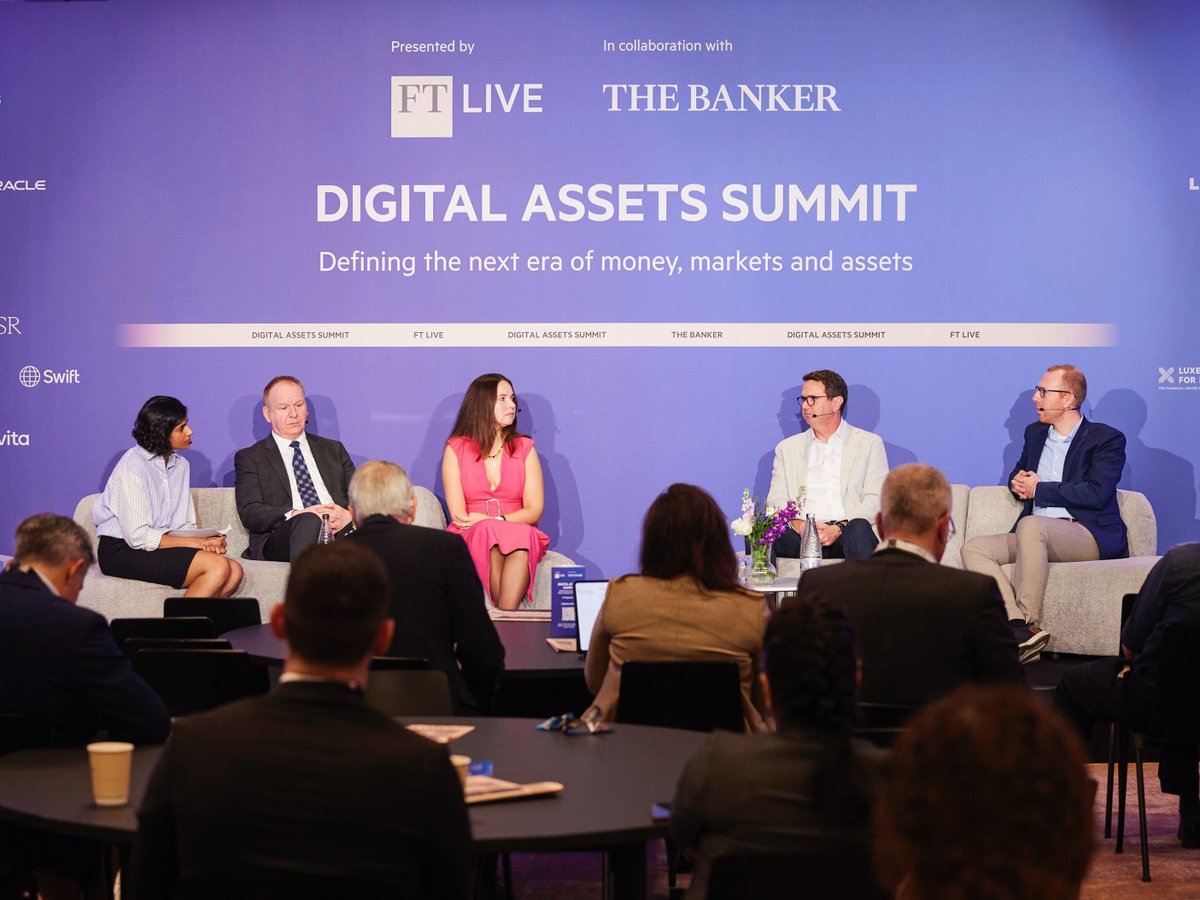
Proud to lead the conversation at Digital Assets Summit as stablecoins reshape traditional banking and everyday finance.
Thanks to @FT and @TheBanker for hosting.
With the CLARITY Act gaining momentum, we welcome the provisions reserving stablecoin yield for chartered banks.
This regulated market structure is what Telcoin Digital Asset Bank and eUSD were built for.
forbes.com/sites/jasonbre…
O Seedance 2.0 da Dreamina permite criar comerciais de forma simples e rápida.
Com apenas uma descrição, a IA gera anúncios completos, reduzindo tempo e complexidade de produção.
👇🏾 Link nos comentários
your competition might put a hit on me after this one.
f*ck it. im giving yall the sauce anyway.
like + RT + comment “GOOGLE” and i’ll DM you right now.
I just built a Claude Code stack that writes, approves, and publishes your LinkedIn posts from a single Sunday session every week.
Feed it your profile context, your hook library, and a topic or script → it studies your voice, your best-performing formats, and your photo folder → generates three draft options matched to the right image and scheduled to LinkedIn while you pick the best angle.
All inside Claude Code and Playwright MCP.
Perfect for GTM engineers and founders who are still writing posts from scratch every week, spending an hour editing AI drafts that sound nothing like them, and manually uploading content to LinkedIn one post at a time.
If you're posting on LinkedIn in 2026, you already know the math - the accounts that build pipeline aren't the ones with the best single post, they're the ones publishing consistently in a voice that sounds genuinely human every week. Most people ship two posts a week if they're lucky.
This stack solves it:
→ profile.md gives Claude permanent context about your voice, your stories, your professional background, and your ICP so every post reads like you wrote it from session one
→ hooks.md gives Claude a curated library of proven formats, specific concrete examples, and a no-go list of overused openers so Claude never produces the lines saturating your space
→ Three draft options generated per topic so you pick the best angle not the only one - posts come out at 70-80% quality out of the box and 5 minutes of editing gets them to publishable
→ Descriptive photo filenames let Claude read the folder, match each post to the right image by feeling and vibe, and recommend the photo without reading the actual image
→ Playwright MCP opens LinkedIn, pastes the post, uploads the photo, handles resizing if the file is too large, and schedules at your default posting time without you touching the platform
→ One hour on Sunday produces and schedules a full week of posts so Monday through Friday runs without you opening LinkedIn once
No writing posts from scratch every week.
No spending an hour editing AI drafts that sound nothing like you.
No manually uploading and scheduling content one post at a time.
What you get:
- profile.md template: the exact structure that gives Claude permanent voice and professional context so every session starts already knowing who you are
- hooks.md file: proven format library, concrete examples, and no-go list built for your specific space
- Full skill file: three draft generation, review and approval flow, and photo matching in one run
- Playwright MCP setup: the exact configuration that publishes and schedules directly to LinkedIn without you touching the platform
- One skill you install once and run every week forever
Built 100% in Claude Code and Playwright MCP.
I put together a full playbook with the skill file, the profile.md template, the hooks.md structure, and the exact Playwright MCP configuration to get a full week of posts written, approved, and scheduled from one Sunday session.
Want it for free?
> Like this post
> Comment "SKILL"
And I'll send it over (must be following so I can DM)
I made a free Claude Code Blueprint.
Most Claude Code courses are tutorials.
The Blueprint is interactive.
You install Claude Code, open the folder I send you, type "Start Lesson 1," and Claude teaches you while you use Claude Code itself.
60 minutes from start to finish. You end with a real tool deployed on the internet, all for free.
Watching tutorials doesn't teach you Claude Code. Using it does.
Whenever I talk to non-technical folks about using Claude Code, the same problem keeps coming up.
They install it, watch a few explainers, then quit when nothing they're seeing maps to what they actually want to build.
The fix isn't another explainer. It's putting your hands on the tool from minute one.
That's what the Blueprint is for. By the end of one short interactive session, you'll know:
- How a single slash command can research any company in 60 seconds, instead of 30 minutes by hand
- The trick to getting three Claude agents working in parallel inside one session
- The CLAUDE .md pattern that makes Claude predictable, not chaotic
- How to put your first Claude Code build on the internet, no terminal needed
The tool you build is yours. A public URL on the open internet, the kind you can text to a friend.
Comment "BLUEPRINT" below and I'll DM it to you (must be following)
claude opus 4.7 just dropped so i automated my ENTIRE cold email system that books 80 calls/month
just put together 30 pages on the full AI playbook
- AI writes my scripts (better than i can)
- AI researches and personalizes leads
- AI replies to interested leads 24/7
- AI optimizes campaigns from the data
- every prompt i use for everything
this wouldve saved me 2 years of trial and error
like + comment "OPUS" and i'll send it over
(must follow + RT for priority access)
🚨 Testei centenas de skills do Claude.
Separei as 5 que realmente fazem diferença pra quem está começando.
Com elas, você já sai na frente de 90%.
👉Comenta "SKILLS" para receber os links.
I built a full AI Marketing + Sales engine with Claude (30+ agents).
And I’m giving it away for free.
Most people use AI to write posts.
That’s 10% of the game.
This system runs the entire pipeline:
Marketing → content, SEO, distribution, demand
Sales → lead sourcing, signal detection, outreach, calls, closing
Each agent does one job.
Together, they operate like a full team.
No fluff. No templates.
Just a system that actually books meetings.
If you want it:
Like the post
Comment “CLAUDE”
Make sure we’re connected
I’ll send you the full breakdown.
Repost if you want priority access.
@IkerCasillas Iker te acuerdas cuándo te hizo salir a rueda de prensa tras ganar 1-3 en el Camp Nou y llevar tú 6 meses sin jugar ni un minuto? Joder, pagaría por volver a vivir eso
I've created a full guide on how to design anything with Claude Design
You also get exact copy-paste prompts for interactive immersive websites, animated pitch decks, app mockups, social banners, infographics, and pricing pages
Grab it FREE
Like + Comment "CLAUDE DESIGN" and I'll DM you the full guide
No opt-in, no BS
Claude just replaced the $100K/year GTM Engineer telling your team how to use AI...
(most GTM engineers are still using it like a fancy search engine)
→ No more paying for generic AI training that doesn't apply to your actual stack
→ No more 10+ hours weekly figuring out which Claude layer to use for which task
→ No more one-off prompts that produce output you can't reuse or scale
→ No more sessions that start from scratch because nothing was saved or systematised
→ No more generic output because Claude has no idea who you are or what you're building
Just load the Masterclass → full Claude GTM infrastructure running across Code, Managed Agents, and Cowork.
Here's how it works:
→ GCAO Prompting Framework (forces specific actionable output every time instead of generic advice)
→ GTM Project Setup (loads your ICP, voice, files, and standards into every chat automatically)
→ Skill File System (slash commands that run qualification, enrichment, and personalisation on any list)
→ Co-work Prospect Engine (blank slate to 10 researched prospects with screenshots and cold emails in one session)
→ CRM and Gmail Integration (reads contact history and drafts 15 personalised follow-ups from actual notes)
→ Opus 4.7 Decision Framework (adaptive thinking, 3x image resolution, and cost management mapped to GTM tasks)
Built on the full Claude stack. Runs without consultants, agencies, or infrastructure teams. Zero re-briefing. Zero wasted sessions.
The difference isn't the model. It's the system built around it.
While everyone's opening a new Claude chat and typing from scratch, this turns the full stack into a repeatable GTM engine.
Want the complete Claude GTM Masterclass?
Like + comment "MASTERCLASS" + repost, and I'll DM it to you.
(must be following)