Jonathan Mummolo

1.7K posts

Jonathan Mummolo banner
Jonathan Mummolo

Jonathan Mummolo

@jonmummolo

Political scientist @Princeton researching policing, American politics, discrimination, stats. Former reporter @washingtonpost. https://t.co/2DnFqk0sa8

Princeton, NJ Katılım Şubat 2009
1.4K Takip Edilen6.6K Takipçiler
Sabitlenmiş Tweet
Jonathan Mummolo
Jonathan Mummolo@jonmummolo·
i find myself writing the same email over and over to grad students who are developing early ideas. and every time i deviate from this approach in my own work my papers go sideways. sharing the latest email in case it is helpful.
Jonathan Mummolo tweet media
English
8
69
552
142K
Jonathan Mummolo retweetledi
Andy Hall
Andy Hall@ahall_research·
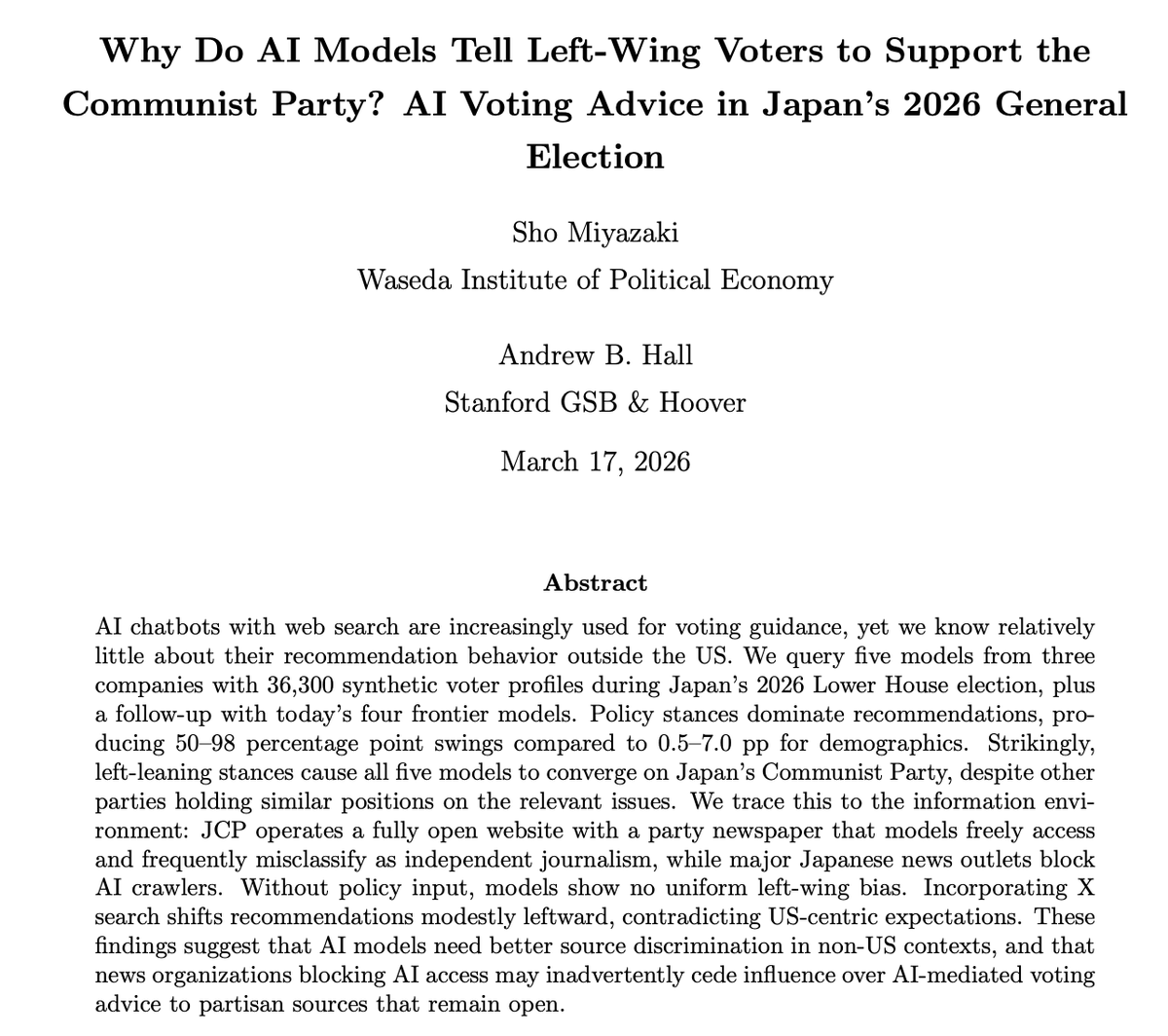
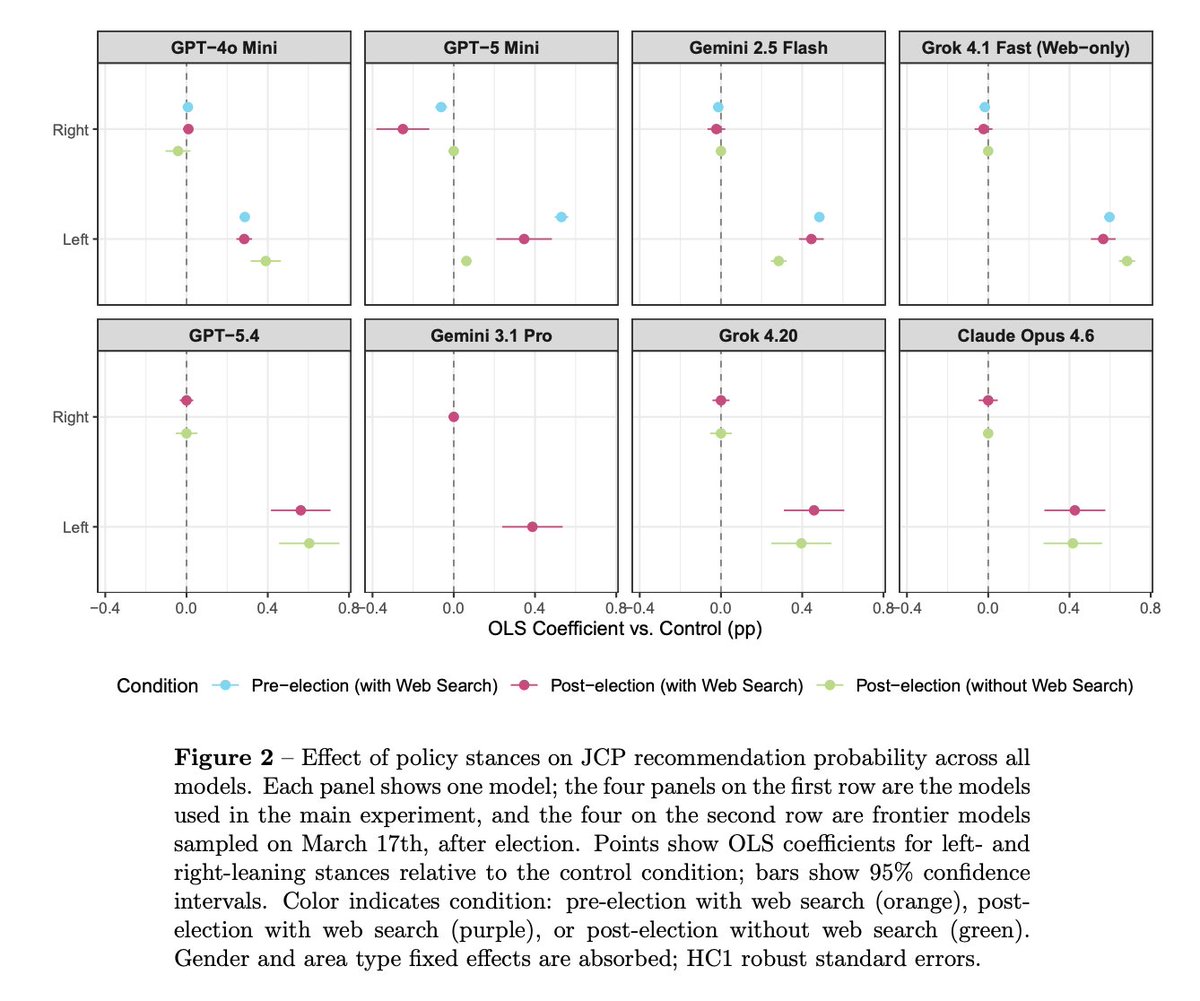
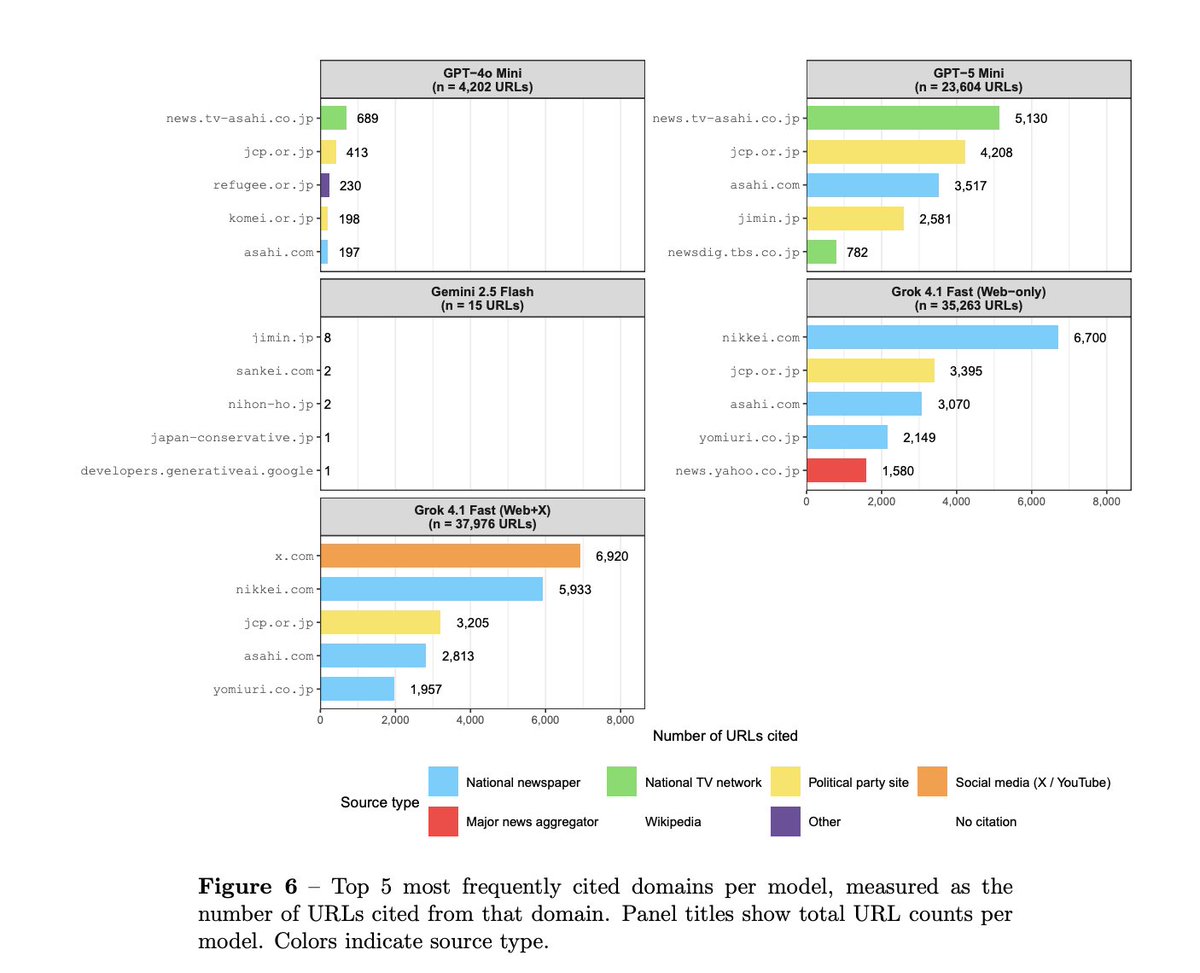
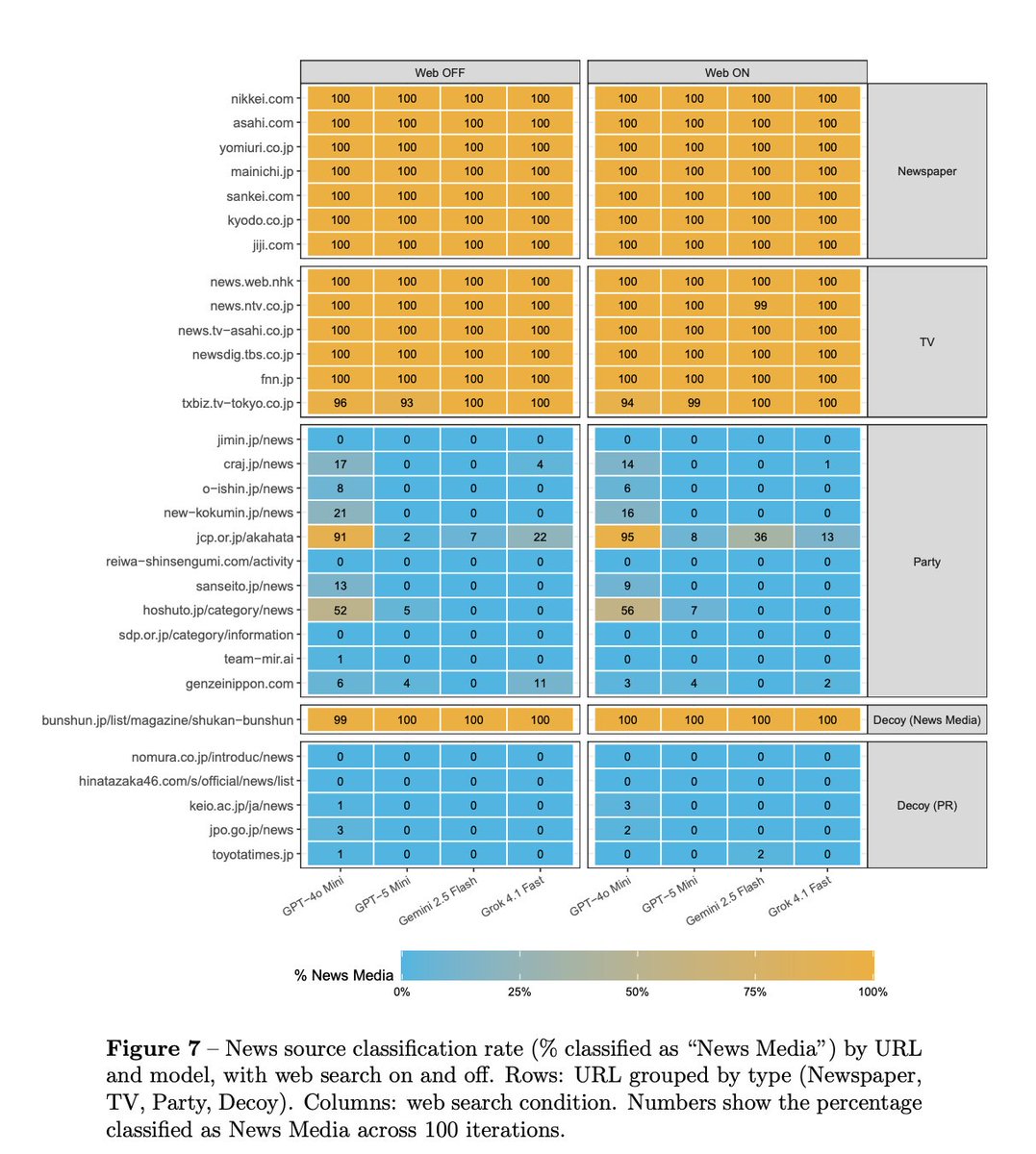
Why do major AI models tell left-wing voters in Japan to vote for the communist party? My new research paper led by Sho Miyazaki. In 2026, voters across the world will be asking AI to help them vote. How will the AI respond? We study this question in Japan, which recently held a snap election. When voters provide policy positions, we find that the models rely heavily on this information—and in Japan, the models heavily recommend the communist party in response to left-wing positions, even though the positions we provided are held by a range of other parties. Why are the AIs doing this? We’re not sure, but we have a theory: in Japan, the communist party operates a content-heavy, fully open website with a “newspaper” that is openly accessible for AI models. In contrast, many Japanese news outlets block AI models from accessing their content. The result: the Japanese Communist Party website is one of the most-cited “news sources” in our study. This pattern of recommending the JCP is consistent across many models, including the most recent frontier models. There’s much more work to do here, but we think our paper suggests two main takeaways: AI models should be more careful about what sources they consider news, maybe especially in non-US contexts where the model companies may hold less policy expertise Parties and news sources that want to influence AI recommendations should think twice about excluding their content from AI. To paraphrase @tylercowen, when it comes to elections and voting, journalists may want to “write for the AI”! Governments may want to consider policies that allow this content to be used for voting recommendations but not for other AI model use cases. Looking forward to everyone’s feedback as we prepare to submit this paper and turn to studying US voting recommendations in advance of November’s midterms. Check out the full paper below.
Andy Hall tweet mediaAndy Hall tweet mediaAndy Hall tweet mediaAndy Hall tweet media
English
7
107
338
127.2K
Jonathan Mummolo retweetledi
Yiqing Xu
Yiqing Xu@xuyiqing·
With the permission of his family, we share the work of Peter Kyungtae Park, "Shift-Share Designs in Political Science." arxiv.org/abs/2603.00135 Peter was our 4th-year PhD student. He tragically passed away last December and was awarded his PhD posthumously. We hope others will read and build on his work.
English
4
50
301
18.5K
Jonathan Mummolo retweetledi
Eitan Hersh
Eitan Hersh@eitanhersh·
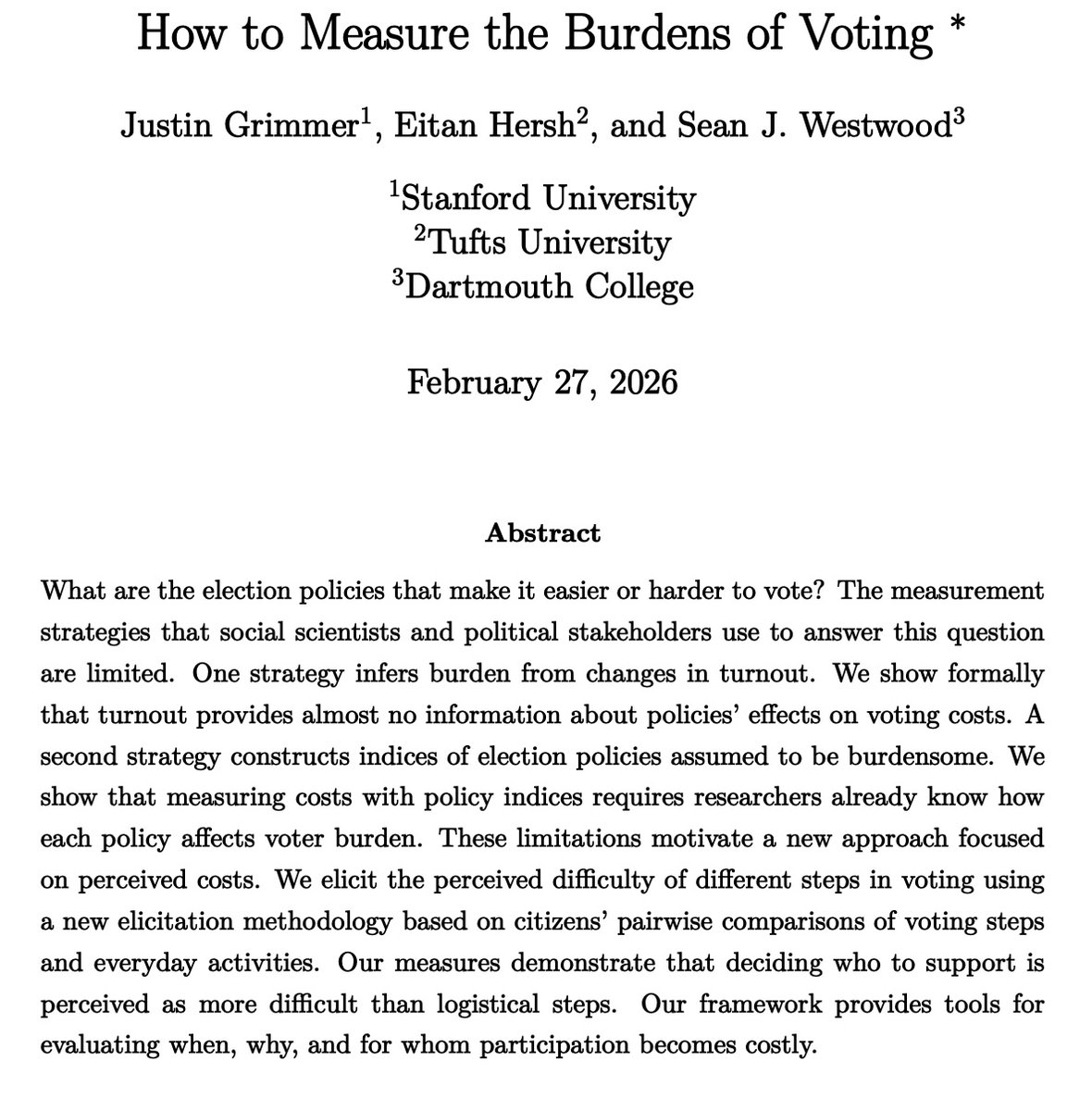
How hard is it to vote in person in an election? About as hard as it is to make a box of mac & cheese. What voters find difficult is not the logistics of voting, but deciding who to vote for, esp in local elections. That's almost as burdensome as getting an annual physical!
Justin Grimmer@JustinGrimmer

Our key finding: decisions are perceived as harder than logistics. Our measures reveal that citizens perceive deciding who to support as more difficult than registering to vote, casting a ballot in person, waiting in line 10 minutes, updating registration after moving, or showing ID to vote.

English
1
7
28
2.9K
Jonathan Mummolo retweetledi
Justin Grimmer
Justin Grimmer@JustinGrimmer·
How do we measure the cost of voting? In a new paper @seanjwestwood , @eitanhersh , and I document serious problems with current measurement strategies and address those problems with a new methodology to elicit citizens' perceived costs. Our elicited measures reveal a surprising fact: citizens perceive deciding who to support as more difficult than logistical steps, like registering to vote or casting a ballot in person.
Justin Grimmer tweet media
English
3
54
143
40.4K
Jonathan Mummolo retweetledi
Justin Grimmer
Justin Grimmer@JustinGrimmer·
“Maybe if we are mean enough to people offering an opinion on AI we can avoid any disruption to our industry” a surprisingly large number of academics, apparently. By the way assertions like “tool X can’t do Y” are difficult to provide evidence for. But if you could show it you’d have a cool paper to write and publish!
English
2
4
48
3.3K
Jonathan Mummolo retweetledi
James Madison Program
James Madison Program@MadisonProgram·
IN THREE DAYS: Join us for a talk at @Princeton by Rafaela Dancygier (@RDancygier) and Jonathan Mummolo (@jonmummolo) on "The Erosion of Opposition to Hate Crimes Against Religious Minorities in the United States." Hosted by the James Madison Program and moderated by Ismail White, the event will be on Thursday, February 26th at 5 pm in Bowell Hall 222. For more information, see here: bit.ly/4kJGaXT
James Madison Program tweet media
English
0
3
1
305
Jonathan Mummolo retweetledi
Andy Hall
Andy Hall@ahall_research·
A few people have raised this question. The point isn't about whether we "need" 1,000 papers or not. The point is that that's what is possible now, and we need to adjust to that reality and start redesigning systems to make sure we promote knowledge production. If we do nothing and leave the journal system as is, then the incentive will be for people to produce thousands of not very good papers, probably. We should aim to do better.
emily l@laskin

Ok so like….i say this as someone who used to be an academic and believes, still, in the value of academic research and writing: why do we need 1,000 academic papers produced at record speed?

English
16
8
55
14.1K
Jonathan Mummolo retweetledi
Yiqing Xu
Yiqing Xu@xuyiqing·
1/ 🐎 Our gift for the Year of the Horse: An AI-assisted workflow that scales reproducibility in empirical research. w/ @YangYang_Leo Paper: bit.ly/repro-ai
Yiqing Xu tweet media
English
13
90
310
60.2K
Jonathan Mummolo retweetledi
Andy Hall
Andy Hall@ahall_research·
Since I extended my own research using AI, I've been thinking about how it's going to reshape research and universities. We can now build new institutions where research is continuously updated, automatically verified, and carried out at immensely greater scale. Picture a research institute where senior scholars direct dozens or even hundreds of AI agents on coordinated programs. Small teams providing questions and judgment while agents handle collection, analysis, and verification. What would it take to build? The requirements are almost comically simple: (1) compute funding for researchers, and (2) a commitment to hire ambitious people and get out of their way. This new institute can unlock totally new way to do research: --Living research that automatically updates any time new data arrives, so our knowledge stays up to date --Automatically verified research that we know replicates from the moment it's posted publicly --Hyperscaled descriptive work that ingests enormous bodies of political data, like the entire history of changes to the US tax code or every bill introduced in every state legislature --Prototypes for new governance tools that are built for communities and then tested alongside them I think we're stepping into a crazy new era of how social science is done. I offer more thoughts on what's changing and how we might design an AI-first university of the future in my post, linked below.
Andy Hall tweet media
Andy Hall@ahall_research

Last weekend I posted that Claude Code created a full empirical polisci study in an hour. A lot of people asked: but how accurate was the study? The answer: quite accurate, with some interesting mistakes and important limitations. To get the answer, Graham Straus kindly offered to do an independent, manual audit—collecting the same data and extending the paper like Claude did, but without using any AI. Here’s what he found: Claude replicated the original paper exactly, coded 29/30 CA counties correctly on treatment timing, and collected election data that correlated >.999 with manual collection. The three main errors Graham found—mis-coding one county’s treatment year, omitting data collection for several potentially relevant races in always-treated states, and not using non-presidential elections to compute turnout—are similar to the kinds of mistakes a human might make on a first pass at writing this paper, and had only small effects on the subsequent estimates. On the other hand, when Claude tried to create new analyses that weren’t straightforward extensions of the original paper, it did worse. No hallucinations or crazy errors, per se, but it drifted from the prompt and produced results we found to be poorly conceived. My read: –AI today is already an extremely powerful way to rapidly update and extend well-contained, simple empirical papers. –To do empirical social science research well, it absolutely needs guidance and oversight from human experts. We’ll be sharing broader thoughts on this work, what we learned by doing it, and where we go from here next week on my blog. Thank you to the many, many people who reached out, asked questions, and offered feedback on this project.

English
13
37
158
58.1K
Jonathan Mummolo retweetledi
Sean Westwood
Sean Westwood@seanjwestwood·
I hear @CloudResearch is promoting that they have solved the AI respondent problem and are using my work to sell the solution. I have no relationship with them and they have not provided *ANY* evidence of efficacy. Be very skeptical. Again, I encourage them to post data or a white paper.
English
2
14
50
4.5K
Jonathan Mummolo retweetledi
Yiqing Xu
Yiqing Xu@xuyiqing·
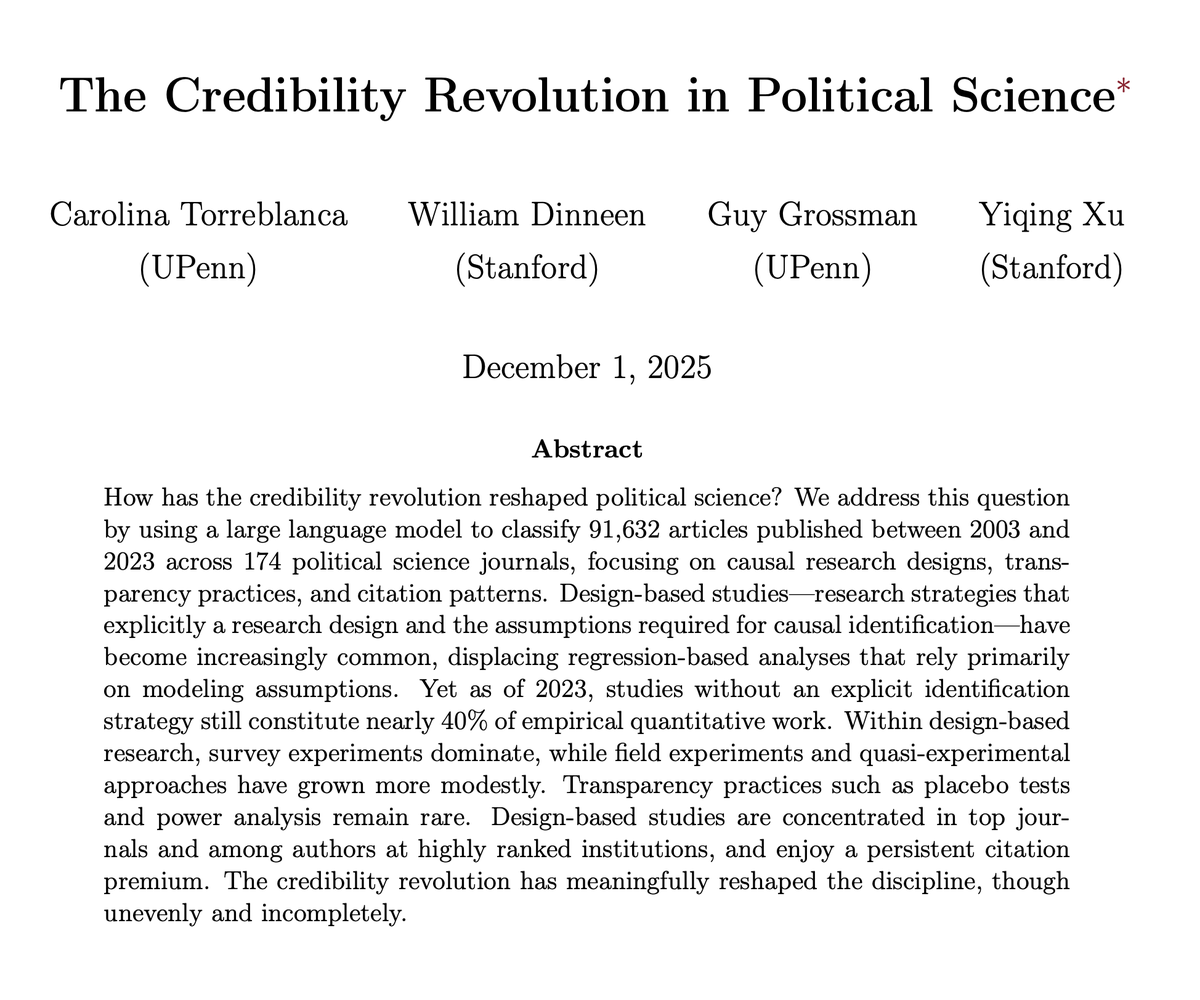
How far has the credibility revolution actually reshaped the discipline? In a new working paper w/ @caro_whitetower @william_dinneen & Guy Grossman, we use GPT-4o to code 91,632 articles from 174 political science journals (2003–2023) and track research designs, transparency practices, and citations. SocArXiv: osf.io/preprints/soca… 🧵
Yiqing Xu tweet media
English
8
111
327
46.9K
Jonathan Mummolo retweetledi
Andy Hall
Andy Hall@ahall_research·
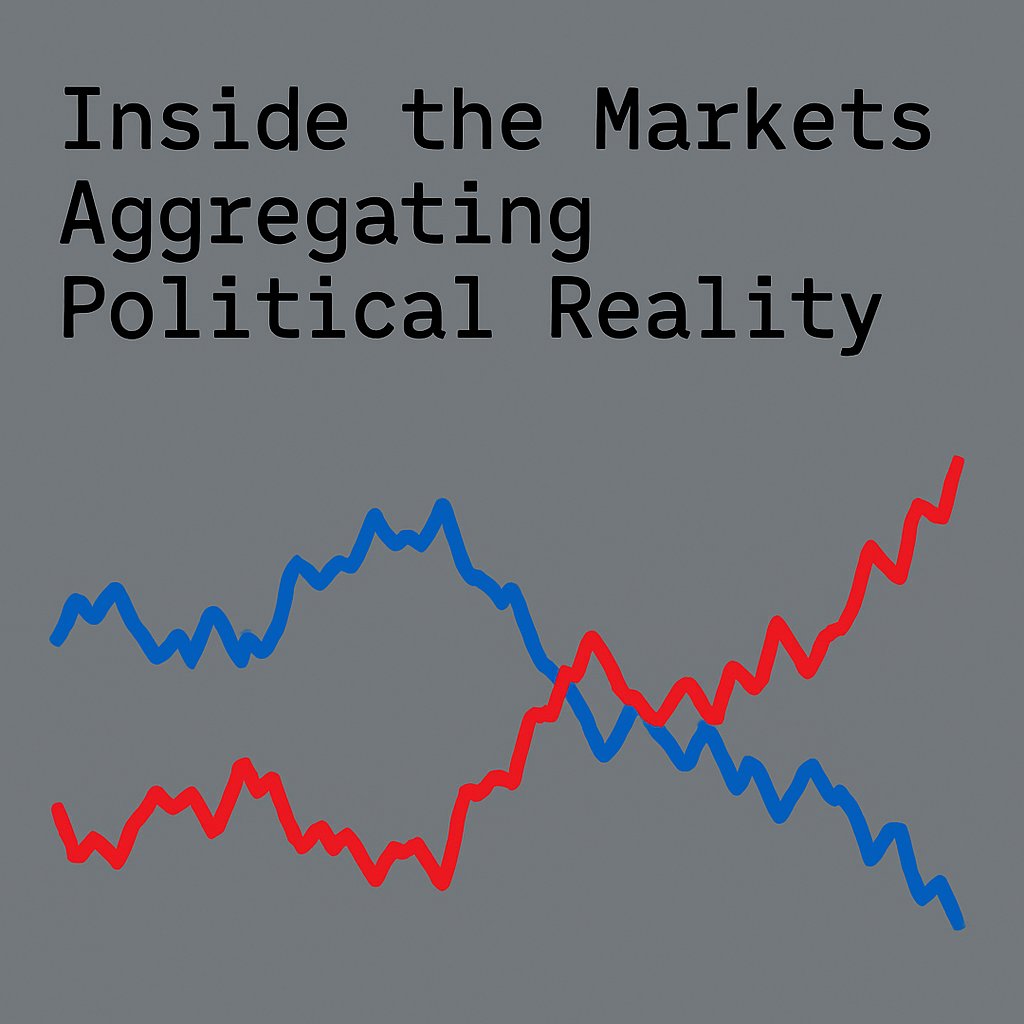
Two weeks ago I spent election night in NYC in a room with traders betting on real elections. Normally obscure off-cycle election races saw $400M in volume. Markets swung wildly on social media rumors. Prices became “proof” that candidates won. Today I'm publishing what I learned about how to design and govern prediction markets that make us smarter about politics—and launching my newsletter, Free Systems.
Andy Hall tweet media
English
10
18
103
18.9K
Jonathan Mummolo retweetledi
Sean Westwood
Sean Westwood@seanjwestwood·
AI presents a fundamental threat to our ability to use polls to assess public opinion. Bad actors who are able to infiltrate panels can flip close election polls for less than the cost of a Starbucks coffee. Models will also infer and confirm hypotheses in experiments. Current quality checks fail. Dark times for survey work.
Sean Westwood tweet media
English
25
201
632
314.2K
Jonathan Mummolo
Jonathan Mummolo@jonmummolo·
Had a great time Saturday playing this benefit show at @pearlstreetlive to support The Stubbornly Positive Project, a nonprofit helping veterans and trauma survivors. Thanks Craig and Nora for the invite and for all the great work you do! @FredTheAfghan
English
0
0
8
561
Jonathan Mummolo retweetledi
Justin Grimmer
Justin Grimmer@JustinGrimmer·
It is ridiculous for @JasmineForUS to spout this baseless conspiracy theory about Dominion voting machines and shame on @marceelias for not refuting it immediately. youtu.be/W0TZ1WqwIOc?si… As a reminder Elias' Democracy Docket has written that "Trump and his allies have made countless attacks against Dominion voting machines since 2020 to undermine public confidence in election results. In a legal brief filed Wednesday, Special Counsel Jack Smith detailed their concerted effort to overturn the 2020 election by, in part, alleging voting machines had changed peoples’ votes." democracydocket.com/news-alerts/ju…
YouTube video
YouTube
English
1
2
4
2.2K
Jonathan Mummolo
Jonathan Mummolo@jonmummolo·
Our new @The_JOP paper shows discussions of diversity in gov can affect (and possibly distort) perceptions of government performance. Stating e.g. 20% of an agency’s jobs are held by women (vs. 80% held by men) boosts perceptions that gov looks after women’s interests. journals.uchicago.edu/doi/10.1086/73…
Jonathan Mummolo tweet media
Lauren A. Wright@drlaurenawright

My new paper in @The_JOP shows that arbitrary changes in how leaders talk about diversity in government affects perceptions of governance (joint w/ @jonmummolo and Madeleine Marr). Women remain underrepresented in the bureaucracy, but rhetoric emphasizing even a small share of women bureaucrats can still impart the impression of substantive representation. E.g. stating that 20% of an agency's jobs are held by women (rather than 80% held by men) boosts perceptions that the agency is looking after women’s interests. journals.uchicago.edu/doi/10.1086/73…

English
0
6
60
8.2K