Jordan Stimpson

79 posts

Jordan Stimpson banner
Jordan Stimpson

Jordan Stimpson

@jords_designer

When every startup echoes the next, I craft credibility-rich B2B Brands + Websites that clarify value, inspire confidence, and define their space.

United Kingdom Katılım Ekim 2023
33 Takip Edilen53 Takipçiler
Jordan Stimpson
Jordan Stimpson@jords_designer·
Had a call recently where it became clear the founder didn't really know their customer yet. Not in a bad way. They had a product, early traction, real momentum. But when we started asking the discovery questions, most of the answers were assumptions. Who's buying? "We think it's..." What do they care about? "Probably..." Why you over the alternative? Not convinced... Our discovery process is built for companies that already know roughly 80% of who they're serving. Their problems. Their language. What makes them choose you. When that foundation is solid, we can build a brand that actually resonates. When it's not, we're designing on guesswork. I'd rather tell someone to go have 20 real conversations with customers and come back in three months than take their money and design/build something that needs redoing in a year. The brand work is sharper when the insight is real.
English
0
0
0
4
Jordan Stimpson
Jordan Stimpson@jords_designer·
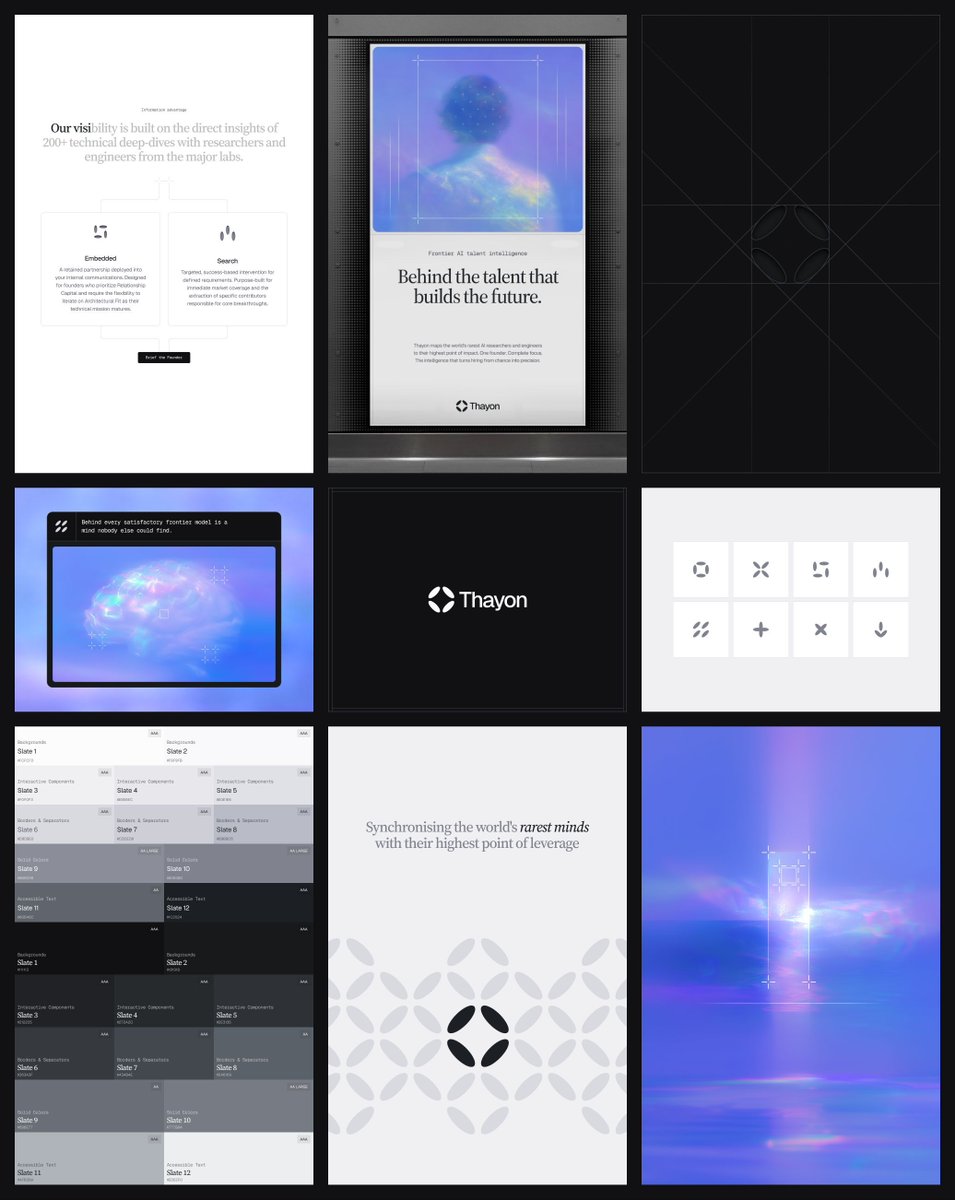
Go on then... have a little sneak peek. Brand identity in progress for Thayon. They're building a founder led intelligence operation that maps the world's rarest AI researchers and engineers to their highest point of leverage. Not a recruitment platform. A precision matching system for frontier talent. The brief is fascinating to me. How do you build an identity that feels institutional enough for enterprise credibility, but still carries the energy of what's possible in AI? That tension shaped everything we explored. Precision. Intelligence. Composure. Curiosity. Creativity. Five words driving every design decision, from the type system to the colour palette to how the brand behaves in motion. We're not playing it safe with this one. The AI talent space is full of the same generic tech aesthetic. Thayon needed to break out of that without losing the credibility that makes enterprise buyers trust it. Website in progress! More to come on this one.
Jordan Stimpson tweet media
English
0
0
1
18
Jordan Stimpson
Jordan Stimpson@jords_designer·
Things are falling into place at Jords+Co. Three new people joining the studio: - A gem of a project manager/delivery success to own timelines, client comms, project success, and keep everything moving. - An unbelievably talented senior brand and web designer to lead creative direction, craft identity systems and websites that build trust and win business. - A brilliantly experienced product designer to improve SaaS platforms, dashboards, and user flows that make complex products feel simple. The team is growing with people who share the same goal: doing great work that moves the needle for B2B tech companies. This isn't about scaling for the sake of it though. It's about adding the right talent (and who importantly share the same values) to what already works and putting more fuel behind it. On the client side: - Locked in two new design retainers. - A new strategic homepage build starting later this month. - Existing projects all moving forward with good momentum (can't wait to share them) Bigger moves are being made. Not just more work, but getting better at doing great work for clients who value good design. Building the team, tightening the process, raising the bar on what we create. More soon!
English
0
0
0
51
Jordan Stimpson
Jordan Stimpson@jords_designer·
Our website won awards. I'm redoing it anyway... The current site spends too much energy convincing people they need better branding and a better website. But that's not how our clients buy. By the time someone visits our website they already know they need a new brand and website. The timing is right. They've had the conversations. They're not browsing to be educated. They're coming to see the work and understand what working with us looks like. So the new site will strip all of that back. Let the work talk. Be really clear about what we do, who for and the outcomes we get. Keep it simple. When your positioning matures, your site has to catch up. Ours hasn't. Yet. Excited to getting started on it!
English
0
0
0
22
Jordan Stimpson
Jordan Stimpson@jords_designer·
The irony is the AI companies succeeding in enterprise are the ones that look the least like AI companies. We keep getting the same brief from AI startups. Not "make us look innovative." It's "make us look like we belong in the room with enterprise buyers." One founder said it perfectly on a recent call: "We don't want to look like we're AI. We want to look like we're credible enterprise." Makes sense when you think about who's actually buying. Not developers scrolling Product Hunt. Procurement teams at large organisations who need to feel safe putting budget behind a company that's two years old. Stanford research found 46% of people judge credibility on visual design alone. So... for an AI startup selling to enterprise, that first impression is does a lot of the heavy lifting. The companies winning this space aren't out-designing competitors using AI. They're out-crediting them. Memorable identity systems. Structured websites. Proof placed where it builds trust before the demo even starts. Trust over hype. Every time.
English
0
0
0
5
Jordan Stimpson
Jordan Stimpson@jords_designer·
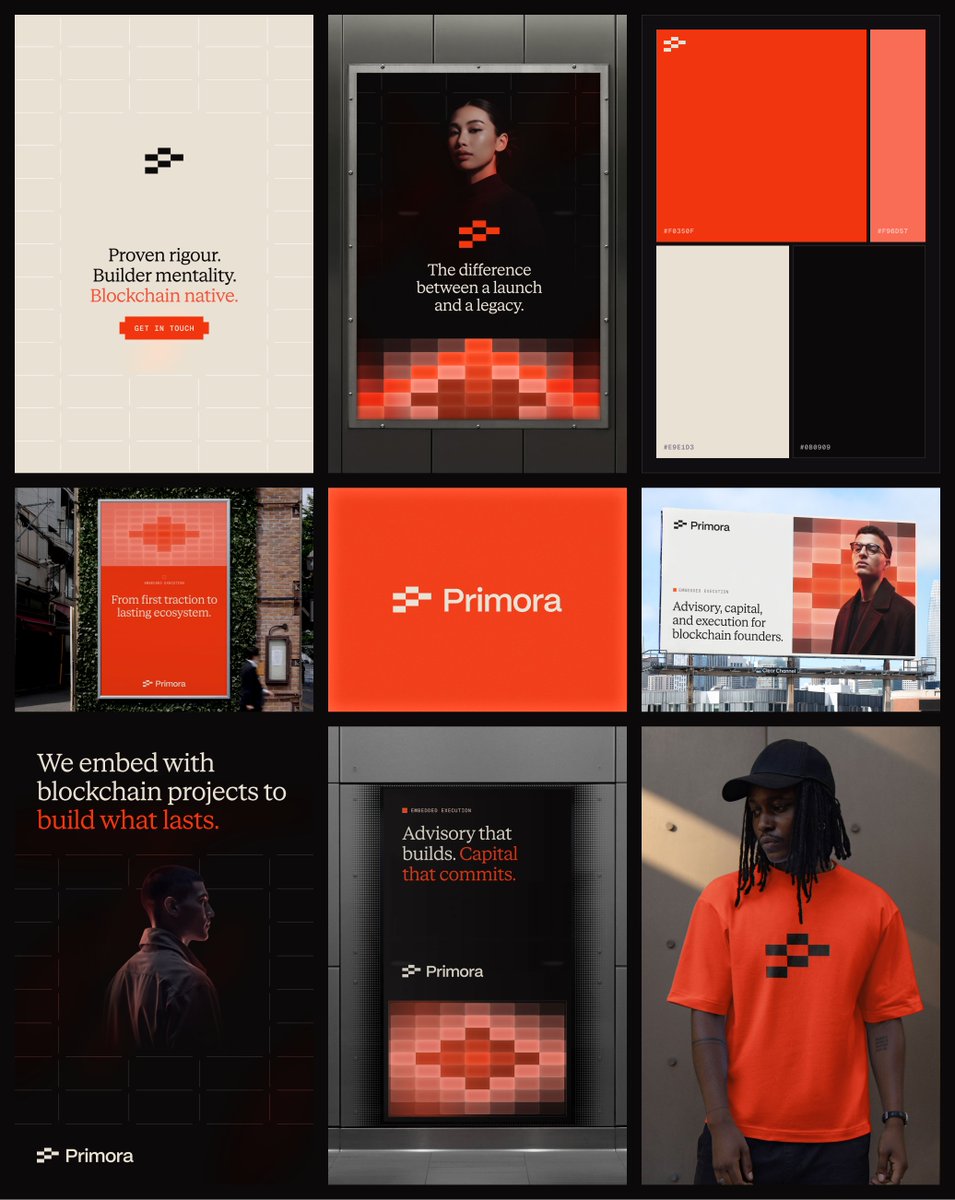
Unused work doesn't mean it's wrong... This was a brand identity concept we at Jords+Co Studio (jords.co.uk) did for Primora where we pushed the boundaries a little. How far could we take institutional credibility before it lost the energy and vibrance of blockchain and crypto (and vice versa)? The concepts that don't get chosen are often the reason the final direction lands so precisely. They test the edges and reveal where the line is. It doesn't mean the work is wrong. It's built on the same insight, the same foundation, the same strategic positioning. Just emphasising certain attributes over others. I loved this direction. Thankfully I loved the chosen one too.
Jordan Stimpson tweet media
English
0
0
0
87
Jordan Stimpson
Jordan Stimpson@jords_designer·
The biggest leak in most B2B pipelines is invisible. It’s the belief gap. A lot of B2B teams focus too much on services/features. They talk about the tech, the roadmap, the clever bit tucked under the hood of what they do, but they overlook what moves serious buyers - belief. If someone doesn’t understand you quickly, doesn’t trust you, doesn’t feel like you’re credible, it really doesn’t matter how strong the product is because they won’t lean in, they won’t book the call and they won’t move past the opening scroll. This came up on a call this week with a performance marketer turned early-stage founder who sees this all the time. Companies assume buyers will “get it” because the product/service is smart, but buyers aren’t arriving with a clean slate. They’re busy, sceptical, comparing you to three other options and trying to decide, in a few seconds, whether you’re worth any more of their attention. Brand is the moment they decide whether to take you seriously. Not the logo, typography or the colour palette (aesthetics are part of it, of course) but the clarity of the story, the confidence in the design and the sense that you understand their world well enough that they can trust you with a real problem. And when that moment lands, everything else in the funnel becomes a lot easier because the heavy lifting has already been done. Fix the belief gap and the rest is optimisation.
English
0
0
0
20
Jordan Stimpson
Jordan Stimpson@jords_designer·
The whole 996 thing... Work until you break or you’re not a “real” founder. Who is that actually for? I spoke to the very interesting James Lucas from Lunos the other week who sees behind the curtain with early-stage teams, and we both nervously laughed about how the story founders are being fed and the reality founders are actually living are two completely different worlds. There’s this loud corner of the internet telling you the only path to success is 9am to 9pm, six days a week, sacrificing everything in the name of “hustle”, but when you step back and think about it properly, most founders aren’t 24 with zero responsibilities. They’re juggling families, partners, mortgages, health and just the normal weight of being a human trying to build something meaningful without grinding themselves down into the ground and that’s the bit that rarely makes it into the narrative - or at least I don't see it much at all. The irony is that the people pushing 996 are usually not the ones doing it. They’re the ones benefitting from it. Early founders don’t fail because they didn’t grind hard enough. They fail because no one helped them validate the right things. Who’s the customer. What problem is real. Will anyone actually pay for this. Those answers don’t magically appear because you worked 12 hours instead of eight. They appear because you spoke to real humans, tested assumptions properly and collected evidence instead of vibes. The founders James and I see with the work we do winning aren’t the ones collapsing at their desks. They’re the ones building clarity and momentum through focused effort, consistent learning and honest conversations about what’s actually working. They move forward because they’re intentional, not because they’re exhausted and sleeping in the office. If you’ve got kids, or you want to stay sane, or you want to build a company that doesn’t swallow your entire life, you’re not “less serious”. You’re just not buying into a story that is unrealistic for you. Curious where you guys sit on this. I've been burn't out like many others building stuff. Are we finally done glamorising burnout? 👀
English
0
0
0
29
Jordan Stimpson
Jordan Stimpson@jords_designer·
I hear this a lot... “We want to feel more enterprise.” This is the most common problem we fix for B2B tech companies and marketing teams. On the surface it sounds like a visual brief, and yes, the aesthetics matter. Typography, colour. layout, maturity of style, motions etc etc. Don't get me wrong... those choices absolutely shift how your company is perceived. When a they say “enterprise”, there’s usually a deeper issue underneath. Every client is different, but usually it's that the story is vague, ICP is too broad, the website is trying to do ten jobs at once and the usually the proof is hidden somewhere in a forgotten PDF towards the bottom of the homepage... you get the idea. But before you worry about aesthetics, you need clarity. You need to truly understand the problem you solve and who feels that pain most. You need messaging that speaks directly to them and a narrative that lands. Once those fundamentals are aligned, the rest becomes a lot easier. The brand identity and website then have something real to amplify. Now the fun part - This is where the magic happens! On goes my chefs hat! We have the right ingredients to create a sharp position, a clear value narrative and visible and easy to digest evidence that you’ve done this before, for people just like them, and with the same problems as them. Design takes that clarity and turns it into confidence. A credible and distinctive brand identity, and the website where people understand you, trust you and take action. DM me if you'd like a chat about how you can "feel more enterprise". ------ Image credit: Pinterest - Bbuketkalem
Jordan Stimpson tweet media
English
0
0
0
19
Jordan Stimpson
Jordan Stimpson@jords_designer·
I had a chat with a VC recently who told me founders shouldn’t invest in positioning, brand identity and website until after series A. His view was simple: "Pre-seed teams don’t know who they’re really serving yet. They’re still validating the problem. They’re testing whether the thing they’ve built actually matters to anyone. So polishing the story too early just means you’ll pay double/triple later when you realise the customer is someone else." I get that. I’ve seen founders burn cash on assets they end up throwing away six months later because the ICP wasn’t who they thought it was. Then recently I was chatting to with the very clever brand strategist Clay Ostrom and he had an interesting view: His point: a bit of early research and lightweight clarity can actually saves months of noise. A few interviews. A pulse survey. Some real conversations. It gives founders something solid to push into the market with instead of putting a finger in the air and throwing some stuff out there hoping it works. So for me... the real question isn’t “should founders invest in positioning early”. It’s “at what point do you have enough understanding to make the positioning stick”. I think the sweet spot for early-stage founders is actually where these two takes meet in the middle. My view is: Yes, you absolutely should build positioning. You should only build it once you’ve gathered enough proof to understand the problem you solve and who feels that pain most... And you can absolutely do this before Series A. But maybe not a full 3-month 30k brand strategy engagement... Maybe a lightweight, streamlined sprint that gives you the essentials and gets you moving towards traction quickly, cleanly, and with confidence. When you're bootstrapping or at pre-seed/seed stage - just as you're on the verge of traction and want to push - build a clear, simple position you can take to market and refine as you go. Avoid: - Burning 20–30k on a heavy brand strategy sprint before you’ve validated anything - Over-polishing a story that’s built on assumptions - Building a shiny identity and website on foundations that are still moving - Writing clever messaging that collapses the moment it meets a real customer What to do instead: - Run just enough research to understand the problem and who feels it most - Use that insight to form a clear, simple position you can push into the market - Keep it modular, lightweight and easy to adapt - Build only the essentials needed to get early traction Refine the story as you learn, instead of reinventing it after every iteration That’s my take anyway! Curious how others see it...
Jordan Stimpson tweet media
English
0
0
0
38
Jordan Stimpson
Jordan Stimpson@jords_designer·
Most people think they love minimalism when it comes to websites. What they actually love is layered complexity that feels simple and clean. This came up on a call a few weeks ago. A fintech founder said he liked “minimalist design” and mentioned examples like Linear, Apple, Marco (shout-out Marco. A SaaS/email product we had the pleasure of creatively bringing to life). What does this mean though? Websites that are clean on the surface but dense with intention underneath. The best B2B websites that have that extra quality are actually cleverly structured, not just minimalist. They deliver information without overwhelm. When you scroll through the page, it's easy to scan but the visuals and messaging are purposeful, and each element is choreographed and delivered with slick intentional interactions and subtle motion. These websites have clear layers/sections, progressive reveal, micro-interactions and nothing loud just for the sake of it. They feel effortless, not because they’re only focused on being minimal, but because the hierarchy is doing all of the heavy lifting. We could get into the details on how you put these elements together, but for the sake of time, creating each of these smaller elements well and playing them out like an orchestra gives you that magical-like quality most people in B2B tech want. If you sell something complex, don’t chase minimalism. Chase clarity and order with a sprinkle of taste and fluid-like interactions. We want audiences to quickly get that feeling of “I understand this...the value is clear, and these guys back it up. And here’s how I get in touch.” In my view, that’s what good design is meant to do. This is what I love doing. Taking a C or B website and bringing it up to an A+
Jordan Stimpson tweet media
English
0
0
0
23
Jordan Stimpson
Jordan Stimpson@jords_designer·
You do not need a “pink cow” brand. You know the ones...Loud for the sake of being loud. Quirky typography, random gradients, 14 colours, a 'cheeky' mascot shouting in your face. In B2B tech where credibility and proof are so important, you don't win by being the weirdest. You win by being the most distinctive and the most trusted (being easy to work with also wins). Think of the person who walks into a room. They are not wearing a multicoloured light up suit with speakers on the back (although that might be cool - whatever floats your boat) They are just… put together well. Cool jacket, clear story, calm confidence. You remember them without really knowing why. That is what I aim for with brand identity and websites. Familiar enough to feel trusted. Distinctive enough to stick. Design templates usually fail here. Templates (and vibe-coding) give you “acceptable” but not “memorable”. If your site could belong to 50 other startups, it is not a brand - it's a mass-produced copy. If you want to stand out in B2B, stop chasing “different”. Start chasing “distinctive”.
Jordan Stimpson tweet media
English
0
0
0
24
Jordan Stimpson
Jordan Stimpson@jords_designer·
Taste is the secret brief founders never write. Had a call this week where the founder skipped the usual “we need more conversions” problem and went straight to taste. ...Music to my little creative ears. If you don’t know what “good” looks like, all the strategy in the world can’t save the final thing. Yes, you need positioning. Yes, you need clarity. Yes, you need UX that doesn’t make people smash their keyboard against their head. But taste is the filter everything passes through. It’s the difference between a website that ticks 'web design best practices' boxes and a website that lands. Founders who lead with taste get better websites. Simple as that. So before you brief your next project, ask yourself a basic question. What brands/websites do you love and why? Your answer is the anchor for everything that follows. (said with a smug, mysterious expression)
Jordan Stimpson tweet media
English
0
0
0
28
Jordan Stimpson
Jordan Stimpson@jords_designer·
If you are pre traction, you probably don't need my brand / website sprint. Harsh, but true. This sprint makes sense when: - You are doing roughly £250k to £1m ARR or on a very clear path there. - You have some real customers, but your brand and site still look MVP. - Buyers hesitate, investors ask for clarity, sales cycles drag. - The story in your head is miles ahead of what your website shows. In that situation, a proper brand and one focused site can shorten cycles, remove confusion and make you look as credible as you actually are. If you are pre revenue or still searching for product market fit, I would rather you spent money on product and sales than on me. Get signal first, then amplify it. So if your brand feels like it belongs to the previous version of your company, that is when the sprint is worth every penny.
English
0
0
0
41
Jordan Stimpson
Jordan Stimpson@jords_designer·
Heard a wild one in a call this week. A startup paid 30k for a WordPress site using a theme/template...30K! Not a custom build. Not a design system. Just a theme with the colours swapped out. No brand guidelines. No identity system. Just a new coat of paint on the same old structure and people wonder why nothing changes. This is the bit that drives me mad. You cannot separate the website from the brand. If the identity isn’t clear, the site will never perform. And if the website is built on a 'samey' looking template with no strategic backbone, it won’t grow with you. Founders deserve more than a glorified theme job. Especially at that price. The alternative is simple: - Strategy that makes sense. - Identity that actually reflects it. - A design system your team can use. - Then a Webflow or Framer build that isn’t fighting the tech. That’s how you get something that works today and scales tomorrow. Don’t pay agency prices for a theme and a shrug. Pay for the thinking. The system. The execution... the stuff that actually moves the business forward. (And yes, the post image is supposed to be scary!)
Jordan Stimpson tweet media
English
0
0
0
30
Jordan Stimpson
Jordan Stimpson@jords_designer·
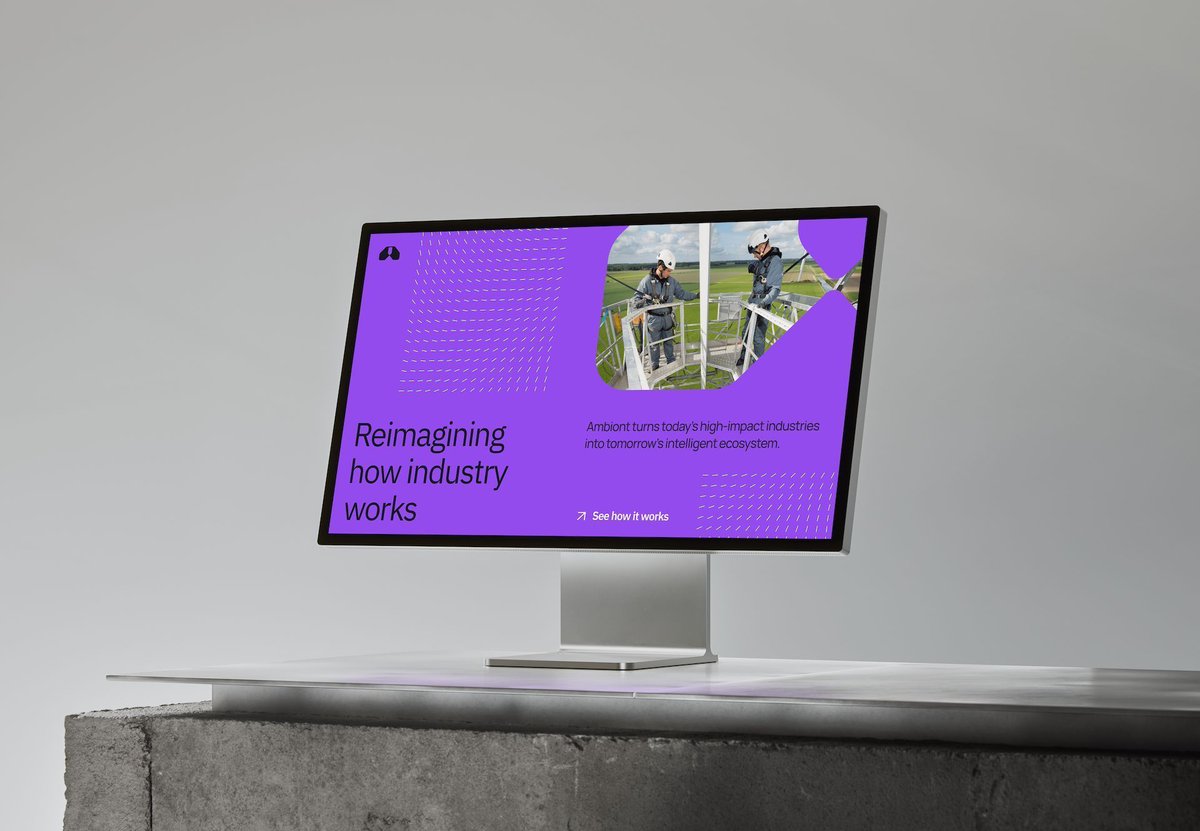
A sneak peek into a current Brand ID / Website project. One of the concepts being explored... Visually, everything points back to the idea of a network you can see working. The A shaped mark acts as the hub. Modular layouts, node like graphics and motion patterns show flows of data, energy and value across the ecosystem. Typography feels precise and technical without going sci-fi. The purple led palette and restrained signals keep it distinctive next to green lookalikes. Photography grounds the promise in reality. Real plants, ports, fields and operators at system scale, with light data overlays to show impact, not hype. Together, the elements present Ambiont as a serious, evidence led partner for future industry. A platform where measurable impact is designed in from the start, rather than added as a story afterwards.
Jordan Stimpson tweet mediaJordan Stimpson tweet mediaJordan Stimpson tweet mediaJordan Stimpson tweet media
English
0
0
0
43
Jordan Stimpson
Jordan Stimpson@jords_designer·
I’ve stopped trying to be “the whole solution”. Founders don’t need another do-it-all agency. They need the right senior people around the table at the right time. So I’ve started building a small partner ecosystem for B2B tech: - Brand strategist who runs proper positioning work - My studio for visual identity and a conversion-focused website - Growth teams for outbound, CRO and actually pressure-testing the ICP in the wild - SEO specialists who turn that story into compounding, long-term search demand Same type of founders. 4 different experts. One joined-up path from “we think this is our position” to “the market is responding to this”. If you’re a founder, would you rather hire one generalist agency or a small crew of specialists who already work together?
Jordan Stimpson tweet media
English
0
0
0
27
Jordan Stimpson
Jordan Stimpson@jords_designer·
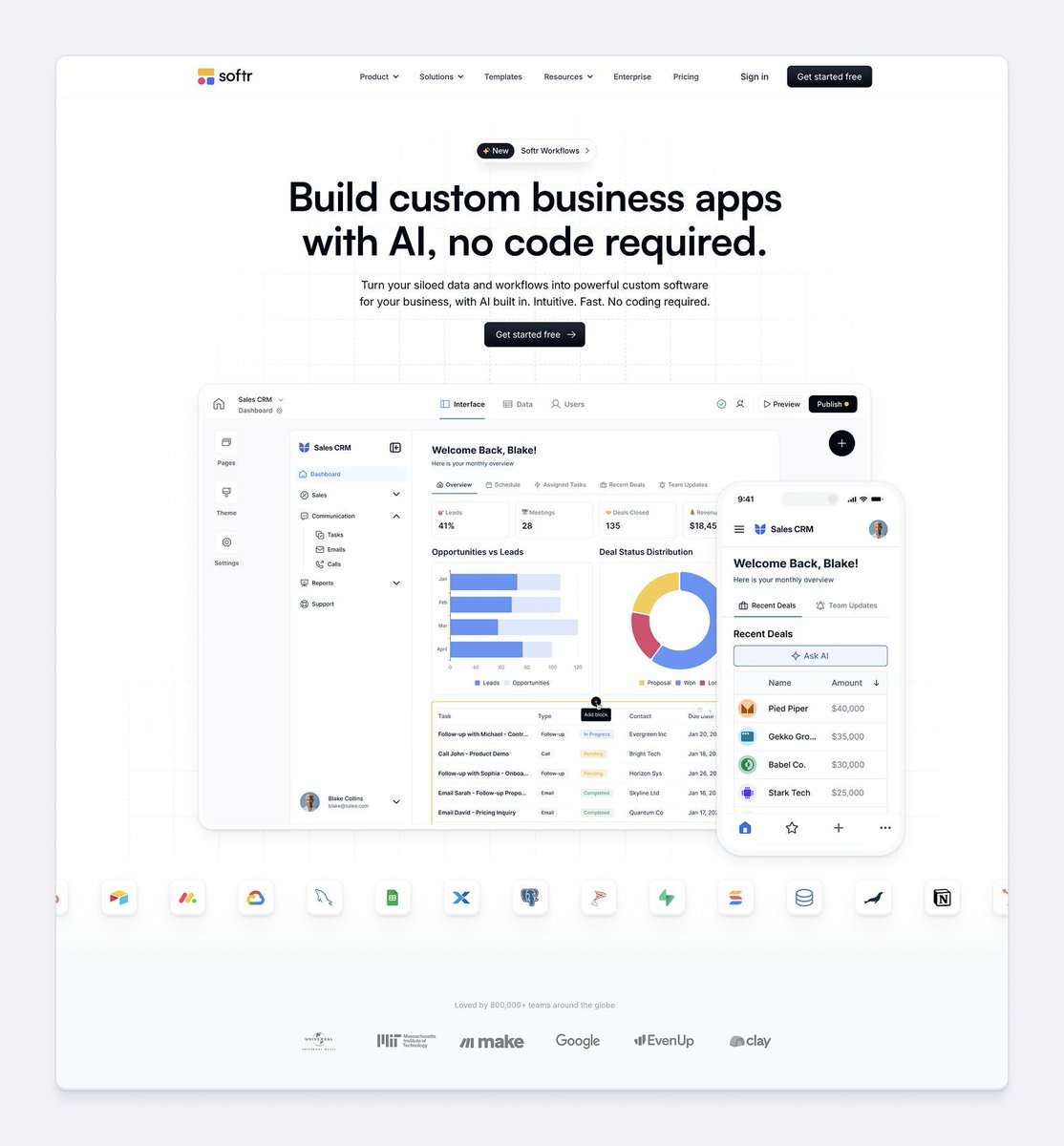
I worked with Softr on their designing their new homepage. We focused on clarity. - The H1 heading at the top tells you exactly: “Build custom business apps with AI, no code required.” - One clear CTA, stands out, but doesn’t overwhelm. - We put the real UI front and centre so the value is visual. - We lined up key integrations: HubSpot, Airtable, Notion, etc - so users know instantly it fits the tools they already use. - Trust - showing leading companies who use Softr If your hero can’t deliver that clarity, you’re losing sign-ups.
Jordan Stimpson tweet media
English
0
0
0
37
Jordan Stimpson
Jordan Stimpson@jords_designer·
For me, this is where it gets really exciting. Once we've nailed the strategy, positioning, and messaging framework, we start bringing it to life with creative directions. The client sees that for the first time and it's that ‘aha’ moment where everything clicks. Everything in the moodboards is pinned back to their strategy (and explaining how helps!). Suddenly there are clear visual directions to review, refine and move forward with. That’s how we get identities to resonate. Visuals that feel familiar to their ICP, but memorable by being distinctive. You don't need to paint yourself as a pink cow to stand out.
English
0
0
0
8
Jordan Stimpson
Jordan Stimpson@jords_designer·
It shouldn’t take a year for an agency to “get” you. Had a 60-minute discovery with a climate tech CEO over in the US. I’d done the homework first. With the deck they sent before as reference/context, I did the following: - Competitive landscape (outlining opportunities) - ICP reality check (aligning pain points with what they say they solve) - Mission and vision (translated into outcomes) Then, this is the important part... I mirrored it back to them on the call in simple terms and with clarity, so they team heard their story. Not mine. This like a mini-test I give myself when it comes to startups with a complex product. Have I truly understand what they're doing? And I can present it back to them like I'm already embedded into the team. I'm not saying I got everything 100% - there are obviously nuances and lots a micro-gaps that need to be filled along the way. But this line from the CEO summed it up for me: “We’ve worked with a large agency for over a year and they still don’t get it. You just nailed it in an hour.”
English
0
0
0
18