Josu Aranbarri
5K posts

Josu Aranbarri
@josuaran
Physical geographer interested in vegetation response to #Quaternary #Climate change. #Palynology and Historical #Biogeography. Associate Professor at @upvehu
Lekeitio//Zornotza Katılım Ağustos 2011
1.8K Takip Edilen1.1K Takipçiler

@drleeclare @TheLastNatufian I see… in any case, I would run a test using exterior contexts, as they present fewer taphonomic issues and allow for a better reconstruction of the surrounding vegetation landscape and the potential uses of the site
English

@josuaran @TheLastNatufian Unfortunately, there are very few off-site palaeoclimate proxy records. Most of our information relating to vegetation comes from on-site deposits through flotation and the analysis of recovered charred plant remains. We also look at phytoliths, of course
English

@TheLastNatufian @drleeclare Very interesting! I hope the pollen content of the different cultural phases will be studied. There is a notable gap in the regional phytogeographic studies!
English
Josu Aranbarri retweetledi

We come bearing news! The archaeobotany team of Kharaysin has published a new paper!
Andoni Mateos Cabero@AndoniMateos
📢 Excited to share the first paper from my PhD research, now published in Vegetation History and Archaeobotany 🔗 doi.org/10.1007/s00334… This study explores vegetation dynamics, land use, and human–environment interactions at Kharaysin (Jordan) @PKharaysin
English

A great new paper highlighting the transformation of a SW-Asian landscape and its vegetation during the PPNA-PPNB transition, a period which coincides with the slow emergence of food-producing lifeways. I know it sounds a bit geeky but I love this phase.
link.springer.com/article/10.100…
English

Happy to share our last paper on the #vegetation reconstruction during the Transtional PPNA/B-EPPNB (ca. 9000-8200 cal BC) at Kharaysin, Jordan, led by @AndoniMateos #archaeobotany #Neolithic link.springer.com/article/10.100…
English

@CGoisMarques I've been looking forward to this conference for a long time. I was expecting to see sessions on Quaternary vegetation history or human-vegetation interactions. In any case, it’s a very nice congress!
English
Josu Aranbarri retweetledi

☘️ 2027 Geoscience Field Trip Informazio saioa
📅 Apirilaren 16a, osteguna, 2026
🕡 18:30ean
📍 O'Connor's pub-a (Prado kalea 11, Vitoria-Gasteiz)
Azalduko ditugu:
✔ Programaren edukiak
✔ Baldintzak
✔ Finantzaketa
✔ Nazioartekotzearen onurak
👉Inskrip forms.gle/UnCpVU4WUXuJwK…


Euskara

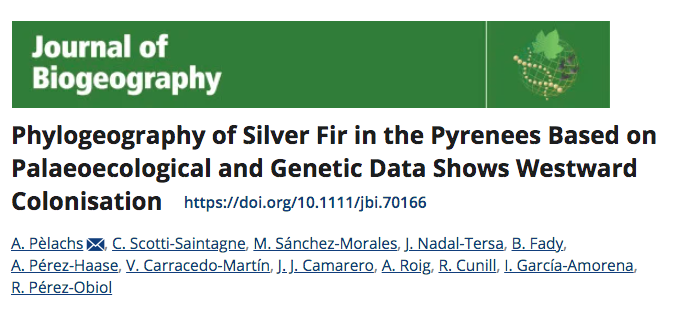
@apelachs, Marc Sànchez, Jordi Nadal i Raquel Cunill del @gramp_uab de @Geografia_UAB firmen aquest article a la revista "Journal of Biogeography".
onlinelibrary.wiley.com/doi/10.1111/jb…

Català
Josu Aranbarri retweetledi

The latest part of Palynology is now published online tandfonline.com/action/tocQuic…
#Palynology #NewArticles
English

#Phylogeography of Silver Fir in the Pyrenees Based on Palaeoecological and Genetic Data Shows Westward Colonisation #Biogeography #Quaternary
onlinelibrary.wiley.com/doi/10.1111/jb…
English
Josu Aranbarri retweetledi

📸 Asteko argazkia: Urbasako bisontea.
Urbasa-Andian Iberiar penintsulako bisonte europarraren lehenengo arrastoak izan daitezkeenak azaldu dira.
#EHU-ko ikertzaileek eta beste hainbat zientzia-erakundek hartu dute parte aurkikuntzan ⤵️
zientzia.eus/artikuluak/ast…
Euskara
Josu Aranbarri retweetledi

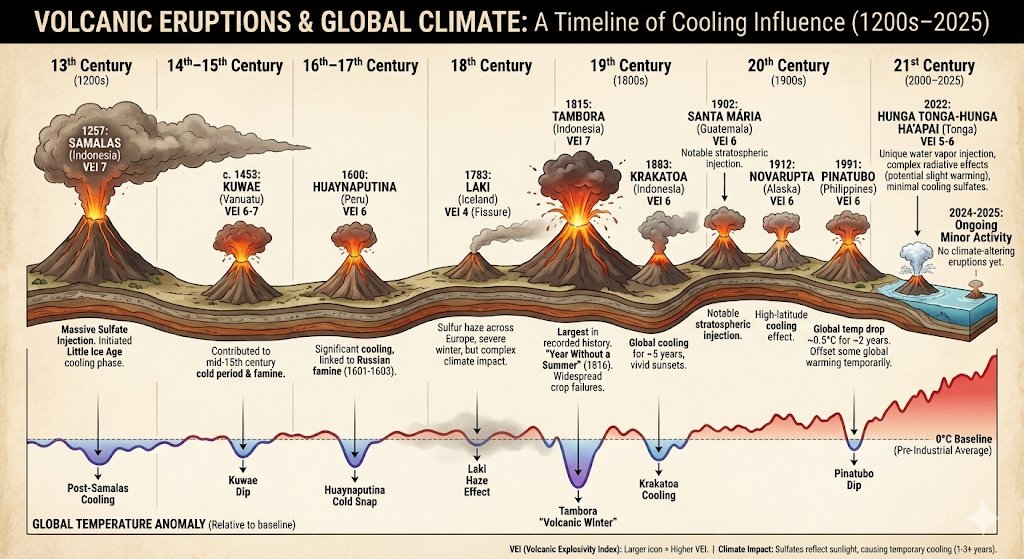
The explosive intensity and spacing of volcanic eruptions 🌋 combined with low solar activity ☀️ periods drove the Little Ice Age and worsened human flourishing.
We only escaped Little Ice Age in late 19th /early 20th Century w/higher solar output and volcanic eruption lull

Ryan Maue@RyanMaue
The 1400s were dry and cold in Europe due to low solar ☀️activity (Spörer Minimum (1420–1550) + overlapping impacts of 2 volcanic eruptions 'The decade from 1471 to 1480 was recorded as the driest decade of the last millennium.'
English
Josu Aranbarri retweetledi

Paper alert! Our study indicates that across the Saharo-Arabian Desert belt, the Holocene humid phase was drier relative to other humid phases. This has implications for our understanding of dispersals and monsoons under different orbital parameters. onlinelibrary.wiley.com/doi/10.1002/jq…

English
Josu Aranbarri retweetledi

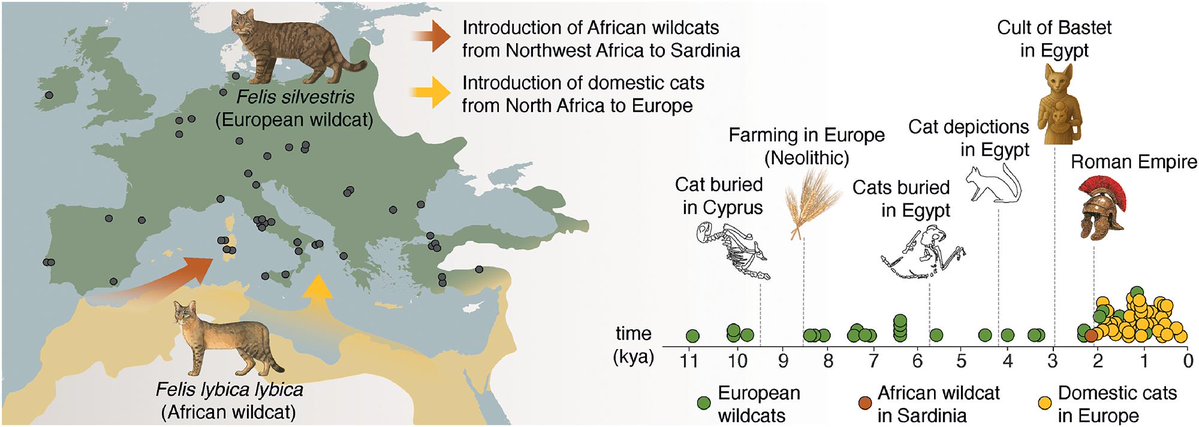
The domestic cat may be a far more recent arrival to Europe than previously thought, arriving roughly 2000 years ago and not because of the Paleolithic expansion of Near East farmers.
The findings in Science offer new insight into one of humanity’s most enigmatic animal companions and identify North Africa as the cradle of the modern housecat. scim.ag/4il9OkV

English
Josu Aranbarri retweetledi

New climate data from the Zagros region spanning the Last Glacial Maximum (LGM) to the Early Holocene (18,000 to 7500 BP) provides important contextual data for the Neolithic transition in the Fertile Crescent. pnas.org/doi/full/10.10…
English
Josu Aranbarri retweetledi

Largas y sucesivas sequías que duraron más de 85 años acabaron con la próspera Civilización del Valle del Indo hace cuatro milenios share.google/gMKUmwDieAfqqX…
Español