Jean-Philippe Lebœuf retweetledi

@kirillzubovsky You don’t need pedigree to build something they can’t ignore and when you build it you don’t need them anyway
English
Jean-Philippe Lebœuf
4.9K posts

@jpleboeuf
French Code Wrangler. Interface Philosopher. AI tools have feelings and I hurt them. Thoughts on tech evolution. Root #Hospoda42 | @u_psud @EPITA alum




Judging by my tl there is a growing gap in understanding of AI capability. The first issue I think is around recency and tier of use. I think a lot of people tried the free tier of ChatGPT somewhere last year and allowed it to inform their views on AI a little too much. This is a group of reactions laughing at various quirks of the models, hallucinations, etc. Yes I also saw the viral videos of OpenAI's Advanced Voice mode fumbling simple queries like "should I drive or walk to the carwash". The thing is that these free and old/deprecated models don't reflect the capability in the latest round of state of the art agentic models of this year, especially OpenAI Codex and Claude Code. But that brings me to the second issue. Even if people paid $200/month to use the state of the art models, a lot of the capabilities are relatively "peaky" in highly technical areas. Typical queries around search, writing, advice, etc. are *not* the domain that has made the most noticeable and dramatic strides in capability. Partly, this is due to the technical details of reinforcement learning and its use of verifiable rewards. But partly, it's also because these use cases are not sufficiently prioritized by the companies in their hillclimbing because they don't lead to as much $$$ value. The goldmines are elsewhere, and the focus comes along. So that brings me to the second group of people, who *both* 1) pay for and use the state of the art frontier agentic models (OpenAI Codex / Claude Code) and 2) do so professionally in technical domains like programming, math and research. This group of people is subject to the highest amount of "AI Psychosis" because the recent improvements in these domains as of this year have been nothing short of staggering. When you hand a computer terminal to one of these models, you can now watch them melt programming problems that you'd normally expect to take days/weeks of work. It's this second group of people that assigns a much greater gravity to the capabilities, their slope, and various cyber-related repercussions. TLDR the people in these two groups are speaking past each other. It really is simultaneously the case that OpenAI's free and I think slightly orphaned (?) "Advanced Voice Mode" will fumble the dumbest questions in your Instagram's reels and *at the same time*, OpenAI's highest-tier and paid Codex model will go off for 1 hour to coherently restructure an entire code base, or find and exploit vulnerabilities in computer systems. This part really works and has made dramatic strides because 2 properties: 1) these domains offer explicit reward functions that are verifiable meaning they are easily amenable to reinforcement learning training (e.g. unit tests passed yes or no, in contrast to writing, which is much harder to explicitly judge), but also 2) they are a lot more valuable in b2b settings, meaning that the biggest fraction of the team is focused on improving them. So here we are.



<끊임없는 반인권적 반국제법적 행동으로 고통받고 힘들어하는 전 세계인들의 지적을 한번쯤은 되돌아볼 만도 한데 실망입니다. 내가 아프면 타인도 그만큼 아픕니다. 나의 필요 때문에 누군가 고통받으면 미안한 것이 인지상정입니다. 아닌 밤중에 홍두깨라고 아무 잘못없는 우리 국민들께서 뜬금없이 겪고 있는 이 엄청난 고통과 국가적 어려움을 지켜보는 마음이 매우 불편합니다. 보편적 인권과 대한민국의 국익을 위해 할 수 있는 일을 더 열심히 찾아봐야겠습니다.> 이스라엘, ‘전시 살해=유대인 학살’ 李대통령 발언에 “용납 못해” v.daum.net/v/202604110641…



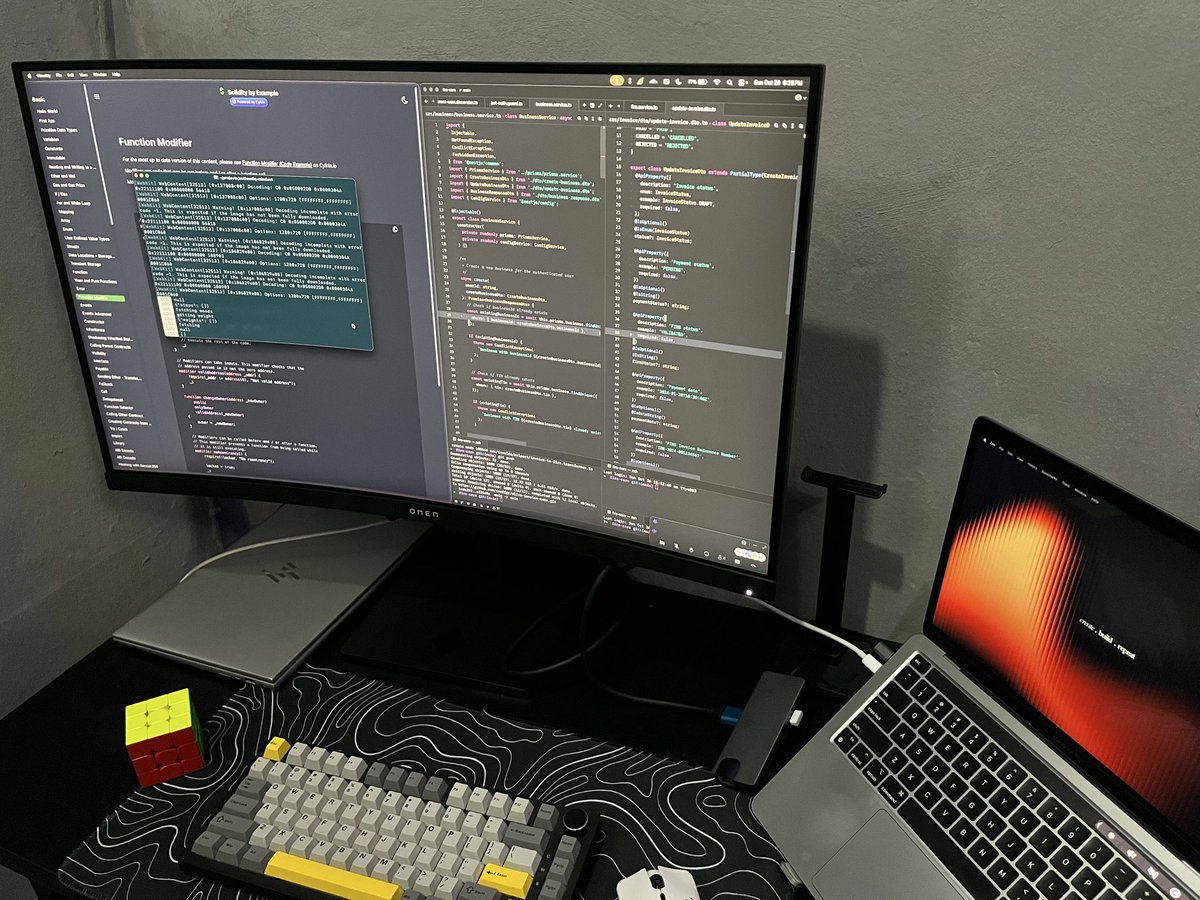



Honestly, this is the most accurate diagram I've seen. Waterfall: You plan for 18 months and deliver exactly what nobody needs anymore. Agile: You deliver something usable at every step, but the CEO keeps asking, "Where's the car?" AI: You get the car on day one. It has six wheels, the doors are on backwards, and it has a rocket launcher. You spend more time making it yours than actually "building"; it's shaping. owning. verifying. That's what the best AI developers do now. They don't build. They shape and own.