
Jean-Noël ROFFIAEN retweetledi
Jean-Noël ROFFIAEN
317 posts



Jean-Noël ROFFIAEN retweetledi

Bull markets test your humility.
Bear markets test your conviction.
English
Jean-Noël ROFFIAEN retweetledi

#DivanCitoyen - Forum public Ep.38 - S5
Quelles sont les options qui s'offrent au Sénégal dans la gestion de sa dette ? Quelles conséquences socio-économiques socio-politiques peut-on attendre de ces choix ?
Avec @AbdouNdiayeNYU
Nous rejoindre 👇 x.com/i/spaces/1rGmq…

Français
Jean-Noël ROFFIAEN retweetledi

Je réprouve personnellement les convocations de Cheikh Bara Ndiaye et Guy Marius Sagna pour les propos qu'ils ont tenus. Je pense et je le répète, la régulation de l'espace publique n'est pas du ressort du procureur. Dans le cadre d'une démocratie qui marche bien, ceux qui sont contre doivent s'exprimer.
Cela dit au regard de la sitution de conflit tres sensible que nous traversons au Sénégal chaque citoyen doit bien peser les conséquences que pourraient avoir son discours sur la situation politique actuelle du Sénégal désormais suivie par l'opinion africaine et internationale. Donc éviter tout ce qui met de l'huile sur le feu. Je suis contre le délit d'offense au chef de l'état. Mais je mets en garde contre les attaques récurrentes et irrespectueuses voire méprisantes contre le Président de la République , clé de voûte de ses institutions. Affaiblir l'executif, donner l'image d'une présidence impotent et sans aucun pouvoir n'est pas sans risque. Que ça vienne des députés pose encore plus problème. Je les invite à faire preuve de retenue.
Il ne faut pas criminaliser le débat politique, mais dans le contexte actuel , la retenue et la responsabilité doivent être de mise. Sonko et Waly Diouf Bodian donnent le ton. Mais ils doivent aller plus loin en invitant leur camarades à la retenue et au respect des institutions. Activer les mecanismes africains de régulation démocratique: la palabre en méttant de coté les égos en privilégiant la démocratie consensuelle et conviviale. C'est le contexte qui le commande.
casavance.net/affaire-cheikh…
Français
Jean-Noël ROFFIAEN retweetledi
Taxpayers realizing they will pay $300 billion to reconstruct Iran after paying $70 billion to destroy it
English
Jean-Noël ROFFIAEN retweetledi

Le Sénégalais Abdoulaye Ndiaye sacré meilleur jeune économiste africain l.jeuneafrique.com/0La
Français
Jean-Noël ROFFIAEN retweetledi

Recevoir ce prix m'émeut profondément. Je le dédie à ma mère, qui nous a quittés cette année, et dont la mémoire m'accompagne en ce moment.
La portée de ce prix pour moi est le fait que le jury d'économistes d'Africains a jugé que ma recherche servait non seulement la communauté académique, mais aussi le citoyen africain, les investisseurs du secteur privé, et les décideurs publics de notre continent.
Je forme le vœu que ce prix inspire les plus jeunes à se tourner vers la recherche, et à y voir une vocation qui mérite qu'on lui consacre une vie.J'invite enfin mes collègues économistes africains à se constituer en réseau, à travailler ensemble sur les questions propres à notre continent, et à conquérir, à la table de l'influence intellectuelle et de la décision, la place qui nous revient. Cette place, nul ne nous la donnera : il nous appartient de la bâtir, par la rigueur de nos travaux et la solidarité de nos efforts. Je vous remercie.
Jeune Afrique@jeune_afrique
Le Sénégalais Abdoulaye Ndiaye sacré meilleur jeune économiste africain l.jeuneafrique.com/0La
Français
Jean-Noël ROFFIAEN retweetledi

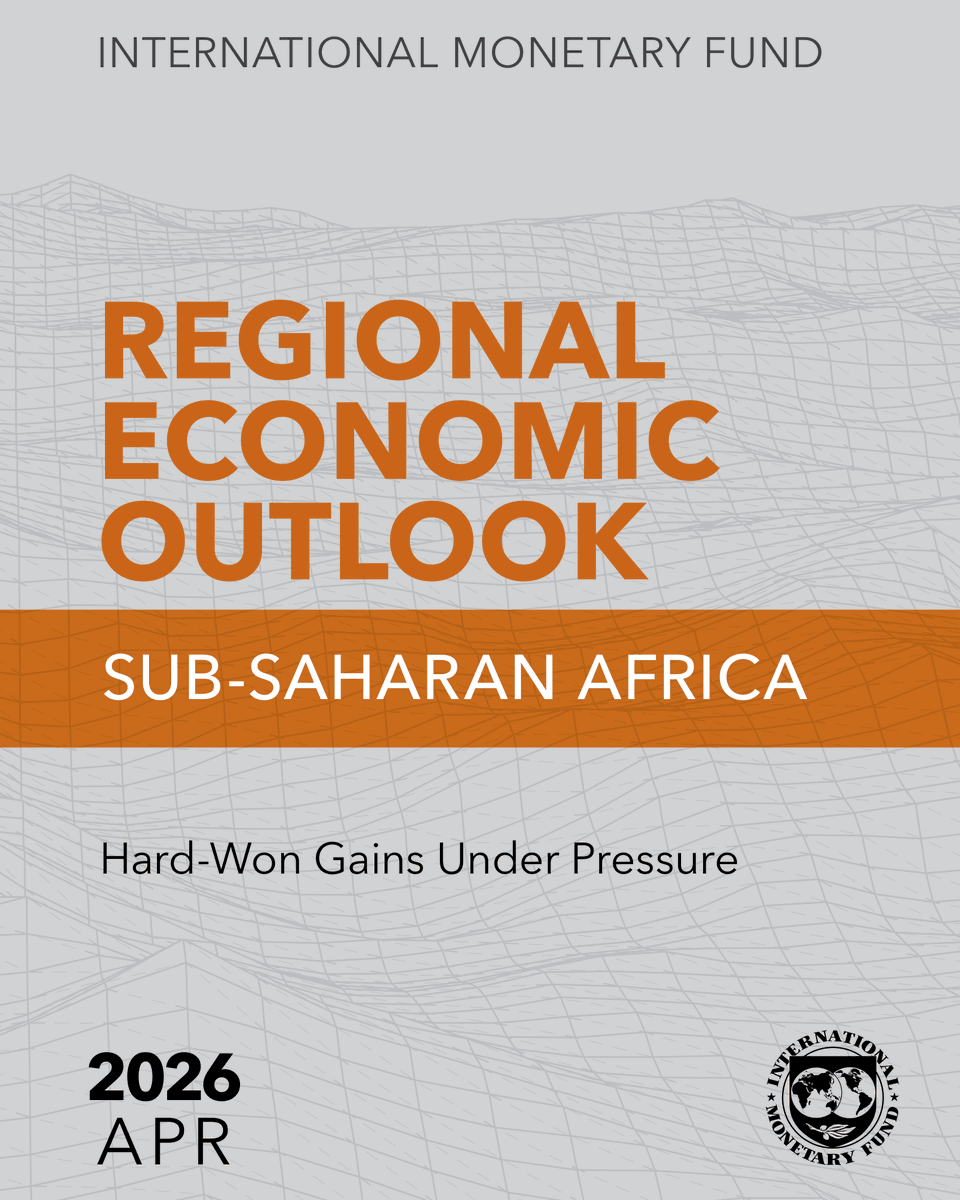
The International Monetary Fund (@IMFNews) just released its April 2026 Regional Economic Outlook for Sub-Saharan Africa.
The title says it all: "Hard-won gains under pressure."
And its three chapters tell a single, uncomfortable story.
---
❶ Good news, then bad news.
2025 was SSA's strongest growth year in over a decade: 4.5% regional GDP growth, inflation falling, progress in debt restructuring.
The region as a whole "entered 2026 reaping the benefits of hard-won stabilization gains."
Then the US-Iran war disrupted everything — pushing up fuel, fertilizer, shipping, and borrowing costs.
---
❷ Aid is collapsing, and this time it's different.
Bilateral aid to SSA fell 16-28% in 2025. The USAID closure, UK cuts, French cuts, German cuts — all at once.
Unlike every prior aid decline, this is "larger, more synchronized across countries, and predominantly donor driven."
And the traditional shock absorbers — multilateral agencies and NGOs — are themselves facing cuts.
So African economies, which are "more reliant on aid than any other region in the world," are bearing the full brunt.
---
❸ The growth model itself is broken.
At the average per capita growth rate over the past three years (1.4%), incomes will take 50 years to double.
Labor productivity has been essentially flat for three decades, while every other developing region has pulled away.
Now with debt elevated, aid declining, and borrowing costs high, the old model that sees the state as the dominant engine of growth "is no longer viable."
The private sector must take the wheel.
The IMF focuses on reforms in three areas: governance, business regulation, and trade liberalization.
But the harder message is political — and the Fund is unusually candid.
"Reforms often falter... for three main reasons:"
• Leaders have little incentive to spend political capital on reforms whose benefits only materialize after their tenure.
• Vested interests mobilize against change that harms their pockets, "even when aggregate gains are large."
• Implementation is often held back by limited internal capacity and derailed by external shocks.
---
The big picture:
By and large, Africa entered 2026 in a very good place — but faces a convergence of pressures.
A Middle East war. A structural aid collapse. A growth model that never really worked, outside of commodity cycles.
The IMF implicitly asks African governments to treat this moment as a forcing function — the vise that makes hard domestic reforms not only urgent, but politically viable.
Crises, the report notes, have historically been SSA's most productive reform windows: Ethiopia, Ghana, Zambia, South Africa all used recent crises to do what they couldn't in calmer times.
That window is open again.
Whether governments — and private sector actors who depend on the environment governments create — use it is the question.
--
Afridigest Intelligence tracks temporal & structural shifts shaping Africa's growth markets: afridigest.com/intelligence | Follow Afridigest on LinkedIn & Instagram
English
Jean-Noël ROFFIAEN retweetledi

Since the start of the Iran war...
Sulfur: +57%
Jet Fuel: +52%
Urea: +51%
Diesel: +48%
Gasoline: +36%
Fertilizer: +35%
Heating Oil: +32%
WTI Crude Oil: +28%
Brent Crude Oil: +26%
European Natural Gas: +21%
Coal: +12%
Palm Oil: +10%
Iron Ore: +8%
Rice: +7%
S&P 500: +4%
$VIX: -12%
English
Jean-Noël ROFFIAEN retweetledi

Brief Trump summary of the past weeks:
- “Open the strait”
- “Help us open the strait”
- “We don’t need the strait open”
- “Open the f’king strait or I destroy you all”
- “We block the strait”
English
Jean-Noël ROFFIAEN retweetledi

I’m old enough to remember when the Trump administration eased US sanctions on Iranian oil.
“In essence, we will be using the Iranian barrels against Tehran to keep the price down,” US Treasury Secretary Scott Bessent said at the time.
That was 3 weeks ago. Now a blockade.
English
Jean-Noël ROFFIAEN retweetledi


Jean-Noël ROFFIAEN retweetledi

We are now facing the biggest global energy crisis in history:
Total oil product exports from the Middle East plunged -63% in March, or -4.8 million barrels per day, to ~2.8 million barrels per day.
Of the remaining ~2.8 million barrels per day still being exported, ~1.1 million barrels per day, or 39%, is flowing through Saudi Arabia's Red Sea ports, bypassing the shut Strait of Hormuz.
Jet fuel was hit the hardest, with exports plunging -85%, triggering flight cancellations and fuel shortages across Asia-Pacific.
At the same time, LPG and naphtha exports dropped by -1.0 million barrels per day.
Diesel, gasoline, and fuel oil exports also fell sharply, with declines ranging from -60% to -70%.
The Strait of Hormuz crisis is in full-swing.

English
Jean-Noël ROFFIAEN retweetledi

📽️THE TANKER
There's an extraordinary race underway on the high seas, as nations vie to secure increasingly scarce shipments of fuel.
In our latest on the economics of this conflict we track one such ship & ask: why is Britain so exposed?
The answer is not v reassuring.
Watch👇
English
Jean-Noël ROFFIAEN retweetledi

I find it hard not to have as a central scenario where oil prices will remain very high for a long time, higher than the market current prices.
I am no expert on geo-politics and defense technology, but this is what I think I have learned:
Fully protecting ships in the strait of Hormuz is basically impossible. Not enough time to stop missiles or drones.
There is no reason, whether or not Trump declares that war is over, to think that Iran will not continue for some time to threaten to destroy the ships that try. Why should they stop?
The risk will thus remain sufficiently high that most non Iranian ships will not take the risk.
Thus, the shortfall of 20 million barrels a day is likely to last for long.
The scope for increased supply from elsewhere is very limited in the short run. Perhaps 2 million barrels at the most.
The 400 million barrels reserve release can only add 3-4 million barrels or so daily.
The short run elasticity of demand for oil is very low, at most -0.1, and probably less.
This suggests to me prices closer to 150-200 dollars per barrel (or more, but I hesitate to give higher numbers…) than to the current market price.
To repeat. I am no expert (As an economist, I have a bit more sense about the next step, namely what such a price would to the world economy). I would be more than happy to be proven wrong.
English
Jean-Noël ROFFIAEN retweetledi

as of today, the united states has no capacity to reopen the straits of hormuz / defend tanker traffic.
if president trump is correct and there are no more targets to hit in iran, i’d say that’s a rather serious dilemma.
English
Jean-Noël ROFFIAEN retweetledi

Jean-Noël ROFFIAEN retweetledi
Dette, croissance et tensions sociales : Pourquoi le Sénégal doit changer de cap? lesnouvellesdafrique.info/2026/03/01/det…
Français
Jean-Noël ROFFIAEN retweetledi

Abdoulaye Ndiaye & Martin Kessler argue that the pace of fiscal consolidation needed for repayment would probably end up costing the country more. project-syndicate.org/commentary/sen…

English
Jean-Noël ROFFIAEN retweetledi

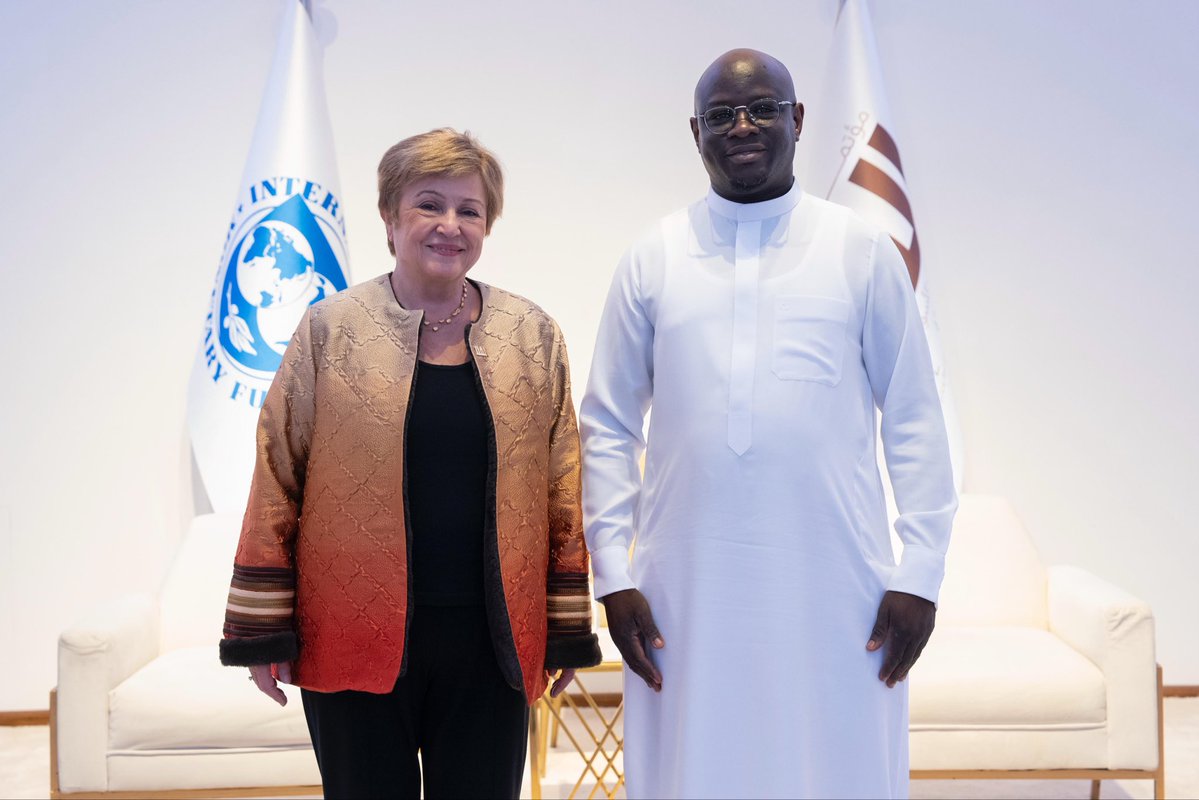
Constructive meeting with Senegal Fin Min Cheikh Diba in Alula. I welcomed 🇸🇳’s impressive progress to improve transparency and fiscal responsibility. We are closely engaged in support of ongoing reforms and macro stability for the benefit of the Senegalese people.
English