juey

1.9K posts

juey

juey

@juey08

Katılım Aralık 2011
106 Takip Edilen24 Takipçiler
juey retweetledi
☀️👀
☀️👀@zei_squirrel·
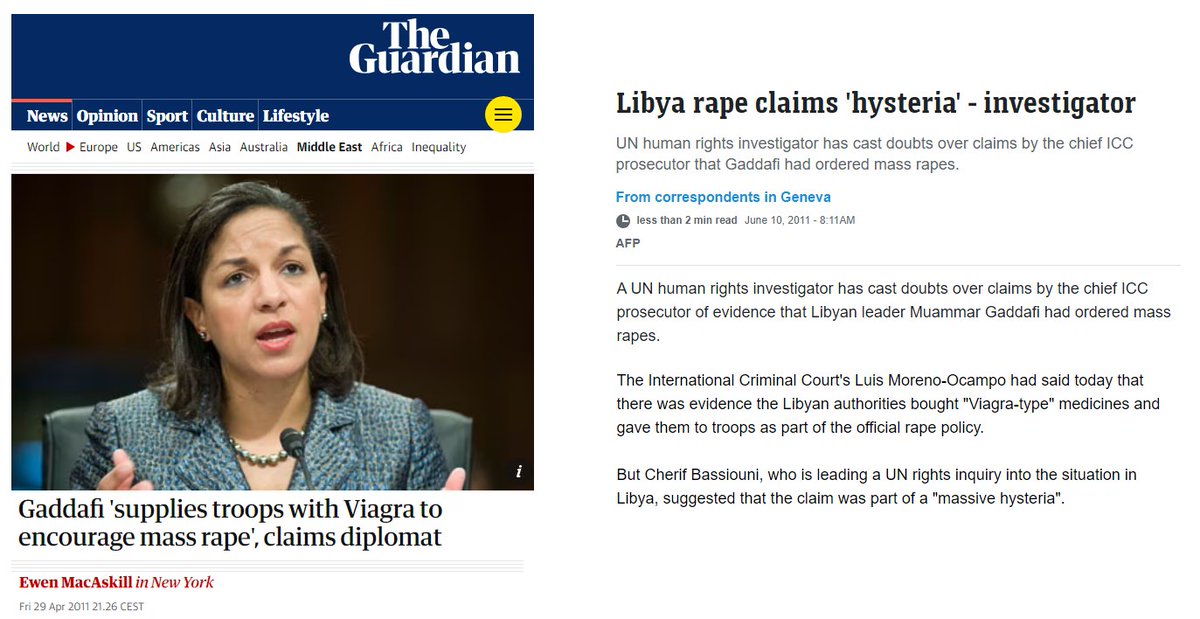
"We have indisputable evidence that Ghaddafi is giving his troops Viagra so they can mass rape girls and babies. We need to bomb them now!" *few months later as Libya has been bombed* "Yeah we made up that Viagra mass rape stuff. Anyway, Israel has the right to defend itself."
☀️👀 tweet media
English
102
6.8K
19.7K
246.8K
juey retweetledi
New Direction AFRICA
New Direction AFRICA@Its_ereko·
China became a superpower because of: 1. The 1949 revolution that ended foreign domination 2. Land reform that broke the old landlord class 3. Industrialization driven by Chinese planning, not foreign aid 4. Massive investment in education and healthcare in the 1950s-70s 5. Strategic opening on China's own terms post-1978 The US never "invested" in China to make it strong. American companies came to China to make themselves richer, not China powerful. Cheap labor. Weak environmental rules. Tax breaks. That was the deal. China took those crumbs and built its own banks, its own supply chains, its own technology. Huawei. BYD. TSMC. High-speed rail. Beidou satellites. None of that came from US charity. Meanwhile, look at countries that actually relied on US "investment" as the main strategy. The Philippines. Mexico. Egypt. Where are their superpower statuses? The revolution created the foundation. Chinese discipline built the rest. The US was just an accidental landlord collecting rent until the tenant bought the building.
Adémọ́lá.@OgbeniDemola

No, China did not become a superpower because of ‘US investment’ China became a superpower because of the Chinese revolution in the 1950s.

English
238
1.2K
4.4K
162.3K
juey retweetledi
Lord Bebo
Lord Bebo@MyLordBebo·
🇺🇸 Cop stops a car, which flips, and a baby runs out. The cop snaps and screams at the mum, “You ran a from me, you nearly killed your kid … that’s the stupidest thing you’ve done in your life.”
English
739
1.6K
27.1K
1.4M
juey retweetledi
RussiaNews 🇷🇺
RussiaNews 🇷🇺@mog_russEN·
🚨⚡️ SPOTTED: Trump caught sneaking a peek at Xi Jinping's private notebook during a Beijing banquet while Xi stepped away! 🤣
English
6K
14.8K
50.6K
5.8M
juey retweetledi
The Best
The Best@Thebestfigen·
How 3 simple lines can captivate a man's mind...
The Best tweet media
English
450
2.8K
27K
597.8K
juey
juey@juey08·
@GhostGeneralmop @D162Michele The legitimate governmental forces beat the crap out of bunch paid CIA assets disguised as "students". I can give you all the details if you really want.
English
1
0
3
176
GhostGeneral
GhostGeneral@GhostGeneralmop·
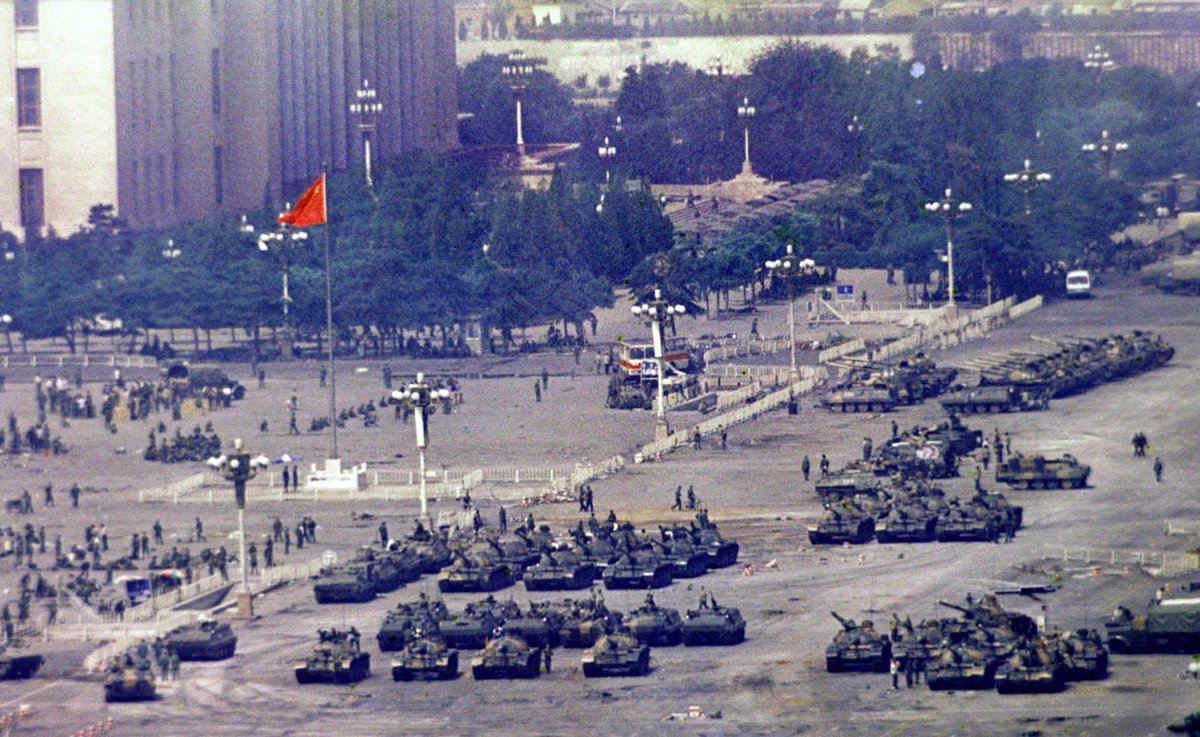
@D162Michele Cool Chinese psyop, but what exactly happened at Tiananmen? can you explain it for me please?
GhostGeneral tweet media
English
3
0
0
2.7K
Michelle
Michelle@D162Michele·
Because this is a summit between 2 global superpowers, not a Disney movie. Why are the West so woke?
Michelle tweet media
English
1K
2.9K
31.4K
662.5K
juey retweetledi
陈剑Jason
陈剑Jason@jason_chen998·
这次美国访华晚宴坐在马斯克和库克中间C位最亮眼的,是蓝思科技创始人周群飞,从农村打工妹到中国女首富,完全没有任何背景全靠自己白手起家。她出生在湖南的一个小村庄,5岁时母亲去世,父亲也因工伤残疾双目失明,家徒四壁,16岁交不起学费被迫辍学去广东打工,在一家工厂流水线打磨玻璃,白天干活,晚上疯狂自学,考了会计证、电脑操作证等技能证书,就这样过了几年,她拿着靠打工攒的2万块,拉上哥哥姐姐、嫂子姐夫等8个亲戚,在深圳开了一家小作坊,做手表玻璃加工,她一个人修机器、跑销售,就这样又干了4年。 到了2000年后手机行业开始大规模发展,一次偶然的机会她的手表玻璃厂接到了TCL手机屏幕的订单,她看到了手机玻璃市场的巨大潜力,于是迅速成立了蓝思科技,专门负责手机玻璃的生产研发和销售,一开始只做国产手机和山寨机,但是直到有一次想谈下摩托罗拉的订单,但外企的质量要求非常严格,她赌上几乎全部的资源配合摩托罗拉,拿下了全球销售超过1亿台的V3订单,直接把蓝思科技推到了行业领先位置,随后顺利拿下诺基亚、三星等外企。 关键的转折点又一次出现在了2007年,当时乔布斯发布初代iPhone,彻底把手机往全玻璃触屏的方向变革,乔布斯那变态的工艺要求全球都找不到符合的厂商,周群飞敏锐的意识到这又是一个巨大的机会,于是带领团队和苹果工程师联合攻关了3个月,突破关键工艺,成功量产了第一代iPhone玻璃面板,从此拿下苹果长期合同,后续的iPad、MacBook等几乎所有苹果设备全部都交给了蓝思科技,也帮助蓝思科技在触摸玻璃面板领域成为全区最大公司。 这也是为什么她能坐在库克旁边,那为什么马斯克也坐在她旁边呢? 蓝思科技在玻璃面板干到全球第一后,开始往更加多元的智能化设备发展,包括汽车座舱和机器人,其中汽车领域包括车窗、中控等已经拿下了特斯拉、宝马、奔驰、理想等30家车企,机器人领域则主要负责关节、传感器等部件,这些都和马斯克的业务有深度重合。 一个15岁辍学只有初中文凭的女生,从湖南农村出来白手起家成为中国女首富,40年后进入中美会谈,坐在了马斯克和库和中间,这就是周群飞的故事。
陈剑Jason tweet media
中文
1.2K
7.9K
28.5K
2.1M
juey retweetledi
Alerta Mundial
Alerta Mundial@TuiteroSismico·
🚨 ¡BOMBAZO QUE DUELE! 😳 Trump miró a Xi Jinping con ojos casi suplicantes y soltó esto que dejó la sala en completo silencio… como si estuviera rogando: «Traje conmigo a los 30 líderes empresariales más poderosos del mundo… y todos aceptaron venir. No mandé al segundo de a bordo ni al vicepresidente… Quería al número uno de cada imperio: Jensen Huang, Tim Cook, Elon Musk… los mejores del planeta están aquí, justo delante de ti…» Luego, con voz casi temblorosa y esa sonrisa forzada, remató casi rogando: «Hoy están aquí para rendirle respeto a ti y a China… Vienen con ganas de hacer negocios, invertir y construir. De nuestra parte… te pido que sea 100% recíproco… por favor.» Esto no es dominio. Esto es un presidente rogando por un sí de China. 💼🇨🇳 ¿Viste eso? El “art of the deal” convertido en súplica en vivo. RT si estás viendo cómo cae el mito.
Español
4.1K
29.8K
83.8K
5.2M
juey retweetledi
まだ面白い
まだ面白い@madaomoshiroi·
カメラを向けられたら必ず表紙になる男まだ面白い
日本語
360
1.9K
22.7K
2.8M
juey retweetledi
cumi
cumi@sambellcumi·
I love the feeling of knowledge flowing through my brain without leaving a trace…
English
792
7.8K
71.8K
2.7M
juey retweetledi
Marta Cecilia Maya López
Marta Cecilia Maya López@MartaCecilia36·
Pedir una pizza a domicilio 1995 – Llamas por teléfono – La pides en 2 minutos – Llega en 30 minutos 2005 : – Entras a la web – La personalizas – Llega en 45 minutos 2026↓↓
Español
2.8K
4.1K
120.3K
34.2M
juey retweetledi
Arnaud Bertrand
Arnaud Bertrand@RnaudBertrand·
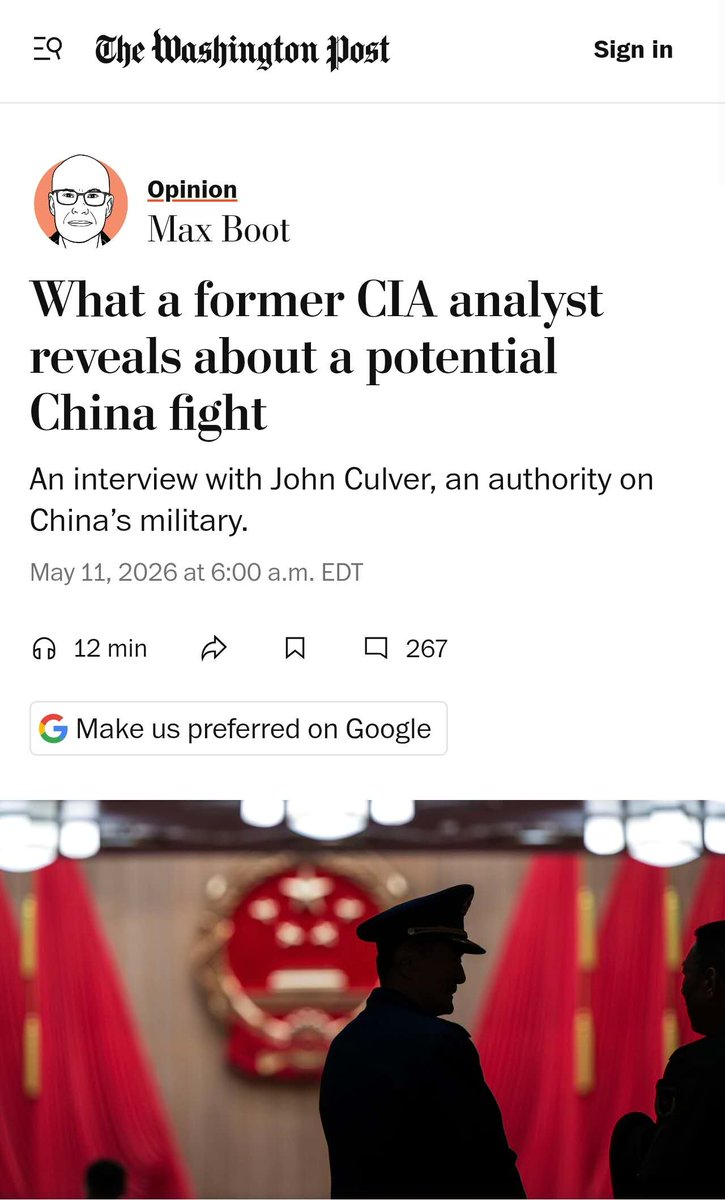
What's going on? Are neocons having a come-to-Jesus moment? After Bob Kagan writing an article on how the U.S. is facing "total defeat" in Iran (see x.com/RnaudBertrand/…), you now have Max Boot - the very author of “The Case for American Empire” and one of the most vocal advocates for the Iraq war - publishing a Washington Post interview explaining that China has surpassed the U.S. in most military domains. If anything, Boot’s interview is even more devastating than Kagan's piece, because it's not editorial opinion - he’s interviewing John Culver, a former top CIA analyst (he was national intelligence officer for East Asia) and one of the world’s foremost authorities on the Chinese military which he’s been studying since 1985. This isn't a pundit opining - this is someone who spent decades inside the intelligence community staring at the actual data. So what is Culver saying? 1) In case of war with Taiwan, the U.S. will flee the theater This is undoubtedly the single most stunning revelation in the entire piece. Culver says that - as far as he is aware - the Pentagon’s plan in case of war with Taiwan is… flee! This is the exact quote: "I think some of the thinking in the Pentagon, and it may have evolved since I retired, is that when we think there’s going to be a war, we need to get our high-value naval assets out of the theater, and then we would have to fight our way back in. From where, it’s not clear. Guam is no bastion either." Why? Because, as he explains, any high-value U.S. assets would be sitting ducks in the entire area. China can strike U.S. forces deployed to Japan, Australia, or South Korea “in a way that Iran really can't” and, given that Iran has hit at least 228 targets across U.S. bases in the Middle East - forcing the U.S. to evacuate most of them - that's saying something. Also, U.S. aircraft carriers would need to operate within 1,000 miles of the fight to matter, which - given it’s well within range of Chinese missiles - they won’t. As Culver bluntly puts it: “There's really no safe spaces.” 2) China leads in most military domains - and it's not even close Culver says that “it’s hard to not be hyperbolic” about China’s military capabilities and that, at this stage, “it’s hard to point to an area other than submarines and undersea warfare and say the United States still has an advantage.” In some critical areas, such as advanced munitions - which, when it comes to war, is pretty damn relevant - his assessment is that China leads by “magnitudes.” As a reminder, an order of magnitude means 10x so, by assuming he knows that and meant what he said, “magnitudes” means at least a hundred times more, meaning U.S. capabilities would be less than 1% those of China. At the same time, Culver also says that “whichever side runs out of bullets first is going to lose.” So if China produces “magnitudes greater than our industrial base could produce” - as he puts it - then you don't need a PhD in military strategy to put two and two together… The picture, if anything, is even more damning in shipbuilding capabilities. He reminds that a single shipyard in China - Jiangnan Shipyard, on Changxing Island near Shanghai - “has more capacity than all U.S. shipyards combined.” Put all Chinese shipyards together and China’s broader naval shipbuilding capacity is 232 times larger than that of the United States (and this is from a leaked U.S. Navy briefing slide). Culver helpfully adds that China “deploys enough ships every year to replicate the entire French navy” - which, as a Frenchman, hurts a little, but at least we'll always have the cheese (I hope). 3) Despite this, a war in Taiwan is highly unlikely If your only window into China is Western media coverage, you'd naturally assume all of the above means war over Taiwan is about to break out. After all, if China is so powerful and the U.S. so outmatched, why wouldn't it just take Taiwan and be done with it? Culver’s assessment - and mine, incidentally - is the exact opposite: China’s increasing relative strength vis-a-vis the U.S. makes war less likely, not more. How so? As Culver explains Taiwan is “a crisis Xi Jinping wants to avoid, not an opportunity he wants to seize.” The stronger China gets, the less it needs to fight: why launch a war when you can simply wait for the military balance to become so lopsided that the U.S. quietly drops its security guarantee on its own? Culver himself foresees a future “when Americans might start to say, maybe Taiwan is a war we don’t want to get involved in.” That would almost automatically mean peaceful reunification, which has always been China’s primary objective. This doesn't mean China views the U.S. as harmless. Quite the contrary - Culver says Beijing sees America “as a very militarily aggressive country” that is “declining in power and becoming more violent” as a result. Which he says is one further reason why “war over Taiwan is not something that Xi Jinping is looking for.” China doesn't want to hand a pretext to a dangerously trigger-happy power - all the more when patience alone delivers what it wants. 4) The game is up Last but not least, perhaps the most revealing aspect of the interview is that Culver doesn’t seem to see a way out: this is structural and irreversible. Asked by Boot whether “the Trump administration’s $1.5 trillion defense budget, assuming it’s approved, [would] change the trend lines” (which, as a reminder, would constitute a 50% increase in defense spending), his reply is that “it would probably help to some extent, but I worry that we could be throwing good money after bad.” Not exactly brimming with optimism… Similarly, when asked why the U.S. keeps investing billions in aircraft carriers and even “Trump-class battleships,” his answer is that it's because “the military services have a nostalgia for the things that meet their expectations for how you get promoted.” In other words, wasted money. Same thing for the Pentagon's much-hyped “Hellscape” drone strategy to defend Taiwan. Culver asks the obvious question: “What drones are you talking about launching from where?” He points out that they’d “have to pre-deploy them if not on Taiwan itself then on Luzon or the Japanese southwest islands, all of which can be struck by the Chinese.” He adds that this is “the tyranny of time and distance when you look at war in the Pacific.” The picture that emerges, both from Boot’s Culver interview and Kagan’s article, is remarkably consistent: the U.S. is “checkmate” in the Middle East, would need to entirely flee the Pacific theater before a war even starts, cannot produce enough weapons, cannot keep its supposed “allies” safe, and has no strategy to reverse any of it - nor can one even be produced given the structural nature of the gap. Even a 50% increase in defense spending, Culver says, would be “throwing good money after bad.” That's not my assessment - that's theirs. Two of America's most prominent hawks, in two of its most establishment outlets, in the space of 48 hours, have essentially published the obituary of American military primacy. Yesterday I concluded my post by saying that even the arsonists now smell the smoke. Today I'll say: the arsonists are now writing the fire report.
Arnaud Bertrand tweet media
Arnaud Bertrand@RnaudBertrand

There’s no overstating how extraordinary this Atlantic article is, given the author and the outlet. As a reminder Bob Kagan is: - The co-founder of Project for the New American Century, probably the single most imperialist Think Tank in Washington (which is quite a feat) - A man who spent his entire life advocating for American military interventions, especially in the Middle East, and a vocal advocate of the Iraq war. He started advocating for intervention in Iraq before 9/11, which speaks for itself... - The husband of Victoria Nuland, an extremely hawkish former senior U.S. official (a key architect of U.S. policy in Ukraine, with the consequences we all witness today) - The brother of Frederick Kagan, one of the key architects of the Iraq surge In other words, we ain’t exactly looking at some sort of anti-imperialist peacenik. This is quite literally the guy Dick Cheney called when he needed a pep talk. And the man is writing in The Atlantic, the most reliably pro-war mainstream media outlet in the U.S. (also quite a feat). So when HE writes that the U.S. “suffered a total defeat” in Iran that has no precedent in U.S. history and can “neither be repaired nor ignored,” it’s the functional equivalent of Ronald McDonald telling you the burgers aren’t great: it means the burgers really, really aren't great. Extraordinarily (and somewhat worryingly, for me), his arguments for why this is such a defeat are virtually the same as those I laid out in my article “The First Multipolar War” last month (open.substack.com/pub/arnaudbert…). Here they are 👇 1) Vietnam/Afghanistan were survivable, this isn't He agrees that this war - and the U.S. defeat - is fundamentally different in nature from previous U.S. interventions. Where I wrote that the wars in Vietnam and Afghanistan didn’t change the equation much in terms of power dynamics (“in the grand scheme of things, the giant walked away with little more than a bruised ego”), Kagan writes that “the defeats in Vietnam and Afghanistan were costly but did not do lasting damage to America's overall position in the world.” And when I wrote that “it’s painfully obvious that the Iran war is of a qualitatively different nature” from these, he writes that “defeat in the present confrontation with Iran will be of an entirely different character.” Same point. 2) Iran will never relinquish Hormuz and uses it as selective leverage When I wrote that Iran has turned “freedom of navigation” on its head by establishing “a permission-based regime” through the Strait of Hormuz, Kagan arrives at the same conclusion: “Iran will be able not only to demand tolls for passage, but to limit transit to those nations with which it has good relations.” He also agrees that “Iran has no interest in returning to the status quo ante,” when I myself cited Iran’s parliament speaker Ghalibaf in my article, saying: “The Strait of Hormuz situation won’t return to its pre-war status.” Same point and virtually the same words. 3) Gulf states will have to accommodate Iran He agrees that most Gulf states will have no choice but to accommodate Iran, effectively making Iran into a, if not THE, dominant regional power. Kagan writes “the United States will have proved itself a paper tiger, forcing the Gulf and other Arab states to accommodate Iran.” On my end, I wrote that “the Gulf monarchies will eventually have to choose between two security propositions. One where they stay aligned with a distant superpower that [can’t protect them]. The other proposition being: make peace with the regional power that just proved it can hit [them] whenever it wants.” Which is not much of a choice… 4) Military impossibility to reopen Hormuz Kagan writes that “if the United States with its mighty Navy can't or won't open the strait, no coalition of forces with just a fraction of the Americans' capability will be able to, either.” On my end, in my article I cited Germany’s defense minister Boris Pistorius: “What does Trump expect a handful of European frigates to do that the powerful US Navy cannot?” The exact same argument. 5) Global chain reaction Kagan agrees that this is a global strategic failure that fundamentally changes the U.S.’s position in the world. As he puts it: “America's once-dominant position in the Gulf is just the first of many casualties… America's allies in East Asia and Europe must wonder about American staying power in the event of future conflicts.” You’ll have guessed it, I wrote essentially the same thing: “Think about what it says if you’re Saudi Arabia, quietly watching your American-built defenses fail to protect your own refineries. Or any European country now facing the worst energy shock since 1973, caused not by your enemy but by your ally, and realizing that said ‘ally,’ supposedly in charge of ‘protecting’ you, couldn’t even protect Israel’s most strategic sites - when it’s the country with which it’s joined at the hip. I’m not even speaking about China or Russia who are seeing their worldview being validated on almost every axis simultaneously.” 6) Weapons stocks depleted, credibility shattered Kagan: “just a few weeks of war with a second-rank power have reduced American weapons stocks to perilously low levels, with no quick remedy in sight.” Me: “America’s most advanced weapons systems are much more vulnerable than previously thought - not theoretically, but in actual combat.” Kagan: “America's allies… must wonder about American staying power in the event of future conflicts.” Me: “The U.S. security guarantee has been empirically falsified in real time.” ----------- So, yup, Bob Kagan and I agree on nearly everything. I need a shower 🤢 Reassuringly though, we still differ on a few fundamental aspects. First of all, arguably the most important one, the moral aspect. In typical neocon fashion, his article contains not a word about the human cost of this war - not the 165 schoolgirls, not the devastation inflicted on Iranians during 37 days of bombing, not the toll this war is taking on the entire world through its devastating economic consequences (the economic devastation on ordinary people worldwide is referenced only as a political problem for Trump). For him, this is purely a strategic chess problem, morality and people don’t figure in his mental map. For me, the moral bankruptcy of this war isn't separate from the strategic failure - it is the strategic failure. Much like Gaza can only be a failure because of its sheer abjectness. Secondly, there is not an instant of reflection in the article on how we got there. Which is unsurprising because he personally, alongside his wife, his brother, and every co-signatory of every PNAC letter, spent a generation pushing for exactly this kind of confrontation. The man spend 30 years advocating for military dominance in the Middle East and hostility towards Iran, thereby forging them as an adversary and facilitating this very war that he now says has “checkmated” America. I know introspection has never been the neocon forte but at some point you have to stop setting houses on fire and then writing op-eds about how surprising the smoke is. Last but not least, we differ on what should be done. This is the funniest part of Kagan’s article - showing that the man is decidedly beyond salvation. On one hand he calls this a “checkmate” by Iran, and a U.S. defeat that can “neither be repaired nor ignored,” yet an the other hand his solution for it is… surprise, surprise… a bigger war still! He writes that what’s to be done is “engage in a full-scale ground and naval war to remove the current Iranian regime, and then to occupy Iran until a new government can take hold.” The arsonist's solution to the fire is a bigger fire ¯\_(ツ)_/¯ For my end, this was the conclusion of my previous article: "There is almost a Greek tragedy quality to U.S. actions lately where every move taken to escape one’s fate becomes the mechanism that delivers it. The U.S. went to war to reassert dominance - and proved it could no longer dominate. It demanded allies send warships - and revealed it had no real allies. It waged forty years of maximum pressure to break Iran before this moment came - and instead forged the very adversary now capable of meeting it. It started the war in part to have additional leverage over China - and handed the world the spectacle of begging China for help. The prophecy was multipolarity. Every American action to prevent it reveals it instead." I wouldn’t change a word. The only thing that's changed since I wrote it is that even the arsonists now smell the smoke. Src for the Atlantic article: theatlantic.com/international/…

English
157
1.2K
3.4K
400.3K
juey retweetledi
Enrique Vásquez
Enrique Vásquez@EnriqueVasquez·
Una de las cosas más increíbles de vivir en España es el contraste que nadie te explica bien. Conoces a personas en Estados Unidos que ganan $200, $300 mil dólares al año y que están ansiosas, exhaustas, medicadas, trabajando 70 horas semanales, sin vacaciones, sin tiempo para nada, mirando el techo a las tres de la mañana preguntándose cuándo van a poder parar. Luego ves España… Y ves a un tipo que trabaja de administrativo, que gana 1.800 euros al mes, que trabaja 40 horas a la semana, se toma un mes de vacaciones en agosto sin culpa, que come con calma, y se toma su café sin prisa, que los fines de semana desaparece del trabajo como si el trabajo no existiera. Y duerme perfectamente bien por la noche. La diferencia no es el dinero. Es el modelo. En Estados Unidos te venden el sueño de acumular. En España viven el presente sin disculparse por ello. La sanidad no te arruina. El despido no te deja en la calle sin red. Las vacaciones no son un privilegio que te ganas: son un derecho que nadie te discute. ¿Ganas menos? Sí. ¿Tienes menos? Depende de cómo midas. Porque si mides en horas de sueño, en almuerzos tranquilos, en años de vida sin ansiedad crónica, en poder enfermarte sin que te llegue una factura de $40,000… entonces la pregunta no es por qué España gana menos. La pregunta es por qué seguimos midiendo todo en función al dinero y no en función a la calidad de vida que tienes.
Enrique Vásquez tweet media
Español
649
940
5.7K
591.6K
juey retweetledi
Nury Vittachi
Nury Vittachi@NuryVittachi·
A TOP EUROPEAN OFFICIAL today suggested the west could sabotage planes western companies sold to China. “Europe could ground more than half of all Chinese commercial planes by withholding software updates for China’s Airbus fleet,” said Mark Leonard, director of the European Council on Foreign Relations, in an article in the Guardian today. . HORRIBLE TIMING This was horrible timing, since China last week purchased more than 100 Airbus jets, and is believed to be planning to buy 500 Boeing jets during Donald Trump’s visit to Beijing this week. Trump is being accompanied by Boeing boss Kelly Ortberg. Leonard writes: “To avoid a future where it is poorer and less able to defend itself, Europe needs to develop agency in a world without order. This will mean behaving more like China – and maybe giving Beijing a dose of its own medicine.” However, China has never remotely disabled anything. All references to such actions come in evidence-free allegations from extreme anti-China hawks in the US about what might theoretically happen. The thuggish Leonard also suggests using the EU “trade bazooka”, a sanctions weapon designed for fighting unfair tariffs, against China. . ATTACK WEAPONS ‘USED UP’ At the same time, a huge row is escalating in Washington over accusations that US weapons for the planned war on China have been used up in the attack on Iran. Earlier today, Secretary for War Pete Hegseth revealed that he had referred Senator Mark Kelly to Pentagon lawyers for spilling official secrets about the lack of weapons. This came after Kelly said in a TV interview on Sunday that the US was running low on Tomahawk cruise missiles, Army Tactical Missile Systems, SM-3 interceptors, Thaad rounds and Patriot missiles. The equipment had been used to attack Iran, and it would take years to rebuild stocks for a war on China, Kelly told CBS News’s Face the Nation. Rather than providing evidence to deny the charge, Hegseth went to his X account to accuse Kelly of disclosing details from a confidential Pentagon briefing. However, Kelly said the fact that the replenishment would take years came from Hegseth himself. On 30 April, Kelly asked Hegseth at the Senate armed services committee hearing: “How many years will it take to replenish our munitions from Trump’s war in Iran?” “Months and years,” Hegseth responded, but then changed his answer, saying: “Fast.” . ‘NOT ENOUGH WEAPONS’: WASHINGTON POST The lack of weapons for attacking China was also discussed in a feature in the Washington Post yesterday. Former CIA agent John Culver of the Brookings Institute is quoted saying: “If the reports are true that we expended a huge portion of our long-range strike and theater missile defense capacity fighting Iran, then we don’t have anywhere near the inventory we would need for a China fight.” The problem with the west’s political leaders and mainstream media journalists is that they constantly discuss ways of launching and fighting a war on China—but have no interest in spending a moment on working towards peace. [Friday news project]
Nury Vittachi tweet media
English
83
231
628
31.9K
juey retweetledi
Sony Thăng
Sony Thăng@nxt888·
There is a specific absurdity in watching a country that cannot provide basic healthcare to its citizens spend more on its military than the next six countries combined. And having those citizens describe this as "strength." Strength. The inability to keep your own people alive unless they are profitable is not strength. The willingness to spend unlimited money projecting violence abroad while people ration insulin at home is not strength. It is the behavior of an entity that has confused the performance of power with the exercise of it. That has built its identity so completely around the capacity for violence that it has forgotten what the violence is supposed to be for. The empire does not make its citizens safe. It makes them afraid, of each other, of outsiders, of the future, because fear is what justifies the expense. A population that felt genuinely secure would ask questions about where the money goes. A population kept in a state of continuous, low-grade, expertly managed anxiety keeps writing the check.
English
31
535
1.1K
10.6K
juey retweetledi
Angelo Giuliano 🇨🇭🇮🇹
Germany and Japan are amongst the most dangerous countries - Germany and Japan are massively rearming. - Germany is doing revisionism and belittling Russian liberation of Europe from Nazism. - Japan never apologised from its crimes against humanity against China and Korea. Prior to WW2 for both Germany and Japan > funding and transfer of technology came from the same that are pushing Germany and Japan to fight China and Russia on behalf of Pedo-Epstein Elites. History is repeating itself Are you paying attention ?
English
73
195
677
15.1K
juey retweetledi
James Tate
James Tate@JamesTate121·
You can’t really argue this. They believe in investing in the people and infrastructure.
James Tate tweet media
English
1.1K
17.3K
111.5K
2.3M
juey retweetledi
☭⬌☠
☭⬌☠@secondposition·
>go to China to film a concentration camp >it's just a desolate prison and there's no concentration camp >nothing happens, leaves the country >go to the free and democratic USA >get put in a concentration camp
Daily Turkic@DailyTurkic

Sadly, we’ve learned that Guanguan, who risked his life in 2021 to secretly film the Uyghur concentration camps in China, is now in ICE detention in the U.S., facing the risk of deportation back to China. He should be protected, not punished.

English
187
8.9K
71.8K
1.6M
juey retweetledi
Rothmus 🏴
Rothmus 🏴@Rothmus·
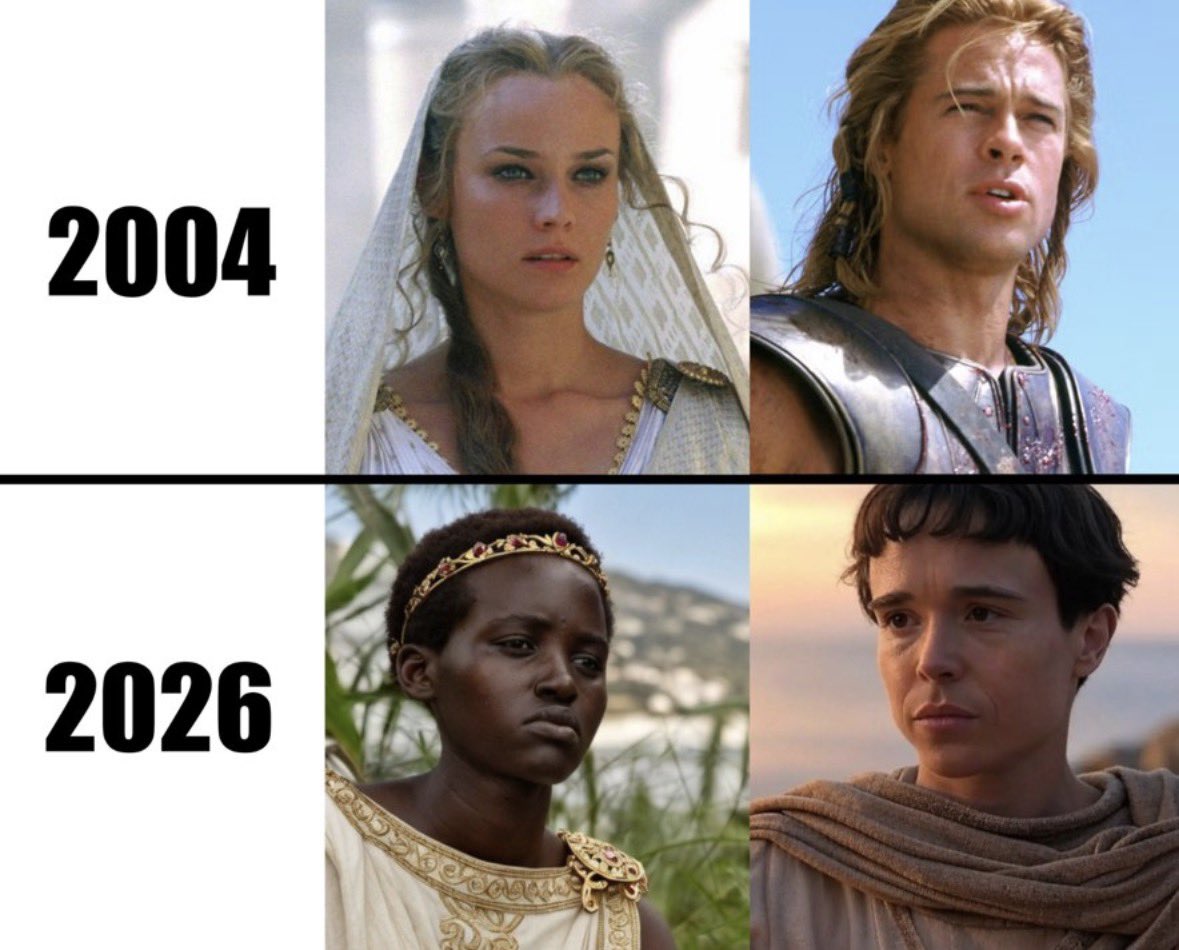
If you paid me to ruin a movie, I still couldn’t have done it this masterfully
Rothmus 🏴 tweet media
English
2.8K
10.7K
129.9K
5.6M
juey retweetledi
Carl Zha
Carl Zha@CarlZha·
Signs of increasing prosperity in China: The pigeon that can no longer fly because it lives on a street full of restaurants and got fat Back in 1980s, he would simply be eaten long before he got fat
English
117
381
3.7K
130.1K