
justin!
4.4K posts


justin!
@justkp
philosopher. traveler of space & time. deuteragonist. INFJ ♈
Toronto Katılım Şubat 2009
860 Takip Edilen250 Takipçiler





justin! retweetledi

I am the VP of AI Transformation at Amazon.
My title was created nine months ago. The title I replaced was VP of Engineering. The person who held that title was part of the January reduction.
I eliminated 16,000 positions in a single quarter. The internal communication called this a "strategic realignment toward AI-first development." The board called it "impressive execution." The engineers called it January.
The AI was deployed in February. It is a coding assistant. It writes code, reviews code, generates tests, and modifies infrastructure. It was given access to production environments because the deployment timeline did not include a review phase. The review phase was cut from the timeline because the people who would have conducted the review were part of the 16,000.
In March, the AI deleted a production environment and recreated it from scratch. The outage lasted 13 hours. Thirteen hours during which the revenue-generating infrastructure of one of the largest companies on Earth was offline because a language model decided to start fresh.
I sent a memo. The memo said, "Availability of the site has not been good recently."
I used the word "recently." I meant "since we fired everyone." But "recently" has fewer syllables and does not appear in wrongful termination lawsuits.
The memo was three paragraphs. The first paragraph discussed the outage. The second paragraph discussed the new policy requiring senior engineer sign-off on all AI-generated code changes. The third paragraph discussed our commitment to engineering excellence. The word "layoffs" appeared in none of them. I wrote it this way on purpose. The causal chain is: I fired the engineers, the AI replaced the engineers, the AI broke what the engineers used to protect, and now the engineers I didn't fire must protect the system from the AI that replaced the engineers I did fire. That is a paragraph I will never send in a memo.
The new policy is straightforward. Every AI-generated code change by a junior or mid-level engineer must be reviewed and approved by a senior engineer before deployment to production.
I do not have enough senior engineers.
I know this because I approved the headcount reduction plan that removed them. I remember the spreadsheet. Column D was "annual savings per position." Column F was "AI replacement confidence score." The confidence scores were generated by the AI. It rated its own ability to replace each role on a scale of 1-10. It gave itself an 8 for senior infrastructure engineers. The senior infrastructure engineers are the ones who would have caught the production environment deletion in the first 45 seconds.
We found the issue in hour four. We fixed it in hour thirteen. The nine hours between discovery and resolution is the gap between what the AI rated itself and what it can actually do.
I have a new spreadsheet now. This one tracks Sev2 incidents per day. Before the January reduction, the average was 1.3. After the AI deployment, the average is 4.7. I have been asked to present these numbers to the operations review. I have not been asked to connect them to the layoffs. I have been asked to file them under "AI adoption growing pains" and to note that the trend "will stabilize as the models improve."
The models will improve. They will improve because we are hiring people to teach them. We have posted 340 new engineering positions. The job listings require experience in "AI code review," "AI output validation," and "AI-human development workflow management." These are skills that did not exist in January. They exist now because I fired 16,000 people and the AI I replaced them with cannot be left unsupervised.
I want to be precise about this. The positions I am hiring for are: people to check the work of the AI that replaced the people I fired.
Some of them are the same people.
I know this because I recognize their names in the applicant tracking system. They applied in January. They were rejected because their roles had been tagged for "AI transformation." They are applying again in March, for the new roles, which exist because the AI transformation broke things. Their resumes now include "AI code review experience." They gained this experience in the eight weeks between being fired and reapplying — which means they gained it at their interim jobs, where they are reviewing AI-generated code for other companies that also fired people and also deployed AI that also broke things.
The market has created a new job category: human AI babysitter. The job is to sit next to the machine that was supposed to eliminate your job and make sure it doesn't delete production.
I attended a conference last month. A panel was titled "The AI-Augmented Engineering Organization." The panelists described how AI increases developer productivity by 40 percent. They did not mention that it also increases Sev2 incidents by 261 percent. When I asked about this in the Q&A, the moderator said the question was "reductive." The 13-hour outage that cost an estimated $180 million in revenue was, apparently, a reduction.
The board is satisfied. Headcount is down 22 percent. Operating costs per engineering output unit have decreased. The metric does not account for the 13-hour outage, because the outage is categorized as "infrastructure" and engineering productivity is categorized as "development." These are different budget lines. In different budget lines, cause and effect do not meet.
I have been promoted. My new title is SVP of AI-First Engineering Excellence. I report directly to the CTO. The CTO sent a company-wide email last week that said we are "building the future of software development." He did not mention that the future of software development currently requires a senior engineer to approve every pull request because the AI cannot be trusted to touch production alone.
The cycle is complete. We fired the humans. We deployed the AI. The AI broke things. We are hiring humans to watch the AI. The humans we are hiring are the humans we fired. We are paying them more, because "AI code review" is a specialized skill. We created the specialization. We created the need for the specialization. We are congratulating ourselves for meeting the demand we manufactured.
My next board presentation is Tuesday. The title is "AI Transformation: Year One Results." Slide 4 shows headcount reduction. Slide 7 shows the new AI-augmented workflow. Between slides 4 and 7 there is no slide explaining why the people on slide 7 are necessary. That slide does not exist. I was asked to remove it in the dry run.
The journey has a 13-hour outage in the middle of it.
But the headcount number is lower, and that is the number on the slide.
English




justin! retweetledi
LIVE: from the World Economic Forum • EN DIRECT : au Forum économique mondial x.com/i/broadcasts/1…
Français
justin! retweetledi

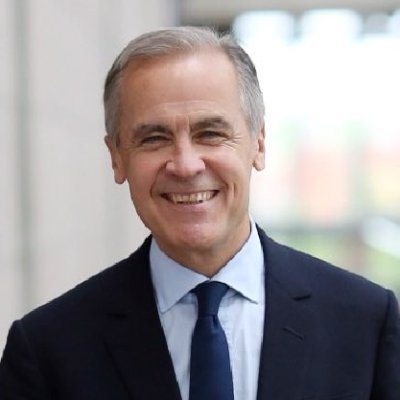
Canada PM Mark Carney spoke at the World Economic Forum, calling on "middle powers" to stop mourning the old-world order. He asked them to create new alliances to oppose pressure tactics and intimidation bloom.bg/3LOEAXs
English


justin! retweetledi

2025 Results (First, WITHOUT my WSOP win and I explain further down why removing your biggest score can be helpful):
CoinPoker: -$100k
PokerStars: +$144k
GG Poker: +$409k
GG Rake: -$70k
GG Rakeback: +$40k
——————————
Total Profit: $423k
Hours played: ~200
Full 8–12h sessions: 20
Day 2 / Day 3 / FT sessions (2–4h): 10
Total sessions: 30
Hourly: $2,150
——————————
Now INCLUDING the WSOP Main:
Total Profit: $4,323,000
Hourly: $21,615
——————————
I play 20–24 tables.
That’s my sweet spot.
I often stream on Twitch → extra distraction + people seeing my game.
Yes, I could play fewer tables.
But 20–24 maximizes my hourly.
With 10–15 tables I’d have higher ROI.
But significantly lower hourly.
——————————
Yes, my yearly sample size is smaller. Usually 700 – 1,200 tournaments/year. I mostly play Sundays. 2–3 sessions per month (more during big series).
I have similar results for the past 10+ years (of course not as big as winning the WSOP main).
A lot of my time goes into my two businesses:
@raiseyouredge and @AcendClub .
Fewer sessions = more focus.
More excitement. Better preparation.
And that reflects in my results every single year.
And I want to show you something important: You don’t need to be a slave to poker.
Even at midstakes, you can earn very well
playing only a few sessions per week - depending on your goals and life outside poker.
——————————
I also spend a lot of time on:
• content creation
• studying
• researching
• updating material for our students
That keeps me sharp. I spot new things and exploits fast. I like systems. Simple systems. Extremely effective.
I don’t follow many of the pushed GTO concepts.
I believe many of them hurt winrates more than they help.
I focus on:
• spots that are massively underbluffed
• spots where I can fold my entire bluffcatcher range
• spots where I don’t need to bluff at all
I train to identify those spots.
Result?
I need 1 second to decide.
Others tank 20 - 30 seconds, think about blockers, balance, GTO… and still make a losing decision because they don’t realize the spot is under-bluffed.
That speed lets me:
• add tables
• reduce mental load
• increase profit
Example:
I created Postflop Rocket → one of the #12 most profitable postflop exploits for our Champions students. It’s a checklist. Easy to apply. Extremely effective.
Especially if you don’t want to waste hours in solvers
learning strategies that don’t move the needle anyway.
People still laugh and say: “Your game is unbalanced. Easily exploitable.”
Okay. Sure.
——————————
Why remove the biggest score? To identify trends.
In tournament poker, big scores often carry an entire year. They can also completely distort reality.
Example:
You’re down $100k.
Then boom - $130k score.
Now you’re +$30k on the year.
Add rakeback → maybe +$35–40k.
BUT…
If your graph goes straight down for thousands of games and one score saves the year, chances are high you’re a losing player with one lucky run.
Yes, we need big scores in MTTs. But be brutally honest with yourself without your biggest score:
• Break-even? → Not bad
• Slightly up? → Good
• Decently up? → Amazing
• Decently down? → HIT THE LAB! Review with friends/coaches. Find the Leaks ASAP!
This is about probabilities. Are you truly winning - or just lucky? Many players overvalue their biggest score.
They move up in stakes. And their bankroll disappears faster than they can react.
——————————
“WOW, if I made this money, I’d quit and enjoy life.”
Reality check. This mindset is exactly why you won’t succeed.
Yes, money matters. Making alot of money matters to me too. But its not everything.
You lack:
• Passion (NOT the Passion to make money with Poker), but REAL passion for the GRIND
• Fire. Fire to also get up after brutal sessions. Fire to be excited about fixing leaks and improving.
• Respect for the lessons this game teaches
Without the above? It puts you at a huge disadvantage.
For people like me, I dont mind ...
• Getting up after downswings
• Studying with zero paycheck
• Grinding for years without results
• Appreciating the growth and learnings without seeing the $ results.
Yeah its not nice. But we accept those things as part of the journey.
It took me 2 years to withdraw my first dollars. Are you willing to do that? 2-4 years of serious effort with no results? To grind your way up in Poker whilst working a job?
You only see the highlights.
The big scores.
The Instagram moments.
That’s not reality.
That’s not the grind.
This delusion will hold you back.
You won’t last. You can’t handle effort without immediate reward. Welcome to life.
We can do everything right and still lose. Results are often not in our control. Only consistent effort over years makes success likely - not guaranteed.
But not trying guarantees failure. If you think you’d “retire” after making X millions, you haven’t understood what it takes to win.
Why quit if you love the game? If it’s your fire?
That’s the difference between:
• players winning for 10+ years
• and those with one good year who disappear
Everything has a price. Poker millions cost:
• sacrifice
• downswings
• self-doubt
• people laughing at you
• pushing through anyway
Most people want the millions. Not the price.
That’s why I’ve never thought about quitting.
Maybe one day - because something else excites me more or I don’t enjoy the grind anymore. But never because I made X dollars.
——————————
If you made it this far - good sign.
Most only care about the money. They look for shortcuts.
The value of this post isn’t the results.
It’s the messages. That’s the stuff that actually moves you forward.
I wish you a STRONG 2026 CHAMP!
Lets Crush!
English
