
Sabitlenmiş Tweet
Johnson Ning
43.1K posts

Johnson Ning
@jzningy
Member of #TeamReality b4 there was a #TeamReality and b4 hashtags were no longer "in".
Progreso, Yucatán MX Katılım Mayıs 2009
748 Takip Edilen1.3K Takipçiler
Johnson Ning retweetledi

Westerners, please familiarise yourself with the Persian term 'aghazadeh'.
Why? Because they live all around you.
Aghazadehs are the children of islamic regime figures, mullahs, IRGC commanders and so on. They exploit stolen Iranian wealth and connections to live in Western luxury.
They obtain Western passports, properties, assets and even businesses. Many of them live mostly secular and Western lifestyles (while secretly supporting fanatical shia islam). Many of them are degenerates, partygoers and sex pests. Meanwhile, their parents murder and torture Iranians on even the accusation of living the way their own children do.
Aghazadehs exploit Western culture and relaxed immigration systems to remove themselves from the hellscape their parents created.
Be weary of the regime offspring around you. Taqqiyeh (islamic gaslighting) allows them to feign harmlessness, but they are a profound danger to the West.

English
Johnson Ning retweetledi
Johnson Ning retweetledi

Armageddon awaits the Senate GOP if we don’t get the SAVE America Act passed into law
Let’s freaking go!
Alex Avetoom@AlexAv2m
McLaughlin poll released today shows 1 in 8 would-be GOP voters stay home in the midterms in ME, GA and NC. That same drop in 2024 loses Trump GA and NC. Same drop in 2022 loses GOP the NC Senate race. Full story at link below: shorturl.at/m1K8H
English
Johnson Ning retweetledi

🚨🇬🇧IRELAND IN TOTAL SHUTDOWN – 200,000 PEOPLE MARCH ON PARLIAMENT AS GOVERNMENT COLLAPSE FEARS GROW 📷
Ireland is entering one of the most intense moments in its modern history.
Day after day, streets have been blocked, transport routes paralyzed, and tensions pushed to the breaking point as a nationwide protest movement continues to grow across the country.
What started as anger over rising fuel costs has now escalated into something far bigger — with organizers calling for mass mobilization in the capital and warning that this could become a defining political showdown.
Reports of massive crowds, disrupted supply chains, and heightened security responses have fueled fears that the situation is moving beyond control, as pressure mounts on the government from all directions.
Some say this is just the beginning… others believe Ireland is standing at a turning point that could reshape its political future entirely.

English
Johnson Ning retweetledi

Emirates executive Patrick Brannelly in new interview on why they adopted @Starlink:
"The legacy systems weren’t working. No matter how much money we threw at them, passengers still complained, and it was impossible technically for everybody that wanted to connect to connect. Then Starlink came along saying, ‘We guarantee it, it will work.’ With a very pragmatic technical viewpoint, insisting on XWAPs, to connect 100%, and to install more than one antenna to handle demand and for redundancy. It was like for the first time, talking to people that actually understood how the internet works in a highly dense environment on an aircraft.
It seemed our legacy connectivity industry didn’t really understand the core technologies needed to deliver customer connectivity happiness. But Starlink absolutely understood it.
Now, in addition, the big fundamental shift from the first generation of Starlink was the evolution of satellite-to-satellite laser connectivity. So, if you’re a middle of the ocean, where you’ve got nowhere to ground the traffic, Starlink could just pass the traffic through adjacent satellites until there’s one over a ground station. That worked much better than I think anybody had imagined."
Emirates has already started to install Starlink on its entire fleet of ~232 aircraft, with full completion expected by mid-2027. Customers onboard with Starlink are already seeing 10-20X internet speed improvements.
(full SatelliteToday interview linked below)

English
Johnson Ning retweetledi

I have the worst news...
Sadly, 2 young children who were riding their bikes have passed away after being hit at 90mph by a drunk, illegal alien with a previous DUI, Eri Roblero-Perez.
The victim's names are 12-year-old Dereon Robins and 9-year-old Mikhail'Lee Smith.
Eri has previously been charged with alcohol-related offenses and driving without a license, but was never deported.
Horrifyingly, the mother of one of the boys witnessed the whole thing and desperately tried to save both boys, performing CPR until EMS arrived, but neither boy survived.
Please pray for the families of these young boys.


English
Johnson Ning retweetledi

Grok
X Freeze@XFreeze
Grok-4.20 just took the #1 spot in the world for Medicine & Healthcare on Text Arena Grok is already saving lives by identifying critical conditions that human doctors miss. There have been many real cases where Grok saved lives ❤️ Grok is officially outperforming every other model on the leaderboard, completely crushing Claude Opus 4.6, Gemini 3.1 Pro, and all other competitors This is massive. Healthcare is one of the most important fields where humanity needs help, and right now, Grok does it best
English
Johnson Ning retweetledi

I do want to thank TPUSA for how incredibly responsive and supportive they’ve been since Saturday.
Every single high level executive at TPUSA (including Erika) has reached out to me and ensured that every single aspect of this assault is taken care of.
I’ve never asked for security when conducting point-and-shoot journalism, because I’ve always had some semblance of hope that I still live in a safe country. However, after Saturday TPUSA ensured that I will have new security protocols moving forward due to the violent nature of the left-wing.
Thank you to everyone who has supported me as well and reached out these last few days. I appreciate y’all and could not be more grateful.
English
Johnson Ning retweetledi

JUST IN: More than 17,000 troops will take part in largest-ever military drills with U.S., Philippines & other nations amid growing China threats.
English
Johnson Ning retweetledi

🚨 NEW: Zohran Mamdani's first "FREE" grocery store is already BURNING UP the budget, and it's going to take a YEAR to open
SHOCKER! 🤣
Mamdani budgeted $70 million for FIVE groceries stores, but this first grocery store ALONE will cost $30 MILLION
Communism doesn't work!
English
Johnson Ning retweetledi

Eyes on 👀
Hegseth just hosted Indonesian counterpart and announced a “Major Defense Cooperation Partnership”.
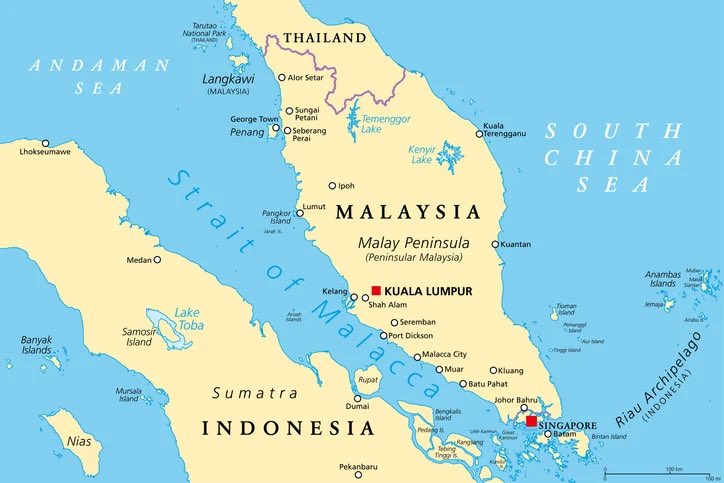
The Strait of Hormuz is 2nd highest volume oil chokepoint on Earth.
What’s the 1st? The Strait of Malacca, INDONESIA (80% of China’s oil imports pass through here).
Global oil shipping chokepoints are being secured by the US MIL and their partners. Trump is securing the board!
It’s happening.
Secretary of War Pete Hegseth@SecWar
It was an honor to host Indonesian Defense Minister @sjafriesjams at the Pentagon today. I was proud to announce that we are elevating our relationship to a Major Defense Cooperation Partnership, in recognition of the strength and potential of our bilateral defense ties.
English
Johnson Ning retweetledi
Johnson Ning retweetledi

I'm not dropping this.
Everything Trump has done was done through Executive Orders.
Everything will revert back when a Democrat gets into office.
For permanent change, everything must be made into a LAW through Congress.
Terminate the filibuster before it's too late.

English
Johnson Ning retweetledi

🚨 The Islamic Republic caught trafficking over 100kg of narcotics!
Three individuals were arrested moving Iranian drugs through Bahrain in a shipment with massive street value.
The Islamic Republic is one of the world’s largest drug traffickers, pushing opium, heroin, and meth across borders to fund terrorism and proxy operations.

English
Johnson Ning retweetledi
🚨 JUST IN: John Thune says he’s CIRCUMVENTING Democrats, and moving forward with funding both ICE and Border Patrol for the REST of President Trump’s term
This is a GREAT move.
If only he was this hellbent on getting the SAVE America Act through.
English
Johnson Ning retweetledi

Lebanese TV Host Walid Abboud to Hezbollah:
“Leave us. And take your weapons, your drones, your rockets, your mouthpieces, your flags, your Supreme Leader, your Iran and your Resistance with you.”
English
Johnson Ning retweetledi

CRAZY FOOTAGE! Israeli security forces find SIXTY Palestinians hiding INSIDE GARBAGE TRUCK attempting to infiltrate into Israel.
Driver detained for questioning; suspects taken into custody by police and IDF
English
Johnson Ning retweetledi

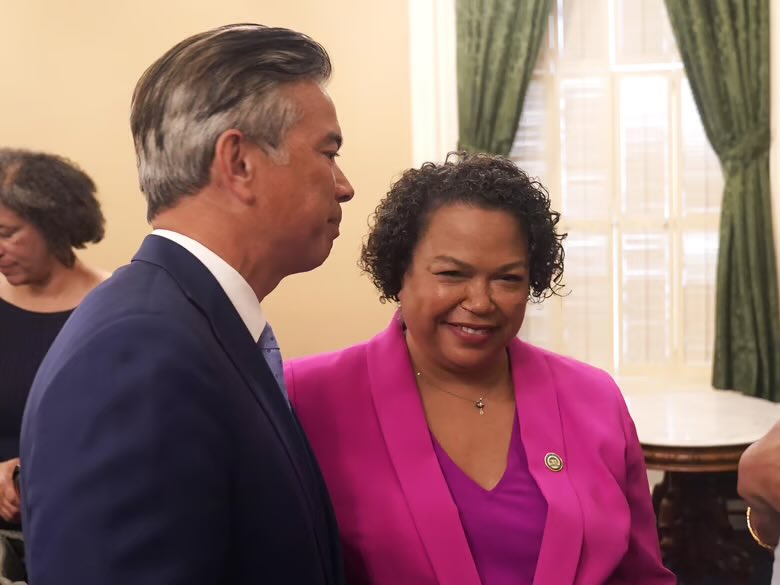
UPDATE: The legislator who proposed this bill is Mia Bonta, the wife of Attorney General Rob Bonta.
The Attorney General of California's wife is trying to silence me and other journalists who are exposing fraud.
Are your donors mad they are being exposed?
English
Johnson Ning retweetledi
What happened to all the Tesla killers that legacy press and hedge fund short sellers predicted were coming? 🤔
Captain Eli@TheCaptainEli
Tesla alone sold 117,300 EVs in the US — more than ALL other EV makers combined (99,099). GM + Hyundai + Toyota + Rivian + Ford + Lucid + BMW + VW + everyone else… still couldn’t beat Tesla’s single-quarter numbers. Tesla outsold the entire rest of the industry by over 18,000 vehicles.
English
Johnson Ning retweetledi

Two years ago, Alexander "Xander" Kazanowski opened a small antique shop in Chicago.
Trans activists doxxed him and protested his business over his "wrongthink" social media posts. The store eventually closed.
Just weeks ago, while expecting his second child and raising a young daughter, he was bludgeoned to death outside a bar. Police are still searching for four suspects.
Another young father gone in a Democrat-run city where crime festers and certain "opinions" get you targeted.
His kids will grow up without him.
Chicago deserves better. When does accountability start?
English