Karolina Urbanska

4.9K posts

Karolina Urbanska banner
Karolina Urbanska

Karolina Urbanska

@karo_urb

Senior People Scientist, Analytics @cultureamp doing all things applied psychology • #rstats • ex-academic

Sheffield, England Katılım Mayıs 2015
1.7K Takip Edilen2.1K Takipçiler
Sabitlenmiş Tweet
Karolina Urbanska
Karolina Urbanska@karo_urb·
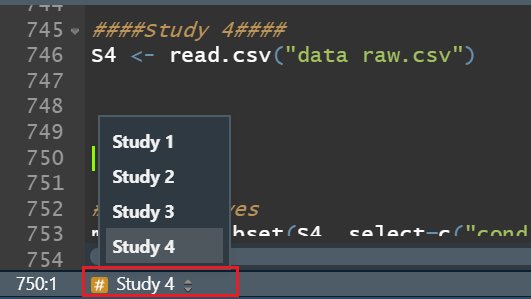
I was today years old when I realised that by using four hashes at the start and at the end of the line you can create code sections. Forever gone are the days of frantic scrolling #rstats
Karolina Urbanska tweet media
English
71
254
2.1K
0
Karolina Urbanska retweetledi
Ian Hussey
Ian Hussey@ianhussey·
I’m so excited to finally get to talk about this publicly! The Swiss @snsf_ch have awarded us $285k to check ~100 important published articles for errors, to foster a culture of error checking & acceptance. Fewer errors = bonus $ to authors More errors = bonus $ to reviewers.
ERROR@error_reviews

Error checking is an important service to science, but it doesn't pay the bills. But what if it did? Introducing ERROR, a bug bounty program for science to systematically detect and report errors in academic publications error.reviews


English
4
27
114
19.7K
Dr Andrew McNeill
Dr Andrew McNeill@andrewrmcneill·
Excited to be starting as lecturer today at @QUBPsych . I finished my PhD here over 10 years ago and it's great to be back to be part of the department.
Dr Andrew McNeill tweet media
English
6
0
39
1.3K
Karolina Urbanska retweetledi
John Burn-Murdoch
John Burn-Murdoch@jburnmurdoch·
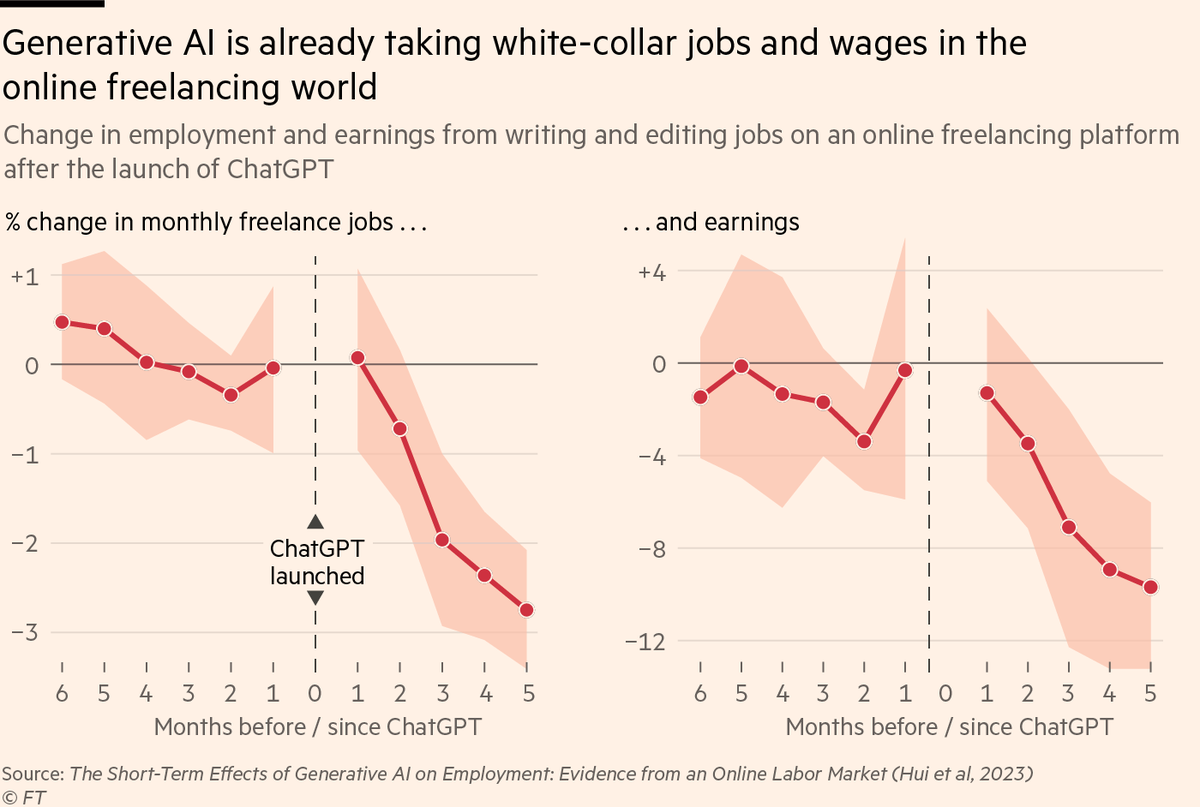
NEW: Generative AI is already taking white collar jobs An ingenious study by @xianghui90 @oren_reshef @Zhou_Yu_AI looked at what happened on a huge online freelancing platform after ChatGPT launched last year. The answer? Freelancers got fewer jobs, and earned much less
John Burn-Murdoch tweet media
English
132
1.9K
5.7K
2.3M
Karolina Urbanska retweetledi
John Burn-Murdoch
John Burn-Murdoch@jburnmurdoch·
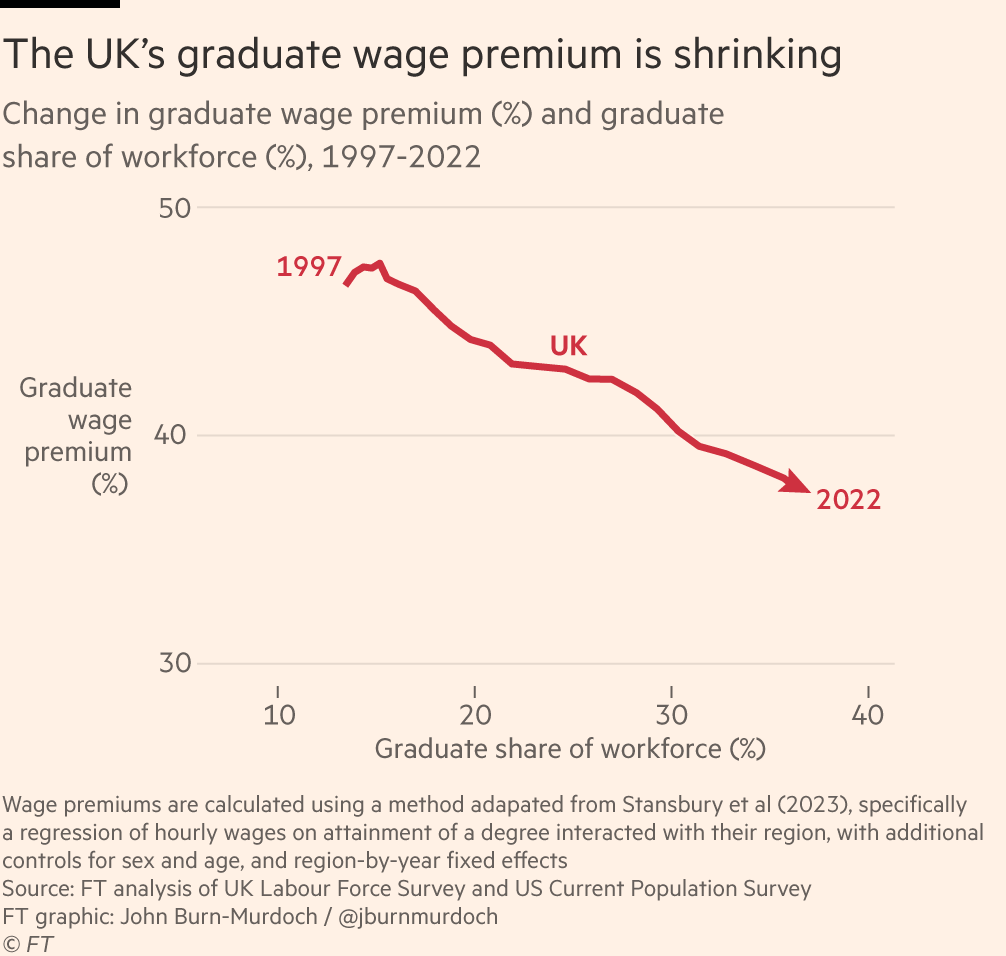
NEW: we need to talk about UK graduate wages, and the idea that Britain sends too many people to university. American readers should stick around for the UK/US comparisons 👀 Let’s start with this: the UK graduate wage premium has fallen substantially over the last 25 years
John Burn-Murdoch tweet media
English
285
2.5K
9.8K
4.1M
Karolina Urbanska
Karolina Urbanska@karo_urb·
I’m looking for examples of behavioural assessment tools from across disciplines including health, clinical, and environmental behaviour fields. Self-report, observational, anything goes. I’d like to learn more about recent advances in how behaviour is measured and assessed
English
0
1
1
316
Karolina Urbanska retweetledi
Joe Henrich
Joe Henrich@JoHenrich·
Is GPT psychologically WEIRD? Using the World Values Survey and other psych measures, we seat GPT within a global perspective. The culturally more distant a place is from the US, the lower the correlation with GPT @MohammadAtari90 @blasi_lang @DorsaAmir
Joe Henrich tweet media
English
41
418
1.4K
307.5K
Karolina Urbanska retweetledi
Crémieux
Crémieux@cremieuxrecueil·
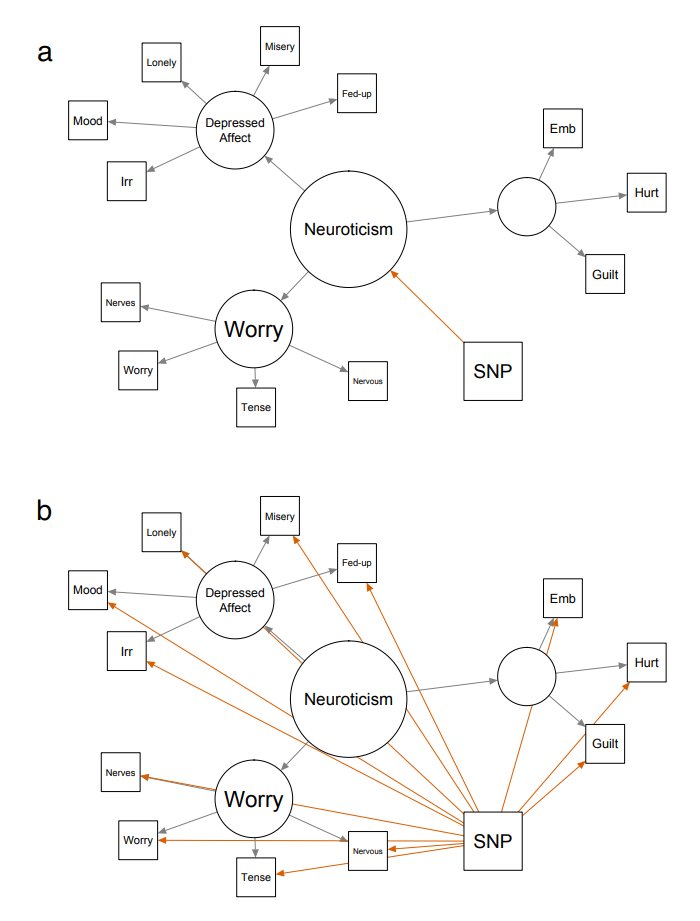
Worry, depressed affect, anger, anxiety, vulnerability — these are all aspects of trait neuroticism. But is neuroticism really a trait? New evidence suggests the answer might be yes! @AlexGiannelis and @eawilloughby have written a wonderful new paper that supports this contention. How did they do that and what does that even mean? Here's the how: They ran a genome-wide association study for neuroticism and found 394 single nucleotide polymorphisms (SNPs) associated with it. Then, they checked if those SNPs had effects that were consistent with Model A - the common pathway model - or Model B - the independent pathway model. OK, that might not be super clear, so I'll restate; here's what I mean: if a "factor model" is modeling a "real" trait that's "out there" and causes the things we think it causes - in this case, neuroticism - then the common pathway model will fit. That means that the things that cause differences in trait-related responding will act exactly as you'd predict from the factor model. That means that the effects will be on the factor itself! Or in other words, SNPs associated with neuroticism affect neuroticism itself - Model A. But if neuroticism isn't real, that means that the causes of neurotic responding are just correlated and they're not consistent with a factor model of neuroticism. In that case, the SNPs act directly on the things that you use to measure what you think is neuroticism, but what is really a more diverse construct - Model B. So what exactly did they find? 394 SNPs were associated with neuroticism, and - 139 had direct effects on the neuroticism factor - 81 had direct effects on the facets of neuroticism - 63 had effects on specific indicator variables, like "embarrassment" or "guilt" The remaining 111 were ambiguous and couldn't have their effects strongly assigned to any particular part of the model, but 54 of the remaining 111 looked to have effects on neuroticism itself. So of the assigned SNPs, 49.12% had effects on neuroticism itself, and if you use all the SNPs, 48.98% affected neuroticism itself. Adding in the facet-specific effects, 77.74% of the assigned effects indicated neuroticism measurement was valid. That's great! But it's not all they found. They also found that, consistent with theory, the genes associated with neuroticism were only significantly expressed in the brain. This is an important part of validation because, if neuroticism was instead found somewhere like the skeleton, we'd know something was wrong. In animal studies, some of the genes associated with neuroticism have been found to be important for things like - Abnormal cued conditioning behavior in mice. Animals with these genes are less capable of learning associations between aversive and neutral stimuli. - Impaired coordination. Animals with these genes show reduced ability to execute integrated movements. - Decreased exploration in new environments. Animals with these genes spend less time investigating new locations. There are definitely some cool findings here. So, what else is neuroticism related to? Glad you asked! Here are the genetic correlations: Earlier Work Other analyses using this same method have found support for general intelligence (nature.com/articles/s4156…) and found that a general factor of psychopathology wasn't supported (nature.com/articles/s4158…). Twin-Based Studies If you're interested in earlier results for Big Five/HEXACO personality, check out x.com/cremieuxrecuei… Here's the link to this new excellent paper. Go give it a read: biorxiv.org/content/10.110…
Crémieux tweet mediaCrémieux tweet mediaCrémieux tweet media
English
5
50
293
32.5K
Karolina Urbanska retweetledi
Brendan Nyhan (@BrendanNyhan on 🟦☁️)
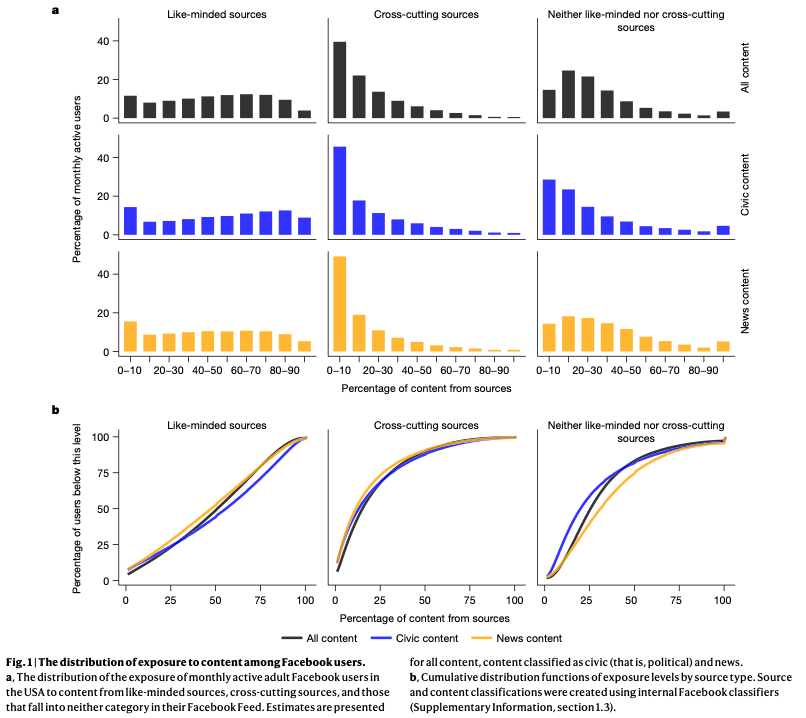
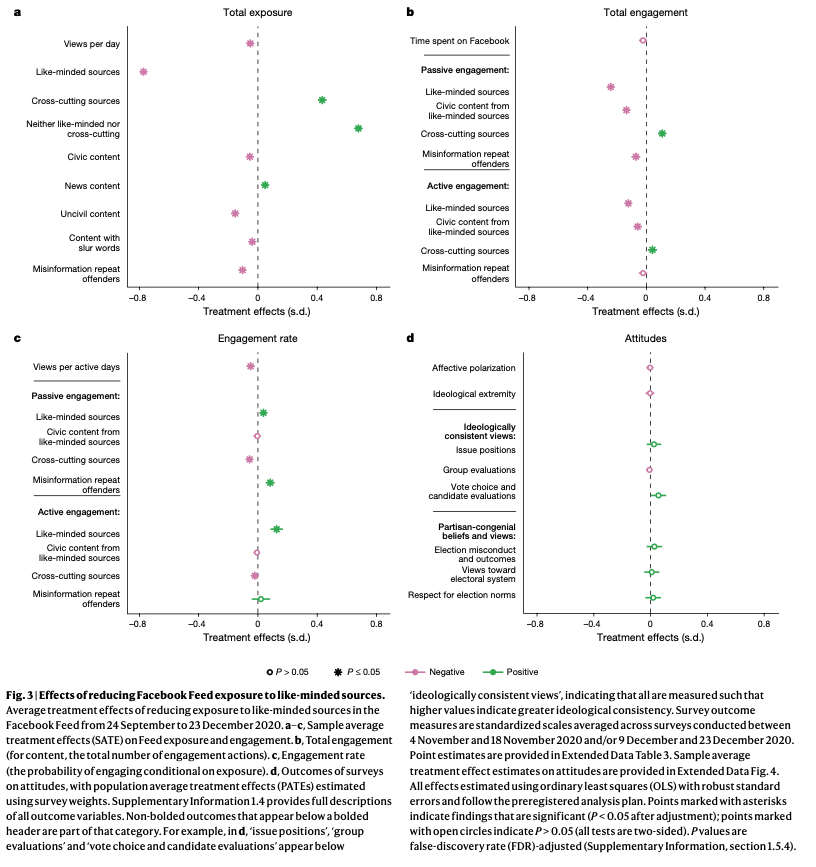
New @nature: Like-minded sources on Facebook are prevalent but not polarizing nature.com/articles/s4158… (open access!) Our key findings: -Median FB user gets 50.4% of content from like-minded sources -But reducing exposure by ~1/3 for 3 months had no measurable effect on attitudes
Brendan Nyhan (@BrendanNyhan on 🟦☁️) tweet mediaBrendan Nyhan (@BrendanNyhan on 🟦☁️) tweet mediaBrendan Nyhan (@BrendanNyhan on 🟦☁️) tweet mediaBrendan Nyhan (@BrendanNyhan on 🟦☁️) tweet media
English
10
132
348
139.8K
Anne Templeton
Anne Templeton@DrAnneTempleton·
Some personal news. I am so deeply in love with this wonderful, exceptional human being.
Anne Templeton tweet mediaAnne Templeton tweet mediaAnne Templeton tweet mediaAnne Templeton tweet media
English
23
0
130
9.7K
Karolina Urbanska retweetledi
Kevin Dorst
Kevin Dorst@kevin_dorst·
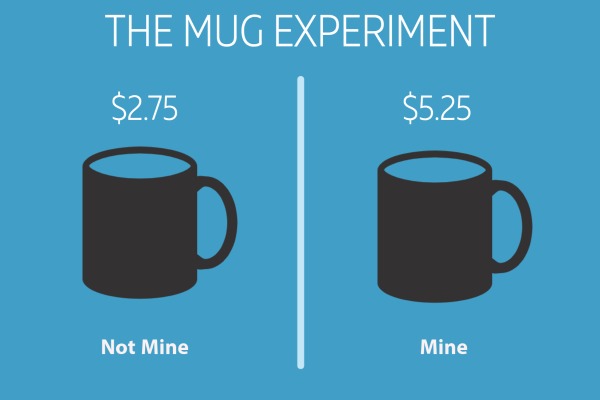
Does simply owning something make you value it more? This apparent *endowment effect* violates standard econ models, and was one of the main findings that led to the rise of behavioral econ. But have the findings been misinterpreted? A thread 🧵
Kevin Dorst tweet media
English
4
20
44
10.3K
Karolina Urbanska retweetledi
Amanda J. Wright
Amanda J. Wright@aj_wright19·
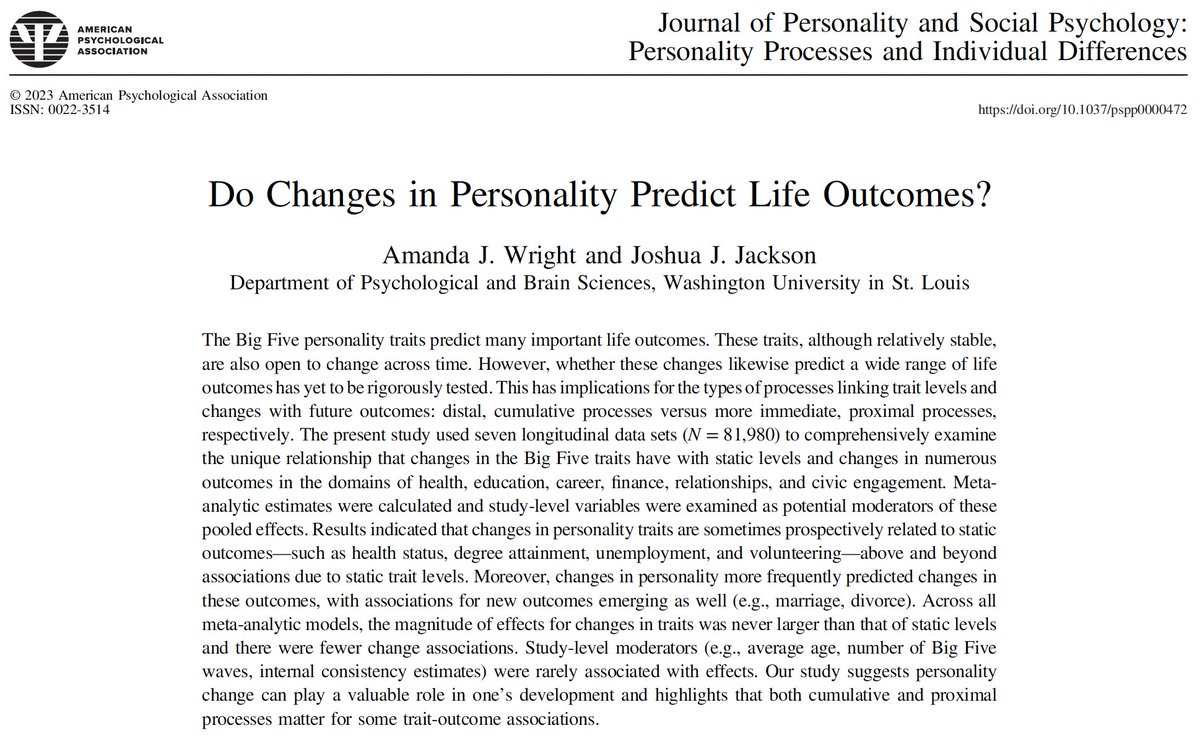
Beyond happy to see this paper out now in JPSP! We've all heard that "personality" predicts things... well, 99% of the time that refers to mean levels of personality traits. What about changes in traits? doi.org/10.1037/pspp00… (1/9)
Amanda J. Wright tweet media
English
1
64
290
46.3K
Karolina Urbanska retweetledi
Alex Strudwick Young
Alex Strudwick Young@AlexTISYoung·
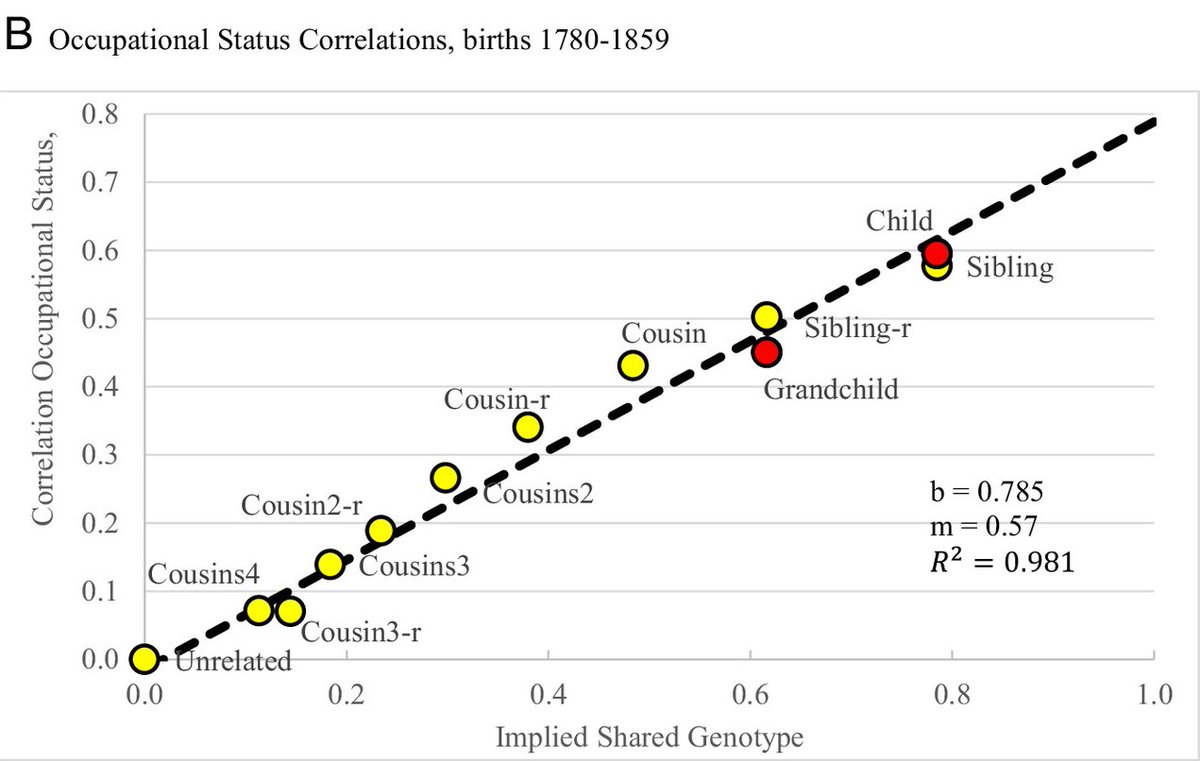
In PNAS today, Greg Clark documents the inheritance of social status in an impressive dataset on 422,374 people born in England between 1600 to 2022. Clark finds a strong persistence in social status going from close to distant relatives, which fits a model dating back to RA Fisher's 1918 work on correlations between relatives due to additive genetic effects and assortative mating. Clark's modeling implies a very high (0.57) correlation between spouses' underlying genetic components affecting social status. The high correlation between spouses' social status (and underlying genetic components) implies that social status has greater persistence across generations than if spouses were not correlated in their social status. It is possible that more complicated models may turn out to explain Clark's and other data better. However, Clark shows that a simple model of additive genetic effects and assortative mating (with limited non-genetic inheritance effects, except for wealth) can fit correlations between relatives' social status over a long time period — a time period in which dramatic social changes have occurred in education and employment. This is a remarkable piece of empirical work that anyone wanting to explain the persistence of social inequalities across generations should take seriously. pnas.org/doi/10.1073/pn…
Alex Strudwick Young tweet media
English
41
213
834
512.7K
Karolina Urbanska
Karolina Urbanska@karo_urb·
I've got some Qualtrics bug where when I select an answer to a question (say, the first response), it automatically selects the first response for all other questions on the same page. Anyone knows what may be the issue?
English
0
2
1
571
Karolina Urbanska retweetledi
Simon Rushton
Simon Rushton@SimonRushton8·
As of today, for the next three weeks, I am ‘locked out’ by my employer, on zero pay, for participating in @UCU’s Marking and Assessment Boycott. A short thread on why I am participating. 1/6
English
12
191
517
191.6K