Katalyst Wealth

4K posts

Katalyst Wealth banner
Katalyst Wealth

Katalyst Wealth

@katalystwealth

Founded in 2011 by @EkanshMittal_KW (SEBI RA - INH100001690) | Small & Midcap Recommendations | Premium offerings - https://t.co/xT1XOGFEpv

Kanpur, India Katılım Eylül 2011
111 Takip Edilen18.6K Takipçiler
Sabitlenmiş Tweet
Katalyst Wealth
Katalyst Wealth@katalystwealth·
Most retail investors in India buy stocks based on tips, social media, or gut feel. We do it differently. 📊 Deep-dive research on small & mid-cap stocks 🎯 Specific buy/sell updates 🔐 SEBI-registered (INH100001690) Serious about wealth creation? → katalystwealth.com
English

0
2
6
1.6K
Katalyst Wealth retweetledi
Ekansh Mittal
Ekansh Mittal@EkanshMittal_KW·
I think we all have this "I Read Buffett Book" Investor in our Investor group. Loves quoting Buffett all the time but mostly does the opposite Vocabulary: - "Moat" (uses for everything) - "Mr. Market is drunk" - "Circle of competence" Portfolio: - 30-year holding period (claims) - Panic sold during COVID crash (reality) - Owns 15 stocks (none held >2 years) When stock falls 20%: "Buffett says be greedy when others fearful" [Adds ₹5,000 to ₹10L position] When stock rises 30%: "Buffett doesn't believe in selling" [Books entire profit]
English
1
1
3
595
Katalyst Wealth retweetledi
Ekansh Mittal
Ekansh Mittal@EkanshMittal_KW·
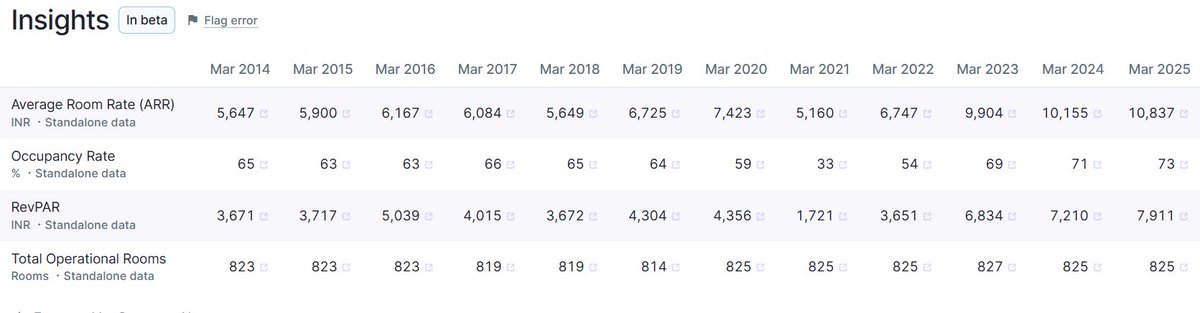
One look at these 10 yrs numbers of a Hotel co. and you start appreciating the cyclical nature of the markets This stock delivered 10x returns from 2020 lows despite - no change in operational rooms - 45% increase in Avg. room rate from 2020 Sectors go from unloved to overowned. The gap between those two states is where wealth is created Research desk -> katalystwealth.com
Ekansh Mittal tweet media
English
1
3
28
5.2K
Katalyst Wealth retweetledi
Ekansh Mittal
Ekansh Mittal@EkanshMittal_KW·
This is actually true and quite funny If investing advice was HONEST: "Buy low, sell high" → "You'll buy high (FOMO), sell low (panic)" "Think long-term" → "Until your stock falls 20%, then think very short-term" "Do your own research" → "Watch 2 YouTube videos, read 1 tweet thread, call it research" "Don't time the market" → "Time the market constantly, fail, then repeat" "Be greedy when others fearful" → "Be terrified when others terrified, pretend you were greedy later" "Focus on business fundamentals" → "Check stock price 15 times a day, fundamentals never" "Ignore market noise" → "Subscribe to 47 market news channels, read every headline" "Patience is key" → "Patience until next earnings call, then panic" "Learn from mistakes" → "Make same mistake 12 times, blame market" "Diversify" → "Own 30 stocks you don't understand vs 5 you don't understand" Advice we give vs what we actually do: The gap is the real market inefficiency. What would you add?
English
1
2
11
1.8K
Katalyst Wealth retweetledi
Ekansh Mittal
Ekansh Mittal@EkanshMittal_KW·
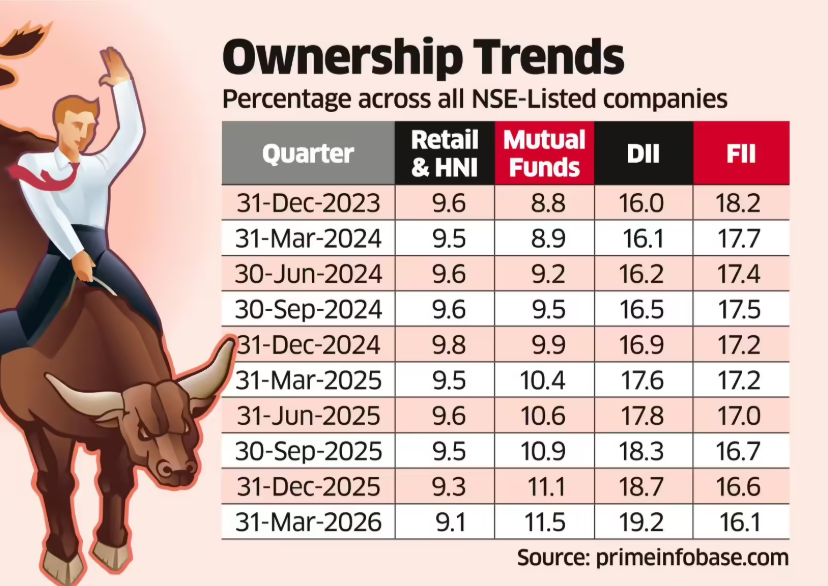
Mar 2026 ownership data is a fascinating picture: 🔴 FIIs: 14-year low (16.1%) 🟢 Domestic institutions: All-time high 🟢 Retail via MFs: Record flows 🔴 Direct retail equity: 3rd straight quarter of decline Retail is staying invested — trusting fund managers than themselves
Ekansh Mittal tweet media
English
0
2
5
1.5K
Katalyst Wealth retweetledi
Ekansh Mittal
Ekansh Mittal@EkanshMittal_KW·
Everyone talks about investing in "Quality Company" However, nobody really defines what quality actually means Here are 7 metrics you can use to determine quality of any stock: Note: Quality alone does not determine the returns you will generate on the stock or the portfolio over longer term 🧵 1. ROCE Consistency 2. Cash Flow Conversion 3. Margin Stability 4. Working Capital Efficiency 5. Earnings Quality 6. Capital Allocation 7. Management Integrity Let's break down each: METRIC 1: ROCE CONSISTENCY Most check: ROCE level (>15-20%) You can check: ROCE stability Why consistency matters more than level: Company A: ROCE: 22%, 23%, 24%, 23%, 25% Average: 23.4% very consistent Company B: ROCE: 28%, 18%, 30%, 15%, 24% Average: 23% volatile Both average ~23% ROCE But: A = Predictable (quality) B = Cyclical/Luck (not quality) METRIC 2: CASH FLOW CONVERSION Formula: (Operating Cash Flow) / Net Profit Over 3-5 years average: What it shows: Is profit converting to actual cash? Scoring: Why it matters: ₹100 Cr profit on paper But OCF = ₹40 Cr Where's ₹60 Cr? Stuck in working capital or fake revenue Quality = Profit converts to cash METRIC 3: MARGIN STABILITY Check: Gross margin range (5-year) Company A: Gross margin: 42%, 43%, 41%, 44%, 43% Range: 41-44% (3% band) Company B: Gross margin: 45%, 32%, 48%, 29%, 42% Range: 29-48% (19% band) Interpretation: A = Pricing power (can pass cost increases) B = Commodity (margin at mercy of raw material) METRIC 4: WORKING CAPITAL EFFICIENCY Formula: (Receivables + Inventory - Payables) / Revenue × 365 = Working Capital Days Why it matters: Low WC days = Capital efficient Can grow without raising capital High WC days = Cash stuck METRIC 5: EARNINGS QUALITY SCORE Check 4 sub-metrics over 3-5 years: a) Other Income <10% of Operating Profit ✓/✗ b) CFO/PAT ratio >80% ✓/✗ c) Receivables growing ~=Revenue growth ✓/✗ d) Inventory growing ~=Revenue growth ✓/✗ METRIC 6: CAPITAL ALLOCATION Check: ROCE 5 years ago: X% Revenue growth: 2x ROCE today: Y% Good capital allocation: Y ≥ X (maintained/improved ROCE while growing) Example: 5 years ago: ROCE 22%, Revenue ₹500 Cr Today: ROCE 24%, Revenue ₹1,100 Cr Grew 2.2x while improving ROCE = Quality capital allocation METRIC 7: MANAGEMENT INTEGRITY Red flag checklist: ✗ Auditor changed in last 3 years ✗ CFO changed 2+ times in 3 years ✗ Qualified audit opinion ✗ RPTs >15% of revenue ✗ Promoter pledge >40% Research desk → katalystwealth.com
English
0
7
34
3K
Katalyst Wealth retweetledi
Ekansh Mittal
Ekansh Mittal@EkanshMittal_KW·
Weekly wrap...2 blog posts this week: Post 1: I wrote about 5 investing lessons that come from 17 years of making mistakes in the market The one that surprises people most: most money is made not in picking stocks, but in waiting. The best investors I know make a few decisions a year, not 50. Full post here → katalystwealth.com/2026/04/30/5-i… Post 2: A stock idea — All E Technologies (ALLETEC) Microsoft grew 28% last quarter. Alletec, their #1 India partner, grew 1.5%. That's a strange gap for a company doing 88% repeat revenue with 26% EBITDA margins. Covered their Q3 concall — what management said, and what to watch Full post here → katalystwealth.com/2026/04/28/sto…
English
1
1
9
1.8K
Katalyst Wealth retweetledi
Ekansh Mittal
Ekansh Mittal@EkanshMittal_KW·
Most wealth is lost in a gap most people don't even notice Not from bad stocks. Not from bad timing From the space between: "I know I should do this" and "...but I'm not going to." 🧵 (1/n)
English
1
1
12
2.8K
Katalyst Wealth retweetledi
Ekansh Mittal
Ekansh Mittal@EkanshMittal_KW·
Unpopular opinion: "Do your own research" is terrible advice for 95% of investors. Here's why: Most people: - Don't have 20 hours/week for research - Don't understand accounting - Can't spot red flags in annual reports - Don't have access to management "Do your own research" for them means: - Read Moneycontrol article (surface level) - Check PE ratio (meaningless without context) - Ask on Twitter "Is X stock good?" (echo chamber) - Buy based on YouTube video (worse) Outcome: "Researched" stock still down 40% Better advice for 95%: "Accept you WON'T do deep research → Buy index fund" or "Get Professional advice" Honest self-assessment > False confidence Only if you can commit: - 15-20 hours/week minimum - Learn accounting properly - Read 200-page annual reports - Track 20+ companies continuously Then "do your own research" makes sense. Research desk -> katalystwealth.com
English
1
3
22
2.7K
Katalyst Wealth retweetledi
Ekansh Mittal
Ekansh Mittal@EkanshMittal_KW·
India's agrochemicals industry: ~ ₹45,000 Cr market (2020) → ~ ₹95,000 Cr (2026) Decent growth, yet most investors ignore it Here's what's happening (and which companies are winning): 🧵 The Setup Agrochemicals = Pesticides + Herbicides + Fungicides India rank globally: - 4th largest producer - 13% global market share - Growing 8-9% CAGR (vs global 4-5%) Why growth is structural: 1. CROP INTENSITY INCREASING India average: - Crop yield/hectare: 50% of global average - Agrochemical usage/hectare: 30% of global Gap = Opportunity As yields must rise (food security): Agrochemical usage will 2-3x over next decade 2. GENERIC AGROCHEMICALS BOOM Patent expiry wave (2020-2025): ₹25,000 Cr worth of molecules went off-patent India companies (low-cost manufacturers): Grabbing global market share Examples: - Glyphosate (off-patent 2020) - Lambda-cyhalothrin (off-patent 2022) Indian manufacturers now supply 40% of global generics 3. CHINA +1 STRATEGY Post-COVID: Global buyers reducing China dependency Shifting to India for: - Agrochemical intermediates - Active ingredients (AI) - Formulations India export growth: FY20: ₹18,000 Cr FY26: ₹45,000-50,000 Cr (2.5x in 6 years) The Market Structure Agrochemicals consolidated at top: Top 5 companies = 45% market share Top 10 = 65% market share But: Within segments, still fragmented - 1,000+ local players (unorganized) - Regional dominance patterns - Product-specific leaders THE PLAYERS Tier 1: Integrated players (₹5,000 Cr+ revenue) - UPL (₹35,000 Cr) - Global giant - PI Industries (₹6,800 Cr) - CSM + domestic - Sumitomo Chemical (₹5,500 Cr) - MNC Tier 2: Mid-sized specialists (₹1,000-3,000 Cr) - Dhanuka Agritech (₹1,800 Cr) - Herbicides focus - Rallis India (₹2,400 Cr) - TATA group - Insecticides India (₹1,200 Cr) - Niche products Tier 3: Niche plays - Sharda Cropchem (₹2,800 Cr) - Export focused - Heranba Industries (₹900 Cr) - Technicals - Bharat Rasayan (₹700 Cr) - Herbicides The Business Model Split Type 1: Custom Synthesis & Manufacturing (CSM) What: Manufacture molecules for global giants under contract Margins: 15-18% EBITDA Growth: 20%+ (sticky, long-term contracts) Risk: Customer concentration Example: PI Industries (60% revenue from CSM) Type 2: Generics (Branded formulations) What: Buy technical grade, formulate, sell under own brand Margins: 12-15% EBITDA Growth: 12-15% (market growth) Risk: Commodity pricing, competition Example: Dhanuka, Rallis Type 3: Integrated (Both) What: Backward integrated (make technicals) + formulations Margins: 16-20% EBITDA Growth: 15-18% Risk: Lower, diversified Example: UPL, Sumitomo The Interesting Shift From Generic → CSM (Higher margin play) Companies moving up value chain: Why CSM attractive: - Higher margins (15-18% vs 10-12%) - Sticky customers (3-5 year contracts) - Lower working capital (advance payments) - Predictable revenue The Consolidation Angle Agrochemicals consolidating differently: 1. Environmental compliance costs rising New effluent norms (2024): Capex needed: ₹50-100 Cr per plant Small players: Can't afford Large players: Absorbing easily Result: Market share shifting to top 10 2. R&D intensity increasing To develop new molecules: R&D spend: ₹100-200 Cr/year needed Only large players can afford PI Industries R&D: 4% of sales Small players: <1% 3. Export capability divide To export, need: - International registrations (₹10-50 Cr per country) - Quality certifications (GLP, GMP) - Regulatory expertise Large players: Have it Small players: Struggling The Segment Growth Fastest growing segments: 1. Herbicides: 18% CAGR (labor shortage → chemicals) 2. Fungicides: 15% CAGR (crop diseases rising) 3. Insecticides: 10% CAGR (mature, slow growth) Winner companies by segment: Herbicides: Dhanuka, Bharat Rasayan Fungicides: PI Industries, UPL Insecticides: Rallis, Insecticides India The Risks Risk 1: Monsoon dependency 80% revenue in Kharif + Rabi seasons Bad monsoon = Demand crash Example: FY23 (weak monsoon): Industry growth 4% FY24 (good monsoon): Industry growth 16% Risk 2: Raw material volatility Key inputs: Crude derivatives Crude price swings = Margin pressure FY22 (crude spike): Margins fell 200-300 bps across sector Risk 3: Regulatory changes Agrochemical bans (safety concerns): India banned 27 molecules (2020-2024) If your product gets banned = Revenue wipeout Example: Monocrotophos ban (2018) hurt several companies The Investment Angle Who benefits most: 1. CSM-focused players (PI Industries, Heranba) → Benefiting from China+1, sticky contracts, margin expansion 2. Integrated players with export (UPL, Sharda) → Global demand growing, India share rising 3. Niche specialists with registration moat (Dhanuka herbicides) → Product registrations = 3-5 year moat per product The Structural Tailwinds Next 5 years: ✓ Food security focus (need to raise yields) ✓ Agrochemical usage/hectare must rise (currently 30% of global) ✓ China+1 benefiting India exports ✓ Patent expiry wave (₹30,000 Cr molecules off-patent 2025-2028) ✓ Consolidation (compliance costs favoring large players) The Takeaway Agrochemicals isn't sexy. But: - Doubling every 7-8 years - Export boom happening - CSM shift adding margins - Consolidation favoring top players Research desk -> katalystwealth.com
Ekansh Mittal tweet mediaEkansh Mittal tweet media
English
0
9
41
4.5K
Katalyst Wealth retweetledi
Ekansh Mittal
Ekansh Mittal@EkanshMittal_KW·
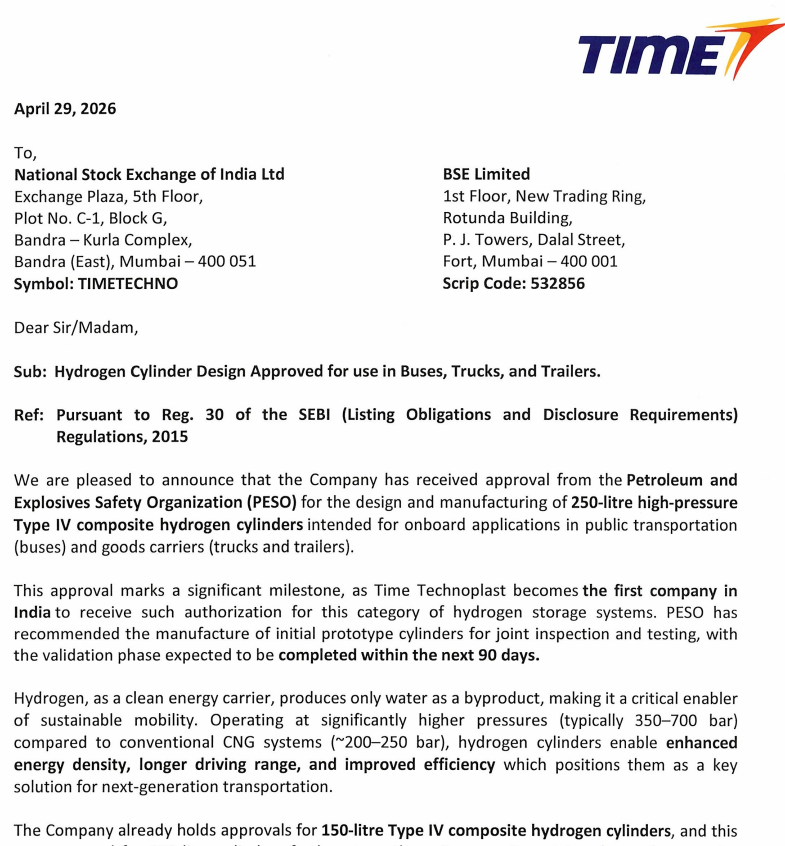
Time Technoplast just made history Company has become first in India to receive PESO approval for 250-litre Type IV composite hydrogen cylinders — designed for buses, trucks & trailers Why does this matter? → Hydrogen cylinders operate at 350-700 bar vs CNG's ~200-250 bar → Higher energy density = longer range for heavy transport → Composite replaces heavy metal = lighter, more efficient vehicles Prototype testing kicks off soon, with validation expected in 90 days They already have approvals for 150L hydrogen cylinders + Type III cylinders for drones Research desk -> katalystwealth.com
Ekansh Mittal tweet media
English
2
8
46
3.8K
Katalyst Wealth retweetledi
Ekansh Mittal
Ekansh Mittal@EkanshMittal_KW·
India's diagnostic testing market: ~₹60,000 Cr (2020) → ~₹1,20,000 Cr (2026) Doubled in 6 years. But 70% still unorganized (mom-and-pop labs). Here's the silent rollup happening: 🧵 The Market Size Diagnostic tests in India: - 15 billion tests/year - ₹1,20,000 Cr market (2026) - Growing 12-14% CAGR Per capita: India: 10 tests/person/year US: 45 tests/person/year Gap = 4x growth potential The Structure Organized chains: 30% market share - Dr. Lal PathLabs: ~₹2,200 Cr (1.8%) - Metropolis: ~₹1,400 Cr (1.2%) - Thyrocare: ~₹700 Cr (0.6%) - Vijaya Diagnostic: ~₹550 Cr (0.5%) Unorganized: 70% market share - 1,00,000+ small labs - Single-city operations - Legacy equipment - No digital presence The Consolidation Play What's happening: Organized chains acquiring small labs at: - 4-6x EBITDA - ₹5-20 Cr per acquisition - 50-100 acquisitions/year The Unit Economics Small unorganized lab: - Revenue: ₹5 Cr - EBITDA margin: 15-20% - EBITDA: ₹80 L - Valuation: 5x = ₹4 Cr acquisition cost After organized chain acquires: Year 1-2 integration: - Shift to hub-spoke model (centralized testing) - Reduce operating costs 30% - Cross-sell advanced tests - Digital integration Year 3: - Revenue: ₹7 Cr (40% growth via cross-sell) - EBITDA margin: 28% (operational efficiency) - EBITDA: ₹2 Cr The Rollup Advantage Why organized chains are winning: 1. Hub-spoke model Small lab: All tests done in-house (high capex) Chain: Collection center + Central lab (low capex) Cost reduction: 30-40% 2. Test menu expansion Small lab: 200-300 tests Chain: 3,000-5,000 tests Revenue/customer increase: 25-30% 3. Brand trust Unorganized: Local reputation Chain: National brand + Quality certification Premium pricing: 10-15% The Segment Split Pathology (blood/urine tests): 60% market - Routine tests (CBC, sugar, lipid) - Margins: 25-30% - High volume, low price Radiology (scans): 30% market - X-ray, ultrasound, CT, MRI - Margins: 35-40% - Lower volume, high price Specialized tests: 10% market - Genomics, oncology panels - Margins: 45-50% - Very low volume, very high price The Growth Drivers 1. Insurance penetration rising Currently: Health insurance: 35% population Covered tests: Growing (OPD coverage increasing) Impact: People doing preventive tests (insured) 2. Chronic disease explosion India diabetes: 10 Cr people (2026) Requires: Quarterly HbA1c, lipid tests Per diabetic: ₹2,000/year testing Market: ₹20,000 Cr from diabetes alone 3. Health consciousness post-COVID Annual health checkups: 2019: 15% urban population 2026: 35% urban population Avg checkup cost: ₹3,000 Market expansion: ₹15,000 Cr The Competitive Moats Why chains dominate once they enter city: 1. Collection center density Dr. Lal: 250+ centers in Delhi Small lab: 1-2 centers Convenience = Market share 2. Home collection capability Chains: App-based, 2-hour pickup Small labs: Manual, call-based Preference: 60% customers prefer home collection now 3. Digital reports + history Chains: All reports online, 10-year history accessible Small labs: Paper reports, no records Stickiness: High (patients don't switch) The Players Tier 1: National chains (₹1,000 Cr+) - Dr. Lal PathLabs: North India dominant - Metropolis: West India strong - Thyrocare: Pan-India, budget positioning Tier 2: Regional strong (₹300-800 Cr) - Vijaya Diagnostic: South India (Hyderabad base) - Krsnaa Diagnostics: Radiology focused, hospital partnerships Tier 3: Niche/Emerging (<₹300 Cr) - Neuberg Diagnostics: Premium positioning - Suburban Diagnostics: Mumbai focused The Acquisition Strategy Target profile for chains: Sweet spot: - ₹3-10 Cr revenue labs - 10-15% EBITDA margin (scope to improve) - Good location (residential areas) - Established customer base (not dependent on single doctor) Avoid: - Hospital-embedded labs (lose revenue post-acquisition) - Single-doctor dependent (doctor leaves = revenue gone) The Risks Risk 1: Regulatory (price control fears) NPPA could cap test prices (like drugs) If pathology tests capped: Margins could fall 5-10% Currently: No regulation on pricing Risk 2: Aggregators (PharmEasy, 1mg) Aggregators offering 30-40% discounts Impact: Margin pressure on routine tests Counter: Chains focus on specialized tests (higher margins, less commoditized) Risk 3: At-home testing devices Glucometers, BP monitors reducing clinic visits Impact: Routine test volumes may plateau Counter: Specialized tests (genomics, panels) can't be done at home The Takeaway Diagnostics rollup story: - ₹1,20,000 Cr market (70% unorganized) - Organized chains acquiring 50-100 labs/year - Unit economics attractive (50% cash-on-cash returns) - Structural tailwinds (insurance, chronic disease, health consciousness) Research desk -> katalystwealth.com
Ekansh Mittal tweet media
English
1
9
40
3.6K
Katalyst Wealth retweetledi
Ekansh Mittal
Ekansh Mittal@EkanshMittal_KW·
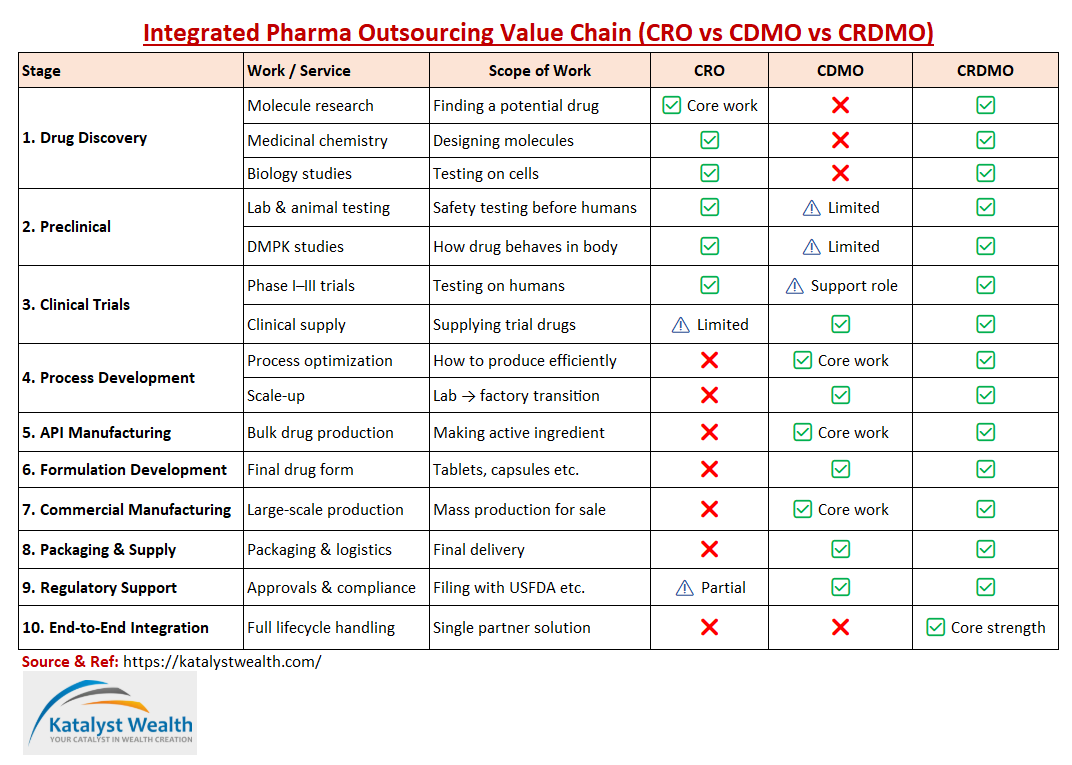
Behind every new drug, there’s often a hidden partner. CRDMOs = companies that research, develop & manufacture drugs for Big Pharma - One of the fastest-growing sectors in pharma. - Silent enablers of the global pharma industry. A detailed 🧵on this sector (1/n)
Ekansh Mittal tweet media
English
2
18
116
12.5K
Katalyst Wealth retweetledi
Ekansh Mittal
Ekansh Mittal@EkanshMittal_KW·
Promoter pledging is like a ticking time bomb. But most investors don't know WHEN to worry. Here's the exact threshold framework: 🧵 THE BASICS Promoter pledging = Promoter uses their shares as collateral to borrow money Why they do it: - Personal needs - Fund other businesses - Invest in same company Where to find: Shareholding pattern (every quarter) THE THRESHOLDS <20% pledged: Risk: Low Action: Monitor quarterly 20-40% pledged: Risk: Moderate Action: Watch for increases, check why 40-60% pledged: Risk: High >60% pledged: Risk: Very High THE MATH Why pledging kills stocks: Scenario: - Promoter holds 50% stake (5 Cr shares) - Pledges 60% of holding (3 Cr shares) - Gets loan at share price ₹100 - Loan value: ₹300 Cr Note: This is only for sake of explanation. Lenders don't lend 300 cr for 300 cr value of shares Stock falls to ₹70 (-30%): - Pledged shares value: ₹210 Cr - Loan: Still ₹300 Cr - Lender panics: "Margin call!" Promoter forced to: Option A: Bring cash (usually don't have) Option B: Pledge more shares Option C: Lenders sell shares (crash) Death spiral begins. THE WARNING SIGNS Red flag progression: Quarter/Year 1: Pledge 25% (okay) Quarter/Year 2: Pledge 35% (increased 10%) Quarter/Year 3: Pledge 48% (increased another 13%) Quarter/Year 4: Pledge 60% (disaster territory) Pattern: RISING pledge % = Desperate for cash Why concerning: If business doing well: → Cash flows strong → No need to keep pledging more If keep pledging: → Cash flows weak → Borrowing to survive THE NUANCES Not all pledging is equal: Low-risk pledging: ✓ Pledge <20% ✓ Stable or declining over time ✓ Company profitable, cash flow positive ✓ Transparent disclosure (why pledging) High-risk pledging: ✗ Pledge >40% ✗ Rising every quarter ✗ Company cash flow negative ✗ No explanation given ✗ Multiple lenders (desperation signal) THE ACTION Check your portfolio: 1. Open latest shareholding pattern 2. Look for "Promoter pledging" 3. Note the % If >40%: Ask yourself: - Why are they pledging so much? - Is it rising or falling? - Are fundamentals strong? If no clear answers + rising pledge: That's your exit signal. Research desk → katalystwealth.com
English
1
4
25
2.6K
Katalyst Wealth retweetledi
Ekansh Mittal
Ekansh Mittal@EkanshMittal_KW·
Working Capital looks boring. But it's the #1 killer of profitable companies. Here's how "profitable" companies go bankrupt: (And the 2-minute check that reveals it) 🧵 THE SETUP Company ABC: - Revenue: ₹1,000 Cr (growing 30% YoY) - Net Profit: ₹100 Cr (10% margin) - Looks: Great on P&L Reality: - Cash from operations: -₹50 Cr - Burning cash despite "profits" Within 2 years: Bankrupt How? WORKING CAPITAL TRAP Working Capital = Current Assets - Current Liabilities Components: - Inventory (stock you're holding) - Receivables (money customers owe you) - Payables (money you owe suppliers) The formula: Working Capital Days = (Inventory Days + Receivables Days - Payables Days) THE DEATH SPIRAL Year 1: Company reports ₹100 Cr profit But: - Sold goods worth ₹1,000 Cr - Collected only ₹700 Cr (₹300 Cr receivables) - Paid suppliers ₹600 Cr Cash flow: Collected: ₹700 Cr Paid out: ₹600 Cr + ₹50 Cr opex = ₹650 Cr Net: +₹50 Cr (okay) Year 2: Grows 30%, reports ₹130 Cr profit But: - Sold ₹1,300 Cr - Collected ₹800 Cr (₹500 Cr receivables now!) - Paid ₹850 Cr Cash flow: Collected: ₹800 Cr Paid: ₹850 Cr + ₹70 Cr opex = ₹920 Cr Net: -₹120 Cr (bleeding!) Year 3: Still growing, still "profitable" But: Receivables: ₹800 Cr (can't collect) Inventory: ₹300 Cr (piling up) Cash: Almost zero Bank says: "No more loans" Suppliers say: "Cash on delivery only" Company: Collapses despite being "profitable" THE 2-MINUTE CHECK Formula: Inventory Days = (Inventory / COGS) × 365 Receivables Days = (Receivables / Revenue) × 365 Payables Days = (Payables / COGS) × 365 Working Capital Days = Inventory + Receivables - Payables Example: Company XYZ: Inventory: ₹100 Cr, COGS: ₹500 Cr → Inventory Days = (100/500) × 365 = 73 days Receivables: ₹150 Cr, Revenue: ₹600 Cr → Receivables Days = (150/600) × 365 = 91 days Payables: ₹80 Cr, COGS: ₹500 Cr → Payables Days = (80/500) × 365 = 58 days Working Capital Days = 73 + 91 - 58 = 106 days Red flag: Taking 106 days to convert sale to cash THE TREND IS KEY Year 1: WC Days = 60 (healthy) Year 2: WC Days = 75 (increased) Year 3: WC Days = 95 (red flag) Deteriorating working capital = Cash crunch coming Even if profits look good! THE SECTORS TO WATCH High working capital businesses: - Retail (inventory heavy) - Real estate (long project cycles) - Infrastructure (long receivables) - Trading (inventory + receivables) Low working capital businesses: - Software (no inventory, fast payments) - Subscription (advance payments) - QSR (cash business) Know which sector your stock is in. THE RED FLAGS Red Flag 1: Receivables growing faster than revenue Revenue grew: 20% Receivables grew: 40% Means: Either selling to weak customers OR fake sales Red Flag 2: Inventory growing faster than revenue Revenue grew: 20% Inventory grew: 50% Means: Either demand slowing OR production overestimated Red Flag 3: Payables shrinking Revenue grew: 20% Payables grew: 0% or negative Means: Suppliers demanding cash upfront (they don't trust company) THE FRAMEWORK Check your stock: Step 1: Calculate Working Capital Days (takes 5 mins) Step 2: Check 3-year trend - Stable or declining: Good - Rising: Red flag Step 3: Compare with sector average - Lower than peers: Good - Higher than peers: Investigate Step 4: Check components - Which is rising: Inventory, Receivables, or Payables shrinking? - Why is it rising? THE BOTTOM LINE Profit is accounting. Cash is reality. Company can show profit while bleeding cash. How? Working Capital trap. Selling goods but not collecting cash = "Profitable" bankruptcy Check Working Capital Days. Takes 2 minutes. Research desk → katalystwealth.com
English
0
12
45
3.1K
Katalyst Wealth retweetledi
Ekansh Mittal
Ekansh Mittal@EkanshMittal_KW·
Controversial opinion: "Buy the dip" is the worst investing advice. Unless you know WHY it dipped. Most dips are: - Business deteriorating (don't catch falling knife) - Sector out of favor (mean reversion takes years) - Market discovering problems (you're last to know) Only buy dips when: - Temporary issue (not structural) - Fundamentals intact (earnings, ROCE, moat) - You have conviction (not hope) Otherwise: "Buying the dip" = Averaging down on losers Different from: "Adding to winners on pullback" Research desk -> katalystwealth.com
English
1
5
28
2.2K
Katalyst Wealth retweetledi
Ekansh Mittal
Ekansh Mittal@EkanshMittal_KW·
Here are my 5 investing lessons based on 17 + years of investing experience (can be different for different investors) 🧵 1. POSITION SIZING >= STOCK PICKING Wrong approach: "This stock will 5x, let me put ₹10L" (Falls 40%, panic sell, lose ₹4L) Right approach: "This could 5x but I could be wrong, let me put ₹2L" (Falls 40%, lose ₹80K, but can hold because position size allows it) Lesson: Size positions for worst case, not best case. 2. SELLING IS HARDER THAN BUYING Buying is easy: - Excitement (potential gains ahead) - No regret yet (fresh start) - Clear thesis (this is why I'm buying) Selling is hard: - Loss aversion (don't want to admit mistake) - Greed (what if it goes higher?) - Unclear thesis (when exactly should I sell?) Lesson: Decide sell criteria BEFORE buying. Write it down. 3. BORING COMPOUNDS BETTER THAN EXCITING Exciting stocks: - Daily price movements - News flow - Sector in focus - High volatility Boring stocks: - Stable business - Predictable earnings - Nobody talks about them - Low volatility 10-year result: Boring outperforms exciting (usually) Lesson: Excitement ≠ Returns 4. YOUR TEMPERAMENT > YOUR IQ High IQ can find great stocks. But: Wrong temperament = Sell too early, buy too late, panic during corrections Average IQ + Right temperament = Hold through cycles, buy during fear Lesson: Work on your psychology more than your analysis. 5. MOST MONEY MADE IN WAITING Not in: - Trading (activity) - Rotating sectors (timing) - Stock picking (selection) But in: - Holding good stocks through volatility - Doing nothing during most days - Letting compounding work The best investors I know: Make few decisions per year, not 50-100. Lesson: Inactivity is underrated. BONUS LESSON Treat mistakes as tuition fees. Research desk -> katalystwealth.com
English
2
9
55
3.9K
Katalyst Wealth retweetledi
Ekansh Mittal
Ekansh Mittal@EkanshMittal_KW·
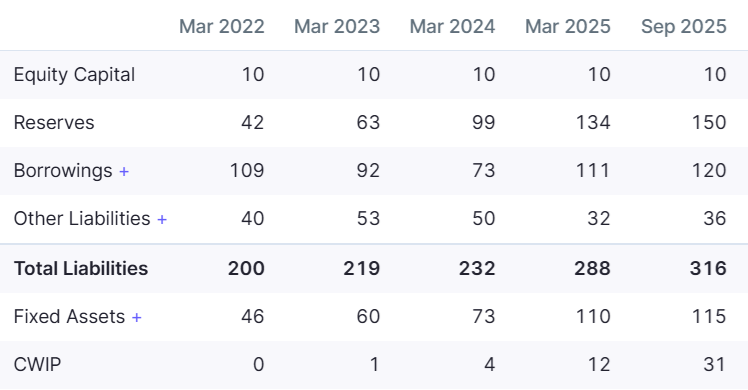
Spotting balance sheets that quietly compound wealth ✅ Zero equity dilution (share capital: 10 → 10) ✅ Debt barely moved in 3.5 years ✅ Reserves up 3.5x ✅ Fixed assets + CWIP up 200% — purely internal accruals This is a business funding its own growth. No hand-holding needed. Digging deeper 🔍 | katalystwealth.com
Ekansh Mittal tweet media
English
1
10
39
5.6K
Katalyst Wealth retweetledi
Ekansh Mittal
Ekansh Mittal@EkanshMittal_KW·
Hot take: If you can't explain why you own a stock in few sentences: You don't have a thesis. You have a hope.
English
3
1
10
1.7K
Katalyst Wealth retweetledi
Ekansh Mittal
Ekansh Mittal@EkanshMittal_KW·
India’s Plastic Pipes & Fittings Industry is a silent compounder ₹50,000–60,000 Cr market, driven by water, housing & infra. With strong tailwinds like Jal Jeevan Mission, sector offers long runway for growth Detailed🧵on this industry Product wise Value Chain Chart (1/n)
Ekansh Mittal tweet media
English
6
41
184
16K