Kavya

271 posts

Kavya

Kavya

@kavyavenkat4

not yet priced in

NYC/LA/PHL Katılım Eylül 2019
896 Takip Edilen148 Takipçiler
Kavya
Kavya@kavyavenkat4·
@davieball @OpenAI right. even with finbench or more specific benchmarks, I don’t think test suites rigorously measure if and how protocol was followed. Seems like you’d need to look into and evaluate raw agent activity + tool calls at every step
English
0
0
0
46
David Ball
David Ball@davieball·
.@OpenAI and others have been talking a lot about "capability overhang." The idea is that today's models can do way more than people are actually using them for. Their thesis is that AGI progress now depends as much on helping users adopt AI as on building smarter models. This is directionally right but misdiagnoses the problem. The overhang is a specification gap. We built incredibly intelligent systems but never defined what "working" actually means for any given task. So users prompt, hope, and iterate until something feels close enough. That's the absence of engineering. If you asked a contractor to build you a house and they said "just describe the vibes you want and I'll figure it out," you wouldn't blame homeowners for slow adoption when the houses come out wrong. You'd blame the lack of blueprints. The reason coders get 10x value from AI while most knowledge workers struggle is that code has specs. It compiles or it doesn't. Tests pass or they fail. There's a definition of "working" that exists independent of human preference. For everything else (writing, analysis, research, operations) we're training models on "what do humans like?" instead of "did it actually work?" One approach hits a wall when you run out of human labelers. The other scales with compute. The real unlock is defining capabilities as executable specifications. That's how you close the overhang. Teach models what success actually looks like.
English
1
0
1
71
Kavya
Kavya@kavyavenkat4·
a lot of holding companies are doing this btw the shift started 2-3 yrs ago where top AI/data science teams were poached from finance to transform these owned businesses. any “applied ai” startup right now is probably fighting for the middle market, partly because they can’t access that kind of scale and data
Sheel Mohnot@pitdesi

Thrive Holdings is a permanent capital vehicle (initial round of $1B) that acquires and holds legacy businesses like accounting & IT services and transforms them with AI/tech. OpenAI now has equity and will train models for tasks with company-specific data.

English
0
0
4
1.1K
Kavya
Kavya@kavyavenkat4·
@HipCityReg I like this take although I do think an option is a more precise analogue for the Moment. You have an unwritten expiration date. And even if you can extend it, value constantly decays. The sooner you build the product, the more potential you lock in.
English
1
0
1
154
Reggie James
Reggie James@HipCityReg·
RISK: CREATING THE MOMENT ON LOAN Like I say in the piece — “marketing is not the moment, it is attempting to lay narrative towards a potential moment” There are times where the marketing really breaks containment and consistently goes viral. Becoming a product unto itself Cluely and Friend represents this well. “The marketing is the point” you’ll see people say. This relates to another piece of mine “Anticipation is Culture”. But marketing alone isn’t a business. What you are doing, what my own company Eternal did accidentally as well!! -> is “creating the moment on loan” What does this mean? Similar to raising a big round, and now you have to “grow into the valuation” Creating The Moment on Loan is the same idea with brand/narrative + product realities. Your brand has gotten ahead, and the product needs to be an absolute banger to live up to the expectations of the narrative you’ve spun in the right environment. Props to Roy for being very candid about this with Cluely on stage. As they are now shifting the product and trying to find something that’ll live in more simpatico with the narrative rails they’ve built. There are some that believe Building The Moment on Loan is ok because attention is hard to garner, and it’s better to try to capture that audience and pivot the product than not capture that audience at all. I’m not sure I believe this. McLuhan says “my consumer, are they not my producer” When you Build The Moment on Loan, and now your captive audience is displeased. The production towards you can sour -> leaving you with runaway negative production. Making it nearly impossible to pay that loan back. Better to remember from the piece “The Moment demands previous suffering and obscurity” Building The Moment on Loan is trying to get around that. But it’s impossible. The white pill is this! When the loan defaults, you have the inciting event to begin the redemption arc. And business history loves a redemption arc!!!
Reggie James@HipCityReg

A16Z New Media Physical Intelligence hiring a Creative Director A well timed Colossus profile "Narrative Lead" job postings Every YC port-co launch video Prime slotting on TBPN Everyone is chasing the same thing Owning "The Moment" But what is "The Moment"? Link in next post

English
8
1
71
10.4K
Kavya
Kavya@kavyavenkat4·
@Noahpinion because the people who were destined to make great movies would have done it regardless of the cost. There is not a huge net gain in people who are driven and competent enough to do that as a direct consequence of new tech
English
0
0
1
853
Noah Smith 🐇🇺🇸🇺🇦🇹🇼
It's weird. The cost of movies has gone down so much -- cheap digital cameras, digital effects, automated post-processing tools. And yet there's been no explosion of quality movies being made. If anything, there are fewer today than before. Why??
English
830
94
2.8K
479.9K
Kavya
Kavya@kavyavenkat4·
Pattern-matching is most useful and reliable for spotting blatantly bad deals. Easier to disprove a claim than to prove it’s right (falsifiability is the crux of the scientific method). So once you filter out these red-flag-riddled deals, you’re left with the plausibly good ones. And usually pattern matching breaks down here because the best companies are just out-of-distribution.
English
0
0
3
281
Kavya
Kavya@kavyavenkat4·
most enterprise AI products are failing to scale beyond pilots because they expose complexity, require users to debug outputs and determine agent-task fit on their own, or lack polish and professional rhythm. also the linear chat is not a good enough interface pattern. you need parallelism and user-visible state compartmentalization. multiple threads if you will to represent the many deliverables people constantly switch between
English
0
0
1
277
Kavya
Kavya@kavyavenkat4·
@lulumeservey Building in consumer AI. sports analytics work & hyperloop team eng on weekends. And at Penn for the distribution and range in experience.
English
0
0
0
38
Kavya
Kavya@kavyavenkat4·
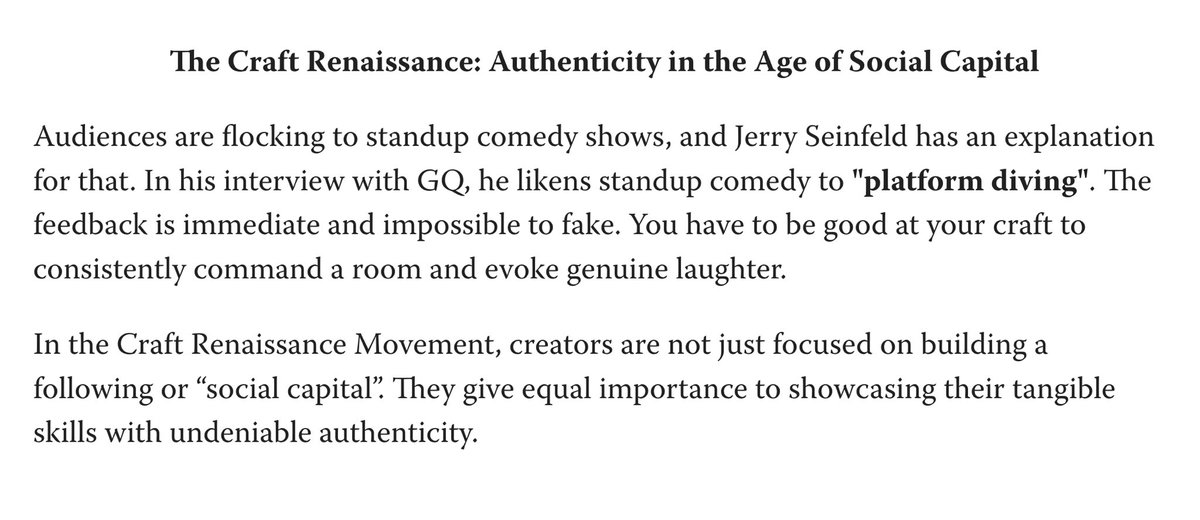
Found my Rostra apprentice application from a year ago (Aug 2024) It feels like an artifact of what I was paying attention to at the time. Some of my predictions held up (decide for yourself). but more importantly, I am in awe of my unbridled delusion to shoot my shot for something like this @lulumeservey Can attest to what was asked
Kavya tweet media
English
2
0
5
1.9K
Kavya
Kavya@kavyavenkat4·
As funny as it is to read all of this, I can’t help but realize that this is a key use case of writing: to register your own predictions and see if reality lives up to them. This is how you calibrate yourself.
English
0
0
0
144
Kavya
Kavya@kavyavenkat4·
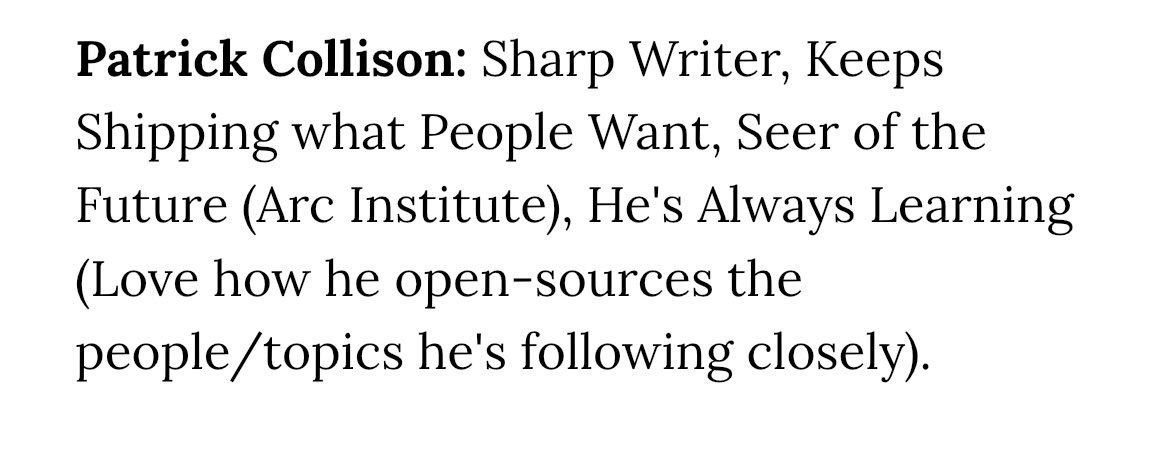
Patrick Collison supremacy (re: “who’s your favorite writer?”)
Kavya tweet media
English
0
0
0
75
Kavya
Kavya@kavyavenkat4·
probably my favorite bit from the whole thing (good representative of my approach to learning where “everything is material”)
Kavya tweet media
English
1
0
0
70
Kavya
Kavya@kavyavenkat4·
in 2023, when AI was not seen as immediately transformative as it is today, I used to have people submit requests for the tasks they wanted to spend less time on. I’d make a custom out-of-the-box demo and get them on call for 20 mins. Do this a few dozen times and eventually the org had buy-in (they’ve been around for 100+ years)
English
0
0
0
79
Jeff Weinstein
Jeff Weinstein@jeff_weinstein·
most/all customer pitches should just be sharing a working demo customized for their use case. (this statement would have been medium outlandish in the past, but ai tooling makes it plausible.)
English
6
1
32
4K
Kavya
Kavya@kavyavenkat4·
when you look at colleges, this dynamic is a lot more pronounced. If seats only went to highest bidders (people who could pay full tuition), this would ignore a very important truth: just because people pay more for something doesn’t mean they get the most value out of it.
English
0
0
0
80
Kavya
Kavya@kavyavenkat4·
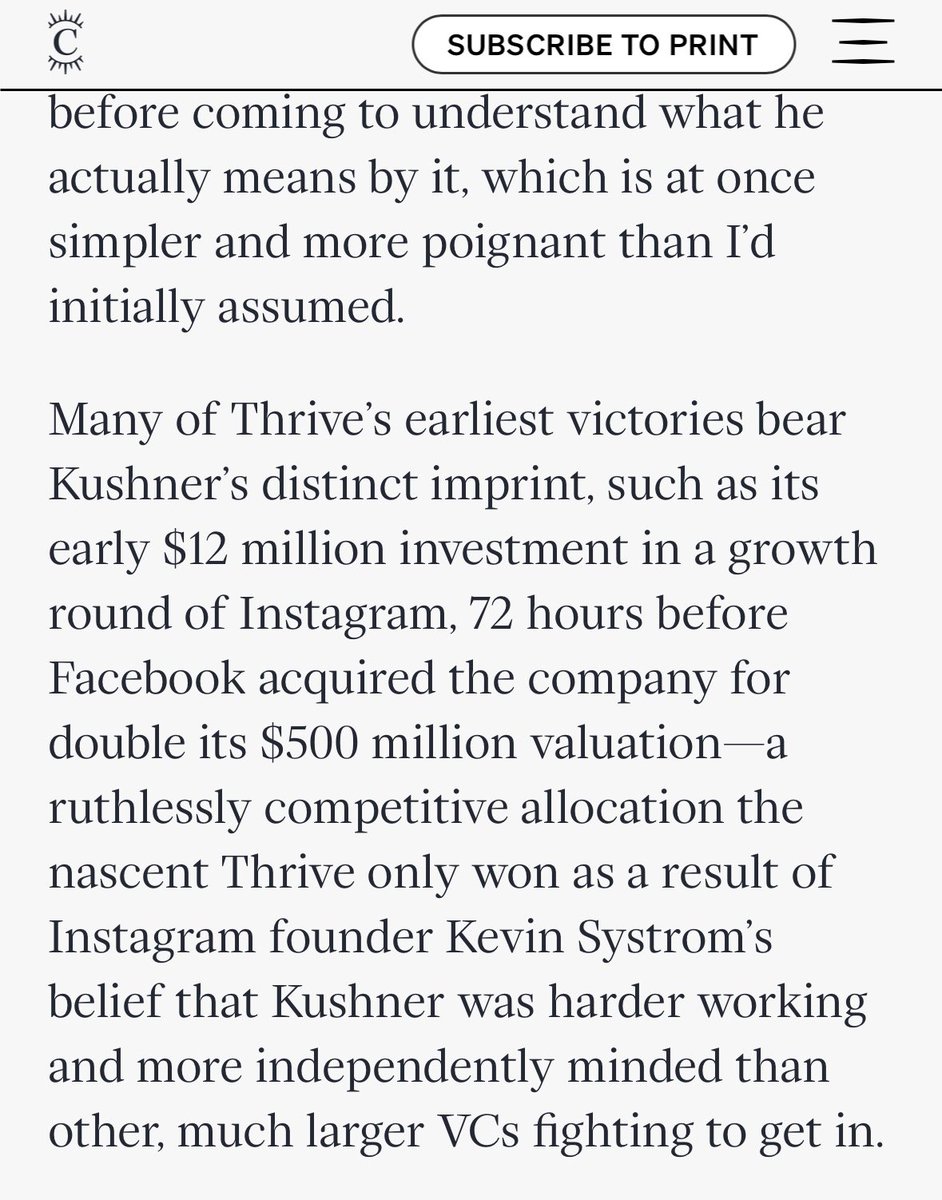
most people forget that markets for scarce/prestigious things are usually not price-taker environments. You don’t have to be the highest bidder or most senior person to get something. Money plays a role, but more often, allocation of resources is driven by stable matches and preferences.
Kavya tweet media
English
1
0
0
154
Kavya
Kavya@kavyavenkat4·
also it’s funny how FAANG has just faded as a concept and now it’s just MAG-7
English
0
0
0
65
Kavya
Kavya@kavyavenkat4·
remember when private equity used to be risky? It’s a lot more diversified than most MAG-7 concentrated portfolios
English
1
0
0
73