
Michael Kayemba retweetledi

URTNA: The Forgotten Pan-African Broadcasting Powerhouse That Once Connected the Continent, Killed By French Colonial Cannibalism
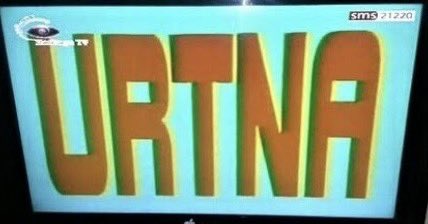
Before Trace TV, before algorithmic playlists, before the French-owned media cartels took over, there was URTNA; the Union of National Radio and Television Organizations of Africa (Union des Radiodiffusions et Télévisions Nationales d’Afrique).
Founded in 1962, just two years after many African nations gained independence, URTNA was one of the earliest and most ambitious pan-African institutions. It operated as an autonomous specialized agency under the Organization of African Unity (OAU) and brought together broadcasting organizations from across the continent - eventually covering stations from nearly 48 countries.
Its Real Historical Impact
URTNA’s greatest achievement was the programme exchange system. African television and radio stations regularly swapped content, meaning a viewer in Nairobi could watch Congolese soukous, Senegalese mbalax, Algerian raï, South African kwaito, Ethiopian jazz, or Zambian Zamrock without needing foreign intermediaries.
This was revolutionary in the pre-internet, pre-YouTube era. URTNA’s music programs in the 1980s and 1990s were legendary. They created a genuine continental soundscape where Africans discovered and celebrated each other’s cultures directly. The Programme Exchange Centre (PEC) in Nairobi played a central role in distributing this rich, diverse content.
In short, URTNA was an attempt to:
• Reduce cultural and media dependence on Europe and America
• Promote authentic intra-African cultural exchange
• Build a shared African media identity beyond colonial borders
The Contrast Today
Compare that vision with what replaced it. French-owned Trace TV and the current cartelized music ecosystem have narrowed African music to a handful of heavily promoted stars (Diamond Platnumz, Burna Boy, Fally Ipupa, Wizkid, Asake, etc.). Real diversity has been buried under heavy rotation, algorithm manipulation, and commercial gatekeeping.
The vibrant, borderless musical exchange that URTNA facilitated has been largely dismantled in favor of profit-driven monopolies.
Independent voices and regional sounds that don’t fit the approved commercial template are systematically blacked out from major platforms, radio stations, and even big events.
URTNA represented a brief, hopeful period when Africans tried to control their own cultural narrative. Its eventual decline and renaming to the African Union of Broadcasting (AUB) in 2006 coincided with the rise of commercial globalization in African media.
France has destroyed the very thing that truly livens up Africans - music, art, and culture - and turned it into another extraction racket. Trace TV wiped out authenticity and crafted an era of cartels where the only musicians we now know from outside our borders are the same cherry-picked few played on heavy rotation to manufacture popularity and shore up sales.
Any artist who refuses to sign up to this extortion scheme is systematically blacked out from affiliated radio stations, concert promoters, and even major gigs
The legacy remains powerful: it proved that a truly pan-African cultural space is possible when the continent’s own institutions lead the way instead of French conglomerates, Western algorithms, or local gatekeepers chasing foreign validation.
That history is worth remembering - especially now, as we watch the same forces that killed authentic exchange celebrate their dominance at summits in Nairobi. URTNA showed what was possible. Its suppression shows exactly what was taken from us.
English