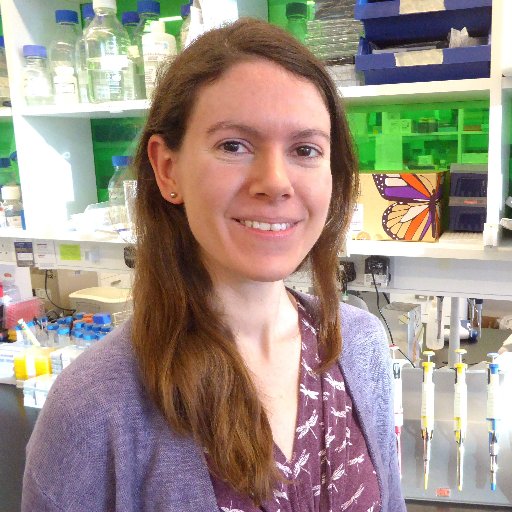
Samuel Keat
295 posts

@keat_sam
PhD Student at the Dementia Research Institute, Cardiff University. Looking at the genetic basis for Alzheimer's disease.


How can we better understand the impact of genetics on Alzheimer's risk? We spoke to @HazelLRoberts about her role in IPMAR, a major UK DRI initiative that established 100 stem cell lines, capturing the effects of Alzheimer's risk genes👉buff.ly/xDH8PnT


Alzheimer's patients 'could miss out on new drugs' bbc.co.uk/news/health-68…

We can’t wait to welcome Sarah Marzi @sj_marzi, Senior Lecturer and @UKDRI Group Leader, to The Festival of Genomics & Biodata in London. Don’t miss her talk on #epigenetic regulation in #AlzheimersDisease. Register now: hubs.la/Q02dB0w70 #FOG2024

Huge thanks to @azziejo for taking the time to share her experiences of living at risk of early onset Alzheimer's. Hearing different perspectives really helps us understand the importance of what we do @UKDRI @cardiffuni @alzheimerssoc @AlzSocCymru

Excited to have @ibrahimihsan kicking off the 2024 season of the #neurogenomics seminars next Tuesday, 3pm UK time. Join us to hear about the awesome work done in @steinaerts lab, decoding enhancer regulatory code with deep learning and impressive functional evaluation 🧠🧬


Excited to share our work on @ACSCentSci! We used acetlylysine to replace Lys73 of OXA-48 and showed NaCl altered the antibiotic effectiveness by promoting a newly discovered inactive acyl-enzyme intermediate.@YuanHe_NWU @the100footpole @JinGroupMIB pubs.acs.org/doi/10.1021/ac…


Blood tests to diagnose the diseases that cause dementia could become available on the NHS within five years. We’re proud to have launched the £5 million #BloodBiomarkerChallenge with @AlzResearchUK, @NIHRresearch and funded by @PostcodeLottery. @SianGregory7 explains.


🧠💡 Passionate about #MachineLearning and its transformative impact on #Genomics? We’re recruiting a PhD student with expertise in ML, statistics, and programming. We're happy to talk to people from non-biological backgrounds, as long as you're excited by the idea of learning about genetics, evolution and biology. Please retweet! Full details of this opportunity can be found here: shorturl.at/fGNWX 📊 Why Machine Learning? The human genome is billions of basepairs long: it is impractical to measure the effect of mutating each basepair, on thousands of transcription factors, in the context of thousands of cell types... We think that our best bet to understand genomic regulation is to learn to predict variant effects. on the epigenome. Machine learning approaches, particularly the use of attentional learning, have shown great promise in enabling us to do this. 🧬 What's our focus? We're working on predicting cell-type specific effects of genetic variants on transcription factors. Transcription factors are DNA binding proteins which regulate how genes are expressed in different contexts. To train the models we are using huge public datasets, in combination with in-house datasets, to train and fine-tune models. 📖 For a broader context of ML's role in molecular biology, read this article: towardsdatascience.com/large-language… If you want to learn more about the field, take a look at this blog post from DeepMind's about recent work on predicting gene expression deepmind.google/discover/blog/… Funding is available for home students. Self-funded international applicants are welcome to get in touch. I encourage all interested candidates to drop me a message either by DM or email.


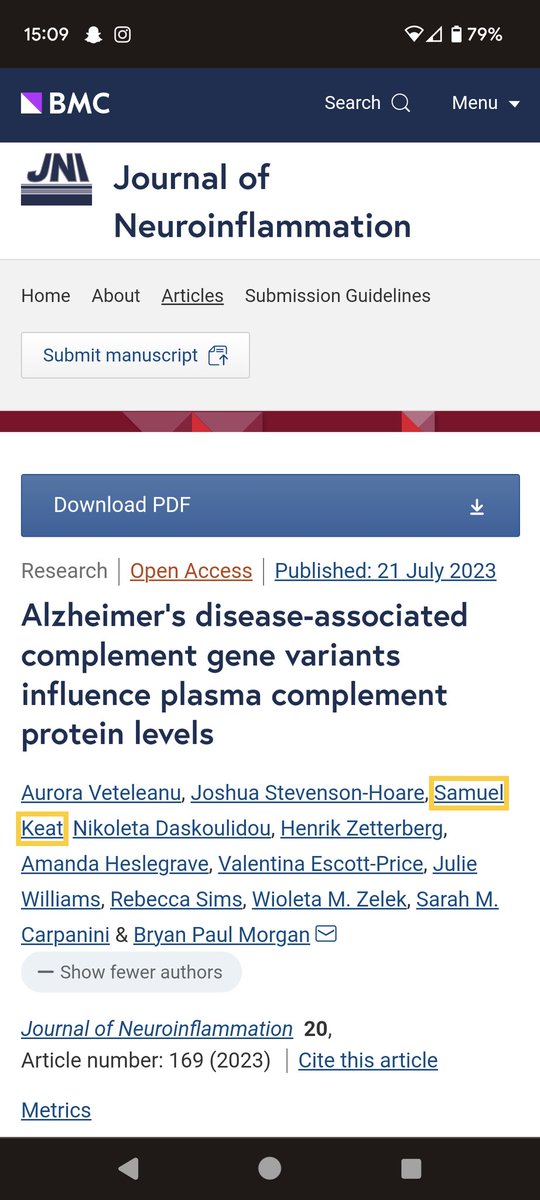
Our latest paper is out and it's a review I would have wished for at the start of my PhD! 👩🔬 Have a look if you are interested in modeling neuroinflammation using iPSC 🧫 jneuroinflammation.biomedcentral.com/articles/10.11…