Blinde vink
(Blind Finch)
Some of the fat in which the meat has been cooked is often poured over the potatoes before serving. Blinde vink is also popular in the neighboring Belgium. Blinde vink is a traditional meat dish originating from the Netherlands. The dish consists of ground meat that's seasoned and wrapped with a flattened veal cutlet. Blinde vink can be assembled at home or bought at the butcher shop. It is roasted until the meat is fully done, and it's then usually served with vegetables or potatoes on the side.
Cima alla Genovese
The whole concoction is flavored with spices such as bay leaves, parsley, and black pepper. The dish is a typical representation of the cucina povera, and in the past it was prepared as a frugal way to use leftovers. Today, it is a rare, but very sought after dish that is traditionally served sliced and accompanied by steamed vegetables or salads on the side.A traditional Genovese dish known as cima alla Genovese is actually a meat loaf consisting of a veal breast stuffed with a huge number of ingredients. Here are just some of them: onions, pork fat, ground veal, pistachios, various offal, peas, hard-boiled eggs, carrots, garlic, and crustless white bread.
Meatloaf
(Faschierter Braten, Meatbread, Vleesbrod, Rulo Stefani, Asado Aleman, Pulpeta, Sekaná, Farsbrød, Lihamureke, Hackbraten, Faschierter Braten, Falscher Hase, Rolo, Stefánia Szelet, Polpettone, Kafta, Kofta, Klops, Rolat, Albondigón, Empotido, хучмал, Pieczeń Rzymska, Bobotie, Köttfärslimpa, Dalyan Köfte, Giò, Pain de viande, Falscher Hase)
The history of the meatloaf as we know it today is believed to have its origins in ancient Rome, where a gastronome named Apicius first mentioned the idea of minced meat patties. It is believed that the now traditional loaf-shaped form grew out of the necessity to hasten the process and save time. READ MOREThe ubiquitous meatloaf is a dish celebrated for its simplicity and versatility. It is made with a substantial amount of minced meat, most commonly pork and beef that is bound by eggs or dairy products. Typically, it is placed in a special mold or formed by hand in the popular shape of a log.After it has been baked, it is usually sliced and served with mashed potatoes or vegetables, all doused in the accompanying juicy sauce. Meatloaf is not a dish that is commonly found in high-end restaurants, nor does it belong to haute cuisine. It is rustic and ordinary, yet incredibly comforting and nutritious.
Vitoulet
(Vitoulet de Charleroi, Gehaktballetjes, Boulettes de viande hachée)
Apart from the different ingredients, the boulet meatballs are usually larger than the vitoulets, and they're typically served hot, with sauce on the side. Vitoulet meatballs, on the other hand, can be enjoyed both warm and chilled, with or without sauce, and they’re commonly accompanied by potatoes and a fresh salad on the side. Vitoulet is a Belgian meatball that is typically made with a combination of ground pork, ground veal, bread, milk, eggs, shallots, and parsley. The meat mixture is usually seasoned with salt, pepper, and nutmeg, and it is then shaped into balls which are fried on melted butter until nicely colored and crispy on all sides.Another version calls for making slightly elongated meatballs with a combination of ground veal or veal and pork, egg yolks, milk-soaked bread, parsley, salt, and pepper. For that version, the meatballs need to be rolled in breadcrumbs before being fried in browned butter. Vitoulet meatballs are typically associated with the Belgian city of Charleroi, and they’re often confused with another Belgian meatball called boulet à la liégeoise, which hails from the city of Liège and usually consists of ground pork and beef, egg yolks, onions, cream, white bread, and parsley.
Chomlek
(чомлек)
Some varieties of this traditional stew can be found in other Balkan countries, and it is mainly associated with the traditional cuisine of neighboring Bulgaria, particularly that of Blagoevgrad Province. Chomlek is a traditional North Macedonian stew that is typically prepared with veal or baby beef, a generous amount of tiny, walnut-sized onion bulbs (called kokar or arpadzik in Macedonian), and garlic. Depending on the recipe, either red or white wine is added to the mixture, while other common ingredients contained in the dish include dried red peppers, carrots, tomato purée, parsley, or mushrooms. Chomlek is usually seasoned with salt, black pepper, red pepper, and bay leaves. It is customarily prepared in a traditional earthenware dish or pot, with the lid placed on top and firmly secured and sealed with dough. Even though this delicacy is a rather straightforward dish, it is also time-consuming and takes hours to cook.North Macedonian chomlek is mostly associated with the southwest and Pelagonija regions of the country, especially with Bitola, Prilep, Ohrid, and Krushevo, with each town having their own version of the dish: bitolski chomlek, prilepski chomlek, ohridski chomlek, and krushevski chomlek.These chomlek variations use more or less the same ingredients with slight differences. In North Macedonia, chomlek is a typical winter dish, usually eaten for lunch, and there’s a long-standing tradition of preparing this dish for New Year’s celebrations in the towns of Bitola and Prilep.The stew is typically enjoyed with a glass of red wine on the side, and it is recommended to dip some bread in it while eating it. The origins of this specialty most likely stem from Turkish cuisine, which is suggested by the dish’s name, which derives from the Turkish word çömlek, meaning earthenware pot.
-Một trong những món ăn quốc dân nổi tiếng của Peru là "Ceviche." Ceviche là một món salad hải sản được chế biến từ cá hồi, cá tráp, tôm hoặc các loại hải sản khác, ướp trong nước chanh, một số loại gia vị như ớt, hành tây, cilantro (rau mùi) và muối.
Quan trọng nhất trong việc chế biến ceviche là sự ảnh hưởng của nước chanh, đóng vai trò "nấu chín" cá mà không cần sử dụng nhiệt độ. Món ăn này thường được ăn kèm với bánh ngô, khoai lang, hoặc camote (loại khoai lang đỏ). Ceviche là một món ăn nhẹ, tươi mát, và phổ biến trong các vùng ven biển của Peru.
-Peru là một quốc gia đa dạng với cảnh đẹp tự nhiên hùng vĩ, di tích lịch sử phong phú và văn hóa độc đáo. Dưới đây là một số địa điểm du lịch nổi tiếng ở Peru:
1. Machu Picchu
2. Cusco
3. Sacred Valley (Thung lũng Thiêng Liêng)
4. Lake Titicaca (Hồ Titicaca)
5. Amazon Rainforest (Rừng mưa Amazon)
6. Nazca Lines
7. Arequipa
8. Huacachina
Những điểm đến này chỉ là một phần của những trải nghiệm du lịch đa dạng và phong phú mà Peru mang lại.
-Những địa điểm nối tiếng ở Nước Ecuador với cảnh đẹp tự nhiên đa dạng và di tích lịch sử.
Dưới đây là một số địa điểm du lịch nổi tiếng ở Ecuador:
1. Quito
2. Galápagos Islands
3. Cotopaxi
4. Baños
5. Cuyabeno Wildlife Reserve
6. Otavalo
7. Ingapirca
Những địa điểm này chỉ là một số trong hàng loạt những trải nghiệm du lịch đa dạng mà Ecuador mang lại cho du khách.
-Belarus không có một món ăn quốc dân cụ thể được công nhận chính thức, nhưng một số món ăn truyền thống và phổ biến thường xuất hiện trong ẩm thực của đất nước này.
Một trong những món ăn phổ biến và có thể coi là biểu tượng của Belarus là "Draniki" hoặc "Kartoffelpuffer."
Draniki (Kartoffelpuffer): Draniki là một loại bánh khoai tây chiên giòn, thường được chế biến từ khoai tây, hành tây, và bột mỳ. Món ăn này thường được ăn kèm với sốt chua hoặc một loại kem chua gọi là "smetana." Draniki thường được coi là một món ăn truyền thống và thường xuất hiện trong các dịp lễ và các bữa tiệc gia đình ở Belarus.
Shashlik
(Shashlyk, шашлы́к, խորոված, şişlik, Tikə Kabab, მწვადი, সাসলিক, Szaszłyk, Šašlykas)
In Georgia, shashlik is known as mtsvadi.Shashlik is the name for a traditional Central and West Asian barbecue consisting of marinated, skewered, and grilled chunks of meat such as lamb, beef, or pork, depending on regional and religious preferences. Lamb, beef, or pork is usually combined with chunks of vegetables such as bell peppers, onions, mushrooms, or tomatoes.The meat is typically marinated overnight in vinegar, herbs, spices, and dry wine. In Russia, barbecue is traditionally reserved for men, who are in charge of the whole grilling process, while the women are usually busy slicing vegetables and setting the tables.Shashlik is traditionally prepared for events with a large number of people gathered around the fire, cooperating and socializing in the process, making the dish a communal affair. Because the origins of the dish lie between Turkey and Russia, many believe that the name is derived from the Turkish word shish, meaning skewer.
Picanha
(Sirloin Cap, Rump Cap)
The name picanha is derived from the word picana, referring to the ranchers' pole used for herding cattle in Portugal and Spain. The technique was brought over to Brazil where the word picanha was used to refer to the part of the cow that was poked by ranchers with the pole.Picanha is a fresh cut of beef that's especially popular and highly prized in Brazil. In the US, it's called sirloin cap, and in the UK, it's known as the rump cap. Picanha is situated on the back side of the animal, above the butt, where it sits on a fat cap .It's mostly used for churrasco – the meat is first grilled, then sliced off of a skewer. This cut holds very little fat in the meat, so it must be cooked perfectly in order not to make it tough. In Brazil, every churrasco has picanha, and all of the best churrascarias feature picanha on their menus.
Chilaquiles
Today, there is a great number of regional variations of the dish, so in Sinaloa it is prepared with a white sauce, and in Mexico City, the dish is traditionally topped with epazote sprigs.Chilaquiles are, at their most basic, an assembly of fried tortilla pieces drenched in chili sauce with optional meat and vegetables. The dish is popular both in Mexico and the United States as a great way to use up leftover, stale tortillas. The name of the dish is derived from chil-a-quilitl, meaning greens or herbs in a chili broth.
Cochinita pibil
This Mayan-influenced dish is most often served on weekends in many Mexican homes, usually as a Sunday family ritual.Cochinita pibil is a Mexican pork dish originating from Yucatan. Pork is marinated in a combination of annatto paste, bitter orange juice, and garlic. It is slowly baked and then shredded and served on tortillas, tacos, or on its own with shallots, pickled onions, salsa, and various roasted vegetables.Cochinita pibil is characterized by the red color of the meat, imparted by the annatto seeds from the marinade. Originally, pork was wrapped in banana leaves prior to baking, but today a foil or any other suitable wrapping can be used instead. Since cochinita means baby pig, and pibil means buried or underground, it acts as a proof that the original recipe used a whole suckling pig that was buried in a pit for roasting.
Tom kha gai
(Tom kha kai, ต้มข่าไก่, Thai Coconut Soup, Chicken Coconut Soup)
Since the dish is very popular, there are also other versions of the soup - vegetarian, tofu, seafood, and pork tom kha are just some of its varieties. It is traditionally served with rice on the side, garnished with coriander leaves and diced tomatoes.Tom kha gai is Thailand's delicious national dish coming from the central part of the country and bearing the influence of neighbouring Laos. It is a soup whose name translates to boiled galangal chicken soup, consisting of coconut milk, chicken chunks or shreds, galangal (reddish-brown or pink woody plant related to ginger), lemongrass, garlic, bird's eye chili peppers, kaffir lime leaves, fish sauce, and shiitake mushrooms.Galangal's peppery, pungent, slightly sour and floral flavors provide an interesting contrast to the creaminess of coconut milk, creating a wonderfully aromatic dish in the process. Tom kha gai is highly nutritious with great medicinal properties, such as the ability to soothe the gastro-intestinal tract.
Ovcharska salata
(Ovcharska Salad, Овчарска салата, Shepherd's Salad)
It is especially popular in summer due to its refreshing flavors and the usage of seasonal vegetables.Ovcharska salata is a simple variation of the famous Shopska salata. Essentially, it is Shopska salata (cucumbers, tomatoes, onions, peppers, and cheese) with the addition of mushrooms, eggs, and ham. The salad is typically tossed with vegetable oil, left to rest for a few minutes, and it is then ready for consumption.
Shopska salata
(Shopska Salad, Bulgarian Salad, Шопска салата, Salata bulgărească, Šopský salát, Sałatka szopska, Sallatë Shope, Sopszka saláta, Σαλάτα σόπσκα)
The word shopska in its name refers to the frugal Shopi people from the Shopluk region, where Bulgaria, Serbia and Macedonia meet.Šopska salata is a traditional cold salad that is also one of the national dishes of Bulgaria. Often served during summer, when one can find it in most Bulgarian restaurants, the salad consists of chopped tomatoes, cucumbers, onions, roasted or raw peppers, and Bulgarian cheese .It was originally created in the 1950s, when Bulgarian top chefs were asked to create dishes that would attract tourists to the country. The vegetables are typically salted, drizzled with sunflower oil, and sprinkled with grated Bulgarian sirene cheese on top.Some people substitute sunflower oil with olive oil in hopes to enhance the dish, but it is believed that it only spoils the authentic taste of the salad. A perfect, light and refreshing dish for hot summer days, shopska salad is a healthy bite of Bulgarian tradition.
Brown Cheese (Brunost)
(Brown Cheese, Gudbrandsdalsost)
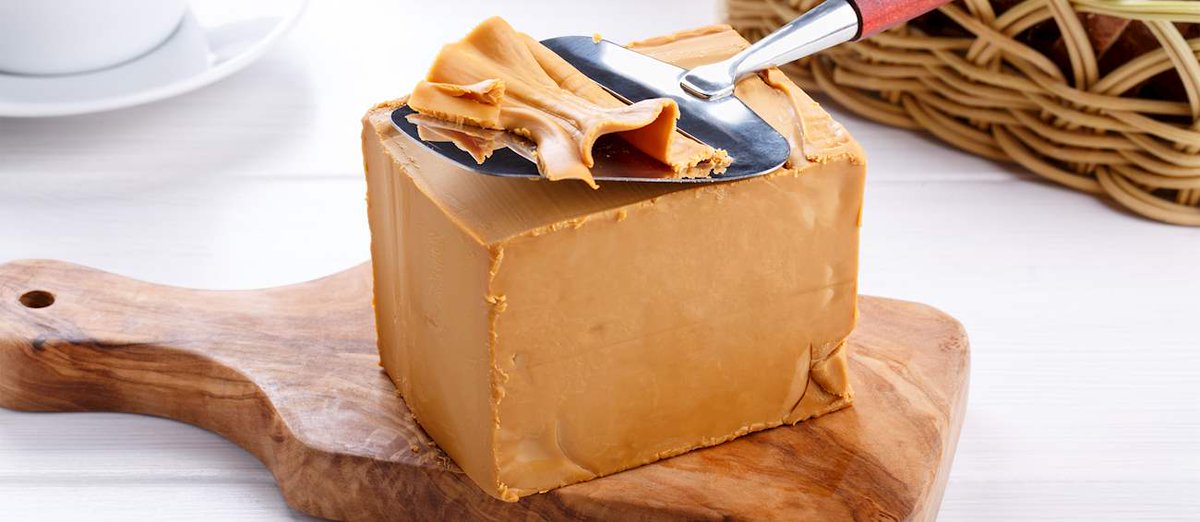
The cheese is typically sliced with a slicer.Brunost is a Norwegian and Scandinavian brown processed cheese made from cow's and goat's milk whey. Technically it's not a cheese at all because it's made from a secondary product. The whey is boiled down to a caramelized sugar. Depending on the length of the boiling, the cheese can be less or more dark and rich in color.The blend is placed into bags and left to cool so that the sugars crystallise. Once chilled, it is packaged into a block and it's then ready to be enjoyed. Brunost has a dense texture, while the flavors are sweet and caramel-like. It is recommended to serve it on rye toast with strawberry jam.
Glögg
Danish version, known as gløgg, is usually paired with æbleskiver pancakes. The drink is mainly enjoyed in the weeks leading up to Christmas.Glögg is a favorite winter drink in Scandinavia. In its basic form, this version of mulled wine combines red wine, sugar, and various spices such as cardamom, cinnamon, cloves, allspice, ginger, and orange zest. Typically served warm, glögg also often includes a splash of distilled spirit such as vodka, brandy, sherry, port, or akvavit.Alcohol-free variations also exist, while the red wine base is sometimes replaced with white wine, fruit juices, or cider. Although it was initially associated with higher social classes and nobility, in the 1900s, it became a more common drink. In Sweden and Finland (glögi), it also includes raisins and almonds, which are sometimes strained and served on the side.
Paris, Pháp
Có thành phố nào đẹp hơn Paris? Đó là một mảnh đất lãng mạn và lịch sử đan xen với nhau. Nhà thờ Đức bà, tháp Eiffel, vương cung thánh đường Sacre-Coeur, các quán cà phê xinh xắn, những đường phố rải đá cuội, người dân xinh đẹp đi bộ ở sông Seine… mỗi khu phố dường như đều có một biểu tượng của riêng mình.