Sabitlenmiş Tweet
Kindgeek
4.2K posts

Kindgeek
@kindgeeks
Kindgeek is a software development company of ambitious and experienced technology professionals. #FinTech Contact us: [email protected]
Lviv, Ukraine Katılım Mart 2014
3.4K Takip Edilen1.6K Takipçiler
Full technical breakdown of all five WebRTC mobile network scenarios, with DevOps checklists, mobile-side impact, and the surveillance app use case behind this analysis: kindgeek.com/blog/webrtc-mo… 👈
Yura Gnatyuk@ygnatyuk_
Your WebRTC app can pass QA and still fail in production. Not because the code is broken. Because the network assumptions are wrong. We at @kindgeeks saw this during a React Native rebuild of a mobile surveillance app. Before any development started, we ran a full network scenario analysis across five real deployment environments. Four of them surfaced failure modes that could have broken video streaming in production. The pattern was clear. Office WiFi is not just WiFi. Client isolation can block device-to-device communication. NAT hairpinning can drop the fallback path entirely on routers that don't support it. Corporate VPNs are not neutral pipes. UDP gets blocked or throttled. Encapsulation headers shrink the effective MTU and fragment video packets in transit. Public mobile networks are not predictable. Carrier-grade NAT makes direct P2P unreliable for a meaningful share of users. Without TURN exposed on TLS/443, a subset of users will get no video at all in restrictive environments. Reverse proxies don't carry media. Signaling over WebSockets passes through fine. UDP media dies because proxies are built for HTTP. Idle WebSocket connections can time out mid-stream with no clean error. Full TURN dependency changes the architecture. The relay now processes every byte of video. That means 2x bandwidth, 20 to 50ms of added latency, redundancy planning, and regional TURN nodes for any real-time control. The important takeaway: Most mandatory fixes were not mobile fixes. They were infrastructure decisions: firewall rules, TURN topology, TLS/443 exposure, split-horizon DNS, MTU caps, proxy configuration, and regional relay planning. The one mobile-side exception was reverse proxy environments, where explicit 25-second WebSocket heartbeats were required to keep signaling alive. This is why we run network scenario analysis before any code is written. Because when video fails in production, asking "which component is broken?" is too narrow. The better question is: "Which environment did we forget to design for?" Full article and the surveillance app use case in the first comment. Full technical breakdown of all five WebRTC mobile network scenarios, with DevOps checklists, mobile-side impact, and the surveillance app use case behind this analysis: kindgeek.com/blog/webrtc-mo…
English
Kindgeek retweetledi

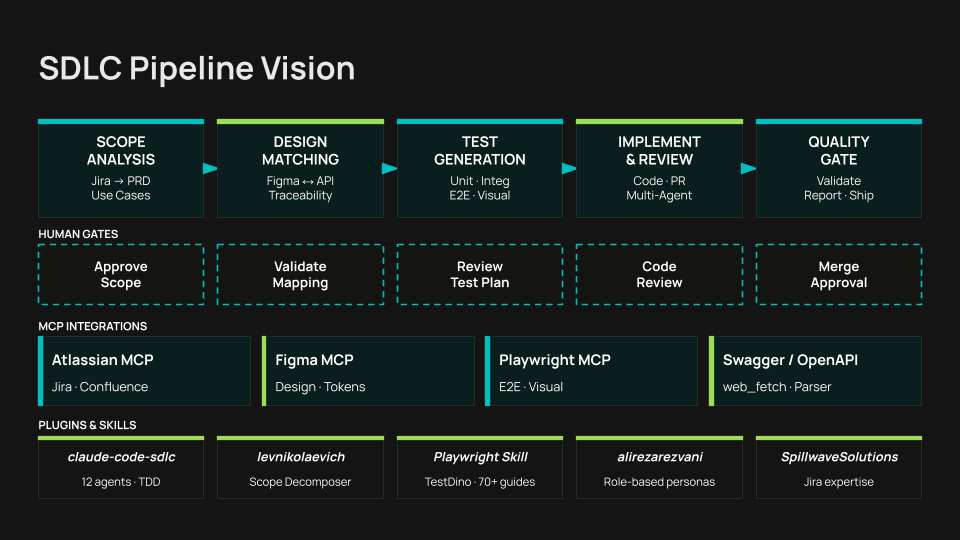
AI does not fix a broken SDLC. It scales whatever operating model already exists. Our CTO @Michael47242613 on what AI-native software development actually means in 2026:
kindgeek.com/blog/ai-native… 👈
English
Is Starbucks a Bank? The Loyalty Program That Had More Payments Than Apple Pay and Google Wallet?
youtube.com/watch?v=LQS2sy…

YouTube

English
Kindgeek retweetledi
🧵 Досвід після сотень дзвінків з компаніями щодо AI-трансформації. 👇
Потрібна допомога: Ми оновили easy-flow.ai. Буду дуже вдячний за ваш фідбек. + Коротка історія про те, як сотні+ дзвінків з клієнтами та проєкти змусили нас переосмислити, якими повинні бути наші AI-сервіси.
З чого починали:
Easyflow стартував як AI Agents компанія. Модель проста: setup fee + підписка. Ти платиш setup fee, отримуєш AI-агентів, далі щомісячна підписка.
Здавалось логічно. AI-агенти - це майбутнє, всі про це говорять.
Ми підписували клієнтів. Всі задоволені.
Але...
AI-ринок за останні 18 місяців пройшов через різні хвилі хайпу. Кожен no-code інструмент став "AI agent platform". Слово "AI-агент" потроху девальвувалося до рівня "чат-бот".
Ми почали помічати просту логіку: AI-агент - це не проблема клієнта. Агент - це одне з рішень. Проблема глибше.
Спочатку наша гіпотеза була такою: проблема клієнтів
в контексті AI-автоматизації - це "немає AI-агентів".
Але часто все виявлялося набагато прозаїчніше. Основна проблема: компанія не готова до AI взагалі.
Сотні розмов із компаніями різних індустрій: стартапи, scale-up, корпорації. Різні країни, різні масштаби, різні бюджети.
Коли ми проаналізували ці дзвінки, стало очевидно: патерни повторюються.
У впровадженні AI компанії знову і знову стикаються з одним і тим самим списком проблем. Ось він:
- Відсутність стратегії та залученості керівництва.
- Відсутність розуміння того, що зараз реально може AI: без перебільшень і применшувань.
- Відсутність owner'а на стороні компанії, який готовий взяти і залідати AI-трансформацію.
- Відповідно, відсутність часу.
- Саботаж команд щодо прийняття AI.
- Відсутність чітких процесів. (Немає описаних процесів взаємодії між департаментами.)
- Інструменти, які є core бізнесу, - без API-доступів.
- Безпека даних і відсутність чітких guidelines.
- Час / гроші.
Але це все відносно дрібниці. Основний висновок, у багатьох бізнесів не готові: ДАНІ. Якість даних на рівні всієї компанії. Якість output'у. Якість даних між командами різних департаментів, продуктів, процесів.
Не в тому сенсі, що їх немає. Даних багато. Але вони живуть у п'яти різних інструментах, структуровані по-різному в кожному відділі, без власника і без логіки. 80% реального знання організації - в Slack-переписках і Gmail-тредах (інколи навіть у WhatsApp/Telegram чи Viber, інколи в голосових дзвінках, які ніхто не записує), до яких жоден AI-агент нормально не доступиться і з автоматизацією яких часто вийде хіба що AIзований хаос.
І AI-агент тут ні до чого - він просто перший, хто на цей хаос натикається.
Тобто це не технічна проблема. Це проблема операційна та стратегічна.
Що ми зробили з цим розумінням.
Перебудували сервісну модель навколо реального шляху клієнта:
1. AI Transformation - стратегія + впровадження + систематизація даних + люди.
2. AI Engineering - вбудована команда для компаній з продуктом.
3. AI Product Development - MVP з AI-стеком.
4. AI Agents - конкретний агент під конкретний процес.
Агенти нікуди не зникли. Вони просто стали четвертим сервісом, а не основним продуктом компанії. Тому що агент без якісних даних і без стратегії - це дорога іграшка.
Ще раз: ми оновили сайт. Буду вдячний за фідбек.
Що зрозуміло? Що ні? Що б змусило вас забукати дзвінок?
І окремо, якщо ви зараз у процесі AI-трансформації або тільки думаєте про неї: пишіть нам.
P.S На відео метафора AI-трансформації без якісних даних. 🙂
Українська
Kindgeek retweetledi
A banking platform. 60+ microservices. 900+ API endpoints: kindgeek.com/blog/post/test… 👈
One feature. 15 deploy-and-fix cycles in a single week.
The QA engineer didn't retest once. Not once.
Here's what most teams do instead:
Dev ships. QA spends 30-60 minutes setting up test data. Finds a bug. Creates a ticket. Developer picks it up hours later. "Can you reproduce?" Slack back-and-forth. Fix deployed. Repeat.
Multiply by 15. That's up to 15 hours of QA execution time. Two full working days. For one feature.
That's not testing. That's latency.
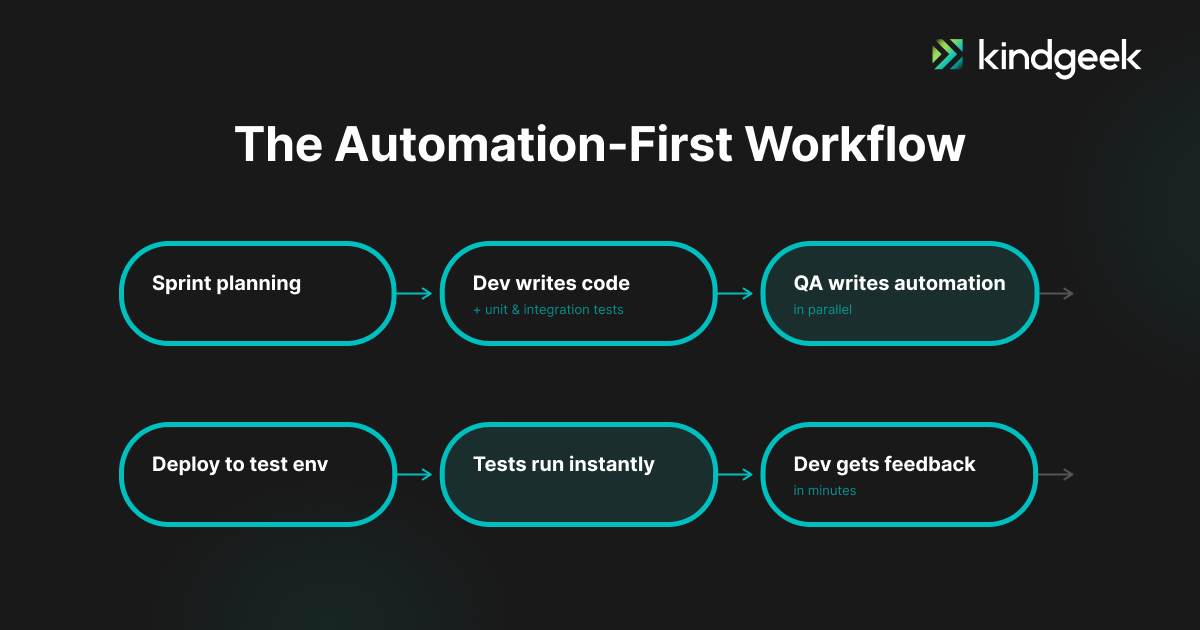
We at Kindgeek flipped the sequence. QA-after became QA-in-parallel.
QA engineers write automated tests alongside development, not after. The moment a developer deploys, tests run automatically. The report lands in Slack: every step, exact test data, expected vs actual, log links attached. Developer opens it, identifies the issue, fixes it.
No tickets. No ping-pong. No waiting.
That feature shipped in 1 week instead of 2-3. Same team. Same feature. Different system.
The broader numbers: release frequency went from once every 2-3 months to weekly. Issues caught in 15 minutes instead of half a day.
Automation-first isn't about QA. It's about control over delivery speed.
We broke down exactly how this works, with real numbers and setup, in the first comment.
Are you still testing after code ships? Or already testing before it exists?
#fintech #engineering #qa
English
Develop → test manually → automate is quietly costing your team weeks.
We flipped the sequence and shipped a complex feature in 1 week instead of 3.
Here's exactly how automation-first QA works (and why your team should be doing it)
kindgeek.com/blog/post/test…
English
Proud to be a @BVNKFinance partner watching this happen. We all at @kindgeeks wish you great success in this new chapter! 🚀
Stablecoin infrastructure just became a core asset for traditional payment networks.
Congrats @chrisharmse89 @jessehs and the whole team. 🤝
Bloomberg@business
Mastercard said it will acquire the stablecoin infrastructure startup BVNK for as much as $1.8 billion, four months after negotiations between BVNK and Coinbase Global for a roughly $2 billion deal fell apart. bloomberg.com/news/articles/…
English
Kindgeek retweetledi
🇪🇺 The Digital Euro is no longer a policy discussion.
It's an infrastructure deadline.
2026: ECB makes the launch decision. 2027-2028: Pilot with real money. 2029: Earliest launch window. 3 years. Mandatory integration. No opt-out for supervised institutions.
Here's what the architecture actually requires:
PSPs don't "accept" the digital euro. They become intermediaries. That means building transaction management, liquidity flows, access management, and A2A connectivity to 10+ Eurosystem services. Settlement, fraud management, tokenization, alias lookup all of it.
This is not a compliance checkbox. It's a platform rebuild.
At the @Money_LIVE_ conference, Ville Sointu, Chief Strategist at @Nordea said during his presentation: "There are no technology platforms today that can help banks deploy the Digital Euro. If you are a technology vendor, please start developing something immediately."
He also emphasized that the Digital Euro architecture being discussed is 100% blockchain-free: meaning it will not rely on blockchain infrastructure.
No mature, production-ready vendor ecosystem exists yet. In 2025. With 3 years to launch.
And the hardware layer is just as uncertain.
The offline mode stores money directly on a secure chip inside your phone. Not in an account on the chip. This introduces real custody and recovery challenges that don't exist in any current payment method.
Apple hasn't opened the secure element in Europe. For anyone. Regulatory intervention may become inevitable before 2029. That's still unresolved.
After 2029, three types of players will exist in European payments:
1. Infrastructure-native players who integrated early and own their stack
2. Banks forced into rushed vendor contracts under deadline pressure
3. PSPs who lost distribution leverage entirely
Banks waiting until 2027 won't just be behind. They'll lose vendor optionality and negotiating power at the worst possible moment.
This is the next PSD2. Except the rulebook already runs to over 1,000 pages, the architecture is defined, and there is no practical grace period once the decision is made.
Digital Euro is not a new product. It's a new distribution rail for Europe.
The question is simple: will you own your integration or rent it under pressure?
What's your take is your organization already mapping this?
At Kindgeek (kindgeek.com), we're already mapping what a reusable Digital Euro integration layer looks like for our clients.


English
Kindgeek retweetledi
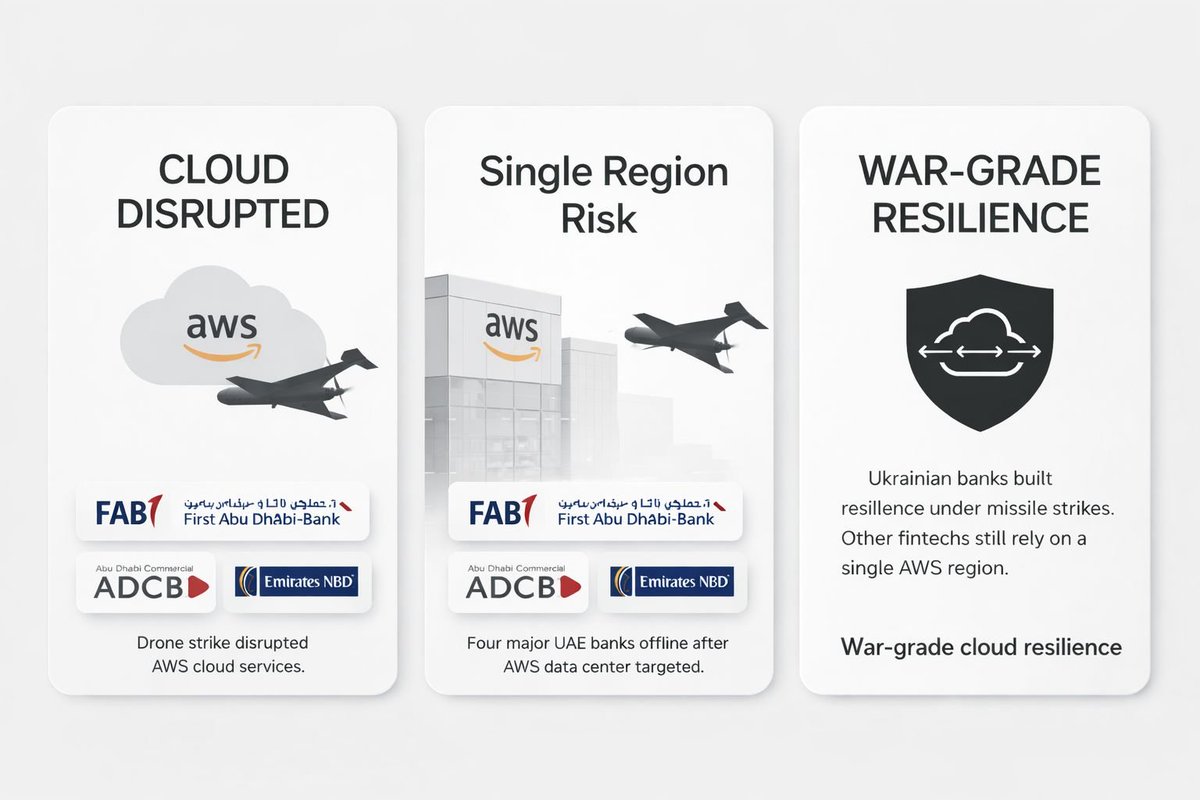
4 major UAE banks went down this week. First Abu Dhabi Bank (FAB), Abu Dhabi Commercial Bank , Emirates NBD, Emirates Islamic.
Millions of people couldn't pay for a taxi or check their balance. ADCB was offline for 48 hours.
The cause: Iranian drone strikes damaged two Amazon Web Services (AWS) data centers in the UAE.
This may be the first time in history that military action disrupted a hyperscale cloud provider's physical infrastructure.
And here's the contrast nobody is talking about.
Ukrainian banks, operating under active missile and drone strikes and blackouts for 4+ years, never went offline for 48 hours.
Why? Because they had no choice but to build real resilience. Multi-region. Multi-cloud. Backup power for blackouts. Disaster recovery tested weekly, not just documented.
Looks like the UAE banks had a single cloud dependency. One provider, one region, one point of failure. This isn't a cloud problem. It's an architecture problem.
Every CTO reading this: if your primary cloud region went dark tonight, how long until you're back online?
If the honest answer is "we don't know" or "48+ hours", that's the conversation we should have.
We help fintechs build multi-cloud, geo-redundant infrastructure. If you need DevOps or FinOps expertise to close that gap, DM me or contact us: kindgeek.com.
@FABConnects, @OfficialADCB, @EmiratesNBD_AE, @emiratesislamic.
English
How to Choose an AI Implementation Partner for Your Bank: A CTO’s Checklist 👉 kindgeek.com/blog/post/how-…
English
Kindgeek retweetledi
5 AI Use Cases That Actually Drive Revenue in Banking (Not Just Cost Savings) kindgeek.com/blog/post/5-ai…
English
Kindgeek retweetledi
Most banks still sell AI as a cost-cutting tool.
Automation. Efficiency. Headcount reduction.
That framing is too small.
@dbsbank publicly reported ~SGD 750M in economic value from AI across hundreds of production use cases and expects it to exceed SGD 1B.
Not from experiments. From systems embedded into core banking workflows.
@jpmorgan is another signal. AI copilots in wealth management are already helping advisors find research dramatically faster and scale client coverage. Not replacing advisors amplifying them.
This is the real shift:
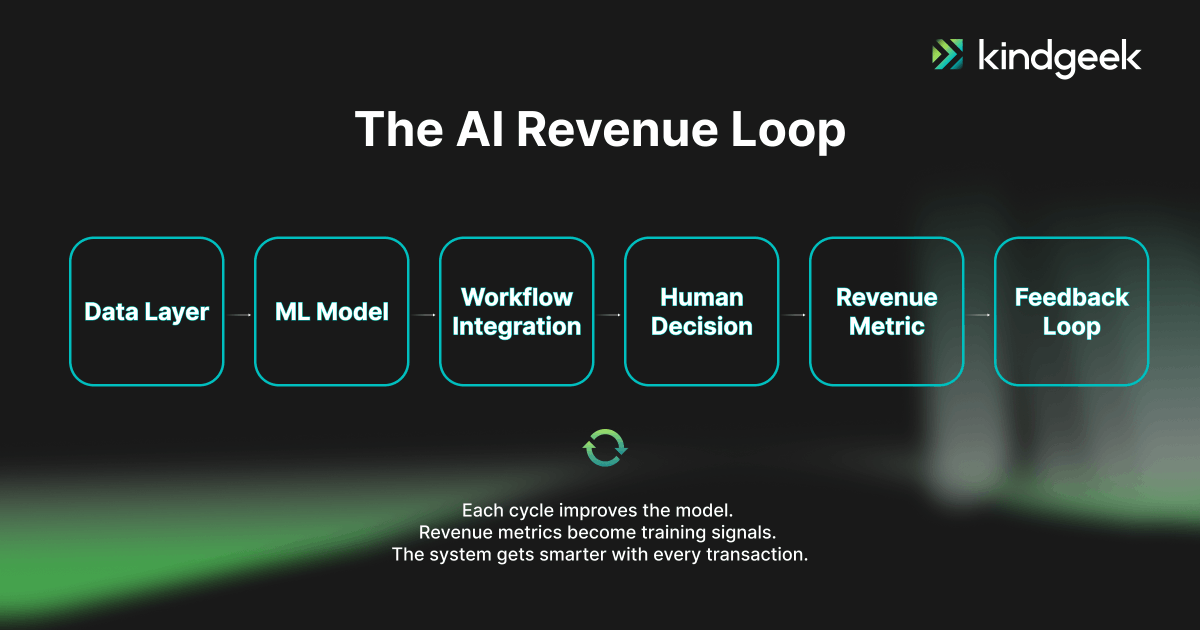
AI in banking is moving from cost optimization to revenue infrastructure.
In our latest deep dive, we broke down 5 AI use cases that actually generate money (not just save costs):
- AI credit scoring with alternative data (expands qualified borrower pool)
- Copilots for relationship managers and advisors
- Next-best-action engines for cross-sell and retention
- AI-enhanced AML (less noise, more real signals
- Conversational AI for service, onboarding and collections
The pattern is the same in every successful bank implementation:
Not a layer on top.
Embedded into decision workflows.
Measured in revenue, conversion and LTV not “AI metrics”.
And the key insight for mid-sized banks:
You don’t need 1,000 models or a Big Tech budget.
You need 5–10 focused AI systems deployed where they directly touch: revenue, risk, and customer decisions.
Start with one use case.
Tie it to a business KPI.
Then scale what actually moves money.
Full article with architecture notes and benchmarks: kindgeek.com/blog/post/5-ai…
English
Kindgeek retweetledi
It's my birthday today. 🎉❤️ Every year I write down things I wish I'd known earlier. This year 10 of them. Here they are:
On time. We romanticize the past and postpone life to the future. But the only thing we actually have is today. Right now we're creating the memories we'll be nostalgic about later.
On choice. Even in the worst moments, you have a choice. Not what happens to you but how you respond. And the best decisions come when you move TOWARD something, not when you run FROM something.
On problems. Learn to love solving them. Think of it as a chess game against a tough opponent. You can complain it's unfair. Or you can play.
On being yourself. External success comes from competing with others. Real character is built by confronting yourself and your own weaknesses.
On happiness. Someone once asked me: "Yura, what is happiness?" I started listing goals, values, achievements. They stopped me and said: "Just have one thing each evening you look forward to all day. A bike ride. Friends, family. A hobby you loved as a kid." That's it.
On the past not defining the future. "I'm this way because of my childhood." Sounds logical. Even comforting. But what if it's not a cause — it's an excuse you gave yourself? Trauma is real. But influence ≠ destiny.
On rejection. Most people stop after the first "no." They never press send, never try again. Then someone less talented but more persistent just does it. And wins. Not because they're better. Because they're not afraid of the word "no."
On simple ideas. Charlie Munger said: "Take a simple idea and take it seriously." Here's one: Health first, then time, then money. In that order. Without health — no energy. Without energy no time. Without time no money.
On slowness. Trust builds slowly. Reputation builds slowly. Health, relationships, a business that survives its first crisis — all slow. There are no cheat codes for things that truly matter.
On people. Quality of life = quality of people around you. Your people, if you're lucky enough to find them are the rarest thing you have. Be grateful. Fight for them. Forgive them. And forgive yourself. Thanks to the whole @kindgeeks team!❤️
That's my list. Nothing special. Nothing new. But I wish someone told me all of this 10 years ago.
P.S. Thanks for the congratulations!
P.P.S. Full episode on my podcast Flow (link in comments).

English
У мене сьогодні День народження. 🎉
1. Якщо хочете мене привітати, то найкращий спосіб це донати для Сил оборони України. Усі зібрані кошти я переведу у фонд «Повернись живим». Посилання: send.monobank.ua/jar/5XtGAyew2U
2. «10 речей про життя, які я хотів би знати 10 років тому | Особисті висновки та спостереження» з такою назвою сьогодні вийшов епізод мого подкасту Flow. Багато років поспіль у свій День народження я збираю власні висновки, думки та спостереження й публікую їх. З минулого року роблю це також у форматі подкасту, з цього року у відеоформаті. Тому, якщо цікаво, слухайте та пишіть свої думки 😊
Лінк: youtu.be/kuKcfOiwV8A?si…
3. Усім щиро ДЯКУЮ! 🇺🇦❤️

YouTube

Українська
Kindgeek retweetledi
Most problems we solve aren't actually problems.
They're symptoms.
We jump to solutions before understanding what we're really solving. We diagnose based on what's visible, not what's causing it.
The result? We fix the wrong thing. Repeatedly.
Here's how I think about problem definition:
First: Understand the current state
What specifically isn't working?
What evidence proves this is actually a problem?
What are the real consequences?
Has this happened before?
What was tried?
Second: Find the root cause
Keep asking "Why?" until you hit bedrock
Break the problem into parts map the cause-effect chain
Ask: What would it take for this to never be a problem again?
The uncomfortable truth: proposing solutions before understanding root cause is just expensive guessing.
Best diagnostic question I've found:
"How would you explain this problem to someone with zero context?"
If you can't do that clearly, you don't understand it yet.
What's your process for defining problems before solving them?
English