Kenneth N. Levy, PhD

70 posts

Kenneth N. Levy, PhD

Kenneth N. Levy, PhD

@klevyphd

I am a clinical psychologist and professor who studies attachment theory, personality disorders, and psychotherapy processes and outcomes.

State College, PA Katılım Aralık 2016
1.9K Takip Edilen986 Takipçiler
Kenneth N. Levy, PhD
Kenneth N. Levy, PhD@klevyphd·
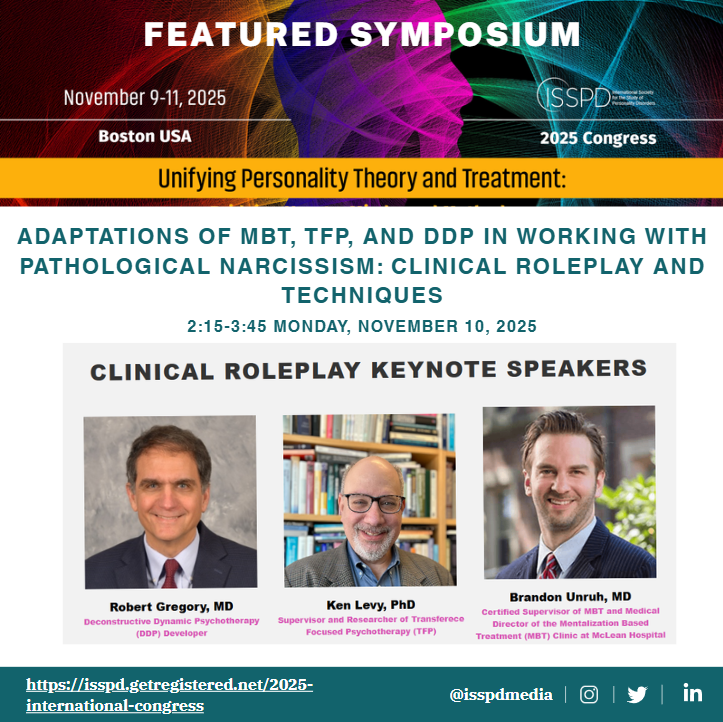
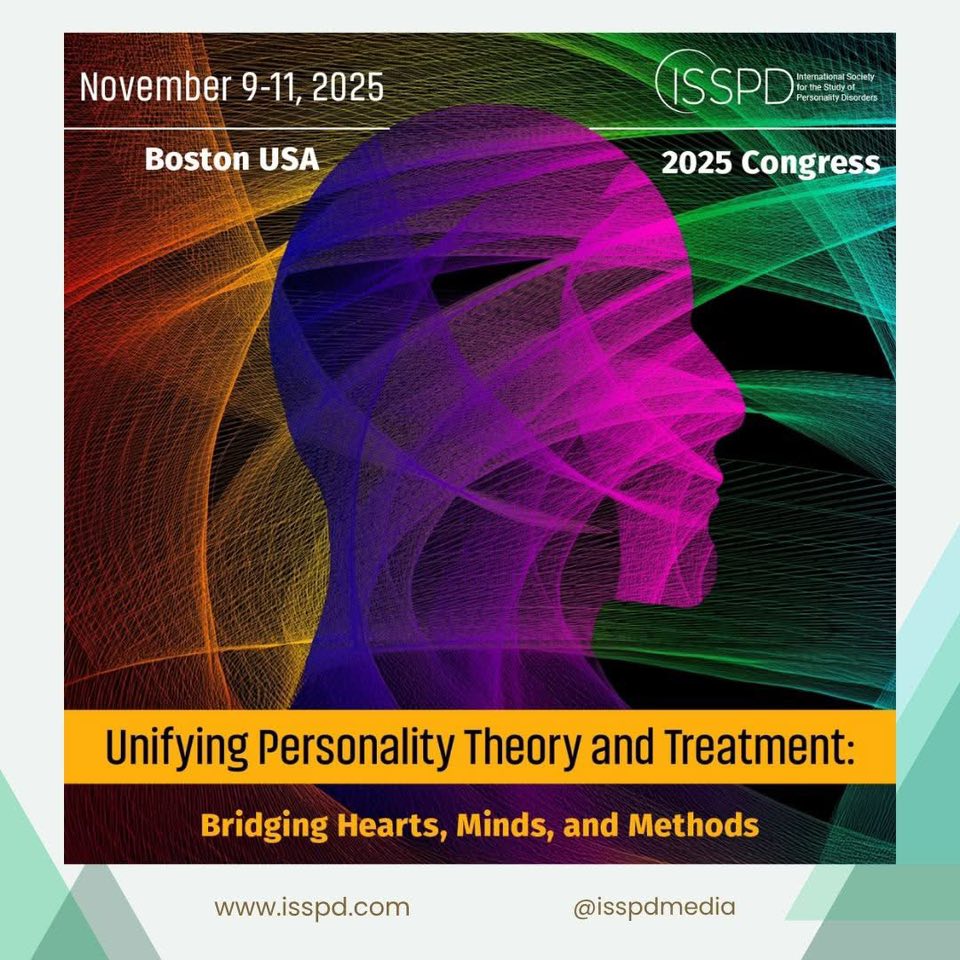
I am at the ISSPD Congress in Boston, where I am honored to be part of a keynote panel.
Kenneth N. Levy, PhD tweet mediaKenneth N. Levy, PhD tweet media
English
0
1
4
250
Kenneth N. Levy, PhD
Kenneth N. Levy, PhD@klevyphd·
@elliotpsych @AAJDeVille1 @JonathanShedler Thread 2/2. The first issue is DBT, although not a PDT, shares certain sensibilities, more so that CBT. Second, DBT is for BPD and CBT proper is not a good treatment for BPD (sans SFT). So if you are tx BPD, your more likely to use DBT than CBT proper. IMHO.
English
1
0
0
120
Kenneth N. Levy, PhD
Kenneth N. Levy, PhD@klevyphd·
@elliotpsych @AAJDeVille1 @JonathanShedler In my experience, many psychodynamic therapists (PDTs) practice DBT and quite well. It helps to have a theory of motivation. And, I do believe that they are more likely to practice DBT than CBT. There are several reasons but most is probably an artifact of two issues Thread 1/2
English
1
0
0
104
Jonathan Shedler
Jonathan Shedler@JonathanShedler·
DBT has sucked up approx 80% of all research funding for borderline personality—and has never once shown greater effectiveness than any other legit form of psychotherapy Reality vs PR See chapter in this book by @klevyphd for up to date review
Jonathan Shedler tweet media
English
11
43
340
30.2K
Kenneth N. Levy, PhD
Kenneth N. Levy, PhD@klevyphd·
@elliotpsych @proud_penelope @AAJDeVille1 @JonathanShedler Mentalization Based Therapy is a psychodynamic treatment approached based on psychoanalytic or psychodynamic theories and techniques, including attachment theory. It was developed by psychoanalysts (Fonagy & Bateman) and based on theory by Fonagy, Target, and others. Thread 1/2
English
1
0
4
105
Kenneth N. Levy, PhD
Kenneth N. Levy, PhD@klevyphd·
@jack_murbach @DrEricKuelker @JonathanShedler RCTs are very useful for testing mechanisms of action in therapy, which has the potential to lead the kind of data you both are seeking. "What treatment, by whom, is most effective for this individual with that specific problem, and under which set of circumstances?"(Paul, 1967)
English
0
0
1
69
Kenneth N. Levy, PhD
Kenneth N. Levy, PhD@klevyphd·
@jack_murbach @DrEricKuelker @JonathanShedler Dr. Kuelker, I agree that therapist effects research is of the utmost importance, as is 'patient-therapist fit' (as Dr. Murbach notes), BUT RCTs are important too. There is so much more we need to know from them. We just need the funding to use better designs.
English
1
0
0
73
Kenneth N. Levy, PhD
Kenneth N. Levy, PhD@klevyphd·
@DeltaXR9 @JonathanShedler That database could be search for terms like BPD, DBT, and by investigators like Linehan, etc. That is how I determined the funding disparity. A disparity that is not justified by the ES from meta-analyses or differences in studies that directly compare DBT to legitimate Tx.
English
1
0
2
149
Dr. Saga Helin
Dr. Saga Helin@helin_drsaga·
Grok says- Part 1: Has DBT Consumed ~80% of BPD Research Funding? There isn’t a definitive, publicly available dataset that breaks down all research funding for BPD by therapy type with precise percentages (e.g., "80% to DBT"). However, we can make an educated assessment based on trends in the field. Dialectical Behavior Therapy (DBT), developed by Marsha Linehan in the late 1980s, has indeed been a dominant focus in BPD research since the 1990s. It was the first psychotherapy to demonstrate efficacy for BPD in randomized controlled trials (RCTs), starting with Linehan’s landmark 1991 study, which showed reductions in suicidal behavior and hospitalizations compared to treatment-as-usual (TAU). This sparked significant interest and subsequent investment in DBT research. Studies and reviews suggest DBT has been extensively studied compared to other therapies like Mentalization-Based Therapy (MBT), Schema-Focused Therapy (SFT), or Transference-Focused Psychotherapy (TFP). For example, a 2022 network meta-analysis found that of 43 RCTs on psychotherapy for BPD, 19 (about 44%) investigated DBT. This doesn’t directly translate to 80% of funding, but it indicates DBT’s prominence. Funding often follows evidence and clinical adoption, and DBT’s early empirical support, along with its structured, manualized approach, made it attractive to researchers, granting agencies, and clinicians. Organizations like the National Institute of Mental Health (NIMH) and similar bodies in other countries have likely allocated substantial resources to DBT studies, given its status as the "gold standard" for BPD treatment. That said, the "80%" figure seems like an exaggeration or a rhetorical flourish without specific financial data to back it up. Other therapies have also received funding—MBT, SFT, and TFP have growing bodies of research, and general psychotherapy studies (not specific to one modality) also draw resources. It’s plausible that DBT has claimed a plurality or even a majority of BPD research funding over time, but hitting precisely 80% would require a detailed audit of decades of grants, which isn’t readily available. So, this part of the claim is unproven and likely overstated, though DBT’s research dominance is real. ### Part 2: Has DBT Never Shown Greater Effectiveness Than Other Legit Psychotherapies? This part is more complex and depends on how we define "greater effectiveness" and "legit form of psychotherapy." DBT has a robust evidence base, particularly for reducing specific BPD symptoms like self-harm, suicidality, and hospitalizations. Multiple RCTs and meta-analyses (e.g., a 2020 Cochrane review) show DBT outperforms TAU—often a mix of unstructured therapies or standard care—in these domains. For instance, studies consistently report lower dropout rates (e.g., 34.5% vs. 63.4% in a 3-month trial against standard group therapy) and improvements in emotion regulation, anger, and depression. However, when pitted head-to-head against other specialized, evidence-based psychotherapies (e.g., MBT, SFT, TFP), the picture gets murkier. There’s a lack of large, well-powered RCTs directly comparing DBT to these alternatives. A 2022 meta-analysis noted that while DBT, MBT, and SFT all outperformed TAU, differences between them were less clear—SFT showed slightly larger effect sizes for BPD severity in some trials, but these were based on fewer studies. A 2017 review argued that DBT’s reputation might exceed its empirical reality, pointing to high dropout rates in some follow-ups and no consistent superiority over other structured therapies for overall BPD management (beyond suicidality). Critics also highlight that many DBT studies have methodological flaws, like small samples or high bias risk, as noted in posts on X questioning its evidence base.
English
3
0
3
1.5K
Kenneth N. Levy, PhD
Kenneth N. Levy, PhD@klevyphd·
@DeltaXR9 @JonathanShedler There is, or at least was, a definitive publicly available data base that one could search to explore what has been funded. That information is (or was) publicly available & in fact, through FOI request one could acquire the actual grant application.
English
0
0
2
58
Kenneth N. Levy, PhD
Kenneth N. Levy, PhD@klevyphd·
@DrJenIzaakson @JonathanShedler DBT's "success rate," as shown in several meta-analyses in terms of effect sizes, is no different than several other treatments, including psychodynamic ones like Transference-Focused Psychotherapy (TFP), MBT, & DDP. It's a good tx, but there is no reason to privilege it.
English
1
0
1
97
Alison Schreiber, PhD (she/her)
Alison Schreiber, PhD (she/her)@alisonmarie526·
I am *over the moon* excited to be joining @universityofky as an Assistant Professor in the Dept of Psychiatry this fall! My research will investigate the neural substrates of affective and social decision-making in PDs. 🎉to donning a new sports cap and becoming a wildcat!
English
9
1
59
4.5K
Shannon Sauer-Zavala, PhD
Shannon Sauer-Zavala, PhD@SauerZavala·
Heartfelt congrats to the literal best person. I am so grateful for the past 5(!) years working with @matt_southward_ Thanks for teaching me MLM and giving me tons of free ad hoc cognitive therapy. 😻🤩🏀
Matt Southward@matt_southward_

From a Wildcat 😺 to a Buckeye 🌰! Delighted to share I've accepted an offer as a TT Assistant Professor at @OhioState starting Fall '24! Students interested in emotion reg, anxiety/mood/PDs, & CBT/DBT/@BpdCompass - please apply! Stats, lessons learned, + thanks below 🧵

English
2
0
38
3.7K
Holly Spinner
Holly Spinner@HollyKSpinner·
I am extremely thrilled to announce that I will be heading to @FloridaState this Fall to pursue my PhD in Clinical Psychology. I cannot wait to begin working with @DrPamKeel and the Keel Lab!
English
16
5
137
7.4K
Kenneth N. Levy, PhD retweetledi
Penn State Psychology
Penn State Psychology@PSUPsychology·
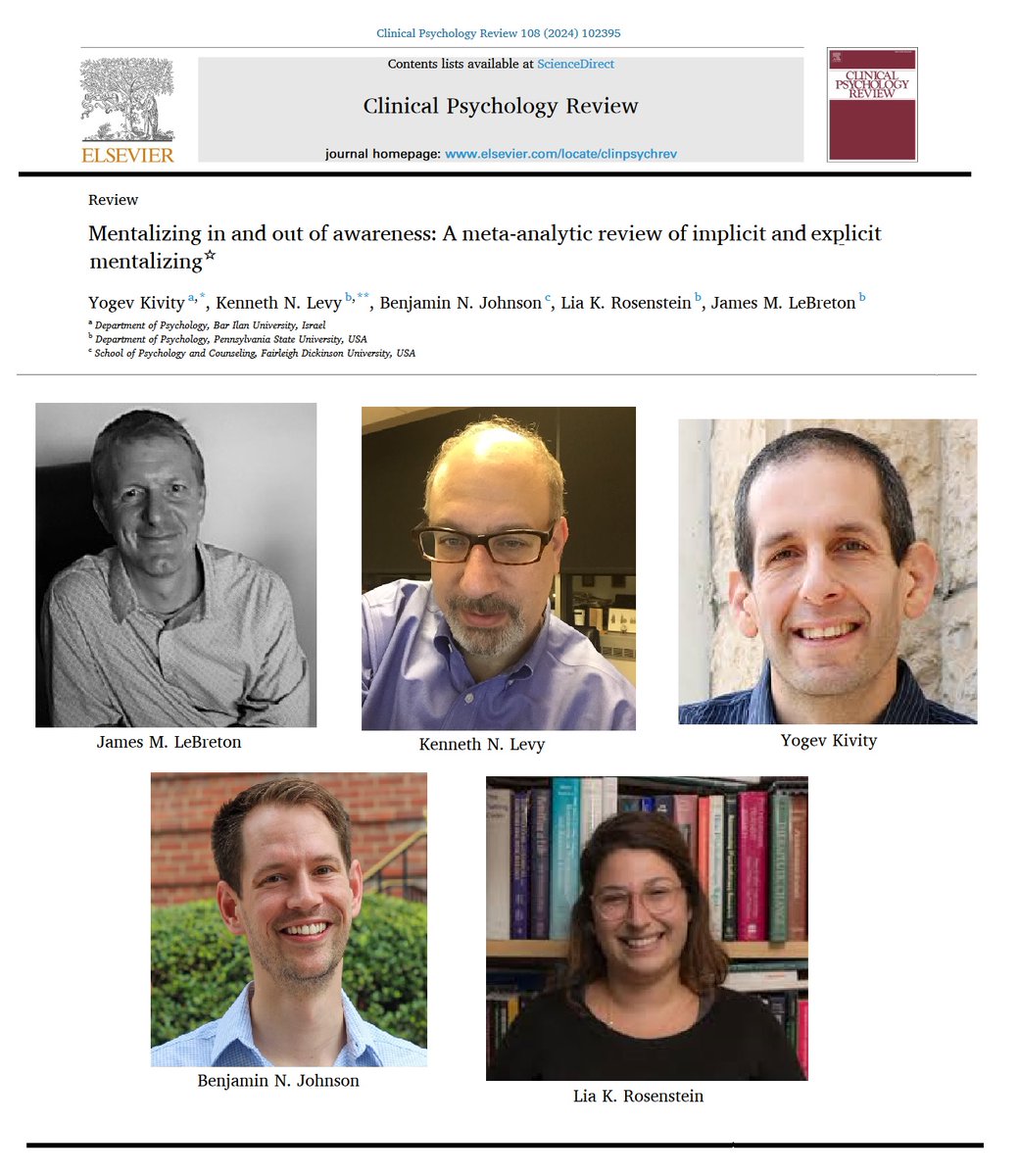
Penn State faculty, Drs. LeBreton and Levy, along with former postdoc Dr. Kivity, and past grad students, Dr. Johnson and Dr. Rosenstein, recently published a meta-analytic study available free for a limited time (through March 26) at: ow.ly/4e5C50QzW3w
Penn State Psychology tweet media
English
0
3
9
1K
Kenneth N. Levy, PhD retweetledi
Whitney Ringwald
Whitney Ringwald@WhitneyRingwald·
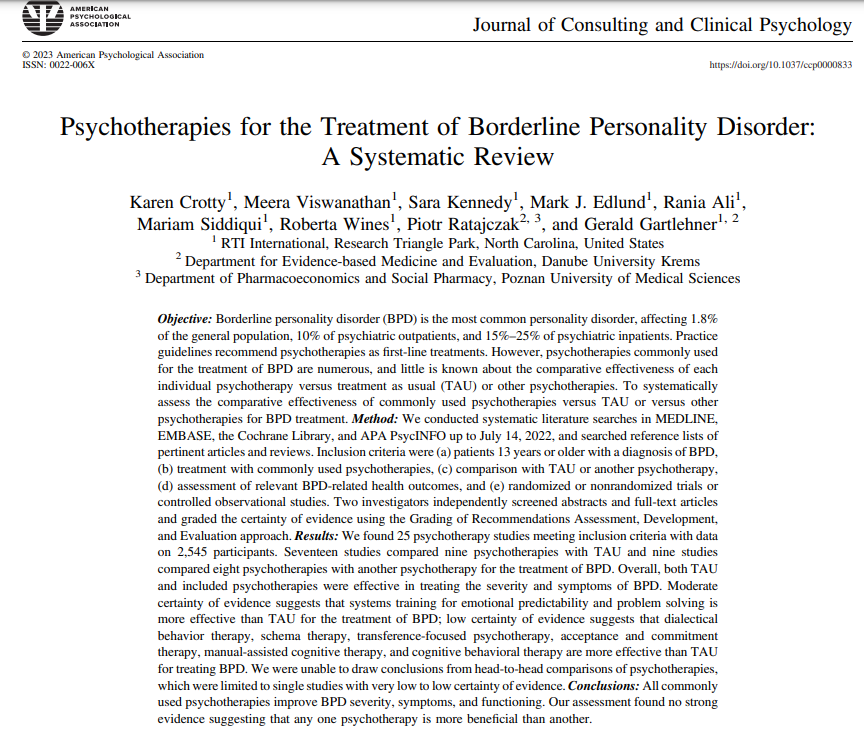
Evidence that BPD is treatable, and no modality is better than another. Love it.
Whitney Ringwald tweet media
English
15
135
776
813K