Krešimir Macan

29K posts

Krešimir Macan banner
Krešimir Macan

Krešimir Macan

@kmacan

Svi stavovi ovdje izneseni su moji osobni. Nulta tolerancija na govor mržnje i slične ispade.
Zagreb Katılım Ekim 2008
4.3K Takip Edilen13.4K Takipçiler
Krešimir Macan retweetledi
60 Minutes
60 Minutes@60Minutes·
“From the point you send a drone to the front line, get the feedback, change something, and get the new version, it could be as short as one week,” says Oleksandr Kamyshin, the architect of Ukraine's drone program. cbsn.ws/4tgCBLR
English
12
357
1.7K
124K
Krešimir Macan retweetledi
Mattia Nelles
Mattia Nelles@mattia_n·
Oleksandr Yakovenko, the founder of TAF Industries, one of Ukraine's largest drone makers wrote a good response to @RheinmetallAG's Papperger's irritating statement. I used AI to translate it for you. It is worth reading in full. "Dear Mr. Armin Papperger, CEO of Rheinmetall, When you called Ukrainian drone manufacturers “Ukrainian housewives with 3D printers in their kitchens,” you demonstrated how deeply the European defense establishment still fails to understand the nature of modern warfare. This is not about emоtions. This is about battlefield reality. Here are the figures your industry refuses to acknowledge: In 2025 alone, Ukrainian drones carried out 819,737 confirmed strikes. They accounted for 90% of all combat losses of the Russian army—more than all other types of weapons combined. A single company, TAF Industries, produces up to 100,000 FPV drones per month. Over any given 90-day period, the products of my company alone have more confirmed hits than your entire fleet of equipment over its entire history of combat use across all conflicts. And most importantly—I built this company and achieved these results in two years, not fifty. Think about that. Our drones achieve greater kinetic effect in three months than your flagship platforms have in half a century. Why? Because the battlefield has changed, while your business model has not. Russian electronic warfare has rendered GPS-guided Western munitions (Excalibur, GMLRS, etc.) almost ineffective. Expensive and complex systems designed for wars with air superiority and conventional “peer-on-peer” conflict have become easy targets for drones costing $500–2,000 that attack them from above. The cost-effectiveness ratio has been turned upside down: one 120mm Rheinmetall shell or one anti-tank missile costs more than a dozen of our drones—yet our drones still prevail. This is not a “Lego game.” This is industrial Darwinism in real time. We iterate weekly. We lose factories to missile strikes and rebuild them within weeks. We print parts in basements and deploy 100,000 strike systems per month, while your engineers still require 3–5 years and hundreds of millions of euros to certify even minor upgrades. The war in Ukraine is not a temporary anomaly. It is the first true drone-industrial war. And it has already proven that outdated European platforms—no matter how expensive or “serious”—are becoming increasingly irrelevant if they do not integrate the very technologies you are mocking. So when you say “this is not innovation,” I hear something else: “We do not want to admit that the future is being written in Ukrainian workshops, not in Düsseldorf offices.” The hashtag #MadeByHousewives is trending for a reason. Because these “housewives” destroy more enemy equipment every month than entire European armies do over full campaigns. And they do so while your industry continues to sell 20th-century solutions at 21st-century prices. The invitation stands, Mr. Papperger. Stop laughing at the kitchen table. Come and learn how the war of tomorrow is actually fought. Because the next time someone asks, “Who needs tanks in the age of drones?”, the answer may be simpler than you think: Those who still believe in 1979 will lose to those who are building in 2026. With respect (but with facts), Oleksandr Yakovenko Founder of TAF Industries One of those “Ukrainian housewives”" pravda.com.ua/columns/2026/0…
English
178
1.9K
5.2K
392.2K
Krešimir Macan retweetledi
Luka Misetic
Luka Misetic@MiseticLaw·
Nitko nije prihvatio "hrvatski narativ" o ratu u Hrvatskoj osim (checks notes) tribunala koji je svijet kroz UN-a osnovao (ICTY). Nijedan Hrvat nije osuđen ni za što od strane ICTY-a u vezi s ratom u Hrvatskoj, dok višestruke presude utvrđuju srbijanski UZP u Hrvatskoj. Hrvatski "narativ" je dominirao.
Gordan Duhaček @prajdizan.bsky.social@Prajdizan

U pravilu pobjednici pišu historiju, ali je "hrvatska država" toliko nesposobna da ni to nije u stanju. 😅 Zanimljivo je koliko se službeni hrvatski državni narativ ne uspijeva probiti u svijetu kao uvjerljiv, a kamoli dominantan. Skoro nitko izvan RH ne vjeruje u njega.

2
7
76
1.8K
Krešimir Macan retweetledi
The Figen
The Figen@TheFigen_·
26-year-old Polish guitar virtuoso Marcin Patrzałek responds to those claiming his music is fake. He created this tutorial-style video to show exactly how he plays so incredibly well – and yes, it’s all performed live on a single guitar. He is incredible! 👌👌
English
504
4.2K
19.7K
899.4K
Krešimir Macan retweetledi
Katyayani Shukla
Katyayani Shukla@aibytekat·
She literally gave the masterclass on surviving when your life plan completely shatters. Here are 18 psychological frameworks from Sheryl Sandberg to build extreme resilience and engineer your massive comeback:
English
11
460
1.6K
146.3K
Krešimir Macan retweetledi
Aariv Khanna
Aariv Khanna@AarivKhanna·
More than 200 million people use a Mac on a daily basis. But 99% have no idea what it’s truly capable of. Here are 12 amazing things your Mac can do:
Aariv Khanna tweet media
English
23
214
1.4K
471.6K
Krešimir Macan retweetledi
Internet sve pamti
Internet sve pamti@davor_Var·
Jutarnji nas uvjerava: Neven Vidaković je "jedan od najvećih stručnjaka za tržišta kapitala", a što su mu prognoze točnije, to je veći "muk" u Hrvatskoj. 🤫 Odlučio sam provjeriti taj muk i njegove "nepogrešive" prognoze kroz godine. Spoiler: Muk je od susramlja. 🧵👇
Internet sve pamti tweet media
16
11
126
10.6K
Krešimir Macan retweetledi
Ihtesham Ali
Ihtesham Ali@ihtesham2005·
A MIT professor taught the same lecture every January for 40 years, and every single time it was standing room only. I watched it at 2am and it completely rewired how I think about communication. His name was Patrick Winston. The lecture is called "How to Speak." His opening line hit like a truck: your success in life will be determined largely by your ability to speak, your ability to write, and the quality of your ideas in that order. Not your GPA. Not your pedigree. Not your IQ. How you speak is what separates people who get heard from people who get ignored. Here's the framework he drilled into MIT students for four decades. He said never start with a joke. Start by telling people exactly what they're going to learn. Prime the pump before you pour anything in. He called it the "empowerment promise" give people a reason to stay in their seats within the first 60 seconds. Then he broke down the 5S rule for making ideas stick: Symbol, Slogan, Surprise, Salient, and Story. Every idea worth remembering hits at least three of these. The part that floored me was his "near miss" technique. Don't just show what's right show what almost looks right but isn't. That contrast is when the brain actually locks something in permanently. His final rule before any big talk: end with a contribution, not a summary. Don't recap what you said. Tell people what you gave them that they didn't have before they walked in. I've used this framework in pitches, interviews, and presentations ever since watching it, and the results are not subtle. Patrick Winston passed away in 2019, but this lecture is still free on MIT OpenCourseWare. One hour, watched by millions, and it costs absolutely nothing. The most important class MIT ever put on the internet isn't about code or math. It's about how to make people actually listen to you.
Ihtesham Ali tweet media
English
199
3.7K
19.9K
1.9M
Krešimir Macan retweetledi
Shanaka Anslem Perera ⚡
Shanaka Anslem Perera ⚡@shanaka86·
JUST IN: The country that learned to shoot down Iranian drones over Kyiv is now teaching the Gulf to shoot them down over refineries. Nobody asked Trump. The Gulf asked Ukraine. President Zelensky confirmed at the UK Parliament on March 18 that 201 Ukrainian military specialists are already deployed across UAE, Qatar, and Saudi Arabia, with teams en route to Kuwait and 34 more ready to go. These are active-duty government military personnel, not private contractors. They are sharing combat-proven expertise from three years of intercepting Iranian Shahed drones over Ukrainian cities, power grids, and civilian infrastructure. The Gulf states requested the assistance. Saudi Arabia explicitly approached Ukraine. The arrangement is reciprocal: Ukraine provides the expertise that no other country possesses at this depth of operational experience, and the Gulf provides what Ukraine needs most, funding, technology, and air defence systems. Zelensky specifically highlighted Patriot missiles as part of the exchange. The country that cannot get enough Patriots from the West is earning them from the Gulf by teaching drone interception. Trump did not request this deployment. No reporting in any outlet, from Reuters to Al Jazeera to the Kyiv Post, indicates American coordination or approval. The recent Trump-Zelensky tensions over aid disputes and public friction are well documented. This is not a Washington-orchestrated move. It is a bilateral arrangement between Ukraine and Gulf capitals that bypasses Washington entirely. Zelensky built a parallel channel to the Gulf that gives Ukraine what America has been reluctant to provide while giving the Gulf what America’s $23.5 billion arms surge does not include: the people who know how to fight Shaheds because they have been fighting them every night for three years. The expertise is specific and irreplaceable. Ukraine has intercepted thousands of Shahed-136 and Shahed-238 drones since 2022. It has developed detection protocols, jamming techniques, acoustic tracking, small-arms interception methods, and integrated air defence coordination that no training manual teaches. The Gulf states purchased Patriot batteries, THAAD radars, and anti-drone systems through the $23.5 billion arms package. The hardware is American. The operational knowledge of how to use it against the exact Iranian drone variants now striking Gulf refineries is Ukrainian. Israel views this positively. Anything that strengthens Gulf air defences against Iranian drones reduces the threat environment for every country in the region, including Israel. Ukrainian-Gulf cooperation reinforces the anti-Iran alignment that the Abraham Accords established. Israel and Ukraine share a common adversary’s weapons system: Iran builds the Shaheds, Russia deploys them against Ukraine, and the IRGC deploys them against the Gulf. The expertise flows in one direction. The threat originates from the same factory. The Putin dimension is real but secondary. Iran supplies Russia with Shahed drones for use against Ukraine. Ukraine now teaches Gulf states to destroy those same drones when Iran uses them directly. The feedback loop is elegant: every Ukrainian lesson learned from shooting down Russian-deployed Shaheds over Odesa is now applied to IRGC-deployed Shaheds over Ras Laffan. Putin’s Iranian drone supplier is being countered by the country Putin is fighting, on a battlefield 4,000 kilometres from the front line. The irony is structural. The aggravation is intentional. Two hundred and one experts. Government military, not contractors. Gulf-requested, not Trump-directed. Shahed-specific, not generic. And the country with the most relevant expertise on Earth got there before the $23.5 billion in hardware arrived. open.substack.com/pub/shanakaans…
Shanaka Anslem Perera ⚡ tweet media
Shanaka Anslem Perera ⚡@shanaka86

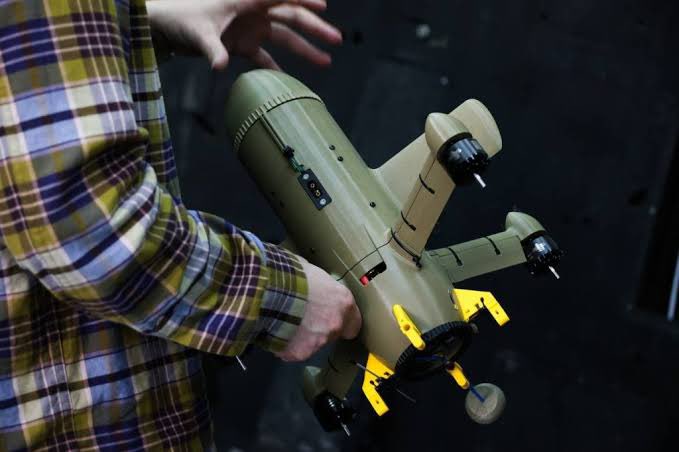
JUST IN: Ukraine just deployed anti-drone soldiers to Qatar, the UAE, and Saudi Arabia. The country Russia has been bombing with Iranian Shahed drones for three years is now defending Gulf states from the same Iranian Shahed drones. Read that sentence until the full geometry of this war becomes visible. Zelensky announced on 10th March that Ukrainian military teams equipped with low-cost interceptor drones and electronic warfare systems have arrived in all three Gulf states this week, with a separate team deployed to Jordan for US base protection. The deployment follows direct requests from Washington and calls from Gulf leaders, including Saudi Crown Prince MBS. The interceptors cost between $1,000 and $2,000 each. A Patriot missile costs $3 to $4 million. An Iron Dome Tamir interceptor costs $50,000 to $100,000. A Shahed drone costs $20,000 to $50,000. Ukraine’s battle-tested ramming drones, some 3D-printed and produced at rates of up to 950 per day, achieve over 60 to 70% kill rates against Shahed swarms at a thousandth of the cost of a Patriot. They are disposable. They are scalable. And they have been tested against the exact weapon system they are now deployed to counter, because Iran designed the Shahed and Russia has been launching them at Ukraine since 2022. No other country on Earth has more operational experience killing Shaheds than Ukraine. No other country can offer that expertise at this price. And no other country needs something from the United States as desperately as Ukraine needs Patriot batteries for its own survival. This is the quid pro quo nobody saw coming. Zelensky is not donating expertise. He is trading it. Ukrainian drone killers for American air defence missiles. Shahed interception capability for Patriot deliveries. The country that cannot defend its own power grid without Western systems is now defending Gulf oil infrastructure with indigenous technology cheaper than anything in the American arsenal. The leverage is extraordinary: Ukraine offers the one capability the Gulf urgently needs, at a cost the Pentagon cannot match, in exchange for the one capability Ukraine urgently needs and only Washington can provide. While the US strips THAAD and Patriot batteries from South Korea and ships them to the Gulf at enormous logistical cost, Ukraine arrives with $1,000 drones in cargo containers. While Ghalibaf mocks American escorts as PlayStation, Ukrainian teams set up electronic warfare jammers on Gulf airfields. While the White House blames a staffer for a deleted post about an escort that never happened, Ukraine delivers the capability the post falsely claimed existed. The Iran war just merged with the Russia war through the one weapon system they share: the Shahed drone. Designed in Iran. Manufactured for Russia. Launched against Ukraine for three years. Now launched against the Gulf. And intercepted in both theatres by the same Ukrainian operators using the same $1,000 technology. Iran built the drone. Russia scaled it. Ukraine learned to kill it. And now Ukraine is selling that knowledge to the countries Iran is attacking, funded by the country Russia is fighting. The circle is complete. The wars are one. Full analysis below. open.substack.com/pub/shanakaans…

English
322
3.5K
11.1K
811.6K
Krešimir Macan retweetledi
MAKS 25 🇺🇦👀
MAKS 25 🇺🇦👀@Maks_NAFO_FELLA·
🇺🇦❗️“I have no idea what the allies have been looking at for four years while we have been at war,” — Ukrainian military instructors who went to help counter Iranian missiles and UAVs are shocked by the way the US shoots down “Shaheds,” writes The Times – First, the Persian Gulf countries launched as many as 8 Patriot missiles at one (!) enemy target, each costing more than $3 million. – They often used a ship-based SM-6 missile, worth about $6 million, to shoot down a “Shahed” worth $70,000. – The US and its allies often literally “shine” their radars like beacons — without proper camouflage. Ukrainians work differently: mobile radars constantly change positions. For example: just three (!) cheap Shahed drones destroyed the AN/FPS-132 early warning radar (~$1 billion) and another air defense radar (~$300 million), which had been standing in one place for months and were perfectly “readable” from satellites.
MAKS 25 🇺🇦👀 tweet media
English
189
1.9K
8.4K
381.8K
Krešimir Macan
Krešimir Macan@kmacan·
Sutra sam s Ivanom Radaljac Krušlin i dr. Hrvojem Handlom uživo u Etteri na HR2 oko 14, a emisiju od početka slučajte već od 13 - link u nastavku. Bit će i FB live - javim gdje - teme su laži, spinovi, fake news, teorije zavjere, političke prevare…
Krešimir Macan tweet media
1
0
0
164
Krešimir Macan retweetledi
Anish Moonka
Anish Moonka@anishmoonka·
A single ant has 250,000 neurons. Your brain has 86 billion. That’s a 344,000x gap. And yet what you’re watching is a colony solving a category of problem that no computer can crack perfectly at scale. It’s called the Steiner tree problem. Given a set of points, find the shortest possible network connecting all of them. First posed in 1811, proved essentially impossible to solve perfectly in 1972 (the computing time grows so fast with size that the world’s fastest supercomputer stalls on a few hundred points). Still one of the hardest open problems in mathematics. Ants solve it with chemistry. When an ant walks a path, it leaves a chemical trail called a pheromone. That trail evaporates over time. Shorter paths get walked faster, so pheromone builds up before it fades. Other ants prefer stronger trails. The colony converges on the shortest route without any single ant knowing the full picture. Jean-Louis Deneubourg at the Free University of Brussels proved this in the early 1990s with a dead simple experiment: two bridges between a nest and food, one twice as long as the other. Within minutes, the colony picked the short one. In 1991, computer scientist Marco Dorigo took that discovery and turned it into an algorithm (a set of step-by-step instructions for a computer) called Ant Colony Optimization. It’s now used to route wires inside microchips with billions of transistors (one study found an 8% reduction in wire length over traditional methods), plan delivery truck routes, and manage internet traffic. The phone you’re reading this on was partially designed using math that ants figured out 100 million years before humans existed. A 2023 study out of Stanford and several other institutions found that turtle ants in the tropical forest canopy build trail networks across tangled branches and vines that approximately solve the Steiner tree problem with zero central control. No ant has any information about the full network. Each one just follows a rule: at each junction, go where the pheromone is strongest. The collective intelligence comes from thousands of these tiny decisions stacking up. Stanford biologist Deborah Gordon has studied this for decades. She compares it directly to how brains work: no single neuron tells the others what to do, but together they produce thought. A 2024 Rockefeller University study found that individual ants decide whether to leave the nest using the same yes-or-no process that brain cells use to decide whether to switch on. The colony is, in a real mechanical sense, a brain spread across thousands of bodies. In early 2025, a Weizmann Institute study pitted ant groups against human groups on a task almost identical to this video: navigating a T-shaped object through a series of obstacles. The bigger the human group, the worse they performed. Too many competing ideas about which direction to push. The bigger the ant group, the better they got. No ego, no debate, just pheromones and simple rules scaling into something that looks a lot like intelligence. 250,000 neurons each. No leader. No blueprint. Solving problems that stumped mathematicians for two centuries.
The Figen@TheFigen_

They are ants solving a geometric problem and it is mind-blowingly colorful.

English
57
792
3.4K
304.4K
Krešimir Macan retweetledi
The Figen
The Figen@TheFigen_·
They are ants solving a geometric problem and it is mind-blowingly colorful.
English
420
2K
28K
6.8M
Krešimir Macan retweetledi
Yasmine Khosrowshahi
Yasmine Khosrowshahi@yasminekho·
In 2018, Stanford professor Matt Abrahams gave a masterclass on why most people fail to communicate well. He broke down: - The structure every message needs - Why audiences stop listening - The psychology of attention 15 lessons that'll make your communication unforgettable:
English
57
1.5K
7K
998.4K
Krešimir Macan retweetledi
Anish Moonka
Anish Moonka@anishmoonka·
June 1983. A 28-year-old Steve Jobs walks into a design conference in Aspen, Colorado. He asks the room who owns a personal computer. Nobody raises their hand. He says “Uh-oh.” Then he spends the next 55 minutes describing the next four decades of technology. Jobs told the audience Apple’s strategy was to “put an incredibly great computer in a book that you can carry around with you, that you can learn how to use in 20 minutes… with a radio link in it so you don’t have to hook up to anything.” That’s an iPhone. In 1983. The Mac hadn’t even shipped yet. He described an MIT project that sent a camera truck down every street in Aspen, photographed every intersection, and built a virtual walkthrough on a computer screen. Google Street View launched 24 years later. He said office networking was about 5 years away and home networking 10 to 15 years out. The web went mainstream in the mid-90s, about 12 years later. Dead on. He described software being sent electronically over phone lines, with free previews and credit card payment. That’s the App Store, 25 years before it launched. He even compared it to the music industry and said software needed “the equivalent of a radio station” for free sampling. Apple built the iTunes Music Store 20 years later. The AI prediction is the one that hits different now. Near the end, Jobs talked about machines that could capture a person’s “underlying spirit” or “way of looking at the world,” so that after they died, you could ask the machine questions and maybe get answers. He said 50 to 100 years. ChatGPT arrived in about 40. The weird part is this speech was lost for nearly 30 years. The full hour-long recording only surfaced in 2012 when a blogger got a cassette tape from someone who attended the original conference. The Steve Jobs Archive didn’t release actual video footage until July 2024. His timelines were consistently too fast. He wanted the “computer in a book” within the 1980s. Apple’s first attempt was the Macintosh Portable in 1989, which weighed 16 pounds and cost $6,500. The iPad arrived in 2010, 27 years late. He guessed voice recognition was about a decade away. Siri launched in 2011, nearly 30 years later. The vision was right every time. The clock was wrong every time. Apple was doing about $1 billion a year in revenue when Jobs gave this talk, with under 5,000 employees. Today it’s worth $3.7 trillion.
English
106
1.5K
7.3K
1.1M
Krešimir Macan retweetledi
Ihtesham Ali
Ihtesham Ali@ihtesham2005·
A PhD student at Oxford got caught submitting "AI-generated" work. Except he hadn't used AI to write anything. He used it to think. Here's the workflow his advisor called "the most sophisticated research process I've seen in 20 years." He starts every essay with a brutal diagnostic prompt. Dumps his rough argument into Claude and asks: "What are the 3 weakest logical jumps in this reasoning? Where would a hostile examiner attack first?" The AI doesn't write his essay. It destroys his draft. Then he rebuilds. But the next step is what separates him from every other student using ChatGPT or Claude to generate paragraphs. He uploads the top 5 papers in his field and asks: "What claims in my argument contradict or oversimplify what these authors actually found?" Most students cite papers they've skimmed. He cites papers he's been forced to genuinely understand. The final move is almost unfair. Before submitting, he pastes his conclusion and asks: "What would a philosopher of science say is missing from this argument? What assumptions am I making that I haven't defended?" His essays come back with comments like "unusually rigorous" and "demonstrates rare critical depth." He's not using AI to write. He's using it to think harder than he could alone. The tool hasn't changed. The workflow has.
Ihtesham Ali tweet media
English
196
586
3.8K
1.1M