AT

3.8K posts

AT banner
AT

AT

@ko_ali

person

Katılım Nisan 2010
64 Takip Edilen207 Takipçiler
AT
AT@ko_ali·
@DeanH2963 @latimeralder Did I say there was an issue with CO2 build up? Where? I take issue with your bizarre way of trying to use pseudo science to pretend that the scale of what is happening isn’t particularly large.
English
1
0
0
26
Deano
Deano@DeanH2963·
That’s fine, you’ve said you’re not making a temperature argument. So just to be clear, what is the mechanism you’re pointing to as the issue with CO₂ buildup? If it’s not temperature, then what is the problem with CO₂ buildup? As far as temperature is concerned, Kelvin is the SI unit for absolute temperature and the proper scale for percentage comparisons. Using other scales introduces arbitrary zero points, which can distort comparisons.
English
2
0
0
22
Latimer Alder
Latimer Alder@latimeralder·
Each year the world produces 40,000 million tonnes of CO2. And produces about 1/60th of a degree C of heating. So, in round numbers all the heat pumps would reduce global temperatures by 1/6,000th of a degree per year I really couldn't be bothered. You?
CIBSE@CIBSE

The impact of #HeatPumps could be transformative. By 2030, heat pumps could reduce global CO₂ emissions by at least 500 million tonnes. That’s roughly equal to the annual emissions of all cars across Europe today. Check out CIBSE’s heat pumps campaign at buff.ly/PWzQDKY

English
11
23
62
1.4K
AT
AT@ko_ali·
@DeanH2963 @latimeralder My goodness. Such nonsense. Humans live independently in places with average temperatures of around 5C to 30C. Why not use that? Or maybe even use the hottest and coldest the earth has been since humans were alive. But to use the temperature of deepest darkest space is bizarre
English
1
0
0
25
AT
AT@ko_ali·
@DeanH2963 @latimeralder Using your (daft) terms, integrate the NET flux to get the total change in stock. To claim they are completely different things shows a woeful lack of knowledge of basic calculus.
English
1
0
0
11
Deano
Deano@DeanH2963·
You’ve switched again, this time from flux to stock. The ~3300 Gt figure is the total atmospheric stock. The ~750 Gt is the annual flux through the system. They’re different quantities, and both are relevant for understanding how the system behaves. Again, the 750 Gt is not moot for understanding the system. The analogy is poor. Gravity has no feedback mechanism that reduces fall damage with altitude, whereas air resistance has a strong feedback. A 500 ft fall will do no more damage than a 15,000 ft fall. The carbon cycle is different. It has strong negative feedbacks, where higher CO₂ concentrations increase uptake by oceans and vegetation. Also, CO₂ is not harmful in itself. It is my opinion that you will argue that CO₂ causes more radiative forcing (I’m trying to shortcut the discussion while avoiding strawmanning your position). The temperature response is generally estimated to be on the order of about 1 to 1.5°C, depending on assumptions and timescale. This is less than a 0.5% increase. So, using your analogy (which I believe to be poor), it is the difference in damage between falling 100 ft and 100 ft plus a few inches.
English
2
0
0
19
AT
AT@ko_ali·
@DeanH2963 @latimeralder Utter tosh. The relevant factor is the amount of CO2 in the air (3300GT) and the amount that humans have added, which is 1400GT. analogy - imagine falling 100ft at sea level. It’s bad. Now imagine being at the top of a mountain and fall 100ft, much smaller % fall, but still bad
English
1
0
0
20
Deano
Deano@DeanH2963·
You’re mixing two different things. The ~750 Gt figure refers to gross natural flux, which is why it’s relevant for understanding system scale. The ~12 Gt per year figure refers to the net imbalance, which is a much smaller number within that larger system. Pointing out that human emissions are ~5% of total flux isn’t “deception”, it’s describing the scale of the system those emissions sit within. Both statements can be true at the same time. They’re describing different aspects of the carbon cycle. You appear to be pivoting away from the point you made. The fact remains that the ~750 Gt figure provides essential context for the scale of the system.
English
1
0
0
19
AT
AT@ko_ali·
@DeanH2963 @latimeralder You own data claims 12Gt extra per year added to the atmosphere, over 50 years. Thats 600Gt, which matches the 50% increase in atmospheric CO2 levels. To throw around this “but it’s only 5% of world emissions” nonsense is purely a Mcguffin for deception.
English
1
0
0
21
Deano
Deano@DeanH2963·
The ratio of man-made CO₂ to natural CO₂ is important. Human emissions are about 40 GtCO₂ per year compared to roughly 750 GtCO₂ moving through the natural carbon cycle, around 5%. So far from being moot, the 750 Gt baseline is important for understanding the magnitude of human influence. Historically, CO₂ levels have been higher. The increase in absorption shows that the carbon cycle is not being overwhelmed. In fact, the increase in CO₂ uptake is greater than total human CO₂ emissions in 1970.
English
1
0
0
20
AT
AT@ko_ali·
@DeanH2963 @latimeralder I’m glad you agree that it’s the net amount of CO2 that matters, and that the 750Gt quote from earlier is moot
English
1
0
0
22
Deano
Deano@DeanH2963·
The balance point is concentration-driven. As atmospheric CO₂ rises, uptake by oceans and vegetation also increases. That’s why roughly half of human emissions are absorbed each year, rather than all of it accumulating. So it’s not a simple “everything integrates upward” system, it’s a dynamic equilibrium adjusting to concentration. The key question isn’t just emissions, but how the system responds to higher concentrations over time. 1970s Human emissions: ~15–17 GtCO₂/yr Absorbed (land + ocean): ~7–9 GtCO₂/yr Recent years (2010s–2020s) Human emissions: ~38–41 GtCO₂/yr Absorbed (land + ocean): ~20–22 GtCO₂/yr Change over ~50 years: Annual absorption increased by roughly +12 to +14 GtCO₂ per year
English
1
0
0
21
AT
AT@ko_ali·
@DeanH2963 @latimeralder It also absorbs about 750Gt co2. It’s the net amount that makes a difference. It integrates up each year. But I suspect you already know that.
English
1
0
0
26
Deano
Deano@DeanH2963·
@latimeralder The actual planet produces much more than this, 750 Gt co2 , 40Gt is the human contribution , a fraction in comparison .
English
1
0
2
31
AT
AT@ko_ali·
@latimeralder Good god, who would want a vented tumble dryer anyway??. The heat pump ones are just as cheap to buy and much cheaper to run. The companies only sell them as they are more profitable and the public don’t understand the difference
English
0
0
1
20
Latimer Alder
Latimer Alder@latimeralder·
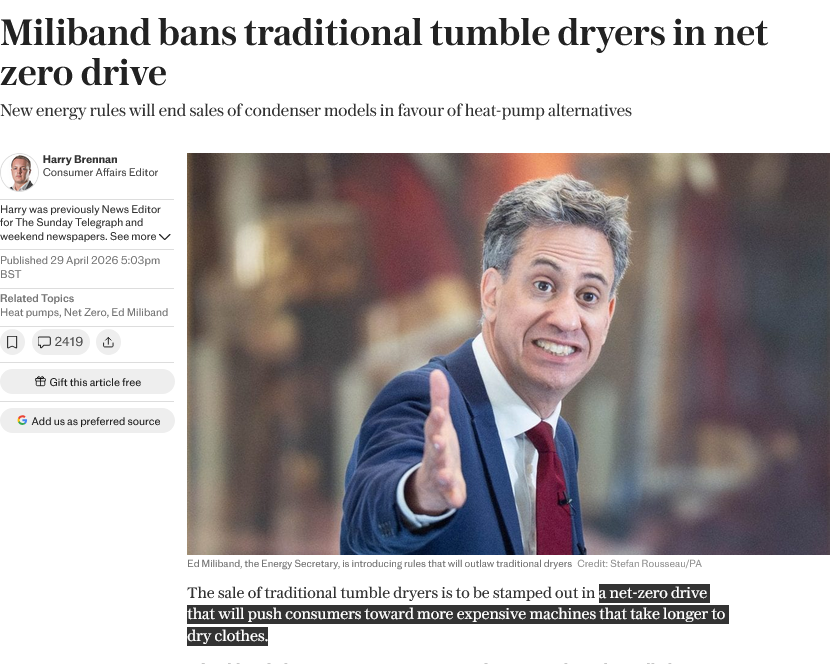
More concrete proof that our rulers hate us. Achieving their Net Zero goals by a million pinpricks, a thousand cuts and a few whacks over the head with a blunt instrument 'We're Saving the Climate' is just a sugar-coated way to say 'We Detest You, You Peasants!' telegraph.co.uk/money/consumer…
Latimer Alder tweet media
English
19
59
136
1.4K
Kathryn Porter
Kathryn Porter@KathrynPorter26·
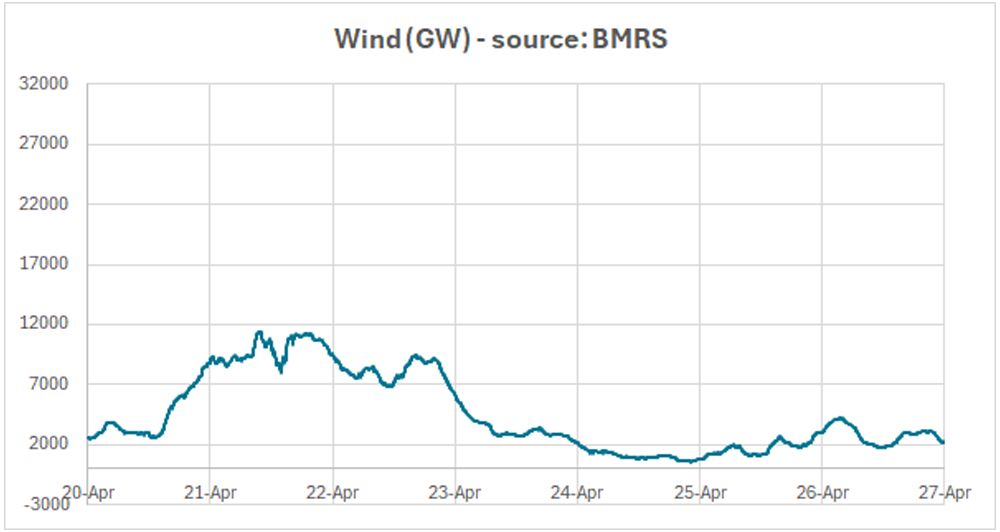
A reminder of what wind power actually looks like... We have 32 GW installed, hence the size of the scale on the y-axis Over the weekend output fell to 0.6 GW - this happened overnight when demand was low but when solar output was zero - so functionally we had no wind or solar on the grid The length of the lull when wind was below 3.2 GW (a tenth of the installed amount) was far longer than any battery can bridge) THIS is why wind and solar do not provide energy security. In the winter periods of zero solar are longer and coincide with times of peak demand, not just for the day but for the year
Kathryn Porter tweet media
English
146
784
2.2K
77.6K
Jonathan James
Jonathan James@Jonathan_55555·
@ko_ali @KathrynPorter26 @GregClinker You have mixed up two things. An ICE engine is only 40% efficient, but it's always available for when you need it (rarely in the garage). Your car still works when it's -4°C outside or +30°C. A wind turbine can't be used whenever we need it though, like in low wind conditions
English
2
0
0
33
Kathryn Porter
Kathryn Porter@KathrynPorter26·
@GregClinker It's roughly a third. Massive waste of money Also a massive waste of the environmental and social harm of all the mining and processing needed to build them Nothing runs at 100% but only getting 34% is simply not good enough
English
19
1
44
913
AT
AT@ko_ali·
@afneil We have gas storage in the UK. It’s actually a reasonable amount. When it’s windy and supplies are hard to get cos someone has shut the Strait of Hormuz we don’t have to dip into our stored gas. It’s pretty basic really
English
0
0
0
127
Andrew Neil
Andrew Neil@afneil·
Energy Secretary Red Ed Miliband claims renewables make energy supplies more secure. Of course, they don’t. Today, because wind is weak, we’ve been importing almost 25% of our electricity needs. We can never be sure that supply will always be there when we need it. And, of course, it adds to our balance of payments deficit, which is already big enough without unnecessarily importing all this power.
English
268
1.2K
4.6K
89.9K
Latimer Alder
Latimer Alder@latimeralder·
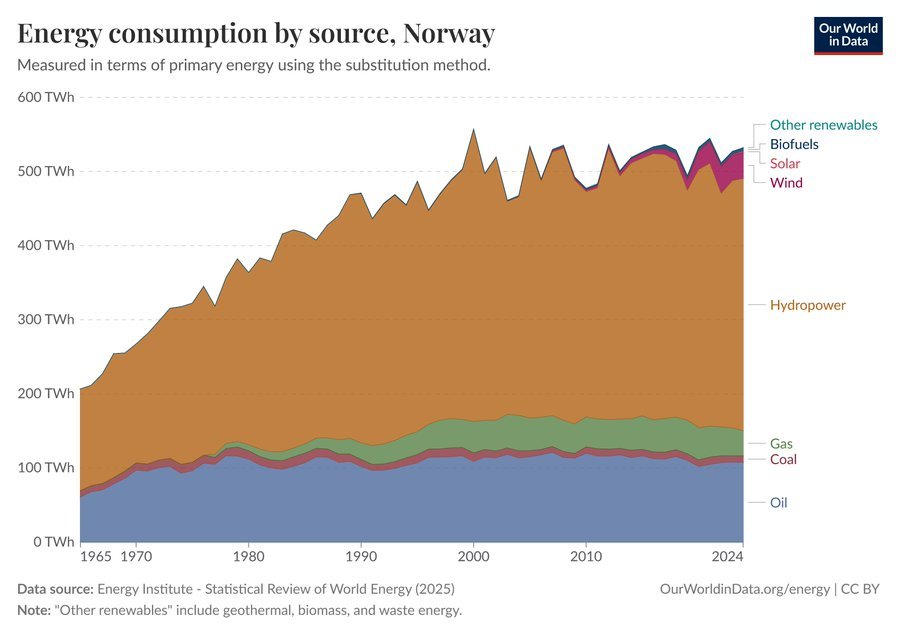
Renewables myths busted 1. 'Norway has 100% renewable energy' No. It doesn't. It gets a LOT of electricity from hydropower. But much of its overall energy comes still from fossil fuels. And very little from 'renewable' wind and solar Hydro is only an option in mountainous countries..Like Norway. Lucky Norway!
Latimer Alder tweet media
English
48
180
451
25.2K
AT
AT@ko_ali·
@latimeralder You can’t be looking very hard
AT tweet media
English
1
1
1
35
Latimer Alder
Latimer Alder@latimeralder·
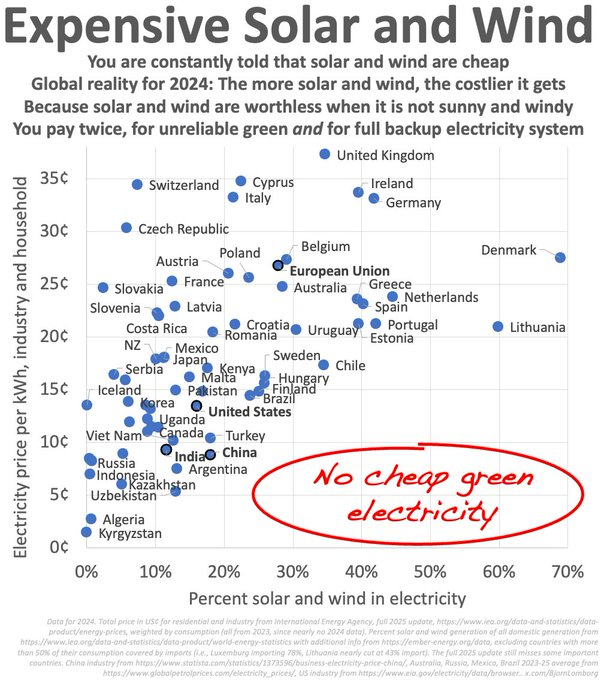
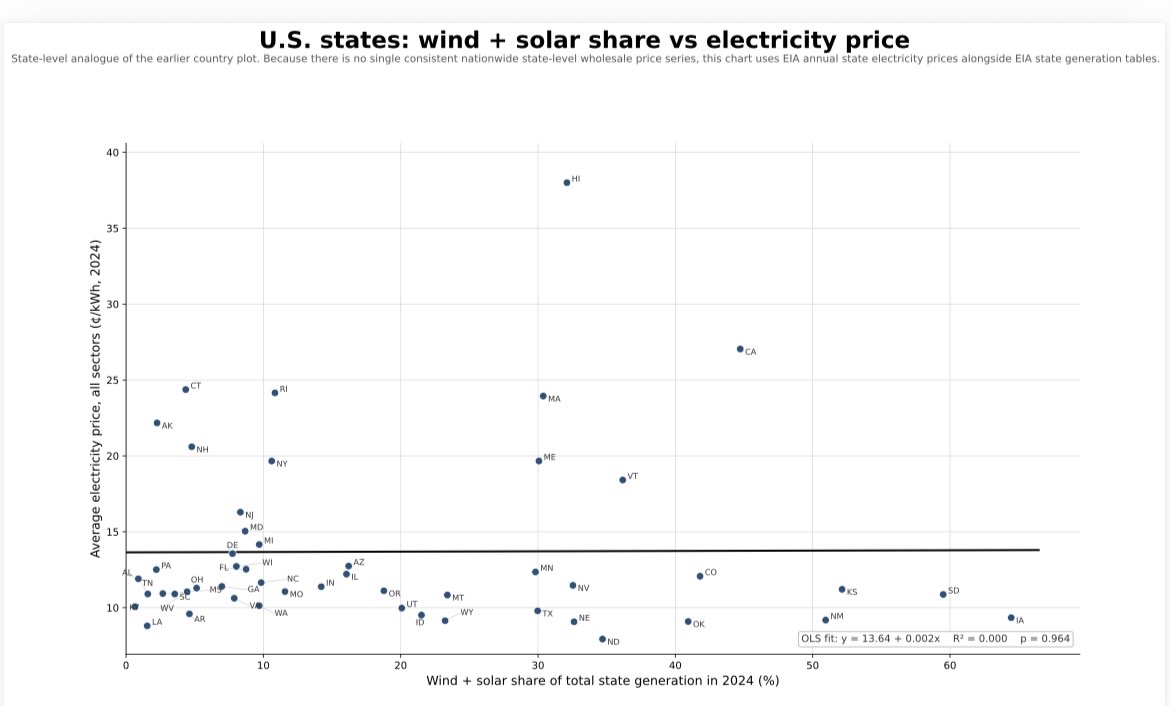
Is there anywhere in the world at all where increasing amounts of wind power has actually lived up to the promoters' promises and reduced electricity bills? I can't find anywhere Everywhere I look, more wind has led to HIGHER bills. It's an 'investment' that LOSES our money!
Latimer Alder tweet media
English
18
40
77
3.4K
Latimer Alder
Latimer Alder@latimeralder·
Peak Oil? Nope. 2024 saw record oil production.
Latimer Alder tweet media
English
3
7
19
599
AT
AT@ko_ali·
@latimeralder And 2026? Note Saudia Arabia has had to stop mining gas as storage is full and it can’t ship it out
English
0
0
0
9
Latimer Alder
Latimer Alder@latimeralder·
Peak Gas? Have we pased Peak Natural Gas production? Nope 2024 saw record Natural Gas production
Latimer Alder tweet media
English
1
4
17
467
AT
AT@ko_ali·
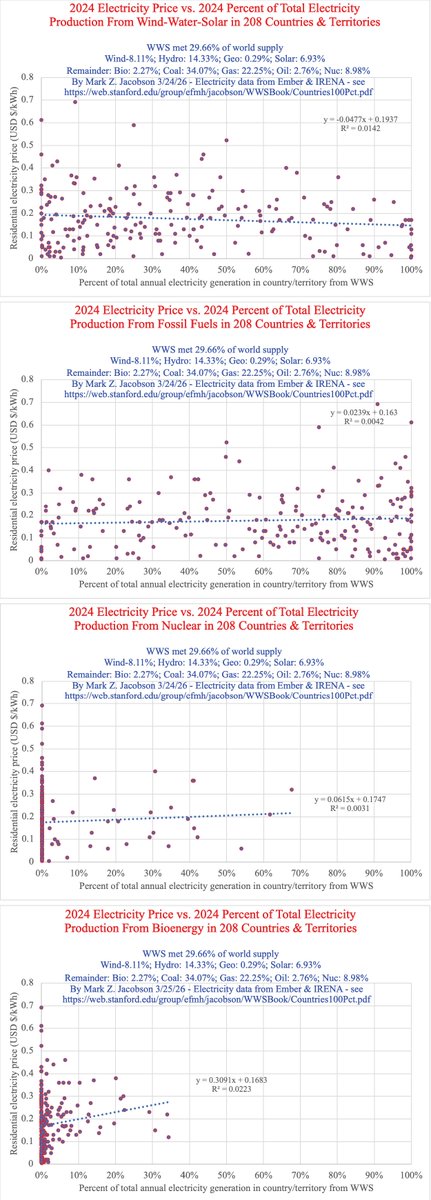
@mzjacobson @latimeralder Can you post this every time Lying Latimer posts his silly false chart? It’s a bit of commitment as he posts it every other day.
English
1
0
2
20
Mark Z. Jacobson
Mark Z. Jacobson@mzjacobson·
@latimeralder No, when you consider all countries and what is actually being proposed (wind+solar+geothermal+hydro=WWS) rather than wind+solar alone, you get a different result More WWS correlates with lower electricity prices Fossils, nuclear, bioenergy all correlate with higher prices
Mark Z. Jacobson tweet media
English
2
4
22
369